Formerly a knuckle-head, now an earnest Christian, who is married to his best friend, the father of three, an evangelist of the Gospel, a Star Wars fan, and tries to be an all around nice guy.
The following question comes up once and a while in various forms:
Is it permissible for a baptized boy to be taught by a woman in the church’s Bible School program?
Questions like this often emerge from the heart of a concerned Christian parent whose heart wishes to honor the Lord. I pray and hope that the following guide will be helpful to those seeking an answer to this question.
The question has several elements which much be addressed. They will form the headings of this brief response in the following order: (1) what is the prohibition in 1 Timothy 2:12?, and (2) does baptism make a person an adult?
The Prohibition in 1 Timothy 2:12
Paul writes to Timothy,
I do not permit a woman to teach or to exercise authority over a man; rather, she is to remain quiet. (English Standard Version)
If left alone an argument may be made to the effect that a woman can never instruct nor be in a position of authority over a man —never. This would, however, be stripping the passage from its larger context and thereby generating a dangerously misleading analysis of these words.
Paul’s prohibition is built upon two lines of reasoning: (1) the order of creation, and (2) the profile of the fall. Observe:
For Adam was formed first, then Eve; and Adam was not deceived, but the woman was deceived and became a transgressor. (1 Tim 2:13–14 ESV).[1]
Although some apply this passage to domestic relationships (husband and wife), or to relationships in the world, such as in business (no women bosses), Paul is specifically addressing the “places” of Christian assemblies. He is not addressing all interactions between women and men, Christian or otherwise.
In verse 8, Paul uses the phrase “in every place” (en panti topō) which is a short hand for “in every place of assembly.”[2] Thus, the focus of Paul’s prohibition has quite a limited application —the Christian assembly. This is further made clear by the mention of the males —as opposed to the women— who are to pray in the assembly (v. 8), and the emphasis on godly women as doers of good works (vv. 9-10) and as active learners in the assembly (vv. 11-15).
Perhaps a point of clarification is in order. Paul does base the “headship/respect” principle for married couples on the order of creation (Eph 5:22–33), but with a different focus. It would be inappropriate to argue —based on 1 Timothy 2:11–15 alone— that women are to be silent at home before their husbands, and contradictory to passages that assume women have administrative authority in their own home (1 Tim 5:14), which also includes martial rights and due consideration from the husband (1 Cor 7:4–5).
Thus, the prohibition in this passage addresses the particular setting of the worship assembly. This must be kept in mind.
Before we move forward. I know there are many genuine believers that would cringe at the notion that there are teaching limitations along gender lines within the church assembly. Yet, while I understand some do believe this instruction to be ad hoc—unique— and therefore, not normative, Paul’s argument is built on his apostolic application of Genesis 2:18-25 and 3:1-14 which refer to the order of creation and the order of the fall.[3]
This should never be confused with an emphasis on the superiority of men and the inferiority of women, both are equal image-bearers of God (Gen 1:27; 2:18).[4]
Is Adulthood Bestowed at Baptism?
This is the heart of the question. The New Testament, in no place that I have found, marks baptism as the transitional act which bestows not only forgiveness of sins (Acts 2:38) but also adulthood upon the recipient. If adulthood is bestowed at baptism, then, what of those who are baptized in their 30s or 40s — have these people been simply children up to this point?
I have heard it said before:
If a boy is ready to make the most important decision he will ever make, then should he not be regarded as an adult? Why not?
While the argument appears to have merit, such a view can have disastrous consequences. Let me further my point. Does this also apply to young baptized girls? Are they now adults ready to marry and bear children? Should the newly baptized boy be thrust into church leadership now because he is a “man”? Why not?
This is not New Testament logic on three grounds: (1) it is nowhere mentioned in the NT, (2) baptism is about the “new creation” and forgiveness of sin (Acts 2:38; 2 Cor 5:17), and (3) baptism is about a “new birth” —a sort of spiritual infancy (John 3:3). So the logic of the gospel runs in the opposite direction of the above claim. Baptism is certainly the most important decision a person can ever make, but that by default does not make a person an adult. This is not what the NT teaches. The assertion is an opinion and we must be very careful with opinions.
Still, even in the New Testament world, there were different words used to describe age groups.[5] One key point to observe is that the ancient world held very a different view of children than modern times when it comes to concepts like merit and value, property, rights, etc. Nevertheless, we will survey these words quickly:
Bréphos means “young” and “fruit of the body” and thus refers to small children/childhood (2 Tim 3:15), newborn infants (1 Pet 2:2), and those within the womb (Luke 1:41, 44).
The words país (small, little), paidíon (little child) and paidárion (little boy, John 6:9) are bit interconnected. Paidion may refer to someone not yet 7 (Matt 2:11,13–14), which covers are large span of time; whereas, a child from the ages 7-14 would be called pais (Luke 8:51, 54). The “adolescent” (14-21) was called a meirákion but the word is not used in the NT (2 Macc 7:25).
There is téknon and teknion: These terms generally reflect “origin” (descendent), the early dependent state of children, and those who are figuratively so (téknon: Luke 11:13; Mark 7:27; Phil 2:22). And teknion was a nursery term for “little child” and is often affectionately used for Christians (John 13:33; 1 John 2:12).
Even when Paul speaks to Timothy and speaks of his “youth” (1 Tim 4:12), he is speaking in relative terms. The word (neotes) itself is relative and often associated with a “youthful spirit” and being impetuous[6] and covered a period until the approximate age of 40.[7]
In no instance is there an example from Scripture that a child becomes an adult at the point of baptism, regardless of the important choice they have made.
Finally, let me add the following. Christians are often called upon to become mature or complete (teleios 1 Cor 14:20). Even the church universal is called upon to grow into “mature manhood” (teleios aner) in the Ephesian letter (4:13; cf. Col 1:28, 4:12). What is more to the flavor of NT teaching is that baptism begins a process of spiritual maturity. It is not a commentary on biological maturity (the brain is not fully mature until the mid-twenties), on legal maturity and accountability (nations and cultures differ), nor on the wisdom the church depends on from its mature leaders.
We should never crush the embers of zeal among our youngest believers and disciples. We need to encourage them and give them an environment for their faith to be nurtured and yield its fruit. I would stress, however, that we do not artificially affirm something upon them —like adulthood— that there is no biblical nor social basis to do. Furthermore, we should not sideline our teaching sisters, many of whom are mothers and grandmothers who administer their own homes with children under their authority (Tit 2:4; 1 Tim 5:14).
So Where Do We Go From Here?
I see no scriptural evidence to remove a young baptized boy from a Bible class taught by a Christian woman simply on the merit that the boy is baptized. But, this does not settle the matter in my view.
The Scriptures do not clearly define a line that distinguishes childhood from adulthood. We often use the phrase, “age of accountability.” Again, there is no general consensus. Is age twenty, based on God’s punishment upon the unbelieving Israelites at the precipice of the Land of Promise (Exod 14:29)? If so, then no youth is accountable before that age and, therefore, baptism would be inappropriate.
Yet, there are plenty of references of young people called by the Lord and brought into His service. Samuel’s call in his early teens to service (1 Sam 3). Josiah was eight years old when he began to reign as king (2 Kings 22:1). Mary was certainly “young” (11-13 years old?) when she conceived Jesus by the power of God while betrothed to Joseph (Luke 1). In her oracle, she acknowledges her inclusion in God’s plan of salvation (Luke 1:49). So, it is not a tidy situation to say young people cannot come into God’s plan.
By and large, the conversion excerpts from the Book of Acts narrate responses from believing adults: (1) the Jews on the day of Pentecost (Acts 2), (2) the Samaritan converts (Acts 8), (3) the conversion of Simon the sorcerer (Acts 8), (4) the conversion of the Ethiopian treasurer (Acts 8), (5) the conversion of Saul of Tarsus (Acts 9, 22, 26), (6) the conversion of Cornelius and his household (Acts 10-11), (7) the conversion of Lydia (Acts 16), (8) the conversion of the Philippian jailor (Acts 16), (9) the Athenian converts (Acts 17), (10) the Corinthian converts (Acts 18), and (11) the Ephesian converts (Acts 19).
There may be some wiggle room in the reference to “household” in cases like Acts 11:14 and 16:33-34 to include younger believing members. R. C H. Lenksi, for example, viewed “household” (Grk. oikos) as a reference to Cornelius’ “family” in Acts 11:14 and 16:33-34.[8] In a study on the multi-functional social setting of the household in Luke and Acts, John Elliott notes that the term includes “family and kin,” but the term may also include “personnel and property.”[9] This may then include servants, slaves, and household managers who also responded to the gospel. At any rate, a baptized youth does not an adult member of a Greco-Roman household make.
At the heart of conversion, however, is the need for forgiveness of sin, the capacity for belief and obedience, and commitment towards discipleship. This would exclude the youthfully immature to the infantile of the house. So where do we go from here? Youths who respond to God in baptism are still youths subject to their own parents.
Concluding Thoughts
That being said, we concede that there is tremendous wisdom to maintain consistency in the church’s teaching program. Since there is no “clear-cut” age to gauge adulthood in Scripture, it would seem best for congregations and families to determine for themselves an age where the teaching program of the church exclusively selects male teachers during those transitional years from late middle school through high school. But, it should be clear that this is only a judgment call.
Endnotes
Unless otherwise stated all Scripture quotations are taken from the English Standard Version of The Holy Bible (Wheaton, IL: Crossway, 2001).
Bruce K. Waltke, “1 Timothy 2:8-15: Unique or Normative?,” Crux 28.1 (March 1992): 22-27. Repr., CBMW News/Journal of Biblical Manhood and Womanhood 1.4 (Oct 1996): 4-7.
Bruce K. Waltke and Cathi J. Fredricks, Genesis: A Commentary (Grand Rapids, MI: Zondervan, 2001), 88.
Albrecht Oepke, “pais…,”TDNT 5:636–39.
H. G. Liddell, An Intermediate Greek-English Lexicon (1888; repr., Oak Harbor, WA: Logos Research Systems, 1996), 529.
Wayne Jackson, Before I Die: Paul’s Letters to Timothy and Titus (Stockton, CA: Christian Courier Publications, 2007), 124.
“He was to tell Cornelius what would save both him and his house (family). It was a matter of saving this household.” R. C. H. Lenski, The Interpretation of the Book of the Acts of the Apostles (Minneapolis, MN: Augsburg, 1961), 443. Later, regarding the Philippian jailor and his house: “The jailor and his family were baptized in the ordinary way by an application of water in the name of the Triune God” (Lenski, Acts of the Apostles, 683).
John H. Elliott, “Temple Versus Household in Luke-Acts: A Contrast in Social Institutions,” in The Social World of Luke-Acts: Models for Interpretation, ed. Jerome H. Neyrey (1991; repr., Peabody, MA: Hendrickson, 1993), 225. See also, Jovan Payes “Organizing God’s House in 1-2 Timothy and Titus.”
Matthew, Mark, Luke, and John are four stories about Jesus that offer four broad perspectives from which they tell specific stories with a “powerful realism” about his ministry, teaching, healings, rejection, crucifixion, and resurrection.[1] This much is very clear. Questions emerge about the genre, historicity, chronology, stages of oral transmission, and history of literary dependence (e.g., “did Matthew and Luke rely on Mark?”), but at the heart of what the gospels are is Jesus and the stories told about him.
I have been reading and studying the four gospels for about a quarter-century, first, as a young Christian, then in my on and off again academic pursuits, and as a local preacher. During this time I’ve arrived at some important conclusions about them:
The genre of “gospel” is historical narratives comparable to the Greco-Roman bios.
The gospels are a blend of theology and history.
This blend of theology and history does not undermine their historical reliability.
The gospels provide a holistic view of Jesus, we cannot pick and chose what is the “authentic” Jesus.
But there was a time I was unaware of Rudolf Bultmann’s (1884–1976) demythologizing existential approach to redefining the meaning of the supernatural elements from the Gospels, and other approaches birthed by liberalism and modernism to reading them. It was a time when I was oblivious of the historical/grammatical-critical approach to studying them with the tools of form criticism, oral-tradition criticism, literary criticism, and so on. I’ve benefited deeply from the types of questions they raise and the kinds of answers they seek to provide.
This essay is not about this process, however. Instead, I am sharing what I can recall from my experience of reading the Gospels as “a knucklehead from the streets” searching for God. I want to share this personal journey while I can still remember how reading the gospel lead me to find God in Jesus Christ and how Jesus’ life and teachings made me want to follow him.
My Background
Here are my “credentials” for the spring of 1996 when I was seventeen: A high school dropout, a three-year freshman, most days starting with cutting school, drinking, smoking weed, and roaming the parks or streets (in that order). In the columns for attendance and absences on my report cards, my poor mom thought they made an error because the numbers looked swapped.
Then there was my street life in a gang. Street fights and violence, jumping over backyard fences running from the police (and dogs), plotting to hurt “heads” from other gangs, all-nighters, drug use, sex, and on and on it went. I am not proud of it, but I ran with my homies and we were “tighter than a glove,” I had my “street-cred,” I earned my stripes, and many can vouch for that.[2] They called me, “Gorilla.”
I grew up in Roman Catholicism. I was christened as a baby at St. Charles on South Van Ness in the Mission District of San Francisco, CA. Although my family is from the Mission, my Abuela brokered a deal so I could attend an Irish Catholic parochial K-8 school in Noe Valley. I wish I could tell you anything I learned in religion class to help me read scripture but I can’t. I can say, the rituals really stuck. I was an altar boy. I know the “Our Father,” the “doxology,” the two “Hail Marys,” parts of the Catholic Apostle’s Creed, and I can genuflect with the best of them. I did my confirmation. I prayed my penance prayers after confession.
I do not however recall ever being taught how to read Scripture, that was the priest’s job. So when I started reading the Bible years after leaving the Roman Catholic Church following 8th grade and diving right into drug use that summer with acid, I had no strategies to work with except my basic education and common sense. I was seventeen years old, getting sober, and walking away from vice and violence. I cried out to God in prayer on the corner of 24th and Mission Streets: “I don’t know how to do this, but I’m going to look for you…. Can you meet me halfway?”
Things did not immediately change for me outside of me stepping away from the streets until one night I went out with my boys. While I was scrambling to get my outfit right, I looked under my bed to find my shoes: Air Griffey Max 1. Behind my shoes, under my bed, was a small Gideon New Testament I had no idea was sitting there amidst the dust and trash. I took the discovery as God prodding me, in effect saying, “I just did my part, now you do your part and start reading it.” I grabbed it. Looked at it with a smirk. Looked upwards and said, “Okay, God, I’ll start reading it.”
I started reading the Gospels and after a few months of reading the stories about Jesus, in December 1996, just after Christmas, I gave my life to Jesus and submitted to baptism in an outdoor hot tub (to learn more read: “Leaving a Street Gang for Jesus“). Up to this point, I had not entered a church, I had not participated in any evangelistic study material outside of some creepy Jack T. Chick (1924–2016) “Gospel” Tracts. I simply read the Gospels and they were sufficient to guide me to obey God.
So here are some things I recall from this several-month journey as a street gang knucklehead,[3] with an eighth-grade education, working through a period of “getting clean.”
Reading the Gospels at Face Value
Let me be clear, I have always been a believer even when I left God and did my thing. If I ever was going to return to religion it was either going to be Christianity (starting point) or Islam (due to some of my closest Egyptian, Palestinian, and Persian friendships at the time). If God exists, then the miraculous is possible. When I read Matthew, Mark, Luke, and John, then, I believed the miracles contained in them were possible. I read them at face value.
Today, naturalism may be how many more approach a book like the Bible. For them, the door is closed to anything miraculous in the literal sense (i.e., the blind will never see, the cripple will never walk, demons are not exorcized, water is not turned to wine, the resurrection of a corpse does not happen). I did not approach the Gospels with this assumption. How could I, I called on God to find me!
Today, I recognize such an approach may be called a supernatural naivete (superstitious), but after studying worldview, the logical consequences of naturalism/materialism on ethics and morality, and dealing with the dismal outlook of living in an indifferent universe, keeping the door open to the possibility of the miraculous continues to make the most sense of the evidence in this world.[4]
Today, having worked through issues surrounding the critical study of the Scriptures, along with its anti-supernatural biases, its “mythology” and de-historicizing its narratives, it is clear that such a folklore Jesus would be a dead end. If the Jesus of the gospels does not exist then there are plenty of other historical fictional, or sci-fi, figures of virtue on their own “hero’s journey” I can enjoy instead. A fictional gospel reveals a powerless Jesus.
I believed God was working through Jesus in reality, and it led me to believe that his power could be applied to my own life in some healing way.
Jesus was Compassionate and Morally Firm
I had never read the gospels. I grew up on liturgy and tradition. Liturgy and tradition can be helpful as a tool for theological reinforcement, but it has significant limitations. For the most part, I just “knew”–as best I could know–Jesus loved me and died for me. But why, and why the cross? And is this what Christianity is all about, the story of an executed man? What about this has to do with me? And what would I learn about Jesus?
Again, I was, in the words of Ben Witherington, III, living a “Jesus haunted and biblically illiterate” life.[5] At the time, Jesus was the guy that died for me. I grew up reciting the “Stations of the Cross” every year in Mass. These 14 liturgical meditations commemorate the condemnation, death, and burial of Jesus (though I distinctly remember meditations of his resurrection).
So, I opened up that little New Testament with the small print to see where it would lead me.
I wasn’t sure what to expect. I was however truly surprised by the Jesus I was reading about. He drew me in. I was slightly expecting Jesus to be like the street preachers on my block. Those “bullhorn guys” yelling at the top of their lungs, telling us all that we are sinners, that we are all under the judgment of God, that regardless if you were eating donuts, McDonald’s, a burrito, going to the market, or selling weed, it didn’t matter because God hated us until we repented.
That is not at all what I found!
The Jesus of the gospels did not shy away from pointing to sin in people’s lives, but when he did so you knew he cared about you, you knew he had spent days with the sick to heal them, with the crippled making them walk, with the demon-oppressed liberating them of these evil spirits. He spent time with the kind of people the “really religious” types pushed aside, like the prostitutes and tax-collectors who wanted God.
In one instance, a woman from the city, known as a “sinner” (she likely had a bad reputation as a violator of the law of Moses), came to Jesus to show gratitude because he had forgiven her of her sins (Luke 7:47–48). The Pharisee who hosted Jesus in his home for dinner when this happened, reacted: “If this man were a prophet, he would have known who and what sort of woman this is who is touching him, for she is a sinner” (Luke 7:39). She was undesirable, not to be engaged. Jesus however acknowledged her morally troubled past, accepted her, and forgave her of her sins.
Like a protector walking among his people, Jesus offered those that would listen to him a better way of life.
Again, Jesus healed a man who could not walk and had been that way for thirty-eight years (John 5:1–9). Later He ran into him when the man was under scrutiny by some Jews because it happened on the Sabbath. “Afterward Jesus found him in the temple and said to him, ‘See, you are well! Sin no more, that nothing worse may happen to you’ ” (John 5:14 ESV). Jesus heals the man, helps the man, forgives the man (implied), but is morally firm: sin no more.
I really needed and wanted a guide out of all the darkness and evil I was in. I knew I had dug a deeply immoral hole. I said to myself, “Jesus has gotta know my situation… and he knows what it’s going to take to get out of it.”
Meeting Jesus in the Gospels was a real turning point for me. I was moved. Reading that Jesus was the type of person that got to know you, your life, your darkness, and was not afraid to touch it as he embraced you, and then led you out of the sin in your life so you can live a liberated life before God. He was compassionate and morally firm.
Jesus’ Inspiring Inner Strength
The 1990s rap scene was flooded with “gangsta rap.” It was not the only form of rap, but like the “consciousness” of hip hop, this movement provided a peek into the mind and mental of street life. It spoke to what many of us were living through to different degrees. In 1995, the Westcoast hip-hop artist Coolio released the massively successful commercial single, “Gangsta’s Paradise” the theme song for the film, Dangerous Minds (Buena Vista Pictures). I recall me and my homies could not get enough of it. In fact, I called the hip hop station 106.1 KMEL on the request line just to hear it again. It was “the jam.”
It was more than just music, it was a mirror of our experiences. I say that because Coolio says what we all understood about respect in the street. Respect and honor were set on a hairpin trigger. When Coolio dropped this line, it was “gospel”:
But I ain’t never crossed a man that didn’t deserve it Me be treated like a punk, you know that’s unheard of You better watch how you talkin’ and where you walkin’ Or you and your homies might be lined in chalk
Coolio, “Gangsta’s Paradise”
This was not mere poetry this was street truth. Outside of joking around, you don’t cross your boys or disrespect people. Did it happen? Sure, but there were consequences.
So when I read the gospels, I brought this attitude with me. Call it machismo, call it pride, call it hubris. Somebody hurts your kin, the next time you see that person you confront them, punk them (embarrass them), and flex your muscle.
I was impressed with Jesus. When he interacted with the religious leaders of his day–the Pharisees, scribes, and Sadducees–who constantly poked at his school, his teaching, his methods, and his compassion, I stood amazed at how he handled these tests with an inner strength of truth and grace.
I definitely rallied behind him when Jesus flipped over the moneychangers’ tables at the temple, they had turned the place into a “den of robbers.” That language made sense to me. But Jesus was mild compared to what power he clearly had.
And he entered the temple and began to drive out those who sold access to God, saying to them, “It is written, ‘My house shall be a house of prayer,’ but you have made it a den of robbers.” (Luke 19:45–46)
He made a statement. He didn’t end them. That’s the difference.
But for every other challenge, every criticism, every rejection, every attempt on his life, every time Jesus was made out to be crazy, a fraud, a violator of the Scripture, or liable as an ally of Satan, Jesus responded with words to clarify, words to unite, words bluntly stating the obvious, and words that demonstrate the faulty logic, scriptural inconsistency, or the like.
Basically, Jesus was full of zeal but kept his cool nonetheless (John 2:17).
Consider the fact that the gospels report that Jesus could walk on water, make water into wine, give people their sight back, restore the skin of leprosy, and revive the dead.
A man with that kind of power could be tempted to abuse it, but as the temptation in the desert points out, Jesus’ power did not outpace his character (Matt 4:1–11; Mark 1:12–13; Luke 4:1–12). When Jesus was rejected by the Samaritans, he rebuked his disciples for suggesting he retaliate with fire from the sky.
And when his disciples James and John saw it, they said, “Lord, do you want us to tell fire to come down from heaven and consume them?” But he turned and rebuked them. And they went on to another village. (Luke 9:54–56)
Jesus showed strength in order to protect people, in order to speak truth to error, and authenticity to hypocrisy. I was captivated by his ability to hold it together when he was betrayed by Judas, when he was lied about in his Jewish “trial” before Caiaphas, when he was publically humiliated by the Romans, publically rejected by the Jewish mob with their frenzied chant, “crucify him, crucify him.” Jesus clearly stated he had the power and authority to be delivered by an overwhelming show of heavenly force (John 18:1–19:16a), but he did not.
I stood in awe at Jesus’ character. Jesus was dismissed by those who knew the Scriptures until the only way they thought they could silence him was to kill him. Here’s the part that really put this strength in context: Jesus predicted his betrayal, his rejection, and his death. John foreshadowed this in his prologue: “He [Jesus] came to his own, and his own people did not receive him” (1:12). He walked right into the fire.
I never heard of anyone who lived like that. Jesus was street-level “hard” (tough) in a way I had never seen. Jesus’ inner strength told me I could trust him. That’s the point.
In describing Abraham Lincoln, Robert G. Ingersol (1833–1899), was recorded in Wisconsin State Journal (16 January 1883) saying,
If you want to find out what a man is to the bottom, give him power. Any man can stand adversity — only a great man can stand prosperity. It is the glory of Abraham Lincoln that he never abused power only on the side of mercy. [Applause]. He was a perfectly honest man. When he had power, he used it in mercy.[6]
Robert Ingersol, Wisconsin State Journal (1883)
Whether that was always true of Abraham Lincoln, I’ll never know. But I trusted what I saw in Jesus’ use of power and in the realism of the stories of the gospels. I needed to trust him. I grew to trust him. I trust him still. And in the quarter-century of serving him, he has done no wrong.
Spending Time with Nobodies
In the 1991 urban drama, Boyz n the Hood (Columbia Pictures), director and writer John Singleton (1968–2019) presented a raw depiction of urban violence, racism, and gang culture as the backdrop for the coming of age stories of a group of childhood friends, notably two brothers (“Doughboy” and Ricky) and their close friend Tre. The impact of drugs and violence on the black community of South Central Los Angeles is seen as we follow these friends who grow up fast to survive–only to become victims of their own turbulent world.
After a confrontation between Ricky–a high school football star on track to receive a college scholarship– and a local gangster, the matter escalates into Ricky being gunned down in an alley while coming home from the liquor store. Doughboy and his own crew retaliate that night by killing the gunmen and his posse for killing his brother. In the next scene, the next morning, Doughboy comes out of his home, sells some crack as he crosses the street, and sits with his friend Tre.
In one of the most memorable moments in the film Doughboy says:
Turned on the TV this morning. Had this s— on about how we’re living in a violent world. Showed all these foreign places. How foreigners live and all. I started thinking, man. Either they don’t know… don’t show… or don’t care about what’s going on in the ‘hood. They had all this foreign s—. They didn’t have s— on my brother, man.
“Doughboy” in Boyz n the Hood
Although I was twelve when the movie came out, the movie has the proven realism of its era. What Singleton is voicing through Doughboy is that even though there is violence in the street of our communities, nobody cares about it. It is happening over there, not in our backyard. We put a spotlight on global violence but not in our own communities. We know it happens and the police are doing “something” about it. But it is not worth talking about or getting involved with.
Here’s my point: street life is a very different world. No matter what your starting point is, once you commit to it you live a life on the fringe. The police are not your friends. You can easily lose trust with your own people. You’re the boogeyman parents warn their kids about, “come home soon so nothing happens to you.” You are the reason they need to be careful.
For example, one day I was detained with a group of “us” by the San Francisco Police Department on 24th Street. Officer Callejas who put the twist on me was the father of a childhood friend. A bunch of us were thrown into a “patty wagon,” taken to the Mission station on Valencia Street. You really get a sense of how you are thought of in situations like this. Any mistreatment was seemingly justifiable because we were thugs who likely assaulted a little boy for his shoes. No one really cares when you are a thug. I get why, but it is still the truth.[7] We were probably guilty of something and the pain was just part of the business of the street: we felt like nobodies cause we were treated like nobodies.
Liberal New Testament scholar John Dominic Crossan (1934–) once described the “kingdom of God” Jesus focuses on as “a kingdom of nuisances and nobodies.”[8] That description really gets the point across. Crossan points to the fact Jesus spends a lot of time with the kinds of people the “clean” religious people would not associate with. The tax-collectors, the prostitutes, the sinners, the Gentile-tainted, the Samaritan, the lepers, the poor, etc., are all the kinds of people Jesus spend time with at the expense of criticism. This really spoke to me.
German theologian, Helmut Thielicke (1908–1986), really puts into words what I saw in Jesus:
[A]n ineffable love radiated from him, a love that quite obviously attracted from their usual haunts the very people whom nobody else cared for: people with loathsome, repulsive diseases, sinners who cowered before the contempt of society, the dejected and dismayed who normally concealed their misery from the eyes of others.[9]
Helmut Thielicke, The Waiting Father (1959)
Reading how Jesus ate with sinners just made me think that there was hope that he would share a seat with me at the dinner table. That he would come to my house and eat with me and my friends. Jesus put to those that criticized him for eating with sinners. He said,
Those who are well have no need of a physician, but those who are sick.I have not come to call the righteous but sinners to repentance. (Luke 5:31–32)
Would Jesus visit with me so he could heal me? I believed he would. He did. He continues to do so.
I am always amazed at the power of grace that allows us to be “other than we are.” God’s grace and forgiveness have empowered me to live a different life. No story Jesus told tells it better than the parable of the two sons:
“What do you think? A man had two sons. And he went to the first and said, ‘Son, go and work in the vineyard today.’ And he answered, ‘I will not,’ but afterward he changed his mind and went. And he went to the other son and said the same. And he answered, ‘I go, sir,’ but did not go. Which of the two did the will of his father?” They said, “The first.” Jesus said to them, “Truly, I say to you, the tax collectors and the prostitutes go into the kingdom of God before you. For John came to you in the way of righteousness, and you did not believe him, but the tax collectors and the prostitutes believed him. And even when you saw it, you did not afterward change your minds and believe him. (Matt 21:28–32)
Fringe people have an opportunity to be at the heart of what Jesus does. I wanted that.
Jesus Taught about Loving People
Sometimes I would leave the Mission and go with some of my fellas to the Tenderloin District of San Francisco at night. We had a friend with a car and we had a friend with a shop out there. The “TL” is a neighborhood district right in the heart of downtown. It’s the part of the city no one wants to get lost in, but so many people do. Legend has it that the name goes back to the largest bribes and police corruption, big cuts. In reality, it’s the home of “outcasts and outlaws, but it has also served as a welcoming home to the downtrodden and out of luck.”[10] It has been that way for a long time.
You always had to be on your guard in the streets but it felt that way even more so in the TL. I got into plenty of fights over misunderstandings. Sometimes you had to “knuckle up” to prove your point. Every now and then, something would happen that would disarm you. One time a parade of prostitutes hurried single-file by me into the back of the pizzeria I was eating at because the police were cracking down outside. That stuff makes you want to lose your appetite. Sadly, I eventually saw a few girls I went to high school with, out there in the TL “walking” the streets.
One situation really struck me. One night I watched a young girl call home to tell her folks that she was not coming back. A pimp had flipped her, she was gonna become of his girls. I can see her standing in a MUNI bust stop phone booth, surrounded by a bunch of guys as she said the following words:
Momma, don’t worry, I’m fine and I’m gonna make a lot of money…. No, tell dad I’m gonna be fine… he’s gonna take care of me, I’m going to be just fine… No, I’m not telling you where I am… he’s gonna take care of me…
Jane Doe calling home
“No, girl,” I said to myself, “No, he’s not.” You learn to get cold to things like this. I didn’t want to get played but if someone else did, that was on them. This moment, though, would eventually make me really question what it is I was becoming. One thing was certain, I was losing my humanity piece by piece I just did not know it yet.
So when I asked God to find me, and I started reading the Gospels, I learned that Jesus was all about loving his neighbor. What surprised me the most, and continues to be the challenge, is how Jesus applies the “love your neighbor” ethic. In the Sermon on the Mount Jesus said:
“You have heard that it was said, ‘You shall love your neighbor and hate your enemy.’ But I say to you, Love your enemies and pray for those who persecute you, so that you may be sons of your Father who is in heaven. For he makes his sun rise on the evil and on the good, and sends rain on the just and on the unjust. For if you love those who love you, what reward do you have? Do not even the tax collectors do the same? And if you greet only your brothers, what more are you doing than others? Do not even the Gentiles do the same? You therefore must be perfect, as your heavenly Father is perfect." (Matt 5:43–48)
When Jesus applies Leviticus 19:18 (“you shall love your neighbor as yourself”) to life, he said my neighbor was not just people I know but even people I hate, and people that hate me. That was a bitter pill to swallow. Looking back, even now, I have learned that this love even protects the vulnerable people in society (the poor, the blind, the deaf; cf. Lev 19:13–14). In a world where hate and anger were the fuel that drove my choices, I thought about how different my choices were going to have to be. I realized that I could not follow Jesus and stay in the gang, that I could not be in a “me vs. them” world. Most of the time I did not even know who the people I hated were.
I was starting to see that the world could be different. That I could be different. God was good to me despite all the things I had done. He gave me the sun, the rain, the wind and rain, different escapes from certain death, and my close trusted cholos over Frisco. I did not know it then, but I had just opened my heart to a very different way of living. Of all the things that changed my life nothing so drastically changed it as learning to love my enemies, people who hurt me, people I had come to hate, and learning to have grief and shame for the joy I got out of hurting people.
Here’s another significant point, Jesus was not teaching some kind of fluffy love. It is a rugged love. It is a love that is independent of what others do. We wait for people to love us and never hurt us, in order for us to love them back. That’s not the kind of love Jesus talks about. We treat people with love even when it might cause hatred, persecution, or attempts on your life. Jesus went through all of that when he lived out God’s love by dying on the cross for all humanity.
That type of love motivated me to learn to forgive those who hurt me, molested me, abandoned me, fought me, or betrayed me; positively, I learned to feed hungry people, give money to needy people, to care for those that struggle, treat people with kindness and patience. Most importantly, I learned to forgive and love myself. Remember, Jesus said the second great commandment is to “love your neighbor as yourself” (Matt 22:39)–as yourself, as myself. It was a new day in my life when I received Jesus’ words to love my neighbor.
Jesus inspired me to look at loving others in such a way that challenged what it means to love, who are the others and even to love myself.
Ready for the Next Step
Reading the Gospels lead me to take the next step to follow Jesus. While I no longer remember how each Gospel spoke to me, I remember the example of Jesus already making a big impression on me. I also began to see how it affected other people when I quoted Jesus or imitated Jesus, often without even telling them I was. A homeless lady on the BART even asked me, “are you a Christian?”[11] I didn’t even know what that meant. She had to tell me: someone who follows Jesus. I was that “unchurched.”
Still, I was still wrestling with drinking, smoking cigarettes and weed, and I was building my fortitude against sleeping with anyone. Over the months of reading the Gospels, I desired but I didn’t exactly know what the next step was. After all, I had not entered a church during this time. There was no preacher or evangelistic crusade that was guiding my journey. It was quite literally, me and the Gospels, and me and my demons.
I remember talking to Mormon missionaries at this time and they said, “Cry out to God for an audible answer that the Book of Mormon was true, and you will hear him.” I spent many nights crying out to God in tears, scared that I was so close but so far. Never heard a voice. I remember receiving a bunch of creepy Chick tracts that told me to give my heart to the Lordship of Jesus or I would be roasted by Satan in Hell. I wandered into books and advice from outsiders.
My big brother, however, brought me back to the Gospels. “Have you read the Gospels?,” he asked. “Yes,” I responded. “What does Jesus tell his disciples when he sends them out at the end of Matthew?” I opened the text and it was right there:
Now the eleven disciples went to Galilee, to the mountain to which Jesus had directed them. And when they saw him they worshiped him, but some doubted. And Jesus came and said to them, “All authority in heaven and on earth has been given to me. Go therefore and make disciples of all nations, baptizing them in the name of the Father and of the Son and of the Holy Spirit, teaching them to observe all that I have commanded you. And behold, I am with you always, to the end of the age.” (Matthew 28: 16–20)
That told me everything I needed to know and do next. I knew I wanted to be a disciple, this text told me how. I knew I wanted to submit to the Lordship of Jesus, this text told me how. I knew I wanted to keep having a relationship with Jesus even though he was not “here” anymore, this text showed me he was still with us. And I wanted to still study under Jesus, and he showed me that it was in the teaching of the disciples. So, I knew I would have to change my life and I made that commitment in a personal hot tub a few days after Christmas in December 1996. The “Gorilla” was “gone” and Jovan was reborn.
Endnotes
See Leland Ryken, How to Read the Bible as Literature (Grand Rapids, MI: Academic Books, 1984), 132. I highly recommend Craig Blomberg, The Historical Reliability of the Gospels, 2nd ed. (Downers Grove, IL: InterVarsity, 2007).
As you may see in this essay, rap lyrics speak for me at times and so it is here. In Eazy-E’s comeback response album, It’s On (Dr. Dre) 187um Killa (Woodland Hills, CA: Ruthless, 1993), to Dr. Dre’s The Chronic album (Beverly Hills, CA: Death Row Records, 1991), the song “Real Muthaphukkin G’s” features Dresta who says, “I did dirt, put in work, and many n—- can vouch that; So since I got stripes, I got the right to rap about [gangsta life].” I wasn’t the worst thug out there, and I can only speak for myself, but I did my thing.
I use the “knucklehead” phrase because that’s what Mr. Cee from the RBL Posse said in his rap rhyme: “I’m just a knucklehead from the streets, All I want is a mic and some of that funky a– beat” (“A Part of Survival,” A Lesson to be Learned [Oakland, CA: In a Minute Records, 1992]).
One should read the opening chapter of William Lane Craig’s The Son Rises: The Historical Evidence for the Resurrection of Jesus (1981; repr., Eugene, OR: Wipf and Stock, 2000). Consistently, atheist Richard Dawkins wrote, “…if the universe were just electrons and selfish genes, meaningless tragedies like the crashing of this bus are exactly what we should expect, along with equally meaningless good fortune. Such a universe would be neither evil nor good in intention. It would manifest no intentions of any kind. In a universe of blind physical forces and genetic replication, some people are going to get hurt, other people are going to get lucky, and you won’t find any rhyme or reason in it, nor any justice. The universe we observe has precisely the properties we should expect if there is, at bottom, no design, no purpose, no evil and no good, nothing but blind, pitiless indifference… DNA neither knows nor cares. DNA just is. And we dance to its music” (River Out of Eden: A Darwinian View of Life [New York: Basic Books, 1995], 132–33; bold added).
The actual quote is, “In America we live in a Jesus-haunted culture that is biblically illiterate. Jesus is a household name, and yet only a distinct minority of Americans have studied an English translation of the original documents that tell us about Jesus, much less read them in the original Greek. In this sort of environment, almost any wild theory about Jesus or his earliest followers can pass for knowledge with some audiences, because so few people actually know the primary sources, the relevant texts, or the historical context with which we should be concerned” (What Have They Done With Jesus? Beyond Strange Theories and Bad History–Why We Can Trust the Bible [New York: HarperSanFrancisco, 2006]).
I can only think of one organization that was brash enough to try to disrupt our comfort with street life, and that was RAP. Unfortunately, there were not a lot of encounters.
John Dominic Crossan, Jesus: A Revolutionary Biography (New York: HarperCollins, 1994), 61–84. While I am critical of many of Crossan’s proposals about the historical Jesus and his trance and mythic theory of the resurrection appearances of Jesus, he rings true here. See my, “Did Paul Hallucinate the Resurrection?“
Helmut Thielicke, The Waiting Father: Sermons on the Parables of Jesus, trans. John W. Doberstein (New York: Harper, 1959), 159.
BART stands for the Bay Area Rapid Transit system. It was a subway/train system that connects various cities in the San Francisco/Oakland/East Bay/North Bay areas.
This was a keynote lecture based on the short letter of Jude delivered at the 2021 annual Faithbuilders of the Northwest conference held in Tacoma, Washington, at the Lakeview church of Christ as a collective work of many congregations of the Pacific Northwest. The theme of the conference: “That They May All be One” (John 17:21).
As one of the smallest documents of the whole Bible, Jude’s communique seems more known for its opening statement of contending for the faith (Jude 3). It is often been the source text for a battle cry of spiritual warfare. However, Jude provides his own exegetical application of this exhortation in verses 17–23. It has a quite different tone than how it is often applied.
17 But you must remember, beloved, the predictions of the apostles of our Lord Jesus Christ. 18 They said to you, “In the last time there will be scoffers, following their own ungodly passions.” 19 It is these who cause divisions, worldly people, devoid of the Spirit. 20 But you, beloved, building yourselves up in your most holy faith and praying in the Holy Spirit, 21 keep yourselves in the love of God, waiting for the mercy of our Lord Jesus Christ that leads to eternal life. 22 And have mercy on those who doubt; 23 save others by snatching them out of the fire; to others show mercy with fear, hating even the garment stained by the flesh.

Jude 17–23 (English Standard Version)
In this keynote lecture, I call on all Christian believers to apply this passage.
At 18 I began in earnest to expand my reading beyond the Bible and gathered literature to inform my studies of the Scriptures. Months after my conversion to the Christian faith, I began transforming my bedroom so that I could study. My main hurdle was that as a high school drop-out I had no “equipment” that I imagined other kids my age would have had at the time: a desk, a bookshelf, highlighters, paper–you get the picture–study stuff.
On top of that, I felt I had a lifetime of study to catch up on. After reading the gospels and coming to faith in Jesus, I wanted to know more. Sermons and Bible classes seemed to talk about things that just went over my head, and I had more questions than the preachers had time to sit with me. I had great teachers and they often answered my questions, but like Johnny Five–a warbot that became alive–I needed “more input.”
Back then Bible tracts were the best way to share Bible studies, essays, and mini-monographs. Today we would call these blog posts. As I collected, collated, and created a cache of these tracts I had a problem of organizing and housing them. My solution was to repurpose something from my gaming life.
I remember it well. It was an old Nintendo Entertainment System Cartridge Library. Originally, it was designed to hold 18 NES games on three columns with six slots. It was my first “bookshelf” dedicated to my training and knowledge building as a young Christian interested in biblical studies.
Above: This is not my original shelf, but someone on eBay is selling theirs if you’re in the market.
How My Library Began
My modest library began with tracts and booklets. An older preacher encouraged me to collect tracts and booklets on whatever topics I could find. Church foyers were like scavenger hunts in my quest to stockpile tracts on subjects I had not heard of before, or topics I wanted multiple studies on. The best part of it is they were free for the curious student.
Back then I used to don a moss green pullover jacket with a kangaroo pouch from Abercombie and Fitch. I would always find a way to “smuggle” some tracts out of every church service I attended. The outcome: a pile of tracts began to collect upon my desk.
There came a point when I did not know where to place my cache of tracts and booklets. So what was an eighteen-year-old, new convert, who had not grown up on Bible lessons and sermons to do? I needed to find a better way to organize my pile. Remember, the internet was still a hit-and-miss resource, and pretty much the wild, wild West when it came to content. Google would not be born, so no real search engines. If I wanted a digital encyclopedia I needed a computer and a CD-ROM. AOL reigned supreme. Amazon wouldn’t be consequential for years.
Amid the chaos of my childhood relics came the NES cartridge library case. It had served me well in the past to house my games. Now it would be my “little library” bookshelf to fuel my newest interest of reading a variety of theological topics.
And so it was; I began to organize my little volumes in alphabetical order. The tracts that would fit I kept organized within the NES Library, and as my library expanded the more I became resourceful to contain it (the larger ones when into my drawers). Not only would I be able to house and organize them, but I began to strengthen my reading muscles that had atrophied.
Today, I have a couple thousand volumes in my library. At times, I am surprised to think that it started with this little box about a foot long by 10 inches tall. Now I have books on shelves and in boxes, journals, and magazines in filing cabinets, the near-limitless possibilities of software and the internet allow for e-books and audiobooks.
In the process I have learned that some books are worth keeping, others reading and passing on, and still others worth discarding. Books are much like selecting fruit: the joy is all in picking and savoring. But the rotten ones need to be tossed away!
Everyone Needs a Biblical Library
I firmly believe that God intends for His people to be readers, thinkers, and meditators:
You shall love the Lord your God with all your heart and with all your soul and with all your might. (Deuteronomy 6:5 ESV)[1]
Simply looking at the word “heart” (lēbāb) should cause us to consider that it is “the totality of man’s inner or immaterial nature” by which God’s people must love God.[2] Its root lēb refers to three elements of this inner world: emotion, thought, and will.[3] Much like its counterpart in the Greek Old Testament and New Testament, the metaphoric use of kardía points to the center of “the whole inner life.”[4] The heart controls the spiritual culture of one’s inner world, and love for God leverages such control.
Keep your heart with all vigilance, for from it flow the springs of life. (Proverbs 4:23)
It is then important to inform the heart, guide the heart, and supply the heart with the meditations which will strengthen our faith. Reading is an essential aspect of our faith. There is no way around that. The content of the faith reaches the heart through the mind. To do that God gave us a collection of sixty-six volumes mediated through a wide range of literary genres and styles, each with different rules of engagement.
To be ignorant of God’s word is to be in a dangerous position. Hosea lamented saying that his people are destroyed due to a lack of knowledge (Hosea 4:6). To be ignorant of how to approach scripture may equally be disastrous.
Moreover, the maintenance of our faith and impact upon our salvation is also to be accomplished through the “public reading” of the Scriptures. Paul makes this abundantly clear to Timothy (1 Tim 4:13; Col 4:16). And while the Bible is a book that can be understood by the average person, any astute reader of this small library will acknowledge that sometimes we need help to guide us through the text (Acts 8:30–31).
To be a diligent student of God’s word requires us to explore other areas of knowledge. From Geography to regional political backgrounds; or from linguistics to religious thematic studies, etc., – good resources are essential to illuminate the text to promote an accurate understanding. Helpful resources prevent us–readers separated by thousands of years–from making uninformed conclusions.
This principle has been well stated:
[I]t is the epitome of folly to ignore the labors of countless Bible scholars across the centuries who have made available, by means of the printed page, the results of their research.[5]
Wayne Jackson, A Study Guide to Greater Bible Knowledge (1986)
There seems to be a connection, then, between being “people of the book” and being “book people.” It is one of the tragic currents of contemporary Christianity that it has become of religion that embraces being “people of emotion” rather than God’s written word–the subjective over the objective.
Every Christian and Christian home should have a budding romance with good literature which reinforces an understanding of God’s word, the Christian worldview, and engage reading that critiques our views.
Build A Library
There is a sense in which we will always be learning. In the apocryphal book Ecclesiasticus, the grandson of Jesus ben Sirach (c. mid-second century BC) writes about the importance of reading for spiritual growth:
Many great teachings have been given to us through the Law and the Prophets and the others that followed them, and for these we should praise Israel for instruction and wisdom. Now, those who read the scriptures must not only themselves understand them, but must also as lovers of learning be able through the spoken and written word to help the outsiders.So my grandfather Jesus, who had devoted himself especially to the reading of the Law and the Prophets and the other books of our ancestors, and had acquired considerable proficiency in them, was himself also led to write something pertaining to instruction and wisdom, so that by becoming familiar also with his book those who love learning might make even greater progress in living according to the law. (Ecclesiastes/Sirach Prologue, NRSV)[6]
Reading the scriptures and “other books” can be very helpful. They create dialogue partners. When I opened those little tracts, I would often think what can this person add to my thinking about this topic. Sometimes I learned how to best summarize an idea, other times I learned about an approach to avoid. Some tracts proved outdated in the examples, but strong in the timeless instruction. There were plenty of times, the author would address the topic so firmly and with the conviction it was of “vital importance” but I left the conversation unconvinced or worse confused. Reading is a battlefield, but that is where we learn.
I soon began to find authors who had a gift for writing and I began to single them out. There is something artistic and soul-nourishing to be found in good writing–whether I always agree with the author(s) or not in every detail.
I started going to used book stores to find books and authors referenced in my little library. I found a small paperback copy of Mere Christianity by C. S. Lewis (1898–1963) for a few bucks. I bought that and a Bible–the shop owner gave me the Bible. I found his writing style so compelling and personal. Lewis had a knack for not just pulling you in with his preliminary words but he could hold you together disarmingly well as he made his case for Christian theism or philosophy.
At a Gospel Meeting in South San Francisco, CA, I heard a preacher–Wayne Jackson (1937–2020)–who I had only read in his articles. I purchased a copy of his A Study Guide to Greater Bible Knowledge. To this day, it is probably one of the most important books in my personal developement as a young Christian. Jackson had a crisp, no fluff, popular writing style which made reading an enjoyable experience. Whether you agreed with him or not, he never left you to wonder if you understood his conclusion.
There is little doubt in my mind that reading is an experience of the soul, and we should do what we can to have the best, brightest, and engaging soul experiences possible. Reading has been my main strategy for fulfilling Paul’s command:
I appeal to you therefore, brothers, by the mercies of God, to present your bodies as a living sacrifice, holy and acceptable to God, which is your spiritual worship. Do not be conformed to this world, but be transformed by the renewal of your mind, that by testing you may discern what is the will of God, what is good and acceptable and perfect. (Romans 12:1–2)
For this reason, I encourage everyone to build their own personal library.
Some Suggestions
I offer five (5) suggestions about what types of books should be included in a personal Bible-focused library. Solomon reminds us, “of making many books there is no end” (Eccl 12:12).
(1) Choose materials that respect biblical inspiration and authority.
Moses told the Israelites not to “add” or “take from” the Lord’s word:
You shall not add to the word that I command you, nor take from it, that you may keep the commandments of the Lord your God that I command you. (Deuteronomy 4:2)
John closes the Revelation with the same sobering warning (22:18–19).
God’s word is to be respected and observed without any intrusion of human opinion. It is a hard task to limit our opinions but if we are vigilant we can acknowledge them or debunk them in our study. Every word within the sacred text is from God (2 Tim 3:16–17). Consequently, it is important to select literature that is in keeping with these truths.
(2) Choose materials that have ongoing usefulness.
Not one can be expected to know everything, not even the expert. One of the keys to learning is to know where to locate information.
For this reason, I highly recommended getting access to Bible dictionaries, encyclopedias, handbooks, and Bible atlases. Most of these types of resources are available digitally.
Use them to refresh your mind, to introduce you to a topic, or expand your thinking. These resources are indispensable.
(3)Choose materials that illuminate the biblical text.
There is too much spiritual fluff peddled in the “Christian” markets. They do little to help understand the Scriptures. They may provide personal inspirational value, but they do not offer textual insight.
In his book Making Sense of the Old Testament, Old Testament scholar Tremper Longman, III, reminds us to respect the fact that the Bible we read is an ancient text, translated from an ancient language, set in an ancient world with ancient socio-economic customs. We would be wise to recognize the danger of imposing our own modern perspective when reading them.[7] This caution applies for both testaments.
It is important to include special background studies which will improve one’s knowledge of the world of the Scripture (archaeology, word studies, culture, and religion, etc.). These often contain information that is often inaccessible. Today, however, specialty blogs, background Study Bibles, and websites provide greater access to this information.
(4)Choose materials that have practical importance for a life of faith.
It is important to obtain practical and useful volumes which address marriage and the family, Christian Apologetics, how the Bible came to man, Christian history and denominationalism.
Books on doubt, the problem of pain and suffering, moral issues, or matters of personal nature are also important for faith development; issues that confront our faith daily.
In an age when we often feel our way to a conclusion, we must fight against the current and reason our way to solid ground.
(5)Choose faithful authors who are experts in their field.
An important criterion for selecting books is that they are written by those of proven worth, ability, and faithfulness. Some authors are well known for their knowledge depth on particular matters – experts.
No one would want a self-trained novice operating on them; but rather, a board-certified surgeon. So it is with those authors we invite into our minds and engage in our studies in the Scriptures.
Concluding Thoughts
As we conclude, we pray that our readers will begin to build a useful faith-building library. It does take time and money to accumulate the needed volumes, but the results of such an investment are tremendous. As Desiderius Erasmus (1469-1536) once said, “When I get a little money I buy books, and if any is left I buy food and clothes“.[8] Only someone who knew the value of study and learning could make such an irrational statement.
In the shadow of Paul’s final days, he asks Timothy to have John Mark accompany him on Timothy’s visit to the imprisoned apostle in Rome (2 Tim 2:11). Among the items Paul requests is a cloak, “the books” (to biblia), and “the parchments” (tas membranas; cf. 2 Tim 2:13).
There is no telling exactly what “the books” are but evidence shows that the apostle was quite familiar with a wider world of literature (cf. Acts 17); yet, “the parchments” is a unique technical term referring to a codice (a bound volume like a book) which retains copies of letters – possibly his letters.[9]
The point we conclude with is that as Christians we have a long tradition of reading and studying. Let us not lose sight of this noble task. Let our homes be a place where we may have access to resources to better inform our faith in order that we may do the most important work ahead of us – understanding and applying Scripture.
Sources
Unless otherwise stated all quotations of The Holy Bible are from the English Standard Version (Wheaton, IL: Crossway, 2016).
Andrew Bowling, “lēbāb,” Theological Wordbook of the Old Testament (Chicago: Moody Press, 1999), 466.
TWOT 466.
Johan Lust, Erik Eynikel, and Katrin Hauspie, A Greek-English Lexicon of the Septuagint, rev. ed. (Deutsche Bibelgesellschaft: Stuttgart, 2003).
Wayne Jackson, A Study Guide to Greater Bible Knowledge (Stockton, CA: Apologetics Press, 1986), 83.
New Revised Standard Version of The Holy Bible (Nashville, TN: Nelson, 1989).
Tremper Longman, III, Making Sense of the Old Testament: Three Crucial Questions (Grand Rapids, MI: Baker Academic, 2006).
Jack P. Lewis, Leadership Questions Confronting the Church (Nashville, TN: Gospel Advocate, 1985), paperback, 111 pages.
Dr. Jack Pearl Lewis (1919–2018) was educated at Abilene Christian University and Sam Houston State Teacher’s College, receiving a PhD. from both Harvard University and Hebrew Union College. Lewis was associated with the Harding Graduate School of Religion (now Harding School of Theology) since it opened in 1958.[1] Lewis’s biblical scholarship, his influence as a teacher, his involvement as a translator of the NIV, his estimation in the academic community, and his love for the Lord’s church earned him a great deal of respect. He has laid much ground for those seeking an understanding of the biblical text and its historical context.
When I was a residential student attending Freed-Hardeman University (Henderson, TN), Lewis’s lectures were always a “must attend” session during the Annual Bible Lectureships. Thanks to my Greek professor, I had a chance to talk with him. When I asked him what an undergraduate Bible major should focus on when preaching and teaching Dr. Lewis said in his understated voice: “be prepared.” Clearly, it was advice he lived by as Dr. Lewis “prepared” himself for the task of providing guidance in the study of God’s word. As a result, he became a scholar’s scholar.
In 1985, Lewis released an anthology of articles from a variety of Christian periodicals and lectureships on critical leadership topics. These articles were collected into a single volume of fifteen chapters, Leadership Questions Confronting the Church.[2] Chapters 4 and 7 are the exceptions, having been serialized word studies now combined here. Each chapter can stand alone as a profitable study on leadership questions, but as a collection, it provides a helpful series of studies.
In the “Foreword,” Dr. Lewis states the reason for the collection: “The reception they received, both from those who criticized and those who applauded, suggested that they would be of use to a wider audience.”[3] The goal of this collection rests in his prayer, “May the Lord help us to find out and to practice his will in matters of leadership as well as in all other matters.”[4]
Well-Researched
The best feature of this compact volume is the wealth of research, analytical thinking, and practical wisdom crystallized on every page. In 111 pages, Dr. Lewis tackles a variety of thorny issues regarding the eldership, the eldership authority-influence debate, leadership without elders, preachers, and their function and authority, and responds to misunderstandings regarding authority (who has it, what kind is it, etc) in a style that is often described as an “economy of words.”
Dr. Lewis places the biblical evidence on display, summarizes the evidence in a few words, and calls attention to complications that often fall upon the church in applying the thrust of a word or passage. There are many instances where Dr. Lewis reveals his heart for the Lord’s church as a church “statesman” (Dr. Lewis would probably prefer Bible student). All these observations seem to be best demonstrated with the following quotation:
Words create the patterns in which men think. Before we divide the church over the implications of a word that does not occur in the Bible in the context with which we are differing from each other, would it not be rational to give thought to the possibility of the need for a more Biblical pattern in which to express ourselves? If we use Biblical terms we might not find ourselves so far apart after all.[5]
Jack P. Lewis, Leadership Questions Confronting the Church (1985)
Dr. Lewis is sensitive to pointing out a perceived or traditional view of leadership that is influenced by denominational tendencies, early Restoration Movement misconceptions, or a lack of preparation to study the Scriptures. He calls on the teaching leaders in the Lord’s church to adequately prepared themselves to understand their function and purpose by properly studying and applying Scripture. Only then will they have a foundation for their ministry.
Valuable Word Studies
A second aspect that makes the volume very useful is the word studies on the elders (ch. 4) and on the preacher (ch. 7).[6] The majority of the chapters are brief; however, the section on word studies stand as the bulk of the book. It demonstrates Lewis’s painstaking scholarship and his confidence in the Bible as the source for Biblical research.
While these approaches have their place and invite a wide appeal, Dr. Lewis approaches such topics by delving into the language of the Scriptures reflecting the very principles he calls others to apply:
“You must apply the seat of your pants to a chair for long periods of time.”[7]
In the course of these word studies, Dr. Lewis explores the various terms in all of their cognate and morphological considerations in order to explore their contextual use.
Where some may spurn such a study, Dr. Lewis explores the stewardship necessary to understand what God has said regarding leadership roles in the church. For this very reason, Dr. Lewis encourages his readers,
“As a preacher you need time in your schedule, not directly related to sermon preparation, when you are not available for the telephone […] a time in which you will sharpen up your Greek and Hebrew.”[8]
Why? Lewis explains the responsibility,
“Have you ever thought of the presumption there is in passing yourself off as an interpreter of a book you cannot read?”[9]
His words are a wake-up call to every leader who desires to understand God’s Word and to lead God’s people in the follow-through of obedience.
Slight Limitations and Suggestions
In general, it may be said that Leadership Questions Confronting the Church is quite valuable and provides guidance in particular areas; however, Dr. Lewis only indirectly addresses questions confronting the church with regard to the role of women and the topic of deacons. Dr. Lewis touches on certain elements of the role of women in chapters 1 and 2 but does not address the broader issues. It should be said that Dr. Lewis addresses the positive case of Scripture — what does the Scripture say? — and then proceeds to call upon church leaders to uphold what the Scripture teaches.[10] In both cases, Dr. Lewis concedes his focus is not to exhaustively treat the question of women’s roles in the church.[11]
Regarding the leadership question of deacons, Dr. Lewis pays little direct attention aside from allusions to certain similarities of qualifications with elders or in those distinctive qualifications that separate the two ministries.[12]
In the second place, there are a few modest suggestions that would improve the usefulness of Dr. Lewis’s anthology as a leadership resource. Should a revised or updated edition be considered, an index of Scriptural, Rabbinic, and Ancient Literature references, an original language word listing index, and a topical index would be a welcomed feature of the book. The content is very rich and quickly invites many personal notations and highlights, these suggested indexes would be very welcomed to make this book more useable.
Another suggestion that would require an updated edition is to re-release in two formats, in print and electronically (Mobi, Kindle, Logos, Adobe, etc). This suggestion would bring a very helpful book into the hands of the “e-reader” generation, and such an update would allow perhaps an appendix to include other available material such as his “A Challenge to New Elders.”[13]
Recommendation: High
For its size and for the fact that Leadership Questions Confronting the Church is nearing its 40th anniversary, Dr. Lewis has produced a primer of enduring value for those searching for answers to broad and thorny issues regarding the ministry of elders and preachers. Few books can boast that kind of longevity. The scholarship, the wisdom, the clear thinking, and the leadership to call out observed inconsistencies in brotherhood applications make this small volume a must-read for preachers in training and the veteran, for newly called elders, and elders who have been in the work for some time.
Christian leaders need to sharpen their deliberative skill set, as Dr. Lewis writes, “The most valuable thing about a man is his power of judgment.” The work is well written and there is much to chew on, and aside from the larger specialized word study chapters (4 and 7), this series of articles would benefit every concerned leader and Christian looking for guidance on these leadership topics. Leadership Questions Confronting the Church is more than a mere series of articles, it is a reminder of the importance that church leadership must constantly be undergirded by biblical authority and proper study of the Scriptures.
Endnotes
Jack P. Lewis, Basic Beliefs (Nashville, TN: 21st Century Christian, 2013), 7.
Jack P. Lewis, Leadership Questions Confronting the Church (Nashville, TN: Gospel Advocate, 1985).
Lewis, Leadership Questions, “Foreword.”
Ibid.
Lewis, Leadership Questions, 11–12.
Lewis, Leadership Questions, 13–35, 49–70.
Lewis, Leadership Questions, 104.
Lewis, Leadership Questions, 106.
Ibid.
In one instance he writes, “It is not the purpose of this paper to discuss the minutia of what women can and cannot scripturally do. It is to call attention to specious reasoning that is being engaged in on a concept that is not in the Greek text at all” (Lewis, Leadership Questions, 8)
Lewis, Leadership Question, 6, 8. Elsewhere Lewis addresses the matter of Phoebe in “Servants or Deaconesses? Romans 16:1” in Exegesis of Difficult Biblical Passages (1988; repr., Henderson, TN: Hester Publications, no date), 105–09.
At the time of publication, Dr. Lewis had not addressed New Testament materials regarding deacons of the church. See Annie May Lewis, “Bibliography of the Scholarly Writings of Jack P. Lewis, ” Biblical Interpretation: Principles and Practice – Studies in Honor of Jack Pearl Lewis (ed. F. Furman Kearley et al.; Grand Rapids, Mich.: Baker, 1986), 329-36. An online search on the Restoration Serial Index results in no articles by Lewis on deacons.
Jack P. Lewis, “A Challenge to New Elders,” Gospel Advocate 143.5 (May 2001): 34-35. Another suggestion would be to include, “Elders’ Wives,” Gospel Advocate 136.12 (Dec 1994): 35.
These lectures form a series on the basis of Christian unity based on Ephesians 4:1–3 delivered at the annual Faithbuilders of the Northwest conference held in Tacoma, Washington, at the Lakeview church of Christ as a collective work of many congregations of the Pacific Northwest. The theme of the conference: “That They May All Be One” (John 17:21).
I believe that Paul’s instruction beginning in Ephesians 4 lays the responsibility of maintaining the unity Jesus died for, the Holy Spirit secures, and the Father purposed on the redeemed, on us Christians. It takes people redeemed and led by the Spirit of God in order to accomplish a unity that cannot be achieved in no other way. I pray these talks will provide you with the same hope they have given me when I was preparing them.
I therefore, a prisoner for the Lord, urge you to walk in a manner worthy of the calling to which you have been called, with all humility and gentleness, with patience, bearing with one another in love, eager to maintain the unity of the Spirit in the bond of peace.
Ephesians 4:1–3 (English Standard Version)
1 – Unity Requires a Worthy Lifestyle (Ephesians 4:1)
Watch the lecture on YouTube.com
Description: Paul places a high priority on a Christian’s lifestyle and how it must be anchored to what God is doing in Christ as a community. Christians are not to think in terms of individuality, but about what God is doing by uniting the body of Christ. We must live worthy of this work in Christ.
2 – Unity Requires Three Attitudes (Ephesians 4:2)
Watch the lecture on YouTube.com
Description: We must develop the attitudes of humility, gentleness, and patience if we are going to contribute to the greater fullness of the unity found in Christ. We must (1) realize that in Christ, our egos have gone to die, (2) learn to embrace our shared need for acceptance, and (3) learn to take the long view of God’s grace applied to all members of the body of Christ.
3 – Unity Requires Two Behaviors (Ephesians 4:3)
Watch the lecture on YouTube.com
Description: Actions manifest our attitudes. We speak with actions. Unity is spoken clearly felt and communicated when Christians learn to endure the challenges of life in the body. We are all prickly in our own way, we must demonstrate love for each other with our endurance. This feeds into another behavior which is to trust God’s Spirit to bind us rather than our perfection. God’s organic work of unity is our goal to bring all nations together into the family of God.
[Note: In light of the fact that both Persia and Rome are significant empires integral to the biblical narrative in both the Old Testament (Persia) and New Testament (Rome), sharing this historical background paper may be helpful to gain a broad appreciation of these empires. Obviously, this is only a rough sketch of these two global ancient empires.]
There are many areas to evaluate and examine ancient empires. In this paper, the Persian and Roman Empires will be evaluated based on their similarities and differences. This will be done by considering four lines of comparisons and contrasts.
First, I look at the rise of the Persian and Roman Empires, then, the political and economic bases that sustained each empire. Third, I consider the impact of environmental factors upon Persia and Rome and conclude with the major internal and external challenges that Persia and Rome confronted and how they were resolved.
These areas of discussion will be considered in light of class lecture notes[1] on the Persian and the Roman Empires respectively, and the related sections of Craig A. Lockard’s book, Societies, Networks, and Transitions: A Global History, 3rd edition (abbreviated SNT).[2]
The Rise to Empire
Persia. The rise of the Persian Empire is connected to its expansion through conquest. In the seventh century B.C.E., the Persian kingdom competed against the Medes until Persian dominance displaced them. The Persian kingdom begins significant expansion during the reign of Cyrus II (Cyrus the Great) in the sixth century B.C.E. (r. 550-530) and Cambyses II (r. 530-522 B.C.E.). These kings were members of the “ruling family” known as the Achaemenid and they reigned during the “peak” of the classical Persian Empire (SNT 140). Then, King Darius I (r. 521-486 B.C.E.) who usurped the throne continued Persian expansion on to the time of Xerxes I (r. 486-465 B.C.E.).
In a period of fewer than one hundred years, the small coastal Persian kingdom expanded through conquest to include Afghanistan, western India along the Indus River, and Central Asia in the east; in the west, their geographic control included Mesopotamia, Syria, Palestine, Egypt, and all of Anatolia including the most western Anatolian kingdom of Lydia.
Rome. Concerning the rise of the Roman Empire, the expansion through conquest does not occur during the imperial period (31 B.C.E.-476 C.E.), but instead during the period of the Republic (509-31 B.C.E.).
As Map 8.2 in SNT (169) demonstrates, there was still unrest in certain areas of the Empire despite the Pax Romana (13 B.C.E.-180 C.E.); moreover, territories were still being added to the Roman Empire by the death of Emperor Hadrian (138 C.E.). The vast geographic territory touching the Mediterranean Sea (southern Europe, Greece, Anatolia, northern Africa, Egypt, etc.), however, is not technically the product of the Roman Empire (SNT 165).
The rise of the Roman Empire is more the result of political maneuvering away from a representative government towards a government of concentrated power in one man. This maneuvering begins with Julius Caesar.
Caesar is a victorious general who desires to become a member of the Republic Senate and was named Dictator upon arrival in the city of Rome. He violated the traditions of disarming at the city limits and the military one-day celebration to show the spoils of war; instead, Caesar crosses the Rubicon river armed, and celebrated for three days. Consequently, the senate responds to his actions by assassinating him. This ushered in a political civil war, where Caesar’s adopted son (nephew) Octavian and the allies of Julius Caesar take revenge upon all the assassins and their families, confiscate lands, and even kill slaves.
Octavian ultimately would become the first Roman Emperor, renamed himself Augustus, and reigned for approximately forty-one years (r. 27 B.C.E.–14 C.E.). The consequence was the loss of democracy, the rise of consolidated power, and as Juvenal notes distractions (“bread and circuses” SNT 168).
Thus, the rise of these two empires is seen from two different arcs. With Persia, the kingdom becomes an empire through traditional means – conquest and domination. The Roman Empire emerged due to political maneuvering rather than conquest. Yet, the rise of these empires emerges from a similar source: a small region or city that becomes a dominant world power.
Politics and Economics
Persia. Lockard describes the Persian rule during the imperial expansion as an “autocratic but culturally tolerant government” (SNT 141). In general, then, the diplomacy strategies of the Persian kings provided codified and humanitarian laws, kind economic policies, provincial governments, and expressed religious and social-cultural tolerance toward the peoples they conquered by force. Cyrus II (the Great) issued what is often called the first charter of human rights, and Darius I provided a codified law similar to that of Hammurabi.
The provinces were governed by a satrap (“protector of the kingdom”) who enforced established laws and paid taxes yearly to the king (SNT 143). Also, the religious and social-cultural tolerance shown to the diversity (language, religion, territories) of the growing empire is thought of as “most crucial” to its political success since it allowed Persia stability and flexibility not only in governing but also in battle and in commerce. Xerxes, however, was a less tolerant and more burdensome king (SNT 145).
Economically, other elements complimented Persia’s political success such as Darius completing the first Suez canal which temporarily unifies the Mediterranean Sea to the Red Sea, thus expanding the land-based commerce of Persia (e.g. the “royal road”) to also include maritime trade from the west to the east. The trade routes not only reinforce the economic forces of the Persian Empire but also extends the political power of its aristocracy.
Rome. The Roman Empire, on the other hand, saw unquestioned control of the Mediterranean for nearly a century and a half (27 B.C.E.-180 C.E.) following the emergence of Caesar Augustus. This is known as the Pax Romana (Roman Peace). By the first century C.E., Rome was a multinational, diversely populated empire. Despite this diversity, there was equality under Roman law and emphasized personal responsibility before the law. It is believed that Stoicism, a Greek philosophy, influenced Roman law in its policies of tolerance, moderation, and acceptance of life (SNT 168).
Meanwhile, the economic bases of the Roman Empire came from its growing trade routes and industries which took advantage of its maritime technologies and routes, and its vast networks of Roman roads across land extending over 150,000 miles (SNT 171). The trade routes on land not only connected Europe, Greece, Anatolia, and Egypt, but Rome made contact with India on the Silk Road, and even with China. Unfortunately, overconsumption and lack of productivity from the western part of the Empire would overburden the economic system, inflation would be a problem, and expensive conquests would deplete the mines and the farmlands (SNT 172).
Thus, the political and economic bases of Persia and Rome faced similar challenges of managing a multinational population and a vast expanding trading network. They both extended a measure of political toleration and equality, and both took advantage of land-based and maritime trading and commerce. Yet, in Persia it would appear that the policies of intolerance would hurt the empire; meanwhile, in Rome, it would be the overconsumption of its scarce resources, and a lack of fiscal responsibility that would hurt its political and economic future.
Environmental Factors
Considering the environmental factors of both the Persian and Roman Empires, respectively, geography is crucial. Map 7.1 in SNT (142) demonstrates some topographical elements of the geographic environment of the Persian kingdom and the breadth of the Persian Empire at its height (cir. 500 B.C.E.).
The Persian homeland was on the northwestern shore of the Persian Gulf and would suggest the potential to have some maritime trade and quite possibly some naval strength needed to control those waters. Persia would then have some connection to India, China, and Egypt. It would also probably have rich fisheries. However, on its northern borders, the Persian kingdom faces the Zagros Mountains and other mountain ranges. It is therefore landlocked on this side. The Persian kingdom also would then have depended upon land-based trade.
When the imperial expansion occurred, trade opportunities were strengthened along newly controlled waterways (Indus River Valley, Suez, the Mediterranean Sea, etc). It may be observed that many of the environmental factors that shaped Persia were overcome through expansion as a result of conquest.
Based on Map 8.2 in SNT (168), there would be a tremendous impact of environmental factors upon the Roman Empire.
First, the fact that the Mediterranean Sea is the center of the Roman Empire suggests its importance in shaping the environment of Rome. There would be fishing, and fisheries, maritime travel and trade, maritime technologies, and naval capacities. There would also imply that the world would be more connected due to maritime travel.
Second, the mountainous European lands like Greece and Italy would also imply that it would be possible to be landlocked in various places, so on land, there would be difficulty in travel and communication. The valleys and small communities would also be a natural place for the growing of grapes and shepherding. This would suggest then wool, fabrics, textiles, and dairy products. The environmental factors of the Roman Empire would also imply the sharing of many ideas from the farthest parts of their world.
Thus, both the Persians and the Romans had experienced due to their environments maritime travel, trade, and diet. Rome however appears to have had more diversity in land-based production in dairy, wool, olive trees, and vineyards.
The Challenges of Empire
Every political system and government has pressures working on it from within and from outside. For all their success, the Persian and Roman Empires are no different.
Persia. Persia faces significant challenges, particularly during the reign of Xerxes (486-465 B.C.E.), son of Darius I, which will ultimately weaken the empire. Xerxes inherits a larger kingdom after his father’s conquests, but it comes with growing unrest among the Greek-speaking communities in the west which do not like Persian rule. The Scythians and several Ionic coastal cities become increasingly rebellious and Xerxes is forced to deal with the expensive task of shutting down their rebellion. Xerxes does so and desires to completely conquer the divided and weak Grecian peninsula; but, what should have been a “cakewalk” ends in an epic failure.
Moreover, Xerxes’ reign represents a significant shift towards intolerance, internal Achaemenid strife, and financial instability. Xerxes and his successors “unwisely reversed” the policies which had brought about the Persian Empire’s greatest strengths and flexibilities (SNT 145). The weight of these policy shifts weakened and exacerbated the empire internally and externally, and as a consequence, concluded with Alexander the Great’s conquest of the Persian Empire in 330 B.C.E.
Rome. Rome, as well, faced major internal and external challenges. As mentioned above, later in the Roman Empire there were significant political and economic problems that undermined it. As a result of an over-reliance upon soldiers, the emperor would eventually come from soldier-backed emperors and this transition did not come without consequences.
For example, “none died peacefully in old age” (SNT 172). Yet, also, conquests would end due to the overconsumption of natural and agricultural resources. Externally, Rome would face in its declining years the rise of the Celtic and German societies in Europe. These societies exhausted Roman military resources, especially since Romans could not raise enough taxes to pay for soldiers to fight them off, especially the Germans (SNT 172-173).
Thus, the internal and external conflicts seem more focused on the Empire during the days of Xerxes when there was a reversal of policies away from tolerance and goodwill towards its subjects. Instead, there was internal unrest and military embarrassment in his failure to conquer the Grecian peninsula. Meanwhile, Rome struggled with political shifts as well, but it suffered tremendously due to mismanagement of natural and financial resources, and the unrest generated by the Celtics and the Germans.
Observations
In conclusion, there are few observations that can be made regarding the similarities and differences between the Persian and Roman Empires.
First, while the Persian Empire rose to world power through traditional means of expansion through conquest, the Roman Empire emerges due to political maneuvering and the transition from a representative government to one of consolidated power in Caesar.
Second, the political and economic bases that sustained the Persian and Roman Empires demonstrate similar demands for managing multinational populations under their rule and the economic capacity to trade and connect to other nations, but each empire succumbed to undermining what made it strong. For the Persians, it was their political tolerance and for the Romans, it was their lack of restraint with their resources.
Third, both the Persians and the Romans had experienced due to their environment: maritime travel, trade, and diet. Rome however appears to have had more diversity it land-based production in dairy, wool, olive trees, and vineyards.
Fourth, the internal and external challenges which confronted Persia and Rome are similar in that are rooted in policy changes and military interaction with outsiders. In the case of Persia, it was a drastic change in policy, while in Rome’s case it was a lack of management.
Endnotes
The class lectures referenced here are from Professor Ann Wiederrecht, Bakersfield College. The citation format/style for the paper will remain as submitted (cf. SNT, page).
Craig A. Lockard, Societies, Networks, and Transitions: A Global History Volume 1: To 1500, 3rd ed. (Stamford, CT: Cengage Learning, 2015).






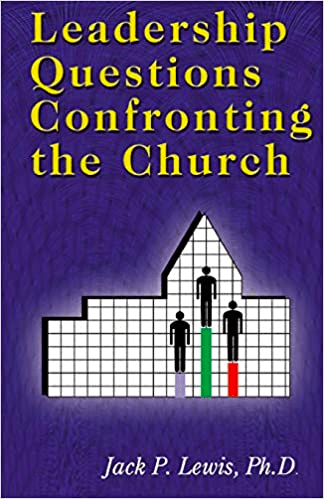





 biblicalfaith.online