Working Through Church Problems

Are you looking for a perfect congregation? Take a number and stand in line. The perfect congregation is elusive because they are composed of imperfect people.

Yes, problems happen. If anything should tip our hand to this fact it ought to be the apostolic letters to the churches found in the New Testament. Even though the Spirit of God dwelt in the primitive church, the New Testament reveals those congregations were still imperfect.

Problems emerged, emerge, and will continue to emerge within the church, and within a congregation. Paul said that the heartache of “factions” can provide a lens to recognize who is “genuine” in the church (1 Cor 11:19 ESV).

We have been given biblical teaching as to how to respond to disruptions caused by Christian misconduct. The answers are found in the apostolic word. Consider three examples.

1. The Thessalonians

Certain members of the congregation in Thessalonica would not work in order to be self-sufficient (2 Thess 3:11-12), but instead, burdened the church as they received dietary support. Such was described as living in “idleness.”

Such was described as “busybodies,” which is a play on words contrasting the appropriate Christian ethic of being “busy at work.”

The point is some members of the Lord’s church in Thessalonica refrained from being productive in the workforce and had become guilty of lifestyles that were unproductive, intrusive, and disruptive to their lives about them.

The apostle Paul sets forth an apostolic injunction to prohibit those who willfully reject the divine ideal to “earn their own living” and received benevolent sustenance from the church: “if one is not willing to work, let him not eat” (2 Thess 3:10).

The church suffered at the hands of their disruptive behavior (i.e. “busybodies”). Since they were subsidized by the church, Paul aptly responds: “stop subsidizing their sinful behavior!”

Too many times, matters which affect the congregation (gossip, opinions, hypocrisy, etc.) are allowed to thrive due to a lack of solidarity to follow God’s teaching. Here Paul makes it clear that the congregation must make a stand together placing sanctions on those Christians who live contrary to the divine teaching on working to supply your own needs (2 Thess 3:6ff).

Only with a unified front, will there be sufficient godly pressure to make the defectors return to the “ranks.” The congregation is to apply the pressure of a well-intended, caring family towards “work” so that they may not be an unnecessary burden on others (3:8).

2. Paul and Barnabas

Sometimes problems develop within very successful ministry teams, particularly in matters of expediency.

In Acts 13:1-4, the setting for Paul’s ministry to evangelize the world is narrated. In fact, the Holy Spirit is quoted as saying, “Set apart for me Barnabas and Saul for the work to which I have called them” (13:2).

This Divine call to action belongs to Barnabas as much as it does Paul. Still, throughout the reports in Acts of the various evangelistic labors, it appears that Paul (Saul) begins to gain special consideration (Acts 13-14).

An interesting footnote is placed at Barnabas and Paul’s transition from the Cyprus Island to the southern Asia Minor Roman province of Pamphylia (Acts 13:13). Luke writes that “John” (= John-Mark 15:37) was with them in their evangelistic campaign functioning as an “assistant” (Acts 13:5); however, for reasons unknown he left Barnabas and Paul and returned to Jerusalem (Acts 13:13).

After some time had elapsed, Barnabas and Paul were anxious to return to the “mission field” to see the well-being of the congregations which they planted in Asia Minor. At this point, Barnabas and Paul entered a “sharp disagreement” over the inclusion of John-Mark (14:36-41).

John-Mark who had served as an “assistant” (Grk. huperetes), a term which suggests the responsibility to care, guard, and to manage the resources of another,[1] had “defected” (= ESV “had withdrawn”) from the evangelistic team. Why, is anyone else’s guess.

While Mark broke his commitment to the evangelistic team, Barnabas wanted to give John-Mark a second chance; but Paul felt him undependable – an evaluation he publically reverses over a decade later (2 Tim 4:11). Mark is enshrined in Scripture as one whom Paul came to think of as helpful, beneficial, and useful (Grk. euchrēstos, 2 Tim 2:21; Philm 11).

Still, Luke does not append any evaluation upon who made the right choice, for Barnabas and Paul part ways here never to be found together again on the pages of Scripture; and yet, never disparaged for their differences on this issue. Possibly, they were both correct, and it is one of those cases where there are two right choices for the same problem (Prov 26:4-5). Wisdom is always a contextualized answer-solution to a contextualized problem.

It is unfortunate that such a successful evangelistic team should part ways, but the most significant point is that neither party refrained from evangelism. Paul continues to fulfill his ministry, as Barnabas continues the “encouragement” he is known for (Acts 4:36; 9:27).

Here is a powerful lesson, especially for advocates of non-denominational Christianity. At various times, brethren due to opinions – even strong opinions – must part ways for the common good of sharing the gospel with the world:

There is enough room for different expedient methodologies (provided they are biblical) to thrive side by side without any sense of competition of faithfulness to intrude our works.

Paul continues his work with the prophet Silas, and along the way picks up Luke and Timothy. Barnabas takes with him John-Mark to the island of Cyprus. One dynamic team turns into two evangelistic teams with capable leaders.

Sometimes we need to step back and realize, like Abraham, that we are brethren, and as such, we should not quarrel with each other over expedients (Gen 13:8; Rom 14:13). Disagreements can be worked through if the parties involved reflect heavenly dispositions to make peace (Jas 3:13-18). Faithful children of God must strive to “agree in the Lord” (Phil 4:2-3). Might one of those agreements be in the matter of ministry methods that are different but biblical?

3. Diotrephes and Gaius (3 John)

Sometimes a church setting can be thrown off its balance by a strong vocal minority. They typically are aggressive, carnally minded, and self-absorbed. Unfortunately, good-meaning brethren can give such ones an audience -and the podium- which encourages their behavior.

Such was the case with a man by the name of Diotrephes. In brief, the apostle John sent a few preachers to the church acquainted with this man in order to be welcomed and financially supported in their evangelistic and missionary work.


Read more about Diotrephes in “Studies in 3 John: The Fellowship of the Truth”


However, pumped with his own arrogance, he rejected the apostolic request, suppressed the request, attacked those like Gaius who provided for men like these, and imposed his own will upon them by ill-treating the preachers and casting their supporters “out of the church” (9-10). In practice, he was a “missions killer.”

Such “church gangsters,” the apostle John says, must have their nefarious operations exposed (“I will bring up what he is doing”). They operate in the brotherhood “alleyways” where their true face is revealed. They are punitive. For not only do they not support a “worthy” work, but they will also subvert them at all costs.

The church must stand up against those who are intoxicated with pride, those who manipulate behind the “church” scenes, and those who “always need a villain” in order to promote their agenda and get their way.

Concluding Thoughts

Problems come, but the church has, can, does, and will overcome them if we are faithful to God and gracious to each other. Some church problems are ethical or doctrinal; consequently, as in the Thessalonian situation, the only solution is to reinforce God’s plan for Christian conduct and teaching.

Other times, church problems emerge when leaders disagree over matters of opinion. Sometimes, we must realize that not every method is the only way to carry out a biblical command or expectation. Some methods and decisions can co-exist side by side. We must learn to be flexible and gracious in such scenarios.

Finally, some problems are instigated by a divisive minority who implement their plan in the shadows rather than in a clear view of all. They are coercive and manipulative. They seek and exercise power rather than submission to God. In such cases, exposure to such conduct is warranted in order to begin the process to restore peace in the church.

These situations do not exhaust every problematic scenario, but hopefully, they provide guideposts that will be helpful. May the church learn to acknowledge and work through our problems in a peaceful and God-fearing way.

Endnote

  1. James H. Moulton and George Milligan, The Vocabulary of the Greek New Testament Illustrated from the Papyri and Other Non-Literary Sources (London: Hodder and Stoughton, 1914-1929), MM 654-55.

A Christian’s Perspective on Plagiarism

Aristocratic Romans began education early in their children with the use of private tutors.[1] Historian Robert Wilken goes on to explain that even a certain “style of speech” was essential to embrace early on so that there was no “style” to unlearned later in life.

To give a sense of the aristocratic educational processes of the mid-first century AD, Wilken writes:

Roman education consisted chiefly of the study of rhetoric, the skill an enterprising young man would need most for a life in the law courts or a position in the civil bureaucracy. Grammar, recitation, analysis of classical literary texts, imitation of the great styles.[2]

Robert Wilken, The Christians as the Romans Saw Them (1984)

Such learning would include tremendous repetition.

That is probably why the Latins are attributed with the old saying: Repetitio mater studiorum estTranslation: “Repetition is the mother of all learning.”[3] After enough repetition, imitation is bound to appear – intended or otherwise.

It would stand to reason that at some point imitation must give rise to personal stylistic variations and the development of a unique voice. Still, one might hear the echo of a common saying: “Imitation is the sincerest [form] of flattery” (QuotationsPage.com).

Nevertheless, not all imitation is flattery is it? Especially the kind of imitation which goes by the name of plagiarism. Dictionary.com denotes the term as:

[A]n act or instance of using or closely imitating the language and thoughts of another author without authorization and the representation of that author’s work as one’s own, as by not crediting the original author.

Dictionary.com

Unfortunately, despite the constant emphasis on academic responsibility, plagiarism appears in our educational institutions and academic organizations.

With the time of the year upon us where educational pursuits are reinvigorated by the rush of “back to school,” we thought it timely to address an issue which affects the school house as well as the church house.

The Issue of Plagiarism

If a dictionary definition does not bring home the problem of plagiarism, perhaps synonyms will provide some focus and sharpness to our understanding. Phrases such as “piracy,” counterfeiting,” and “passing off” (Dictionary.com) should be pointed enough to stress that this act is “literary theft” (Thesaurus.com).

A few years ago, ABC Primetime’s Charles Gibson spoke to many college students regarding cheating and plagiarism. One student interviewed said, “The real world is terrible […] People will take other people’s materials and pass it on as theirs. I’m numb to it already, I’ll cheat to get by.”[4]

It is unfortunate when Christians use equally transparently flawed reasons for intellectual dishonesty. The Christian ought to have an aversion to plagiarism out of sheer principle that we ought not to be thieves or robbers (Exod 20:15; 1 Pet 4:15).

This ethic would extend beyond physical property to include intellectual property as well. “Sticky fingers” is not supposed to be a part of the “worthy” calling of God (Col 1:10; Eph 4:1). And yet, it is no longer a shock to this author when it occurs “even in religious circles.”[5]

It is an amazing thing that some operate under the impression that they can provide a sort of “wave-of-the-hand” acknowledgment to another’s work, while copying line-after-line of material, without the common use of appropriate grammatical devices which indicate the identity of the real author.[6]

Wayne Jackson, “Hank Hanegraaff and the ‘Christian Research Institute’,” ChristianCourier.com

The goal to expand the knowledge of humanity is never deterred by documenting the sources used and borrowed – “whether facts, opinions, or quotations.”[7]

While doing research on dinosaurs, I stumbled upon a so-called hi-profile preacher and publisher who blatantly took the words of their collaborators only to claim those “words” to be the mutual property of their ministry. Meanwhile, they fail to forget that they did not do the heavy lifting of the research nor organize of the wording of the material. Further, they seem to disregard the fact that most publications are archived so that it becomes clear whose words were penned first.

There are, however, times when it may seem impossible to attribute individual concepts one has come to believe or understand due to considerable collaboration with others. We ought to acknowledge the fluid elements of learning and idea shaping. I always appreciate the “Acknowledgements” page at the beginning of the book where the author intends to show an indebtedness to their colleagues and friends for the stimulation and fertile ground where many of the ideas they have written about were seeded and planted.

So Why Plagiarize?

I suppose there are many reasons for the seductive temptation to take the words of another to employ them as though they are yours: need, laziness, lack of creativity, tight schedules, arrogance, etc. “Convenience, quick turn around and other elements are also factors,” says Jonathan Bailey, a victim of plagiarism.[8]

The action is, however, thuggish. It has been observed that “plagiarists chose their victims in much the same way and they often do so with much less skill than the common mugger chooses theirs.”[9] Would anyone, including a child of God, want to be considered a “mugger”?

There are two New Testament terms of significance here.[10] (a) Thieves (kleptes) operate by means of “fraud and in secret”; likewise, (b) robbers (lestes) obtain what is not theirs “by violence and openly.” The plagiarist resembles both of these terms.[11]

Joseph Gibaldi, in the MLA Handbook for Writers of Research Papers, observes:

Using another person’s ideas, information, or expressions without acknowledging that person’s work constitutes intellectual theft. Passing off another person’s ideas, information, or expressions as your own to get a better grade or gain some other advantage constitutes fraud.[12]

Joseph Gilbaldi, MLA Handbook for Writers of Research Papers, 6th ed. (2003)

It has been a painful thing to read the work of fellow classmates, and the work of others, only to discover that the words and research they employ are not their own – but that of others.

Not only has “intellectual theft” and “fraud” occurred, but blatant deception as well. Since liars, the greedy, and thieves will not be welcomed in that eternal abode (1 Cor 6:10, Rev 21:8), why plagiarize? There is no spiritual advantage. Frankly, there is no advantage at all.

What about the Sermon?

I was in the assembly of a congregation when a young preacher was “working” through his lesson. Then, the wording began to sound very familiar. I immediately looked for a pen and something to write on and jotted down what I suspected was his next few points. Sure enough, I had read this sermon before and apparently so had this young preacher. Was he plagiarizing? If I’m going to be a “stickler” about it, then yes.

However, there seems to be a sort of allowance among the preaching community for sharing and using the outlines and even content of another preacher. Yet, we must be careful. Gary Holloway shares a few anecdotal examples of “stolen sermons.” He introduces his segment of the practice among southern preachers with the following words:

Sermons, like most speeches, are not often copyrighted. Preachers felt no moral compunction in “borrowing” sermon ideas, outlines, and sometimes entire sermons verbatim from other preachers.[13]

Gary Holloway, Saints, Demons; and Asses: Southern Preacher Anecdotes (1989)

Holloway recounts two stories of famous Restoration Movement preachers of the early 20th century (H. Leo Boles and N. B. Hardeman) who happened to be visiting a congregation when their sermons were being presented verbatim by the local preacher.

Despite the cordial responses and humorous reactions by the original speakers,[14] Holloway footnotes these anecdotal stories with a concern. A concern which I share:

[T]heir humor is based on a serious issue. Although stealing sermons was a common and accepted practice, there is an underlying sense of the unethical nature of the practice that provides the humor in this situation. These young men got caught doing what most preachers did surreptitiously [i.e., covertly, secretly].[15]

Holloway, Saints, Demons; and Asses

For preachers and evangelists, then, plagiarism can present itself to be a true danger. I sympathize. If I only consider the math of my own preaching ministry, then at the minimum I speak about 52 weeks a year – that’s every week.

I speak, at the minimum, three times a week before an assembly 52 weeks a year. That means I present spiritual content designed to stimulate, provide a reason for meditation, and to ignite action approximately 156 times a year, 13 times a month, 3 times a week.

Most church goers do not realize the work that goes into just one of these messages. They can demand the energies of a small college term paper. Then multiply this three times a week, 13 times a month, 156 times a year. That’s is a lot of temptation to short-cut the content and plagiarize and ignore a moderate level of attribution for words or phrases which may be vital to the delivery of a sermon or message.

Here are a few guidelines that I follow and I share them here as benchmarks of genuine attribution in a field which it can be very hard to cite the source. These are in no order of importance, and they are benchmarks that I have put together over time.

  1. Remember that there is no copyright on truth. There is copyright protection for the presentation of that truth, but not on truth itself. Every preacher is influenced by the thoughts and studies of another. If you quote an author verbatim and at length introduce your quote with an attribution.
  2. When you make a linguistic argument, there is no need to cite every source which was consulted (nor the whole debate). Nor, should one make lexical lists of definitions for matters which are insignificant (I have heard one preacher spend over 10 minutes quoting lexicons over the definition of the word “cup”). If it is significant to the point of the lesson, refer by name the language tool being used and give the audience a sense of why that is important.
  3. When you follow a book, article, or commentary’s flow of thought then at the beginning of the message an acknowledgment to the author would be ideal. However, it would be best if the preacher worked through the text on their own and found their own sense of the flow of thought of the passage before they ever consulted other authors.
  4. Keep track of your research and sources of information by footnoting or parenthetical references in an outline or manuscript of the sermon. Sometimes I share outlines with the assembly so they can follow along or so they can study the passage again later. I’ve been asked, “why do you have all the footnotes in your outlines?” My answer, “so the brethren will know I have thought through my message.”

No doubt some will disagree with some of my suggestions. I’m sure some will say that I have missed a few more benchmarks. Yet, the above will go a long way to preventing plagiarism in the pulpit. We already have the greatest message in the world, there is no need to hide how we frame our thoughts.

Concluding Thoughts

It may be argued that plagiarism is not the worst thing “out there.” One might be tempted to agree, but the practice of hijacking the words of another robs one of learning and personal development. More importantly, it reflects a sinful disposition which must be rejected.

The truth of the matter is that it is an ethically deficient habit which not only hurts others but also ruins the trustworthiness of intellectual thief. It is a tragedy that some either do not know the courtesy of citing where they learned their information, are shallow or too lazy to follow through with it. We strongly encourage our writing brethren and friends to refrain from literary theft.

For our friends who are in the spotlight we submit this brief warning from Wayne Jackson:

Every writer should remember this. Once he has compromised his status as a serious student and a researcher of integrity, he will forever be suspect. Whose material are we reading—his or someone else’s? It behooves the Christian to be honorable in all things.[16]

Wayne Jackson, “Ethical Guidelines for Writers,” ChristianCourier.com

Indeed, Christians would do well to follow the words of the apostle Paul, “give thought to do what is honorable in the sight of all” (Rom 12:17).

Sources

  1. Robert L. Wilken, The Christians as the Romans Saw Them (New Haven, Ct.: Yale University Press, 1984), 2.
  2. Wilken, Christians as the Romans Saw Them, 2.
  3. Amanda Moritz, “Repetition is the Mother of all Learning,” Brainscape.com.
  4. A Cheating Crisis in America’s Schools,” ABCNews.com.
  5. Wayne Jackson, “Hank Hanegraaff and the ‘Christian Research Institute’,” ChristianCourier.com.
  6. Jackson, “Hank Hanegraaff.”
  7. Joseph Gilbaldi, MLA Handbook for Writers of Research Papers, 6th ed. (N.Y.: Modern Language Association of America, 2003), 142. Cf. Wayne Jackson, 1997-2012, “Advice to Aspiring Writers,” ChristianCourier.com. Jackson writes, “I have observed some writers quote line after line—even consecutive paragraphs—from other authors with no credit given whatever. Or, sometimes significant portions of a writer’s material will be “borrowed”—word-for-word with no quotation marks—but with some sort of generic acknowledgment added at the end. Literary “plastic surgery” is unethical. One never detracts from his own scholarship by giving proper acknowledgment to those from whom he has learned.”
  8. Jonathan Bailey, “Why Plagiarism is not Flattery,” PlagiarismToday.com.
  9. Bailey, “Why Plagiarism.”
  10. See: Jovan Payes, “Such Were Some of You (5),” Livingstoncoc.wordpress.com.
  11. Richard C. Trench, Synonyms of the New Testament, 12th ed. (London: Trubner, 1894), 157.
  12. Gilbaldi, MLA Handbook, 66 (emphasis added).
  13. Gary Holloway, Saints, Demons; and Asses: Southern Preacher Anecdotes (Bloomington, IN: Indiana University Press, 1989), 25.
  14. When a preacher saw H. Leo Boles in the assembly, he apologized from the pulpit. Boles responded, “That’s all right; the fellow I got it from said you can preach it too” (Holloway, Saints, Demons; and Asses, 26).
  15. Holloway, Saints, Demons; and Asses, 26.
  16. Wayne Jackson, “Ethical Guidelines for Writers,” ChristianCourier.com.

Who is to Care for the Widows? (1 Tim 5:16)

college papers

If any believing woman has relatives who are widows, let her care for them. Let the church not be burdened, so that it may care for those who are truly widows. (ESV)

If any believing man or woman has widows, let them relieve them, and do not let the church be burdened, that it may relieve those who are really widows. (NKJV)

The opening words of 1 Timothy 5:16 is plagued with four variant readings. At the outset, this paper will follow the order of the fifth revised edition of The Greek New Testament (UBS5)[1] textual apparatus in arranging the variant readings. The first reading is in that which is in the main body of the UBS5 Greek text, “a woman that believes” (pistē), the second variant reading is “a man that believes” (pistos), the third variant reading is the longer “man or woman that believes” (pistos e pistē), and the fourth variant reading is the accusative plural “women that believe” (pistas).

The variants throw into question who are the believers to care for their widows. Is it Christian women or men (variants 1-2)? Is it either or (variant 3), or is it a general call to care (variant 4)? The following processes will be followed: (1) evaluate the external and internal evidence, then (2) observe its effect on modern translations, and then (3) apply the most probable reading to approach an understanding of the reading in 1 Timothy 5:16.

Evaluating the Evidence

External Evidence

The weight of the external evidence of the four variant readings are early, but they are not of the same strength. In particular, the second (pistos) and fourth (pistas) variant readings are void of extant Greek manuscripts. The second reading is represented by the Ethiopic tradition from the sixth century, half of Ambrose (397), Augustine (430), and a Latin translation of Theodore of Mopsuestia, Cilicia. The meager witnesses for the fourth reading are exclusively translational itg (ninth) and vgmss (fourth and fifth).

The third longer reading (pistos e piste) is represented with witnesses which begin in the fourth and fifth centuries. The reading appears early in patristic witnesses such as John Chrysostom (407), Ambrosiaster (post 384), and also Ambrose; moreover, it has witness in Old Latin translations from the third and sixth centuries (itb, d). The earliest extant Greek manuscript witness, however, is the bilingual (Greek and Latin) sixth-century uncial Codex Claromontanus (D 06).[2]

Despite the earlier witness of the longer variant reading against pistos and pistas, the uncials which support the first reading (pistē) are much earlier. These witnesses are from the fourth and fifth centuries and are traditionally more substantial in their textual value.[3] The fourth-century evidence has Aleph (Sinaiticus), along with fifth-century codexes Alexandrinus (A) and palimpsests Ephraem (C 04), and uncial 048.[4] Patristic evidence has early witnesses as Athanasius (373) and mid-fifth century Pelagius. Translational evidence for the preferred reading is in the fourth-century Sahidic Coptic text in Egypt (copsa). The early dates of the external evidence weigh in agreement with the UBS5 inclusion of the preferred reading.

Geographic Distribution

The geographical distribution is spread somewhat evenly among Eastern and Western text-type lines. The longer reading is distributed widely in the West more so than in the East. The inclusion of the longer reading is supported by Alexandrian Uncials, Western D, and Byzantium readings (K 018, L020). It is also distributed in the Greek Church (Chrysostom, and a majority of Lectionary readings) and Latin Fathers Ambrosiaster and Ambrose. Nevertheless, pistē has the widest breadth of distribution, impressively stretching from Greek Father Athanasius (373) in Alexandria, Egypt, in the East to the Latin Father Pelagius (418) in Britain in the far West at roughly the same time. The overlap of both readings in the translational evidence is also equally distributed and this is best typified by Latin Father Ambrose who is a witness to both readings; however, the longer reading is mainly supported by the Western witnesses. The geographical distribution of the second and third readings are both substantially Western.

Regarding text-type affinities and other aspects of these particular variants, the first and third variants share text types and there is some external evidence that needs to be considered. First, the first and third readings both share Alexandrian and Western text types, with the longer reading, having late witnesses from the Byzantium text type. The second and fourth readings have no text-type witnesses. Second, in the evaluation of the external evidence of the four readings, it is clear that the second and fourth readings have connections to early witnesses but are relegated to translational evidence in Old Latin and the Vulgate.

Moreover, even the patristic witnesses for the second reading are Latin such as Ambrose and Augustine, and even the witness from Greek Father Theodore of Mopsuestia, Cilicia, is only found in a Latin translation. This suggests that unless better evidence emerges, the second and fourth readings should continue to be viewed as inferior readings which are probably translational in origin.[5]

One piece of the manuscript evidence which has not been considered is that the textual apparatus also lists a considerable amount of minuscule evidence for the longer reading both from Western and Eastern text types; however, the earliest minuscule witnesses are from the tenth century (1175, 1739, 1912), eleventh century (104, 256, 424, 459, 1962), and later. This evidence is consistent with the late witnesses from the ninth century in Byzantium uncials K and L, and the Alexandrian 044 from a similar period. The abundance of these manuscripts which are geographically dispersed very well may prove to be sufficient evidence for their primacy as the text reading; however, the majority of late manuscripts are not weightier than the strong early Alexandrian texts which support the preferred text of the UBS5.

There are strong lines of evidence for dismissing the second and fourth readings because the external evidence is purely translational and patristic. The first and the third readings have competitive manuscript witnesses and have comparative geographic distribution, which slightly leans toward the third reading; nevertheless, the quality of the early uncial witnesses, translational evidence, and distribution between patristic fathers from Alexandria to Britain in the same window of time favor the preferred reading of “woman that believes” (pistē).

Internal Probabilities

Next, it is important to evaluate the internal evidence of the four variants readings and determine which reading has the best transcriptional probability of being the correct reading.[6] Currently, the editorial committee of the UBS5 places a {B} rating for the short reading piste which “indicates that the text is almost certain.”[7] Among the variants, there are three short readings (piste, pistos, pistas) and one longer reading (pistos e pistē).

The shortest reading (pistē) with the most external support is a difficult reading, for it makes Christian women solely responsible for the care of widows,[8] as opposed to a more general statement that calls all believers to care for the widows of the Christian community. It would certainly be more likely to have been broadened, especially in light of a few broad tis statements in 1 Timothy 5 (4, 8, 15).

Among the shorter readings, the second (pistos) and fourth (pistas) readings appear as linguistic changes intended to understand the care for widows as a broad Christian responsibility (“if any believer” and “if anyone has widows who are believers”). It would be likely for a scribe, or translator, to broaden the responsibility to “anyone” or to “a believer” than to limit it to the more difficult shorter reading, “a woman who believes” (i.e. a Christian sister). The latter best explains the former two readings.

The shorter reading and in the longer third reading (pistos e pistē). The longer reading makes the care of widows a gender-inclusive responsibility in the church (“any man or woman who believes”). Regarding longer variant readings, the conventional textual critical wisdom prefers a longer reading so long as the change is unintentional;[9] from a practical point of view, a copyist would “more likely” omit words than to add words.

Metzger concedes that “it is possible” that, if the longer reading is original, a copyist may have accidentally omitted pistos e;[10] however, the longer reading has late attestation and may be best explained as a conflation of the variants (pistos and pistas) attempting to broaden the responsibility to care for widows in 1 Timothy 5:16 to both male and female believers (cf. 4, 8). This would effectively diminish the leading role of believing women that Paul had in mind.[11] However, the more difficult reading is piste and is better attested; in fact, it requires an explanation as to why Christian sisters are called to care for their widows. The first reading, then, is better attested, shorter, and more difficult; and in terms of probability is a natural impetus to explain the other variants.

How English Translations Stack

The direction most modern translations go is to follow the strength of the textual basis for piste, “a woman who believes” over the longer reading in 1 Timothy 5:16.

Major English New Testaments which take the longer variant reading, however, are the AV/KJV tradition (1611, 1979), Moffatt (1922), NEB (1961); moreover, less familiar versions such as The Living Oracles/Sacred Writings (1828) and McCord’s Everlasting Gospel/FHV5 (2005) also include the longer reading.

Since the time of the American Standard tradition (1901, 1971, 1995), the following major translation has accepted the shorter reading: the Revised Standard tradition (1952, 1990), JB tradition (1966, 1985), the NAB tradition (1970, 1986, 2011), TEV (1976), the NIV tradition (1984, 2002, 2011), ETR (1987), REB (1989), NCV (1991), CEV (1995), NET (1996-2006), HCSB (1999), and ESV (2001). The less-known Plain English Bible (2003), The Voice Bible (2012), and the Jehovah’s Witness’ NWTR (2013) also have shorter and better-attested reading.

The wholesale selection of the shorter reading by the vast majority of modern English translations provides a supportive scholastic culture to the present evaluation of the external and internal evidence in favor of pistē.

Applying “Believing Woman”

Finally, it is critical to find the application of the present conclusion that the shorter variant has the strongest probability to be the text of 1 Timothy 5:16 and understand Paul’s instruction to Timothy regarding the care of widows in the church. The verse is situated in the final words of the pericope concerning directives for the care of widows and the expectations of young widows (1 Tim 5:3-16).[12] 

There is a strong distinction made between the church (5:8b, 9, 16) and Christian families with widows (5:4, 8a), and a distinction made between vulnerable widows to which the church has a responsibility to (5:5-7, 9-10) and young widows who should remarry and establish a proper family life (5:11-15). The last verse (5:16) apparently weaves these four counterpoint groups into a praxis for ministry towards widows which brings the Christian family to the forefront of such benevolent ministry; moreover, every Christian sister (widowed or not) is placed at the focal point to care for any widows they are related to (“she has”).

The counterpoint in this text is that such family ministry in Christian homes, carried out by a “woman who believes,” allows the church to care for the widows who are truly vulnerable (5:3, 5a, 16b). Bruce Winter observes:

Christian women were being called upon to relieve the church of the extra mouths to feed who were their widowed relatives. There is no censure in v. 16, but a call to shoulder responsibility for kinship relationships so that the church can adequately support widows who are without relatives.[13]

Bruce W. Winter, “Providentia for the Widows of 1 Timothy 5:3-16.” TynBul 39 (1988)

Indeed, this Pauline injunction demonstrates a corrective in the Ephesian church culture where Timothy evangelized. Apparently, the church had been “burdened” and “exhausted” (bareō/omai) financially for sure;[14] but also, perhaps the capacity to serve had reached its limit and so the church was significantly fettered.

Nevertheless, Paul is clear there are widows whom the church, as a community, must help (the true widow), but there are widows who must be cared for by their Christian families. In the latter point, Paul argues out the principle at stake: “if anyone does not provide for his relatives, and especially for members of his household, he has denied the faith and is worse than an unbeliever” (1 Tim 5:8). Paul then calls upon Christian women specifically to meet this ministry need.

In the ideal realm, Christian families are responsible for their own widowed grandmother as a demonstration of godly repayment (5:4). Christians males (5:8) are responsible for this service (presumably the husband of the family), but the transition to women believers (remarried women, wives) is significant since they are described as the ones who “run” and “control” their household (5:14).[15]

Part of the power of connecting “wife” and household authority is that it “implies the new and improved position which was secured to women by the Gospel.”[16] Furthermore, this requires a full range of administrative responsibilities.[17] The practical application, then, appears to ask of the “believing woman” her full range of resources and ability to care for “her widow.” As such, if “a woman took good care of her household [including her widow], the enemy would not be able to say anything against them.”[18]

This understanding would encourage a multi-generational inclusive model of family responsibilities as part of a Christian worldview. There are, however, many methods of care for the older members of the family. Still, as Walter Liefeld[19] observes, a few considerations should be made to evaluate the need of a widow:

  1. Determine the actual needs of the widow. Do not presume to know their needs or abilities. It is critical to appreciate their abilities – known or latent. Moreover, consider that not all needs are physical (financial, home); some needs are emotional, spiritual, and intellectual.
  2. Revisit and reaffirm family ties and responsibilities. For family cultures that tend to live far from each other, it is vital to reconnect and reestablish family ties. Distance is not an excuse. Communication, visitation, and creating space for one’s widow to find their new or expanded niche.
  3. One must take into account a widow’s responsibility. Truly, a widow must learn to grieve in a healthy manner. Paul encouraged the younger widows to reestablish a family and marry. He further recognized a widow’s need to manage and maintain her relationship with God. Ultimately, she must find her role in ministry to others.
  4. The church has a role in supporting a family to care for their widow. (a) Consider enlisting a member to qualify for hospice care in order to be a bridge between the congregation and the grieving widow. (b) Develop an awareness of the stages of bereavement to better help to bring comfort and encouragement. (c) Develop a team that is knowledgeable of basic financial instruments and entitlement programs one might be amenable to. This would help bring awareness of issues. (d) There should be a visitation program that the elders, deacons and preachers, and members should participate in to check in on various needs. (e) While a congregation should not act as a private investigator’s office, a congregation should not act blindly toward senior abuse.

These are but a few items to consider in the quest toward New Testament discipleship concerning the care of widows.

Concluding Thoughts

While this paper was specifically focused upon the injunction by Paul to “any woman of faith” and her responsibility to care for “her” widow, it is critical to remember that this is one side of the coin for the care of widows in the church. It is true that the church should not be so burdened that it cannot function to carry out its mission; however, the community of the church has a responsibility toward its widows who are widows indeed.

The conclusion drawn here is that the shorter, well-attested variant reading piste best explains the other variants. Furthermore, it better weaves within the counterpoints in the discussion which finds closure in verse 16. It provides insight into the service which Christian women rendered on behalf of their faith, as an extension of their Christian family, and as an asset to the church and its ministry to its own widows. To add the fourth reading (pistos e pistē) provides an additional counterpoint that detracts from the focus on the “younger widows” (5:11).

Instead of carousing (5:11-13) they are to remarry and minister to their own widows whoever they may be (14-15). Knight legitimately proposes the possibility that this ministry to widows is an extension of the Christian sister’s husband and her household;[19] therefore, it seems reasonable to conclude that when she ministers to her widows, she ministers to her family’s widow.

The focus on “a woman who believes” is a powerful reminder of the importance Christian sister have in the church’s ministry and in their Christian homes. As in the early church, so today the need for “women of faith” to minister still exists within the church and their families.

The Voice Bible rendering reflects this emphasis:

Tell any woman of faith: if you have a widow in your family, help her so the church is unencumbered and is free to extend aid to the widows who are truly in need of its help.[20]

Endnotes

  1. (UBS5) Barbara Aland, et al., eds., The Greek New Testament, 5th rev. ed. (Stuttgart, Germany: Deutsche Bibelgesellschaft, 2014).
  2. Frederick G. Kenyon, The Text of the Greek Bible: A Students Handbook, Rev. ed. (London: Duckworth, 1949), 96.
  3. (NA28) Eberhard Nestle and Erwin Nestle, Novum Testamentum Graece, 28th rev. ed., eds. Barbara Aland, et al. (Stuttgart, Germany: Deutsche Bibelgesellschaft, 2012), 63*. There exists no papyrus testimony which supports any of the variant readings in 1 Timothy 5:16.
  4. The fourth-century Codex Vaticanus (B) is silent on the variant readings due to the fact that it lacks the letters to Timothy. See Neil R. Lightfoot, How We Got the Bible, 3rd ed. (Grand Rapids, MI: Baker Books, 2003), 38.
  5. Bruce M. Metzger, A Textual Commentary on the Greek New Testament, 2d ed. (1994; repr., Stuttgart, Germany: Deutsche Bibelgesellschaft, 2001), 574-75.
  6. Metzger, Textual Commentary, 12*-14*; J. Harold Greenlee, Introduction to New Testament Textual Criticism, Rev. ed. (Grand Rapids, MI: Eerdmans, 1964; repr., Peabody, MA: Hendrickson, 1999), 111-14.
  7. Metzger, Textual Commentary, 14*.
  8. Donald Guthrie, The Pastoral Epistles: An Introduction and Commentary (1957; repr., Grand Rapids, MI: Eerdmans, 1978), 104.
  9. Greenlee, New Testament Textual Criticism, 112.
  10. Since the extant evidence for these two variants is translational it is possible that the variants emerged in that process (Metzger, Textual Commentary, 575), or in the process of oral transmission since pistos and pistas may be pronounced the same (Greenlee, New Testament Textual Criticism, 57).
  11. Walter L. Liefeld, 1 & 2 Timothy, Titus, Kindle ed. (Grand Rapids, MI: Zondervan, 1999), loc. 9699. Liefeld writes, this “would not be the first time that an ancient copyist changed the text to give preference to the male” (fn 21).
  12. Bruce W. Winter, “Providentia for the Widows of 1 Timothy 5:3-16.” TynBul 39 (1988): 83-99.
  13. George W. Knight, III, The Pastoral Epistles (1992.; repr., Grand Rapids, Mich.: Eerdmans, 2013), 222. Winter, “Providentia for the Widows of 1 Timothy 5:3-16,” 94.
  14. Gottlob Schrenk, “baros, barus, bareō,” TDNT 1: 561.
  15. Karl Heinrich Rengstorf, “despotes, oikodespotēs, oikodespoteō,” TDNT 2: 49.
  16. Walter Lock, A Critical and Exegetical Commentary on the Pastoral Epistles, ICC (Edinburgh: T&T Clark, 1924), 61.
  17. Linda Belleville, “Commentary on 1 Timothy,” Cornerstone Biblical Commentary, ed. Philip W. Comfort (Carol Stream, IL: Tyndale House Publishers, 2009), CBC 17: 95.
  18. Belleville, CBC 17: 101.
  19. Liefeld, 1 & 2 Timothy, 186-88 (loc. 3722-65).
  20. Knight, The Pastoral Epistles, 229.
  21. The Voice Bible: Step into the Story of Scripture (Nashville, TN: Nelson, 2012).

Is Jesus a Poached Egg?

Weird question, I know. Let me explain. This phrase is from C. S. Lewis’s classic book Mere Christianity.[1] Lewis journeyed from atheism to a believer in Jesus as the Christ. In Mere Christianity, he articulated an argument in support of the deity of Jesus commonly styled the trilemma.

Actually, Lewis’ classic argument emerges from his desire to disabuse his readers who are tempted to accept Jesus of Nazareth “as a great moral teacher” and yet reject his claims “to be God.” Lewis is very adamant, “That is the one thing we must not say.”[2] Why? The reason is simple. Jesus made claims to have divine privileges, claims to be divine, and exercised the rights of God by forgiving others of their sins.

How could we rationalize Jesus being a “great moral teacher,” Lewis argues, when he makes such claims to which places him beyond humanity? We are forced to make a decision: accept all that Jesus teaches or attempt to separate this claim to divinity from his teachings.

Decisions, We Have to Make One

At this point, the question about Jesus of Nazareth could be reduced to a dilemma. Professor Maurice Stanley explains that the “dilemma is among the most powerful forms of argument. Like the horns of a charging bull, its alternatives seem to leave you with no escape.”[3]

For example, we may argue that either Jesus is the Christ or He is just “a great moral teacher.”

If Jesus is the Christ, then his teaching is absolutely true.

If Jesus is just a great moral teacher, then his teaching is subjective.

Consequently, you are left with two alternatives: either what Jesus taught (1) is absolutely true, or (2) it is decidedly subjective (we may pick and choose).

As a dilemma, there is no both-and. If you accept one, you deny the other conclusion.

Lewis knew, however, there was a third element regarding the case of Jesus of Nazareth. It simply is not that Jesus is either the Christ or a great moral teacher. Jesus made too many claims to divinity recorded in the Gospel Accounts to leave it at those two options.

Lewis goes to see that Jesus is either one of three things.[4] Jesus is either (1) a lunatic (Lewis’s “a poached egg”), (2) a devil, or (3) the Son of God. This is the trilemma where there is no both-and-and. If you accept one, you deny the other two conclusions.

If you accept that Jesus is a lunatic, then he is the sort of man “who says he is a poached egg” — i.e, a madman.

No madman is a “great moral teacher.” Is Charlie Manson a great moral teacher? What about Jim Jones? Or, David Koresh? Hardly. These are the questions readers of the New Testament need to ask. Interestingly, we find that these questions were raised as well during the ministry of Jesus himself.

They Said, “Jesus is Beside Himself”

In Mark 3:20-21, the family of Jesus had heard that he was home in Capernaum (2:1). They rushed “to lay hold on him: for they said, He is beside himself.” [All Scripture references are from the American Standard Version unless otherwise noted.]

The language is very vivid. Jesus’ own family was so concerned about what people were saying about Jesus that they rushed to take him into their “protective” custody. However, certain Jerusalem scribes had already come and dismissed the exorcisms of Jesus as the work and influence of Beelzebul and “the prince of the demons” (3:22).

The text forces the question concerning Jesus: He is either (1) “out of his mind” (i.e., “a poached egg”) or (2) in cooperation with evil spirits (“a demon”). In the latter point, no one disputed the supernatural elements of the exorcisms.

In this text, Jesus responds with a third option (Mark 3:22-27). He argues that He is not cooperating with Satan, nor is Satan in a civil war against himself since his kingdom would fall apart. Instead, Jesus demonstrates his power and authority over Satan by subduing him in his own home. Jesus, then, logically argues for his superiority over the demonic and satanic world.

This passage then, which questions his sanity, demonstrates that he possesses all his mental faculties (he is not crazy) and that he is no emissary of Satan (he is no deceiver). But true to his power and authority, he is in the company and presence of the Holy Spirit (he is from God). Mark presents Jesus as mentally stable and confident in his power over evil spiritual forces.

Did Jesus Go Crazy Later?

George Bernard Shaw (1856-1950), an Irish playwright, once claimed that Jesus began his teaching ministry as a sane Rabbi but later after being exalted by the masses as Christ lost his mind.[5] This is not, however, the testimony of the Gospel Accounts which are of such authenticity that they could arguably be “admissible as evidence in a court of law” as true ancient eyewitness documents.[6] This is significant since the only authentic evidence for the existence of Jesus, his teaching, and his ministry are the first-century documents of Matthew, Mark, Luke, and John.

But still, if a person claims to be God today, we would say they are insane. The Gospel Accounts, however, are united in their presentation that Jesus claimed both the power and the nature of God. In Mark 2:1-12, Jesus demonstrates that he not only has supernatural powers to heal a disabled man but also the prerogative and power of God to forgive sins (2:7). He then affirms, “that ye may know that the Son of man hath authority on earth to forgive sins” he heals the man (2:10).

Jesus not only taught that he had this divine privilege, but he also claimed to be God in the flesh (John 1:14, 10:29-33). Furthermore, he accepted worship — a significant acceptance of an act only due to God (Matt 8:2; 9:18; 14:33; 15:25; 20:20; Mark 5:6-7; John 9:35-38).

When pressed about Jesus’ “I am God” claim as a demonstration that he was insane, psychologist Dr. Gary R. Collins responded that it is important to remember that “psychologists don’t just look at what a person says. They’ll go much deeper than that.”[7]

Dr. Collins sets forth four particular problems “disturbed individuals frequently show” that Jesus does not demonstrate, namely:

(1) Emotional instability.

(2) Out of touch with reality (misperceptions, paranoia, etc).

(3) Thinking disorders (e.g. cannot think logically)

(4) Demonstration of unsuitable behavior.[8]

Instead, Collins praises the emotional and mental stability of Jesus, giving his “diagnosis” as follows: “All in all, I just don’t see signs that Jesus was suffering from any known mental illness… He was much healthier than anyone else I know —including me!”[9]

The Significance of Jesus and His Resurrection

Ultimately, the Gospel Accounts emphasize the story of Jesus and his significance. This is summed up in the word “gospel” (Grk. euangelion) which means “a good tiding” or “a tiding of joy” (Matt 4:23; Mark 1:1; Luke 1:19, 4:18; John 1:11-13). Surely, the authors would not attempt to establish their gospel message upon a delusional Rabbi from a backwater city like Nazareth (John 1:46). Yet their story hangs on such an individual.

The only thing that makes Jesus’ claim to divinity (“I and the Father are one”) credible is the resurrection from the dead (Rom 1:3-5). While Lewis would ask us to choose between the three options based upon the logic of the Gospel Accounts, the real evidence lies in the resurrection of Jesus.

The strongest evidence for the empty tomb of Jesus is seen in the various conversions of those who did not believe in Jesus (James the brother of Jesus) and those who persecuted Christianity (like Saul-Paul the apostle), who was moved from being unbelievers to significant leaders of the primitive Christian faith (1 Cor 15:1-11).

Gary Habermas reminds us that the earliest belief “that they had actually seen Jesus after his death led to a radical transformation in their lives, even to the point of being willing to die for their faith.”[10] Their conversion and capacity to endure sufferings as eyewitnesses of the resurrected Jesus are unexplainable otherwise.

Concluding Thoughts

Similar arguments can be made from various other texts, but the present discussion should be helpful to demonstrate that Jesus is no “poached egg,” nor is he a liar. We are then led to the only true credible conclusion that Jesus is the son of God.

What will you decide based upon the evidence and testimony of the Gospel Accounts (John 20:30–31; 21:25)? As Lewis reminds us:

let us not come with any patronising [sic] nonsense about His being a great human teacher. He has not left that open to us. He did not intend to.[11]

Endnotes

  1. Clive S. Lewis, Mere Christianity (NY: Macmillan, 1952).
  2. Lewis, Mere Christianity, 56.
  3. Maurice F. Stanely, Logic and Controversy (Boston, MA: Wadsworth, 2002), 192.
  4. N.T. Wright critiques Lewis’ “lunatic, liar, Lord” trilemma argument, or as he rephrases it “bad or mad or God,” by observing that the argument does not take into account the pre-existing “incarnational model” of Israel in the Scriptures and consequently “drastically short-circuits the argument” (“Simply Lewis: Reflections on a Master Apologist After 60 Years,” TouchstoneMag.com). That criticism acknowledged, Lewis does provide the basic contours of the question by forcing his readers to decide if Jesus was a lunatic, a liar, or Lord.
  5. Wayne Jackson calls attention to Shaw’s point of view in Jackson, Eric Lyons, and Kyle Butt, Surveying the Evidence (Montgomery, AL: Apologetics Press, 2008), 175.
  6. Pamela Binnings Ewen, Faith on Trial: An Attorney Analyzes the Evidence for the Death and Resurrection of Jesus (Nashville, TN: B&H, 1999). It has been reprinted with slight variation to the title, Faith on Trial: Analyze the Evidence for the Death and Resurrection of Jesus (Nashville, TN: B&H, 2013). The purpose of the volume is to demonstrate the credibility of the Gospel Accounts to have the internal evidence to stand up in a court of law as eyewitness documents. Ewen argues forcefully that they do. See also Simon Greenleaf, Faith on Trial: Analyze the Evidence for the Death and Resurrection of Jesus (1874; repr., Grand Rapids, MI: Kregel Publications, 1995).
  7. Lee Strobel, The Case for Christ: A Journalist’s Personal Investigation of the Evidence for Jesus (Grand Rapids, MI: Zondervan, 1998), 146.
  8. Strobel, The Case for Christ, 146-47.
  9. Strobel, The Case for Christ, 147.
  10. G. Habermas, To Everyone an Answer: A Case for the Christian Worldview, eds. Francis J. Beckwith, William Lane Craig, James P. Moreland (Downers Grove, IL: InterVarsity Press, 2004), 189.
  11. Lewis, Mere Christianity, 56.

This is a reformatted and slightly expanded version of the article which originally published in The Glendale Gleaner (Newbern, TN: Glendale church of Christ).


Devotional: Remember, God is Faithful and Righteous (1 John 1:9)

But if we confess our sins, he is faithful and righteous, forgiving us our sins and cleansing us from all unrighteousness. (New English Translation)[1]

“I never get it right.” “I feel like such a failure.” Ever say this to yourself with respect to your Christian relationship with God? You are not alone; in fact, you are not alone in more ways than this sense of moral and spiritual frustration. But, I’m jumping the gun a little; so read on.

The apostle John writes these words to a group of Christians that are actually having the opposite problem. As hard as it may be to believe, this letter was written to remind Christians that admission of spiritual and moral failures (sin) is actually a mark of faithfulness. Some had become so misguided to believe that how a person lives does not affect their relationship with God.

But the apostle of love reminds them that living in denial is actually lying (1:6), self-deception (1:8), and an outright attack upon God’s integrity (1:10). All this is a reflection of human arrogance, and as such reflects a life lived in darkness (1:6). It appears, then, that when we try to cover up our moral and spiritual failures, weaknesses, and limitations, we are in fact covering up our dependence upon a faithful and just God.

Growing up in San Francisco, I would often look out into the bay and see sailboats. Sometimes, if close to the breakers I can even see windsurfers speeding along. A sailboat depends upon the wind in its sail to propel it upon its nautical journey. Would it not be the most ridiculous thing for the captain of the vessel to say, “I do not need the wind!” Stuck in the bay would be his lot. For that matter, ask a windsurfer how important wind is to her endeavors. The matter is equally obvious.

The Christians who first read these words were struggling with a teaching that encouraged a sense of arrogance about their lifestyle, that they were not accountable for their decisions; however, today, many Christians are afflicted with an unbalanced sense of guilt for their past sins, and for those more current, to the point where they judge themselves beyond the borders of God’s continued forgiveness.

In putting these early Christians in their place, John gives all Christians in every generation the truth that consoles the self-afflicted: God is faithful – despite our sins – and He will not abandon His children should they approach Him confessing sin, seeking forgiveness. Forgiveness is a privilege of “sonship”; and as such restores us in conscience and service by the cleansing power of God as he imparts to us the righteousness that is not our own (Phil 3:9).

Knowing this, let us remember our shortcomings are a reminder that we are not always faithful and just – but God is. It is the faithfulness of God that should give us confidence and joy in the face of our spiritual struggles. If he prepared to forgive us initially through Christ, shall he not also keep us in spite of our sins through Him as well? The answer is obvious.

Hymn: Faithful Love

Source

  1. New English Translation of the Holy Bible, Bible.org (Bible Studies Press, 2005).

The Divisions of the Bible: A Starting Place

The Bible is a library of 66 books, composed over a period of fifteen hundred years. The authors involved in this inspired anthology come from a variety of backgrounds, locations, historical situations, professions, and ethnicities.

While each book has its individual purpose, each work develops the overarching theme that humanity is the creation of an eternal Creator, and due to personal sin has fallen spiritually. This fallen state is addressed both historically and theologically in the development of the scheme of redemption, finally materializing in the ministry of Jesus.

In order to appreciate this history of redemption and the books of the Bible, it is vital to have a working knowledge of the divisions of the Bible. Moreover, a better understanding of the Bible improves one’s comprehension of sermons and Bible classes. The following is an extremely brief sketch of the Bible and its arrangement of content as we have it in our modern Bibles.

Chronological Divisions

The Patriarchal Period

The name of this period derives from the method God communicated his will, by speaking the “fathers” of the family (Adam, Noah, Abraham, etc.); hence, the term “patriarch” which means “the male head of a family” (Heb 1:1). The biblical content covering this period is Genesis 1-50 and Exodus 1-19, that of the creation and the fall, the flood, and the call of Abraham to be in covenant with God and to be the father of “many nations”.

Through the nation of Israel, God would bring about the redemptive “seed” (Jesus, Gal 3:15-16) to bless all the nations of the world (Gen 12:3). Moreover, this covenant promise was reiterated to Isaac (Gen 26:1-5), Jacob/Israel (Gen 35:9-15), and the children of Israel after the exodus from Egypt on Mt. Sinai.

The Hebrew Period

While technically the story of the Hebrews in the biblical record goes back to Abraham the Hebrew (Gen 14:13), as a major division of the biblical story the Hebrew period reflects the story of God and His covenant people Israel (cf. Acts 7:2-53). This period covers Exodus 20-Malachi, and the time period of the ministry of Jesus (Matt–John). The historical story of the Exodus transitions into the giving of the Law at Sinai.

During this period, Israel received “the law”, wandered in the wilderness for forty years, conquered and settled into the Promised Land, and transitioned from a theocracy (where God ruled through prophets) to a monarchy (where God ruled through kings). This period also covers the history of the divided kingdoms of Israel (North) and Judah (South) and their eventual demise. The kingdom and the covenant were both to be superseded by a new kingdom (Dan 2:44-45), and a new covenant (Jer 31:31-34); the design of which was to prepare the world for the coming of Jesus (Gal 3:19-29; Heb 9:11-28).

The Christian Period

The Christian Period technically begins upon the death of Jesus of Nazareth, when the “testament” came into effect (Heb 9:16-17); however, the teaching of Jesus as it anticipated the Christian era is found in the Gospel Narratives and occurred while under the Law of Moses was still in effect (Matt–John; Gal 4:4-6). Moreover, the confirmation of this “new” testament was accomplished in Christ by God in the resurrection from the dead (Rom 1:4-5; Acts 2:14-36; 1 Cor 15:1-11).

This period begins then with the establishment of Christianity in Jerusalem (Acts 2), and continues on through the expansion of the Christian faith not only geographically (Acts 1:8) but also ethnically (Acts 2:39, 10:28, 11:18). The Christian era will continue, time-wise, until the return of Jesus, at the Second Coming (Matt 28.20; 1 Cor 15:22-28); and at this time the present world will dissolve away and we will be with our God (2 Pet 3:8-13; 1 Thess 4:13-18).

Division of Books by Category

The following is a listing of the books of the Bible according to categories, along with a useful numeric memory tool to learn the divisions of each section.

The 39 Old Testament Books (5, 12, 5, 5, 12)

Books of Moses (5). Written by Moses to provide the origins of the human family, the Hebrew nation, and incorporates the Law of Moses (Genesis, Exodus, Leviticus, Numbers, Deuteronomy).

Hebrew History (12). Follows the story of Joshua and the conquest and settlement of Canaan to the rise and demise of the Hebrew Kingdom, and the exile into Babylon and their return (Joshua, JudgesRuth, 1-2 Samuel, 1-2 Kings, 1-2 Chronicles, Ezra, Nehemiah, Esther).

Hebrew Poetry (5). A series of volumes set in Hebrew poetic prose, written by a number of authors, designed to impart divine wisdom and perspective (Job, Ecclesiastes, Psalms, Song of SolomonProverbs).

Major Prophets (5). Popularly so-called due to the size of each work, and not for their spiritual value. (Isaiah, Jeremiah, Lamentations, Ezekiel, Daniel).

Book of the Twelve (12). Grouped together from ancient times, the “Minor” prophets are brief volumes that pack spiritual “punch” (Hosea, Joel, Amos, Obadiah, Jonah, Micah, Nahum, HabakkukZephaniah, Haggai, Zechariah, Malachi). Both the Major and the Minor Prophets are from various time periods, these works contain words of woes, judgments, and hope; moreover, they provide a great wealth of messianic prophecies.

The 27 New Testament Books (4, 1, 21, 1)

Gospel Narratives (4). Written to chronicle the teaching and ministry of Jesus of Nazareth, his rejection, crucifixion, and resurrection. Two of the four authors are apostles (Matthew, John), one is known to be an associate of Paul (Luke), and the other is believed to be of Peter (Mark).

Acts of Apostles (1). As the sequel to the Gospel of Luke, Acts covers the beginning of the church, and its expansion from Jerusalem to Rome, roughly a period of some 30-plus years.

Apostolic Letters (21). Written to churches and individuals teaching and exhorting Christians to live faithful; furthermore, the letters address false teachings and local issues (Roman, 1-2 CorinthiansGalatians, Ephesians, Philippians, Colossians, 1-2 Thessalonians, 1-2 Timothy, TitusPhilemon, Hebrews, James, 1-2 Peter, 1-3 John, Jude).

Revelation (1). Addressed to seven churches in Asia, this final “revelation” is a message of victory of God and His people over their enemies. It is rich in apocalyptic language, much like Daniel, Ezekiel, and other prophetic books.

Concluding Thoughts

When Vince Lombardi took the helm of the coaching staff of the Green Bay Packers, it is said that he gave a speech that established clearly the importance of the basics. It runs as follows:

Everybody stop and gather around,” he said. Then he knelt down, picked up the pigskin, and said, “Let’s start at the beginning. This is a football. These are the yard markers. I’m the coach. You are the players.” He went on, in the most elementary of ways, to explain the basics of football.

The team became very successful, and this anecdote reminds us of the importance of getting back to basics. Understanding the fundamental components of the Bible is essential to obtaining the wisdom needed to know what to do to be saved (2 Tim 3:13-14). May we all be so blessed.


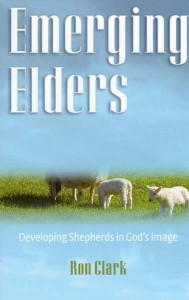
Book Review: Emerging Elders

Emerging Elders

Ron Clark, Emerging Elders: Developing Shepherds in God’s Image (Abilene, TX: Leafwood Publishers, 2008), 203 pages. Paperback.

Ron Clark is the lead church planter with the Agape church of Christ in Portland, Oregon. He holds M.Div. and D.Min. degrees from Harding School of Theology (Memphis, TN) and serves as an adjunct instructor for George Fox Evangelical Seminary. He is also a member of the Oregon Attorney General’s Sexual Assault Task Force.

Clark has contributed to various publications such as New Wineskins, The Christian Chronicle, Stone-Campbell Journal, and Restoration Quarterly; moreover, he has recently published The God of Second Chances (2012) and Setting the Captives Free (2005) along with the current volume which is the subject of this book review.

Emerging Elders: Developing Shepherds in God’s Image provides a theological platform for training current elders and potential elders. Clark explores the text and terminology of the descriptive terms for “pastor” (elder, overseer) and explores such leadership in light of an incarnation model. Clark believes that only when God’s word is actually lived out and exemplified by its the church’s leaders shepherding cannot truly be what God intended it to be.

The Book

Clark has provided the body of Christ a unique text which addresses the needs of the organizational structure of churches of Christ. This is perhaps its greatest overall strength. As Clark observes, “few books are written specifically for ministers about our style of ministry” where the pastor and the preacher are distinct ministries in the body of Christ.[1] Clark observes that most church leadership material is based upon church models which are dissimilar to churches of Christ, or based upon business models which have been given a Christian spin. Consequently, to address the lack of literature on the subject Emerging Elders is an attempt at providing a resource and a solution to the vacuum of pastoral development in light of this distinction.

In Emerging Elders, Clark provides a solid response to this lack of material to address In section one, Clark develops the need for elders who are equipped to lead the body of Christ (chapters 1-2). In section two, Clark provides a dynamic model of God as shepherd and what that means for the leaders of God’s people, he offers a situational and contextual applications of the pastoral qualifications, and then emphasizes that both God’s example and Paul’s instructions are to be applied incarnationally (chapters 3-8).

In section three, Clark provides a series of chapters which specifically address the tensions and problems within church life in particular and churches of Christ in general that emerging elders must address in an incarnational model. “These leaders are appointed to imitate God’s care and concern for people.”[2] The chapters on predators and care of the preacher were particularly exceptional and passionate, and are often not treated in the manner in which Clark has done (chapters 9-15).

Suggestions

What perhaps would have made Emerging Elders more helpful would have been in the area of conflict resolution (chapter 10) and the elder development program (chapter 15). In chapter 10, Clark explores the role elders have in the promotion and maintenance of unity. This lays heavily upon John 17 and Eph 4:1-6, and according to Clark speaks to the needs of the elders to “encourage reconciliation.” To be sure, Clark is complete in his development of the reconciliation process: “Reconciliation requires, conflict resolution, validation, and reinstatement of a relationship.”[3] However, I walked away from that section wishing that Clark had spent more time on developing these ideas, diagrams notwithstanding.

Secondly, I felt that the last chapter (ch. 15) was almost a letdown. With the idea of elder development as the core of the book, I anticipated the last chapter, “Suggested Elder Development Program,” to have more details. Maybe I am being over judgmental. The cycles are a great suggestion and using a quarter year system for elders and potential elders is very helpful. The book reading suggestions are also very appropriate. But what about the first steps it takes, the conversations needful to create the atmosphere to offer and provide these classes? I anticipated more help in creating the development program; however, even in saying this the program offered and the notes to use certain sections of the book along with corresponding cycles is very helpful.

Recommendation: High

In balance, Emerging Elders is a perfect balance of scholarship and the heart of a servant attempting to live incarnationally. Incarnational leadership is at the heart of Emerging Elders and it should be at the heart of how Christian leaders serve, and how Christians serve their church, family, and community. It does not provide easy answers to the flesh and blood problems in the church, nor does it provide answers that are so impossible to achieve. Emerging Elders calls Christians to lead God’s church biblically (incarnationally), and to address the real-life problems the people of God face with the most fundamental gift God has given his people agape love.

Emerging Elders calls every would-be elder to be living examples of faith, integrity, and loving concern for all. I highly recommend Ron Clark’s Emerging Elders to every husband and wife who serve in their church, every preaching couple, every elder and his wife, every deacon, and his wife. They are truly the focus of this book. As Clark observes,

We must help families inside and outside the church heal, but this must come from incarnational leaders who model God’s style of marriage and parenting. God has a pattern; leaders follow and call others to do the same. They follow by modeling his nature through the fruits of the Holy Spirit, becoming a father like God, and being approachable. These individuals reflect God’s character to both the church and the world.[4]

Endnotes

  1. Ron Clark, Emerging Elders: Developing Shepherds in God’s Image (Abilene, TX: Leafwood Publishers, 2008), 9.
  2. Clark, Emerging Elders, 46.
  3. Clark, Emerging Elders, 139.
  4. Clark, Emerging Elders, 101.