In Jonah 4:2 the prophet appeals to the Hebrew noun חֶסֶד (hesed) as a Divine character trait reflected in relational actions. This term is one of the most profound words in the Hebrew Bible, but this profundity is complicated by the fact no single translation really captures its meaning. For this reason, deClaissé-Walford, Jacobson and Tanner opted to transliterate the term throughout their commentary on the Psalms:
Traditionally, a wide range of English terms have been employed in the attempt to capture the meaning of hesed: “mercy,” “loving-kindness,” “steadfast love,” “faithfulness,” “covenantal love,” “loving faithfulness,” and the like. We find that none of these words or phrases satisfactorily express the range and depth of hesed.[1]
The present word study, then, seeks to provide sufficient contours for the word’s usage in the Hebrew Bible and then suggest Jonah’s usage is not only a matter of subversion but also an acknowledgment that the LORD is a God of “benevolent love” (Exod 34:6–7).
Hesed Throughout the Hebrew Bible
There is no agreement of how many instances of hesed there are in the Hebrew Bible. In ascending order, based on BHS4 Kohlenberger and Swanson index the noun 244 times.[2] Stoebe and Zobel list 245 instances; yet, Gordon counts 246.[3] In their popular grammar, Practico and Van Pelt supply a 249 wordcount; meanwhile, Koehler, Baumgartner, and Stamm, and therefore Holladay, calculate about 250 instances.[4] This apparent statistics fluctuation for the frequency of hesed is probably due, at least, to variants in the critical Hebrew texts upon which their analyses were based.
Hesed is widely distributed across all biblical literary categories of the Hebrew Bible, which is arranged differently than the Christian Bible (see word map below). It is found in the Torah 20 times, in the Prophets (Nevi’im) 53 times, and the Writings (Ketuvim) 172[3] times.[5] The twelve books where hesed does not appear, however, are Leviticus, 2 Kings, Ezekiel, seven of the twelve minor prophets (Amos, Obadiah, Nahum, Habakkuk, Zephaniah, Haggai, and Malachi), Song of Solomon and Ecclesiastes.
Hesed appears in the first book and the last book of the Hebrew Bible; from the rescuing of Lot in Genesis 19:19 to the faithful deeds of Josiah’s reformation in 2 Chronicles 35:26:
you have shown me great kindness [hesed] in saving my life. (NRSV)[6]
the rest of the acts of Josiah and his faithful [hesed] deeds in accordance with what is written in the law of the Lord. (NRSV)
The last reference reflected in the Protestant arrangement of the Bible (see word map below) closes with the prophetic oracle of Zechariah 7:9-10:
Thus says the Lord of hosts: Render true judgments, show kindness [hesed] and mercy to one another; do not oppress the widow, the orphan, the alien, or the poor; and do not devise evil in your hearts against one another. (NRSV)
Word Map: The Hesed (חֶסֶד) word map is based on the English Standard Version generated by Logos Bible software. The pink horizontal lines represent single and double instances.
The books which have ten or more references of hesed are Proverbs (10 times), Genesis (11 times), 1–2 Chronicles (15 times), 1–2 Samuel (16 times), and the Psalms (127[8] times). The majority of these books reflect the relational nature of hesed in the human realm. In Proverbs the end goal of wisdom is to teach practical relational hesed (31:26, 21:21), it is not a false front but the foundation of one’s reputation by its presence in their life (20:6, 28).
In Genesis, “kindness” is requested in prayer to God by Abraham’s servant to find a wife for Isaac (Gen 24:12, 14, 27). Then, Laban and Bethuel act in hesed (“kindness”) by cosigning their approval of Rebekah’s consent to be given as wife to Isaac.
1–2 Chronicles and 1–2 Samuel show that hesed expressed in reciprocal social acts. Saul reciprocates and excuses the Kenites from his assault on the Amalekites because they has shown hesed to Israel in ages past (1 Sam 15:6). Hushai’s “love” (loyalty?) for David is questioned during his infiltration of Absolam’s forces (2 Sam 16:17). The hesed shared between David and Jonathan is a story of deep loyalty and mutual reciprocity (1 Sam 20:8, 14–15). The Divine hesed is evidenced as well (2 Sam 15:20). Nathan enshrined the Davidic lineage and kingdom on behalf of God,
“my love will never be taken away from him” (2 Sam 7:15 NIV; 1 Chr 17:13, 2 Chr 1:8, 6:42; Psa 18:25[26]).
The Psalms contain close to half of all uses of the noun hesed (127[8] times); but it does not appear in 55% (83 psalms) of the 150 psalms. In brief, there are 23 instances in Book I (1-41), 16 instances in Book II (42–72), 14 and 13 times in Book III (73–89) and IV (90–106) respectively. In Book V (107–150), however, the frequency count skyrockets to 60 instances. Psalm 136 alone celebrates the Divine hesed in each of its twenty-six verses. It is in the Psalms that “both God and human worshipers describe God’s hesed as everlasting.”[7] Indeed,
While the term is used of both humans and God, in the Psalter it is above all a theological term that describes God’s essential character as well as God’s characteristic ways of acting—especially God’s characteristic ways of acting in electing, delivering, and sustaining the people of Israel. Hesed is both who the Lord is and what the Lord does. Hesed is an ancient term that defined for Israel who its God is.[8]
The saturation of hesed in the Psalms suggests that God’s people should always be mindful in prayer and worship of its content, its deeds, and the God who so relates to his people (Psa 36:5, 7, 10).
As pertains to the present study, it should be noted that the noun hesed only features twice in Jonah.Jonah is only one of four minor prophets where the term is employed (Hosea, Joel, and Micah). The first instance is in Jonah’s prayer of lament while in the “great fish” wherein he affirms that pagan idolators will miss out on “the grace [hasdam] that could be theirs” (2:8[9] NIV). The other instance is in 4:2 where Jonah laments what he knows about the LORD, who is “abounding in love” (NIV, warabhesed) and willing to change his mind about bringing judgment on the penitent people of Nineveh.
Semantic Range and Related Hebrew Words
As Silzer and Finley remind, “[w]ords normally have more than one meaning. The specific meaning of the word depends on its context.”[9] It is not sufficient, then, to rely on English translations (archaic or contemporary), nor to force lexical glosses to determine the meaning of a word.[10]
Brown, Driver, and Briggs groups hesedwith its verbal (hasad 2 times) and adjectival (hasid 32 times) forms, along with a few proper names, such asBen-Hesed (“son of Hesed” 1 Kgs 4:10) and Hasadiah (“Yah is Hesed” 1 Chr 3:20).[11] Lastly, is the unclean hasidah (6 times) often translated “stork” or “heron.” The root connection is believed to be due to their fond, “kind and affectionate” nature with their young.[12] This is a feature that is never appealed to in the Hebrew Bible.
The semantic range of hesed extends to the secular and the religious. In each, hesed manifests in concrete actions of goodwill, loyalty, and communal love whether in or outside of the covenant.[13] Divergent views emerge here with polarizing understandings over the meaning of hesed. Nelson Glueck saw in hesed a hardline covenantal legal obligation, H. J. Stoebe and others countered that hesedwas a free relational demonstration of loyal love.[14]
In the secular sense hesed speaks to certain “ethical norms of human intercourse” where mutuality exists that focuses on “the closest of human bonds.”[15] For example, Ruth exhibits this sense (1:8, 2:20, 3:10). Naomi blesses her daughters-in-law reciprocally, “May the Lord deal kindly [hesed] with you, as you have dealt with the dead and with me” (NRSV).
Religiously, the Divine demonstration of hesed does not function very differently than from the secular.[16] Exodus 34:1–7 provide a clear liturgical formula which demonstrates that Israel’s God abounds “in steadfast love and faithfulness” (34:6 NRSV; Psa 86:15, 89:14, Num 14:18).
The Lord passed before him, and proclaimed, “The Lord, the Lord, God merciful and gracious, slow to anger, and abounding in steadfast love [hesed] and faithfulness, keeping steadfast love [hesed] for the thousandth generation, forgiving iniquity and transgression and sin, yet by no means clearing the guilty, but visiting the iniquity of the parents upon the children and the children’s children, to the third and the fourth generation.” (Exod 34:6-7 NRSV)
This divine expression stresses the LORD’s multi-generational hesed and faithfulness. Moses now knows (33:13) that the LORD relates to his people through his benevolent and enduring nature. The words are quoted and echoed throughout the Hebrew Bible which suggests that they became formulaic or institutionalized to extoll the attributes of the God of Israel (Num 14:18, Jer 32:18, Joel 2:13, Nah 1:3, Psa 86:15, 103:8, 111:4, 112:4, 116:5, 145:8, Neh 9:17, 31, 2 Chron. 30:9)[17]
There are several words that appear frequently with hesed. They provide some dynamic appreciation for its usage in the Hebrew Bible.[18]Hesed may be done (‘asah) in concrete choices (Ruth 1:8). The LORD God keeps (shamar) and abounds (rab) in hesed (Deut 7:9, Neh 9:17). It is often associated with various nouns of “mercy” as in Psa 103:4 where the psalmist speaks of being crowned by God with hesed and rahamim(mercy). Likewise, hesed appears together with ’emet (faithfulness) probably as a hendiadys such as in Exod 34:6 and Psa 86:15.[19]
Hesed in Jonah 4:2
He prayed to the Lord and said, “O Lord! Is not this what I said while I was still in my own country? That is why I fled to Tarshish at the beginning; for I knew that you are a gracious God and merciful, slow to anger, and abounding in steadfast love [hesed], and ready to relent from punishing. And now, O Lord, please take my life from me, for it is better for me to die than to live.” (Jonah 4:2–3 NRSV)
This survey of hesed in the Hebrew Bible should help to determine the possible range of meaning for how Jonah 4:2 should be understood. Words have meaning only in context. With the above range in mind, the context appears to reflect Jonah’s usage of the formulaic hesedlanguage of Exodus 34:6–7. Instead of celebrating his God with these words, Jonah is subversively using this language to express his frustration with the LORD’s restraint against the city of Nineveh.
Jonah is using God’s own words against him. For this reason, it appears the meaning for Hebrew word hesedfound in Jonah 4:2 should be understood as “benevolent love.” Jonah knows how LORD acts out in concrete acts of hesed, these being grace, mercy, “slow to anger,” and relenting from judgment. Since there is no evidence that the LORD is in covenant with Nineveh, this supports the supposition that divine hesed may be expressed in free relational demonstrations of benevolent love. God relates to repentance with the reciprocal response of grace, mercy, patience/forbearance, relenting from judgment.
Jonah 2:8[9] further supports this view. It reveals that the prophet desires for judgment those who do not enjoy a covenant relationship with the LORD. It appears that for Jonah, idolatry is the “deal-breaker” for having a relationship with the LORD based on hesed. Yet, the irony fails to make any headway with the nationalistic prophet, since he rejected his prophetic call on the basis that he knew what the LORD would do should Nineveh repent. Both he and pagans have rejected God. Jonah is not only selfish with his relationship with his faithful God (“save me from the fish!”) but is resentful that God is “sharing the love” with foreigners (“you saved them from judgment!”).
Jonah wants his curse to come true, that those who “cling to worthless idols forfeit the grace [hesed] that could be theirs” (2:8[9] NIV). It is this forfeiture of Divine hesedwhich Jonah still desires for Nineveh, reflected in his willingness to proclaim that the city “will be overturned” (3:4) and his bitterness that it was not (4:1–11). Jonah knew that God would choose relationship over punishment. The LORD said as much (4:11). Humans, unfortunately, seem to choose punishment over relationship. Jonah shows as much.
This focused study on hesed and Jonah 4:2 brings to mind that the caricature of the bloodthirsty wrathful God of the Old Testament is just that an exaggerated cartoon (cf. Jas 2:13). As Baer and Gordon powerfully remind:
The insight that, while both anger and love are appropriate divine responses, the latter outlasts the former, is an important one for biblical theology. Wrath is a true word, a right word, sometimes an inevitable word, such passages seem to say. But God would not have it be his last word. That honor is reserved for his unfailing love (hesed).[20]
The burden of Jonah was to provide concrete witness to the people of Nineveh that God seeks to extend and establish benevolent love with all nations. As one who has experienced Divine benevolent love, Jonah should have been moved to be a spokesman for Divine benevolent love. In this he struggled and failed; nevertheless, God succeeded even if for a brief time (cf. Nahum 1:1?).
Conclusion
The meaning for Hebrew word hesedfound in Jonah 4:2 should be understood as “benevolent love.” The formulaic language of Exodus 34:6–7 is surely the theological and context for Jonah’s use of hesed. In Exodus as in Jonah 4:11, the LORD shows that he has the concern to establish and maintain a communal relationship with Israel. The benevolent concerns of preserving others and acting on the basis of moral uprightness anchor the LORD’s demands of repentance. Jonah knew if Nineveh took seriously the burden of his message, his God would become their God. They would collectively experience Divine benevolent love.
A final thought should be emphasized. Even though there are many excellent translations in the English language their primary function is simply to provide a reading text. Some significant and complex words, like hesed, merit the focused investigation which a word study provides. As developed above, hesed stresses relationships, community, loyalty and the ethical demands of love, responsibility, care, and obligation words which no single translation can do justice. Word studies reveal facets and these usages are combined into a framework. This framework provides the contours for understanding what a word means within its context, for usage determines meaning.
Endnotes
Rolf A. Jacobson, “Text, Title, and Interpretation,” in The Book of Psalms, NICOT, eds. E. J. Young, R. K. Harrison, and Robert L. Hubbard (Grand Rapids, MI: Eerdmans, 2014), 7–8.
John R. Kohlenberger III. and James A. Swanson, The Hebrew-English Concordance to the Old Testament (Grand Rapids, MI: Zondervan, 1998), v, 559.
H. J. Stoebe, “hesed kindness,” TLOT 2:449; H.-J. Zobel, “hesed,” TDOT 5:45; Robert P. Gordon, “hesed,” NIDOTTE 2:211.
Gray D. Practico and Miles V. Van Pelt, Basics of Biblical Hebrew, 2d ed. (Grand Rapids, MI: Zondervan, 2007), 105; Koehler, Baumgartner, and Stamm, “hesed,” HALOT 1:336; William L. Holladay, A Concise Hebrew and Aramaic Lexicon of the Old Testament (1971; repr., Grand Rapids, MI: Eerdmans, 2000), 111.
The Torah includes Genesis-Deuteronomy; the Nevi’im includes Joshua-2 Kings, Isaiah, Jeremiah and Ezekiel, and the Minor Prophets; and the Ketuvim includes Psalms, Proverbs, Job, Song of Solomon, Ruth, Lamentation, Ecclesiastes, Esther, Daniel, Ezra-Nehemiah, and 1–2 Chronicles.
The two English translations the Holy Bible used in this paper are the New Revised Standard Version (Nashville, TN: Nelson, 1989) and the New International Version (Nashville, TN: HarperCollins, 2011) cited as NRSV and NIV respectively.
David A. Baer and Robert P. Gordon, “hesed,” IDOTTE 2:212–17.
Jacobson, “Text, Title, and Interpretation,” 8.
Peter James Silzer and Thomas John Finley, How Biblical Languages Work: A Student’s Guide to Learning Hebrew and Greek (Grand Rapids, MI: Kregel Publications, 2004), 164.
Douglas Stuart, Old Testament Exegesis: A Handbook for Students and Pastors, 4th ed. (Louisville, KY: Westminster John Knox, 2009), 182–83.
BDB 338–39.
BDB 339; HALOT 1:336; TLOT 2:449.
IDOTTE 2:212–17; HALOT 1:336–37; TDOT 5:46–64.
R. Laird Harris, “hesed,” TWOT 1:305–06.
TDOT 5:47–48.
TDOT 5:54–55.
Nahum M. Sarna, Exodus, JPS Torah Commentary, ed. Nahum M. Sarna (Philadelphia, PA: Jewish Publication Society, 1991), 216.
HALOT 1:337.
TWOT 1:307.
IDOTTE 2:214.
Bibliography
Baer, David A., and Robert P. Gordon. “חסד.” Pages 211–18 in vol. 2 of New International Dictionary of Old Testament Theology and Exegesis. Grand Rapids, MI: Zondervan, 2012.
Brown, Francis, S. R. Driver, and Charles A. Briggs. A Hebrew and English Lexicon of the Old Testament. Oxford: Clarendon Press, 1907.
Ford, David. “Keeping up Biblical Languages while in the Ministry.” Foundations 14 (1985): 41–44.
Gordon, Robert P. “חסד.” Pages 211–18 in vol. 2 of New International Dictionary of Old Testament Theology and Exegesis. Edited by Willem A. VanGemeren. Grand Rapids, MI: Zondervan, 1997.
Harris, R. Laird. “חסד (hsd).” Pages 305–07 in vol. 1 of Theological Wordbook of the Old Testament. Edited by R. Laird Harris, Gleason L. Archer, Jr., and Bruce K. Waltke. Chicago, IL: Moody Press, 1980.
Holladay, William L. A Concise Hebrew and Aramaic Lexicon of the Old Testament. 1971. Repr., Grand Rapids, MI: Eerdmans, 2000.
Jacobson, Rolf A. “Text, Title, and Interpretation.” Pages 2–9 in The Book of Psalms. NICOT. Edited by E. J. Young, R. K. Harrison, and Robert L. Hubbard. Grand Rapids, MI: Eerdmans, 2014.
Koehler, Ludwig, Walter Baumgartner, and Johann J. Stamm. The Hebrew and Aramaic Lexicon of the Old Testament. Translated and edited under the supervision of Mervyn E. J. Richardson. 5 vols. New York: Brill, 1994–1999.
Kohlenberger, John R., III., and James A. Swanson. The Hebrew-English Concordance to the Old Testament. Grand Rapids, MI: Zondervan, 1998.
Practico, Gray D., and Miles V. Van Pelt. Basics of Biblical Hebrew. 2d edition. Grand Rapids, MI: Zondervan, 2007.
Sarna, Nahum M. Exodus. JPS Torah Commentary. Edited by Nahum M. Sarna. Philadelphia, PA: Jewish Publication Society, 1991.
Silzer, Peter James, and Thomas John Finley. How Biblical Languages Work: A Student’s Guide to Learning Hebrew and Greek. Grand Rapids, MI: Kregel Publications, 2004.
Stoebe, H. J. “חֶסֶד, hesed kindness.” Pages 449–64 in vol. 2 of Theological Lexicon of the Old Testament. Edited by Ernst Jenni and Claus Westermann. Translated by Mark E. Biddle. 3 vols. Peabody, MA: Hendrickson, 1997.
Stuart, Douglas. Old Testament Exegesis: A Handbook for Students and Pastors. 4th edition. Louisville, KY: Westminster John Knox, 2009.
Wegner, Paul D. Using Old Testament Hebrew in Preaching: A Guide for Students and Pastors. Grand Rapids, MI: Kregel Publications, 2009.
Zobel, H.-J. “(חֶסֶד, hesed).” Pages 44–64 in vol. 5 of Theological Dictionary of the Old Testament. Edited by G. Johannes Botterweck and Helmer Ringgren. Translated by David E. Green. Grand Rapids, MI: Eerdmans, 1977.
The seventeenth-century “non-conformist” English pastor, Ralph Venning, is famous for immortalizing the following line regarding Scripture:
it is deep enough for an elephant to swim in, and yet shallow enough for a lamb to wade through.
No truer does this speak to both the complex richness and visual clarity of the Gospel of John. John is traditionally regarded as one of the last written books of the New Testament canon at the tail-end of the first-century CE. When compared to Matthew, Mark, and Luke, John is written in a style all its own — comparable only to the letters of John.
Of the significant unique features of John is the tightly bound chapters, known by many as Jesus’ Farewell Discourse (John 14-16). It is prudent to consider a few preliminary matters to appreciate the way John 16:12-15 delivers on the themes of John and the coming of the Holy Spirit with a view to some application for the modern church.
Genre and Interpretation
John, as the so-called Fourth Gospel, has presented itself with challenges of every kind. As Gary M. Burge observes, the study of what is a gospel genre and its interpretation has been an intense one, especially as it relates to the Gospel of John.[1] The nature of the genre of the gospel as a narrative is still in somewhat of a debate, and in particular how John’s structural stability or instability is appreciated and explained.[2]
The question about gospel genre speaks to what is its purpose and goal(s). This has troubled the academic community for some time. For example, a gospel is a biography but it is not what a modern person thinks of as a biography since so many anticipated features are missing. An examination of the early chapters of each Gospel reveals a thumbsketch history of Jesus’ “early years.” As Craig Blomberg demonstrates, modern perceptions of biography are misleading and resulted in earlier scholars questioning the historical value of the Gospels on false assumptions.[3] However, Blomberg continues, “when they are set side by side with various ancient sources, the Gospels compare quite favorably”:
Ancient historical standards of precision in narration and in selection and arrangement of material were much less rigid than modern ones. Few, if any, ancient works were written merely for the sake of preserving the facts; almost all were trying to put forward and defend certain ideologies or morals. But propaganda need not distort the facts, though it sometimes does. Of course, any genre may be modified, and there are uniquely Christian features in the Gospels.[4]
Craig Blomberg, “The Diversity of Literary Genres in the New Testament,” Interpreting the New Testament
Consequently, while scholars acknowledge the formal critical parallels between the Gospel accounts and other ancient historical and biographical documents, there are unique features in matters of content and emphasis.[5] Some students have even cautioned that there are significant variations even between the four Gospels based on their own internal agendas, sufficient enough to make Larry Hurtado caution, “it wise to treat them individually.”[6]
John on His Own
The Gospel of John bears features that stand uniquely against the Synoptics. This, however, does not suggest a contradiction. This proclivity of John to emphasize unique material does not disassociate itself with the themes of the Synoptics. For example, instead of a nativity narrative, there is an emphasis on the pre-incarnate narrative (John 1:1-14ff) serving as a prequel to their nativity storyline (Matt 2:1-23; Luke 1:26-52). Moreover, an emphasis upon miracle narratives and extensive dialogs and discourses, take precedence over parabolic instructions and pronouncements.[7]
Despite the material that is unique to John, C. K. Barrett calls attention to the fact that events in John and Mark “occur in the same order.”[8] And while Barrett stresses that John most likely borrowed from Mark, Leon Morris responds that such features found to be common with John and the Synoptics “is precisely the kind that one would anticipate finding in oral tradition.”[9] In short, John is certainly unique in many significant ways, but it follows the same structure of Matthew, Mark, and Luke.
A Broad Layout for John
John may be divided broadly into two thematically arranged halves (1:19-12:50; 13:1-21:25), despite some disagreement regarding the structural integrity of the fourth Gospel, due to certain aporia (i.e. any perplexing difficulty).[10] Jeffrey Staley suggests these tendencies are set forth in the prologue (John 1:1-18) and bolsters the viability of the approach taken here.[11] John 1:19-12:50 (“book of signs”) and John 13:1-21:25 (“book of glory”) are consequently the main divisions taken in this study.
The last nine chapters focus great attention upon the last few days of Jesus’ life,[12] where the focus is on the “Upper Room” and his “Farewell Discourse” (13-17), the crucifixion and resurrection narratives (18-21). Even more specifically, the text under consideration (John 16:12-15) finds its niche as the last of five discourses that speak of the Spirit as the Paraclete (John 14:15-17, 25-26; 15:26-27; 16:7-11, 12-15):[13]
Book of Glory 13:1-21:25
Upper Room/Farewell (13-16)
Prayer (17)
Crucifixion and Resurrection (18-21)
A Brief Exegetical Walkthrough
This paper sets out to examine John 16:12-15 as the last of five segments that place emphasis upon the Paraclete’s role in the ministry of the apostles; furthermore, to examine the nature of the Paraclete’s role in the early church, as set forth by Jesus, as an apostolic “Aid,” guiding them in the ways that pertain to truth.
Verse 12: I have many things left to say to all of you, but you are not able to endure it at the present time. (Author's Translation)[14]
Following George Beasley-Murray’s lead, the final Paraclete passage brings the discourse to a “climax” emphasizing the role the Spirit’s ministry.[15] The adverbial eti here takes the sense of “what is left or remaining”[16] and in concert with all’, which contextually appears to function as a transition marker placing emphasis on “the other side of a matter or issue,”[17] suggests that verse 12 begins to further demonstrate the importance of the Spirit’s coming presence. Etiand all’ are pivotal phrases for they describe the tension of the situation in which the disciples are to be found. Consequently, this climactic Paraclete discussion may be viewed in terms of two perspectives: the disciples’ and the Lord’s.
First, from the disciple’s perspective, one wonders how much more Jesus withheld from them during his personal ministry. However, earlier in this context Jesus clearly told them, “I did not speak about these matters to you, because I was among you” (John 16:4b). As a result of disclosing the impending future events, Jesus observes their plight and says, “pain has filled your hearts” (16:6b). The thought of loss and loneliness, without access to the presence of Jesus, made the disciples at that moment (arti) incapable (ou dúnasthe) to carry the burden (bastádzein) of what appears to be doctrinal and prophetic significance (14:26; 16:14). The anarthrous adverbial infinitival construction ou dúnasthe bastádzeinstresses purpose; namely, the disciples do not have adequate capacity in order to “sustain the burden” of what Jesus has left to teach them.[18] Thus, in essence, because the disciples are currently unable to carry more weight (upon the sorrow?) in their hearts, there remains future spiritual growth.
Second, from the Lord’s perspective, he looks forward to a future event. This observation is made on the basis of the present lack of capacity of the disciples to carry the burden of what Jesus has to further instruct them in. If ou dúnasthe bastádzeinarti is to be taken as a present reality, then Jesus looks forward to a future reality-event when they will have the capacity to bear his teaching. This is one of the blessings already referred to previously that flow from the arrival of the Paraclete (14:25-27; 15:26-16:11).
The Paraclete[19] is viewed as an “Aid” in John 14:25-27 as one who will “teach” the disciples and “remind” them of the teaching of Jesus eventuating in “peace”; in contrast to the “sorrow” that they are now experiencing (16:6). And with the arrival of the Paraclete, the disciples will have an “Advocate” for their defense from the world (15:26-27), and a “Counselor” to give guidance in accusing the world (16:8-11).[20] In each circumstance, Jesus says, “the Father will give you another Paraclete” (14:16), “the Father will send” (14:26), “but when the Paraclete comes” (15:26), “when he comes” (16:8), “when the Spirit of truth comes” (16:12). Hence, Jesus already anticipates a time when the disciples overcome both their sorrow and the corresponding incapacity to bear more of his teaching.
Verse 13: However, when that one has come – the Spirit of Truth – he will guide you in all the truth; for he will not speak from himself, on the contrary, to the extent of what he will hear, he will speak. And he will announce to you the things that are to come.
Preliminary to discussing the continued flow of thought from verse 12, there is a text-critical matter that needs some attention. Verse 13 bears two significant variants. The first is the dative construction en te aletheía páse (dative of sphere) following hodegései humas, which according to other textual traditions has an accusative construction eis pasan tèn alétheian(spatial accusative). The committee of the UBS4 textual apparatus has given en te aletheía páse a B rating; meaning, that they view the dative construction as is almost certain,[21] being witnessed by notable uncialsAleph1 (4th century), W (4/5 centuries). Meanwhile, the accusative construction is witnessed by notable uncials A (5) and B (4th century) with variation, and 068 (5th century). Along with early translations and early patristic witnesses, the evidence appears somewhat fairly divided. Bruce Metzger suggests, however, “the construction of eis and the accusative seems to have been introduced by copyists who regarded it as more idiomatic after hodegései”[22] than en with the dative.[23]
Despite the pain that filled each disciple’s heart, the disciples were directed to a future event – the work of the Spirit of Truth (16:13ff.). “However” (dè) marks that Jesus is developing a new topic (dè of “switch subject”).[24] Moreover, this contrast is temporal as demonstrated by hótan élthe (“when that one has arrived”). Furthermore, following Buth’s discussion on δὲ as a mark of switching subjects, it is proposed that the new subject is ekeínos, which refers to ho parákletos. Daniel Wallace proposes that this is a more solid linguistic connection between this pronoun and its antecedent (ekeínos = ho parákletos).[25] Consequently, tò Pneùma tès aletheías serves as an appositional phrase expanding and further defining ekeínos; hence the translation, “when that one has come – the Spirit of Truth […]” (John 16:13a). Instead of the present reality of pain that the disciples feel, Jesus focuses on the guidance that ho parákletos[26] will bring to the disciples.
Ancient sources point to a Jewish background the Spirit of Truth motif. This vocabulary was typical when admonishing obedient and moral lives by using concepts that are dualistic. For example, we find a proverbial discussion of “the spirit of truth and the spirit of error” with “the spirit of discernment” standing between them urging there to be a selection of truth (T. Jud 20). Observe the full quote:
Learn therefore, my children, that two spirits wait upon man—the spirit of truth and the spirit of error; and in the midst is the spirit of the understanding of the mind, to which it belongeth to turn whithersoever it will. And the works of truth and the works of error are written upon the breast of men, and each one of them the Lord knoweth. And there is no time at which the works of men can be hid from Him; for on the bones of his breast hath he been written down before the Lord. And the spirit of truth testifieth all things, and accuseth all; and he who sinneth is burnt up by his own heart, and cannot raise his face unto the Judge. (italics added)[27]
Moreover, in the Qumran cache there is a discussion of God allotting two spirits to humanity, “the spirits of truth and perversity” in between which humanity must walk, again choosing between the two. As a result, walking with the truth is to “walk in the ways of light,” and the converse is true of walking with perversity – to walk in darkness (1QS 3:18-21). Again, observe:
[God] allotted unto humanity two spirits that he should walk in them until the time of His visitation; they are the spirits of truth and perversity. The origin of truth is in a fountain of light, and the origin of perversity is from a fountain of darkness. Dominion over all the sons of righteousness is in the hand of the Prince of light; they walk in the ways of light. All dominion over the sons of perversity is in the hand of the Angel of darkness; they walk in the ways of darkness. (italics added)[28]
These resonate strongly with the positive guidance the disciples will receive from the Paraclete.
The source of the Paraclete’s teaching is external to him, “for he will not speak from himself, “on the contrary” (all’), to the extent of what he will hear, he will speak.” Since earlier the Paraclete is said to be like Jesus (14:16-17), and Jesus also said that his teaching was not his own (3:32-35; 7:16-18; 8:26-29, etc.), it would make sense that the teaching of the Paraclete would originate from the Father. As F. Moloney observes, “neither Jesus nor the Paraclete is the ultimate source of the revelation they communicate.”[29] And his work is, in part, to remind the disciples of the teaching of Jesus (14:26).
In addition to this call to remembrance, “he will announce” (lalései) to them “things that are to come” (tà erchómena anangeleì), which presumably are the things that he will also “hear” (hósa akoúsei). Some view this last phrase (tà erchómena anangeleì) as eschatologically prophetic.[30] Others view it as instructional content yet to be expanded upon.[31] D. A. Carson proposes that this phrase has to do with “all that transpires in consequence of the pivotal revelation bound up with Jesus’ person, ministry, death, resurrection and exaltation.”[32] These matters, Carson views, are the subject of what we now call the New Testament Canon; consequently, this anticipates further canonical development by the new prophetic office – the apostleship.[33]
Verse 14: That one will glorify me, because he will take from what is mine and he will report it to you.
Still looking to the arrival of the Paraclete (e.g. ekeínos), Jesus expands further upon his ministry – he will glorify Jesus. The word doxásei was often used in LXX to glorify God (2 Sam 6:20; 1 Chron 17:18), so also is used to describe one of the roles the Paraclete will have.[34] The term hóti has been ignored somewhat here among commentaries, where it could potentially be employed epexegetically; saying, “the Paraclete will glorify (honor) Jesus; namely, by taking the teaching that goes back to the Lord’s ministry and announcing it afresh to the disciples.” Such is not an unlikely view of the grammar; however, viewing hóti as causal (i.e. “because”) the sense changes slightly. Overall, the idea that the Paraclete’s glorifying of Jesus directly relates to him taking the teaching that was Jesus’ remains the same.[35]
This is borne out by Carson in three related ways. First, the Paraclete’s work is Christ-centric. Second, based upon the implication drawing from ek tou emou lépsetai“from what is mine,” Carson draws the conclusion that “the Spirit takes from this infinite sum and gives that truth to the disciples.” Third, Christ is the center of his teaching ministry, and it is through the Spirit’s work that Jesus is glorified.[36]
There is a rather important emphasis that should be laid upon the phrase ananggelei humìn. The term has to do with providing information; hence, may be translated “disclose,” “announce,” “proclaim,” or even “teach.”[37] What is contextually significant is that ananggéllōα carries an implicit understanding that it is a report of what one has heard.[38] Incidentally, the Paraclete will speak whatever he has heard (hósaakoúsei lalései 16:13), and here Jesus says that the Paraclete will take from what is his (Jesus), from where he will provide information to the disciples. Again, this highlights two matters: first, that the Paraclete will not speak independently; and second, the content of his teaching is all truth and Jesus. As Barrett observes, in John, ananggéllō (4:25, 5:15, 16:13-15) “is applied to the revelation of divine truth, and it is apparent that it is so used here.”[39]
Furthermore, Lawrence Lutkemeyer observes, thatananggéllō is “never” used in a predictive sense; instead, it is employed to report the way things were, are, or as they come into realization.[40] Therefore, what is under consideration is a reporting of the teaching and implications that flow from Christ and the Gospel message. This reporting is deposited within the pages of what is now the New Testament canon and serves as demonstrative proof that they have understood the Lord’s teaching.[41]
Verse 15: All things whatsoever the Father has are mine; for this reason I said, [hóti] “he takes from what is mine and will report it to you.”
When Jesus says, “All things whatsoever the Father has are mine,” it is in a sense logical to deduce that the content of what the Spirit is to announce or report to the disciples is under consideration. Carson again observes:
Therefore if the Spirit takes what is mine and makes it known to the disciples, the content of what is mine is nothing less than the revelation of the Father himself, for Jesus declares, All that belongs to the Father is mine (v. 15). That is why Jesus has cast the Spirit’s ministry in terms of the unfolding of what belongs to the Son: this is not a lighting of God, or undue elevation of the Son, since what belongs to the Father belongs to the Son. It is therefore entirely appropriate that the Spirit’s ministry be designed to bring glory to the Son (v. 14).[42]
D. A. Carson, The Gospel According to John, Piller New Testament Commentaries
It is precisely because they share this content and revelation (dià toùto) that the Paraclete will draw out from what belongs to Jesus (16:14), and that he will only speak what he has heard (16:13). There is a very similar statement in Luke, but here it speaks in reference to Jesus as he was sent from the Father (Luke 10:16).[43] The parallel is striking to this context regarding the Paraclete, of which Jesus by implication is the first and the Spirit is the second (14:16).
Precisely because of this shared content and revelation (dià toùto), Jesus retrospectively points out that he had spoken certain words to them (eìpon).[44] And here, John employs the recitativumhóti, meaning that the use of this conjunction is designed to introduce a direct quotation and is usually left untranslated.[45] Often hóti functions as an indicator of direct discourse.”[46] It serves only “to call attention to the quotation,” thus it functions in the same fashion as do quotation marks;[47] hence, in the translation above, hóti is emboldened and bracketed to demonstrate the origin of the quotation marks. What Jesus points to then, is the role of the Paraclete, “he takes from what is mine and will report it to you.”
It is interesting to note that the first quotation, “he takes from what is mine” (ek toù emoù lambánei) is a present indicative as opposed to the future indicative in 16:14 (lémpsetai). The shift in the tense of activity to the present as Christ views the Spirit’s work retrospectively may point back to 14:17, where Christ apparently speaks in both present and future tenses. Jesus says, “You know (present) him, for he dwells (present) with you and will be (future) in you” (14:17b). However, to be fair, the UBS4 committee had difficulty deciphering between a variant here (giving it a C rating) that relates specifically to the tense of both verbs ménei and éstai. If the wording of 14:17 stands as the majority of the UBS4 committee suggests,[48] then the Spirit was already in some sense active in the apostolic circle, and will in the future be in them.
This reflects what is happening here. Jesus notes that the Spirit is, in some sense, already taking (lambánei) from the reservoir of revelation and that he will when the time is ready, report this information to them (ananggeleì humìn). There is little by way of academic support for this approach to provide a resolution for the tense change from lémpsetai to lambánei (except Moloney).[49] Barrett’s terse statement, “the change of tense (cf. lémpsetai, v. 14) does not seem to be significant,”[50] needs revision on the grounds that 14:17, assuming its textual basis is the weightiest available, transitions from present to future with reference to the Paraclete’s work as does the tense shift in 16:15.[51]
Endnotes
Gary M. Burge, “Interpreting the Gospel of John,” Interpreting the New Testament: Essays on Methods and Issues, eds. David Alan Black and David S. Dockery (Nashville, TN: B&H, 2001), 357-70.
Burge, “Interpreting,” 376-78.
Craig Blomberg, “The Diversity of Literary Genres in the New Testament,” Interpreting the New Testament: Essays on Methods and Issues, eds. David Alan Black and David S. Dockery (Nashville, TN: B&H, 2001), 274.
Blomberg, “The Diversity of Literary Genres,” 274.
Blomberg, “The Diversity of Literary Genres,” 275.
Larry W. Hurtado, “Gospel (Genre),” DJG 278.
Hurtado, “Gospel (Genre),” 281.
C. K. Barrett, The Gospel According to St. John: An Introduction with Commentary and Notes on the Greek Text, 2d ed. (Philadelphia, PA: Westminster, 1978), 43.
Leon Morris, The Gospel According to John, rev. ed., NICNT (Grand Rapids, MI: Eerdmans, 1995), 45.
Burge, “Interpreting,” 376-78.
Jeff Staley, “The Structure of John’s Prologue: Its Implications for the Gospel’s Narrative Structure,” CBQ 48.2 (April 1986): 241-49.
Burge, “Interpreting,” 382.
C. H. Dodd takes note of the significant fact, that John 15.1 to 16.15 is a pure monologue, and is in fact, the longest monologue in the entire Johannine Gospel (The Interpretation of the FourthGospel [New York, NY: Cambridge at the University Press, 1965], 410).
The translations are the author’s unless otherwise noted.
George R. Beasley-Murray, Gospel of Life: Theology in the Fourth Gospel (1991; repr., Peabody, MA: Hendrickson, 1995), 78.
BDAG 400.
BDAG 45.
BDAG 171; Daniel B. Wallace, Greek Grammar Beyond the Basics: An Exegetical Syntax of the New Testament (Grand Rapids, MI: Zondervan, 1996), 590.
“The principal difficulty encountered in rendering parákletos is the fact that this term covers potentially such a wide area of meaning. The traditional rendering of ‘Comforter’ is especially misleading because it suggests only one very limited aspect of what the Holy Spirit does” (L&N 12.19). There are three semantic domains in which it overlaps: (1) psychological factors of encouragement, (2) definite communication aspects, and (3) intercessory aspects leading toward certain legal implications and procedures (L&N 35:16, fn. 4).
Beasley-Murray, Gospel of Life, 71-72.
Bruce M. Metzger, A Textual Commentary on the Greek New Testament, 2d ed. (1994; repr., Stuttgart, Germany: German Bible Society, 2001), 14*.
Metzger, A Textual Commentary, 210; cf., Stanley E. Porter, Idioms of the Greek New Testament, 2d ed. (London: Sheffield Academic Press, 2005), 151-52.
Interestingly, Stanley E. Porter discusses the morphological connection between eis and en, noting that eis “may have been formally derived from the preposition ἐν, through the process of adding a final sigma (ens), the nu dropping out, and compensatory lengthening of the vowel from e to ei” (Idioms, 151) As a result, there is evidence of a connection, observing that “eis in its basic meaning is concerned with the movement of the sphere toward and into” a location, “as if this were the action that resulted in the condition of en” (Idioms, 151). There is much, therefore, to agree with Barrett’s observation that: “The difference in meaning between the two readings is slight, but whereas eis t. al. suggests that, under the Spirit’s guidance, the disciples will come to know all truth, en t. al. suggests guidance in the whole sphere of truth; they will be kept in the truth of God […] which is guaranteed by the mission of Jesus” (Gospel According to St. John, 489).
Randall Buth, “Oun, De, Kai, and Asyndeton in John’s Gospel,” Linguistics and New Testament Interpretation: Essays on Discourse Analysis, eds. David Alan Black, et al. (Nashville, TN: Broadman, 1992), 145, 151.
Wallace, Greek Grammar Beyond the Basics,331-32.
That one who is ho parákletos will come as a guide in all truth, and it is only fitting then that ho parákletos is called “the Spirit of Truth” (tò pneùma tés aletheías). The two titles are complex conceptions; however, they appeal to certain Hebrew motifs that need some attention here. Without developing too deeply some of the backgrounds of each of these phrases, John employs the phrases ho parákletos (5 times) and tò pneùma tés aletheía (4 times) exclusively among New Testament authors. However, cognates are used by other authors.
T. Judas 20, ANF 8:20.
1QS 3:18–21 as quoted in Craig A. Evans, Word and Glory: On the Exegetical and Theological Background of John’s Prologue, JSNT Supplement 89 (England: Sheffield Academic Press, 1993), 147.
Francis J. Moloney, The Gospel of John, SP 4 (Collegeville, MN: Liturgical Press, 1998), 441.
Barrett, The Gospel According to St. John, 490.
George R. Beasley-Murray, John, 2d ed., WBC 36 (Nashville, TN: Nelson, 1999), 283; Rodney A. Whitacre, John, IVPNTC, eds. Grant Osborne, et al. (Downers Grove, IL: InterVarsity, 1999), 392-93.
D. A. Carson, The Gospel According to John, PNTC (Grand Rapids, MI: Eerdmans, 1991), 540.
D. A. Carson, The Farewell Discourse and Final Prayer of Jesus: An Exposition of John 14:-17 (1980; repr., Grand Rapids, MI: Baker Books, 1988), 149-51.
Ceslas Spicq, “dóxa, doxádzō, sundoxádzō,” Theological Lexicon of the New Testament, trans. James D. Ernest (1994; repr., Peabody, MA: Hendrickson, 1996), 1:376-78.
Wallace, Greek Grammar Beyond the Basics, 459-60.
Carson, The Farewell Discourse, 150.
BDAG 59.
BDAG 59.
Barrett, The Gospel According to St. John,490; Carson, According to John, 540.
Lawrence J. Lutkemeyer, “The Role of the Paraclete (John 16:7-15),” CBQ 8.2 (April 1946): 228.
Andreas J. Köstenberger, The Missions of Jesus and the Disciples According to the Fourth Gospel: With Implications for the Fourth Gospel’s Purpose and the Mission of the Contemporary Church (Grand Rapids, MI: Eerdmans, 1998), 173-74; Lutkemeyer, “The Role of the Paraclete,” 228; Barrett, The Gospel According to St. John, 490-91.
Carson,According to John, 541.
“The one who hears you hears me, and the one who rejects you rejects me, and the one who rejects me rejects him who sent me” (Luke 16.10 ESV).
Wallace, Greek Grammar Beyond the Basics, 333.
Matthew S. DeMoss, Pocket Dictionary for the Study of New Testament Greek (Downers Grove, IL: InterVarsity, 2001), 107.
James Allen Hewitt, New Testament Greek: A Beginning and Intermediate Grammar (1986; repr., Peabody, MA: Hendrickson, 2004), 52.
A. T. Robertson and W. Hersey Davis, A New Short Grammar of the Greek Testament, 10th ed. (1958; repr., Grand Rapids, MI: Baker Books, 1979), 364.
Metzger, A Textual Commentary, 208.
Moloney, The Gospel of John, 447.
Barrett, The Gospel According to St. John, 491.
Moloney, The Gospel of John, 447.
Bibliography
Barrett, Charles K. The Gospel According to St. John: An Introduction with Commentary and Notes on the Greek Text. 2d edition. Philadelphia, PA: Westminster, 1978.
(BDAG) Bauer, Walter, F.W. Danker, William F. Arndt, and F. Wilbur Gingrich. A Greek-English Lexicon of the New Testament and other Early Christian Literature. 3rd edition. Chicago: University of Chicago Press, 2000.
Beasley-Murray, George R. Gospel of Life: Theology in the Fourth Gospel. 1991. Repr., Peabody, MA: Hendrickson, 1995.
Blomberg, Craig. “The Diversity of Literary Genres in the New Testament.” Interpreting the New Testament: Essays on Methods and Issues. Edited by David Alan Black and David S. Dockery. Nashville, TN: B&H, 2001.
Burge, Gary M. “Interpreting the Gospel of John.” Interpreting the New Testament: Essays on Methods and Issues. Edited by David Alan Black and David S. Dockery. Nashville, TN: B&H, 2001.
Buth, Randall. “Oun, De, Kai, and Asyndeton in John’s Gospel.” Linguistics and New Testament Interpretation: Essays on Discourse Analysis. Edited by David Alan Black, et al. Nashville, TN: Broadman, 1992.
Carson, Donald A. The Farewell Discourse and Final Prayer of Jesus: An Exposition of John 14:-17. 1980. Repr., Grand Rapids, MI: Baker Books, 1988.
—-. The Gospel According to John. PNTC. Grand Rapids, MI: Eerdmans, 1991.
DeMoss, Matthew S. Pocket Dictionary for the Study of New Testament Greek.Downers Grove, IL: InterVarsity, 2001.
Dodd, C. H. The Interpretation of the Fourth Gospel. New York, NY: Cambridge at the University Press, 1965.
Evans, Craig A. Word and Glory: On the Exegetical and Theological Background of John’s Prologue. JSNT Supplement 89. Library of New Testament Studies. England: Sheffield Academic Press, 1993.
Hewitt, James Allen. New Testament Greek: A Beginning and Intermediate Grammar. 1986. Repr., Peabody, MA: Hendrickson, 2004.
Hurtado, Larry W. “Gospel (Genre).” Dictionary of Jesus and the Gospels. Edited by Joel B. Green, et al. Downers Grove, IL: InterVarsity, 1992.
Köstenberger, Andreas J. The Missions of Jesus and the Disciples According to the Fourth Gospel: With Implications for the Fourth Gospel’s Purpose and the Mission of the Contemporary Church. Grand Rapids, MI: Eerdmans, 1998.
(L&N) Louw, Johannes P., and Eugene Albert Nida. Greek-English Lexicon of the New Testament: Based on Semantic Domains. 2d edition. New York: United Bible Societies, 1996.
Lutkemeyer, Lawrence J. “The Role of the Paraclete (John 16:7-15).” CBQ 8.2 (April 1946): 220-29.
Metzger, Bruce M. A Textual Commentary on the Greek New Testament, 2d edition. 1994. Repr., Stuttgart, Germany: German Bible Society, 2001.
Moloney, Francis J. The Gospel of John. SP 4. Collegeville, MN: Liturgical Press, 1998.
Morris, Leon. The Gospel According to John. Revised edition. NICNT. Grand Rapids, MI: Eerdmans, 1995.
Porter, Stanley E. Idioms of the Greek New Testament. 2d edition. London: Sheffield Academic Press, 2005.
Robertson, Archibald T., and W. Hersey Davis. A New Short Grammar of the Greek Testament. 10th ed. 1958. Repr., Grand Rapids, MI: Baker Books, 1979.
Spicq, Ceslas. “dóxa, doxádzō, sundoxádzō.” Theological Lexicon of the New Testament, Translated by James D. Ernest. 1994. Repr., Peabody, MA: Hendrickson, 1996.
Staley, Jeff. “The Structure of John’s Prologue: Its Implications for the Gospel’s Narrative Structure.” CBQ 48.2 (April 1986): 241-63.
The writing of a letter in ancient times was a special thing, yet it seems the estimation of what a letter is has escaped the modern person.[1] In an age where communication is as instant as the punch of a button, at text, or a voice-to-text there appears to be as E. Randolph Richards observes:
a struggle to understand how much a handwritten letter, which was already weeks old, meant to the reader. Although usually battered from the journey, such letters did more than just bring news; one could almost feel the warmth of the hand that wrote it and the sound of the voice that spoke it.[2]
Letters are not cold mechanical communiques. Charles B. Cousar mentions how letters “are always sent as surrogates for a visit,”[3] and usually in ancient times the trusted courier (“emissary”) would also “supplement” the written message with an oral greeting from the sender.[4] The arrival of a letter and a message was, therefore, a joyous occasion (Phil 2:19).
Adapting the letter for church use was, therefore, natural and ingenious.[5] The Philippian letter then, being a product of an ancient letter society, is not necessarily unique so far as its general composition is concerned;[6] however, it is inherently valuable because it is inspired instruction (2 Tim 3:16-17).[7] It allowed the apostle Paul to make his presence felt so that he might personally address a few matters (Phil 2:12). It also gave him a platform to reconnect with his beloved Philippians, those who always supported him in his ministry (Phil 1:5, 4:15).
It is this last thought which forms the focus of this study. In Philippians 4:10-13, Paul acknowledges the gift from this Macedonian congregation. Yet, this “thank you” memo quickly turns into an opportunity to stress a spiritual perspective which he himself had to learn, and one which he desperately desires them to learn: the source of strength to do the humanly impossible does not come from within, it comes from above.
This is an important lesson for the church to reflect upon. There is a temptation to derive strength from within. There is also something unnerving to surrender oneself over to the strengthening influence of an invisible God when in the presence of visible and tangible problems. We can only transcend our surroundings through God.
Background and Context
Philippians 4:10-13 follows after the paraenetic section[8] of Philippians (3:1-4:9), where despite some harsh words regarding false teachers, he encourages the Philippian church to forebear through joy and peace.[9] Handley Moule agrees noting, “the directly didactic message of the Epistle is now over and he turns to the personal topic of the alms, for himself and his work, received through Epaphroditus from Philippi.”[10] There is a hint at the beginning of the letter regarding the longevity of their support of Paul (1:3-7), but nothing explicit regarding a recent “gift” until 4:10-20 of which only verses 10-13 will be discussed below.
Letter writing often, revelation notwithstanding, was usually mitigated at the knowledge of an associate traveling.[11] Epaphroditus had arrived from Philippi, but after recovering from an illness Paul sends him with Timothy to Philippi (2:19-30). It is without doubt that one of Paul’s purposes for the letter is to express thanksgiving for the gift he has received.[12] This created the reason for the letter.
Yet, if grattitude was one of the main reasons for ne of Paul’s reasons for sending the letter being to thank the brethren at Philippi, “it seems strange,” as Donald Guthrie writes:
on a first reading that Paul should conclude by a reference to the Philippians’ revived concern for him. It almost savours [sic] of ingratitude to be so casual about it. And yet he may have had a purpose in postponing until the end the mention of the Philippians’ gifts.[13]
Indeed, placement of some vocabulary within Paul’s section of thanksgiving has made this passage subject of much discussion.
First, it must be noted that the thanksgiving for the gift should not be viewed as the sole reason for the letter, since the letter has other specific areas that it addresses. Archibald T. Robertson suggests that Paul “seemed about to forget it in his eager discussion of other things and so he checked himself before it was too late.”[14] But again, there is no reason to treat Paul as “the absent minded apostle,” for the unity of the letter is sound.
In fact, there is an interesting parallel between “the important verbal parallels between thanksgiving (1:3-11) and the closing note of thanks (4:10-20),”[15] demonstrating a planned arrangement consistent with epistolary composition.[16] Epistolary productions were not a haphazard endeavor, there was a process from draft to final copy.[17] Gordon Fee observes that the gratitude section’s “placement at the end of the letter is most likely due to the combined influence of orality and Pauline rhetoric.”[18]
Second, Paul’s appreciation is sometimes regarded as savoring “of ingratitude to be so casual about it”; moreover, Gerald Hawthorne refers to this section as “this so-called ‘thank you’ section, since Paul does not use the verb eucharistein (‘to thank’ someone for something).”[19] But, as Gerald Peterman demonstrates, some scholars approach this issue “without taking cognizance of first century social conventions related to gratitude.”[20]
These conventions demonstrate that the use of eucharistein was inappropriate among intimate friends,[21] that instead of a verbal (i.e. written) thank you a material one of some kind was rendered, and that verbal gratitude “is an expression of debt or of one’s intention to repay.”[22] It is interesting that Paul promises God will repay the Philippians for their troubles (Phil 4:19). Consequently, the Philippian letter is in “keeping with the thankless thanks practiced in the first century Graeco-Roman [sic] world.”[23] Peterman’s observations, however, have not swayed all students of this letter.
Exegesis of Philippians 4:10-13
10 | I rejoiced in the Lord greatly that now at length you have revived your concern for me. You were indeed concerned for me, but you had no opportunity.[24]
The postpositive de is often omitted in English translations and in general it may be of minor importance since it is one of the weakest of connective conjunctions; however, the fact that it is a conjunction demonstrates that what Paul says here is related to what is previously stated. In other words, de is transitional here,[25] and its importance is Paul rhetorically demonstrating that he had not forgotten to show his thanksgiving of the Philippians.[26]
Alfred Plummer expands the de and translates the particle as “but I must not omit,”[27] and suggests that this “indicates that something has just occurred to him. He has been meaning to say it, but might have forgotten. The de looks back to vv. 4-9, or perhaps earlier. ‘I have been exhorting you to rejoice and to imitate me: so I must thank you for making me rejoice.’”[28] Paul’s “words have to be read in the light of the deep mutual affection existing between him and the Philippian church and in the light of his well-attested financial policy.”[29]
Echaren,[30]I rejoice, is the aorist passive indicative verb (chairo, “I rejoice” and “I am glad”). The word here basically expresses a “state of happiness and wellbeing.”[31] There is a complication regarding how chairo should be taken here, made evident by two renditions of echaren. The ESV renders chairo in the present force “I rejoice” (ASV, TEV, NIV, RSV, JB, NEB, NET); however, other translations render chairo with its aorist tense expressed “I was glad” (KJV, NKJV, ASV fn., NASU, FHV).
On the main, chairo is rendered as an epistolary aorist, which “is most often found in letters where there is a time gap between writing and reading”; furthermore:
As a courtesy to the reader, the writer adopts the time perspective of the reader, which is different from his own. He uses the aorist tense to describe an event which is present or future for him but which will be in the past by the time the reader receives the letter. Since there is no such idiom in English, such aorists are usually translated by using the present or future tense.[32]
While the epistolary aorist[33] makes sense, the aorist aspect of the verb[34] also makes perfect contextual sense.[35] Taking the aorist naturally, the apostle would be referring to the joy he experienced when he received the “care package” sent by the Philippians through Epaphroditus (Phil 1:5, 7; 2:25, 30; 4:18). Nevertheless, despite the plausibility of this latter translation, there is nothing requiring the interpreter to exclude the syntactical for the idiomatic association, and vice versa.[36] With this in mind, either take on the aorist verb makes sense, and this ambiguity only allows us to specifically regard Paul’s great joy as being initiated by the entire Philippian exchange.[37]
The phrase en kurio megalos, in the Lord greatly, appears to be as vivid a conception as it is unique. Albrecht Oepke observes that en kurio is a formula that is “not found prior to Paul” and is “rare outside the Pauline corpus.”[38] In fact, Oepke speculates that not only is this formula “peculiar to Paul,” but that such constructions perhaps find origin with him. The phrase en kurio “characterizes an activity or state as Christian.”[39] The activity, which is particularly a Christian activity, is the joy Paul is experiencing (Phil 4:10). Hans Conzelmann suggests that en kurio has “ecclesiological significance” since it is the sphere of this unique Christian joy.[40] This significance is seen in its eschatological emphasis as well; this latter sense is seen here in Paul’s joy, as he looks forward to the heavenly account from which the Philippians will reap spiritual dividends (Phil 4:17-20). Furthermore, Paul’s unique experience of Christian joy is enhanced by the adverbmegalos, greatly, and cannot be contextually understood apart from it. When Paul rejoiced, the location of his joy was nowhere else active, aside from it being in the Lord.
The reason for such a joy was that now at length (hoti ede pote) the Philippians had revived concern for (anethalete to huper emou phronein) Paul. The expression hoti ede pote provides great insight into the mind of the Philippians, and into Paul’s knowledge of their activities. The phrase ede pote should be taken to mean, “that after so long a time you again were in a position to show […] to be in a state identical to a previous state.”[41] The “previous state” is the concern (to huper phronein) regarding Paul’s situation. Against Guthrie,[42] this does not appear to be an indictment, for anethalete (second aorist, active indicative, 2nd person, plural) as it means here, “you caused to rekindle,” demonstrates Paul’s awareness that after so long a time the Philippians had a moment to finally act out on their concern (phronein). This is more apparent in connection with imperfect verbs ephroneite and ekaireisthe later addressed.
The Philippian concern for the Apostle is more evident with the following vocabulary – to huper emou phronein– which the ESV translates your concern for me. They had, as Paul understands them, “caused to rekindle your thoughts on behalf of myself.” The expression to huper emou phronein[43] should most definitely be translated as a unit, taking the articular infinitive and the huper emou construction, to express the overarching idea that Paul was a major concern for the Philippians.[44] They were prepared to act on his behalf when the opportunity presented itself again, and the arrival of Epaphroditus demonstrates that such an avenue arose.[45] “I know that had there been a earlier moment for you to continue caring for my well being, you would have done so. Despite how much time had lapsed since you last helped me, you acted instantaneously,” is probably closest in sentiment to Paul here.[46]
The phrase eph’ ho kai, literally “upon which also,” refers back to what the Philippians were already concerned for (ephroneite); thus, the ESV translates eph’ (from epi) ho kai ephroneite as You were indeed concerned for me. The syntactical construction of the text makes a literal rendering into English somewhat awkward, however, a literal rendering of the text would result this alternative, “upon which also you had concern.” The ESV rendering retains the emphasis upon the Philippian concern for Paul, as it inserts for me, and also completes the thought in English by providing a direct object for the verb to act towards.[47] Still, the Imperfect Active Indicative 2nd person plural ephroneite, also from phroneo, rendered here, as you were concerned, fills in the chronological blanks which ede potecreates, because the latter expression implicitly suggests a lapse in time before the Philippians could revive their concern. The imperfect active indicative form of phroneo suggests continued action in the past; consequently, the picture Paul elaborately canvasses is that despite the long duration which had elapsed, the Philippian congregation’s actual concern and meditation remained constant demonstrated by this most recent financial fellowship.[48] The point is: they had never forgotten the Apostle Paul whether in action or in thought, and Paul knew it![49]
Paul again reaffirms his understanding of the situation that circumscribed the Philippians’ gift, and tells them but I know that you had no opportunity (ekaireisthe de). The transitional particle de here moves from the long-standing concern (ephroneite), to the long-standing vacuum of opportunity (ekaireisthe) to send some assistance to Paul. You had no opportunity derives from the imperfect, middle deponent, indicative, 2nd person plural verb form of akaireomai, meaning “to have no time”[50] or “to not have a favorable opportunity to do something […], to have no chance.”[51] Placing the nature of this verb in the imperfect tense, Paul details a parallel picture with ephroneite; whereas, the Philippians always had Paul on their minds, here ekaireisthe shows the Philippians suffered with the dual issue that they had no convenient moment to act out their good will towards the apostle. Robertson suggests possibly that ekaireisthe could mean, “lacked means,”[52] but akaireomai[53] is a “temporal” verb;[54] consequently, the only “means” that was lacking for them was a point in time to assist Paul.[55]
Only speculation can approximate what the hindrance was which limited the Philippians’ gift(s). Bruce suggests Paul requested the lengthy temporal retardation of financial assistance.[56] Hawthorne postulates that “time” refers to unfavorable weather conditions and a lack in traveling funds, setting up a barricade through which the Philippians could not penetrate.[57] Martin also extrapolates that perhaps there was no time available to the Philippians because of their poverty, but also speculates that Paul may have been in an “inaccessible place.”[58] Martin’s appraisal of the situation seems much far more compelling than the rest, but since there is insufficient testimony regarding why the delay, the issue must be left open.
11 | Not that I am speaking of being in need, for I have learned in whatever situation I am to be content.
Paul moves from expressing his understanding of the historical background behind the Philippian gift, where he assures them that he understands their plight, to describing his own situation. Not that I am speaking of being in need (oux hotikath’ husteresin lego),[59] demonstrates that Paul is making a clarification of some kind. In light of the Philippians’ concern for Paul, perhaps they had let their imagination get the better of them. Thus, when Epaphroditus met with Paul, this hyper-concern was revealed to Paul as a major impetus for the gift (1:12-14), so he clarifies that he is not in such dyer straights as they perhaps had thought. From grammatical considerations, it appears that Paul is explaining that (hoti) his joy, which he is speaking about (cf. lego),[60] is not the result from being in need (kath’ husteresin) when he received the gift. Instead, kath’, from kata, with the accusative singular husteresin, demonstrates that Paul affirms that the void which the gift was to fill was neither (oux) consistent, nor the reason,[61] for his joy. This seems odd since Paul uses the word husteresin, rendered as need in the ESV, which means, “the condition of lacking that which is essential” and “want in general, or poverty.”[62] It is taken here that Paul is not denying that he is in “an impoverished situation” (husteresin),[63] but instead he is elevating his joy in the Lord and denying that it was only inaugurated by receiving the a physical gift.
As noted above, Paul’s joy is the result of spiritual reflection as he looked upon the Christian fortitude demonstrated by the Philippian congregation.[64] His joy is in the Lord, not in the gift, which alleviated his “impoverished situation.” This is later demonstrated in 4:17, when he affirms, “Not that I seek the gift, but I seek the fruit that increases to your credit,” which is later expressed as being credited in the form of God’s care (cf. 4:19).[65] U. Wilckens notes that Paul’s joy “is not the joy of a poor person whose needs has been met”;[66] instead, as Gromacki observes Paul was “more grateful for the givers than for the gifts,” and as Vine concludes, “What they had sent he regarded not as so much relief, though that is was, but as a token of their spiritual prosperity.”[67] Paul’s joy is Christian in scope, and breaks away from being an “intrinsically […] secular term” as it is colored by the inspired Apostle to connote a joy that results from spiritual insight.[68]
Martin suggests that 4:11b to 4:13 is a parenthetical section, amplifying Paul’s meaning of his joy, labeling it as an “impressive statement of his ‘contentment.’”[69] The connections between 4.10-13 appear to go against Martin’s suggestion, since Paul moves from his “joy” (v. 10) towards an explanation on how he has arrived at this unique joy (vv. 11-13). Paul eventually reveals how, naming his empowering source for this joy as God (4:13); consequently, Martin’s parenthetical break appears to be unnecessary and possibly inconsistent with Paul’s thought processes. Since Paul denies that his joy stems from the gift within itself, for (gar) serves to prepare his readers’ mind for the true source of his joy. The apostle frankly admits I have learned (ego emathon). The verbal construction is emphatic, meaning “I myself found out (learned the secret).” Emathon, 2nd aorist active indicative, 1st person singular form of manthano,[70] which is a somewhat complex word, carrying three basic meanings, but contextually denotes coming “to a realization, with implications of taking place less through instruction than through experience or practice” and “reflection.”[71] Martin suggests that the aorist tense implies that “the lesson he learnt came to him in a moment of time”;[72] but, against this ambiguous evaluation of the aorist in this context, is Plummer, Robertson, Gromacki, and Hawthorne. Plummer suggests that this is a Greek idiom where the aorist, is better understood in the English perfect,[73] which corroborates with Robertson’s claim that it is a “timeless aorist” to be taken as a “constative aorist and sums up all the life of Paul as one experience.”[74] More likely, emathon “views all of his learning experiences as a whole.”[75]
The seasoned imprisoned apostle (1:7; 2 Cor 11:16-29) is sharing a spiritual pearl of wisdom, to which all ears must listen should they desire the joy he experiences; but, what he is sharing took time for even him to understand.[76] He explains that what he has learned allows him, in whatever situation (en hois) to be content (autarkes einai). The phrase, I am to be content (eimi autarkes einai) is emphatic, demonstrated by the two present active “be” verbs (eimi, “I am”; einai, “I am to be”) working together to underscore Paul’s own personal interaction with whatever situation may come his way. There is a tremendous personal emphasis made on the part of the apostle, that “he himself” learned that “he himself” must be content. No one else can do this for Paul, and no one can do it for the concerned mature Christian.
What then does Paul mean when he uses the word contentment? Contentment comes from autarkes, meaning, “pertaining to being happy or content with what one has – ‘[…] content with the circumstances in which one exists.’”[77] Moulton and Milligan have several examples of autarkes, “but” as they caution they are “only in the simple sense of ‘enough’”;[78] however, the non-literary papyri demonstrate that autarkes was employed to express “sufficiency” as in the example ton autarke keramon, translated “a sufficient number of jars.”[79] Furthermore, agreeing with Kennedy’s discussion of the philosophical usage of autarkes,[80] Moulton and Milligan express that “the [nonliterary papyri] record lends some emphasis to the Pauline use of the word in the philosophic sense of ‘self-sufficient, contented’ […] Paul could use the technical words of thinkers in their own way.”[81] Philosophically, G. Kittel observes, it carries the idea of a person who became “independent […] sufficient to himself and in need of none else”; distinctly Christian however, the word takes on the meaning of “capacity for external contentment and privation.”[82]
When Paul says, “I myself found out (learned the secret) that under whatever circumstances I myself am to be content (self-sufficient),” he is explaining why he is not rejoicing principally because of the gift. The gift within itself added nothing, from a spiritual vantage point, to Paul’s existence because he already had the mind set that he had everything necessary to exist –God (4:13, 19). Whereas “the pagan virtue is self-made, the Christian [virtue] rests upon God, [and] on his provident love and care.”[83] W. Barclay writes that the philosophical background of autarkes, promoted self-sufficiency, but Paul was God-sufficient.[84] The point in this passage is similar to that found in 2 Corinthians 1:9, where Paul says, “we felt that we had received the sentence of death. But that was to make us rely not on ourselves but on God who raises the dead” (ESV cf. 2 Cor 3:5).[85] In light of Paul’s imprisonment, his words are astounding:
Though deprived of every comfort, and cast as a lonely man on the shores of the great strange metropolis, with every movement of his clanking a fetter, and nothing before him but the lion’s mouth or the sword, he speaks serenely of contentment.[86]
“Paul could face anything, because in every situation he had Christ; the man who walks Christ can cope with anything.”[87] Mature Christians need to learn from this to “change what ought to be changed for the better. What cannot be cured has to be endured.”[88]
12 | I know how to be brought low, and I know how to abound. In any and every circumstance, I have learned the secret of facing plenty and hunger, abundance and need.
What comes next in the text are extremes which Paul lists to demonstrate what he has experienced, and there is a hint of implication that these are the lands of existence Paul pilgrimage through to learn his lesson of how to obtain Christian joy through Christian contentment. Paul employs oida twice in this passage, being a perfect active tense verb that has a present active tense meaning,[89] 1st person singular form related to ginosko, “I know.” The word means, “to have the knowledge as to how to perform a particular activity or to accomplish some goal,”[90] and in this context is employed to demonstrate Paul’s first had knowledge as to “how” to perform “not only”[91] (kai) when he is brought low (tapeinousthai) “but also” (kai) when he abounds (perisseuein). This is a sample of Paul’s defining experiences that helped him see the joy and contentment that God had been revealing to him.
Paul declares I know how to be brought low (oida kai tapeinousthai), which is the same as saying that Paul had expertise gained through experience (cf. manthano 4.11) on how to focus on the essentials when he was “subject to strict discipline” where constrainment and mortification was his reality (tapeinousthai).[92] Guthrie is right when he writes, “‘Abased or abounding’ fairly sums up the natural alternatives.”[93]Tapeinousthai is the present passive infinitive of tapeinoo, coupling the perfect-present tense of oida, Paul composes the idea that he had from the past learning, experience, and coping with being brought low, and after a history with this he could now say that I can perform if he was left to undergo such difficult circumstances. Moreover, he adds and I know how to abound (oida kai tapeinousthai), where perisseuein is the present active infinitive, of perisseuo, meaning to “have an abundance.”[94] Consequently, Paul is addressing his history of circumstance where he considered himself rich and states that he knows what it takes to be “an abundance” maker. However, should he go that route in life, Paul learned in whatever situation he was in to be content (4:11), which is Paul point here as he uses tapeinoo and perisseuo as his conflicting motifs.
With in any and every circumstance (en panti kai en pasin), Paul further develops how significant the extent of his joy making contentment. There is no circumstance, from Paul’s mind, that can shake his Christian deportment. No matter what, Paul has the disposition that he can smile in the face of adversity.[95] Besides disclosing that he had learned (ego emathon), or had an experiential knowledge regarding contentment, he now states I have learned the secret of facing plenty (memuemai, kai chortazesthai). Memuemai is the perfect passive indicative form of mueo, meaning, “to learn the secret of something through personal experience or as the result of initiation.”[96] This is somewhat a synonymous phrase, but there appears to be difference as Bruce suggests a more esoteric concept, “I have been initiated” by God.[97] Due to the perfect tense, the verb embraces two time periods at the exact same time – the past and the present. Here, the ESV rendering is a precisely vivid, and the message is this: Paul has had this secret with him for quite some time, and it because of its proven worth, it is still a faithful principle upon Paul builds his life.
Paul recounts his experience with plenty and hunger (kai chortazesthai kai peinan), and with abundance and need (perisseuein kai hustepeisthai), and affirms that he lived through them with Christian joy as his compass. These are four interesting present infinitive verbs, placed in two contrasting formulas, and connected by four consecutive kai’s:
kai chortazesthai (present passive infinitive): and to be filled with food
kai peinan (present active infinitive): and to hunger
kai perisseuein (present active infinitive): and to have abundance
kai hustepeisthai (present passive infinitive): and to be made deficient
Another aspect of these contrasts is that one verb from each contrasting set is a passive verb; meanwhile, the other verb is an active verb. Aside from the any revelatory intentionality regarding the text, it hardly seems accidental that these are placed in this quadra-kai construction, or that a shift voice shift exists in each set. Perhaps Paul is touching on items the Philippians were concerned about, but what is definite is the case Paul is building regarding Christian joy stemming from spiritual contentment. This is the knowledge which he has been initiated into and which he wishes to share with his beloved brethren.[98]
Before considering these two sets as individual paradigms of what Paul can face, because of the experience he has with such matters, one line of thought needs to be evaluated. This is the nature of the quadra–kai construction. Lenski observes this quadra–kaiconstruction, and takes them to mean “both – as well as” in each case.[99] This seems reasonable, and makes perfect sense; thus, it is suggested that the quadra–kai construction must not be ignored in the interpretation of this section. First, Paul says that he has the secret to face both plenty as well as hunger (kai). Chortazesthai is the present passive infinitive of chortazo, I “fill with food,”[100] meaning here, “to be filled with food”; thus, what Paul is referring to is be satiated with food.[101] The verb peinan, the present active infinitive form of peinao, means “hunger” and serves as the exact opposite of chortazo, meaning here “to feel the pangs of lack of food.”[102]
Second, Paul says that he has the secret to face both abundance as well as need (kai perisseuein kai hustepeisthai). Perisseuein is the present active infinitive verb form of perisseuo, meaning as noted above to “have an abundance.”[103] Opposing perisseuo, the verb hustepeisthai is employed by Paul to accentuate these two antithetical words. Hustepeisthai, the present passive infinitive of hustepreo, denotes here “to experience deficiency in something advantageous or desirable.”[104] These contrasts are interesting, because they are usually things that one would not necessarily view as dangerous, particularly the positive ideas of “satiation” (chortazesthai) and abundance (perisseuein); however, each group Paul mentions can be dangerous.[105] Paul then uses these contrasts that can be used to describe the majority of life, and moves into what he really wants to tell the Philippians – the one that empowers me through these difficult times is God; consequently, I cannot but feel joy and contentment.
13 | I can do all things through him who strengthens me.
Paul has finally prepared his readers in Philippi for better absorption of this next point, I can do all things (panta iskuo). G. Kittel makes the observation that “panta iskuo (v.13) seems to be fully identical with the philosophical autarkes en panti […] Yet the root is en to endunamounti.”[106] Kittel suggests that while the philosophers depended upon their own empowering volition, the Christian has God as their empowering presence. The word iskuo, is the present active indicative, 1st person singular verb which means, “I am strong,” or having the “requisite personal resources to accomplish” a task.[107] Self-sufficiency only makes sense to the Christian if God is the empowering agent that the Christian has to make them self-sufficient. Paul in the Colossian letter explains it in this fashion, “giving thanks to the Father, who has qualified you to share in the inheritance of the saints in light” (Col 1:12).
That is why Paul affirms strongly that he can do all things through him who strengthens me (en to endunamounti me). The phrase endunamounti me, having the dative masculine singular, present active participle, of endunamao, means, “to cause one to be able to function or do something” (i.e., strengthen).[108] Here, the participle in association with me should be understood as “the one who strengthens me.”
Some would argue that Paul is vague and makes no explicit claim as to who is “the one who strengthens” him. However, the context shows that “the one who strengthens” Paul is the Lord. We have argued elsewhere that contextually, “the one who strengthens me” (4:13b) goes back to the presence of Jesus (“in the Lord”) in 4:10a and it is obvious that this is Paul’s intended meaning, even though it is not Paul’s words.[109]
As Hendrickson words it, “The Lord is for Paul the Fountain of Wisdom, encouragement, and energy, actually infusing strength into him for every need.”[110] God is the enabler (endunamounti), through Whom Paul can face the trials of life with a smile (2 Cor 12:9-10).[111]
With these observations in hand, it is important to state a limitation to this Scripture. It is often thought that Paul’s words offer limitless promise; however, the “do all things” is best conceived of as “endure all things.” It is that Paul has learned the Christian secret that he can endure all the challenges thus far because the Lord empowers him to endure which is at the heart of this passage.
To illustrate this point, missionary Gary Reaves shares an interesting anecdote:
Once in a class at Freed-Hardeman University, my professor, Dowell Flatt, brought a scroll of papyrus to class to show us what some of the New Testament was written on. Out of nowhere he asked, “Rusty, can you see this scroll?” It is important to know that Rusty is blind.
For a moment he teased Rusty saying, “What’s the matter, if your faith was stronger you could see this… well I guess you just need to pray harder.” Then, he began the most fascinating discourse on Philippians 4.13 I had ever heard.
So often people convey a message that you can do everything through Christ who strengthens you; you can do it! But can you really do everything?[112]
No, Paul’s words are a not a limitless billboard promise that in Christ we an do anything. Some things are not subject to being done. However, they do stress that in Christ all of life’s circumstances can be endured in anticipation of gaining the hope Christ offers.
Endnotes
Davis discusses the practical value of the ancient papyrus sheet upon which letters were written. See W. Hersey Davis. Greek Papyri of the First Century: Introduction, Greek Text, English Translation, Commentary, Notes (repr., Chicago, IL: Ares, 1933), xx.
E. Randolph Richards, Paul and First-Century Letter Writing: Secretaries, Composition and Collection (Downers Grove, IL: InterVarsity Press, 2004), 13.
Charles B. Cousar, The Letters of Paul (Nashville, TN: Abingdon, 1996), 30; Richard N. Longenecker, “On the Form, Function, and Authority of the New Testament Letters,” Scripture and Truth, eds. D. A. Carson and John D. Woodbridge (Grand Rapids, MI: Zondervan, 1983), 101-02, 104.
Jerome Murphy-O’Connor, Paul the Letter-Writer: His World, His Options, His Skills (Collegeville, PA: Liturgical Press, 1995), 39.
Sidney Greidanus, The Modern Preacher and the Ancient Text: Interpreting and Preaching Biblical Literature (Grand Rapids, MI: Eerdmans, 2003), 312.
Harry Y. Gamble, The New Testament Canon: Its Making and Meaning (Philadelphia, PA: Fortress, 1985), 13; William G. Doty, Letters in Primitive Christianity (Philadelphia, PA: Fortress, 1988), 18; Richard N. Longenecker, “Ancient Amanuenses and the Pauline Epistles,” New Dimensions in New Testament Study, eds. Richard N. Longenecker and Merrill C. Tenney (Grand Rapids, MI: Zondervan, 1974), 283.
Longenecker, “On the Form,” 101.
Paraenesis is the “Greek word for ‘advice.’ Ethical, edifying material, often associated with moral instruction or preaching” (Doty, Letters in Primitive Christianity, 83); Richard N. Soulen and R. Kendall Soulen, Handbook of Biblical Criticism, 3rd rev. and expanded ed. (Louisville, KY: WJK, 2001), 132-33.
Richard N. Longenecker catalogues Philippians as a pastoral letter, “conveying the apostolic presence, teaching, and authority” and thus as a pastoral letter it would have been “read widely in the churches (cf. their salutations and such verses as Col 4:16; 1 Thess 5:27). Yet as letters arising from a particular situation and speaking to that situation, their message was more circumstantially than systematically delivered. They are not tractate- or essay letters. They are real letters dealing pastorally with issues then current, and they must be interpreted accordingly” (“On the Form,” 104).
Handley C. G. Moule, Studies in Philippians (1893; repr., Grand Rapids, MI: Kregel, 1977), 116.
Murphy-O’Connor, Paul the Letter-Writer, 40.
William Hendrickson, Exposition of Philippians (Grand Rapids, MI: Baker, 1962), 19.
Donald Guthrie, Epistles from Prison: Philippians, Ephesians, Colossians, Philemon (New York, NY: Abingdon, 1964), 47.
Archibald T. Robertson, Paul’s Joy in Christ: Studies in Philippians (New York, NY: Revell, 1917), 245-46.
John D. Harvey, Listening to the Text: Oral Patterning in Paul’s Letters (Grand Rapids, MI: Baker, 1998), 245-46. Harvey demonstrates three particular parallels within the section under discussion: chairo (1:4; 4:10), huper with phroneo (1:7; 4:10), and perisseuo (1:9; 4:12). These parallels may not alone prove the unity case, but as Harvey demonstrates there is considerable evidence to show a literary relationship between 1:3-11 and 4:10-20 (246).
E. Iliff Robson, “Composition and Dictation in New Testament Books,” JTS 18 (1917): 289-91; Gordon J. Bahr, “Paul and Letter Writing in the First Century,” CBQ 28 (1966): 470.
Murphy-O’Connor, Paul the Letter-Writer, 8-16.
Gordon D. Fee, To What End Exegesis? Essays Textual, Exegetical, and Theological (Grand Rapids, MI: Eerdmans, 2001), 284.
Gerald F. Hawthorne, Philippians (Nashville, TN: Nelson, 1983), 195.
All Scripture references are from the English Standard Version unless otherwise noted.
Richard C. H. Lenski, The Interpretation of St. Paul’s Epistles to the Galatians, to the Ephesians, and to the Philippians (1937; repr., Peabody, MA: Hendrickson, 2001), 886.
Hawthorne, Philippians, 196.
Alfred Plummer, A Commentary on St. Paul’s Epistle to the Philippians (London: Roxburghe, 1919), 100.
Plummer, Epistle to the Philippians, 100.
Frederick F. Bruce, Philippians (Peabody, MA: Hendrickson, 2002), 148.
The Greek text underlying this discussion is The Greek New Testament (UBS4), 4th revised ed., eds. Barbara Aland, et al. (Stuttgart: Deutsche Bibelgesellschaft, 2002).
BDAG 1074.
James A. Brooks and Carlton L. Winbery, Syntax of New Testament Greek (Lanham, MD: University Press of America, 1979), 102.
Here are a few examples of the epistolary aorist within the Pauline corpus where it “is merely looking at the letter from the standpoint of the recipient” (Archibald T. Robertson and W. Hersey Davis, A New Short Grammar of the Greek New Testament, 10th ed. [Grand Rapids, MI: Baker, 1979], 296): (1)Tuchikos…hon epempsa pros humas: Tychicus whom I am sending to you (Col 4:7-8); (2)Ego Paulos egrapsa te eme cheiri: I, Paul, write (this) with my own hand (Philem 19); (3)anangkaion hegesamen Epaphroditon… pempsai pros humas: I consider (it to be) a necessary thing to send Epaphroditus to you (Phil 2:25). See also Brooks and Winbery, Syntax of New Testament Greek, 102.
Hawthorne, Philippians, 196.
This is possibly an aorist ingressive. Jacobus Johannes Müller,The Epistles of Paul to the Philippians and to Philemon (Grand Rapids, MI: Eerdmans, 1955), 145; Moule, Studies in Philippians, 116. However, Lenski argues that this is “a simple aorist of fact” (Philippians, 886).
Müller, The Epistles of Paul to the Philippians and to Philemon, 145; J. Hugh. Michael, The Epistle of Paul to the Philippians (London: Hodder, 1928), 212; Hendrickson, Exposition of Philippians, 203.
Robert G. Gromacki, Stand United in Joy: An Exposition of Philippians. (Grand Rapids, MI: Baker, 1980), 186. In addition, Robertson suggests that Paul’s joy stemmed from the difficulty the apostle experienced as he would often be supported by those he ministered to, he would often defend his right to receive support and at times he would be attacked from his lack or use of financial support. Since the Philippians supported him time and again, Robertson concludes, “He rejoiced in the church at Philippi because they trusted him and understood him. They gladly and frequently made contributions for the support of his work elsewhere” (Paul’s Joy in Christ, 246-47). Gromacki further contributes: “He rejoiced because God had met his need and because God had constrained the Philippians to give. This same principle was designed to encourage the Corinthians to participate in the welfare collection (2 Cor 9:11-13)” (Stand United in Joy, 186).
Albrecht Oepke, “en,” TDNT 2:541.
Oepke, “en,” TDNT 2:541.
Hans Conzelmann, “chaírō, chará, sungchaíro,” TDNT 9:369.
L&N 1:152.
Guthrie, Epistles from Prison, 47.
Present active infinitive, of phroneo, “I think.” Hawthorne observes that “because phronein characterized the relationship of the Philippian Christians meant that they of necessity would be personally involved in promoting the welfare of the apostle by whatever means they had at their disposal” (Philippians, 196-97).
J. Gresham Machen, in his beginner’s Greek grammar, discusses the difficulty sometimes undergone transferring the articular infinitive into the English language. The articular infinitive “is usually to be translated into English by a clause introduced by a conjunction. But it must not be supposed that the details of such translation have anything to do with the details of the Greek original. It is rather the total idea expressed by the Greek phrase which is transferred into a totally different idiom” (New Testament Greek for Beginners (1923; repr., Unicoi, TN: Trinity Foundation, 2000), 139.
Harry Angus A. Kennedy, “The Epistle to the Philippians,” EGT 3:469.
Robert Johnstone, Lectures Exegetical and Practical on the Epistle of Paul to the Philippians (1875; repr., Grand Rapids, MI: Baker, 1955), 393; Lenski, Interpretation, 888; Müller, Epistles of Paul, 146; Gromacki, Stand United in Joy, 186; Albert Barnes, Ephesians, Philippians, and Colossians, updated ed., ed. Robert Frew (Grand Rapids, MI: Baker, 1949), 217; William E. Vine, “Philippians,” in The Collected Writings of W.E. Vine (Nashville, TN: Nelson, 1996), 2:323; Wayne Jackson, The Book of Philippians: A Grammatical and Practical Study (Abilene, TX: Quality, 1987), 85; William Barclay, The Letters to the Philippians, Colossians, and Thessalonians, revised ed. (Louisville, KY: Westminster, 1975), 84; Ralph P. Martin, Philippians, revised ed. (Grand Rapids, MI: Eerdmans, 1987), 177.
As an aside, it is interesting to note that such an object may be implied contextually and make perfect sense in the Greek language.
Jackson, Philippians, 85.
The Philippians had not forgotten Paul, “he had not been out of their thoughts, but he had been beyond their reach! When, however, opportunity presented itself, their thoughts blossomed into action!” (Jackson, Philippians, 85).
Gerhard Delling, “ákairpos, akairéō, eúkairos, eukairía,” TDNT 3:462.
L&N 1:630.
Robertson, Paul’s Joy in Christ, 248.
This word is a hapax legomena in the New Testament.
BDAG 34.
L&N 1:629.
Bruce, Philippians, 148-49.
Hawthorne, Philippians, 197.
Martin, Philippians, 177.
oux hoti is elsewhere evident in this epistle (3.12), where Paul guards “against misapprehension” (Robertson, Paul’s Joy in Christ, 248).
Lego indicates and points back to something already under discussion, or to give the proper meaning about something already known (BDAG 588); here, Paul’s kairo appears to be the best candidate. Michael, Philippians, 214.
Kata, with the accusative construction, is a “marker of norm, of similarity or homogeneity” and may be translated as “according to, in accordance with, in conformity with, according to” and here according to BDAG the “norm is the reason” (512). BDAG further embellishes this meaning here by stating that contextually it connotes both the idea of “in accordance with and because of are merged” – consistency and reason (512).
A. Plummer infers from that the word husteresin implies “actual penury” (Epistle to the Philippians, 101). Against this observation is Bruce, who affirms, “Paul greatly appreciated the Philippians’ kind thought, but he assures them that he had not been in need of support of this kind” (Philippians, 149). Cf. Karl Barth, The Epistle to the Philippians, trans. James W. Leitch (Richmond, VA: Knox, 1962), 127. Bruce bases his case upon a supposed Pauline “policy” of not living “at the expense of his converts” (2 Thess 3:9), though he had the right to (1 Cor 9:12; Philippians, 149); however, while he did not accept support from “his [Corinthian] converts,” he “robbed” from “his [Macedonian] converts,” and received “wages” to preach full time at Corinth (2 Cor 11:7-9 ASV). Furthermore, Paul recanted from this optional situation at Corinth, seeing that it caused his ministry more harm than good (2 Cor 11:12-15) –“forgive me this wrong” (2 Cor 12:11-13). Hence, Bruce’s argumentation is flawed because its supposition is false.
Lenski, Philippians, 888.
“And my God will supply every need of yours according to his riches in glory in Christ Jesus” (ESV).
This is same word used to describe Jesus in Heb 5:8 (L&N 1:327).
BDAG 615; L&N 1:327.
Martin, Philippians, 178.
Plummer, Epistle to the Philippians, 101.
Robertson, Paul’s Joy in Christ, 250; Brooks and Winbery, Syntax, 99: “The constative aorist views the action in its entirety with no reference to its beginning, its end, its progress, or its result. The action is simply stated as a fact.”
Gromacki, Stand United in Joy, 186; Hawthorne, Philippians, 198.
As Guthrie points out, “such contentment is not automatic” (Epistles from Prison, 47).
L&N 1:299.
MM 93.
MM 93.
“Dr. Johnson talked with approbation of one who had attained to the state of the philosophical wise man, that is, to have no want of anything. ‘Then, sir,’ said he, ‘I do not mean simply being without, – but not having a want’” (469-70). Kennedy, “The Epistle to the Philippians,” EGT 3:469-70; Gerhard Kittel, “arkéō, arketós, autárkeia, autárkēs,” TDNT 1:466.
Barclay, Philippians, Colossians, and Thessalonians, 85.
Leander E. Keck, Paul and His Letters, 2d edition (Philadelphia, PA: Fortress, 1988), 121.
Frederick B. Meyer, The Epistle to the Philippians: A Devotional Commentary (London: Religious Tract Society, 1912), 241.
Barclay, Philippians, Colossians, and Thessalonians, 85.
Robertson, Paul’s Joy in Christ, 252.
L&N 2:172.
L&N 1:335; BDAG 694.
The kai-kai lends itself to the “both… and” and the “not only… but also” translation (BDAG 495).
BDAG 990.
Guthrie, Epistles from Prison, 47.
BDAG 805.
Robertson, Paul’s Joy in Christ, 252.
L&N 1:327.
Bruce, Philippians, 151; MM 418; Bruce’s suggestion is based upon the root derivation of the verbal to musterion (Philippians, 151). Following Bruce’s suggestion, it appears that the word carries the idea of initiation “into the mysteries,” which of has allusion to “religious secrets” of the mystery cults. Henry H. Thayer, A Greek-English Lexicon of the New Testament (New York, NY: American Book Co., 1889), 419-20.
Guthrie, Epistles from Prison, 47, Moule, Studies in Philippians, 116.
Lenski, Philippians, 890, Robertson, Paul’s Joy in Christ, 254-55.
Aland, Barbara, et al. Eds. Greek New Testament. Fourth revised ed. Stuttgart: Deutsche Bibelgesellschaft, 2001.
Bahr, Gordon J. “Paul and Letter Writing in the First Century.” CBQ 28 (1966): 465-77.
Barclay, William. The Letters to the Philippians, Colossians, and Thessalonians. Revised ed. Louisville, KY: Westminster, 1975.
Barnes, Albert. Ephesians, Philippians, and Colossians. Updated ed. Edited by Robert Frew. Grand Rapids, MI: Baker, 1949.
Barth, Karl. The Epistle to the Philippians. Translated by James W. Leitch. Richmond, VA: Knox, 1962.
(BDAG) Bauer, Walter, Frederick W. Danker, William F. Arndt, and Wilbur Gingrich. A Greek-English Lexicon of the New Testament and Other Early Christian Literature. 3rd ed. Chicago, IL: University of Chicago Press, 2000.
Brooks, James A., and Carlton L. Winbery. Syntax of New Testament Greek. Lanham, MD: University Press of America, 1979.
Bruce, Frederick F. Philippians. NIBC. New Testament Series. Edited by W. Ward Gasque. Peabody, MA: Hendrickson, 2002.
Cousar, Charles B. The Letters of Paul. Interpreting Biblical Texts Series. Nashville, TN: Abingdon, 1996.
Davis, W. Hersey. Greek Papyri of the First Century: Introduction, Greek Text, English Translation, Commentary, Notes. Repr., Chicago, IL: Ares, 1933.
Doty, William G. Letters in Primitive Christianity. Guides to Biblical Scholarship. New Testament Series. Edited by Dan O. Via, Jr. Philadelphia, PA: Fortress, 1988.
Fee, Gordon D. To What End Exegesis? Essays Textual, Exegetical, and Theological. Grand Rapids, MI: Eerdmans, 2001.
(FHV) McCord, Hugo. The Everlasting Gospel. 4th ed. Henderson, TN: Freed-Hardeman University Press, 2000.
Gamble, Harry Y. The New Testament Canon: Its Making and Meaning. Philadelphia, PA: Fortress, 1985.
Greidanus, Sidney. The Modern Preacher and the Ancient Text: Interpreting and Preaching Biblical Literature. Grand Rapids, MI: Eerdmans, 2003.
Gromacki, Robert G. Stand United in Joy: An Exposition of Philippians. Grand Rapids, MI: Baker, 1980.
Guthrie, Donald. Epistles from Prison: Philippians, Ephesians, Colossians, Philemon. Bible Guides. No. 19. Edited by William Barclay and Frederick F. Bruce. New York, NY: Abingdon, 1964.
Harvey, John D. Listening to the Text: Oral Patterning in Paul’s Letters. ETS Studies. Grand Rapids, MI: Baker, 1998.
Hawthorne, Gerald F. Philippians. WBC. Edited by Bruce Metzger, David A. Hubbard, and Glenn W. Barker. Nashville, TN: Nelson, 1983.
Hendrickson, William. Exposition of Philippians. Grand Rapids, MI: Baker, 1962.
Jackson, Wayne. The Book of Philippians: A Grammatical and Practical Study. Abilene, TX: Quality Publications, 1987.
Johnstone, Robert. Lectures Exegetical and Practical on the Epistle of Paul to the Philippians. 1875. Repr., Grand Rapids, MI: Baker, 1955.
Keck, Leander E. Paul and His Letters. 2d ed. Proclamation Commentaries. Edited by Gerhard Krodel. Philadelphia: Fortress, 1988.
Kennedy, Harry Angus Alexander. “The Epistle to the Philippians.” Vol. 3 of The Expositor’s Greek Testament. Edited by W. Robertson Nicoll. New York: Doran, n.d.
Lenksi, Richard C. H. The Interpretation of St. Paul’s Epistles to the Galatians, to the Ephesians, and to the Philippians. 1937. Repr., Peabody, MA: Hendrickson, 2001.
Longenecker, Richard N. “Ancient Amanuenses and the Pauline Epistles.” Pages 281-97 in New Dimensions in New Testament Study. Eds. Richard N. Longenecker and Merrill C. Tenney. Grand Rapids, MI: Zondervan, 1974.
—. “On the Form, Function, and Authority of the New Testament Letters.” Pages 101-14 in Scripture and Truth. Eds. Donald A. Carson and John D. Woodbridge. Grand Rapids, MI: Zondervan, 1983.
(L&N) Louw, Johannes P., and Eugene A. Nida. Eds. Greek-English Lexicon of the New Testament Based on Semantic Domains. 2d ed. New York, NY: United Bible Society, 1989.
Machen, Gresham J. New Testament Greek for Beginners. 1923. Repr., Unicoi, TN: Trinity Foundation, 2000.
Martin, Ralph P. Philippians. Revised ed. TNTC. Edited by Leon Morris. Grand Rapids, MI: Eerdmans, 1987.
Metzger, Bruce. A Textual Commentary on the Greek New Testament. 2d ed. Stuttgart: Deutsche Bibelgesellschaft, 2001.
Meyer, Frederick B. The Epistle to the Philippians: A Devotional Commentary. London: Religious Tract Society, 1912.
Michael, J. Hugh. The Epistle of Paul to the Philippians. Moffatt New Testament Commentary. Ed. James Moffatt. London: Hodder, 1928.
Moule, Handley Carr Glyn. Studies in Philippians. 1893. Repr., Grand Rapids, MI: Kregel, 1977.
(MM) Moulton, James H., and George Milligan. Vocabulary of the Greek Testament. 1930. Repr., Peabody, MA: Hendrickson, 1997.
Mounce, William D. Basics of Biblical Greek Grammar. 2d ed. Grand Rapids, MI: Zondervan, 2003.
Müller, Jacobus Johannes. The Epistle of Paul to the Philippians and to Philemon. NICNT. Ed. Ned B. Stonehouse. Grand Rapids, MI: Eerdmans, 1955.
Murphy-O’Connor, Jerome. Paul the Letter-Writer: His World, His Options, His Skills. Good News Studies. Vol. 41. Collegeville, PA: Liturgical Press, 1995.
Peterman, Gerald W. “‘Thankless Thanks’: The Epistolary Social Convention in Philippians 4.10-20.” TynB 42 (1991): 261-70.
Plummer, Alfred. A Commentary on St. Paul’s Epistle to the Philippians. London: Roxburghe, 1919.
Richards, E. Randolph. Paul and First-Century Letter Writing: Secretaries, Composition and Collection. Downers Grove, IL: InterVarsity Press, 2004.
Robertson, Archibald T. Paul’s Joy in Christ: Studies in Philippians. New York, NY: Revell, 1917.
—, and W. Hersey Davis. A New Short Grammar of the Greek New Testament. 10th ed. Grand Rapids, MI: Baker, 1979.
Robson, E. Iliff. “Composition and Dictation in New Testament Books.” JTS 18 (1917): 288-301.
Soulen, Richard N., and R. Kendall Soulen. Handbook of Biblical Criticism. 3rd revised and expanded ed. Louisville, KY: WJK, 2001.
(TDNT) Kittel, Gerhard. Ed. Theological Dictionary of the New Testament. Translated and edited by Geoffrey W. Bromiley. Grand Rapids, MI: Eerdmans, 1964.
Vine, William E. “Philippians.” Pages 277-327 in vol. 2 of The Collected Writings of W.E. Vine. Nashville, TN: Nelson, 1996.
There is a considerable body of research and literature available to discuss 1 Tim 2:11-15 which is one of the key New Testament passages discussing gender roles in worship and ministry of the church. This paper can only hope to provide introductory insight to the issues and difficulties of bringing the words of Paul from Greek into English so that the church can apply these apostolic words in the twenty-first century. In fact, Ann L. Bowman, a complementarian, summarizes the difficulties every exegete must face when sifting through the various grains of this passage.[1] In spite of these difficulties, a satisfactory translation of 1 Tim 2:11-15 can be rendered into English, the epistolary pericope can be analyzed syntactically, and the results from this analysis can be helpful in providing guideposts for application in the worship and ministry of the Lord’s body.
Textual Observations
The textual basis for this translation of 1 Tim 2:11-15 is the fifth revised edition of The Greek New Testament (UBS5), supplemented by the 28th revised edition Novum Testamentum Graece (NA28).[2] There are only two textual matters of interest, the first being a textual variant in 2:14 and other focuses upon whether “the faithful saying” (3:1a) concludes the paragraph at 2:15. A third issue is the way certain words can or should be translated, especially the hapax legomenon authentéō. In the first case, the NA28 critical apparatus shows a variant in 2:14. Instead of the eksapatētheîsa (“having been thoroughly deceived”) found in the main text, late manuscript evidence has apatētheîsa (“having been deceived”). Clearly, the manuscript evidence for eksapatētheîsa is earlier (4th to 6th centuries) and stronger (Aleph*, A, D*), than the late (7th-9th centuries) and weaker evidence for apatētheîsa (Aleph2, D1). The late reading most likely is a result of late editorial harmonization of the apatáō verbs in 2:14.
Second, the paragraph structure in UBS5 and NA28 are in agreement the “faithful saying” of 3:1a conclude the paragraph. introduce the “saying” regarding guardians (3:1b). A. T. Robertson, for example, affirms this “phrase points to the preceding words (not like 1:15) and should close the preceding paragraph.”[3] However, the “faithful saying” can be viewed as introducing the protasis, “if someone aspires…,” in the present simple conditional clause of 3:1b.[4] Third, certain constructions and verbals were significantly difficult to translate with precision. The prepositional phrase en hēsuchía in 2:11, 12 may be translated as the act of “silence,” or “quietness, gentleness” as a quality of behavior. The perfective compound aorist passive participle eksapatētheîsa “when she was fully deceived in transgression”[5] in balance with the force of historic use of the perfect active indicative gégonen is unsatisfactorily rendered into English as “was.”[6] Two more substantial problems for translation and interpretation are the verbs authentéō (2:12) and sōzō (2:15a).
A Translation of 1 Timothy 2:11-15
The tentative translation which follows is presented based on the analysis and considerations and interpretive decisions as explained later in this paper.
11 Let a woman learn in silence in full submission; 12 and I do not permit a woman to teach nor to have authority over a man, but to be in quietness. 13 For Adam was formed first, afterwards Eve. 14 And Adam was not deceived, but as for the woman, she was when she was fully deceived in transgression; 15 but she shall be delivered by bearing children, if they continue in faith and love and consecration with sound judgment. (Author's Translation)
One of the concerns this translation intends to address is to express, as clear as possible, that the domestic realm is where submissive women find non-soteriological “deliverance.”
Context and Exegetical Analysis
It is important to observe that 1 Tim 2:11-15 is a part of larger context specifically dealing with the connection of Christian women and the assembly of the church.[7] This topic begins in 2:9, although an argument can be made that the theme begins in 2:8 since it establishes the location where Paul’s instructions are to take place with the phrase en pantì tópō (“in every place”). This locative expression appears to be a shorthand for “in every place of assembly.”[8] It is in this context that the third movement of desired conduct “in every assembly” of the church is argued (2:8, 9-10, 11-15). First, godly Christian men are to lead prayer in the place of assembly (2:8). Second, Christian women are to profess godliness through good works (2:9-10). Thirdly, as an extension of 2:9-10, Christian women are instructed to exhibit submissiveness in the assembly by being learners, not instructors (2:11-15).
The overall structure of 1 Tim 2:11-15 may be subdivided into two groups marked by Paul’s imperatival command, manthanétō (11-12), followed by the explanatory gàr (13-15) which directs his reader(s) to the rationale for this command. Each group is bound structurally with the postpositive dè, marking their internal connection and transitions. This then provides a structural framework toward from: 11 dè 12, gàr 13 kaì 14 dè, dè 15. This does not remove the complexity of the passage as a whole, but the grouping does allow the exegete to focus on the syntax of these two movements.
In the first group, for example, the subject of the present active imperative manthanétō could have been supplied from 2:9-10 (gunaîkas, gunaiksin), but the word order of 2:11 begins with an anarthrous nominative gunē.[9] Its repetition along with the verb can be viewed as an important “topic marker or shifter” (295);[10] hence, the command “let a woman learn” shifts toward a new topic from 2:9-10.[11] Paul places “a requirement” upon the “woman” in the assembly[12] which he expects to be followed in “an ongoing process.”[13] The manner of learning in the assembly is defined by the two dative prepositional phrases (en hēsuchía and en pásē hupotagē). The meaning for hēsuchía pivots between “silence” and “quietness, rest,”[14] but uses of the prepositional phrase en hēsuchía in non-biblical Greek (Philo and Ignatius)[15] meaning “in silence” provides some insight here and in verse 12.[16] The manner (action or circumstance) under consideration, then, is probably “in silence.” Likewise, the silence is en pásē hupotagē (instrumental of manner), “in full submission” anticipates further nuance in verse 12.
1 Tim 2:12 nuances the prohibition with a list of three complementary infinitives[17]and the gnomic present active indicative[18] verb epitrépō. The postpositive dè marks this connection and transition. Furthermore, if S. E. Porter is right, placing the infinitival didáskein first in its clause marks it as the “most important element” in its clause.[19] The prohibition’s main concern then is didáskein gunaikì (“to teach by a woman”) and its counterpart authenteîn andrós (“to have authority over a man”). Paul specifically prohibits (ouk) theses activities within the assembly. Despite some difficulty in ascertaining the precise contextual meaning of authenteîn (taken here as “to have authority over”),[20]oudè joins these two infinitives to “explains what sort, or what manner, of teaching is prohibited to women.”[21] The contrastive alla is brought in to provide a strong contrast to the prohibition by setting up the “permission” eînai en hēsuchía (“to be in quietness”). The implied helper verb epitrépō reinforces, as an exhortation, the positive command in 2:11 to “learn in silence in full submission.” This second use of the instrumental of manner en hēsuchía gives strength to the view that verses 11-12 solidifies submission and quietness as the hallmarks of Christian women receiving instruction in the assembly.[22]
The second group of verses (2:13-15) is marked by an explanatory gàr providing insight into the prohibition of 2:11-12. The explanation in 2:13 does not stem from any noticeable wordplay within the context; instead, a logical appeal is made to biblical texts outside of 1 Tim. The argument and explanation is derived from Genesis 2-3 in the LXX, and it serves as the foundation for the boundaries of Christian women in the church assembly.[23] The aorist passive indicative verb eplásethē is constative in force and views the formation (the creation) of Adam and Eve as completed.[24] The emphasis is laid upon the order of creation marked by the use of the adjectival use of prôtos, which suggest “first of several” in order to provide clarity to the substantive it modifies.[25] Thus, the prôtos and adverbial eîta have the chronological force of, “Adam, the first one, was formed, next Eve was.”[26]
Paul extends his thought with kaì, adding a “second fact” to his argument.[27] He begins the clause with a subject and its predicate (2:14). The first clause takes Adam and the aorist passive constative ouk ēpatēthē (“Adam was not deceived”);[28] in the second clause, dè calls “attention to the singularity” of the woman being “deceived in transgression”;[29] hence, the translation, “but as for the woman, she was [deceived].”[30] The perfect active indicative verb (gégonen) takes on the historic emphasis calling dramatic attention to the act of “being” deceived. In addition, the compound anarthrous nominative aorist passive participle eksapatētheîsa is perhaps perfective[31] in that ek intensifies the verb (“fully deceived”). Following hē gunē argues for it to be read adjectivally, and places the adjectival participle in the predicate position; asserting, that it is “the woman who was fully deceived.” It is this large subject which is modified by the dative of reference en parabásei “with reference to transgression.” The subject and its modifiers are viewed historically (gégonen), and echoes Eve’s confession, “The woman [hē gunē ] said, ‘the serpent deceived [ēpátēsén] me” (Gen 3:13).[32] “Paul bases his arguments,” observes egalitarian T. C. Geer, “on the creation stories in Genesis.”[33]
As in verse 12, the dè in 2:15 marks the sustained continuity from 2:13-14 which serve as the logical basis for Paul’s command in 2:11 and prohibition in 2:12. 1 Timothy 2:15 concludes the argument with an inverted third class conditional statement.[34] While there are several important “exegetical cruxes” in 2:15,[35] this is the overarching grammatical crux since it is the verse’s organizing principle. First, conditional sentences are comprised of two clauses, the “if” clause (protasis) and the “then” clause (apodosis). In general, the first clause contains the contingency under consideration; meanwhile, the second clause is a statement (the portrayal) about what will happen, or not happen, should the contingent action occur. There may be, however, other relationships at work besides a cause and effect one, and context must inform the exegete.[36] Second, contrary to a usual “if-then” structure, the apodosis is introduced first followed by the protasis (“then-if”). This can be done since the apodosis is “grammatically independent,” but it is still “semantically dependent” upon the protasis for understanding its fulfillment (Matt 4:9; Heb 6:3).[37]
1 Timothy 2:15, then, begins with the fulfillment clause sōthēsetai (apodosis), and concludes with the condition clause eàn meínōsin (protasis). The first clause, then, portrays the future expectation (portrayal) of “being saved” by means (ablative) of “bearing children” (dià tēs teknogonías). Arranging the apodosis first connects the future active indicative third person verb sōthēsetai to the nominative feminine singular hē gunē “the woman will be saved” (2:14).[38] The verb sōthēsetai is future passive indicative (“will be saved”) and serves to “grammaticalize,” as Porter observes, “a projection or expectation, not an assertion, about reality.”[39] The question, here, concerns the portrayed future meaning of sōzō, a verb which has a wide lexical range.[40] In what way will she be saved? The context must provide the answer.[41] Its use in 2:15, however, is connected to the transgression (parabásei) of Eve (2:14), so the natural “Christian” sense of salvation is certainly possible as component of lives which profess godliness (5:14, teknogoneîn).[42] This expectation, however, only has a probability of occurring “when the conditions stated in the protasis are met.”[43]
The second clause (2:15b) marks the protasis of the third class condition, eàn with the aorist active subjunctive. The protasis, eàn meínōsin (“if they continue”), points to the woman’s salvation (2:15a) rather than the subjects of the third person plural verb here (2:15b).[44] Knight sees this “as a fact assumed to be true”;[45] hence, the sense, may very well be, “it is assumed to be true that if they continue.” The nearest antecedent to meínōsin (“if they continue”) is perhaps implied by teknogonías (2:15a), which is children.[46] Alternatively, however, “woman” is the subject of the entire pericope[47] and this is most likely the implied semantic subject for meínōsin. Consequently, the verb refers to Christian women who “continue in faith and love and consecration with sound judgment.” This is the condition of the protasis. If Christian women continue a life of godliness and faith, then they will be saved by means of their reception of their domestic role.
Ralph Gilmore once observed, “it is easier to show what the biblical principles involved are than to apply them in specific instances.”[48] The implications of this evaluation of the syntax of 1 Tim 2:11-15 are not easily summarized, but a few suggested guideposts can be suggested. The passage does divide into two main lines of thought (11-12 and 13-15).
The occasional nature of the problem, however, does not undermine the truth which it teaches. The guidelines may have emerged from a need to address heresy; however, heresy is corrected by truth. In 1 Tim 2:4, Paul made it clear that God “desires all men to be saved and to come to the knowledge of truth.” This instruction then is to provide the truth regarding the contours of gender responsibilities in the assembly and outside of the assembly. This instruction can be difficult to digest, but that is a modern problem of application. It perhaps reflects a contemporary bias rather than an internal problem of the text itself. Moreover, Paul introduces the foundation for the command and prohibitions of 2:11-12 in the next verses (2:13-15).
First, 2:11-12 represents the second main injunction upon women in the assembly (2:8). It is first introduced as a command and then nuanced by two prohibitions, and finally balanced by an exhortation towards “quietness.” Despite some difficulty in the proper meaning of en hēsuchia, the fact that the phrase brackets the internal works of Paul’s command, prohibition, and exhortation, would suggest that the content defines how Paul used the phrase. In other words, having a focus on receiving biblical instruction (learn), while refraining from giving instruction in the assembly (not to teach) and having (therefore using) authority over a man, serve as explaining en hēsuchia . An attitude of gentleness which manifests itself in silence and full submission. This does perhaps imply that there was a serious breach in the Pauline protocol for women in the assembly which required instruction.
Second, 2:13-15 is a clear explanation that the command and prohibitions are logically connected to the creation narrative of Adam and Eve, and the narrative of the serpents deception of Eve and the willful participation to eat from the tree of the knowledge of good and evil (Gen 2-3). Despite the literary mountain of literature designed to reconstruct the religious and philosophical world of Ephesus which may or may not provide insight into the internal problems of heresy in 1 Tim, the appeal to Gen 2-3 demonstrates that these “scriptures are not tied to culture. They are tied to creation.”[49] This is a significant commitment to the words of Paul. If the argument stems from Gen, then matters such as the order of creation, headship, Eve as a complement to Adam, Eve’s role in the fall by being deceived, Adam’s role in the fall void of deception, and the Divine punishments upon Adam, Eve, and the serpent are all integral parts of the theological foundation for 2:11-12.
Christian men and Christian women are to understand their identity and roles in this world from Scripture. Three particular issues are brought up to shape Paul’s readers understanding of gender roles in the assembly and when not assembled. First, Adam was formed first. When Adam was formed, it was not good that man should be alone so God “constructed” Eve out of his rib. Eve as a complement to Adam demonstrates a joint purpose and companionship; however, the fact remains Adam was formed first. There is an inherent position of responsibility and privilege for the first born males of a family in the Old Testament. This implies a standing expectation or responsibility on the part of men; however, this does not diminish women nor provide a reason to abdicate any responsibility or authority she may have.
Second, Eve was deceived and transgressed God’s command. When Paul quotes and alludes from Gen 3, he provides a window into Eve’s plight. Why did the serpent focus upon Eve? Speculations abound. The fact is she was full deceived in transgression. Gen 3 piers into Eve’s mind, “the woman saw that the tree was good for food, and that it was a delight to the eyes, and that the tree was to be desired to make one wise” (Gen 3:6 ESV). What is interesting is the LXX arranges the verb in the aorist active indicative “he deceived/enticed me”; however, in 1 Tim 2 Paul places the verbs in the aorist passive “he was formed/she was deceived.” Eve alone concedes to being deceived (Gen 3:16). In all of this, it must be remembered that regardless of the order of creation, regardless of the deception, regardless of the transgression, the woman as a profound role in the framework of God saving the world through Jesus.
Third, the limitations which exist when the church is assembled is not a reflection on her salvation. The true measure of the salvation which she longs to have is found in “child bearing/bearing children,” the unique capacity and role to be, like Eve, the mother of all the living (Gen 3:20). In fact, the “renaming” of Eve in LXX into Zoe following the Hebrew text, demonstrate that even outside of Eden, in the shadow of the garden there was still a profound role Eve played. The mirror image, or type and antitype, is seen in the profound role of continuing on in a manner consistent with faith, love, and sanctification with sound judgment. The implications from this study no doubt raises many questions to our “modern” ears.
Conclusion
Bruce Morton summarizes well our understanding of the text in the face of negative reactions. He writes,
In a time filled with male and female ability and confidence, the teaching swims against a strong current. But the apostle is not saying that women should avoid teaching the Word. Instead, he is announcing the purposes and roles within church assemblies.[50]
Deceiving Winds: Christians Navigating the Storm of Mysticism, Leadership Struggles and Sensational Worship (21st Century Christian, 2009)
1 Timothy 2:11-15 is as profound as it is complicated, but if one focuses on the flow of the syntax the exegete can eliminate some biases, whether they be complementarian or egalitarian. Personally, I have no vested interest in either point of view; what matters is how the syntax and the internal logic of the passage develops. The most difficult problem I see in applying 1 Tim 2:11-15 is that “the assembly” of first-century churches was vastly different than contemporary assemblies. This factor alone causes some the majority of the problems with concepts such as “having authority” and being “in silence/quietness.” In the end, churches and leaders always need to reassess their practices by what the text says, and here the boundaries of women participating in the assembly are based on creation and its principles not upon culture.
Endnotes
Ann L. Bowman points to the difficulty of “unusual vocabulary … awkward grammar … references to the Old Testament … significant theological issues … and a flow of thought that is not so clear as it may seem at first glance.” See “Women in Ministry: An Exegetical Study of 1 Timothy 2:11-15,” BSac 149.594 (April-June 1992): 193.
Barbara Aland, et al., eds., The Greek New Testament, 5th rev. ed. (Germany: Deutsche Bibelgesellschaft, 2014); Eberhard Nestle and Erwin Nestle, Novum Testamentum Graece, 28th rev. ed., eds. Barbara Aland, et al. (Germany: Deutsche Bibelgesellschaft, 2012).
Robertson, Word Pictures in the New Testament (1931; repr. Nashville, TN: Broadman, n.d.), 4:572.
James A. Brooks and Carlton L. Winbery, Syntax of New Testament Greek (Langham, MD: University Press of America, 1979), 146.
Daniel B. Wallace, Greek Grammar Beyond the Basics: An Exegetical Syntax of the New Testament (Grand Rapids, MI: Zondervan, 1996), 578-79.
See George W. Knight, III, The Pastoral Epistles (Grand Rapids, MI: Eerdmans, 1992; repr., Grand Rapids, MI: Eerdmans, 2013), 130-49.
Everett Ferguson, “Tópos in 1 Timothy 2:8,” ResQ 33.2 (1991): 65-73. Ferguson disputes the entry in “topos,” BAGD, as “everywhere that Christian people or Christians live” (822). To this Ferguson affirms, “This is inadequate, for a stronger statement may be made to the effect that among Jews ‘place’ acquired in some contexts a technical reference to the ‘place of worship’” (66). The force of Ferguson’s contribution did not affect, unfortunately, the entry of the third edition (“topos,” BDAG 1011).
Stanley E. Porter, Idioms of the Greek New Testament, 2d ed. (1992; repr., Sheffield: Sheffield Academic, 2005). Porter describes this word order structure as “Subject-predicate” which is a very basic pattern, but it does point to gune as the expressed subject (294-95). It is grammatically legitimate for manthaneto to find its subject in 2:9 (gunaikas), so the repetition (the “expressed subject”) is important as a “form of topic marker or shifter” (295).
Porter, Idioms of the Greek New Testament, 295.
As a caveat, this is not a prohibition, which “forbids an action,” for it lacks the customary structural mē. This also dispels any notion to view the phrase as a suggestion or an option. See Wallace, Greek Grammar Beyond the Basics, 486-87.
Wallace, Greek Grammar Beyond the Basics, 486.
Robertson and Hersey remind that “all imperatives are future in idea” which underscores the anticipation of obedience. See, Archibald T. Robertson and W. Hersey Davis, A New Short Grammar of the Greek Testament, 10th ed. (New York, NY: Harper & Brothers, 1933; repr., Grand Rapids, MI: Baker Books, 1979), 165. Wallace, Greek Grammar Beyond the Basics, 485. Chamberlain reminds that “the present imperative may have any of the characteristic ideas of linear action.” William D. Chamberlain, An Exegetical Grammar of the Greek New Testament (New York, NY: Macmillan, 1941; repr., Grand Rapids, MI: Baker Book House, 1981), 86.
“hēsuchia,” BDAG 440.
Philo, On Dreams 2.263, and Ignatius Eph 19.1; see “hēsuchia,” BDAG 440.
Jack P. Lewis, “Quietness or Silence?” Gospel Advocate 130.7 (July 1988): 11-12. Lewis writes, “That silence from sound is an undisputed meaning of hēsuchia, plus the parallels to the prepositional phrase en hēsuchia, which we have cited, creates the presupposition that that is the proper meaning of 1 Timothy 2:11, 12. I would be glad to see a linguistic demonstration to the contrary” (12).
Wallace, Greek Grammar Beyond the Basics, 598-99. Wallace cites epitrepo as a “helper verb” which requires an infinite to supplement and complete its meaning.
Brooks and Winbery, Syntax of New Testament Greek, 86-87. Wallace, Greek Grammar Beyond the Basics, 525. Wallace argues extensively as to why epitrepo should be taken as a gnomic present over descriptive (progressive) present. Three points in particular were persuasive. There are no temporal indicators, the present tense is used with a generic object (gunaiki), and the exhortation is tied to creation.
Porter, Idioms of the Greek New Testament, 296.
Barclay M. Newman, “authenteo,” A Concise Greek-English Dictionary to the New Testament, rev. ed. (Stuttgart: Deutsche Bibelgesellschaft, 2010), 29; The meaning of this New Testament hapax is the subject of considerable study and debate and beyond the scope of this paper. In BDAG it falls under the basic category “to assume a stance of independent authority” such as “to give orders to, dictate to” (150); however, semantically, L&N have “to control in a domineering manner” (37.21). For opposing views, see Richard Clark Kroeger and Catherine Clark Kroeger, 1 Suffer not a Woman: Rethinking 1 Timothy 2:11-15 in Light of Ancient Evidence (Grand Rapids, MI: Baker Books, 1992; repr., Grand Rapids, MI: Baker Books, 2001), 87-98; Andreas J. Köstenberger and Thomas R. Schreiner, eds., Women in the Church: An Analysis and Application of 1 Timothy 2:9-15, 2d ed. (Grand Rapids, MI: Baker Academic, 2005).
Kroeger and Kroeger, I Suffer not a Woman, 83-84.
Some see a chiastic structure in 11-12 with en hēsuchia marking this group as a unit. (A) gunē en hēsuchia manthaneto en pasē hupotagē· (B) didaskein de gunaiki ouk epitrepo (B’) oude authentein andros, (A’) all’ einai en hēsuchia (Bowmann, “Women in Ministry,” 202-03).
This citation to the Greek Genesis record reveals that there are corresponding verbs and nouns demonstrating an intentional recapitulation of the events in Eden in order to provide the rationale for the gender roles played out “in every place of assembly” (2:8-15).
Wallace, Greek Grammar Beyond the Basics, 557-58.
“protos,” BDAG 725. George Benedict Winer, A Grammar of the Idiom of the New Testament, 7th ed. enl. and impr. ed., ed. Joseph H. Thayer, trans. Gottlieb Lünemann (Andover: Draper, 1886), 464.
Whereas Paul uses aorist passive indicative third person singular form, eplasthē, the LXX employs aorist active indicative third person singular, eplasen, four times in Gen 2 each time as a reference to God’s formation of Adam (7, 8, 15, 19). Moreover, a different word is used to describe the construction of Eve in Gen 2:19: okodomesen kurios ho theos ten pleuran … eis gunaika.
R. C. H. Lenski writes, “kai adds the second fact to the first. This is not done because a second is needed; yet Paul lets two witnesses speak.” The Interpretation of St. Paul’s Epistles to the Colossians, to the Thessalonians, to Timothy, to Titus, and to Philemon (Lutheran Book Concern, 1937; repr., Peabody, MA: Hendrickson, 2001), 567.
Albrecht Oepke, “apatáō, eksapatáō, apátē,” TDNT 1:384-85. Oepke demonstrates briefly that the LXX use of the verb is seen commonly “to deceive” or “entice,” but only provides one tentative example of eksapatáō in the second century A.D. by Jewish translator Theodotion (Sus 56). The Old Greek version uses apatáō. In this passage, either verb attempts to offer a distortion (to entice, deceive).
“de,” BDAG 212.
Wallace, Greek Grammar Beyond the Basics, 578-79.
Bruce M. Metzger, Lexical Aids for Students of New Testament Greek, 3rd ed. (Princeton, NJ: Theological Book Agency, 1969; repr., Grand Rapids, MI: Baker Books, 2002), 79, 82. Knight does not place too much emphasis on the compound verb, but keeps this point open (The Pastoral Epistles,144).
eîpen hēgunēHoóphis ēpátēsén me (Gen 3:13 LXX).
Thomas C. Geer, Jr., “Admonitions to Women in 1 Tim. 2:8-15,” in vol. 1 of Essays on Women in Earliest Christianity. ed. Carroll D. Osburn (Joplin, MO: College Press, 1993; repr., Joplin, MO: College Press, 1995), 295. Geer is right that the order of creation does not point to male “superiority” and that it is a reminder of complement Eve is to Adam, but he ignores that the Old Testament does give a voice to “the first born” as a pecking order for authority, responsibility, and privileges (Bowman, “Women in Ministry,” 204-05).
Wallace, Greek Grammar Beyond the Basics, 696-97. Dana and Mantey observe, that the contingency implies a certain level of “uncertainty,” yet it carries a tone of being “hopeful but hesitant.” Harvey E. Dana and Julius R. Mantey, A Manual Grammar of the Greek New Testament (1927; repr., New York, NY: Macmillan, 1957), 290.
Knight, The Pastoral Epistles, 144-49.
Wallace, Greek Grammar Beyond the Basics, 682-87. Wallace points out that some conditional relationships may have a semantic force such as “evidence-inference” or even “equivalence” (687).
Wallace, Greek Grammar Beyond the Basics, 684. Wallace goes on to say that the protasis is “grammatically dependent, but semantically independent.” The apodosis can form a complete thought, but the protasis inherently cannot.
Making this connection does not resolve the difficulty of coming to a conclusion as to the meaning of sōthēsetai.
Porter, Idioms of the Greek New Testament, 262.
Newman, “sōzō,” A Concise Greek-English Dictionary to the New Testament. Newman has the following glosses: “save (of Christian salvation); save, rescue, deliver; keep safe, preserve; cure, make well” (179).
In 1 Tim the use of the verb (1:15, 2:4, 4:16) shows connection to eternal life (1:15-16), arrive at gospel truth (2:4), and the result of remaining in the teaching (4:16).
Werner Foerster, “sōzō, sōtēria,” TDNT 7:995. Foerster, observes, such a view “cannot be ruled out at” grammatically. Bowman surveys six possible interpretations and argues that an “interpretation that satisfies the grammatical and lexical problems and that also fit the larger context is … women will enter into eschatological salvation, with its accompanying rewards, through faithfulness to their proper role, exemplified in motherhood and in godly living generally” (“Women in Ministry,” 208).
Brooks and Winbery, Syntax of New Testament Greek, 183.
Carl Spain, The Letters of Paul to Timothy and Titus (Austin, TX: Sweet Co., 1970), 52.
Knight, The Pastoral Epistles, 148.
Spain, The Letters of Paul to Timothy and Titus, 52.
Knight, The Pastoral Epistles, 148. Knight makes an excellent point, “The concept of ‘remaining’ or ‘continuing’ would also seem to tie the subject of this verb to the subject of the previous clause (gunēγ); one does not talk about ‘continuing’ with a new subject but with a continuation of the previous subject.”
Robert Randolph, et al., Gender and Ministry: The Role of the Women in the Work and Worship of the Church (Huntsville, AL: Publishing Designs, 1990), 77.
Randolph, Gender and Ministry, 57.
Bruce Morton, Deceiving Winds: Christians Navigating the Storm of Mysticism, Leadership Struggles and Sensational Worship (Nashville, TN: 21st Century Christian, 2009), 135.
The ekklesia of the Pastoral Epistles (PE) is a challenging study.[1] Part of its challenge is that the study is can be very quickly clouded by the assertions against Pauline authorship from interpreters which make large assumptions based upon a perceived problems with the way the organization of the church is detailed in the PE; and, although a majority of New Testament interpreters categorize the PE as pseudonymous, and deutero-Pauline, there are salient and thoughtful responses to such criticisms[2] against Pauline authorship.[3]
This particular investigation looks into the use of ekklesia in the 1-2 Timothy and Titus (PE) and seeks an understanding of how these letters articulate the organization of the church, and to present a preliminary conclusion of whether or not this reflects a post-Pauline setting.
Ekklesia in Perspective
To begin with, of the 114 instances of ekklesia in the New Testament Paul’s use of the term accounts for 62 (54.39%) of these, three of which are only in the PE (2.63%).[4] The word is used in both non-biblical and biblical contexts.[5] In its ordinary sense, it refers to “the popular assembly of the full citizens of the polis, or Greek city state” (Acts 19:32, 41).[6]
It is incorporated into Jewish theology through the Septuagint (LXX) frequently to translate the Hebrew term qahal.[7] It is found in references to the assembly of Israel during“their desert wanderings.”[8] It also would describe “Israel when it assembled to hear the Word of God on Mt. Sinai, or later on Mt. Zion where all Israel was required to assemble three times a year.”[9] There was the assembly “of the Lord” (Deut 23:2), or “of the people of God” (Judges 20:2; Acts 7:38).[10] It seems proper to understand ekklesia, then, as a word which in many cases depicts an assembly of God’s people prepared to hear God’s Word (Matt 16:18).
Ekklesia in 1-2 Timothy and Titus
The first matter to discuss is the usage of ekklesia in the PE. The limits of the use of ekklesia in the PE perhaps underscore Luke T. Johnson’s concerns regarding certain tendencies in how “the three letters are invariably treated together as a group.” This tendency results in the “characterization” of the PE by “coalescing” their contents and in effect “dulls the perception of the individual letters.”[11] There must be an internal reason for this limited use of ekklesia in the PE. Despite the data and Johnson’s concern, the concepts associated with church life are interwoven throughout the PE, demonstrated by the fact that ministerial concerns are ultimately church concerns: “Keep a close watch on yourself and to the teaching. Remain in them, for by doing these things you will save both yourself and your hearers” (1 Tim 4:16).[12]
The three uses of ekklesia in 1 Timothy are found in 3:5, 15, and 5:16. These will be considered in the order of their appearance. 1 Timothy 3:5 is a parenthetical maxim: “but if someone does not know how to care for his own household [tou idiou tou idiou oikou], how will he take care of God’s church [ekklesias theou]?” Not much later, Paul writes, “but if I delay, that you might know how one ought to behave in the household of God [en oiko theou], which is the church of the living God [ekklesia theou zontos], the pillar and the foundation of truth” (3:15). At the end of the discussion regarding the ministry toward widows, Paul writes, “If any believing woman has widows, let her provide them help and do not let the church [he ekklesia] be burdened, in order that She (i.e. the church) may provide for the ones who are truly widows” (5:16).
1 Timothy 3:5 and 15 are the most closely linked together not only in proximity but also the way they are integrated into Paul’s argument for the expected conduct in the ekklesia (3:15). In 3:5, the care given in the guardian’s[13] “own home” reflects his capacity to care for the “household of God”; moreover, this very “household of God” bears the “characteristic quality” (hetis)[14] as “the church of the living God” (3:15). The syntax may be understood in a few a ways. These institutions may find their origin in God (ablative of source); or, the genitive reflects them as God’s possession, if not they are defined by their relationship with God.[15] In either case, what God creates He possesses and has a relationship with what is His (John 1:12).
While these three are legitimate grammatical options, contextually the contrast between the household of the guardian and the household of God lays the emphasis upon possession: “God’s household” and “the Living God’s church.” Hence, as George W. Knight, writes, the Christian life is to be lived out in “the home built and owned by God and indwelt by him as the living one.”[16]
In 5:16, the closing statement requires the care for widows and presents a prohibition against burdening “the church” unnecessarily (he ekklesia). This is the anaphoric use of the article, pointing back to 3:15, which implicitly suggests this is a reference to the local congregation.[17] “The church” is the same as “the church of the living God” for as K. L. Schmidt observes, “the words tou theou are implied even when they are not specifically added, just as basileia in the NT always means the basileia tou theou unless some earthly kingdom is expressly mentioned.”[18] This fits well with the context, where there is a strong distinction made between one’s responsibility to “one’s own household” (5:4) and “member of the family” (5:8) with the responsibility he ekklesia has to care for its members who are “genuine widows.”
Taking a wider view, the phrase ekklesia theou is found in connection of the work of guardians who function as shepherds in Acts 20:28; moreover, the phrase ekklesia theou is found in the so-called “genuine” Pauline letters (1 Cor 1:2, 10:32, 11:16, 22, 15:9; 2 Cor 1:1; Gal 1:13; 1 Thess 2:14) and “deutero-Pauline” references such as 2 Thessalonians 1:4.[19]
The exclusive use of ekklesia in 1 Timothy demonstrates a few things. First, ekklesia must be understood in its connection to the genitival theou, which here emphasizes God’s ownership of the church. Second, ekklesia theou is explanatory revealing the “characteristic quality” (hetis) of the household of God (oiko theou 3:15). Third, the genitival construction ekklesias theou is consistent with the so-called “genuine” letters of Paul. This is significant since it is a consistent Pauline phrase to describe the saints in Christ (2 Cor 1:1). Fourth, as the “household of God” the church is distinct from the household of the “guardians” (3:1b, 5) and of the “servants” (3:12), and of the Christian families who must care for their own households (5:1-16).
1 Timothy’s use of ekklesia then is bound within what this writer would describe as a concentric responsibility. Guardians, servants, and Christian families must take care of their own households as part requisite to serve in greater echelons of the household of God, the church of the living God. The household metaphor will be explored next since it is pervasive in the PE.
The “Household” in 1-2 Timothy and Titus
The second matter to consider is the church organizational structure found in the PE. Despite the limited use of the ekklesia various church leaders are discussed within the PE. In 1 Timothy and Titus there those who would take on “the responsibility of a guardian” (episkope; 1 Tim 3:1-7; Tit 1:5-9). Only 1 Timothy provides a virtue list for those who would be “servants” (deacons) in the church (3:8-13). There is an “enrollment of the widows” which may refer to an “order” of godly women who are supported by the church (1 Tim 5:1-16). Again, Johnson’s caution is reiterated that the PE are individual letters in spite of many overlapping features, and these distinctions must be respected. Nevertheless, the familiar Greco-Roman metaphor of “household” is evident throughout the PE and provides the organizing principle for churches in Ephesus and Crete.[20]
The “household” metaphor is significantly used throughout the PE. It is not without precedent that Paul uses metaphors (the body, the bride, the temple, etc.) to describe the interworking relationships of the church. David J. Williams introduces his research on metaphors in Pauline literature by calling attention to the literary fact that
metaphor is a way of presenting a truth that is wholly or partly unknown by likening it to something that is known to the person or persons under instruction. A metaphor is an aid to the perception of a truth (its intuitive recognition). It helps us to “get a handle” on a truth, but it does not necessarily furnish an explanation, certainly not a complete explanation, of the truth in question.[21]
In the Greco-Roman backdrop, the household metaphor lent itself to the political realm. According to P. H. Towner, the Roman emperor “came to be viewed as a father and the state as his household. And many functions or positions in relation to the state were derived from the ‘household’ root.”[22] As such, the metaphor of “household” would include derivative analogies such as immediate family members, slaves, freedmen, servants and laborers, and many other household personnel.
It is clear that “household” is an overarching metaphor Paul draws from in the PE. This is seen in the PE’s phrase, “how one ought to behave in God’s house” (1 Tim 3:15b). Paul does use the term “house” in his correspondences in the sense of one’s own home (1 Cor 11:22) and in the sense of where Christians meet (Rom 16:5; Phlm 2). Yet, it is in the metaphor of household that the PE develop the analogy of the church as “a social unit, made up of various members, each responsible to one another and ultimately to the householder.”[23]
This emphasis on household imagery could explain the omission of spiritual gifts as the connective tissues of church organization and leadership, which is a critical concern that some interpreters find to be evidence pointing against Pauline authorship. Therefore, if it is granted to Paul that the household metaphor better pointed out “truth” to his recipients then at the very least the viability of Pauline authorship cannot be dismissed lightly. Such criticisms, which centers on the PE’s use of non-Pauline metaphor for ekklesia, appears forced and arbitrary.
The household metaphor for the church organization, then, is developed in the PE in the following ways. In 2 Timothy 2:20-21 there is a brief comparison of the church to “a great house” (en megale oikia). Such a comparison suggests that the house must have various elements of worth. 1 Timothy 2:1-3:13 more emphatically develops that there are expectations in the household of God (3:15).[24]
Let us summarize a few points regarding expectations. First, 1 Timothy 2:1-15 develops the roles of the church as a whole (2:1-7), and gender role expectations in the assembly (2:8-15). Second, 1 Timothy 3:1-7 and Titus 1:5-9 addresses the qualifications for the managerial and senior members of the household of God (guardians and elders). Moreover, Titus 1:7 calls the elder and guardian a “steward of God” (theou oikonomon), which refers to a member of the household who is entrusted with a task by the master of the household.[25] Third, 1 Timothy 3:8-13 provides a virtue list for servants (diakonous) who function in various roles in a household. In this connection, Timothy himself is described as a diakonos Christou Iesou who later on is called to fulfill his work as an evangelist (2 Tim 4:5).[26] Fourth, there is the familial treatment between Christian “siblings” and the care of widows as members of the household of God (1 Tim 5:1-16). Timothy and Titus are both regarded as a “true child” (1 Tim 1:2; Tit 1:4), and Timothy is also described as “beloved child” (2 Tim 1:2).
Does this Fit with Paul’s Authorship?
With the evaluation of much of the internal evidence of the PE, it must be considered whether the picture of the church is of such a state that it weighs against Pauline authorship. The use of the household metaphor for organizing “the church of the living God” in the PE is pervasive, providing analogies for every ministry of ekklesia; moreover, it is all inclusive with specific guidelines for the various ministries considered.
Gerd Theissen, however, argues that “the notions of the community are not very Pauline. The image of the body of Christ in which all members have equal rights is absent.”[27] Quite to the contrary, the “notions of community” in the PE are every bit as comparable to so-called “authentic” Pauline teaching of the body of Christ. In Romans 12:3-8 the body of Christ is filled with many members with differing gifts. Paul writes the gifts are given “each according to the measure of faith that God has assigned” (3 ESV), and “so we, though many, are one body in Christ, and individually members one of another” (5 ESV).
Furthermore, in 1 Corinthians 12 Paul makes a similar argument. All the spiritual gifts are from a single source, but every Christian has a different ministry: “there are varieties of gifts, but the same Spirit” (4 ESV).In this context, Paul raises the issue of church leadership: “Are all apostles? Are all prophets? Are all teachers? Do all work miracles?” (29 ESV).
There appeared to be equal opportunities to serve but different areas of ministry based upon the will of God. This is precisely how the household metaphor presents ministry in the PE. Such evidence ought to reduce the weight of observations like those of Theissen who reject Paul’s authorship on the belief that the community in the PE is inconsistent with the so-called “authentic” letters of the apostle.
Some Conclusions
The conclusions drawn here are preliminary, but they lean toward a realization that each letter in the PE must be respected for their individual contribution and voice. Yet, for the focus given to individual church leaders (Timothy and Titus) and their concerns for conduct in the household of God, there is a commonality between them which can be evaluated in unison. There are three preliminary conclusion which can be made at this time.
First, the limited data of the use of ekklesia in the PE demonstrates that 1 Tim has particular expectations for its members to understand the difference between one’s own household and God’s household. This clearly suggests a rebuke and an attempt to recalibrate the Christian behavior. Titus and 2 Timothy apparently had different church concerns.
Second, the church organization revealed in the PE is quite clearly patterned after the metaphor of “household” with God as the master. In employing this metaphor, the PE reveals that leadership roles are subject to God’s prerogative to entrust a task for His household servants. Timothy and Titus along with the other leaders and servants appear cooperative; there does not appear to be a portrayal of a second century monarchical type of hierarchy as in Clement of Rome and Ignatius.[28]
Finally, the criticism that the PE “office holders” have replaced a “charismatic-functional church structure”[29] overlooks the pervasive and organic nature of the “household” organizing principle, and upon closer look reflects similar levels of diversity of ministries and personnel.
Endnotes
Pastoral Epistles (PE) will be used throughout this essay. There is some objection raised as to the use of this nomenclature due to the correct view that neither Timothy nor Titus are pastors in the modern sense. However, Paul does address the qualifications for the episkopos, the overseers, or the guardians of the church; so, in this sense as documents which speak to this office these letters are viewed as pastoral, if not episcopal, in the New Testament sense.
The internal areas of discussion are fourfold: the historical problem of fitting the PE into the historical scheme of Acts and the Pauline corpus, the connection between church organization in the PE and second century church organization, the distinct style of the PE and its unfamiliar robust vocabulary, and the dissimilar use of Pauline theological terms and lack of common doctrinal concerns.
Donald A. Carson and Douglas J. Moo, An Introduction to the New Testament, 2d ed. (Grand Rapids, MI: Zondervan, 2005), 554-68; Donald Guthrie, New Testament Introduction, 4th ed. (Downers Grove, IL: InterVarsity Press, 1990), 612-36; a centrist, Luke Timothy Johnson and Todd C. Penner, The Writings of the New Testament: An Interpretation, rev. ed. (Minneapolis, MN: Fortress Press, 1999), 424-28.
Peter T. O’Brien, “Church,” DPL 124. Cognates of ekklesia are used throughout in 1 Timothy (6:12) and 2 Timothy (1:9; 2:20, 22), but they are not used in Titus.
“ekklesia,” BDAG 303-04.
O’Brien, “Church,” 123.
O’Brien, “Church,” 124; Karl Ludwig Schmidt, “ekklesia,” TDNT 3:527; BDAG 303.
Joseph A. Fitzmyer, Pauline Theology: A Brief Sketch (Englewood Cliffs, NJ: Prentice-Hall, 1967), 76.
O’Brien, “Church,” 124.
See also the assemblies in 1 Kgs 8:55 and 1 Chr 29:10; interestingly, the Hebrew writer speaks of the redeemed in a similar way (Heb 12:22-24).
Johnson and Penner, The Writings of the New Testament, 424.
Unless otherwise noted all translations are those of the author.
“episkopos,” L&N 35:43.
“hostis, hetis, hoti,” BDAG 729.
Boyce W. Blackwelder, Light from the Greek New Testament (1958; repr., Grand Rapids, MI: Baker Hook House, 1976), 131; James A. Brooks and Carlton L. Winbery, Syntax of New Testament Greek (Lanham, MD: University Press of America, 1979), 8-9, 23
George W. Knight, III, The Pastoral Epistles (Grand Rapids, MI: Eerdmans, 1992; repr., Grand Rapids, MI: Eerdmans, 2013), 181-82.
Daniel B. Wallace, Greek Grammar Beyond the Basics: An Exegetical Syntax of the New Testament (Grand Rapids, MI: Zondervan, 1996), 217-20.
Schmidt, “episkopos,” TDNT 3:507.
Blackwelder, Light from the Greek New Testament, 131; Charles B. Cousar, The Letters of Paul (Nashville, TN: Abingdon, 1996), 89-90, 163-80.
Cousar, Letters of Paul, 178, 202.
David J. Williams, Paul’s Metaphors: Their Context and Character (Peabody, MA: Hendrickson, 1999; repr., Peabody, MA: Hendrickson, 2004), 1. Williams sees the use of “household of God” (oiko theou) as a probable metaphor for the church in 1 Tim 3:5 and 15, and he compares this with the “household of faith” in Galatians 6:10 (30).
Philip H. Towner, “Households and Household Codes,” DPL 417.
Towner, “Households and Household Codes,” 418.
Cousar, Letters of Paul, 202; Towner, “Households and Household Codes,” 418.
“oikonomos,” BDAG 698.
This is of particular importance since Timothy is thought of as a type of monarchial bishop from the second century. Neither Timothy nor Titus are so named.
Gerd Theissen, Fortress Introduction to the New Testament, trans. John Bowden (Minneapolis, MN: Fortress Press, 2003), 136.
Howard Lee Kee, Understanding the New Testament, 4th ed. (Englewood, NJ: Prentice-Hall, 1983), 315. Although Kee rejects Pauline authorship, he does concede that there is “no hint” of a single bishop in a city or territory with central authority over the Church in the PE.
Udo Schnelle, The History and Theology of the New Testament Writings, trans. M. Eugene Boring (Minneapolis, MN: Fortress Press, 1998), 330; trans. of Einleitung in das Neue Testament (Göttingen: Vandenhoeck & Ruprecht, 1994).
As the apostle Paul closes his immediate words acknowledging a recent gift from the Philippians (Phil 4:10-12), Paul interweaves a statement which transcends gifts and the encouragement to endure that they provide. In Philippians 4:13, Paul’s words read, “I can do all things through…”[1]
It ellipses into a scene from a role playing game. At this point, the verse breaks out into three possibilities (variant readings) as to how the verse ends. The first two are represented by mainline translations, but the third is my translation (AT) since there are none that I am aware of to represent it:
(A) I can do all things through Christ who strengthens me. (NKJV; CEV, FHV4, KJV, NLT, Tyndale)
(B) I can do all things through him who strengthens me. (ESV; ASV, Barclay, CEB, HCSB, NASB95, NET, NIV, NRSV, Phillips, RSV, Weymouth, Wycliffe)
(C) I can be able to do all things through Christ. (AT)
In truth, Paul’s point is transparent regardless of the textual problem. In them, Paul, at bottom line, concludes his statement with a powerful declaration that “Christ/God gives me the strength to face anything.” Yet, at times questions are asked as to why a translation has this word or is missing that word, so this aspect of the text will be explored here.[2]
So here, in this note, we are not so concerned with the sense of the passage than we are with the original wording of the passage. For while these variants are theologically harmonious, they differ but in two ways; case in point, did Paul label Christ as his enabler, or did he leave it undefined for a reason? Let us consider the textual question, then attempt to put the most probable words in context.
Don’t Get Jittery, We Love the Bible
Every early Sesame Street kid remembers the lyrics: “Three of these things are kind of the same; Can you guess which one of these doesn’t belong here?” Sometimes when the topic of textual criticism emerges upon the scene of our faith it feels so flippant and cruel. “You mean to tell me that it was God’s Word in the time of my grandma but now ‘scholars’ know [sarcasm] it isn’t.”
But the study and search for the earliest wording of the biblical text is an act of devotion to God’s word and not some academic display of nerdiness. While there are areas of subjectivity to the evaluation process of the textual variants, so much as been done to minimize them as much as possible.
Why? Because for the most part textual criticism shows a love for the Bible. So in the words of the late Dr. Dowell Flatt, let us be clear that the search for the earliest wording of the biblical text is not (1) a liberal versus conservative issue, (2) a high view versus a low view of inspiration debate, nor is it (3) a study of the varied English versions, or (4) a study of what the providence of God should have done or not done.[3]
However, variants make it necessary to “arrive at nearest thing we can have to that which” is God-breathed;[4] “it is, after all, somewhat difficult to study or interpret a document accurately unless one first knows exactly what the document says.”[5] This is, then, a necessary element of biblical interpretation.
How can one explain the text if there is an uncertainty in the wording of the text? Unfortunately, the everyday student of the Scriptures (versus someone like an academically trained student of the Scriptures) rarely walks through these ancient halls and so it becomes something of a mystery. It does not need to be so.
An Evaluation of the Textual Variants
There are a few things that should be said at the beginning about some general assumptions I am making. There are more refined treatments of this subject to be sure,[6] but these will at least give some reason for the approach taken here.
First, this evaluation is based upon the premise that (within reasonable limits) the closer a manuscript is in age to the timeframe of its composition, then the more probable it is that it represents its autographic wording (i.e. original wording). The closer one is to the source it is typically regarded more pure.
Second, wide geographic distribution is a vastly important consideration of the evidence,[7] but it is not as weighty as the date of the manuscript evidence. For example, a reading may have a significantly wide geographic distribution, but if an earlier reading exists also having a wide distribution, then (all things being equal) the oldest reading is more probable to be the autographic wording.
Third, in most cases one must consider what is the variant which is the hardest to explain and would be most likely create a need to correct or clarify a difficult reading. Sometimes, for example, the shorter reading is taken to be the most probable reading since variations are often additions rather than deletions.
There are many exceptions to these general assumptions, but these are laid out in full disclosure. Let us, then, turn to the three textual variants of Philippians 4:13b.
From the Least Likely to the Best Supported
First, the (C) variant has the weakest evidence to be the probable reading of the early text of Philippians 4:13. It is only mentioned in the UBS4 textual apparatus.
The only manuscript supporting this reading in the apparatus is from the twelfth to thirteenth century (minuscule 1573). This variant can be easily dismissed due to its weak and late support, but it is an interesting combination of the next two variants. It is also weak since because variants (A) and (B) are more difficult to explain than the (C) variant.[8]
Second, the (A) variant is perhaps the most well-known among the three to the English reader. This is due in large part to the influence and dominance of the King James/Authorize Version tradition (1611). It is well known and it clearly establishes the source of Paul’s endurance – Christ.
I can do all things through Christ who strengthens me.
Manuscripts. The strongest manuscript evidence is seen in second hand “corrections” to the text of both Aleph (4th century) and Claromontanus (6th century). Yet, since they are second corrections the Christo notes are from about 7th century (Aleph) and 9th century (Claromontanus) respectively.[9] Despite support in the later Byzantine text (Byz) and in church lectionary readings (Lect), the reading is found in the ancient versions of the Syrian Peshitta (5th century) and Ethiopian tradition (6th century).
The evidence in the early church leaders (i.e. Church Fathers) is mixed. The mid-4th century finds roughly about half of Eusebius’s manuscripts which include “Christ,” and several late 4th and early 5th century Greek writers with verifiable references to 4:13 (Basil, Gregory, Chrysostom, Cyril, Theodore in latin). Four-fifths of Jerome’s unstable Latin text (419-20) and Paulinus-Nola (481) are witnesses of the Latin church.
Distribution. While this variant has a wide geographic distribution among its witnesses (Western, Alexandrian, Byz), the strongest and earliest examples are substantially late and statistically problematic. David A. Black calls us to be open-minded to the possibility that “a later MS may preserve an early reading. It is the date of the reading and not of the MS, that is important.”[10] Still, the strength of this variant reading is its wide geographic distribution.
Probabilities. The earliest witnesses for this reading come from ancient translations and quotations from church leaders in both the Latin and Greek church and are omitted in the body of earlier Greek manuscripts. Instead, they exist in much later corrections notes. This leads to the probability that the reading emerged as “a later addition for the sake of clarity,” perhaps due to influential church leaders and the lectionaries harmonizing Philippians 4:13 with other passages with similar wording (2 Tim 4:17 and Eph 6:10).[11]
In other words, the reading emerged to identify the one who strengthens Paul and all subsequent Christians. Further, as Metzger observes, “If the word [Christo] had been present in the original text, there would have been no reason to omit it.”[12] One would more likely need to explain the “elusiveness” of the text rather than to delete Christ from the verse, as such, it would be a “predictable” variant.[13]
Third, on the whole, the evidence for the (B) variant is decidedly better to be the wording of the earliest text of verse 13. It’s vagueness better explains (A) and (C) because it is the most difficult reading between the three.
I can do all things through him who strengthens me.
Manuscripts. This reading has a strong representation from the manuscripts regarded as the most reliable witnesses of the New Testament. They date from the 4th century (Aleph*,[14] Vaticanus) and the fifth century (Alexandrinus). Also, it is represented in the fragmented Freerianus (5th century) and the Claromontanus (D* 6th century) manuscripts.
It is also represented by early third-century text of Clement of Alexandria (before 215). It is insightful that statistically there are alternative texts among fourth-century church leaders Eusebius (1/3) and Didymus (1/3) with this reading. This shows a similar instability of their texts which include variant (A) above. Still, various fourth and fifth-century witnesses to this reading are from Latin church leaders.
Distribution. Witnesses to this reading are geographically broad. It is found in Alexandria and Western manuscripts to eastern translations (Armenian, Vulgate, Coptic), and as far West as Britain (Pelagius after 418). This distribution weighs stronger for the (B) variant due not only to its distribution but also due to its earlier witness.
Probabilities. The evidence of the manuscripts and early church leaders indicates strongly that this variation is older and is in the best position to explain variants (A) and (C). The later “scribes” understood Paul’s intent to be Christo (“Christ”), no doubt because Paul, as Gerald Hawthorne observes, “paradoxically gained all by losing all for Christ; he who longed to know Christ and the power of his resurrection (3:7-10), and so on, could only envision Christ as his true source of inner strength.”[15]
So we conclude here that the text reads, “I can do all things through him who strengthens me” (ESV). The evidence above explains why the majority of modern translation have the “unspecified” reading in the body of their texts (ASV, Barclay, CEB, HCSB, NASB95, NET, NIV, NRSV, Phillips, RSV, Weymouth, Wycliffe). So if this is the text, who then is “the one who strengthens” Paul?
So Why the Vagueness Paul?
Let us start with a verb. The verb endunamao used in Philippians 4:13 (“I make strong”) is used approximately 7 times in the New Testament, the majority of time by Paul (Rom 4:20; Eph 6:10; 1 Tim 1:12; 2 Tim 2:1, 4:17). The balance is one reference about Paul gaining strength as an early Christian (Acts 9:22) and those whom the world was not worthy due to their faith (Heb 11:34). The verb itself is part of a larger word family (based on the duna- stem),[16] but we will limit ourselves to endunamao.
Abraham, Paul argues, “grew strong in his faith as he gave glory to God” (Rom 4:20). Before Timothy, Paul evokes in prayer “him who has given mestrength, ChristJesusourLord” (1 Tim 1:12). In his last letter, Paul both encourages Timothy and acknowledges the role of “the grace that is in Christ Jesus” and “the Lord [who] stood by” has in their lives to strengthen them (2 Tim 2:1, 4:17). Moreover, in Ephesians Paul empowers his readers with, “Finally be strongin the Lordandin the strength of hismight” (Eph 6:10). The title “Lord” (kurios) is predominately a title for Christ Jesus in the letter.
Aside from Paul’s discussion of Abraham’s faith in Romans, Paul is clear to connect the empowering force in his life with the Lord Jesus Christ, his grace, and God his Father. This leaves us with Philippians 4:13b and its “vagueness.” The phrase, “the one who strengthens me,” requires explanation – who is that?
The truth is that Paul was not vague, elusive, or unspecific. Paul was perfectly clear. The articular particple (to endunamounte) points back to the “Lord” (kurios) in 4:10a. Again, consistent with Paul’s use in Ephesians, “Lord” (kurios) is used throughout the Philippian letter for “Jesus Christ” (Phil 1:1; 3:20). There is perhaps no greater example in Philippians that “Lord” refers to Jesus than 2:11: “everytongue confess thatJesusChrist is Lord, to the glory of God the Father.”
In the immediate context of 4:13b, Paul already expresses his great joy to be “in the Lord” (4:10; 3:1). Paul repeats this locative phrase “in the Lord” several times in Philippians (1:14; 2:19, 24, 29; 3:1, 4:1-2, 4) and such a phrase is unique to Paul. It is one of those phrases that he seems to have just made up to convey a Christian concept where the Lord Jesus’ presence dwells within – an immanent Christian context.[17] “In the Lord” means, then, “Jesus is here” or “in the presence of Jesus.”
So contextually, “the one who strengthens me” (4:13b) goes back to the presence of Jesus (“in the Lord”) in 4:10a and it is obvious that this is Paul’s intended meaning, even though it is not Paul’s words. But why the so-called “vagueness”? Perhaps it is simply a matter of style or syntax convention.
Consider one example along these lines. In Philippians 1:6, there is a similar example of a “vague” articular participle, “he who began a good work in you…” The context begins with “God” (1:3). “God our Father” is always connected to the work of Jesus Christ (1:1). Even in the context of 4:10-13, Paul calls upon God to “supply every need” of the Philippians “according to this riches in glory in Christ Jesus” (4:19) as part of his gratitude for their gift (4:18). But it is God who is the source of our salvation (1:28) and the exaltation of the Lord Jesus (2:9). It is God who consummates the work He begins in His children at the day of Christ (2:13-16).
So contextually, the “vague” articular participle, “he who began a good work in you,” goes back to “God” in 1:3. This is a parallel to 4:13b and leads me to conclude that Paul is not being vague, elusive, or unspecific.
In both cases, Paul leads with God or the Lord, then references back with an articular participle. It is God “who began a good work in you” (1:6) and it is the Lord through whom Paul can “do all things” (4:13). These participles are functioning as anaphoric abstract adjectives for God and for the Lord.[18] In other words, it points back up the text and to a previous referent (God, Lord).
Concluding Words
In seeking an answer to the textual variant in the Greek text of Philippians 4:13b, we walked through some history of the text in the early church. Christians seem to have needed a stronger sense of the one through whom Paul was empowered to endure all things. Was it a slip of the pen? Was it a theological harmonization with other passages using so many similar words? Hard to say.
But the history of the text shows a few things. Theologically, the variant is insignificant because all three variant readings are essentially harmonious. They say the same thing just with a difference in nuance.
Still the question remains: why so vague Paul? The answer is most likely a matter of convention. It is not that Paul is purposely elusive as if he wishes the Philippians to guess. We see a parallel in 1:6 and 4:13 using the articular participle to tell us more about God and Jesus.
So what Paul wants his readers to know is that Jesus is here, in his life, manifesting the power of the resurrection and it gives Paul (1) insight to be content in the face of real challenges and (2) the capacity to endure all things that come his way (Phil 3:7-11, 4:10-13). This is the grace and source of strength for all those whose citizenship is in heaven (Phil 3:20).
References
The Greek texts and apparatuses used are the following: (NA28) Barbara Aland, et al., eds. Novum Testamentum Graece, 28th ed. (Stuttgart: Deutsche Bibelgesellschaft, 2012); (UBS5) Barbara Aland, et al., eds. The Greek New Testament, 5th revised ed. (Germany: Deutsche Bibelgesellschaft, 2014).
Bruce M. Metzger, A Textual Commentary on the Greek New Testament, 2d ed. (Stuttgart: Deutsche Bibelgesellschaft, 2001), 11*; Jack P. Lewis, Questions You’ve Asked about Bible Translations (Searcy, AR: Resource Publications, 1991), 91; David Alan Black, “Textual Criticism of the New Testament,” Foundations for Biblical Interpretation, eds. David S. Dockery, et al. (Nashville, TN: Broadman & Holman, 1994), 396-97.
Dowell Flatt, “Can We Be Certain of the Text? —New Testament,” in
God’s Word for Today’s World: The Biblical Doctrine of Scripture,
eds. Don Jackson, et. al (Kusciusko, MI: Magnolia Bible College, 1986), 103-04.
Lewis, Questions You’ve Asked about Bible Translations, 100.
Michael W. Holmes, “Textual Criticism,” Interpreting the New Testament: Essays on Methods and Issues, eds. David Alan Black and David S. Dockery (Nashville, TN: B&H, 2001), 46.
Black, “Textual Criticism of the New Testament,” 396-413; J. Harold Greenlee, Introduction to New Testament Textual Criticism, revised ed. (Grand Rapids, MI: Eerdmans, 1964; repr., Peabody, MA: Hendrickson, 1999); Michael W. Holmes, “Textual Criticism,” 46-73; Frank Pack, “New Testament Textual Criticism,” Biblical Interpretation Principles and Practice: Studies in Honor of Jack Pearl Lewis, eds. F. Furman Kearley, et al. (Grand Rapids, MI: Baker Books, 1986), 214-25.
“A geographically widespread reading is more likely to be original than a reading preserved in only one locale” (Black, “Textual Criticism of the New Testament,” 404).
Metzger, A Textual Commentary, 13*-14*.
NA28, 59*.
Black, “Textual Criticism of the New Testament,” 404.
Jacobus Johannes Müller,The Epistles of Paul to the Philippians and to Philemon (Grand Rapids, MI: Eerdmans, 1955), 147; Archibald T. Robertson, Paul’s Joy in Christ: Studies in Philippians (New York, NY: Revell, 1917), 256; Alfred Plummer, A Commentary on St. Paul’s Epistle to the Philippians (London: Roxburghe, 1919), 102; Frederick F. Bruce, Philippians (Peabody, MA: Hendrickson, 2002), 151. Compare this variant of Philippians 4:13 (to endunamounti me Christo) with(a) 1 Timothy 1:12, endunamosanti me Christo Iesou, (b) 2 Timothy 4:17, endunamosen me, and (c) Ephesians 6:10, enedunamousthe en kurio.
Metzger, Textual Commentary, 550.
After evaluating the variants, the footnote in NET Bible has this comment: “But this kind of reading is patently secondary, and is a predictable variant. Further, the shorter reading is much harder, for it leaves the agent unspecified.”
The * in Aleph* and D* (Claromontanus*) refers to the original hand of a given manuscript. That is to say, it is the reading in the main body of the manuscript text, versus a correction of the text in the margins.
Gerald F. Hawthorne, Philippians (Nashville, TN: Nelson, 1983), 201; William Hendrickson agrees (Exposition of Philippians [Grand Rapids, MI: Baker, 1962], 206); Handley C. G. Moule labels this variation (A) “a true ‘gloss’” (Studies in Philippians [1893; repr., Grand Rapids, MI: Kregel, 1977], 118).
Walter Grundmann, “dunamai, et al.,” TDNT 2:284-317.
Albrecht Oepke, “en,” TDNT 2:541. Albrecht Oepke observes that en kurio is a formula that is “not found prior to Paul” and is “rare outside the Pauline corpus.”In fact, Oepke speculates that not only is this formula “peculiar to Paul,” but that such constructions perhaps find origin with him. The phrase en kurio “characterizes an activity or state as Christian.”
Daniel B. Wallace, The Basics of New Testament Syntax: An Intermediate Greek Grammar (Grand Rapids, MI: Zondervan, 2000), 98-104.
The initial basis for looking into Romans 8:12-17 was due to an interest in Paul’s use of “adoption” (huiothesia) in his Christian application of a legal technical term. Paul’s use of the term is not limited to Romans (8:15, 23; 9:4) for it is also found in the letters to the Galatian (4:5) and the Ephesian (1:5) Christians. This is the combined data of Paul’s use of the term in particular and in the New Testament in general.
In Romans 8:15 Paul assures his readers that they had received “a spirit of adoption”; similarly, but with a different nuance, in Galatians 4:5 Paul writes of an “adoption” dependent upon the redemptive work of Jesus as he frees those under the law (4:4). In Ephesians, Paul again establishes the connection between “adoption” and Jesus; specifically, the saints are to understand their “adoption” was preordained and accomplished through Jesus (1:5). However, in Romans 8:23 “adoption” is something yet to come when the body will be delivered. Lastly, Romans 9:4 calls attention to the fact that “adoption” is a possession of the Israelites along with “the glory, the covenants, the giving of the law, the worship, and the promises” (cf. Exod 4:22).
It appears that “adoption” is an important term in Paul’s argumentation in Romans to explain sonship which belonged to Israel “according to the flesh” (9:5), but belongs also to “the children of the promise” (9:8). Nevertheless, the limited use of huiothesia demonstrates that “adoption” has a specialized context of application and is not widely used by other New Testament authors. Although huiothesia holds a striking image which reflects the full inclusion of the Christian into the family of God with all its benefits, a reading of Romans 8:12-17 demonstrates that “sonship” (huiothesia, huioi theou, tekna theou) requires spiritual formation (8:13) with a view to a joint glorification with Jesus (8:17).
There are many subordinate points to be sure; however, these three generalizations serve as a critical bridge to carry Paul’s argument further from Romans 8:1-11 to 8:18 which continues a discussion about living in the spirit (contra kata sarka 8:5) and anticipating a “glory that is to be revealed to us.” These points will be borne out in the translation and reading prepared below.
Translation of Romans 8:12-17
[12] So then, brothers, we are not debtors to the flesh (namely, to live according to the flesh). [13] For if you live according to the flesh then you are destined to die, but if you put to death, by the Spirit, the deeds of the body, then you will keep yourself alive. [14] For all who are led by God’s Spirit, these are God’s sons. [15] For you have not received again a spirit of slavery towards fearfulness, but you received a spirit of adoption in which we cry out: “Abba-Father!” [16] The Spirit testifies along with our spirit that we are God’s children, [17] and if we are children, then we are heirs as well –on the one hand, God’s heirs, and on the other hand, joint heirs with Christ– if, after all, we suffer together in order that we may share in glory.
Exegesis and Reading of Romans 8:12-17
According to the 28th edition of the Nestle-Aland text, Paul begins this with the strengthened phrase Ara oun (“so then”), which is a combination of two “inferential conjunctions”[1] designed to link it with the preceding rhetoric written against living kata sarka. In Romans, Ti oun (3:1, 9; 4:1; 6:1, 15; 7:7, 13; 8:31; 9:14) or oun (5:1; 6:12; 11:1, 11; 12:1) are used to string large sections of questions and rhetoric along;[2] moreover, ara appears in the letter in its basic function as an inferential particle (“So” 7:21; “therefore” 8:1).[3]
Interestingly, Ara oun marks significant shifts to capture both the inference and the transition in the text (5:18; 7:3, 25b; 8:12; 9:16, 18; 14:12, 19).[4] Consequently, Paul is doing two things in 8:12. He is affirming an inference while transitioning his argument forward to oppose living kata sarka: “brothers, we are not debtors to the flesh (namely, to live according to the flesh)” (8:12).[5]
In reading opheiletai esmen ou te sarki Paul’s main point is established; namely, “we are not debtors with reference to the flesh.” Daniel B. Wallace states that opheiletai is a verbal-noun of personal interest formed from its cognate verb opheilo (“I owe”) which requires the dative to complete its thought (te sarki); moreover, te sarki also limits the state of the subject and verb (“we are not debtors”) which suggests this is a Dative of Reference, or Dative of Respect.[6] The next clause tou kata sarka zen is translated parenthetically because it appears best understood epexegetically.
Stanley E. Porter makes two helpful points. First, Porter writes, “when an infinitive is used as part of a prepositional phrase, this syntactical construction must be taken seriously.” Second, when the infinitive follows tou it may function “epexegetical or appositional.”[7] Since the infinitive draws out the meaning of “we are not debtors to with reference to the flesh,” it seems best to regard it epexegetical and parenthetical. This is in complete accord with his argument in Romans 8:5-8.
At this point the reader is directed (gar) to a series of cohesive conditional statements, marked off with ei, which portray the curse of living according to the flesh (8:13a) and the blessing received when led by the Spirit of God (i.e. spiritual formation; 8:13b-15). It is important to rehearse that conditional statements are two clauses which are combined to portray a contingency; they are not necessarily portrayals of reality.[8]
Usually, the first clause contains the contingency under consideration (protasis); meanwhile, the second clause is a statement – the portrayal – about what will happen, or not happen, should the contingent action occur (apodosis). In 8:13a, then, ei… kata sarka zete, mellete apothneskein, is a portrayal of the contingent curse upon unfaithful Christians: “if you live according to the flesh” (contingent), then “you are destined to die” (portrayal). There exists a cause and effect relationship portrayed in this conditional statement: death will occur if one lives fleshly. Wallace debates the idea of whether this should be viewed exclusively spiritual or literal. Although he is probably right to lean towards a literal view, this is not a grammatical question. Nevertheless, sin is accompanied with both a physical and spiritual curse of death (Gen 3:3; Rom 5:12, 6:23).
In Romans 8:13b, the text reads: ei de pneumati tas praxeis tou somatos[9]thanatoute, zesesthe. The de provides a hint that the forthcoming text is adversative but not so strong it is unrelated to the previous words. This is quite helpful, since the contingency under consideration, “if you put to death, by the Spirit, the deeds of the body,” is designed to counter life kata sarka. The verb thanatoute (“you [pl.] put to death”) is an active verb, which is significant for an understanding of how the dative pneumati functions in the apodosis. Initially, one must consider if the Dative is of Agency or of Means.
There is a key to distinguish between the two, though both, as Porter observes, “label a relationship by which (normally) a thing (and occasionally a person) brings about or enters into an action with respect to something else.”[10] The main key is found in the verb thanatoute, being a present active verb, which places the burden of the action (“I kill”) upon Paul’s readers not upon the Spirit. In order for the dative pneumati to be a “clear” grammatical demonstration of agency, Wallace states the verb must be perfect passive.[11] The protasis reads, then, “if you put to death, by means of the Spirit, the deeds of the body.” As in the previous conditional statement (13a), there is no structural marker establishing the “then” clause (apodosis); however, the semantics of the construction is obvious. The middle verb Zesesthe completes the “if-then” clause, portraying the effect: “you will keep yourself alive.” The reader should understand there is a cause and effect relationship portrayed in this conditional statement: The Christian’s life will be kept, if the Christian employs the instrumentality of the Spirit to kill off the body’s “sinful” actions. Clearly the Christian participates in their spiritual formation when they embrace the life-giving relationship of the Spirit.[12]
The reader is directed (gar) again to a series of cohesive statements (8:14-15) which provide reassurance to Christians regarding their inclusion into the Father’s family. Verse 14 appears to be an implied conditional statement since the grammatical markers are lacking to introduce the contingent clause.[13] If this is the case, there may be an ambiguity which is at play in the text. The verse reads: hosoi gar pneumati theou agontai, houtoi huioi theou eisin (“for all who are led by God’s Spirit, these are God’s sons”). In the assumption of an implied contingency, “If you are all led by God’s Spirit,” is followed by, “then, you are God’s sons.” Or, as Wallace states the converse, “If you are the sons of God, you are led by the Spirit.”[14] In either case, what is at the core in this implied contingency is spiritual formation (as “sons of God”) not conversion.
Moses E. Lard, taking eisin in a durative sense, translates and observes: “these remain sons of God. For the Apostle is not speaking of originally becoming sons, but of continuing such.”[15] The means by which this occurs is stated in the present passive + Dative of Means clause, pneumati theou agontai. The agent of Christian spiritual formation is, then, God’s Spirit – not the deeds of the body (tas praxeis tou somatos) or the flesh (sarka).
In verse 15, then, Paul extends (gar) this argument to further intertwine spiritual formation with the assurance of sonship: ougarelabetepneuma douleiaspalineisphobon allaelabetepneuma huiothesiasen hokradzomen:abba ho pater (“For you have not receive again a spirit of slavery towards fearfulness, but you received a spirit of adoption in which we cry out: Abba-Father”). In both cases of the aorist active elabete, the verb functions in a culminative sense (resultative, perfective, effective aorist), which places a “slight emphasis” upon “the conclusion or the results of the completed action.”[16]
Particularly is this true with verbs having roots which “signify effort or attempt or intention or process, and it indicates the completion or attainment of such things.”[17] In the first instance, elabete is modified by the negative particle ou and the adverb palin; whereas pneuma douleias is the condition (“benefit”) not received.[18] On the contrary (alla), Paul affirms the conclusive nature of what they have received: pneuma huiothesias. This is a statement regarding a status change. Christians are not merely “slaves” who had been freed from the servitude to sin (manumission) but are huioi theou, because they have received pneuma huiothesias. There is a logical connection between pneuma huiothesias and the prepositional phrase (taking the dative) en ho and the governing dynamic of their outcry (kradzomen). Does en ho suggest “within” (Locative), located “within the sphere of influence, control…” (Spherical), or is it manner or cause (Instrumental)?[19]
Despite the overlap in many respects, Dative of Sphere – an extension of the Locative – retains the emphasis of the Spirit’s influence. The result is spectacular for the content of the Christian outcry is: abba ho pater.[20] This is where spiritual formation and sonship/adoption interlock; namely, in affirmation.
The Christian not only affirms sonship, but “the Spirit himself” (auto to pneuma) is involved in affirming the Christian’s status before God. Paul writes: auto to pneuma summarturei to pneumati hemon hoti esmen tekna theou (8:16). The verse emphasizes the Spirit’s identity with the predicate construction auto to pneuma (cf. Rom 8:26).[21] The Spirit is involved in affirming “we are God’s children” (esmen tekna theou). There is no question Whom the subject of the verb is; however, there is a question regarding the relationship between the verb summarturei (“he testifies” to/for) and the dative-genitive construction to pneumati hemon (“to/for our spirit”).[22]
On the one hand, the Spirit’s testimony may be viewed in terms of Dative of Association which renders the reading “the Spirit testifies alongside with our spirit”; on the other hand, maintaining the dative-genitive as the indirect object the reading is “the Spirit testifies to our spirit.” Wallace states that grammatically, Dative of Association is usually based upon verbs compounded with sun but this is not an exhaustive rule. The reason being, sun may also be intensive rather than associative. Wallace, following Cranfield, recoils at the notion of the associative since the Christian spirit “has no right at all to testify” along with the Spirit.[23] This is a theological exacerbation of the grammar. Trevor Burke responds, “the compound verb… with the dative expression would more naturally mean ‘bears witness with our spirit’ as two witnesses linked together indicating that we are God’s sons.”[24] It would seem consistent with the movement of the overall thrust of the passage that the Spirit’s leading crescendos in a united confirmation (“The Spirit itself testifies along with our spirit”).
Adoptive sonship is at the heart of verses 16-17, so much so that Paul transitions from huioi theou (“God’s sons”) to tekna theou (“God’s children”) after assuring his Christian readers they have received pneuma huiothesias (“the spirit of adoption”). The transition is significant and is the basis for the eschatological conclusion of this segment of Romans 8, picked up in verse 18. The text, structured semantically as a conditional sentence,[25] reads: ei de tekna, kai kleronomoi:kleronomoi men theou, sungkleronomoi de Christou, eiper sumpaschomen hina kaisundoxasthomen. As in verse 13b, de is adversative but not so strong it is unrelated to the previous words. In fact, it further develops the argument from the previous verse with the conditional clause: “if we are children [tekna], then we are heirs as well.” The protasis is evidential not causal, and the apodosis is inferential not effectual; moreover, heirs as children is further explained: “on the one hand, God’s heirs, and on the other hand, joint heirs with Christ.”
Paul concludes this pericope with an intensive form of ei (eiper) meaning “if indeed, if after all, since, if it is true that.”[26] The strength of the closing clause is in its eschatological connection. Spiritual formation through the Spirit, and adoptive sonship with its inheritance, are connected to a joint-glorification through suffering: “if after all we suffer together in order that we will share[27] in glory.”
Concluding Words
Romans 8:12-17 is a tremendous contribution to the Gospel’s appropriation of all those freed from the lordship of sin and redeemed by the blood of Jesus. Where they were once flesh led, now Christians are Spirit led. Where once they were outside of the family of God, they are made adopted sons and confirmed as children with an inheritance. Christians are given the resources through the Spirit to use “death” to kill the deeds of the body in order to have life. The Spirit provides the context for spiritual formation. The model of slavery and emancipation from slavery were probably very vivid the Roman Christians, but perhaps the most eye opening is God taking former slaves and embracing them as members of his own household as sons and children. This is not a token adoption, but a full investment complete with inheritance, making the Christian a joint heir with Christ in suffering and glorification.
Endnotes
Archibald T. Robertson and W. Hersey Davis, A New Short Grammar of the Greek Testament, 10th ed. (1933; repr., Grand Rapids, Mich.: Baker, 1979), 317.
Stanley E. Porter, Idioms of the Greek New Testament, 2d ed. (London: Sheffield Academic Press, 1999), 305.
BDAG 103.
BDAG 104; Robertson and Davis, New Short Grammar, 317.
Unless specified the translation used in the body of this paper is that of the author.
James A. Brooks and Carlton L. Winbery, Syntax of New Testament Greek (Lanham, MD: University Press of America, 1979), 36; Harvey E. Dana and Julius R. Mantey, A Manual Grammar of the Greek New Testament (New York, NY: Macmillan, 1957), 85.
Porter, Idioms, 198.
Daniel B. Wallace, Greek Grammar Beyond the Basics (Grand Rapids, MI: Zondervan, 1996), 680-87.
The Nestle-Aland textual apparatus notes the variant reading: tes sarkos. Although there is some antiquity to the variant reading, and some linguistic consistency (sarx); in keeping with the more difficult reading which would require such a scribal adjustment, tou somatos is viewed as the best wording.
Porter, Idioms, 99.
Wallace, Greek Grammar, 163-166. Wallace concedes that a passive verb would be sufficient.
The two conditional sentences portray the outcomes of the two paths of spiritual formation. Living kata sarka leads to death, but living pneumati maintains life by killing sin at its source tas praxeis tou somatos. This is in keeping with Paul’s overall argument in Romans 8: “To set the mind on the flesh is death, but to set the mind on the Spirit is life and peace” (ESV).
Wallace, Greek Grammar, 685-86.
Wallace, Greek Grammar, 686.
Moses E. Lard, Commentary on Romans (1875; repr., Delight, AR: Gospel Light, n.d.), 264.
Brooks and Winbery, Syntax, 100.
Brooks and Winbery, Syntax, 100.
This is an adamant declaration: “you are not slaves again for you have been freed from sin” (cf. Rom 6.17-18).
Porter, Idioms, 156-58.
Robertson and Davis, New Short Grammar, 215. Robertson calls this idiomatic construction, “The Articular Nominative as Vocative”; meaning, a “vocative of address” is formed in the nominative yet its case is vocative.
Porter, Idioms, 120; Dana and Mantey, Manual Grammar, 129
Wallace, Greek Grammar, 160
Wallace, Greek Grammar, 159
Trevor J. Burke, “Adoption and the Spirit in Romans 8,” EQ 70.4 (1998): 322.
Wallace, Greek Grammar, 683.
Porter, Idioms, 209; Barclay M. Newman, Jr., A Concise Greek-English Dictionary of the New Testament (Stuttgart: German Bible Society, 1993), 53; Dana and Mantey, Manual Grammar, 262; Richard J. Goodrich and Albert L. Lukaszewski, A Reader’s Greek New Testament (Grand Rapids, MI: Zondervan, 2003), 344.
Brooks and Winbery, Syntax, 103. The grammatical reading of the passage takes the aorist passive verb as “I am glorified with,” but the hina and the anticipation inherent in the clause would suggest the aorist is functioning as a Futuristic Aorist.


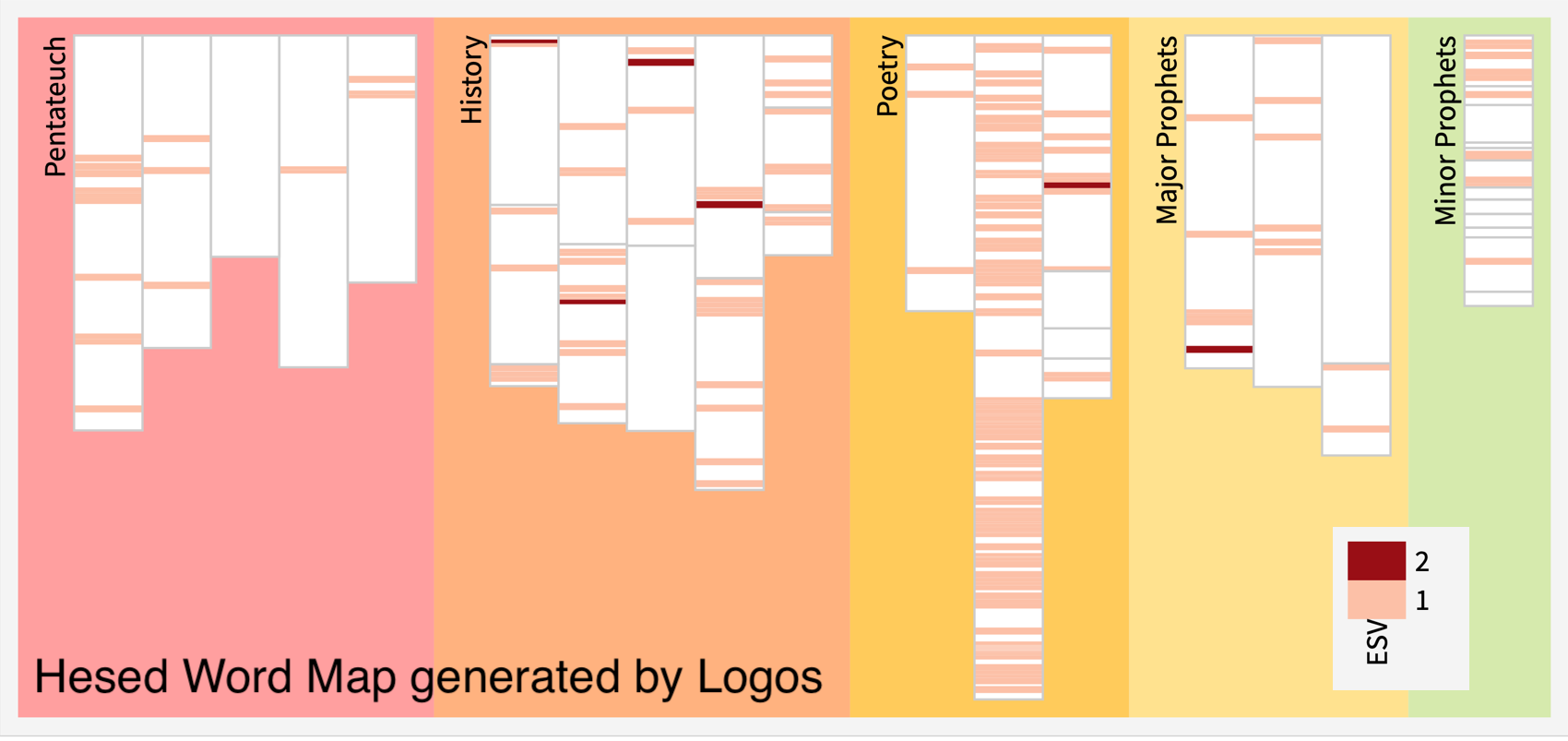



 biblicalfaith.online