David G. Hagopian, editor, The Genesis Debate: Three Views on the Days of Creation (Mission Viejo, CA: CruXpress, 2001), pb., 319pp.
Reading The Genesis Debate: Three Views of the Days of Creation provided a front row seat at how heated the conversation about origins among fellow-believers can be. The book brings together three teams of Christian scholars set to represent three views on the days of creation and how these views impact Christian thinking about origins and cosmology.
The Teams and Views
Each team is made up of two terminal-credentialed scholars, who present their view and critique the other viewpoints. Team one is made up of Presbyterian affiliated scholars J. Ligon Duncan, III, and David W. Hall. They write a chapter on the traditional 24-hour view of the days of creation, and engage the other view points from this young earth lens.
Team two is comprised of astrophysicist Hugh Ross and Old Testament scholar Gleason L. Archer, representing the Day-Age view of the days of creation in which they believe natural theology informs reading the days of creation from a deep time perspective. The final team provides a literary-framework approach to reading the creation story of Genesis 1. The literary framing of the story of creation is the heart of how to read the creation development outlined by Genesis 1. This chapter is written by New Testament scholar, Lee Irons, with Old Testament scholar Meredith G. Kline.
Observations
Due to the nature of this views book, I want to make some general observations about the interactions found in this work. I am doing this for a couple of reasons. First, some of the missteps I believe in this book provide examples to learn from to improve my own case-making. Second, while I believe in the legitimacy of a young earth and universe point of view, and that we ought to engage other viewpoints, fellow-believers should participate in gracious disagreement.
Evangelical Scholars Misunderstand Each Other
Each team complained of being misunderstood. The most pronounced and heated misunderstandings came from the exchanges between Duncan-Hall and Ross-Archer.[1] Duncan-Hall’s assertion of the testimony of the history of interpretation was misunderstood as the elevation of ecclesial dogma over scripture.[2] Ross-Archer’s assertion that evidence must be gained from both special revelation and natural revelation was misunderstood as an equivocation to anti-supernatural science.[3] Irons-Kline’s non-sequential framework was marginalized as a version of Ross-Archer’s Day-Age theory.[4] At various times, these evangelical scholars did misread and inadvertently misrepresented their opponent’s argument.
I was greatly concern in how the teams misread and misrepresented their opponents. It made me wonder how much crosstalk there should be between scholars on opposite sides if the purpose is to flesh out differences and promote solutions. This was not an oral discussion subject to off the cuff remarks. Surely, there was sufficient time to properly understand their opponent’s view. It strained reason for Ross-Archer to sidestep Duncan-Hall’s point about Jesus turning water into wine as example of Divine control over substance to illustrate God’s creative power. It showed an unwillingness to see Duncan-Hall’s point by reducing the miracle into “flavor” and “color” changes. Ross-Archer’s explanation ultimately calls into question the miracle of Cana in their fake whiskey story.[5] Listening carefully is important.
Methods Slant Emphasis
Each team presented their position from their unique methodological emphases which illustrates that conclusions are not only derived from the text but also from the methodology one employs. Duncan-Hall seize on the exegetical tradition of the church to buttress their position from which they will not be moved.[6] Ross-Archer find corroboration between “modern science” of an old cosmos and Genesis 1 from which they offer a radically different life origins narrative.[7] Irons-Kline uniquely offer an elastic approach able to embrace old or young cosmos viewpoints because their approach to the literary features of Genesis 1 allows them to read the text as providing a figurative portrait of a real historical event.[8]
The debate helped me reflect on the methods I use for interpretation. I should not be surprised at the results of the methods employed. If the method is to only use the rule of faith, the history of interpretation, then it should not surprise me that I may defend traditional interpretations. If I emphasize the tools of literary criticism, then I should not be surprised that it may force me to purely literary conclusions which may not be able to account for macro-theological truth. Methods which seek knowledge from natural revelation to inform my reading of the scriptures may subject the text to eisegesis. The methodologies used by Duncan-Hall, Ross-Archer, and Irons-Kline have strengths, but each were shown to have weaknesses as well.
Humility: Same Commitment, Different Results
Humility is vital when evangelicals hold the same core commitments, but their divergent methodologies lead them to different conclusions.[9] Although I gravitate towards Duncan-Hall, I found that they had the most difficulty with humility throughout the discussion. Their responses to Ross-Archer and Irons-Kline revealed their intolerance for their views. In fact, their disposition forced the discussion into a two-views debate rather than three-views. There was far more cordiality between Ross-Archer and Irons-Kline. The aggressive responses by Duncan-Hall provided impetus for more detailed responses by Ross-Archer and Irons-Kline in their critiques of their view.
This made me do some self-reflection. The assumptions I held about the Day-Age View and the Framework View before reading this book were very uncharitable. There is one exception. I was aware of the Framework approach and found it helpful for seeing additional layers to what could be seen in the text of Genesis 1. After reading their commitment to the core elements of creation I felt more sympathetic to each of their views. Furthermore, Ross-Archer and Irons-Kline really gave Duncan-Hall a powerful pushback and criticism. Duncan-Hall presented a “change my mind” argument, failing to offer an exegetical foundation for their argument.
While I remain in general favor of a 24-hour viewpoint, I truly appreciated the tone, presentation and engagement of Ross-Archer and Irons-Kline. They raise some really important questions and offer an approach that should not be dismissed out of hand. Their arguments did not provide enough reason for me to change my view, but their disposition made them come off as cool heads in a heated discussion.
As a final note here, I make a plea to those who wade into the tempestuous waters of the debate on how to read Genesis 1. I support being forthright in case-making, but let us not confuse rudeness with directness–they are not the same.
Recommendation
Despite some of the weaknesses in this book, in particular the cross-talking and overt suspicion of sincerity, each chapter represents a clear argument that explains their view. I would strongly encourage to focus on the author’s commitment to a belief in God as the source of creation, give consideration to their methodology and their assumptions. As a “debate book” it was unnecessarily combative. Aside from this concern, it represents a helpful volume to understanding the sorts of issues believers debate over regarding how to read the creation days of Genesis 1.
Endnotes
[1] David G. Hagopian, ed., The Genesis Debate (Mission Viejo, CA: Crux Press, 2001), 189, 195–211.
[9] The three teams shared a clear commitment to God’s existence, fiat ex nihilo creation, Genesis 1 affirms a historical event, and special creation of humankind; yet, they are divergent on their young earth, old earth, temporal agnosticism conclusions.
N. T. Wright, Scripture and the Authority of God: How to Read the Bible Today (New York: HarperCollins, 2005), pb, 210 pages.
In his volume, Scripture and the Authority of God: How to Read the Bible Today, the former Bishop of Durham (2003–2010) and Anglican scholar, Nicholas Thomas Wright (1948–), argues in close quarters (200 pages) that the “authority of God” is mediated in the scriptures and this authority is properly accessed today when the church takes the biblical narrative seriously—Jesus redeems, renews, and completes the human story—as the rubric by which it engages today’s meaningful questions in face of God’s victory revealed in the gospel.
Book Summary
Wright argues that God is the only authority that can be spoken of concretely and that the authority of God manifested in the world is a necessary reality in way of sin’s corruption of creation in the fall. This assertion of divine authority is realized by the concept of rulership and kingdom. The written word, properly understood as the scriptures (i.e., the Bible), is not authoritative in a moralistic sense as being a scrapbook of good ideas, but instead communicates God’s authority in a narratival sense. For Wright, the flow of this story is played out in five acts (creation, the fall, Israel, Jesus, and the church) revealing the way in which God plans to heal and renew his image-bearers and the creation itself through the work and person of Jesus Christ. The scriptures, therefore, mediate God’s authority in the same way as revealed in the work of prophets as they spoke and proclaimed his word. Today, that same authoritative word is mediated properly to the church—the Bible reading community—when this overall message is narratively understood, contextually appreciated, and Christologically applied.
The overall purpose of the book is to provide a remedy to the “bible wars” in which the question and place of the scripture’s authority have lost their fixed placement in the “culture wars.” The church has always been a “Bible reading” entity and its history reflects this point; however, the church interacts with culture as well as the Bible and must constantly apply afresh its narrative to the church’s ever-changing setting and questions. The areas of contemporary tensions (culture, politics, philosophy, theology, and ethics) the church faces “interlock” with how the Bible-reading church applies the scriptures.[1] The most important resource which sets the scriptures apart as a unique source of Christian guidance is that the Bible is “the authority of God.” This is, as Wright describes a “shorthand” to help densely pack into a phrase that the narrative of the scriptures has an effect upon its readers because it carries a transcendent narrative that reveals the only true authority—God—as one who has created, and is now confronting the fall of his creation by the manifestation of his kingdom through Jesus Christ.
In this significant sense, the Bible reveals that in the kingdom (the kingship), in Jesus, God is confronting a fallen world in order to redeem, renew, and complete it in him. To do so God not only enlists his image-bearers (humans), but must also in the process redeem, renew, and complete them to be those who embrace the kingship of God. Authority, according to Wright, is not static nor flat but must be understood within the conflict of the biblical narrative. The authority of God includes the scriptures, but the scriptures do not exhaust God’s authority. In other words, “the authority of God” resides in the scriptures because it is the form God has chosen to mediate his kingship authority to his bible reading image-bearers, who will be redeemed, renewed, and completed in Jesus Christ. The narrative of scripture as alluded to above, unfolds in five stages, beginning with the good creation, the fall of humanity, the call of Israel, the incarnation of Jesus Christ, and the full consumption of God’s plan in the church. God’s authority in scripture only makes sense within that narrative.
Wright conceives of a theological foundation for his approach to the authority of scripture. This approach brings his main purposes and overarching points into focus. Much of what Wright sees in the broader church culture are significant influences and forces on the academic study of scripture that undermine its authority and accessibility to the church—the intended Bible reading community—and therefore his proposal. Wright spends a major part of his proposal engaging and providing clarifications based on his extensive body of research (which he self-references) to highlight the lingering benefits and problems from the Enlightenment (i.e., Age of Reason), and the influence of the Reformation. Negatively, the development of scientific tools of historical research birthed a movement of pure rationalism, and with it an accompanying skepticism of the divine (or tendency toward deism). This has created a polarization within the theological academy which is still felt to this day represented in his catalog of various “misreadings.”[2] Wright argues that good historical criticism and the Bible can co-exist without the loss of the scripture’s supernatural authority. It is not only possible but necessary for the church to contextually understand the Bible’s story.
Meanwhile, the celebrated Reformation period has likewise contributed to contemporary problems in Bible reading. In particular, Wright culls out the mantra of the Reformation—sola scriptura—and contextualizes it. The slogan was not intended to eviscerate any appreciation for the history of how the historic church had responded to the authority of the scriptures. Wright affirms the Reformer’s “insistence that scripture contains all things necessary to salvation… was part of their protest against the Roman insistence on belief in dogmas like transubstantiation as necessary articles of faith.”[3] The slogan was to affirm a limit, namely, that “nothing beyond scripture” could be taught as an article of salvation.[4] The need to stress this speaks to the “muddled” understanding of the “protest” theology behind the slogan. Furthermore, Wright goes on to underscore a common misunderstanding of another term reaffirmed in the Reformation period, being on insisting on the “literal” sense of scripture. This phrase does not pursue “the sense of the letter” but instead it means “the sense that the first writers intended.”[5] For Wright, this is crucial because it underscores the importance of historical criticism in understanding the text, and it discards a misunderstanding of a hermeneutical principle.
A Brief Evaluation
Wright argues that the question regarding the “authority of scripture” is not a flat discussion, and must take into account more than a book citation by observing how a text of scripture fits within his five-act biblical narrative, and how the trajectory of the “new creation” frames an important narratival hermeneutical context to understand the relevance and application of these texts.
Simply because there may be a “proof text” of an idea found in the Bible does not provide sufficient warrant that the notion is provided positive authority for the practicing Christian today. More is required. This is certainly an important point which Wright demonstrates in the two case studies that Sunday is not the new Sabbath and that the Sabbath ultimately speaks to the coming divine-human co-habitation,[6] and on how to establish the proper basis for male-female monogamy in the face of considerable evidence that the Old Testament tolerated polygamy.[7] What is extremely helpful in Wright’s model is how it grounds the textual and the application of the text in the renewing story of the gospel, and in this way provides God’s authority mediated through these scriptures.
If there is any drawback to Wright’s argument it may be found in his writing style. Granted, it is refreshingly straightforward, but the inclusion of caveats and parenthetical notations can detract from the argumentation. It is not so much of a drawback in Wright’s argument, but the writing style of a very aware scholar seeking to maintain in every statement an accurate reflection of the substance of his thesis. More significantly, Wright does not spend any time working through 2 Timothy 3:16-17, being by his own admission, “the famous passage about scripture.”[8] His only observation is that the passage is not about the nature of scripture but an encouragement to study the scriptures. Certainly, Paul’s focus the usefulness of “all scripture” to make its students “proficient, equipped for every good work” (3:17 NRSV).[9] Nevertheless, “all scripture” is both “useful” (ōphélimos) and “inspired by God” (theópneustos) which are both adjectival statements in the same clause about scripture in general, and are affirmations of their origin (theópneustos) and purpose in particular (ōphélimos). The explanation for this lack of attention is probably because the work presupposes the Bible as God’s mediated authority on the one hand, and that Wright is focused on how to appropriate this authority.
Finding Application
The thesis of Wright’s work has proven to find an immediate application in my life. First, the emphasis on the renewing work in Christ as the “end game” of the theological trajectory has an immediate and personal application in how I process scripture. Second, recognizing that scripture still mediates God’s authority has invigorated my confidence in the theological process.
First, Wright’s work has significantly challenged how I apply the same principle behind the transformative “renewing” of my mind principle of Romans 12:2 to the trajectory of the gospel narrative. As Paul says, “So if anyone is in Christ, there is a new creation: everything old has passed away; see, everything has become new!” (2 Cor 5:17). It has certainly made me more aware of the need to ground my conclusions to what Christ is renewing in the world. The narrative framework looks at the promises of God as “speech acts” wherein he heals not only me, but the world around me.
Second, even in the wake of its historical, occasional, culturally bound essence which requires reason and the Spirit to evaluate my experience(s) and church traditions, God’s authority is still mediated in the scriptures. This has re-invigorated my confidence in the theological process. Wright’s survey of biblical interpretation and authority was extremely helpful in providing better clarity of how authority and scripture have been connected over the centuries.[10] Wright also called attention to the importance of private and communal study, not just in the academic context but also in the congregational setting. Since our insights are limited, it is worthwhile to gain insight from what others see in their in-depth study of God’s word.
Conclusion
What Wright accomplishes in Scripture and the Authority of God is to chart an important course that affirms that “the authority of God” is mediated in the scriptures, and this authority is properly accessed and applied when the redeeming, renewing, and completing work of Jesus Christ is applied to understanding the narrative of scripture as the church answers its call today.
Endnotes
Wright, Scripture and the Authority of God, 4–18.
107–14.
72.
72.
73–74.
143–73.
176–95.
97.
New Revised Standard Version of the Holy Bible.
Wright, Scripture and the Authority of God, 61–81.
The present study is an inquiry into the interconnected reciprocal nature of patronage in the Greco-Roman imperial social setting, as one background component from the New Testament world. One would be wrong to think that such a social dynamic’s presence was minimal. In actuality, patronage and its vocabulary not only appears specifically in the New Testament (Luke 22:25; Acts 10:38; Rom 16:2; Philm 17-20, Phil 4:14-20, etc), but the social reciprocal dynamics in which its value and cultural powers are also assumed(shame, honor, unity, gratitude, fellowship, etc.). The reader who knows what to look for will see it in numerous contexts shaping the life of the body.[1] Unfortunately, the many elements vital to the matrix of patronage can only be pointed to. Yet, as Bruce J. Malina observes, it was “the most significant form of social interaction in the limited-good world of the first century is an informal principle of reciprocity, a sort of implicit, non-legal contractual obligation, unenforceable by any authority apart from one’s sense of honor and shame.”[2] The challenge in this paper is to briefly and accurately describe it.
In seeking to understand the New Testament accurately, scholars propose various exegetical principles and contextualizing models to accomplish this task.[3] The process here requires an approach which appreciates the cultural background of the New Testament to contextualize its vocabulary. This, Albert A. Bell reminds, is the “crucial part of understanding any written text.”[4] Greco-Roman words have a socially conditioned context that the modern reader may not readily identify. “Without a comprehension of the sociological dynamics of that world, our understanding… is terribly superficial at best and woefully mistaken at worst.”[5] The most crucial need for the reader of the New Testament, then, is to be able to bridge the cultural and time gap between the original (native) context and the reader’s contemporary context. This linguistic and cultural divide can be managed. In advancing a cultural-anthropological reading model, Jerome H. Neyrey argues that one can avoid ethnocentric and anachronistic readings of Paul (and the New Testament) by appreciating the difference between reading him as member of the same culture (an emic reading), and by reading him informed by the analytical and descriptive works of specialists and ethnographers (an etic reading).[6] As one gets closer to this “emic reading,” the modern reader comes closer to better appreciate the symbolic universe of Paul’s and Jesus’ culture.[7] The goal here is to gain a realistic perception from “native informants” which can illustrate and contextualize patronage as a Greco-Roman phenomenon.[8]
The presentation to follow will demonstrate how significant the social form of patronage was in the daily life of the Greco-Roman world, it will outline the vocabulary of patronage in Latin and Greek primary sources, it will sharpen this outline to differentiate between political and social patronage, and then offer a realistic scenarios that can illuminate reading the New Testament in its social and cultural world.
Daily Significance of Patronage
In modern analogy, patronage was like an ancient informal “welfare system.” Social services, like the modern model of the United States, would have been quite foreign. Instead, patronage was a cultural phenomenon in which there was a reciprocal relationship between the upper class and the lower class. It benefited lower classes with protection and patronage by means of reasonable support (legal, financial, medical, marital, etc.) for public support, the running of errands, odd jobs, escorting through streets, and providing social honor in exchange (a return). In exchange for the daily allowance (sportula), the client was at the patron’s call. Thus, it was a form of social investment between patron-client; interestingly, even slaves of wealthy households were known to have clients who hoped the slave could use their influence upon their master.[9] Greco-Roman and Christian scholarship is unequivocal about the daily and social significance of the patron-client network of relationships.[10]
Martial, in his colorful Epigrams, clocks what city life was like in the urbs (4.8.1-4): “The first and second hours wear out clients greeting their patrons.” The imagery evokes the crushing nature of the daily dependence of clients upon their patronus.A step further, Juvenal shows how important this allowance of money was for the everyday professional and collegia with his sarcastic words in the Satires (1.95-126):
For no deity is held in such reverence amongst us as Wealth; though as yet, O baneful money, thou hast no temple of thine own; not yet have we reared altars to Money in like manner as we worship Peace and Honour, Victory and Virtue, or that Concord that clatters when we salute her nest.[11]
This fits the common view that the patron-client phenomena were important to the daily life of every social stratum of the Greco-Roman world. To this point, Jérôme Carcopinodescribes that whether employed or unemployed, freedman or the parasite do-nothing, aristocrats or lower plebeians, clients “were no sooner out of bed than they were in the grip of the duties inseparable from being a ‘client.’ […] there was no man in Rome who did not feel himself bound to someone more powerful above him by the same obligations of respect, or, to use the technical term, the same obsequium.”[12] This honor-bound relationship allowed those in various professions and collegia to survive by means of this small daily “dole as their main source of revenue.”
Patronage in Latin and Greek Sources
Extant Greek and Latin sources (literary and epigraphic) speak of patronage, benefaction, and euergetism (good-doing) from political and social perspectives. Ideas such protection, assistance, help, advocacy, and philanthropy appear. Consider the following samples. It seems that patronage was initially borne out of political power and civic duty, but that distinction apparently broke down over time into a social network between the upper and lower classes in the Greco-Roman world among the rich, the poor, the freedman and freedwoman.[13]
The Roman historian Livy stretches back about four centuries to the early Roman Republic and recounts the story of Cincinnatus, the famed aristocratic plebeian consul, turn poor plebeian farmer, turn dictator, turn savior of Roman (History of Rome 3.26-29). According to Livy, his actions as dictator were reciprocated with honor and status. Livy frames (stylizes?) the response of the army as recognizing “the benefit [beneficii] they had received at his hands,” honored him with a golden crown, and “saluted him as their protector [patronum salutaverit]” (History of Rome 3.29.3). They had become his “clients,” and Cincinnatus would use this social bond to his advantage to “clear” the charges against his son Caeso who was on the run for charges of murder. The protector of Rome, then, returned his powers of dictator and returned to the rustic farm life. Later, when Augustus consolidates his power, Tacitus recounts his use of “gratuities” (donis) among the military and the poor (Annals 1.2). Michael Grant[14] interprets this as Augustus letting “it be understood that the old institution of patrons and clients had been recast, so that henceforward all the people were his own, personal clients, including the poorest citizens.” Thus, as principis Augustus and the emperors after him would portray (politically?) to the citizens of Rome and its subjects a bond of reciprocal loyalty.
Greek sources also illuminate various aspects of patronage. In the fifth century BCE, Sophocles frames the tragic Oedipus as gratefully exchanging protection from Thebes and “help [prostátisi] of the dread goddesses” who reigns in their districts, with obtaining “a great savior [sōtēr’] for this city, and troubles for my enemies” in him (Oedipus at Colunus 455-460). The Apocrypha[15] likewise points to the political upheavals in the Maccabean storyline connected to concepts of patronage. In 2 Maccabees, Simon slanders Onias, who is designated “a plotter against the government the man who was the benefactor [tòn euergétēn] of the city, the protector [tòn kēdemóna] of his compatriots, and a zealot for the laws” (4:2).[16]
In 3 Maccabees 3:13-29, “King Ptolemy Philopater” declares to his “generals and soldiers” that despite his goodwill (philanthrōpía), a desire to do good (eū poiēsaí), and to honor (timēsai) in the Jewish temple (3:15-17), the Jews “manifest ill-will toward us” and are “the only people among all nations who hold their heads high in defiance of kings and their own benefactors [euergétais], and are unwilling to regard any action as sincere” (3:19). The accommodative and benevolent king (philanthrópōs 3:20) declares that such rebellious Jews should be arrested, bound, and deported and that any who harbor them should be severely punished (3:25-29). Eventually, Philopator descends upon the Jews but is subdued by two angels. The king breaks down to pity and tears, and blames and threatens his “friends” (toís phílois): “You are committing treason and surpassing tyrants in cruelty; and even me, your benefactor [euergétēn]” (6:24).
Political and Social Patronage in Rome
In the Greco-Roman world of the first century CE, there appears to be evidence distinguishing between political and social patronage. This can be confusing since sources often use terms like benefactor, euergetes, and patron in the process of discussion. The masculine form of the Greek prostát– (see verbal use above for “help”) is somewhat problematic. It is often considered synonymous with the Latin patronus. Interestingly, the New Testament the feminine form προστάτις is used in Romans 16:2 and translated as patron and benefactor (ESV; NIV, NRSV, HCSB). Erlend D. MacGillivray[17] takes exception to the view that these two forms are completely synonymous. The masculine appears in both Attic Greek and in the Roman Empire and carries both legal and a variety of leadership benefaction roles, but not the feminine form. MacGillivray argues that applying the masculine meaning upon prostátis is exegetically problematic for this reason. Benefaction is in view, but one must distinguish between political patronage from some interpersonal social networking.
MacGillivray argues that understanding prostátis depends, then, upon understanding the fluid nature of ancient Mediterranean reciprocal dynamics, recognizing the patron-client model is far too limiting and misleading. There is a difference between the narrow and nuanced meaning of classical patronage and the broad euergetistic/altruistic benefaction. While epigraphical gratitude evidence shows that prostátis and prostátes imply civic prestige, the nature of the evidence is, however, often weak to force synonymity. Part of the problem stems from the near normative templates in honorary Greco-Roman epigraphs that do not always neatly distinguish between the various kinds of patronage. Thus, the presence of these terms do not prove exclusively a classical patronage/patronus; consequently, MacGillivray’s work argues that prostátis and prostátes are not demonstrably synonymous.
R. A. Kearsley[18] extends this trajectory and explores several first century CE gratitude (honorarium) inscriptions shedding light on the first-century distinction between political and social patronage. These aristocratic women are named, Iunia Theodora and Claudia Metrodora, and are celebrated as female benefactors/patrons who operated in mid-first century CE Asia Minor. The cities of Lycia (Myra, Patara, Tel-messos) recount the influence of Theodora. Theodora apparently had multiple-citizenships, she freely shared her wealth, applied influenced for political and commercial purposes, and is described consistently in benefactor terms (sōphronōs, philolúkios) in Lycia. Such amounts to Theodora functioning as a social benefactor. On the other hand, Metrodora of Chiot Island likewise held multiple-citizenships, did hold political office as magistrate (stephanephoros), which required benefaction toward the people although she surpassed such requirements. She functioned in banquets, directed imperial games, gymnasiarch, public bathhouse donation, basileia in Ionia, and was praised for her public virtue. She was a benefactor as part of holding office.
Realistic Patronage Scenarios for Reading the New Testament
The above illustrations provide insight into the deep and ancient tradition of patronage and how such played out in various settings. There are two passages where patronage vocabulary is explicitly found in the New Testament.
First, in Luke, the political aspect of patronage is evident in Jesus’ counter-intuitive teaching on greatness. Jesus corrects the “greatness debate” among the disciples by saying,
“The kings of the Gentiles exercise lordship over them, and those in authority over them are called benefactors [euergétai]. But not so with you. Rather, let the greatest among you become as the youngest, and the leader as one who serves” (22:25-26).
Frederick W. Danker observes, euergétai “served as a title for rulers in Syria and Egypt… In many cases the title would conceal tyranny under extravagant expenditure” (cf. Greek Esther 16:2-3, 13-14).[19] One might argue that Jesus is taking for granted a political euergétai known to abuse such roles, and parts from the fundamental principle of the patron-client relationship: “a service performed or a favor done shall not be transformed into status and honor.”[20] Jesus’ leadership principle, then, is that one serves detached from the demands of reciprocity and the honor and status it brings (cf. Acts 10:38).[21]
Second, in Romans 16:1-2 patronage appears to have a social component. Paul commends Phoebe to the church as “a servant of the church at Cenchreae” and as one who should be helped —reciprocally— “for she has been a patron [prostátis] of many and of myself as well.” Caroline F. Whelan[22] relates this passage to the context of Roman reciprocal social conventions within associations (collegia). Whelan maintains that women not only had the Roman legal standing to operate their wealth independently of guardians, they also functioned as civic patrons for collegia. Secondly, comparable “recommendation” letters reveal two types of reciprocal relationships. There is the superior-inferior recommendation rhetoric, and two, the social-equals recommendation rhetoric; each reflecting in some sense the inherent nature of reciprocity in Rome’s social structure, the matrix of which fuses together the economic and social. Romans 16:1-2, then, points to one of these realistic scenarios. Whelan argues that the patronage between social equals (amica, friends) is probably in view. Phoebe needs Paul’s influence among those addressed in Romans 16 (thus the recommendation), but as “equals” such rhetoric is not for his own social benefit. Instead, it is a gesture of gratitude for her own social activity as a social patron (euergetistic) to the collegia of the church in Cenchrea.
Conclusion
Robert Wilken asserts: “We have a distorted view of the history of early Christianity… The historian of Christianity has given the impression that the rest of the canvas is simply background for the closeup —relegating the general history of the times to an introductory chapter of vague generalities.”[23] Hopefully, this paper provides a closer, native (emic) reading. The smaller the cultural and linguistic gap is, the more accurate the reading. May this paper accomplish its task, to gain realistic perceptions from primary sources which can illustrate and contextualize patronage as an important Greco-Roman imperial phenomenon.
Endnotes
David A. deSilva, “Honor and Shame,” “Patronage,” DNTB 518-22, 766-71; Donald Walker, “Benefactor,” DNTB 157-59; Halvor Moxnes, “Patron-Client Relations and the New Community in Luke-Acts,” in The Social World of Luke-Acts, ed. J. H. Neyrey (1991; repr., Peabody: Hendrickson, 1993), 241-68; Everett Ferguson, Backgrounds of Early Christianity, 3rd ed. (Grand Rapids: Eerdmans, 2003), 66-69.
Bruce J. Malina, The New Testament World (Louisville: John Knox, 1981), 80.
Ralph P. Martin, “Approaches to New Testament Exegesis,” in New Testament Interpretation, ed. I. Howard Marshall (Grand Rapids: Eerdmans, 1977), 220-51.
Albert A. Bell, Jr., Exploring the New Testament World (Nashville: Nelson, 1998), 2.
M. Robert Mulholland, Jr., “Sociological Criticism,” in Interpreting the New Testament, eds. David A. Black and David S. Dockery (Nashville: B&H, 2001), 171.
Jerome H. Neyrey, Paul, In Other Words (Louisville: Westminster John Knox, 1990), 13.
Neyrey, Paul, 14-17. Neyrey’s distinctions and concerns have value, but he makes a hardline dichotomy between Paul as one who receives supra-cultural insight (i.e., from God) and Paul as a fully incarnated product of his times (18). This distinction ignores Paul’s stated role from God. This is one of Mulholland’s four critiques of this model, it tends to be human-centered, often grounded in dynamic models foreign to the Roman world, imposes the model on the evidence, and lends itself to sociological reductionism (“Sociological Criticism,” 178-80).
David A. deSilva, The Hope of Glory: Honor Discourse and New Testament Interpretation (Collegeville: Liturgical, 1999). The “native informants” are “our best instructors” (xi).
Bell, Exploring the New Testament World, 191-92.
Ferguson, Backgrounds, 67; Florence DuPont, Daily Life in Ancient Rome, trans. C. Woodall (Oxford: Blackwell, 1993); Micahel Grant, A Social History of Greece and Rome (New York: Scribner’s Sons, 1992).
Jérôme Carcopino, Daily Life in Ancient Rome, ed. Henry T. Rowell, trans. E. O. Lorimer (1940; repr., New Haven: Yale University, 1968), 171.
Grant, Social History of Greece and Rome, 30, 54, 70-76, 114-119.
Grant, Social History of Greece and Rome, 75-76.
See also the verbal, and substantival, usages in Wisdom 3:5, 11:5, 13, 16:2, 19:13-14; 2 Macc 8:6; 4 Macc 8:6; Greek Esther 16:2-3 = 8:12c (tōn euergetoúntōn), 13 = 8:12n (euergétēn). Of these sources, Mordecai is framed as sōtēra and euergétēn (cf. God in LXX Psa 12:6, 56:3, 114:7).
Quotations for the Old Testament Apocrypha are taken from New Revised Standard Version of the Holy Bible (Nashville: Nelson, 1989). The Greek text is from Septuaginta (Stuttgart: Deutsche Bibelgesellschaft, 1996).
Erlend D. MacGillivray, “Romans 16:2, prostátis/prostátes, and the Application of Reciprocal Relationships to New Testament Texts,” NovT 53 (2011): 183-99.
R. A. Kearsley, “Women in Public Life in the Roman East: Iunia Theodora, Claudia Metrodora and Phoebe, Benefactress of Paul,” TynB 50.2 (1999): 189-211.
Frederick W. Danker, Jesus and the New Age According to St. Luke (St. Louis: Clayton Publishing, 1979), 222.
Moxnes, “Patron-Client Relations,” 261.
Halvor Moxnes, The Economy of the Kingdom (1988; repr., Eugene: Wipf & Stock, 2004), 158.
Caroline F. Whelan, “Amica Pauli: The Role of Phoebe in the Early Church,” JSNT 49 (1993): 67-85.
Robert L. Wilken, The Christians as the Romans Saw Them (New Haven: Yale University, 1984), xiv.
Bibliography
Bell, Albert A., Jr. Exploring the New Testament World: An Illustrated Guide to the World of Jesus and the First Christians. Nashville, TN: Nelson, 1998.
Carcopino, Jérôme. Daily Life in Ancient Rome: The People and the City at the Height of the Empire. Edited by Henry T. Rowell. Translated by E. O. Lorimer. 1940. Repr., New Haven, CT: Yale University, 1968.
Danker, Frederick W. Jesus and the New Age According to St. Luke: A Commentary on the Third Gospel. 1972. Repr., St. Louis, MO: Clayton Publishing, 1979.
deSilva, David A. “Honor and Shame.” DNTB. 518-22.
deSilva, David A. The Hope of Glory: Honor Discourse and New Testament Interpretation. Collegeville, MN: Liturgical Press, 1999.
deSilva, David A. “Patronage” DNTB. 766-71.
DuPont, Florence. Daily Life in Ancient Rome. Translated by Christopher Woodall. Oxford: Blackwell, 1993.
Ferguson, Everett. Backgrounds of Early Christianity. 3rd edition. Grand Rapids, MI: Eerdmans, 2003.
Grant, Michael. A Social History of Greece and Rome. New York, NY: Scribner’s Sons, 1992.
Kearsley, R. A. “Women in Public Life in the Roman East: Iunia Theodora, Claudia Metrodora and Phoebe, Benefactress of Paul.” TynB 50.2 (1999): 189-211.
MacGillivray, Erlend D. “Romans 16:2, prostátis/prostátes, and the Application of Reciprocal Relationships to New Testament Texts.” NovT 53 (2011): 183-99.
Malina, Bruce J. The New Testament World: Insight from Cultural Anthropology. Atlanta, GA: Knox, 1981.
Moxnes, Halvor. The Economy of the Kingdom: Social Conflict and Economic Relations in Luke’s Gospel. Minneapolis, MN: Augsburg Fortress, 1988. Repr., Eugene, OR: Wipf & Stock, 2004.
——-. “Patron-Client Relations and the New Community in Luke-Acts.” Pages 241-68 in The Social World of Luke-Acts: Models for Interpretation. Edited by Jerome H. Neyrey. 1991. Repr., Peabody, MA: Hendrickson, 1993.
Mulholland, M. Robert, Jr. “Sociological Criticism.” Pages 170-86 in Interpreting the New Testament: Essays on Methods and Issues. Edited by David Alan Black and David S. Dockery. Nashville, TN: B&H, 2001.
Neyrey, Jerome H. Paul, In Other Words: A Cultural Reading of His Letters. Louisville, KY: Westminster John Knox, 1990.
Walker, Donald D. “Benefactor.” DNTB. 157-59.
Whelan, Caroline F. “Amica Pauli: The Role of Phoebe in the Early Church.” JSNT 49 (1993): 67-85.
Wilken, Robert L. The Christians as the Romans Saw Them. New Haven, CT: Yale University, 1984.
The book of Proverbs was the first book of the Bible that I read as a new Christian in 1996. It called my attention and spoke to me with wisdom that I did not have. It literally saved my life. I come from a street gang background, and after leaving it behind for Christ I would receive invitations and phone calls to “go out” with friends still living the life I had abandoned. The hard part was that I cared for my friends but I knew that the life they were living was dangerous. On one occasion, after reading Proverbs, I denied an invitation to go out. My friend asked, “Why?” I said, “Let me read you something.” I read to him Proverbs 1:1-33verbatim from the American Standard Version.[1] He did not like what he heard, but he understood. It would almost be a decade later when I would have a safe outing with my old friends. In that moment, though, Proverbs spoke for me with the wisdom I did not have at the time, the words of wisdom which promise life when followed, and warnings of calamity when not.
On face value, Proverbs promises to all those who would read and apply its words of protection from calamity. The first verses invite people to learn wisdom. It calls out with the words, “To know wisdom… to discern the words… to receive instruction… to give prudence… knowledge and discretion” (1:2-4 ASV). These synonymously paralleled ideas highlight the strength, beauty, and power of this book. I am indebted to Proverbs for giving me the words and a plan of action for speaking to my friend when I was very tempted to say yes and go out with him and others. It cannot be overstated that this paper on Proverbs is not a mere academic exercise in biblical hermeneutics and interpretive methods, and their bearing on Hebrew Poetry and Wisdom Literature. I do not believe that an academic judicious study of the Scriptures must ignore or be disinterested in practical engagement of the same. The wisdom psalm says our “delight” must be “in the law of the Lord” wherein we should meditate upon it “day and night” and, as a consequence, our actions bear its fruit (Psa 1:2-3 ESV).[2]
The present paper focuses, though, upon the contents of Proverbs 1-9 and the methodology within this section to teach wisdom. The impetus for this paper is the intriguing use of two women (Lady Wisdom, Dame/Madam Folly) dueling for the attention of a “lover/spouse” (the reader), the use of a father-figure addressing his son as to the importance of selecting a companion from one of these women, and how this motif and strategy is used to teach wisdom —presumably from God. This paper will contextualize Proverbs 1-9 in order to properly understand its literary features (genre), structure (the instruction speeches), and strategies (how it teaches wisdom); so that, trajectories may be suggested for personal spiritual growth in wisdom. The home and the church needs more wise people active in this world.
Consider first the cautionary words of Old Testament scholar, Tremper Longman, III:
We will surely distort God’s message to us if we read the Old Testament as if it had been written yesterday. We will surely misapply it to our lives and the communities in which we live if we don’t take into account the discontinuity between the Israelites… and us Christians living at the beginning of the third millennium.[3]
In an attempt to reduce these potential gaps, this paper will have two movements. First, Proverbs will be considered as a work of Hebrew Poetry set within the international context of Wisdom Literature. Second, the strength of interpreting Proverbs 1-9 as a significant collection within the anthology of the whole book will be examined. Finally, some conclusions will be drawn.
1. Contextualizing the Genre of Proverbs
Proverbs is a work of Hebrew Poetry set within an ancient international context of Wisdom Literature. Proverbs must be read in light of the stylistic poetic methods of the ancient Hebrews rather than in the light of modern literary expectations. Karen Jobes reminds that the “unfamiliarity of ancient literary genres found in the Bible is undoubtedly a stumbling block to interpretation — and has been throughout the history of the church.”[4] Due to the antiquity and foreignness of the Hebrew Bible, it is important to bridge this interpretive gap by understanding the form through which God communicates His Word. To even begin to understand Hebrew poetry the Bible student must enter into “the image world of the poet” derived from “the ancient biblical culture” which is most likely quite different from the present modern (or post-modern) era today.[5] To lament with Samuel Sandmel, outside of allusions to David, Solomon, “certain ‘guilds,’” and the mentions of Asaph and the sons of Korah in the superscriptions of the Psalms, “Scripture tells us virtually nothing about the poets.”[6] Nevertheless, the legacy of their poetry suggests that they were wordsmiths and craftsmen[7] leveraged by the Spirit of God to communicate His Word in poetic form.
Poetry Appreciation
Poetry —ancient Near Eastern (ANE) or modern— is quite a different literary creature than narratives and civic codifications. To appreciate poetry and non-prosaic literature, it must be approached “with our imaginations sharpened, our rhythmic senses ready to carry us along the swells and recesses.” In others words, a poetic frame of mind must be at the ready if there will be any enjoyment or profit when reading poetic sections and books of the Bible.[8] Why? Because poetry is crafted to convey truth by means of emotion and imagery; the imagery is not to be pressed for its literalness. This is critical because the Hebrew Bible particularly is comprised of many books and sections which are framed in poetry (verse or proverb). This is a core hermeneutical skill needed to interpret and understand a large section of the Hebrew Bible, of which only Leviticus, Ruth, Ezra-Esther, Haggai and Malachi have no poetic sections.[9] Ultimately, poetry is regarded as the second most prevalent form of literature in either testament.[10]
Proverbs must be set within the international context of Wisdom Literature for this is the background of its poetic forms. This is not comfortable for some Bible students; however, when the biblical writings are set within their historical context, it becomes observable that biblical writers use the literary genres and conventions of their day and international heritage.[11] This is true as for the Hebrew Bible as well as the New Testament. For example, the Greco-Roman world was a letter writing community and its capacity to send information through a letter as a surrogate for a personal visit was powerfully used by the apostles and Christian prophets.[12] This utilitarian means led to the dominance of the epistolary genre of the New Testament. Likewise, it is clear that the form and function of Proverbs that its poetic nature is tied to an internationally known literary genre which centers upon teaching wisdom. It is not the form that makes them unique, it is the revelation they bear from God which set Israel’s Wisdom Literature apart from its international counterparts (2 Tim 3:16).
Consequently, while the context of God’s relationship with Israel may satisfy many interpreters of Proverbs for understanding the formation of the wisdom genre, it is probably better to understand Israel’s Wisdom Literature within the “contemporary” international context of the ANE. Merrill F. Unger offers, however, a valuable caution. Unger stresses a value for the contributions of scholarship from a variety of disciplines external to the text of Scripture (archaeology, ethnology, history, etc.), provided such disciplines are “purged of the leaven of unbelief and the unhappy results of a professed scientific but invalid method of approach that reposes [i.e., sets, lies] authority in unaided human reason.”[13] The concern is a valid one, but this conviction must not breed a fear which hinders properly contextualizing the Old Testament (cf. Longman).
International Wisdom Literature
With this said, Kenton L. Sparks, John H. Walton, and William W. Hallo have cataloged a vast array of documents and texts which make it clear that “wisdom was an international rather than strictly Israelite/Jewish phenomenon.”[14] These wisdom texts are spread across three broad ancient international regions and “states”: Mesopotamia, Egypt, and the West Semitic and Hittite. The existence of Wisdom Literature external to biblical sources goes back to the third millennium BC. In Mesopotamia, wisdom is identified in such texts as the Sumerian Proverbs, the Instruction of Shuruppak, the Instruction of Urninurta, the Counsels of Wisdom, and the Advice to a Prince.[15] In Egypt, “Instruction” texts such as the following share a striking literary correspondence with Proverbs: Instruction of Ptahhotep, Instruction of Merikare, and Instruction of Any and Instruction of Amenemope.[16] In the third group, the Aramaic Proverbs of Ahiqar bears similarities with the numerical sayings of Proverbs (6:16-19).[17]
Consider a few conclusion drawn by Old Testament scholars regarding these extra-biblical international sources of Wisdom Literature. First, Walton demonstrates (following Kitchen)[18] that “a great deal of formal similarity exists between the Instruction of the ancient Near East and the book of Proverbs.”[19] Thus, one cannot ignore this similarity. Second, Israel’s wisdom genre is a late-comer, however, when compared to the international community. Nevertheless, despite the existence of international Wisdom Literature which predates Israel’s, one should not confuse pre-existing genre and form as a subversive challenge to divine revelation. Third, many of these texts are generally framed between a father and a son, provide advice and counsel, and employ riddles and figurative language.
In the Akkadian Counsels of Wisdom (lines 81-84)[20] a father speaks to his son:
My son, if it be the wish of a ruler that you belong to him, //If you are entrusted with his closely guarded seal, //Open his treasure (and) enter it, //For no one but you may do it.
In the Instruction of Shuruppak (lines 31-34)[21] there are sections reminiscent of the concern about proper conduct especially around a married woman (Prov 2:16-22, 5:1-23, 6:20-35, 7:1-27):
My son, do not commit robbery, do not cut yourself with an axe. //Do not act as the bridegroom’s friend in a wedding, do not … yourself. //Do not laugh with a girl who is married; the slander is strong. //My son, do not sit (alone) in a chamber with a woman who is married.
Fourth, the wisdom “Instructional sayings” texts emphasizing the passing on of instruction by imperatival phrases (“listen, my son”) find strong intertextual similarities with Proverbs 1-9, 22-24, and 30-31.[22] For example, the Egyptian Instruction of Amenemopet shares common literary features with the prologue of Proverbs 1 and 22:17-24:22.[23]
Solomon’s Placement
These findings stand in agreement with the biblical narrative which frames the international influence and fame of King Solomon’s wisdom (1 King 4:29-34). Solomon’s kingdom (ca. 960-922 BCE) is connected to the international community of the world. There are five elements to this passage which underscore the international stature of wisdom in Israel due to Solomon.[24]
First, as a result of Solomon seeking wisdom and “an understanding mind to govern” Israel (1 King 3:9), God grants him “wisdom [hakmah] and understanding [tebuna] beyond measure” (4:29).[25]
Second, the richness of his wisdom is as the “breadth of mind like the sand on the seashore” (4:29).
Third, Solomon’s hakmah is intentionally stated to have surpassed the pre-existing wisdom tradition of the east (Mesopotamia?) and Egypt (4:30).[26]
Fourth, Solomon’s wisdom was regarded as exceptional at home among the men of Israel (4:31).[27]
Fifth, Solomon’s wisdom had achieved international acclaim (4:31-43). Perhaps, the catalogue of Solomon’s 3,000 proverbial sayings and his 1,005 songs (masal) were appealing for their artistry and craftsmanship: “And people of all nations came to hear the wisdom of Solomon, and from all the kings of the earth, who had heard of his wisdom” (4:43).[28]
Furthermore, the mention of the Ezion-geber seaport and capable seamen in 1 Kings 9:26-28 and 2 Chronicles 8:17-18 provides insight into the international trade and military capacity of Israel during the reign of Solomon. The capacity to use the sea would extend Israel’s connection to other nations and implicitly suggests that here was to some degree the transference of cultural and religious ideas. The point is, Israel was connected.[29]
Exploring the Purpose of Proverbs 1-9: Order and the Fear the Lord
What is the purpose the Wisdom Literature as revealed in Proverbs 1-9? A survey of scholarly sources can easily demonstrate the difficulty inherent in defining biblical wisdom. Some define wisdom, and ultimately the purpose of Wisdom Literature, from the point of view of a chase to obtain wisdom or to become wise. Dave Bland asserts that Wisdom Literature concerns itself with “how one gains wisdom” so that one may have ability and expertise to negotiate the difficulties of life (2:1-5).[30] James G. Williams, describes wisdom as the ability to voice and apply perspective, “wisdom is dedicated to articulating a sense of order.”[31] Williams goes on to define that “sense of order” through the lens of positive and negative retributive justice; which is it say, if you do x, then y follows — whether to reward you or to punish you. Furthermore, and what is inviting to Williams’ treatment of wisdom codified in proverbial sayings, is that the power of wisdom resides in its capacity to instill discipline and self-control (musar 1:1-7).[32]
Indeed, Kevin J. Youngblood[33] sustains and extends this thesis by arguing that “discipline” functions in four relational levels, all of which maintain the “cosmic boundaries” which protect wisdom’s order. They move from the proper order that should exist in the comprehensive first level of the cosmos as God orders it, the second level of the city with its cultural and political order, the third level being the family and household order, and finally the fourth level where self-discipline reflects the “individual expression” of the cosmic order.[34] The foundation to this order of wisdom is spelled out in the prologue of Proverbs (see Youngblood’s figure below).
Figure from Youngblood, “Cosmic Boundaries,” ResQ 51 (2009): 147.
The language of wisdom from Proverbs 1:2-6 is distinctively summed up[35] by the synonymously parallel concept of “the fear of the Lord is the beginning of knowledge” (1:7a). Bruce Waltke calls this verse the essential “spiritual grammar for understanding” Proverbs and in effect wisdom.[36] In agreement, if Bland and Williams may be synthesized, the pursuit to gain wisdom is to articulate and practice the treasury of human knowledge which provides the understanding and guideposts to live within the proper divinely sanctioned order of existence. In light of Proverbs 1:7a, then, the emerging wise person must begin with the primary source of earthly order, namely — the Lord. Roland Murphy believes this phrase enunciated the motto of the sages. It takes little to explain how this function of “fear” in the God of Israel is the only thing which aligns the emerging person with a right relationship with their surroundings.[37]
In addition, when seeking a broader perspective on the notion of fearing the Lord, Kenneth T. Aitken calls attention to two elements of “the fear of the Lord” illustrated in the Hebrew Bible. First, there is “deep-seated reverence and awe,” and second, there is the commitment of the emerging wise person to be loyal and obedient to the Lord’s law.[38] It was Moses who was afraid to look at God when He manifested at the burning bush (Exod 3:6), and it was Isaiah who spoke of regarding “the Lord of Hosts” as holy, your “fear” and “dread” (Isa 8:13). However, Proverbs use of “the fear of the Lord” is quite clear. The phrase is used in Proverbs 1:7 and 9:10. In the conclusion to the preamble of Proverbs (1:7), the emphasis is laid upon a promotion to begin practicing the essence of wisdom; later, Proverbs 9:10 functions as a warning to those who would be seduced by the way of folly, or as Whybray calls her Lady Stupidity.[39] “Fear of the Lord” or “fear the Lord” is used as a shorthand (Waltke’s “spiritual grammar”) for the wisdom of obedience to God’s order (Prov 3:7; 14:2; 24:21; 28:14; 31:30). In these references for “fear the Lord,” one can observe in the juxtaposed tension found in the antithetic binary line the contours of what wisdom-obedience is and is not.
We may then conclude that “fear of the Lord” or “fear the Lord” is used as a shorthand (Waltke’s “spiritual grammar”) for obedience to God’s order as it connects down the one’s personal relationships (Prov 3:7; 14:2; 24:21; 28:14; 31:30). In these references for “fear the Lord,” one can observe how the contours of what “wisdom-obedience” is and is not by the tension created in the antithetic binary line.
2. Understanding the Structure of Proverbs 1-9
The strength of interpreting Proverbs 1-9 as a significant collection within the anthology of the whole book will be examined. The book of Proverbs may be outlined in three movements: (1) the preamble (1:1-7), (2) the Instructional Sayings (1:18-9:18), and (3) the Proverbial Sayings (10:1-31:31). An outline like this demonstrates the broad outlook of the book which is framed as a father encouraging his son to follow after wisdom.[40] However, it is very clear from the headings staggered throughout Proverbs (1:1, 10:1, 22:17, 25:1, 30:1, 31:1), that the canonical form of this inspired book is the result of a purposeful editorial hand(s) marked by these collections. This anthological insight provides guideposts for knowing how to read the different parts of Proverbs.[41] It is precisely due to this diversity of literary forms in Proverbs that forces Whybray to say, “there is little gained from attempting to read the book straight through without a break.”[42] In the case of the two Solomonic headings (1:1, 10:1), it may be to acknowledge the change in literary form from Instructional discourse to two-line proverbs.[43] These headings provide internal seams to distinguish between literary collections.
Unfortunately, the academic community is divided over the exact structure of Proverbs 1:8-9:18.[44] Merrill F. Unger offers a common three-point outline: (1) the call of wisdom (1:1-33), (2) the rewards of wisdom (2:1-7:27), and (3) praise of divine wisdom (8:1-9:18).[45] Yet, the outline is simplistic and does not take into account the prologue (1:1-7), nor the various individualized thematic Instructions given on the wayward woman throughout chapters 2-7. To be fair, Unger is providing an introductory outline, and yet his outline represents the problem of oversimplification.
Outlining the Structure of Proverbs 1-9
So while there is wide agreement that Proverbs 1-9 is framed in a series of lectures or Instructions, this is where the agreement ends. Some scholars organize Proverbs 1-9 along self-proclaimed traditional lines of fifteen discourses (Bullock, Archer). Meanwhile, other scholars carve out 10 instructional speeches with a varied number of interludes (Whybray, Bland, Crenshaw). However, Patrick W. Skehan[46] takes his cue from Proverbs 9:1 advancing a seven speech (Instruction) model:
“Wisdom has built her house; she has hewn her seven pillars.”
For Skehan this is the best interpretive place to start, as the seven pillars of Wisdom personified are best explained in literary terms (a “literary edifice”). Chapters 1 and 8-9 function, according to Skehan, as the framework for the seven speeches of roughly 22 lines each within chapters 2-7. Despite some promising observations, Skehan’s forces every speech into this paradigm which runs him into trouble with Proverbs 6:1-19. His solution is to cut it out of his structure, labeling it as “intrusive.”
What is clear is that there is an intentionality in how Proverbs 1-9 was organized, but at this point, there is not total agreement among biblical scholars, who have similar and overlapping outlines. Furthermore, these smaller sections within chapters 1-9 do work together and provide the “hermeneutical guide to the interpretation of the rest of the book” (10:1-31:31).[47] It is not held here that the value of the structure of chapters 1-9 falls because of the difficulty of outlining it; instead, the value of the structure is upheld if it accomplishes its intended goal: to instruct the simple to find wisdom through the fear of the Lord. The overlapping ideas and grammatical nuances which create structural tensions may, in fact, be another measure to provoke the interconnected nature of these Instructions.
The Personification of Wisdom and Folly
The theological contribution of chapters of the Instruction sayings 1-9 is found particularly in its personification of wisdom and folly. There is the pursuit of the proper order of things (Lady Wisdom) and the disruption of the proper order of things (Dame Folly, the Adulteress, etc.). Wisdom and Folly are personified throughout Proverbs 1-9: Folly (1:10-19, 4:14-17, 5:1, 7:1, 9:13-18) and Wisdom (1:20-33, 8:1-21, 9:1-6). The personification of wisdom and folly is particularly developed in Proverbs8:1-9:18, when the emerging wise person is called upon to make the final decision. The pageantry is over. Unlike Adam who woke up “clean slate” to Eve in the Garden, the emerging wise son must choose between two beauties. Will he choose Lady Wisdom or Dame Folly?
Bringing a mind ready for the imagery of poetry, recognizing this personification is critically important. Personification may be understood as when “an inanimate object or entity or an animal (or a god, or God) is spoken of as though it or he were a human person with human characteristics.”[48] The power in such figures of speech, over against the clarity of literal speech, relies on its power to communicate with “richness, depth, and emotional impact.”[49] Although it can be argued that such women may and do exist in real life,[50] it can not be ignored that throughout the context of chapters 1-9 they function as figurative expressions to illustrate the object lesson of both wisdom and folly.
Personification plays another important role besides providing imagery. It is clear that even “the way” which an emerging wise person will go is personified by the home of either Wisdom or Folly. These all reflect one choice to follow God or to reject His counsel. In chapters 8-9, Wisdom’s origin is above the city, “the highest places in the town” (9:3); likewise, so is Folly situated in a seat “on the highest places of the town” (9:14). It is believed by some that this is a direct allusion to the ANE idea that only the god of that city would dwell in the highest locales.[51] Derek Kidner illustrates from Canaanite practice the precedent to personify a deity from the pantheon with the principle which best represented their god or an attribute of their god (anger, war, love, etc.). Personifying God’s wisdom by a faithful honorable woman was then in keeping with literary strategy; likewise, personifying the opposition to God’s wisdom (idolatry? paganism?) by a distrusted dishonorable covenant breaking woman also fits.[52] Thus, personification is more than mere imagery. It serves as a literary feature —a tool— procured by Israel from the international religious community, and incorporated it into their own wisdom speeches to epitomize God and the deceitful “competition.”[53]
The Strategy’s Terminus
The first nine chapters of Proverbs creates a framework for understanding that seeking wisdom, and upholding how things ought to be, demonstrates the “fear of the Lord.” This “discipline” and “self-control” to choose wisdom functions then in relational ways. What the speeches in Proverbs 1-9 address is that our choices affect the order of things around us. In the four concentrated sections dealing with the adulteress or strange woman and the unfaithful wife(2:16-22; 5:1-23; 6:20-35; 7:1-27), wisdom is explained in terms of marital faithfulness, foolishness is explained in terms of the pitfalls of misplaced sexuality.
Again, Youngblood is correct when he observes that wisdom (for Youngblood “self-control”) “is a matter of submitting oneself to Yahweh’s governance as does all creation.”[54] It begins with the self, then in the home, then the civic interactions, and then before God himself (see figure above).[55] This transition is borne out by comparing Proverbs 3:19-20 and 24:3-4. The same wisdom that founded creation also builds our households; the same understanding by which the heavens are established also establishes our own home and life; by means of his knowledge creation functions, so to our family.[56] The choice of the which woman to dine with and to be with, is a demonstration —a graduation of sorts— for the emerging wise person, for in that choice they have shown fear and discipline (or, vice and disorder), and are living in the order that ought to be (or, how it ought not to be).
Two outcomes result at this point. In the first place, the emerging wise person has chosen the direction of their life, which according to Proverbs 1-9 ought to be wisdom and fear of the Lord. In the second, this perspective will give the reader the proper guidance for understanding judiciously and applying the binary proverbs in the later collections of Proverbs. Proverbs 1-9, then, provides the context to understand the rest of the book.
3. Models for Teaching Wisdom
Let us consider some thoughts on how to articulate a model for teaching wisdom within the home and the church.
Wisdom-Training Must Begin in the Home
The motif of a father (and mother) speaking to their son is a significant reminder of the importance Scripture places on the home as the primary location for spiritual formation. The shema passage of Deuteronomy 6:4-9 is not only the Law but also provides and demands parents and guardians to find appropriate ways to make faith the “air that the family breathes.”
Every parent should be willing to recognize the obvious truth that with the raising and caring for children comes a learning curve — a learning curve that seems to never straighten. Nevertheless, the task in the home is to connect the children to the divine order of wisdom which speaks to their behavior. In Malachi the prophet condemned Judah for their lack of faithfulness. And in this condemnation, the Lord clearly addresses His desire for “godly offspring” (Mal 2:15).
What is at stake is establishing early the human boundaries created by God for self-control and responsible involvement to be the creative force that establishes God’s order in the world.[57] Furthermore, as Sandmel acknowledges,
a person can be trained in wisdom and, if by chance he does not himself become personally wise, he can at least absorb the wisdom in the book well enough to live prudently… to live without unnecessary risk.[58]
Proverbs is useful for developing the emerging wise person because its counsel is “safe and reliable” and fosters the virtues of “thrift, hard work, foresight, and piety.”[59]
It was through a home education in God’s sacred writings which provided the wisdom for Timothy to obtain the salvation which is in Christ (2 Tim 3:14-15). Fathers and mothers are called upon to raise up children (1 Tim 3:4, 5:14; Tit 2:4) and train them in the “nurture and admonition of the Lord” (Eph 6:1-4).
Everyday Choices are Spiritual Choices
In the use of personification in Proverbs 1-9, the spiritualization of everyday things can assist dramatically in demonstrating the consequences of wisdom and folly.
Wisdom, then, is different from learning, for an unschooled person may posses it, out of rich experience. On the other hand, there are people with rich experience to whom we would not attribute wisdom, for even that experience does not necessarily lead them to it.[60]
What are the gods of this age? How might one describe drug addiction or sexual pornographic addictions, or greedy consumerism? It comes down to choices. If we could reframe our spiritual focus down to the kitchen table choices, the check book choices, the wandering feet choices, etc., then it is possible to illustrate with clarity the heart of the problem and not the symptom.
It is the rejection of a loving obedience to God’s order which enables a lack of self-control. If you lack self-control, then you may eventually be controlled by a vice you never learned to say no to. The wisdom of Proverbs 1-9 highlights the creative ways we may seek to instill wisdom one choice at a time. Too many times, we believe simply by knowing or quoting the Scripture it will be sufficient. This is unsatisfactory.
In the temptation of Jesus, his identity as the Christ was under attack (Matt 4:1-11). It was not simply that he was hungry, or a test of God, or a test of ruling the kingdoms of men that was at the heart of the temptation. Jesus’ identity was under attack. In each response, Jesus quotes Scripture, but it was his choice to abide by the wisdom of those passages that led his victory over Satan. There was an order that he respected, thus, as the practice of fasting often typified Jesus showed himself disciplined to the leading of God.
There is a great social need for discipline and the wisdom that provides the contours of discipline. Some seek to develop spiritual discipline in recovery programs, particularly those built upon the sermon on the mount. For all the stigma such recovery programs receive, they at least are addressing the matter of discipline head-on and are not ignoring or whitewashing the issue.
For those who face their hurts, hang-ups, and habits, everyday choices are spiritual choices of restructuring their world order based upon the “fear of the Lord.” We need to champion their cause rather than subvert them, or stigmatizing them. They know who has the antidote for their weaknesses. The real question is, “do we?”
The Church Needs Wise People
Third, James A. Sanders speaks to the need for the church to develop and “produce more ‘wisemen’ and fewer ‘prophets’ for the responsible guidance of the people of God.”[61] For Sanders this would include the concern for the survival of God’s people. Wise people, as conceived in terms of Proverbs 1-9, scrutinize the power structure of any given situation, or the problem, and then work them out in realistic ways which honor their relationship with God.[62] James 1:19-20 reads,
“Know this, my beloved brothers: let every person be quick to hear, slow to speak, slow to anger; for the anger of man does not produce the righteousness of God.”
Developing men and women to think in terms of the fear of the Lord, to choose faithful means to serve God, is what will reinforce the ideal Divine order. Paul clearly connects the church’s identity to the outflow of God’s wisdom and the order which it creates:
In him we have redemption through his blood, the forgiveness of our trespasses, according to the riches of his grace, which he lavished upon us, in all wisdom and insight making known to us the mystery of his will, according to his purpose, which he set forth in Christ as a plan for the fullness of time, to unite all things in him, things in heaven and things on earth. (Eph 1:7-10)
Thus, it will take a variety of means to develop members of the body of Christ. This must be primarily accomplished at the level of the local congregation. This will require developing mentoring relationships within the body of Christ. One has wisely said, “Academic training is not the only kind of training we should utilize, however. A young person can benefit from working with someone older, wiser, more experienced.”[63] I fully concur. We must cultivate wisdom-seeking from within the church, this will aid us to be receptive to God’s lead (Eph 3:10-11; Luke 7:31-35).
Conclusion
Proverbs 1-9 stands as a powerful section of Wisdom Literature. It shows that God’s people can learn from others how to teach wisdom. It also reveals that wisdom is more than knowing what to do, but also doing so because of a godly “fear of the Lord.” God’s people can and must use all expedient methods to teach wisdom. As an inspired anthology, Proverbs 1-9 demonstrates a measure of creativity for teaching wisdom in the home, in the community, and in the church. Proverbs 1-9 provides guideposts for teaching wisdom and discipline in the home and the church, for living by the fear of the Lord creates God’s order.
Endnotes
American Standard Version of The Holy Bible (1885, 1901; repr., Fort Worth, TX: Star Bible, 1992).
Unless otherwise stated all Scripture quotations are taken from the English Standard Version of The Holy Bible (Wheaton, IL: Crossway, 2001).
Tremper Longman, III, Making Sense of the Old Testament: Three Crucial Questions (1998; repr., Grand Rapids, MI: Baker Books, 2005), 22-23. Longman argues that there are four major causes for this interpretive distance, two of which are the antiquity (“vast space of time”) and foreignness (culture, civilization, images, and literary genres and forms) of the Hebrew Bible (19-22).
Karen Jobes, “Stumbling Block #1: Literary Genre: Missing Clues in the Text,” Bible Study Magazine 9.1 (Nov.-Dec. 2016), 25.
Jack P. Lewis, “The Nature of Hebrew Poetry,” in When We Hurt: Tragedy and Triumph in Job, ed. David L. Lipe (Henderson, TN: Freed-Hardemen University, 2003), 187.
Samuel Sandmel, The Enjoyment of Scripture: The Law, the Prophets, and the Writings (1972; repr., London: Oxford University Press, 1981), 195.
Sandmel, Enjoyment of Scripture, 196.
A. Berkeley Mickelsen and Alvera M. Mickelsen, Understanding Scripture: How to Read and Study the Bible, rev. ed. (Peabody, MA: Hendrickson, 1992), 115.
Lewis, “Hebrew Poetry,” 185. This means that thirty-two books of the Hebrew Bible are composed either completely or in part (sections) as poetic literature (82%).
Leland Ryken, How to Read the Bible as Literature (Grand Rapids, MI: Academie Books, 1984), 87.
Leland Ryken, “Bible as Literature,” in Foundations for Biblical Interpretation, eds. David S. Dockery, et al. (Nashville, TN: B&H, 1994), 56.
Harry Y. Gamble, The New Testament Canon: Its Making and Meaning (Philadelphia, PA: Fortress, 1985), 13. “Examined within the full context of early Christian literature, the documents which came to constitute the NT canon are not, as a group, recognizably unique.” Cf., W. Hersey Davis, Greek Papyri of the First Century (New York, NY: Harper & Brothers, 1933; repr., Chicago, IL: Ares, n.d.).
Merrill F. Unger, “Scientific Biblical Criticism and Exegesis,” Bsac 121 (1964): 64.
Kenton L. Sparks, Ancient Texts for the Study of the Hebrew Bible: A Guide to the Background Literature (Peabody, MA: Hendrickson, 2005), 56. John H. Walton, Ancient Israelite Literature in its Cultural Context (1989; repr., Grand Rapids, MI: Zondervan, 1990), 169-97; William W. Hallo and K. Lawson Younger, eds., The Context of Scripture (New York: Brill, 1997); James L. Crenshaw, Old Testament Wisdom: An Introduction, rev. ed. (Louisville, KY: Westminster John Knox, 1998), 205-26.
Robert D. Biggs, trans., “Counsels of Wisdom,” in The Ancient Near East, ed. James B. Pritchard (London: Princeton University, 1975), 2:147.
Bendt Alster, “Shuruppak,” COS 1.176.
Dave Bland, Proverbs, Ecclesiastes & Song of Songs (Joplin, MO: College Press, 2002), 17.
Crenshaw, Old Testament Wisdom, 210-13.
Walton, Ancient Israelite Literature, 177; James E. Smith, The Wisdom Literature and Psalms (Joplin, MO: College Press, 1997), 20-21.
Louis Goldberg, “hakmah,” TWOT 647a; Louis Goldberg, “tebuna,” TWOT 239b.
Harvey E. Finley, “The Book of Kings,” in Beacon Bible Commentary, ed. A. F. Harper, et al. (Kansas City, MO: Beacon Hill Press of Kansas City, 1965), 2:362. “The ancient Near East could claim a considerable deposit of wisdom (hokma) before Solomon’s time. This the Historian recognized.”
Are Ethan and Heman mentioned here the Ezrahites cited in the subtitles of Psalm 88 and 89?
Sandmel, Enjoyment of Scripture, 196. “Meter and parallelism suggest that these poets were craftsmen. One would need to conclude, too, that the people were receptive to the poems; some high status of the poet is certainly to be inferred from the epithet applied to David, that he was Israel’s sweet singer.”
The visit by the Queen of Sheba by camel and the seaport mentioned lend strongly in favor of a Solomonic kingdom that was an international player. Furthermore, add the centralized placement of Israel between Egypt in the southwest and Mesopotamia in the northeast. See Samuel J. Schultz, The Old Testament Speaks, 5th ed. (San Francisco, CA: HarperSanFrancisco, 2000), 141-53.
Bland, Proverbs, 12.
James G. Williams, “Proverbs and Ecclesiastes,” in The Literary Guide to the Bible, Robert Alter and Frank Kermode (1987; repr., Cambridge, MA: Belknap Press of Harvard University,1999), 263.
Williams, “Proverbs and Ecclesiastes,” 264-65. “Everything in traditional Wisdom, from its basic ideas to its literary forms, affirms order. What this means when the principle of retribution, the necessity of wise utterance, and the authority of the fathers are brought to bear on the individual is the imperative of discipline and self-control” (246).
Bruce K. Waltke, The Book of Proverbs: Chapters 1-15 (Grand Rapids, MI: Eerdmans, 2004), 180-81.
Waltke, Proverbs, 180-81.
Roland Murphy, Proverbs (Nashville, TN: Nelson, 1998), 5. Robert Alter marks this as a distinctive emphasis by Israel which is “not evident in analogous Wisdom texts in Egypt and Mesopotamia” (The Wisdom Books: Job, Proverbs, and Ecclesiastes [New York, NY: Norton & Co., 2010], 194).
Kenneth T. Aitken, Proverbs (Louisville, KY: Westminster John Knox, 1986), 14-15.
R. N. Whybray, The Book of Proverbs (London: Cambridge at the University Press, 1972), 55.
Tremper Longman, III, “Poetic Books,” in The IVP Introduction to the Bible, ed. Philip S. Johnston (Downers Grove, IL: InterVarsity, 2006), 104.
Thomas H. Olbricht, “The Making of Old Testament Books,” in The World and Literature of the Old Testament, ed. John T. Willis (1979; repr., Abilene, TX: Abilene Christian University, 1984), 234.
Whybray, Proverbs, 12.
Olbricht, “Making of OT Books,” 233. Waltke labels 10:1a as a Janus verse linking the 1:1-9:18 collection and the 10:1b-22:16 collection (Proverbs, 447; cf. Murphy, Proverbs, 64).
Raymond Dillard and Tremper Longman, III, An Introduction to the Old Testament (Grand Rapids, MI: Zondervan, 1994), 238.
Merrill F. Unger, Introductory Guide to the Old Testament (1951; repr., Grand Rapids, MI: Zondervan, 1979), 372.
Patrick William Skehan, “The Seven Columns of Wisdom’s House in Proverbs 1-9,” Catholic Biblical Quarterly 9.2 (April 1947): 190-98.
Dillard and Longman, Introduction to the OT, 239.
John C. L. Gibson, Language and Imagery in the Old Testament (Peabody, MA: Hendrickson, 1998), 16-18.
Craig C. Broyles, “Interpreting the Old Testament,” in Interpreting the Old Testament: A Guide for Exegesis, ed. Craig C. Broyles (Grand Rapids, MI: Baker Academic, 2001), 37.
Dave Bland, Proverbs, 81.
Dillard and Longman, Introduction to the OT, 243.
Derek Kidner, An Introduction to Wisdom Literature: The Wisdom of Proverbs, Job, and Ecclesiastes (Downers Grove, IL: InterVarsity, 1985), 38-43.
Lawrence Boadt, Reading the Old Testament: An Introduction (New York, NY: Paulist, 1984), 480.
Youngblood, “Cosmic Boundaries,” 140.
Youngblood, “Cosmic Boundaries,” 147.
Youngblood, “Cosmic Boundaries,” 141.
Youngblood, “Cosmic Boundaries,” 149.
Sandmel, Enjoyment of Scripture, 210.
Sandmel, Enjoyment of Scripture, 210.
Sandmel, Enjoyment of Scripture, 208.
James A. Sanders, Torah and Canon (1972; repr., Philadelphia, PA: Fortress Press, 1976), 100.
Sanders, Torah and Canon, 101.
Stan Mitchell, Will Our Faith Have Children? Developing Leadership in the Church for the Next Generation (Henderson, TN: Hester, 2016), 10.
Bibliography
Aitken, Kenneth T. Proverbs. Daily Study Bible Series. Old Testament. Edited by John C. L. Gibson. Louisville, KY: Westminster John Knox, 1986.
Alter, Robert. The Wisdom Books: Job, Proverbs, and Ecclesiastes: A Translation with Commentary. New York, NY: Norton & Co., 2010.
Archer, Gleason L. A Survey of Old Testament Introduction. Revised and expanded edition. Chicago, IL: Moody, 1994.
Bland, Dave. Proverbs, Ecclesiastes & Song of Songs. College Press NIV Commentary. Edited by Terry Briley and Paul Kissling. Joplin, MO: College Press, 2002.
Boadt, Lawrence. Reading the Old Testament: An Introduction. New York, NY: Paulist, 1984.
Broyles, Craig C. “Interpreting the Old Testament: Principles and Steps.” Pages 13-62 in Interpreting the Old Testament: A Guide for Exegesis. Edited by Craig C. Broyles. Grand Rapids, MI: Baker Academic, 2001.
Brueggemann, Walter. An Introduction to the Old Testament: The Canon and Christian Imagination. Louisville, KY: Westminster John Knox, 2003.
Bullock C. Hassell. An Introduction to the Old Testament Poetic Books. Revised and Expanded. Chicago, IL: Moody, 1988.
Crenshaw, James L. Old Testament Wisdom: An Introduction. Revised and Enlarged. Louisville, KY: Westminster John Knox, 1998.
Dillard, Raymond B., and Tremper Longman, III. An Introduction to the Old Testament. Grand Rapids, MI: Zondervan, 1994.
Fee, Gordon D., and Douglas Stuart. How to Read the Bible for All its Worth. 3rd edition. Grand Rapids, MI: Zondervan, 2003.
Finley, Harvey E. “The Book of Kings.” Pages 337-507 in vol. 2 of the Beacon Bible Commentary. Edited by A. F. Harper, et al. Kansas City, MO: Beacon Hill Press of Kansas City, 1965.
Gibson, John C. L. Language and Imagery in the Old Testament. Peabody, MA: Hendrickson, 1998.
Guthrie, George H., and David Howard. “Reading Psalms and Proverbs.” Pages 111-30 in Read the Bible for Life: Your Guide to Understanding and Living God’s Word. Nashville, TN: B&H, 2011.
Hallo, William W., and K. Lawson Younger. Editors. The Context of Scripture. 3 vol. New York: Brill, 1997.
Harris, R. Laird, Gleason L. Archer Jr., and Bruce K. Waltke, eds. Theological Wordbook of the Old Testament. Chicago: Moody Press, 1999.
Jobes, Karen. “Stumbling Block #1: Literary Genre: Missing Clues in the Text.” Bible Study Magazine 9.1 (Nov.-Dec. 2016): 24-25.
Lewis, Jack P. “The Nature of Hebrew Poetry.” Pages 185-93 in When We Hurt: Tragedy and Triumph in Job. Edited by David L. Lipe. Henderson, TN: Freed-Hardeman University, 2003.
Longman, Tremper, III. Making Sense of the Old Testament: Three Crucial Questions. 3 Crucial Questions Series. Edited by Grant R. Osborne and Richard J. Jones, Jr. 1998. Repr., Grand Rapids, MI: Baker Books, 2005.
Longman, Tremper, III. “Poetic Books.” Pages 95-113 in The IVP Introduction to the Bible. Edited by Philip S. Johnston. Downers Grove, IL: InterVarsity Press, 2006.
Mickelsen, A. Berkeley, and Alvera M. Mickelsen. Understanding Scripture: How to Read and Study the Bible. Revised edition. Peabody, MA: Hendrickson, 1992.
Miller, Clyde M. “Interpreting Poetic Literature in the Bible.” Pages 158-67 in Biblical Interpretation: Principles and Practice: Studies in Honor of Jack Pearl Lewis. Edited by F. Furman Kearley, Edward P. Myers, and Timothy D. Hadley. Grand Rapids, MI: Baker Book House, 1986.
Murphy, Roland E. Proverbs. Word Biblical Commentary 22. Edited by Bruce M. Metzger, David A. Hubbard, and Glenn W. Barker. Nashville, TN: Nelson, 1998.
Paterson, John. The Book that is Alive: Studies in Old Testament Life and Thought as set Forth by the Hebrew Sages. New York, NY: Scribner’s Sons, 1954.
Pritchard, James B. Editor. The Ancient Near East. Vol. 2. London: Princeton University, 1975.
Ryken, Leland. “Bible as Literature.” Pages 55-72 in Foundations for Biblical Interpretation: A Complete Library of Tools and Resources. Edited by David S. Dockery, Kenneth A. Mathews, and Robert B. Sloan. Nashville, TN: B&H, 1994.
Ryken, Leland. How to Read the Bible as Literature. Grand Rapids, MI: Zondervan, 1984.
Sanders, James A. Torah and Canon. 1972. Repr., Philadelphia, PA: Fortress, 1976.
Sandmel, Samuel. The Enjoyment of Scripture: The Law, the Prophets, and the Writings. 1972. Repr., London: Oxford University Press, 1981.
Schultz, Samuel J. The Old Testament Speaks: A Complete Survey of Old Testament History and Literature. 5th edition. San Francisco, CA: HarperSanFrancisco, 2000.
Skehan, Patrick William. “The Seven Columns of Wisdom’s House in Proverbs 1-9.” CBQ 9.2 (April 1947): 190-98.
Smith, James E. The Wisdom Literature and Psalms. Joplin, MO: College Press, 1997.
Sparks, Kenton L. Ancient Texts for the Study of the Hebrew Bible: A Guide to the Background Literature. Peabody, MA: Hendrickson, 2005.
Unger, Merrill F. Introductory Guide to the Old Testament. 1951. Repr., Grand Rapids, MI: Zondervan, 1979.
Unger, Merrill F. “Scientific Biblical Criticism and Exegesis.” Bsac 121.481 (Jan.-March 1964): 58-65.
Waltke, Bruce K. The Book of Proverbs: Chapters 1-15. New International Commentary on the Old Testament. Edited by Robert L. Hubbard. Grand Rapids, MI: Eerdmans, 2004.
Walton, John H. Ancient Israelite Literature in its Cultural Context: A Survey of Parallels Between Biblical and Ancient Near Eastern Texts. Library of Biblical Interpretation. 1989. Repr., Grand Rapids, MI: Zondervan, 1990.
Whybray, R. N. The Book of Proverbs. Cambridge Bible Commentary on the New English Bible. Edited by Peter A. Ackroyd, A. R. C. Leaney, and J. W. Packer. New York, NY: Cambridge at the University Press, 1972.
Williams, James G. “Proverbs and Ecclesiastes.” Pages 263-82 in The Literary Guide to the Bible. Edited by Robert Alter and Frank Kermode. 1987. Repr., Cambridge, MA: Belknap Press of Harvard University, 1999.
The writing of a letter in ancient times was a special thing, yet it seems the estimation of what a letter is has escaped the modern person.[1] In an age where communication is as instant as the punch of a button, at text, or a voice-to-text there appears to be as E. Randolph Richards observes:
a struggle to understand how much a handwritten letter, which was already weeks old, meant to the reader. Although usually battered from the journey, such letters did more than just bring news; one could almost feel the warmth of the hand that wrote it and the sound of the voice that spoke it.[2]
Letters are not cold mechanical communiques. Charles B. Cousar mentions how letters “are always sent as surrogates for a visit,”[3] and usually in ancient times the trusted courier (“emissary”) would also “supplement” the written message with an oral greeting from the sender.[4] The arrival of a letter and a message was, therefore, a joyous occasion (Phil 2:19).
Adapting the letter for church use was, therefore, natural and ingenious.[5] The Philippian letter then, being a product of an ancient letter society, is not necessarily unique so far as its general composition is concerned;[6] however, it is inherently valuable because it is inspired instruction (2 Tim 3:16-17).[7] It allowed the apostle Paul to make his presence felt so that he might personally address a few matters (Phil 2:12). It also gave him a platform to reconnect with his beloved Philippians, those who always supported him in his ministry (Phil 1:5, 4:15).
It is this last thought which forms the focus of this study. In Philippians 4:10-13, Paul acknowledges the gift from this Macedonian congregation. Yet, this “thank you” memo quickly turns into an opportunity to stress a spiritual perspective which he himself had to learn, and one which he desperately desires them to learn: the source of strength to do the humanly impossible does not come from within, it comes from above.
This is an important lesson for the church to reflect upon. There is a temptation to derive strength from within. There is also something unnerving to surrender oneself over to the strengthening influence of an invisible God when in the presence of visible and tangible problems. We can only transcend our surroundings through God.
Background and Context
Philippians 4:10-13 follows after the paraenetic section[8] of Philippians (3:1-4:9), where despite some harsh words regarding false teachers, he encourages the Philippian church to forebear through joy and peace.[9] Handley Moule agrees noting, “the directly didactic message of the Epistle is now over and he turns to the personal topic of the alms, for himself and his work, received through Epaphroditus from Philippi.”[10] There is a hint at the beginning of the letter regarding the longevity of their support of Paul (1:3-7), but nothing explicit regarding a recent “gift” until 4:10-20 of which only verses 10-13 will be discussed below.
Letter writing often, revelation notwithstanding, was usually mitigated at the knowledge of an associate traveling.[11] Epaphroditus had arrived from Philippi, but after recovering from an illness Paul sends him with Timothy to Philippi (2:19-30). It is without doubt that one of Paul’s purposes for the letter is to express thanksgiving for the gift he has received.[12] This created the reason for the letter.
Yet, if grattitude was one of the main reasons for ne of Paul’s reasons for sending the letter being to thank the brethren at Philippi, “it seems strange,” as Donald Guthrie writes:
on a first reading that Paul should conclude by a reference to the Philippians’ revived concern for him. It almost savours [sic] of ingratitude to be so casual about it. And yet he may have had a purpose in postponing until the end the mention of the Philippians’ gifts.[13]
Indeed, placement of some vocabulary within Paul’s section of thanksgiving has made this passage subject of much discussion.
First, it must be noted that the thanksgiving for the gift should not be viewed as the sole reason for the letter, since the letter has other specific areas that it addresses. Archibald T. Robertson suggests that Paul “seemed about to forget it in his eager discussion of other things and so he checked himself before it was too late.”[14] But again, there is no reason to treat Paul as “the absent minded apostle,” for the unity of the letter is sound.
In fact, there is an interesting parallel between “the important verbal parallels between thanksgiving (1:3-11) and the closing note of thanks (4:10-20),”[15] demonstrating a planned arrangement consistent with epistolary composition.[16] Epistolary productions were not a haphazard endeavor, there was a process from draft to final copy.[17] Gordon Fee observes that the gratitude section’s “placement at the end of the letter is most likely due to the combined influence of orality and Pauline rhetoric.”[18]
Second, Paul’s appreciation is sometimes regarded as savoring “of ingratitude to be so casual about it”; moreover, Gerald Hawthorne refers to this section as “this so-called ‘thank you’ section, since Paul does not use the verb eucharistein (‘to thank’ someone for something).”[19] But, as Gerald Peterman demonstrates, some scholars approach this issue “without taking cognizance of first century social conventions related to gratitude.”[20]
These conventions demonstrate that the use of eucharistein was inappropriate among intimate friends,[21] that instead of a verbal (i.e. written) thank you a material one of some kind was rendered, and that verbal gratitude “is an expression of debt or of one’s intention to repay.”[22] It is interesting that Paul promises God will repay the Philippians for their troubles (Phil 4:19). Consequently, the Philippian letter is in “keeping with the thankless thanks practiced in the first century Graeco-Roman [sic] world.”[23] Peterman’s observations, however, have not swayed all students of this letter.
Exegesis of Philippians 4:10-13
10 | I rejoiced in the Lord greatly that now at length you have revived your concern for me. You were indeed concerned for me, but you had no opportunity.[24]
The postpositive de is often omitted in English translations and in general it may be of minor importance since it is one of the weakest of connective conjunctions; however, the fact that it is a conjunction demonstrates that what Paul says here is related to what is previously stated. In other words, de is transitional here,[25] and its importance is Paul rhetorically demonstrating that he had not forgotten to show his thanksgiving of the Philippians.[26]
Alfred Plummer expands the de and translates the particle as “but I must not omit,”[27] and suggests that this “indicates that something has just occurred to him. He has been meaning to say it, but might have forgotten. The de looks back to vv. 4-9, or perhaps earlier. ‘I have been exhorting you to rejoice and to imitate me: so I must thank you for making me rejoice.’”[28] Paul’s “words have to be read in the light of the deep mutual affection existing between him and the Philippian church and in the light of his well-attested financial policy.”[29]
Echaren,[30]I rejoice, is the aorist passive indicative verb (chairo, “I rejoice” and “I am glad”). The word here basically expresses a “state of happiness and wellbeing.”[31] There is a complication regarding how chairo should be taken here, made evident by two renditions of echaren. The ESV renders chairo in the present force “I rejoice” (ASV, TEV, NIV, RSV, JB, NEB, NET); however, other translations render chairo with its aorist tense expressed “I was glad” (KJV, NKJV, ASV fn., NASU, FHV).
On the main, chairo is rendered as an epistolary aorist, which “is most often found in letters where there is a time gap between writing and reading”; furthermore:
As a courtesy to the reader, the writer adopts the time perspective of the reader, which is different from his own. He uses the aorist tense to describe an event which is present or future for him but which will be in the past by the time the reader receives the letter. Since there is no such idiom in English, such aorists are usually translated by using the present or future tense.[32]
While the epistolary aorist[33] makes sense, the aorist aspect of the verb[34] also makes perfect contextual sense.[35] Taking the aorist naturally, the apostle would be referring to the joy he experienced when he received the “care package” sent by the Philippians through Epaphroditus (Phil 1:5, 7; 2:25, 30; 4:18). Nevertheless, despite the plausibility of this latter translation, there is nothing requiring the interpreter to exclude the syntactical for the idiomatic association, and vice versa.[36] With this in mind, either take on the aorist verb makes sense, and this ambiguity only allows us to specifically regard Paul’s great joy as being initiated by the entire Philippian exchange.[37]
The phrase en kurio megalos, in the Lord greatly, appears to be as vivid a conception as it is unique. Albrecht Oepke observes that en kurio is a formula that is “not found prior to Paul” and is “rare outside the Pauline corpus.”[38] In fact, Oepke speculates that not only is this formula “peculiar to Paul,” but that such constructions perhaps find origin with him. The phrase en kurio “characterizes an activity or state as Christian.”[39] The activity, which is particularly a Christian activity, is the joy Paul is experiencing (Phil 4:10). Hans Conzelmann suggests that en kurio has “ecclesiological significance” since it is the sphere of this unique Christian joy.[40] This significance is seen in its eschatological emphasis as well; this latter sense is seen here in Paul’s joy, as he looks forward to the heavenly account from which the Philippians will reap spiritual dividends (Phil 4:17-20). Furthermore, Paul’s unique experience of Christian joy is enhanced by the adverbmegalos, greatly, and cannot be contextually understood apart from it. When Paul rejoiced, the location of his joy was nowhere else active, aside from it being in the Lord.
The reason for such a joy was that now at length (hoti ede pote) the Philippians had revived concern for (anethalete to huper emou phronein) Paul. The expression hoti ede pote provides great insight into the mind of the Philippians, and into Paul’s knowledge of their activities. The phrase ede pote should be taken to mean, “that after so long a time you again were in a position to show […] to be in a state identical to a previous state.”[41] The “previous state” is the concern (to huper phronein) regarding Paul’s situation. Against Guthrie,[42] this does not appear to be an indictment, for anethalete (second aorist, active indicative, 2nd person, plural) as it means here, “you caused to rekindle,” demonstrates Paul’s awareness that after so long a time the Philippians had a moment to finally act out on their concern (phronein). This is more apparent in connection with imperfect verbs ephroneite and ekaireisthe later addressed.
The Philippian concern for the Apostle is more evident with the following vocabulary – to huper emou phronein– which the ESV translates your concern for me. They had, as Paul understands them, “caused to rekindle your thoughts on behalf of myself.” The expression to huper emou phronein[43] should most definitely be translated as a unit, taking the articular infinitive and the huper emou construction, to express the overarching idea that Paul was a major concern for the Philippians.[44] They were prepared to act on his behalf when the opportunity presented itself again, and the arrival of Epaphroditus demonstrates that such an avenue arose.[45] “I know that had there been a earlier moment for you to continue caring for my well being, you would have done so. Despite how much time had lapsed since you last helped me, you acted instantaneously,” is probably closest in sentiment to Paul here.[46]
The phrase eph’ ho kai, literally “upon which also,” refers back to what the Philippians were already concerned for (ephroneite); thus, the ESV translates eph’ (from epi) ho kai ephroneite as You were indeed concerned for me. The syntactical construction of the text makes a literal rendering into English somewhat awkward, however, a literal rendering of the text would result this alternative, “upon which also you had concern.” The ESV rendering retains the emphasis upon the Philippian concern for Paul, as it inserts for me, and also completes the thought in English by providing a direct object for the verb to act towards.[47] Still, the Imperfect Active Indicative 2nd person plural ephroneite, also from phroneo, rendered here, as you were concerned, fills in the chronological blanks which ede potecreates, because the latter expression implicitly suggests a lapse in time before the Philippians could revive their concern. The imperfect active indicative form of phroneo suggests continued action in the past; consequently, the picture Paul elaborately canvasses is that despite the long duration which had elapsed, the Philippian congregation’s actual concern and meditation remained constant demonstrated by this most recent financial fellowship.[48] The point is: they had never forgotten the Apostle Paul whether in action or in thought, and Paul knew it![49]
Paul again reaffirms his understanding of the situation that circumscribed the Philippians’ gift, and tells them but I know that you had no opportunity (ekaireisthe de). The transitional particle de here moves from the long-standing concern (ephroneite), to the long-standing vacuum of opportunity (ekaireisthe) to send some assistance to Paul. You had no opportunity derives from the imperfect, middle deponent, indicative, 2nd person plural verb form of akaireomai, meaning “to have no time”[50] or “to not have a favorable opportunity to do something […], to have no chance.”[51] Placing the nature of this verb in the imperfect tense, Paul details a parallel picture with ephroneite; whereas, the Philippians always had Paul on their minds, here ekaireisthe shows the Philippians suffered with the dual issue that they had no convenient moment to act out their good will towards the apostle. Robertson suggests possibly that ekaireisthe could mean, “lacked means,”[52] but akaireomai[53] is a “temporal” verb;[54] consequently, the only “means” that was lacking for them was a point in time to assist Paul.[55]
Only speculation can approximate what the hindrance was which limited the Philippians’ gift(s). Bruce suggests Paul requested the lengthy temporal retardation of financial assistance.[56] Hawthorne postulates that “time” refers to unfavorable weather conditions and a lack in traveling funds, setting up a barricade through which the Philippians could not penetrate.[57] Martin also extrapolates that perhaps there was no time available to the Philippians because of their poverty, but also speculates that Paul may have been in an “inaccessible place.”[58] Martin’s appraisal of the situation seems much far more compelling than the rest, but since there is insufficient testimony regarding why the delay, the issue must be left open.
11 | Not that I am speaking of being in need, for I have learned in whatever situation I am to be content.
Paul moves from expressing his understanding of the historical background behind the Philippian gift, where he assures them that he understands their plight, to describing his own situation. Not that I am speaking of being in need (oux hotikath’ husteresin lego),[59] demonstrates that Paul is making a clarification of some kind. In light of the Philippians’ concern for Paul, perhaps they had let their imagination get the better of them. Thus, when Epaphroditus met with Paul, this hyper-concern was revealed to Paul as a major impetus for the gift (1:12-14), so he clarifies that he is not in such dyer straights as they perhaps had thought. From grammatical considerations, it appears that Paul is explaining that (hoti) his joy, which he is speaking about (cf. lego),[60] is not the result from being in need (kath’ husteresin) when he received the gift. Instead, kath’, from kata, with the accusative singular husteresin, demonstrates that Paul affirms that the void which the gift was to fill was neither (oux) consistent, nor the reason,[61] for his joy. This seems odd since Paul uses the word husteresin, rendered as need in the ESV, which means, “the condition of lacking that which is essential” and “want in general, or poverty.”[62] It is taken here that Paul is not denying that he is in “an impoverished situation” (husteresin),[63] but instead he is elevating his joy in the Lord and denying that it was only inaugurated by receiving the a physical gift.
As noted above, Paul’s joy is the result of spiritual reflection as he looked upon the Christian fortitude demonstrated by the Philippian congregation.[64] His joy is in the Lord, not in the gift, which alleviated his “impoverished situation.” This is later demonstrated in 4:17, when he affirms, “Not that I seek the gift, but I seek the fruit that increases to your credit,” which is later expressed as being credited in the form of God’s care (cf. 4:19).[65] U. Wilckens notes that Paul’s joy “is not the joy of a poor person whose needs has been met”;[66] instead, as Gromacki observes Paul was “more grateful for the givers than for the gifts,” and as Vine concludes, “What they had sent he regarded not as so much relief, though that is was, but as a token of their spiritual prosperity.”[67] Paul’s joy is Christian in scope, and breaks away from being an “intrinsically […] secular term” as it is colored by the inspired Apostle to connote a joy that results from spiritual insight.[68]
Martin suggests that 4:11b to 4:13 is a parenthetical section, amplifying Paul’s meaning of his joy, labeling it as an “impressive statement of his ‘contentment.’”[69] The connections between 4.10-13 appear to go against Martin’s suggestion, since Paul moves from his “joy” (v. 10) towards an explanation on how he has arrived at this unique joy (vv. 11-13). Paul eventually reveals how, naming his empowering source for this joy as God (4:13); consequently, Martin’s parenthetical break appears to be unnecessary and possibly inconsistent with Paul’s thought processes. Since Paul denies that his joy stems from the gift within itself, for (gar) serves to prepare his readers’ mind for the true source of his joy. The apostle frankly admits I have learned (ego emathon). The verbal construction is emphatic, meaning “I myself found out (learned the secret).” Emathon, 2nd aorist active indicative, 1st person singular form of manthano,[70] which is a somewhat complex word, carrying three basic meanings, but contextually denotes coming “to a realization, with implications of taking place less through instruction than through experience or practice” and “reflection.”[71] Martin suggests that the aorist tense implies that “the lesson he learnt came to him in a moment of time”;[72] but, against this ambiguous evaluation of the aorist in this context, is Plummer, Robertson, Gromacki, and Hawthorne. Plummer suggests that this is a Greek idiom where the aorist, is better understood in the English perfect,[73] which corroborates with Robertson’s claim that it is a “timeless aorist” to be taken as a “constative aorist and sums up all the life of Paul as one experience.”[74] More likely, emathon “views all of his learning experiences as a whole.”[75]
The seasoned imprisoned apostle (1:7; 2 Cor 11:16-29) is sharing a spiritual pearl of wisdom, to which all ears must listen should they desire the joy he experiences; but, what he is sharing took time for even him to understand.[76] He explains that what he has learned allows him, in whatever situation (en hois) to be content (autarkes einai). The phrase, I am to be content (eimi autarkes einai) is emphatic, demonstrated by the two present active “be” verbs (eimi, “I am”; einai, “I am to be”) working together to underscore Paul’s own personal interaction with whatever situation may come his way. There is a tremendous personal emphasis made on the part of the apostle, that “he himself” learned that “he himself” must be content. No one else can do this for Paul, and no one can do it for the concerned mature Christian.
What then does Paul mean when he uses the word contentment? Contentment comes from autarkes, meaning, “pertaining to being happy or content with what one has – ‘[…] content with the circumstances in which one exists.’”[77] Moulton and Milligan have several examples of autarkes, “but” as they caution they are “only in the simple sense of ‘enough’”;[78] however, the non-literary papyri demonstrate that autarkes was employed to express “sufficiency” as in the example ton autarke keramon, translated “a sufficient number of jars.”[79] Furthermore, agreeing with Kennedy’s discussion of the philosophical usage of autarkes,[80] Moulton and Milligan express that “the [nonliterary papyri] record lends some emphasis to the Pauline use of the word in the philosophic sense of ‘self-sufficient, contented’ […] Paul could use the technical words of thinkers in their own way.”[81] Philosophically, G. Kittel observes, it carries the idea of a person who became “independent […] sufficient to himself and in need of none else”; distinctly Christian however, the word takes on the meaning of “capacity for external contentment and privation.”[82]
When Paul says, “I myself found out (learned the secret) that under whatever circumstances I myself am to be content (self-sufficient),” he is explaining why he is not rejoicing principally because of the gift. The gift within itself added nothing, from a spiritual vantage point, to Paul’s existence because he already had the mind set that he had everything necessary to exist –God (4:13, 19). Whereas “the pagan virtue is self-made, the Christian [virtue] rests upon God, [and] on his provident love and care.”[83] W. Barclay writes that the philosophical background of autarkes, promoted self-sufficiency, but Paul was God-sufficient.[84] The point in this passage is similar to that found in 2 Corinthians 1:9, where Paul says, “we felt that we had received the sentence of death. But that was to make us rely not on ourselves but on God who raises the dead” (ESV cf. 2 Cor 3:5).[85] In light of Paul’s imprisonment, his words are astounding:
Though deprived of every comfort, and cast as a lonely man on the shores of the great strange metropolis, with every movement of his clanking a fetter, and nothing before him but the lion’s mouth or the sword, he speaks serenely of contentment.[86]
“Paul could face anything, because in every situation he had Christ; the man who walks Christ can cope with anything.”[87] Mature Christians need to learn from this to “change what ought to be changed for the better. What cannot be cured has to be endured.”[88]
12 | I know how to be brought low, and I know how to abound. In any and every circumstance, I have learned the secret of facing plenty and hunger, abundance and need.
What comes next in the text are extremes which Paul lists to demonstrate what he has experienced, and there is a hint of implication that these are the lands of existence Paul pilgrimage through to learn his lesson of how to obtain Christian joy through Christian contentment. Paul employs oida twice in this passage, being a perfect active tense verb that has a present active tense meaning,[89] 1st person singular form related to ginosko, “I know.” The word means, “to have the knowledge as to how to perform a particular activity or to accomplish some goal,”[90] and in this context is employed to demonstrate Paul’s first had knowledge as to “how” to perform “not only”[91] (kai) when he is brought low (tapeinousthai) “but also” (kai) when he abounds (perisseuein). This is a sample of Paul’s defining experiences that helped him see the joy and contentment that God had been revealing to him.
Paul declares I know how to be brought low (oida kai tapeinousthai), which is the same as saying that Paul had expertise gained through experience (cf. manthano 4.11) on how to focus on the essentials when he was “subject to strict discipline” where constrainment and mortification was his reality (tapeinousthai).[92] Guthrie is right when he writes, “‘Abased or abounding’ fairly sums up the natural alternatives.”[93]Tapeinousthai is the present passive infinitive of tapeinoo, coupling the perfect-present tense of oida, Paul composes the idea that he had from the past learning, experience, and coping with being brought low, and after a history with this he could now say that I can perform if he was left to undergo such difficult circumstances. Moreover, he adds and I know how to abound (oida kai tapeinousthai), where perisseuein is the present active infinitive, of perisseuo, meaning to “have an abundance.”[94] Consequently, Paul is addressing his history of circumstance where he considered himself rich and states that he knows what it takes to be “an abundance” maker. However, should he go that route in life, Paul learned in whatever situation he was in to be content (4:11), which is Paul point here as he uses tapeinoo and perisseuo as his conflicting motifs.
With in any and every circumstance (en panti kai en pasin), Paul further develops how significant the extent of his joy making contentment. There is no circumstance, from Paul’s mind, that can shake his Christian deportment. No matter what, Paul has the disposition that he can smile in the face of adversity.[95] Besides disclosing that he had learned (ego emathon), or had an experiential knowledge regarding contentment, he now states I have learned the secret of facing plenty (memuemai, kai chortazesthai). Memuemai is the perfect passive indicative form of mueo, meaning, “to learn the secret of something through personal experience or as the result of initiation.”[96] This is somewhat a synonymous phrase, but there appears to be difference as Bruce suggests a more esoteric concept, “I have been initiated” by God.[97] Due to the perfect tense, the verb embraces two time periods at the exact same time – the past and the present. Here, the ESV rendering is a precisely vivid, and the message is this: Paul has had this secret with him for quite some time, and it because of its proven worth, it is still a faithful principle upon Paul builds his life.
Paul recounts his experience with plenty and hunger (kai chortazesthai kai peinan), and with abundance and need (perisseuein kai hustepeisthai), and affirms that he lived through them with Christian joy as his compass. These are four interesting present infinitive verbs, placed in two contrasting formulas, and connected by four consecutive kai’s:
kai chortazesthai (present passive infinitive): and to be filled with food
kai peinan (present active infinitive): and to hunger
kai perisseuein (present active infinitive): and to have abundance
kai hustepeisthai (present passive infinitive): and to be made deficient
Another aspect of these contrasts is that one verb from each contrasting set is a passive verb; meanwhile, the other verb is an active verb. Aside from the any revelatory intentionality regarding the text, it hardly seems accidental that these are placed in this quadra-kai construction, or that a shift voice shift exists in each set. Perhaps Paul is touching on items the Philippians were concerned about, but what is definite is the case Paul is building regarding Christian joy stemming from spiritual contentment. This is the knowledge which he has been initiated into and which he wishes to share with his beloved brethren.[98]
Before considering these two sets as individual paradigms of what Paul can face, because of the experience he has with such matters, one line of thought needs to be evaluated. This is the nature of the quadra–kai construction. Lenski observes this quadra–kaiconstruction, and takes them to mean “both – as well as” in each case.[99] This seems reasonable, and makes perfect sense; thus, it is suggested that the quadra–kai construction must not be ignored in the interpretation of this section. First, Paul says that he has the secret to face both plenty as well as hunger (kai). Chortazesthai is the present passive infinitive of chortazo, I “fill with food,”[100] meaning here, “to be filled with food”; thus, what Paul is referring to is be satiated with food.[101] The verb peinan, the present active infinitive form of peinao, means “hunger” and serves as the exact opposite of chortazo, meaning here “to feel the pangs of lack of food.”[102]
Second, Paul says that he has the secret to face both abundance as well as need (kai perisseuein kai hustepeisthai). Perisseuein is the present active infinitive verb form of perisseuo, meaning as noted above to “have an abundance.”[103] Opposing perisseuo, the verb hustepeisthai is employed by Paul to accentuate these two antithetical words. Hustepeisthai, the present passive infinitive of hustepreo, denotes here “to experience deficiency in something advantageous or desirable.”[104] These contrasts are interesting, because they are usually things that one would not necessarily view as dangerous, particularly the positive ideas of “satiation” (chortazesthai) and abundance (perisseuein); however, each group Paul mentions can be dangerous.[105] Paul then uses these contrasts that can be used to describe the majority of life, and moves into what he really wants to tell the Philippians – the one that empowers me through these difficult times is God; consequently, I cannot but feel joy and contentment.
13 | I can do all things through him who strengthens me.
Paul has finally prepared his readers in Philippi for better absorption of this next point, I can do all things (panta iskuo). G. Kittel makes the observation that “panta iskuo (v.13) seems to be fully identical with the philosophical autarkes en panti […] Yet the root is en to endunamounti.”[106] Kittel suggests that while the philosophers depended upon their own empowering volition, the Christian has God as their empowering presence. The word iskuo, is the present active indicative, 1st person singular verb which means, “I am strong,” or having the “requisite personal resources to accomplish” a task.[107] Self-sufficiency only makes sense to the Christian if God is the empowering agent that the Christian has to make them self-sufficient. Paul in the Colossian letter explains it in this fashion, “giving thanks to the Father, who has qualified you to share in the inheritance of the saints in light” (Col 1:12).
That is why Paul affirms strongly that he can do all things through him who strengthens me (en to endunamounti me). The phrase endunamounti me, having the dative masculine singular, present active participle, of endunamao, means, “to cause one to be able to function or do something” (i.e., strengthen).[108] Here, the participle in association with me should be understood as “the one who strengthens me.”
Some would argue that Paul is vague and makes no explicit claim as to who is “the one who strengthens” him. However, the context shows that “the one who strengthens” Paul is the Lord. We have argued elsewhere that contextually, “the one who strengthens me” (4:13b) goes back to the presence of Jesus (“in the Lord”) in 4:10a and it is obvious that this is Paul’s intended meaning, even though it is not Paul’s words.[109]
As Hendrickson words it, “The Lord is for Paul the Fountain of Wisdom, encouragement, and energy, actually infusing strength into him for every need.”[110] God is the enabler (endunamounti), through Whom Paul can face the trials of life with a smile (2 Cor 12:9-10).[111]
With these observations in hand, it is important to state a limitation to this Scripture. It is often thought that Paul’s words offer limitless promise; however, the “do all things” is best conceived of as “endure all things.” It is that Paul has learned the Christian secret that he can endure all the challenges thus far because the Lord empowers him to endure which is at the heart of this passage.
To illustrate this point, missionary Gary Reaves shares an interesting anecdote:
Once in a class at Freed-Hardeman University, my professor, Dowell Flatt, brought a scroll of papyrus to class to show us what some of the New Testament was written on. Out of nowhere he asked, “Rusty, can you see this scroll?” It is important to know that Rusty is blind.
For a moment he teased Rusty saying, “What’s the matter, if your faith was stronger you could see this… well I guess you just need to pray harder.” Then, he began the most fascinating discourse on Philippians 4.13 I had ever heard.
So often people convey a message that you can do everything through Christ who strengthens you; you can do it! But can you really do everything?[112]
No, Paul’s words are a not a limitless billboard promise that in Christ we an do anything. Some things are not subject to being done. However, they do stress that in Christ all of life’s circumstances can be endured in anticipation of gaining the hope Christ offers.
Endnotes
Davis discusses the practical value of the ancient papyrus sheet upon which letters were written. See W. Hersey Davis. Greek Papyri of the First Century: Introduction, Greek Text, English Translation, Commentary, Notes (repr., Chicago, IL: Ares, 1933), xx.
E. Randolph Richards, Paul and First-Century Letter Writing: Secretaries, Composition and Collection (Downers Grove, IL: InterVarsity Press, 2004), 13.
Charles B. Cousar, The Letters of Paul (Nashville, TN: Abingdon, 1996), 30; Richard N. Longenecker, “On the Form, Function, and Authority of the New Testament Letters,” Scripture and Truth, eds. D. A. Carson and John D. Woodbridge (Grand Rapids, MI: Zondervan, 1983), 101-02, 104.
Jerome Murphy-O’Connor, Paul the Letter-Writer: His World, His Options, His Skills (Collegeville, PA: Liturgical Press, 1995), 39.
Sidney Greidanus, The Modern Preacher and the Ancient Text: Interpreting and Preaching Biblical Literature (Grand Rapids, MI: Eerdmans, 2003), 312.
Harry Y. Gamble, The New Testament Canon: Its Making and Meaning (Philadelphia, PA: Fortress, 1985), 13; William G. Doty, Letters in Primitive Christianity (Philadelphia, PA: Fortress, 1988), 18; Richard N. Longenecker, “Ancient Amanuenses and the Pauline Epistles,” New Dimensions in New Testament Study, eds. Richard N. Longenecker and Merrill C. Tenney (Grand Rapids, MI: Zondervan, 1974), 283.
Longenecker, “On the Form,” 101.
Paraenesis is the “Greek word for ‘advice.’ Ethical, edifying material, often associated with moral instruction or preaching” (Doty, Letters in Primitive Christianity, 83); Richard N. Soulen and R. Kendall Soulen, Handbook of Biblical Criticism, 3rd rev. and expanded ed. (Louisville, KY: WJK, 2001), 132-33.
Richard N. Longenecker catalogues Philippians as a pastoral letter, “conveying the apostolic presence, teaching, and authority” and thus as a pastoral letter it would have been “read widely in the churches (cf. their salutations and such verses as Col 4:16; 1 Thess 5:27). Yet as letters arising from a particular situation and speaking to that situation, their message was more circumstantially than systematically delivered. They are not tractate- or essay letters. They are real letters dealing pastorally with issues then current, and they must be interpreted accordingly” (“On the Form,” 104).
Handley C. G. Moule, Studies in Philippians (1893; repr., Grand Rapids, MI: Kregel, 1977), 116.
Murphy-O’Connor, Paul the Letter-Writer, 40.
William Hendrickson, Exposition of Philippians (Grand Rapids, MI: Baker, 1962), 19.
Donald Guthrie, Epistles from Prison: Philippians, Ephesians, Colossians, Philemon (New York, NY: Abingdon, 1964), 47.
Archibald T. Robertson, Paul’s Joy in Christ: Studies in Philippians (New York, NY: Revell, 1917), 245-46.
John D. Harvey, Listening to the Text: Oral Patterning in Paul’s Letters (Grand Rapids, MI: Baker, 1998), 245-46. Harvey demonstrates three particular parallels within the section under discussion: chairo (1:4; 4:10), huper with phroneo (1:7; 4:10), and perisseuo (1:9; 4:12). These parallels may not alone prove the unity case, but as Harvey demonstrates there is considerable evidence to show a literary relationship between 1:3-11 and 4:10-20 (246).
E. Iliff Robson, “Composition and Dictation in New Testament Books,” JTS 18 (1917): 289-91; Gordon J. Bahr, “Paul and Letter Writing in the First Century,” CBQ 28 (1966): 470.
Murphy-O’Connor, Paul the Letter-Writer, 8-16.
Gordon D. Fee, To What End Exegesis? Essays Textual, Exegetical, and Theological (Grand Rapids, MI: Eerdmans, 2001), 284.
Gerald F. Hawthorne, Philippians (Nashville, TN: Nelson, 1983), 195.
All Scripture references are from the English Standard Version unless otherwise noted.
Richard C. H. Lenski, The Interpretation of St. Paul’s Epistles to the Galatians, to the Ephesians, and to the Philippians (1937; repr., Peabody, MA: Hendrickson, 2001), 886.
Hawthorne, Philippians, 196.
Alfred Plummer, A Commentary on St. Paul’s Epistle to the Philippians (London: Roxburghe, 1919), 100.
Plummer, Epistle to the Philippians, 100.
Frederick F. Bruce, Philippians (Peabody, MA: Hendrickson, 2002), 148.
The Greek text underlying this discussion is The Greek New Testament (UBS4), 4th revised ed., eds. Barbara Aland, et al. (Stuttgart: Deutsche Bibelgesellschaft, 2002).
BDAG 1074.
James A. Brooks and Carlton L. Winbery, Syntax of New Testament Greek (Lanham, MD: University Press of America, 1979), 102.
Here are a few examples of the epistolary aorist within the Pauline corpus where it “is merely looking at the letter from the standpoint of the recipient” (Archibald T. Robertson and W. Hersey Davis, A New Short Grammar of the Greek New Testament, 10th ed. [Grand Rapids, MI: Baker, 1979], 296): (1)Tuchikos…hon epempsa pros humas: Tychicus whom I am sending to you (Col 4:7-8); (2)Ego Paulos egrapsa te eme cheiri: I, Paul, write (this) with my own hand (Philem 19); (3)anangkaion hegesamen Epaphroditon… pempsai pros humas: I consider (it to be) a necessary thing to send Epaphroditus to you (Phil 2:25). See also Brooks and Winbery, Syntax of New Testament Greek, 102.
Hawthorne, Philippians, 196.
This is possibly an aorist ingressive. Jacobus Johannes Müller,The Epistles of Paul to the Philippians and to Philemon (Grand Rapids, MI: Eerdmans, 1955), 145; Moule, Studies in Philippians, 116. However, Lenski argues that this is “a simple aorist of fact” (Philippians, 886).
Müller, The Epistles of Paul to the Philippians and to Philemon, 145; J. Hugh. Michael, The Epistle of Paul to the Philippians (London: Hodder, 1928), 212; Hendrickson, Exposition of Philippians, 203.
Robert G. Gromacki, Stand United in Joy: An Exposition of Philippians. (Grand Rapids, MI: Baker, 1980), 186. In addition, Robertson suggests that Paul’s joy stemmed from the difficulty the apostle experienced as he would often be supported by those he ministered to, he would often defend his right to receive support and at times he would be attacked from his lack or use of financial support. Since the Philippians supported him time and again, Robertson concludes, “He rejoiced in the church at Philippi because they trusted him and understood him. They gladly and frequently made contributions for the support of his work elsewhere” (Paul’s Joy in Christ, 246-47). Gromacki further contributes: “He rejoiced because God had met his need and because God had constrained the Philippians to give. This same principle was designed to encourage the Corinthians to participate in the welfare collection (2 Cor 9:11-13)” (Stand United in Joy, 186).
Albrecht Oepke, “en,” TDNT 2:541.
Oepke, “en,” TDNT 2:541.
Hans Conzelmann, “chaírō, chará, sungchaíro,” TDNT 9:369.
L&N 1:152.
Guthrie, Epistles from Prison, 47.
Present active infinitive, of phroneo, “I think.” Hawthorne observes that “because phronein characterized the relationship of the Philippian Christians meant that they of necessity would be personally involved in promoting the welfare of the apostle by whatever means they had at their disposal” (Philippians, 196-97).
J. Gresham Machen, in his beginner’s Greek grammar, discusses the difficulty sometimes undergone transferring the articular infinitive into the English language. The articular infinitive “is usually to be translated into English by a clause introduced by a conjunction. But it must not be supposed that the details of such translation have anything to do with the details of the Greek original. It is rather the total idea expressed by the Greek phrase which is transferred into a totally different idiom” (New Testament Greek for Beginners (1923; repr., Unicoi, TN: Trinity Foundation, 2000), 139.
Harry Angus A. Kennedy, “The Epistle to the Philippians,” EGT 3:469.
Robert Johnstone, Lectures Exegetical and Practical on the Epistle of Paul to the Philippians (1875; repr., Grand Rapids, MI: Baker, 1955), 393; Lenski, Interpretation, 888; Müller, Epistles of Paul, 146; Gromacki, Stand United in Joy, 186; Albert Barnes, Ephesians, Philippians, and Colossians, updated ed., ed. Robert Frew (Grand Rapids, MI: Baker, 1949), 217; William E. Vine, “Philippians,” in The Collected Writings of W.E. Vine (Nashville, TN: Nelson, 1996), 2:323; Wayne Jackson, The Book of Philippians: A Grammatical and Practical Study (Abilene, TX: Quality, 1987), 85; William Barclay, The Letters to the Philippians, Colossians, and Thessalonians, revised ed. (Louisville, KY: Westminster, 1975), 84; Ralph P. Martin, Philippians, revised ed. (Grand Rapids, MI: Eerdmans, 1987), 177.
As an aside, it is interesting to note that such an object may be implied contextually and make perfect sense in the Greek language.
Jackson, Philippians, 85.
The Philippians had not forgotten Paul, “he had not been out of their thoughts, but he had been beyond their reach! When, however, opportunity presented itself, their thoughts blossomed into action!” (Jackson, Philippians, 85).
Gerhard Delling, “ákairpos, akairéō, eúkairos, eukairía,” TDNT 3:462.
L&N 1:630.
Robertson, Paul’s Joy in Christ, 248.
This word is a hapax legomena in the New Testament.
BDAG 34.
L&N 1:629.
Bruce, Philippians, 148-49.
Hawthorne, Philippians, 197.
Martin, Philippians, 177.
oux hoti is elsewhere evident in this epistle (3.12), where Paul guards “against misapprehension” (Robertson, Paul’s Joy in Christ, 248).
Lego indicates and points back to something already under discussion, or to give the proper meaning about something already known (BDAG 588); here, Paul’s kairo appears to be the best candidate. Michael, Philippians, 214.
Kata, with the accusative construction, is a “marker of norm, of similarity or homogeneity” and may be translated as “according to, in accordance with, in conformity with, according to” and here according to BDAG the “norm is the reason” (512). BDAG further embellishes this meaning here by stating that contextually it connotes both the idea of “in accordance with and because of are merged” – consistency and reason (512).
A. Plummer infers from that the word husteresin implies “actual penury” (Epistle to the Philippians, 101). Against this observation is Bruce, who affirms, “Paul greatly appreciated the Philippians’ kind thought, but he assures them that he had not been in need of support of this kind” (Philippians, 149). Cf. Karl Barth, The Epistle to the Philippians, trans. James W. Leitch (Richmond, VA: Knox, 1962), 127. Bruce bases his case upon a supposed Pauline “policy” of not living “at the expense of his converts” (2 Thess 3:9), though he had the right to (1 Cor 9:12; Philippians, 149); however, while he did not accept support from “his [Corinthian] converts,” he “robbed” from “his [Macedonian] converts,” and received “wages” to preach full time at Corinth (2 Cor 11:7-9 ASV). Furthermore, Paul recanted from this optional situation at Corinth, seeing that it caused his ministry more harm than good (2 Cor 11:12-15) –“forgive me this wrong” (2 Cor 12:11-13). Hence, Bruce’s argumentation is flawed because its supposition is false.
Lenski, Philippians, 888.
“And my God will supply every need of yours according to his riches in glory in Christ Jesus” (ESV).
This is same word used to describe Jesus in Heb 5:8 (L&N 1:327).
BDAG 615; L&N 1:327.
Martin, Philippians, 178.
Plummer, Epistle to the Philippians, 101.
Robertson, Paul’s Joy in Christ, 250; Brooks and Winbery, Syntax, 99: “The constative aorist views the action in its entirety with no reference to its beginning, its end, its progress, or its result. The action is simply stated as a fact.”
Gromacki, Stand United in Joy, 186; Hawthorne, Philippians, 198.
As Guthrie points out, “such contentment is not automatic” (Epistles from Prison, 47).
L&N 1:299.
MM 93.
MM 93.
“Dr. Johnson talked with approbation of one who had attained to the state of the philosophical wise man, that is, to have no want of anything. ‘Then, sir,’ said he, ‘I do not mean simply being without, – but not having a want’” (469-70). Kennedy, “The Epistle to the Philippians,” EGT 3:469-70; Gerhard Kittel, “arkéō, arketós, autárkeia, autárkēs,” TDNT 1:466.
Barclay, Philippians, Colossians, and Thessalonians, 85.
Leander E. Keck, Paul and His Letters, 2d edition (Philadelphia, PA: Fortress, 1988), 121.
Frederick B. Meyer, The Epistle to the Philippians: A Devotional Commentary (London: Religious Tract Society, 1912), 241.
Barclay, Philippians, Colossians, and Thessalonians, 85.
Robertson, Paul’s Joy in Christ, 252.
L&N 2:172.
L&N 1:335; BDAG 694.
The kai-kai lends itself to the “both… and” and the “not only… but also” translation (BDAG 495).
BDAG 990.
Guthrie, Epistles from Prison, 47.
BDAG 805.
Robertson, Paul’s Joy in Christ, 252.
L&N 1:327.
Bruce, Philippians, 151; MM 418; Bruce’s suggestion is based upon the root derivation of the verbal to musterion (Philippians, 151). Following Bruce’s suggestion, it appears that the word carries the idea of initiation “into the mysteries,” which of has allusion to “religious secrets” of the mystery cults. Henry H. Thayer, A Greek-English Lexicon of the New Testament (New York, NY: American Book Co., 1889), 419-20.
Guthrie, Epistles from Prison, 47, Moule, Studies in Philippians, 116.
Lenski, Philippians, 890, Robertson, Paul’s Joy in Christ, 254-55.
Aland, Barbara, et al. Eds. Greek New Testament. Fourth revised ed. Stuttgart: Deutsche Bibelgesellschaft, 2001.
Bahr, Gordon J. “Paul and Letter Writing in the First Century.” CBQ 28 (1966): 465-77.
Barclay, William. The Letters to the Philippians, Colossians, and Thessalonians. Revised ed. Louisville, KY: Westminster, 1975.
Barnes, Albert. Ephesians, Philippians, and Colossians. Updated ed. Edited by Robert Frew. Grand Rapids, MI: Baker, 1949.
Barth, Karl. The Epistle to the Philippians. Translated by James W. Leitch. Richmond, VA: Knox, 1962.
(BDAG) Bauer, Walter, Frederick W. Danker, William F. Arndt, and Wilbur Gingrich. A Greek-English Lexicon of the New Testament and Other Early Christian Literature. 3rd ed. Chicago, IL: University of Chicago Press, 2000.
Brooks, James A., and Carlton L. Winbery. Syntax of New Testament Greek. Lanham, MD: University Press of America, 1979.
Bruce, Frederick F. Philippians. NIBC. New Testament Series. Edited by W. Ward Gasque. Peabody, MA: Hendrickson, 2002.
Cousar, Charles B. The Letters of Paul. Interpreting Biblical Texts Series. Nashville, TN: Abingdon, 1996.
Davis, W. Hersey. Greek Papyri of the First Century: Introduction, Greek Text, English Translation, Commentary, Notes. Repr., Chicago, IL: Ares, 1933.
Doty, William G. Letters in Primitive Christianity. Guides to Biblical Scholarship. New Testament Series. Edited by Dan O. Via, Jr. Philadelphia, PA: Fortress, 1988.
Fee, Gordon D. To What End Exegesis? Essays Textual, Exegetical, and Theological. Grand Rapids, MI: Eerdmans, 2001.
(FHV) McCord, Hugo. The Everlasting Gospel. 4th ed. Henderson, TN: Freed-Hardeman University Press, 2000.
Gamble, Harry Y. The New Testament Canon: Its Making and Meaning. Philadelphia, PA: Fortress, 1985.
Greidanus, Sidney. The Modern Preacher and the Ancient Text: Interpreting and Preaching Biblical Literature. Grand Rapids, MI: Eerdmans, 2003.
Gromacki, Robert G. Stand United in Joy: An Exposition of Philippians. Grand Rapids, MI: Baker, 1980.
Guthrie, Donald. Epistles from Prison: Philippians, Ephesians, Colossians, Philemon. Bible Guides. No. 19. Edited by William Barclay and Frederick F. Bruce. New York, NY: Abingdon, 1964.
Harvey, John D. Listening to the Text: Oral Patterning in Paul’s Letters. ETS Studies. Grand Rapids, MI: Baker, 1998.
Hawthorne, Gerald F. Philippians. WBC. Edited by Bruce Metzger, David A. Hubbard, and Glenn W. Barker. Nashville, TN: Nelson, 1983.
Hendrickson, William. Exposition of Philippians. Grand Rapids, MI: Baker, 1962.
Jackson, Wayne. The Book of Philippians: A Grammatical and Practical Study. Abilene, TX: Quality Publications, 1987.
Johnstone, Robert. Lectures Exegetical and Practical on the Epistle of Paul to the Philippians. 1875. Repr., Grand Rapids, MI: Baker, 1955.
Keck, Leander E. Paul and His Letters. 2d ed. Proclamation Commentaries. Edited by Gerhard Krodel. Philadelphia: Fortress, 1988.
Kennedy, Harry Angus Alexander. “The Epistle to the Philippians.” Vol. 3 of The Expositor’s Greek Testament. Edited by W. Robertson Nicoll. New York: Doran, n.d.
Lenksi, Richard C. H. The Interpretation of St. Paul’s Epistles to the Galatians, to the Ephesians, and to the Philippians. 1937. Repr., Peabody, MA: Hendrickson, 2001.
Longenecker, Richard N. “Ancient Amanuenses and the Pauline Epistles.” Pages 281-97 in New Dimensions in New Testament Study. Eds. Richard N. Longenecker and Merrill C. Tenney. Grand Rapids, MI: Zondervan, 1974.
—. “On the Form, Function, and Authority of the New Testament Letters.” Pages 101-14 in Scripture and Truth. Eds. Donald A. Carson and John D. Woodbridge. Grand Rapids, MI: Zondervan, 1983.
(L&N) Louw, Johannes P., and Eugene A. Nida. Eds. Greek-English Lexicon of the New Testament Based on Semantic Domains. 2d ed. New York, NY: United Bible Society, 1989.
Machen, Gresham J. New Testament Greek for Beginners. 1923. Repr., Unicoi, TN: Trinity Foundation, 2000.
Martin, Ralph P. Philippians. Revised ed. TNTC. Edited by Leon Morris. Grand Rapids, MI: Eerdmans, 1987.
Metzger, Bruce. A Textual Commentary on the Greek New Testament. 2d ed. Stuttgart: Deutsche Bibelgesellschaft, 2001.
Meyer, Frederick B. The Epistle to the Philippians: A Devotional Commentary. London: Religious Tract Society, 1912.
Michael, J. Hugh. The Epistle of Paul to the Philippians. Moffatt New Testament Commentary. Ed. James Moffatt. London: Hodder, 1928.
Moule, Handley Carr Glyn. Studies in Philippians. 1893. Repr., Grand Rapids, MI: Kregel, 1977.
(MM) Moulton, James H., and George Milligan. Vocabulary of the Greek Testament. 1930. Repr., Peabody, MA: Hendrickson, 1997.
Mounce, William D. Basics of Biblical Greek Grammar. 2d ed. Grand Rapids, MI: Zondervan, 2003.
Müller, Jacobus Johannes. The Epistle of Paul to the Philippians and to Philemon. NICNT. Ed. Ned B. Stonehouse. Grand Rapids, MI: Eerdmans, 1955.
Murphy-O’Connor, Jerome. Paul the Letter-Writer: His World, His Options, His Skills. Good News Studies. Vol. 41. Collegeville, PA: Liturgical Press, 1995.
Peterman, Gerald W. “‘Thankless Thanks’: The Epistolary Social Convention in Philippians 4.10-20.” TynB 42 (1991): 261-70.
Plummer, Alfred. A Commentary on St. Paul’s Epistle to the Philippians. London: Roxburghe, 1919.
Richards, E. Randolph. Paul and First-Century Letter Writing: Secretaries, Composition and Collection. Downers Grove, IL: InterVarsity Press, 2004.
Robertson, Archibald T. Paul’s Joy in Christ: Studies in Philippians. New York, NY: Revell, 1917.
—, and W. Hersey Davis. A New Short Grammar of the Greek New Testament. 10th ed. Grand Rapids, MI: Baker, 1979.
Robson, E. Iliff. “Composition and Dictation in New Testament Books.” JTS 18 (1917): 288-301.
Soulen, Richard N., and R. Kendall Soulen. Handbook of Biblical Criticism. 3rd revised and expanded ed. Louisville, KY: WJK, 2001.
(TDNT) Kittel, Gerhard. Ed. Theological Dictionary of the New Testament. Translated and edited by Geoffrey W. Bromiley. Grand Rapids, MI: Eerdmans, 1964.
Vine, William E. “Philippians.” Pages 277-327 in vol. 2 of The Collected Writings of W.E. Vine. Nashville, TN: Nelson, 1996.
There is a considerable body of research and literature available to discuss 1 Tim 2:11-15 which is one of the key New Testament passages discussing gender roles in worship and ministry of the church. This paper can only hope to provide introductory insight to the issues and difficulties of bringing the words of Paul from Greek into English so that the church can apply these apostolic words in the twenty-first century. In fact, Ann L. Bowman, a complementarian, summarizes the difficulties every exegete must face when sifting through the various grains of this passage.[1] In spite of these difficulties, a satisfactory translation of 1 Tim 2:11-15 can be rendered into English, the epistolary pericope can be analyzed syntactically, and the results from this analysis can be helpful in providing guideposts for application in the worship and ministry of the Lord’s body.
Textual Observations
The textual basis for this translation of 1 Tim 2:11-15 is the fifth revised edition of The Greek New Testament (UBS5), supplemented by the 28th revised edition Novum Testamentum Graece (NA28).[2] There are only two textual matters of interest, the first being a textual variant in 2:14 and other focuses upon whether “the faithful saying” (3:1a) concludes the paragraph at 2:15. A third issue is the way certain words can or should be translated, especially the hapax legomenon authentéō. In the first case, the NA28 critical apparatus shows a variant in 2:14. Instead of the eksapatētheîsa (“having been thoroughly deceived”) found in the main text, late manuscript evidence has apatētheîsa (“having been deceived”). Clearly, the manuscript evidence for eksapatētheîsa is earlier (4th to 6th centuries) and stronger (Aleph*, A, D*), than the late (7th-9th centuries) and weaker evidence for apatētheîsa (Aleph2, D1). The late reading most likely is a result of late editorial harmonization of the apatáō verbs in 2:14.
Second, the paragraph structure in UBS5 and NA28 are in agreement the “faithful saying” of 3:1a conclude the paragraph. introduce the “saying” regarding guardians (3:1b). A. T. Robertson, for example, affirms this “phrase points to the preceding words (not like 1:15) and should close the preceding paragraph.”[3] However, the “faithful saying” can be viewed as introducing the protasis, “if someone aspires…,” in the present simple conditional clause of 3:1b.[4] Third, certain constructions and verbals were significantly difficult to translate with precision. The prepositional phrase en hēsuchía in 2:11, 12 may be translated as the act of “silence,” or “quietness, gentleness” as a quality of behavior. The perfective compound aorist passive participle eksapatētheîsa “when she was fully deceived in transgression”[5] in balance with the force of historic use of the perfect active indicative gégonen is unsatisfactorily rendered into English as “was.”[6] Two more substantial problems for translation and interpretation are the verbs authentéō (2:12) and sōzō (2:15a).
A Translation of 1 Timothy 2:11-15
The tentative translation which follows is presented based on the analysis and considerations and interpretive decisions as explained later in this paper.
11 Let a woman learn in silence in full submission; 12 and I do not permit a woman to teach nor to have authority over a man, but to be in quietness. 13 For Adam was formed first, afterwards Eve. 14 And Adam was not deceived, but as for the woman, she was when she was fully deceived in transgression; 15 but she shall be delivered by bearing children, if they continue in faith and love and consecration with sound judgment. (Author's Translation)
One of the concerns this translation intends to address is to express, as clear as possible, that the domestic realm is where submissive women find non-soteriological “deliverance.”
Context and Exegetical Analysis
It is important to observe that 1 Tim 2:11-15 is a part of larger context specifically dealing with the connection of Christian women and the assembly of the church.[7] This topic begins in 2:9, although an argument can be made that the theme begins in 2:8 since it establishes the location where Paul’s instructions are to take place with the phrase en pantì tópō (“in every place”). This locative expression appears to be a shorthand for “in every place of assembly.”[8] It is in this context that the third movement of desired conduct “in every assembly” of the church is argued (2:8, 9-10, 11-15). First, godly Christian men are to lead prayer in the place of assembly (2:8). Second, Christian women are to profess godliness through good works (2:9-10). Thirdly, as an extension of 2:9-10, Christian women are instructed to exhibit submissiveness in the assembly by being learners, not instructors (2:11-15).
The overall structure of 1 Tim 2:11-15 may be subdivided into two groups marked by Paul’s imperatival command, manthanétō (11-12), followed by the explanatory gàr (13-15) which directs his reader(s) to the rationale for this command. Each group is bound structurally with the postpositive dè, marking their internal connection and transitions. This then provides a structural framework toward from: 11 dè 12, gàr 13 kaì 14 dè, dè 15. This does not remove the complexity of the passage as a whole, but the grouping does allow the exegete to focus on the syntax of these two movements.
In the first group, for example, the subject of the present active imperative manthanétō could have been supplied from 2:9-10 (gunaîkas, gunaiksin), but the word order of 2:11 begins with an anarthrous nominative gunē.[9] Its repetition along with the verb can be viewed as an important “topic marker or shifter” (295);[10] hence, the command “let a woman learn” shifts toward a new topic from 2:9-10.[11] Paul places “a requirement” upon the “woman” in the assembly[12] which he expects to be followed in “an ongoing process.”[13] The manner of learning in the assembly is defined by the two dative prepositional phrases (en hēsuchía and en pásē hupotagē). The meaning for hēsuchía pivots between “silence” and “quietness, rest,”[14] but uses of the prepositional phrase en hēsuchía in non-biblical Greek (Philo and Ignatius)[15] meaning “in silence” provides some insight here and in verse 12.[16] The manner (action or circumstance) under consideration, then, is probably “in silence.” Likewise, the silence is en pásē hupotagē (instrumental of manner), “in full submission” anticipates further nuance in verse 12.
1 Tim 2:12 nuances the prohibition with a list of three complementary infinitives[17]and the gnomic present active indicative[18] verb epitrépō. The postpositive dè marks this connection and transition. Furthermore, if S. E. Porter is right, placing the infinitival didáskein first in its clause marks it as the “most important element” in its clause.[19] The prohibition’s main concern then is didáskein gunaikì (“to teach by a woman”) and its counterpart authenteîn andrós (“to have authority over a man”). Paul specifically prohibits (ouk) theses activities within the assembly. Despite some difficulty in ascertaining the precise contextual meaning of authenteîn (taken here as “to have authority over”),[20]oudè joins these two infinitives to “explains what sort, or what manner, of teaching is prohibited to women.”[21] The contrastive alla is brought in to provide a strong contrast to the prohibition by setting up the “permission” eînai en hēsuchía (“to be in quietness”). The implied helper verb epitrépō reinforces, as an exhortation, the positive command in 2:11 to “learn in silence in full submission.” This second use of the instrumental of manner en hēsuchía gives strength to the view that verses 11-12 solidifies submission and quietness as the hallmarks of Christian women receiving instruction in the assembly.[22]
The second group of verses (2:13-15) is marked by an explanatory gàr providing insight into the prohibition of 2:11-12. The explanation in 2:13 does not stem from any noticeable wordplay within the context; instead, a logical appeal is made to biblical texts outside of 1 Tim. The argument and explanation is derived from Genesis 2-3 in the LXX, and it serves as the foundation for the boundaries of Christian women in the church assembly.[23] The aorist passive indicative verb eplásethē is constative in force and views the formation (the creation) of Adam and Eve as completed.[24] The emphasis is laid upon the order of creation marked by the use of the adjectival use of prôtos, which suggest “first of several” in order to provide clarity to the substantive it modifies.[25] Thus, the prôtos and adverbial eîta have the chronological force of, “Adam, the first one, was formed, next Eve was.”[26]
Paul extends his thought with kaì, adding a “second fact” to his argument.[27] He begins the clause with a subject and its predicate (2:14). The first clause takes Adam and the aorist passive constative ouk ēpatēthē (“Adam was not deceived”);[28] in the second clause, dè calls “attention to the singularity” of the woman being “deceived in transgression”;[29] hence, the translation, “but as for the woman, she was [deceived].”[30] The perfect active indicative verb (gégonen) takes on the historic emphasis calling dramatic attention to the act of “being” deceived. In addition, the compound anarthrous nominative aorist passive participle eksapatētheîsa is perhaps perfective[31] in that ek intensifies the verb (“fully deceived”). Following hē gunē argues for it to be read adjectivally, and places the adjectival participle in the predicate position; asserting, that it is “the woman who was fully deceived.” It is this large subject which is modified by the dative of reference en parabásei “with reference to transgression.” The subject and its modifiers are viewed historically (gégonen), and echoes Eve’s confession, “The woman [hē gunē ] said, ‘the serpent deceived [ēpátēsén] me” (Gen 3:13).[32] “Paul bases his arguments,” observes egalitarian T. C. Geer, “on the creation stories in Genesis.”[33]
As in verse 12, the dè in 2:15 marks the sustained continuity from 2:13-14 which serve as the logical basis for Paul’s command in 2:11 and prohibition in 2:12. 1 Timothy 2:15 concludes the argument with an inverted third class conditional statement.[34] While there are several important “exegetical cruxes” in 2:15,[35] this is the overarching grammatical crux since it is the verse’s organizing principle. First, conditional sentences are comprised of two clauses, the “if” clause (protasis) and the “then” clause (apodosis). In general, the first clause contains the contingency under consideration; meanwhile, the second clause is a statement (the portrayal) about what will happen, or not happen, should the contingent action occur. There may be, however, other relationships at work besides a cause and effect one, and context must inform the exegete.[36] Second, contrary to a usual “if-then” structure, the apodosis is introduced first followed by the protasis (“then-if”). This can be done since the apodosis is “grammatically independent,” but it is still “semantically dependent” upon the protasis for understanding its fulfillment (Matt 4:9; Heb 6:3).[37]
1 Timothy 2:15, then, begins with the fulfillment clause sōthēsetai (apodosis), and concludes with the condition clause eàn meínōsin (protasis). The first clause, then, portrays the future expectation (portrayal) of “being saved” by means (ablative) of “bearing children” (dià tēs teknogonías). Arranging the apodosis first connects the future active indicative third person verb sōthēsetai to the nominative feminine singular hē gunē “the woman will be saved” (2:14).[38] The verb sōthēsetai is future passive indicative (“will be saved”) and serves to “grammaticalize,” as Porter observes, “a projection or expectation, not an assertion, about reality.”[39] The question, here, concerns the portrayed future meaning of sōzō, a verb which has a wide lexical range.[40] In what way will she be saved? The context must provide the answer.[41] Its use in 2:15, however, is connected to the transgression (parabásei) of Eve (2:14), so the natural “Christian” sense of salvation is certainly possible as component of lives which profess godliness (5:14, teknogoneîn).[42] This expectation, however, only has a probability of occurring “when the conditions stated in the protasis are met.”[43]
The second clause (2:15b) marks the protasis of the third class condition, eàn with the aorist active subjunctive. The protasis, eàn meínōsin (“if they continue”), points to the woman’s salvation (2:15a) rather than the subjects of the third person plural verb here (2:15b).[44] Knight sees this “as a fact assumed to be true”;[45] hence, the sense, may very well be, “it is assumed to be true that if they continue.” The nearest antecedent to meínōsin (“if they continue”) is perhaps implied by teknogonías (2:15a), which is children.[46] Alternatively, however, “woman” is the subject of the entire pericope[47] and this is most likely the implied semantic subject for meínōsin. Consequently, the verb refers to Christian women who “continue in faith and love and consecration with sound judgment.” This is the condition of the protasis. If Christian women continue a life of godliness and faith, then they will be saved by means of their reception of their domestic role.
Ralph Gilmore once observed, “it is easier to show what the biblical principles involved are than to apply them in specific instances.”[48] The implications of this evaluation of the syntax of 1 Tim 2:11-15 are not easily summarized, but a few suggested guideposts can be suggested. The passage does divide into two main lines of thought (11-12 and 13-15).
The occasional nature of the problem, however, does not undermine the truth which it teaches. The guidelines may have emerged from a need to address heresy; however, heresy is corrected by truth. In 1 Tim 2:4, Paul made it clear that God “desires all men to be saved and to come to the knowledge of truth.” This instruction then is to provide the truth regarding the contours of gender responsibilities in the assembly and outside of the assembly. This instruction can be difficult to digest, but that is a modern problem of application. It perhaps reflects a contemporary bias rather than an internal problem of the text itself. Moreover, Paul introduces the foundation for the command and prohibitions of 2:11-12 in the next verses (2:13-15).
First, 2:11-12 represents the second main injunction upon women in the assembly (2:8). It is first introduced as a command and then nuanced by two prohibitions, and finally balanced by an exhortation towards “quietness.” Despite some difficulty in the proper meaning of en hēsuchia, the fact that the phrase brackets the internal works of Paul’s command, prohibition, and exhortation, would suggest that the content defines how Paul used the phrase. In other words, having a focus on receiving biblical instruction (learn), while refraining from giving instruction in the assembly (not to teach) and having (therefore using) authority over a man, serve as explaining en hēsuchia . An attitude of gentleness which manifests itself in silence and full submission. This does perhaps imply that there was a serious breach in the Pauline protocol for women in the assembly which required instruction.
Second, 2:13-15 is a clear explanation that the command and prohibitions are logically connected to the creation narrative of Adam and Eve, and the narrative of the serpents deception of Eve and the willful participation to eat from the tree of the knowledge of good and evil (Gen 2-3). Despite the literary mountain of literature designed to reconstruct the religious and philosophical world of Ephesus which may or may not provide insight into the internal problems of heresy in 1 Tim, the appeal to Gen 2-3 demonstrates that these “scriptures are not tied to culture. They are tied to creation.”[49] This is a significant commitment to the words of Paul. If the argument stems from Gen, then matters such as the order of creation, headship, Eve as a complement to Adam, Eve’s role in the fall by being deceived, Adam’s role in the fall void of deception, and the Divine punishments upon Adam, Eve, and the serpent are all integral parts of the theological foundation for 2:11-12.
Christian men and Christian women are to understand their identity and roles in this world from Scripture. Three particular issues are brought up to shape Paul’s readers understanding of gender roles in the assembly and when not assembled. First, Adam was formed first. When Adam was formed, it was not good that man should be alone so God “constructed” Eve out of his rib. Eve as a complement to Adam demonstrates a joint purpose and companionship; however, the fact remains Adam was formed first. There is an inherent position of responsibility and privilege for the first born males of a family in the Old Testament. This implies a standing expectation or responsibility on the part of men; however, this does not diminish women nor provide a reason to abdicate any responsibility or authority she may have.
Second, Eve was deceived and transgressed God’s command. When Paul quotes and alludes from Gen 3, he provides a window into Eve’s plight. Why did the serpent focus upon Eve? Speculations abound. The fact is she was full deceived in transgression. Gen 3 piers into Eve’s mind, “the woman saw that the tree was good for food, and that it was a delight to the eyes, and that the tree was to be desired to make one wise” (Gen 3:6 ESV). What is interesting is the LXX arranges the verb in the aorist active indicative “he deceived/enticed me”; however, in 1 Tim 2 Paul places the verbs in the aorist passive “he was formed/she was deceived.” Eve alone concedes to being deceived (Gen 3:16). In all of this, it must be remembered that regardless of the order of creation, regardless of the deception, regardless of the transgression, the woman as a profound role in the framework of God saving the world through Jesus.
Third, the limitations which exist when the church is assembled is not a reflection on her salvation. The true measure of the salvation which she longs to have is found in “child bearing/bearing children,” the unique capacity and role to be, like Eve, the mother of all the living (Gen 3:20). In fact, the “renaming” of Eve in LXX into Zoe following the Hebrew text, demonstrate that even outside of Eden, in the shadow of the garden there was still a profound role Eve played. The mirror image, or type and antitype, is seen in the profound role of continuing on in a manner consistent with faith, love, and sanctification with sound judgment. The implications from this study no doubt raises many questions to our “modern” ears.
Conclusion
Bruce Morton summarizes well our understanding of the text in the face of negative reactions. He writes,
In a time filled with male and female ability and confidence, the teaching swims against a strong current. But the apostle is not saying that women should avoid teaching the Word. Instead, he is announcing the purposes and roles within church assemblies.[50]
Deceiving Winds: Christians Navigating the Storm of Mysticism, Leadership Struggles and Sensational Worship (21st Century Christian, 2009)
1 Timothy 2:11-15 is as profound as it is complicated, but if one focuses on the flow of the syntax the exegete can eliminate some biases, whether they be complementarian or egalitarian. Personally, I have no vested interest in either point of view; what matters is how the syntax and the internal logic of the passage develops. The most difficult problem I see in applying 1 Tim 2:11-15 is that “the assembly” of first-century churches was vastly different than contemporary assemblies. This factor alone causes some the majority of the problems with concepts such as “having authority” and being “in silence/quietness.” In the end, churches and leaders always need to reassess their practices by what the text says, and here the boundaries of women participating in the assembly are based on creation and its principles not upon culture.
Endnotes
Ann L. Bowman points to the difficulty of “unusual vocabulary … awkward grammar … references to the Old Testament … significant theological issues … and a flow of thought that is not so clear as it may seem at first glance.” See “Women in Ministry: An Exegetical Study of 1 Timothy 2:11-15,” BSac 149.594 (April-June 1992): 193.
Barbara Aland, et al., eds., The Greek New Testament, 5th rev. ed. (Germany: Deutsche Bibelgesellschaft, 2014); Eberhard Nestle and Erwin Nestle, Novum Testamentum Graece, 28th rev. ed., eds. Barbara Aland, et al. (Germany: Deutsche Bibelgesellschaft, 2012).
Robertson, Word Pictures in the New Testament (1931; repr. Nashville, TN: Broadman, n.d.), 4:572.
James A. Brooks and Carlton L. Winbery, Syntax of New Testament Greek (Langham, MD: University Press of America, 1979), 146.
Daniel B. Wallace, Greek Grammar Beyond the Basics: An Exegetical Syntax of the New Testament (Grand Rapids, MI: Zondervan, 1996), 578-79.
See George W. Knight, III, The Pastoral Epistles (Grand Rapids, MI: Eerdmans, 1992; repr., Grand Rapids, MI: Eerdmans, 2013), 130-49.
Everett Ferguson, “Tópos in 1 Timothy 2:8,” ResQ 33.2 (1991): 65-73. Ferguson disputes the entry in “topos,” BAGD, as “everywhere that Christian people or Christians live” (822). To this Ferguson affirms, “This is inadequate, for a stronger statement may be made to the effect that among Jews ‘place’ acquired in some contexts a technical reference to the ‘place of worship’” (66). The force of Ferguson’s contribution did not affect, unfortunately, the entry of the third edition (“topos,” BDAG 1011).
Stanley E. Porter, Idioms of the Greek New Testament, 2d ed. (1992; repr., Sheffield: Sheffield Academic, 2005). Porter describes this word order structure as “Subject-predicate” which is a very basic pattern, but it does point to gune as the expressed subject (294-95). It is grammatically legitimate for manthaneto to find its subject in 2:9 (gunaikas), so the repetition (the “expressed subject”) is important as a “form of topic marker or shifter” (295).
Porter, Idioms of the Greek New Testament, 295.
As a caveat, this is not a prohibition, which “forbids an action,” for it lacks the customary structural mē. This also dispels any notion to view the phrase as a suggestion or an option. See Wallace, Greek Grammar Beyond the Basics, 486-87.
Wallace, Greek Grammar Beyond the Basics, 486.
Robertson and Hersey remind that “all imperatives are future in idea” which underscores the anticipation of obedience. See, Archibald T. Robertson and W. Hersey Davis, A New Short Grammar of the Greek Testament, 10th ed. (New York, NY: Harper & Brothers, 1933; repr., Grand Rapids, MI: Baker Books, 1979), 165. Wallace, Greek Grammar Beyond the Basics, 485. Chamberlain reminds that “the present imperative may have any of the characteristic ideas of linear action.” William D. Chamberlain, An Exegetical Grammar of the Greek New Testament (New York, NY: Macmillan, 1941; repr., Grand Rapids, MI: Baker Book House, 1981), 86.
“hēsuchia,” BDAG 440.
Philo, On Dreams 2.263, and Ignatius Eph 19.1; see “hēsuchia,” BDAG 440.
Jack P. Lewis, “Quietness or Silence?” Gospel Advocate 130.7 (July 1988): 11-12. Lewis writes, “That silence from sound is an undisputed meaning of hēsuchia, plus the parallels to the prepositional phrase en hēsuchia, which we have cited, creates the presupposition that that is the proper meaning of 1 Timothy 2:11, 12. I would be glad to see a linguistic demonstration to the contrary” (12).
Wallace, Greek Grammar Beyond the Basics, 598-99. Wallace cites epitrepo as a “helper verb” which requires an infinite to supplement and complete its meaning.
Brooks and Winbery, Syntax of New Testament Greek, 86-87. Wallace, Greek Grammar Beyond the Basics, 525. Wallace argues extensively as to why epitrepo should be taken as a gnomic present over descriptive (progressive) present. Three points in particular were persuasive. There are no temporal indicators, the present tense is used with a generic object (gunaiki), and the exhortation is tied to creation.
Porter, Idioms of the Greek New Testament, 296.
Barclay M. Newman, “authenteo,” A Concise Greek-English Dictionary to the New Testament, rev. ed. (Stuttgart: Deutsche Bibelgesellschaft, 2010), 29; The meaning of this New Testament hapax is the subject of considerable study and debate and beyond the scope of this paper. In BDAG it falls under the basic category “to assume a stance of independent authority” such as “to give orders to, dictate to” (150); however, semantically, L&N have “to control in a domineering manner” (37.21). For opposing views, see Richard Clark Kroeger and Catherine Clark Kroeger, 1 Suffer not a Woman: Rethinking 1 Timothy 2:11-15 in Light of Ancient Evidence (Grand Rapids, MI: Baker Books, 1992; repr., Grand Rapids, MI: Baker Books, 2001), 87-98; Andreas J. Köstenberger and Thomas R. Schreiner, eds., Women in the Church: An Analysis and Application of 1 Timothy 2:9-15, 2d ed. (Grand Rapids, MI: Baker Academic, 2005).
Kroeger and Kroeger, I Suffer not a Woman, 83-84.
Some see a chiastic structure in 11-12 with en hēsuchia marking this group as a unit. (A) gunē en hēsuchia manthaneto en pasē hupotagē· (B) didaskein de gunaiki ouk epitrepo (B’) oude authentein andros, (A’) all’ einai en hēsuchia (Bowmann, “Women in Ministry,” 202-03).
This citation to the Greek Genesis record reveals that there are corresponding verbs and nouns demonstrating an intentional recapitulation of the events in Eden in order to provide the rationale for the gender roles played out “in every place of assembly” (2:8-15).
Wallace, Greek Grammar Beyond the Basics, 557-58.
“protos,” BDAG 725. George Benedict Winer, A Grammar of the Idiom of the New Testament, 7th ed. enl. and impr. ed., ed. Joseph H. Thayer, trans. Gottlieb Lünemann (Andover: Draper, 1886), 464.
Whereas Paul uses aorist passive indicative third person singular form, eplasthē, the LXX employs aorist active indicative third person singular, eplasen, four times in Gen 2 each time as a reference to God’s formation of Adam (7, 8, 15, 19). Moreover, a different word is used to describe the construction of Eve in Gen 2:19: okodomesen kurios ho theos ten pleuran … eis gunaika.
R. C. H. Lenski writes, “kai adds the second fact to the first. This is not done because a second is needed; yet Paul lets two witnesses speak.” The Interpretation of St. Paul’s Epistles to the Colossians, to the Thessalonians, to Timothy, to Titus, and to Philemon (Lutheran Book Concern, 1937; repr., Peabody, MA: Hendrickson, 2001), 567.
Albrecht Oepke, “apatáō, eksapatáō, apátē,” TDNT 1:384-85. Oepke demonstrates briefly that the LXX use of the verb is seen commonly “to deceive” or “entice,” but only provides one tentative example of eksapatáō in the second century A.D. by Jewish translator Theodotion (Sus 56). The Old Greek version uses apatáō. In this passage, either verb attempts to offer a distortion (to entice, deceive).
“de,” BDAG 212.
Wallace, Greek Grammar Beyond the Basics, 578-79.
Bruce M. Metzger, Lexical Aids for Students of New Testament Greek, 3rd ed. (Princeton, NJ: Theological Book Agency, 1969; repr., Grand Rapids, MI: Baker Books, 2002), 79, 82. Knight does not place too much emphasis on the compound verb, but keeps this point open (The Pastoral Epistles,144).
eîpen hēgunēHoóphis ēpátēsén me (Gen 3:13 LXX).
Thomas C. Geer, Jr., “Admonitions to Women in 1 Tim. 2:8-15,” in vol. 1 of Essays on Women in Earliest Christianity. ed. Carroll D. Osburn (Joplin, MO: College Press, 1993; repr., Joplin, MO: College Press, 1995), 295. Geer is right that the order of creation does not point to male “superiority” and that it is a reminder of complement Eve is to Adam, but he ignores that the Old Testament does give a voice to “the first born” as a pecking order for authority, responsibility, and privileges (Bowman, “Women in Ministry,” 204-05).
Wallace, Greek Grammar Beyond the Basics, 696-97. Dana and Mantey observe, that the contingency implies a certain level of “uncertainty,” yet it carries a tone of being “hopeful but hesitant.” Harvey E. Dana and Julius R. Mantey, A Manual Grammar of the Greek New Testament (1927; repr., New York, NY: Macmillan, 1957), 290.
Knight, The Pastoral Epistles, 144-49.
Wallace, Greek Grammar Beyond the Basics, 682-87. Wallace points out that some conditional relationships may have a semantic force such as “evidence-inference” or even “equivalence” (687).
Wallace, Greek Grammar Beyond the Basics, 684. Wallace goes on to say that the protasis is “grammatically dependent, but semantically independent.” The apodosis can form a complete thought, but the protasis inherently cannot.
Making this connection does not resolve the difficulty of coming to a conclusion as to the meaning of sōthēsetai.
Porter, Idioms of the Greek New Testament, 262.
Newman, “sōzō,” A Concise Greek-English Dictionary to the New Testament. Newman has the following glosses: “save (of Christian salvation); save, rescue, deliver; keep safe, preserve; cure, make well” (179).
In 1 Tim the use of the verb (1:15, 2:4, 4:16) shows connection to eternal life (1:15-16), arrive at gospel truth (2:4), and the result of remaining in the teaching (4:16).
Werner Foerster, “sōzō, sōtēria,” TDNT 7:995. Foerster, observes, such a view “cannot be ruled out at” grammatically. Bowman surveys six possible interpretations and argues that an “interpretation that satisfies the grammatical and lexical problems and that also fit the larger context is … women will enter into eschatological salvation, with its accompanying rewards, through faithfulness to their proper role, exemplified in motherhood and in godly living generally” (“Women in Ministry,” 208).
Brooks and Winbery, Syntax of New Testament Greek, 183.
Carl Spain, The Letters of Paul to Timothy and Titus (Austin, TX: Sweet Co., 1970), 52.
Knight, The Pastoral Epistles, 148.
Spain, The Letters of Paul to Timothy and Titus, 52.
Knight, The Pastoral Epistles, 148. Knight makes an excellent point, “The concept of ‘remaining’ or ‘continuing’ would also seem to tie the subject of this verb to the subject of the previous clause (gunēγ); one does not talk about ‘continuing’ with a new subject but with a continuation of the previous subject.”
Robert Randolph, et al., Gender and Ministry: The Role of the Women in the Work and Worship of the Church (Huntsville, AL: Publishing Designs, 1990), 77.
Randolph, Gender and Ministry, 57.
Bruce Morton, Deceiving Winds: Christians Navigating the Storm of Mysticism, Leadership Struggles and Sensational Worship (Nashville, TN: 21st Century Christian, 2009), 135.
In Philippians 1:1, Paul addresses himself “to all the holy ones in Christ Jesus who are in Philippi with the guardians and servants.” In Acts 20, Paul addresses “the elders of the church” from Ephesus and calls them to a commitment to their pastoral ministry. In this admonition, he reaffirms that it was the Holy Spirit that “set them forth as guardians” (Acts 20:28). These few references point to the organization structure of the early Christian congregations in apostolic times but provide little by way of an exposition of qualifications needed to assume such a role.
Moreover, there are approximately four terms that are used in concert when touching the topic of church leadership; their common glosses are elder, overseer (“guardian”), shepherd (“pastor”), and steward. While this connection demonstrates their interdependence upon each other to explain the function of such leaders, only two pericopes develop the qualifications with specific details.[1] These are 1 Timothy 3:1-7 and Titus 1:5-9 which show some variation in terminology, though “the same ideas are often expressed.”[2] The former is the focus of this reading.
Understanding the qualifications for those aspiring to the episkope in 1 Timothy 3:1-7 is a pressing need for the body of Christ, in general, and local congregations in particular which seek to establish their organizational model upon the pattern of the primitive church reflected in the New Testament. A reading of this passage will be accomplished in three progressions. First, 1 Timothy 3:1-7 must be understood in its connection to the previous chapters. Second, the passage must be taken as a whole along with its subdivisions. Finally, translation and reading of the passage will provide a proper understanding of the qualification of the guardians.
Evaluating the Internal Context
The context of the previous chapters must be considered. In the assumption that 1 Timothy is a genuine Pauline document, Paul is writing to Timothy at the beginning to the sixth decade of the first century A.D., to excel in his ministry of the word in Ephesus against various false teachers and threats to church life (1 Tim 4:11-16).[3]
Contextually, in the first two chapters Paul leads his letter with a reminder of his warning against false teachers and immorality (1:3-11), then balances the rebuke against false teachers with another reminder of God’s “mercy” (1:12-17), ending with a call to wage war against false teacher and detractors (1:18-20). In the second chapter, Paul shifts into another call for action and this time in reference to prayer that it may result in, among many things, lives framed in “dignity” in matters of authority, gender roles, and domestic roles (2:2; 2:1-15; cf. 3:4, 8; Tit 2:7).
From here, Paul transitions quickly into the qualifications of the “guardians” (3:1-7) and “servants” (3:8-13) which are framed in a virtue list. As such, then, Paul uses a common literary tool to “communicate his own theological intent.”[4] “Guardians” are part of the solution to protect and lead the church.
Breaking Down 1 Timothy 3:1-7
The pericope can be subdivided into reasonable progressions beyond the broader paragraph.[5] Gordon D. Fee organizes his analysis of this passage into five progressions (3:1, 2-3, 4-5, 6, 7).[6] Others focus on the two main aspects of this section: the faithful saying (3:1) and the qualifications (3:1-7).[7] This reading will follow a three-movement progression: the faithful saying (3:1), the things which must be (3:2-5), and the dangers of the Devil (3:6-7).
The first progression is based upon the introductory statement of 3:1, which is used elsewhere in the letter (1:15, 4:9). The second progression is established by the leading statement regarding the things which are “fitting” (or “necessary”) “to be” (i.e. the qualifications) in 3:2, introducing the virtue list which technically concludes in verse 7.
However, 3:6-7 are unique in the section because they set up two warnings in connection with two qualifications (“not a new convert” and “a good testimony from non-Christians”). For this reason, these last verses are seen as a final progression.
An outline of 1 Timothy 3:1-7 is as follows:
The Faithful Saying (3:1)
What the Guardian Must Be (3:2-5)
Two Warnings for the Guardians (3:6-7)
A Reading of 1 Timothy 3:1-7
A reading and translation of 1 Timothy 3:1-7 a proper appreciation of the flow and meaning can be gained with the intention of having true “guardians” of church based upon the fifteen virtues in the apostle Paul’s list.
The First Progression. The first section of the pericope begins with no particle of transition or connective conjunction;[8] instead, 3:1 begins with the introductory slogan, “The statement is true” (pistos ho logos).
The nominatives stand grammatically separate, and the adjective πιστὸς stands in the predicate position to ho logos. Robertson disagrees with this slogan beginning the section; instead, he affirms this “phrase points to the preceding words (not like 1:15) and should close the preceding paragraph.”[9] In brief response, the “faithful saying” better introduces the protasis, “if someone aspires…,” in the present simple conditional clause in 3:1b.[10] In the end, the phrase is used to emphasize the following truth:[11] “If someone aspires to the responsibility of a guardian, he desires to secure a good work” (3:1b).
The second half of the verse contains the trustworthy maxim. First, consider the logic of 3:1b. As previously mention, it is a present simple conditional statement. The present middle indicative protasis, ei tis and oregetai, includes within it the personal emotional interest (lit. “I stretch myself to reach”)[12] of the one “aspiring to the responsibility of a guardian.” The verb oregetai takes the genitive episkopes as its direct object which suggests that episkopes defines what is the aspiration.[13] It is the episkopes and “no other” which serves as the root idea of the verb.[14]
The present active indicative apodosis, kalou ergou epithumei, portrays the simple consequence, “he desires to secure a good work.”Another verb of emotion, epithumei likewise has a genitive as its direct object.[15] This verb is often associated with an inordinate emotion (i.e. sexual lust, covet, etc.), but in this instance the connotation of a positive desire as colored by its object “a good work.”
Second, there is a need to briefly explain why the term “guardian” (episkopos) and the phrase “responsibility of a guardian” (episkope) has been selected over its contemporary gloss “overseer” and “office of an overseer.” In brief, the New Testament use of these terms does not inherently suggest an “office” (status) as they do stress a responsibility (function). There is evidence in the papyri showing the use as a title and an office;[16] however, its contextual use in the New Testament emphasizes function over office.[17] Categories of use in the New Testament such as “one being present watching over” to care or to punish (Luke 19:44; 1 Pet 2:12), or “a position of responsibility” due to an assignment (Acts 1:20), and the act of “supervision.”[18]
In 1 Peter 2:25, God is both shepherd and “guardian” of our souls; moreover, in 1 Peter 5:2 “being guardians” displays the function of “overseeing.”[19] Agreeably, it does seem “important to try to combine the concepts of both service and leadership […] the responsibility of caring for the needs of a congregation as well as directing the activities of the membership.”[20] This is not an appeal for an exclusive gloss, but an attempt to emphasize the function of “guardian.”
Second Progression. In the second progression of 1 Timothy 3:1-7, Paul begins his virtue list regarding the “guardian” of the church of God (3:2-5). After the “faithful saying” of 3:1a, the impersonal present active indicative verb of obligation dei (lit. “it is necessary”) and oun transitions Paul’s readers to the virtue list with, “It is, then, fitting” (3:2). There is also the difficulty due to the wide “colloquial” use of dei, because it complicates how to view the nature of the obligation. Generally, it refers to “something that happens because” it is “fitting” (due to internal or external reasons) and is often followed by an infinitive verb as here (einai).[21]
In such a case, the infinitive may function as “the subject of a finite verb”[22] as it has been rendered here: “It is, then, fitting to be.” However, due to English grammar, the subject of the infinitive (ton episkopon) is translated along with the leading verb dei;[23] hence, “It is, then, fitting for the guardian to be.” The semantic force here displayed is what Wallace calls the “potential indicative” for it places an emphasis on the desire, not upon the doing.[24] This is a blanket declarative statement for each adjectival qualification.[25]
In keeping with what is fitting, the “guardian” (ton episkopon) stands as a representative of this class of church leadership.[26] In other words, in keeping with a virtue list which will be compared or contrasted against “deacons” or false teachers, the category of the “guardian” is in focus.From 3:2b-5, Paul develops thirteen different qualifications, all adjectival words or participles in the accusative case. With a few exceptions, the terms are straightforward. Paul writes:
It is, then, fitting for the guardian to be: irreproachable, a-man-of-one-woman, clear-headed (i.e. wineless), self-controlled, respectable, hospitable, skilled in teaching, not quarrelsome, not combative, but forbearing, peaceable, not a lover of money, one who is engaged in the care of his own household, having children in submission with all dignity (but if he does not know how to care for his own household, how will he take care of God’s church?). (1 Tim 3:2-5 AT)
Of the thirteen terms enlisted above, three phrases were of interest in this reading. The most controversial phrase is “a-man-of-one-woman” (mias yunaikos andra, cf. 3:12, 5:12).[27] The anarthrous accusative andra is modified by the genitive mias gunaikos. Before any theological meaning can be derived from the phrase, the syntactical limits of the phrase must be established. It seems a qualitative[28] or descriptive genitive,[29] or a possessive genitive[30] are three of the best options. Of these three, a qualitative or descriptive genitive is probably under consideration as each of these uses underscores character over mere possession of a woman or wife.[31]
The second term, emphasizes the type of character which has as its primary meaning to be free of the influence of wine (i.e. wineless);[32] consequently, as a secondary meaning portrays a person who is “level-headed”[33] and “clear-headed.”[34] This is in contrast to the negative “not quarrelsome” (me paroinon) which has a primary meaning of being “given to drinking too much wine” as in being “addicted to wine;”[35] consequently, this refers to a person who would is abusive or brash, everything a guardian is not supposed to be.
The third phrase, is a present middle participle meaning “one who is engaged in the care of his own household” it describes “involvement or leadership” which must first be demonstrated “in house;” hence, the potential “guardian” must show himself to be an “active” family man who plays an important role in training and developing his children.[36] This last phrase is the subject of a parenthetical statement (3:5). In this statement, the apostle Paul forms a question in a present simple conditional sentence setting a portrayal of the sort of “guardianship” God intends to occur. “If he does not know how to care for his own household, how will he take care of God’s church?” In other words, if one has not been involved at home to personally mature and develop those in their care, the portrayal goes, the “guardian” of the church will not have the “how to” of experience.
The Third Progression. Finally, the last two verses (3:6-7) reflect the final progression with two strong warnings of how well-intended leadership can go bad. This last progression is built upon dei and einai from 3:2. It is, then, fitting for the guardian to not be “a new convert, so that he may not —having become conceited— fall into the judgment of the Devil” (3:6). The warning against a newly planted Christian becoming a “guardian” is seen in the hina and subjunctive clause, reflecting the potential result of such a fall into judgment. The same sort of warning closes the pericope: “But, it is also fitting to have a good testimony from non-Christians, so that he may not fall into the disgrace and snare of the Devil” (3:7).[37]
The section closes with a few similarities from within the pericope (3:1-7), in that a combination of an impersonal present active verb dei (lit. “it is necessary”) and the present active infinitive echein (lit. “to have”): “it is fitting to have.” The subject of the infinitive is the accusative “a good testimony” modified with the genitive of source “from non-Christians.” The point is, there is a certain fall out which results if these qualifications are not met.
The genitive of source is in contrast to the failures or work of the Devil, which depends upon how one reads tou diabolou in 3:6 and 7. In connection with 3:6-7, the genitive of tou diabolou shows there is a connection between the two “he may fall” statements and the Devil. What that connection may be is debated. The Devil may be the subject of the condemnation received from God or condemnation one endures at the hands of Satan (3:6).[38] It is read here with the former in mind; namely, in 3:6 the warning is against judgment as a result of arrogance. This is genitive of possession (“the Devil’s guilty verdict”) and it fits with the overall biblical context of the Devil’s standing before God (John 16:11).
In 3:7, there is a good reason to consider the genitive of agency or source. The context is of having a good testimony, which has its hindrances; namely, those which are done by or have their origin from tou diabolou (lit. “the adversary”). The Devil is ready to bring a shameful charge or a snare upon a would-be “guardian” to entrap him so that he falls. In both cases, the Devil stands as a warning to a prospective guardian. The Devil is the “poster child” for falling prey to arrogance, and in 3:7 stands as an ever-present enemy to those seeking to establish marturian kalen.
Concluding Thoughts
Jack P. Lewis once wrote, “Words create the patterns in which men think.”[39] It then follows that a reading and translation of this passage should help in this endeavor to think in the patterns Paul deems fitting regarding “guardians.” This reading of 1 Timothy 3:1-7 originates from a pressing need to explore the inner workings one of the two “complete” virtue lists in the New Testament for the “guardians of the church.”
The immediate context demonstrates Paul making a theological assertion about the leadership qualities of the “guardians” which reflect one who has restraint and conviction, steady relationships in the home and in the community, and is compassionate and genuine, a leader in the things which matter most in life and faith.
Endnotes
Donald A. Carson and Douglas J. Moo, An Introduction to the New Testament, 2d ed. (Grand Rapids, MI: Zondervan, 2005). As Carson and Moo observe, “It comes as something of a surprise to realize that, apart from the Pastoral Epistles, the New Testament has very little to say about it (and with it does, it speaks of forms like the apostle or the prophet, which, at least in their narrowest definitions, have ceased to exist). It is accordingly important that 1 Timothy has so much to say about ministers —more, indeed, than has any other New Testament writing” (575). The same can be said for the episkopos.
Everett Ferguson, The Church of Christ: A Biblical Ecclesiology for Today (Grand Rapids, MI: Eerdmans, 1996), 323.
Carson and Moo, An Introduction, 571.
David A. Mappes, “Moral Virtues Associated with Eldership,” BSac 160 (April-June 2003): 211.
There are many popular commentaries that outline 1 Timothy broadly then focus verse by verse. David Lipscomb and J. W. Shepherd, 1-2 Thessalonians, 1-2 Timothy, Titus, and Philemon, ed. J.W. Shepherd (Nashville, TN: Gospel Advocate, 1942), Wayne Jackson, Before I Die: Paul’s Letters to Timothy and Titus (Stockton, CA: Christian Courier Publications, 2007), Denny Petrillo, Commentary on 1, 2 Timothy (Abilene, TX: Quality Publications, 1998), Carl Spain, The Letters of Paul to Timothy and Titus (Austin, TX: Sweet Publishing, 1970), William E. Vine, “1 Timothy,” volume 3 of The Collected Writings of W.E. Vine (Nashville, Tenn.: Nelson, 1996).
Gordon D. Fee, 1 and 2 Timothy, Titus (1988; repr., Peabody, MA: Hendrickson, 2000), 79-83.
J. W. Roberts, Letters to Timothy (Austin, TX: Sweet Publishing, 1961), Walter Lock, A Critical and Exegetical Commentary on the Pastoral Epistles(1924; repr., Edinburgh: T & T Clark, 1959), Walter L. Liefeld, 1 and 2 Timothy, Titus (Grand Rapids, MI: Zondervan, 1999).
R. C. H. Lenski, The Interpretation of St. Paul’s Epistles to the Colossians, to the Thessalonians, to Timothy, to Titus, and to Philemon (1937; repr., Peabody, MA: Hendrickson, 2001), 576.
Archibald T. Robertson, Word Pictures in the New Testament (1931; repr., Nashville, TN: Broadman, n.d.), 4:572. This is also how the editorial committee of the NA28 have rendered the paragraph.
Fee, 1 and 2 Timothy, Titus, 79. Herbert W. Smyth, A Greek Grammar for Colleges (New York, NY: American Book Company, 1920), par. 2297. Lock, Pastoral Epistles, 35.
James A. Brooks and Carlton L. Winbery, Syntax of New Testament Greek (Lanham, MD: University Press of America, 1979). “Some verbs have a root idea (i.e. meaning) which is so closely related to the root idea of the genitive (i.e. description, definition) that they take their direct object in the genitive rather than the accusative case” (20).
Archibald T. Robertson and W. Hersey Davis, A New Short Grammar of the Greek Testament, 10th ed. (1958; repr., Grand Rapids, MI: Baker, 1979), 230; cf. Robertson, Grammar, 506.
Daniel B. Wallace, Greek Grammar Beyond the Basics: An Exegetical Syntax of the New Testament (Grand Rapids, MI: Zondervan, 1996), 132. Wallace advises not to make much out of this construction because it generally takes a genitive direct object.
G. Adolf Deissmann, Bible Studies, trans. Alexander Grieve (Edinburgh: T & T Clark, 1901; repr., Peabody, MA: Hendrickson, 1988), 230-31.
L&N 53.71. Barclay M. Newman, Jr., A Concise Greek-English Dictionary of the New Testament, revised ed. (Stuttgart: German Bible Society, 1993). Newman provides the following glosses: “overseer, guardian, supervisor” (72).
Wallace, Greek Grammar, 451-52. Wallace goes on to say that it “is important to understand that normal force of the indicative mood is not thereby denied; rather, the assertion is simply in the desire, not the doing. Thus, this usage is really a subcategory of the declarative indicative” (451). This seems to be the force here and in 3:6 (dei de and echein).
Robertson, Grammar, 1168-72.
Harvey E. Dana and Julius R. Mantey. A Manuel Grammar of the Greek New Testament (1927; repr., New York, NY: Macmillan, 1957), 144. Stanley E. Porter, Idioms of the Greek New Testament, 2d ed. (1994; repr., London: Sheffield Academic Press, 2005). Porter calls this the “categorical” use of the article, whereby, the article makes a substantive represent a category of items (104-105).
Ed Glasscock, “‘The Husband of one Wife’ Requirement in 1 Timothy 3:2.” BSac 140 (July-Sept. 1983): 244-58, Robert L. Saucy, “The Husband of One Wife.” BSac 131 (July-Sept. 1974): 229-40.
Wallace, Greek Grammar, 86-88.
Wallace, Greek Grammar, 79-81.
Wallace, Greek Grammar, 81-83.
J. W. Roberts, “Exegetical Helps,” ResQ 2.3 (1958): 128-131. Andreas J. Köstenberger, “Hermeneutical and Exegetical Challenges in Interpreting the Pastoral Epistles,” Entrusted with the Gospel: Paul’s Theology in the Pastoral Epistles, eds. Andreas J. Köstenberger and Terry L. Wilder (Nashville, TN: B&H, 2010), 1-27.
MM 426.
BDAG 672.
Richard J. Goodrich and Albert L. Lukaszewski, A Reader’s Greek New Testament (Grand Rapids, MI: Zondervan, 2003), 459.
BDAG 780.
Ron Clark, “Family Management or Involvement? Paul’s Use of Proistemi in 1 Timothy 3 as a Requirement for Church Leadership,” Stone-Campbell Journal 9 (Fall 2006): 251.
Newport J. D. White, EGT 4:114. There “is something blameworthy in a man’s character if the consensus of outside opinion be unfavorable to him; no matter how much he may be admired and respected by his own party.”
White, EGT 4:114.
Jack P. Lewis, Leadership Questions Confronting the Church (Nashville, TN: Gospel Advocate, 1985), 11-12.




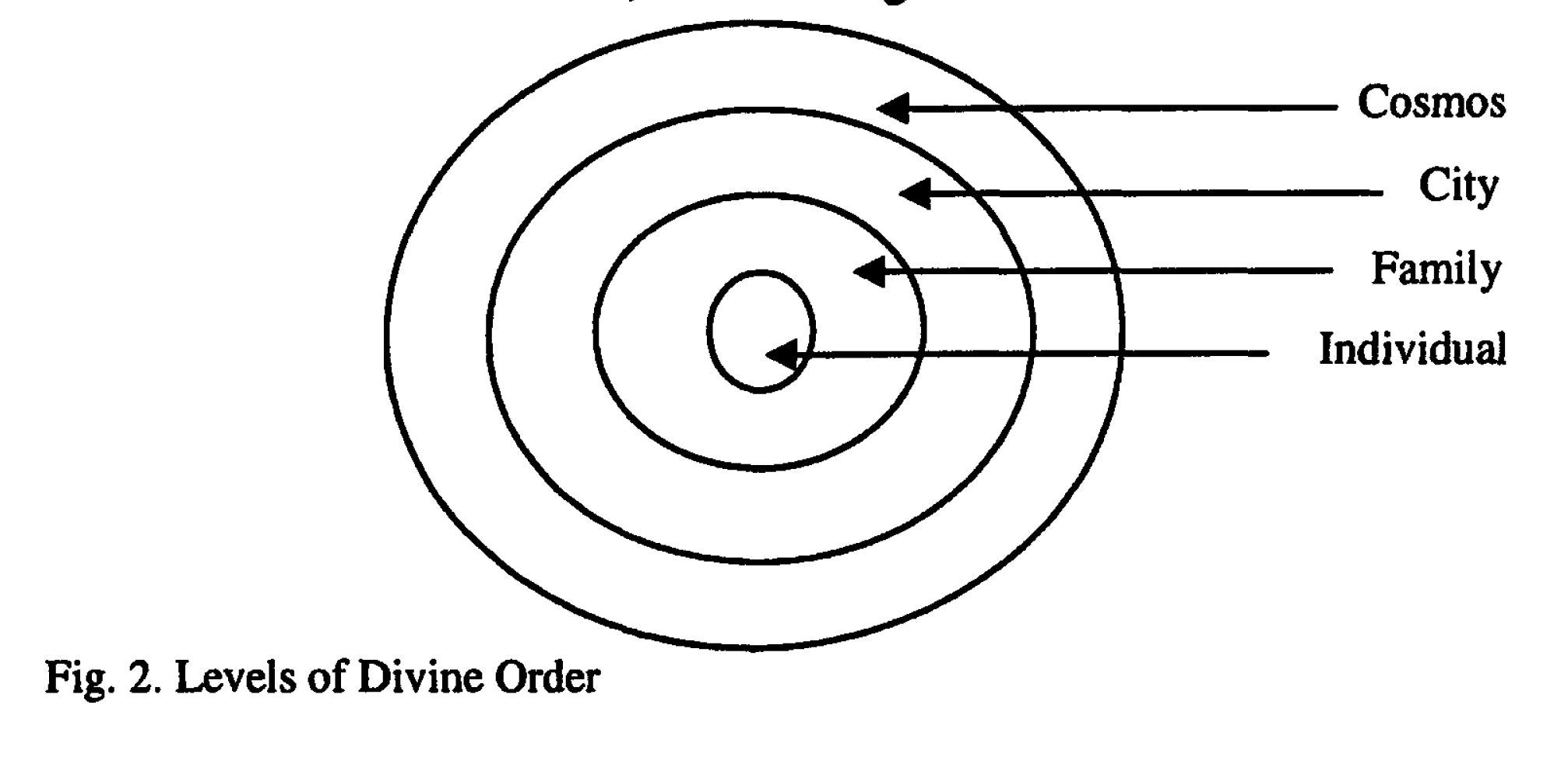

 biblicalfaith.online