Did Paul Hallucinate the Resurrection?

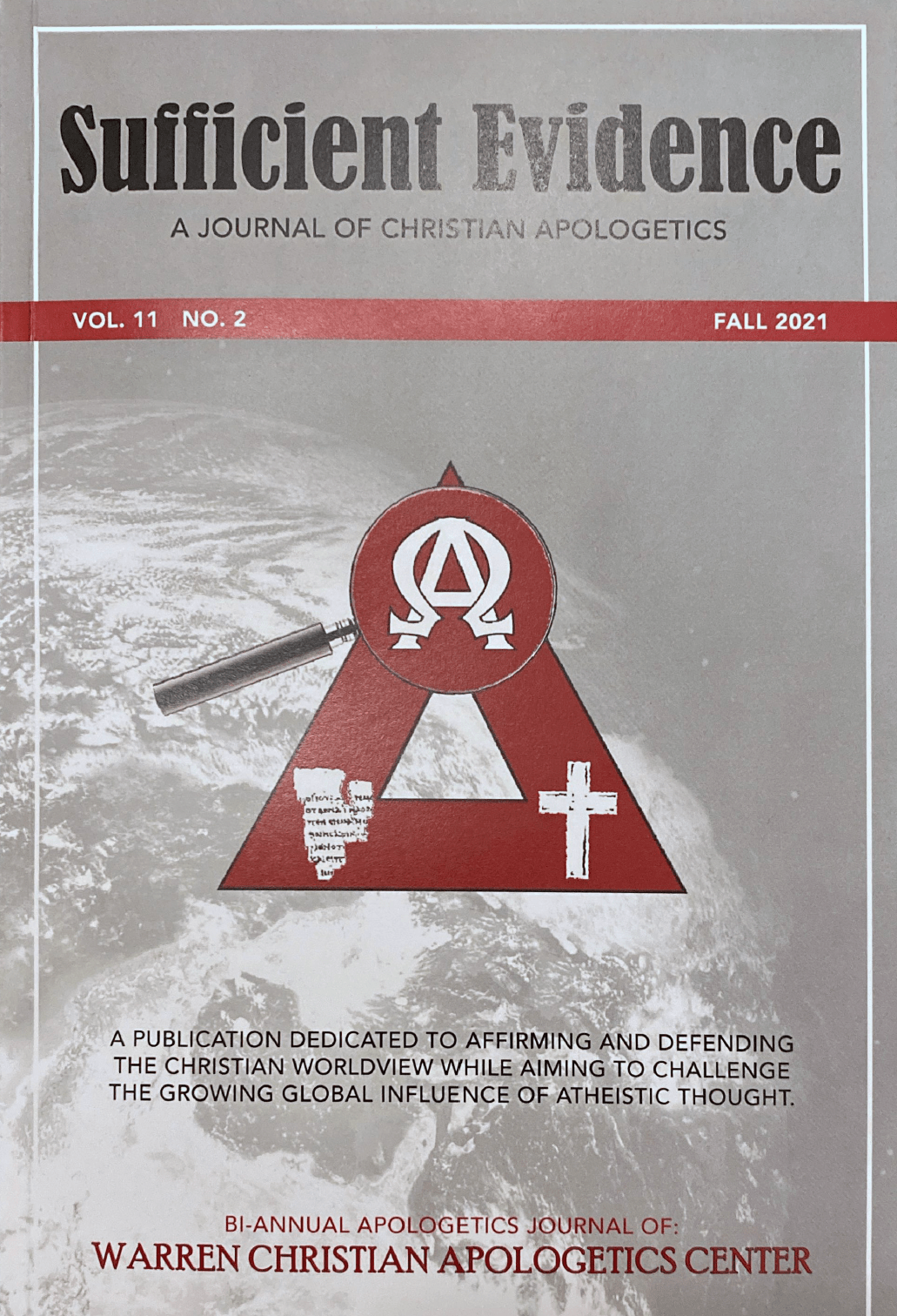
[Note: This paper has been published. Go to the end of the article to download the published version.]

The historical bodily resurrection of Jesus Christ from the dead is the foundation of orthodox Christianity. The apostle Paul asserts, “if Christ has not been raised, then our preaching is in vain and your faith is in vain” (1 Cor 15:14).[1] One argument skeptics, like former Catholic Priest and Jesus Seminar scholar John Dominic Crossan, use to counter the force of the historical claim of a bodily resurrection of Jesus is to say that the early Christians experienced hallucinations.

I intend to demonstrate the early Christian claim of Jesus appearing bodily after his resurrection­, as reflected in Paul, is the best explanation for the resurrection appearances of the New Testament over Crossan’s hallucination theory.

I first critique the hallucination theory of Crossan for contradicting the bodily resurrection language of the New Testament. Second, I demonstrate how Crossan’s trance mechanism for a hallucination imposes an anachronistic understanding on Paul’s words. Finally, I dispute Crossan’s denial of the falsifiable of the bodily resurrection of Jesus.

Early Christians Believed in a Bodily Resurrection

The language of the miracle claim asserts that Jesus resurrected and appeared bodily to his disciples (John 20:27; Luke 24:39). However, a secular worldview primed by naturalism demands an alternative explanation of “what really happened” to Jesus other than a bodily resurrection.[2] The horns of the dilemma were posed by David F. Strauss (1808–1874), “either Jesus was not really dead, or he did not really rise again.”[3] However, all the details of passion-week Friday, such as, scourging, dehydration, crucifixion, etc., make any interpretation Jesus did not die to be “at odds with modern medical knowledge.”[4] The category of hallucination, as an explanation theory, is a popular attempt to claim the disciples hallucinated the bodily appearances of Jesus, and mass hysteria then spread their claim. As Dale C. Allison, Jr., frames it,

it was not the empty tomb that begot the hallucinations but hallucinations that begot the empty tomb.[5]

Dale C. Allison, Jr., Resurrecting Jesus (T&T Clark, 2005)

The charge is ancient. In the third-century AD, Origen of Alexandria (d. 254) combatted Celsus’ second-century claim that the disciples suffered a “delusion.”[6]

Another pushback against the orthodox view of a bodily resurrection is that it is just a fictional myth that developed over time as a result of a personal hallucination of Paul. To establish this claim, liberal Bible critic Crossan introduces the writings of two early non-Christian historians (Josephus and Tacitus) which he believes limit “what happened both before and after Jesus’s execution.” [7] Crossan argues their religious profiles of the Christian movement lack mention of the resurrection. Additionally, the Gospel of Thomas speaks of the “living Jesus” and the Epistle of Barnabas is void of resurrection talk. Crossan believes this evidence affirms that early Christian faith did not need to believe in a post-mortem appearance of Jesus. He further claims that Paul uses his experience of Jesus appearing to him (1 Cor 15:8) to give him the gravitas to be the equal of all the apostles in a political powerplay.[8]

Crossan’s novel hallucination theory also requires that the present passive indicative verb ōphthē, translated “appeared” in most translations, actually means “revealed.” This would be a culturally conditioned “trance” where Paul experienced an “altered state of consciousness” and used this personal experience to stabilize the infighting in the Corinthian church.[9] Crossan’s theory requires the church to have completely misread Paul’s testimony by taking his personal experience for apostolic orthodoxy. Crossan’s theory offers a “growth-politics” twist to the category of the hallucination theory.

The words of Paul in 1 Corinthians 15:3–11, however, do not support Crossan’s theory. In fact, this passage is a test-case of the united shape of the earliest Christian tradition concerning the resurrection appearances of Jesus.[10] The minimal facts theory of apologist Gary R. Habermas provides a firm critical foundation to respond to Crossan. The minimal facts theory is a critical approach that uses “the minimal, best-established facts surrounding the appearances” of Jesus that even Bible critics grant “to determine what really happened after Jesus’ death.”[11] Habermas has established four historical facts.

First, there is very little controversy that Paul wrote 1 Corinthians, as even Crossan dates the letter to AD 53–54.[12] Second, Paul’s articulation of the gospel predates him, “I delivered to you… what I also received” (1 Cor 15:3). Here Paul affirms the normative nature of what he is preaching. Third, Paul received this “tradition” anywhere between AD 32–38, less than a decade after the crucifixion.[13] Fourth, this reception of the creed occurred during Paul’s Jerusalem information gathering “visit” (cf. historéō) with Peter and James (Gal 1:18–20) and anchors his tradition to the early Jerusalem church.[14]

Bible critical scholar, A. M. Hunter (1906–1991), argues that Paul claims in this passage “a very early Christian summary” of what the united apostolic voice affirms about the gospel and Jesus resurrection appearances (15:11);[15] namely, “that Christ died for our sins… that he was buried, that he was raised on the third day… and that he appeared” (15:3–5). The bodily death and resurrection appearances of Jesus legitimizes the existence of the Christian faith, for “in fact Christ has been raised from the dead, the firstfruits of those who have fallen asleep” (15:20; cf. 15:6, 14). There is no powerplay. Paul is in fact arguing from within the earliest Christian tradition and meaning of resurrection appearance. This is a substantial point since Crossan’s theory offers a reinterpretation of the early Christian tradition which cannot be sustained internally.

Ultimately, a naturalistic argument forces Crossan’s hand to redefine what is a resurrection and how one experiences it. Resurrection was not, according to N. T. Wright, a generic term for “life after death” but instead “the second stage in a two-stage process of what happens after death: the first stage being nonbodily and the second being a renewed bodily existence… Paul really did believe in the bodily resurrection” (cf. 1 Cor 9:1).[16] It is precisely this firm belief in the bodily resurrection that invalidates Crosson’s theory for Paul, and is in conformity with other the New Testament descriptions of the bodily resurrection appearances of Jesus.[17]

Beyond the evidence of Paul’s words in 1 Corinthians 15:3–11 of multiple eyewitnesses there are the public resurrection expectations and appearances in the Gospels; moreover, there are the resurrection creedal statements in the sermons of Acts.[18] It points to a clear unified belief among the earliest Christians that Jesus rose bodily from the dead and appeared in a renewed bodily existence. Bodily existence is the expected concept non-believers were to understand as the Christian view of the resurrection, as Judean Procurator Festus explains to Herod Agrippa II, “a certain Jesus, who was dead, but whom Paul asserted to be alive” (Acts 25:19; Acts 17:32). The New Testament evidence affirms, then, the early Christian claim that Jesus was a live again.

No Mechanism for Hallucination

As we shall argue, there are no cause for Paul to need a hallucination. Such a theory redefines the unified Christian claim of the bodily resurrection of Jesus. Crossan, keenly aware that Paul provides the earliest creedal statement, posits that Paul is the key for all the New Testament internal evidence. For Crossan what really happened is Paul was desperate to have a trance experience of the resurrection. He theorizes the Easter tradition developed over the years into its current boundaries of the canonical New Testament. Crossan offers “apparition–which involves trance” as the alternative dissociated state in which he believes Paul experienced resurrection.[19]

Based on the work by Erika Bourguignon on “dissociational” states, Crossan affirms trance to be “a human universal” that may be a culturally trained and controlled experience by one’s social and religious expectations.[20] Crossan’s reading of Paul’s words is an eisegetical fallacy importing a modern socio-religious model of an “altered state of consciousness” into Paul’s experiences to establish his political equality with the other apostles.[21] Again Crossan claims, “Paul needs… to equate his own experience” with the apostles to establish “its validity and legitimacy but not necessarily its mode or manner.”[22] Crossan’s methodology is problematic on this point.

However, there are three major problems with Crossan’s hallucination theory. First, Crossan imports an anachronistic definition into the use ōphthē in Paul’s words. It should be noted with significance that in the Greek Old Testament ōphthē is used in appearances of God (i.e., theophanies) to Abraham, and clearly to Abraham in bodily form where he ate with the Lord (Gen 18:1).[23] Paul was quite familiar with Genesis as he makes substantial arguments about justification by faith with the stories of Abraham in Galatians and Romans. To posit a modern theory while ignoring this Old Testament tradition of the verb, “he appeared,” ignores the textual evidence. Furthermore, it calls into question the validity of Crossan’s exegetical methodology.

Second, he exchanges his own meaning for Paul’s intended meaning of the verb ōphthē.[24] Crossan’s claim puts the power of the trance in Paul’s hands, but Paul’s verbal word choice indicates the appearance was out of his hands. Greek scholar, Daniel B. Wallace, reminds in grammatical instances like this, “volition rests wholly with the subject [Jesus], while the dative noun is merely recipient [Paul].”[25] It is Jesus who “appeared.” Paul did not conjure a “revelation” of Jesus.

Third, Crossan’s portrayal of Paul as desperate for apostolic power does not agree with Paul’s own success in Judaism prior to his conversion and call. He writes,

I was advancing in Judaism beyond many of my own age among my people, so extremely jealous was I for the traditions of my fathers. (Gal 1:13b–14)

Paul had the pedigree of a rising Jewish leader (Phil 3:4–8). There is no explainable mechanism which accounts for exchanging this advancement in Judaism for the trials of following Christ outside of an actual appearance of the resurrected Jesus which he did not initiate in a trance. Paul joins the pre-existing united voice of the apostolic witnesses, other earlier skeptical witnesses (non-believing siblings of Jesus), and the large groups seeing Jesus post-burial. Crossan’s theory do not adequately take these elements into account. Furthermore, Habermas’s minimal facts theory renders his mechanism historically implausible since its critical timetable places Paul as recipient, not creator, of the bodily resurrection confession.

Paul’s Claim was Falsifiable

This conclusion then leads to question of falsifiability. The early Christians claimed a dead man lived again. Writing about twenty years after the resurrection Paul asserts there were many eyewitnesses who could verify or falsify his claim that Jesus rose bodily. Paul wrote, “I delivered to you…what I also received” (1 Cor 15:2) and proceeds to outline six lines of eyewitness testimony evidence: Cephas, the twelve, over five hundred, James, all the apostles, and Paul. The most audacious claim is that Jesus appeared “to more than five hundred brothers at one time, most of whom are still alive, though some have fallen asleep” (1 Cor 15:6). Paul’s submission invites investigation into the genuineness of the resurrection of Jesus and is essential to Paul’s argument for the validity of the gospel. Paul’s claim to have “seen the Lord” is falsifiable (1 Cor 9:1). Even Crossan understands the surface argument of this passage, and observes, “no Jesus resurrection, no general resurrection; or, no general resurrection, no Jesus resurrection.”[26] He does not however believe it.

Crossan believes that it would be impossible to falsify the traditional empty tomb and resurrection stories. When asked whether “the empty tomb” was historical, Crossan emphatically responds, “No.” Crossan expands,

“I doubt there was any tomb for Jesus in the first place. I don’t think any of Jesus’ followers even knew where he was buried–if he was buried at all.”[27]

John Dominic Crossan in Who is Jesus? Answers to Your Question About the Historical Jesus (Westminster John Knox, 1996)

From Roman sources Crossan argues the Roman expectation for the crucified was the denial of both body and burial.[28] To the point, Crossan says, the “final penalty was to lie unburied as food for carrion birds and beasts [i.e., animals that eat decaying flesh].”[29] Crucifixion meant, then, “death-without-burial” and “body-as-carrion”; consequently, there was little likelihood of Jesus’ body making it off the cross let alone into the tomb of Joseph of Arimathea (Mark 15:42; Matt 27:1–61).[30] It would likely take “bribery, mercy, or indifference” to get the Romans to release the body over to a Jew seeking to avoid violating Jewish protocols of burying the hung (Deut 21:22–23).

Such a “hope” would be the exception, for only one contemporary crucified body remains have been found where thousands have been so executed; as such, it “is not history.”[31] This clearly undermines the Gospel tradition of the empty tomb where Jesus had been buried.

Crossan’s historical reconstruction of customary expectations and practices is a strong counterargument against falsification by the presentation of the cadaver of Jesus. If there is no body which survives the cross, there is no body to be buried, and therefore the Christian claim cannot be falsified. However, Crossan cannot historically rule out that Jesus was buried as Mark affirms. He can only suggest burial would be highly unlikely. Crossan’s alternative depends on advancing a legendary basis for the burial of Jesus. Yet, William Lane Craig responds this “would ignore the specific evidence” in Jesus’ case.[32] As established by the “minimal facts” critical theory, the creedal statement in 1 Corinthians 15:3–5 is very early. Furthermore, this four-line creedal formula affirms crucifixion, burial, resurrection, and then appearance.

The burial of Jesus was essential to the creed and Mark’s reference to it is substantial corroboration. First, the “assured results” of critical scholarship considers Mark the earliest gospel as it is the most “bare bones” narrative of Jesus.[33] Second, the Passion week narrative includes Jesus’ rejection and crucifixion. Third, Mark introduces Jesus’ burial in Joseph of Arimathea’s tomb from which he resurrects. Mark retains the burial tradition.[34] Crossan’s methodology is prejudicial because it rules out, beforehand (a priori), the established testimony of the earliest claim of the Christians: Christ was buried, was raised, and he appeared.

Conclusion

This paper affirms the bodily resurrection of Jesus over the challenge raised by the hallucination theory developed by Crossan. The language of the New Testament asserts that Jesus resurrected and appeared bodily to his disciples, to unbelievers, and to many others. Crossan claimed that the resurrection from the dead was not a main element of the Christian faith. However, a critical examination of the words of Paul in 1 Corinthians 15:3–11 verifies that the primary and earlier Christian creedal tradition which teaches that Jesus arose bodily and appeared. There is no other normative belief in the New Testament than Jesus resurrected from the dead.  

Second, Crossan’s trance mechanism for a hallucination imposes an anachronistic understanding on Paul’s words. The alternative theory offered by Crossan that Paul had a dissociative hallucination-trance experience to gain religious political power is based on seriously flawed exegetical methodology. There is ultimately no proper mechanism for Paul’s conversion to Christianity and his claim of seeing the resurrected Jesus, when he was living a successful Jewish life as a persecutor of the church. Paul’s claim that he saw the Lord resurrected must be taken seriously.

Finally, I asserted the early Christian claim of a bodily resurrection would have been falsifiable by the cadaver of Jesus. Crossan’s claim that Jesus’ body would likely never have survived nor made it to a burial actually is self-defeating because he cannot rule out known exceptions. In Jesus’ case, there were elements to his story that made it possible for Jesus to be taken off the cross and buried in the tomb of Joseph of Arimathea. This is in keeping with the earliest Christian claim regarding his burial.


Endnotes

  1. Unless otherwise noted, all Scripture quotations are from the English Standard Version of The Holy Bible (Wheaton, IL: Crossway Bibles, 2016).
  2. Gary R. Habermas explains that a naturalist theory for the resurrection draws “from a host of philosophical backgrounds, the basic idea is to suggest an alternative explanation in place of divine causation… ‘Jesus didn’t rise from the dead. What really happened is (fill in the blank).’” Habermas, “The Late Twentieth-Century Resurgence of Naturalistic Responses to Jesus’ Resurrection,” Trinity Journal 22 (2001): 180.
  3. David F. Strauss, The Life of Jesus Critically Examined, 4th edition, translated by George Eliot (London: Sonnenschein, 1902), 736. The longer form: “a dead man has returned to life, is composed of two such contradictory elements, that whenever it is attempted to maintain the one, the other threatens to disappear. If he has really returned to life, it is natural to conclude that he was not wholly dead; if he was really dead, it is difficult to believe that he has really become living” (735–36).
  4. William Edwards, Wesley J. Gabel, and Floyd E. Hosmer, “On the Physical Death of Jesus Christ,” Journal of the American Medical Association 255.11 (1986): 1436.
  5. Dale C. Allison, Jr., Resurrecting Jesus: The Earliest Christian Tradition and Its Interpreters (New York: T&T Clark, 2005), 204. Allison offers seven categories and sub-categories of resurrection appearance hypotheses each with different psychological catalysts (199–213).
  6. Origen Contra Celsum 2.60: “But Celsus, unwilling to admit any such view, will have it that some dreamed a waking dream, and, under the influence of a perverted imagination, formed to themselves such an image as they desired. Now it is not irrational to believe that a dream may take place while one is asleep; but to suppose a waking vision in the case of those who are not altogether out of their senses, and under the influence of delirium or hypochondria, is incredible. And Celsus, seeing this, called the woman half-mad,— a statement which is not made by the history recording the fact, but from which he took occasion to charge the occurrences with being untrue.”
  7. Josephus Antiquities 18.63; Tacitus Annals 15.44. cf. Crossan, Jesus: A Revolutionary Biography (New York: HarperCollins, 1994), 161–62. Italics added.
  8. Crossan, Jesus, 166.
  9. Ibid., 167; 87–88.
  10. The following four arguments presume the work of Gary R. Habermas, “The Resurrection Appearances of Jesus,” In Defense of Miracles, ed. R. Douglas Geivett and Gary R. Habermas (Downers Grove, IL: InterVarsity, 1997), 264.
  11. Habermas, “Resurrection Appearances,” 262.
  12. Possibly later, like 64. Stephen Neill and Tom Wright, The Interpretation of the New Testament: 1861–1986, 2nd edition (New York: Oxford University, 1988), 308; Crossan, Jesus, 163.
  13. C. H. Dodd argues that Paul’s first visit to Jerusalem was “not more than seven years after the Crucifixion,” The Apostolic Preaching and Its Developments (reprint, New York: Harper & Brothers, n.d.), 16.
  14. William R. Farmer, “Peter and Paul and the Tradition Concerning ‘The Lord Supper’ in 1 Cor 11:23–26,” Criswell Theological Review 2.1 (1987): 122–28; Habermas, “Resurrection Appearances,” 265–67.
  15. A. M. Hunter, Jesus: Lord and Saviour (reprint, Grand Rapids, MI: Eerdmans, 1978), 99. John Dominic Crossan argues that Paul went to great pains to validate his own apostleship, yet, it was not the voice but a competing voice among many regarding the importance of the resurrection, Jesus, 159–92.
  16. N. T. Wright and John Dominic Crossan, “The Resurrection: Historical Event or Theological Explanation? A Dialogue,” The Resurrection of Jesus: John Dominic Crossan and N. T. Wright in Dialogue, ed. Robert B. Stewart (Minneapolis, MN: Fortress, 2006), 17.
  17. 1 John 1:1–4; John 20:1–21:24; Acts 1:1–3, 2:29–32.
  18. Expectations: Matt 28:8–20; Luke 24:13–52; John 20:10–23, 26–30, 21:1–14; Mark 16:6–7; statements: 1:1–3; 2:23–24, 32; 3:15; 4:10; 10:41; 13:30–34; 17:31; 23:6; 24:21; 26:8, 23.
  19. Crossan, Jesus, 160–61. Italics are original.
  20. Ibid., 87–89.
  21. Ibid., 166–67; Acts 9:3–4, 22:6–7, 26:13–14.
  22. Ibid., 169.
  23. Genesis 12:7; 17:1; 18:1; 26:2, 24.
  24. The following argument is based on Daniel B. Wallace’s discussion of the dative + the present passive indicative form of ōphthē in the New Testament in his Greek Grammar Beyond the Basics: An Exegetical Syntax of the New Testament (Grand Rapids, MI: Zondervan, 1996), 165, footnote 72; “horáo,” Walter Bauer, Frederick W. Danker, William F. Ardnt, and F. Wilbur Gingrich A Greek-English Lexicon of the New Testament and Other Christian Literature, 3rd ed. (Chicago, IL: University of Chicago Press, 2000), 719.
  25. Wallace, Greek Grammar, 165. What Wallace says for Paul applies equally to all listed in 1 Corinthians 15:5–8: Cephas and the twelve, the “more than five-hundred,” and James and the apostles. Crossan, Jesus, 164.
  26. John Dominic Crossan and Richard G. Watts, Who is Jesus? Answers to Your Question About the Historical Jesus (Louisville, KY: Westminster John Knox, 1996), 122.
  27. Suetonius, Defied Augustus 13.1–2, Tacitus, Annals 6.29.
  28. John Dominic Crossan, Who Killed Jesus? Exposing the Roots of Antisemitism in the Gospel Story of the Death of Jesus (New York: HarperCollins, 1995), 160.
  29. Crossan, Who Killed Jesus, 163. In Crossan’s perspective, Joseph of Arimathea is purely a construct of Mark’s imagination; see his discussion on Luke 23:50–54 and John 19:35–42.
  30. Crossan, Who Killed Jesus, 163–68.
  31. Lee Strobel, The Case for Christ (Grand Rapids, MI: Zondervan, 1998), 208.
  32. Donald Guthrie, New Testament Introduction, 4th ed. (Downers Grove, IL: InterVarsity, 1990), 150.
  33. Strobel, Case for Christ, 209.

Click here to download the published version of this research paper. To subscribe to Sufficient Evidence click here.


Are Miracles Possible?

The question of whether miracles are impossible strikes at the heart of the Christian faith. Its viability hangs on one significant miracle: the resurrection of Jesus. Paul argued,

 if Christ has not been raised, then our preaching is in vain and your faith is in vain. (1 Cor 15:14 ESV)

If the bodily resurrection never happened, because it is impossible, then the traditional Christian faith is catastrophically and irreparably compromised. In response, I will first argue there is evidence for a creator-God necessary for miracles to occur, then demonstrate that anomalies (like miracles) require intelligent causation. Finally, I will look at the resurrection as a case study.

The Creator-God

The evidence for the existence of God is cumulative in nature. This means there is a body of positive evidence combined to support the case that the universe is created by a personal Creator-God. Furthermore, God as creator is separate, or outside, of this creation. This Creator-creation relationship would allow, then, for the possibility of miracles:

if God exists then miracles are possible.[1]

Norman L. Geisler and Ronald M. Brooks
When Skeptics Ask, rev. ed. (Baker, 2013)

Natural theology affirms that the created world is host to evidence positively supporting God’s existence and justifying belief in him. There are four broad categories of arguments from natural theology:[2]

  • Cosmological (argument from causality, from effect to cause),
  • Teleological (argument from fine-tuned and intelligence-laden design),
  • Moral (argument from the objective value of morality and ethics), and
  • Ontological arguments (argument of a necessary uncaused Being).

These arguments represent a preponderance of the evidence that justifies belief in a personal ethical Creator-God.

A strong case can be made for the existence of God with the Kalam cosmological argument.[3] The first premise may be stated as “the universe had a beginning.” The evidence from the second law of thermodynamics affirms that the universe is experiencing entropy, a running out of useable energy. This points to the finite nature of the cosmos and points to a beginning when the universe was “fully charged.” The second premise affirms, “the universe was caused to exist.” What caused it to exist? Or had it come into being out of nothing? The evidence from nature (natural theology) points to a powerful (creation), ethical (morality), and intelligent designer (DNA) which brought these phenomena into existence. The reasonable conclusion is that a supernatural being created the universe into existence, this is God.

Not all Causes are Naturally Recurring

In response to the above supernatural claim, proponents of a naturalistic worldview argue that the existence of miracles would render the scientific method impossible to practice. This is only an assumption because there are different kinds of scientific ways of understanding causation, for not all causes are natural. A difference must be made between “operational science” which studies “regular patterns in the present from which predictions can be made,” and “forensic science” which studies “past singularities.”[4] The study of photosynthesis which takes into account how sunlight, carbon dioxide, and water, are converted into food by plants (operational science) would be conducted differently than a study of a singularity like the creation of the Mt. Rushmore monument (forensic science).

Miracles would no more disrupt operational science than would the reshaping of a naturally formed mountainside into a monument bust relief at Mt. Rushmore, or the carved-out ruins of Petra Pella. The use of intelligence and power offers a different source for causation than the naturally regular patterns in the world. The question remains how to decipher in what way miracles interact with the regular patterns of nature (disrupt, break, suspend). This difficulty of understanding anomalies like miracles or “the Big Bang” is not proof that such anomalies are incompatible with known scientific theory. It suggests we still have much to learn.

The Resurrection

A religion that is consistent with the picture of God derived from natural theology should have evidence of supernatural activity (historical reliability, fulfilled prophecy, etc.).[5] As noted already, the central figure of the New Testament, Jesus Christ, is presented in the historical setting of first-century Palestine, in which his teaching ministry is substantially interwoven with supernatural activity (healings, exorcisms, telepathic and empathic actions). The most significant miracle is his post-mortem bodily resurrection from the dead following his execution by means of crucifixion. Is this just legendary material that has been added, or are these ancient documents reliable eyewitness testimony to the most important miraculous event of human history?

The study of the historical reliability of the New Testament demonstrates that it has the strongest transmission history of any work from antiquity. It has preserved the eyewitness testimony of its authors who acknowledge the supernatural resurrection of Jesus Christ. For example, Paul’s words in 1 Corinthians:

Now I would remind you, brothers, of the gospel I preached to you, which you received, in which you stand, and by which you are being saved, if you hold fast to the word I preached to you—unless you believed in vain. For I delivered to you as of first importance what I also received: that Christ died for our sins in accordance with the Scriptures, that he was buried, that he was raised on the third day in accordance with the Scriptures, and that he appeared to Cephas, then to the twelve. Then he appeared to more than five hundred brothers at one time, most of whom are still alive, though some have fallen asleep. Then he appeared to James, then to all the apostles. Last of all, as to one untimely born, he appeared also to me. For I am the least of the apostles, unworthy to be called an apostle, because I persecuted the church of God. 10 But by the grace of God I am what I am, and his grace toward me was not in vain. On the contrary, I worked harder than any of them, though it was not I, but the grace of God that is with me. 11 Whether then it was I or they, so we preach and so you believed. (1 Cor 15:1–11 ESV)

Their ancient words have been preserved in over 5,000 Greek manuscripts.[6] These documents contain doctrinal traditions which include the Divine Lordship of Jesus, his bodily resurrection, and his miracles, so early (within less than a decade of the actual events) that there is no room for legends to displace Christianity’s core historical truths.[7]

The question “did Jesus rise from the dead?” must then be taken seriously. The death of Jesus is one of the surest known historical facts of Christianity.[8] Despite many attempts to theorize that he successfully survived the crucifixion, the medical evaluation[9] of the historical descriptions of his wounds points out that he was a “dead man” before the spear was thrust through his side (John 19:34). The belief that Jesus appeared bodily to his disciples after his execution is another known fact of Christianity, which transformed his disciples and converted unbelievers (e.g., James). The early disciples shared their witness that Jesus was raised from the dead by the power of God, many of them dying for their claim that they saw Jesus bodily raised.

Conclusion

The short version of this brief essay’s argument is, “if God exists, then the supernatural anomaly of the miraculous bodily resurrection of Jesus, as historically reported in the New Testament, is possible.” The possibility of the miraculous is, therefore, quite reasonable.

Endnotes

  1. Norman L. Geisler and Ronald M. Brooks, When Skeptics Ask: A Handbook on Christian Evidences, rev. ed. (Grand Rapids, MI: Baker, 2013), 71.
  2. Geisler and Brooks, When Skeptics Ask, 9–19.
  3. James P. Moreland, “Transcript: Arguments for the Existence of God” (Class lecture, Defending the Faith course of Talbot School of Theology, La Mirada, CA, n.d.); Geisler and Brooks, When Skeptics Ask, 10.
  4. Geisler and Brooks, When Skeptics Ask, 74–77.
  5. James P. Moreland, “Transcript.”
  6. Geisler and Brooks, 101–05; Joe Hellerman, “Handout: Defending the Gospel Accounts of Jesus” (Class lecture, Defending the Faith course of Talbot School of Theology, La Mirada, CA, n.d).
  7. Lee Strobel, “Handout: The Case for Faith” (Class lecture, Defending the Faith course of Talbot School of Theology, La Mirada, CA, n.d.).
  8. Known historical facts of Christianity are taken from Craig Hazen, “Handout: Evidence for the Resurrection” (Class lecture, Defending the Faith course of Talbot School of Theology, La Mirada, CA, n.d.).
  9. William D. Edwards, Wesley J. Gabel, and Floyd E. Hosmer, “On the Physical Death of Jesus Christ,” Journal of the American Medical Association 255.11 (March 1986): 1462.

Defining Gospel: A New Testament Glance

Words are strange creatures. Often, they mean what we want them to mean. It has been said that words are the patterns by which people think. Since words frame our thinking world, it is really important that we correctly shape our ideas with properly defined words. In the case at hand, understanding the meaning of the Christian word gospel depends on understanding how the word gospel is presented in the New Testament.[1] 

The English word Gospel most likely derives from the Old English word gōd spell, which meant “good story” or “good message.” William Deal points out that gōd spell meant a good mystery, doctrine, or secret, something hidden which was being brought out.[2] And the gospel is definitely a mystery revealed (Ephesians 3:1-14). The words translated gospel is, however, roughly the result of the combination of two Greek words: eu (good) and angelia (message, news). It roughly approximates “a good message,” but even this is not enough to tell us how the word is shaped by the New Testament.

Within the 27 New Testament volumes, the gospel is connected to three focuses: (1) “the gospel” as a message (euangelion), (2) the action of “preaching/bearing the gospel” (euangelizo), and (3) those individuals who proclaim the gospel (euangelistes). These words have a combined total of 133 instances, scattered over 20 of the 27 New Testament books.[3] The only books that do not use these words are the Gospel of John and his three Letters, and James, 2 Peter, and Jude. These books tend to use other words which emphasize the same ideas (cf. truth, proclaiming, hope, light, the message, etc.).

Let us consider a few lines of thought that will help us define and shape an accurate understanding of the gospel message.

How do you Define Gospel?

First, the gospel is not the result of religious evolution and philosophical development. In the ancient world, a number of religions and beliefs often blend into each other or break out into their own religions. For example, the far eastern religions such as Hinduism, Buddhism, and Confucianism resulted from a philosophical and religious reaction to their view of social order (the caste system) and how to become one with the ultimate reality of the universe. This development of ideas is not along parallel lines with how the gospel message is defined in the person of Jesus of Nazareth.  

Second, the gospel is not the result of social progress. One of the modern concerns in the industrial world is that of social concern for equality. These social concerns tug at our values, and our ethics. Equality is the hallmark (gospel) of the modern social order, and because of it, we are seeking ways to save everything. Yet, as the late atheist and satirical comedian George Carlin quips against this elevation of self-importance:

Save the trees, save the bees, save the whales, save those snails.” And the greatest arrogance of all: save the planet. […. explicit deleted] Save the planet[?], we don’t even know how to take care of ourselves yet […][4]

I would argue that here inlays the problem of a socially derived “good news”; The gospel must be defined by other means. Humanity needs help from the Creator.

Third, the gospel is the result of divine revelation (Galatians 1:11-17). The authors of the Bible in general and the New Testament in particular assume and argue that their religious instruction is not the result of human philosophy or development. For example, Paul affirms his source is Jesus Christ:

For I make known to you, brethren, as touching the gospel which was preached by me, that it is not after man. For neither did I receive it from man, nor was I taught it, but it came to me through revelation of Jesus Christ. (1:11–12).[5] 

The contrast between “not after man” and “through revelation of Jesus” is clear. The gospel of the New Testament is, by definition, from God and not from the insights of humanity (1 Corinthians 2:1-16). 

The New Testament Gospel

But how should we understand the word gospel? In its basic sense, the word gospel is focused on something positive being announced (military victory, news, etc). This meaning is older than in New Testament times but it is found in a few verses. For example, Paul writes to the Christians in Thessalonica about the good feelings they felt for him and his ministry, he writes,

when Timothy came even now unto us from you, and brought us glad tidings [euangelisamenou] of your faith and love, and that ye have good remembrance of us always, longing to see us, even as we also to see you. (1 Thessalonians 3:6).

The report of Timothy was positive, a good report, an enjoyable announcement (cf. Galatians 3:8, proeuangelizomai).

More significantly, when the Gospel of Mark —a biography of Jesus’s ministry— opens we read, “The beginning of the gospel of Jesus Christ, the Son of God” (Mark 1:1). This tells us something about the story of Jesus. It starts out by anticipating a message to embrace as a celebration and victory (Matthew 11:5). The content of the gospel not only includes the ministry and message of Jesus, but also his rejection, crucifixion, resurrection, and glorification of Jesus.

The four Gospel Accounts (Matthew-John) are so named because they provide the “building blocks” of what is to be proclaimed as the message of the gospel (Mark 1:14-15), by those whose role it is to proclaim it and bear it to the world (Acts 21:8; Ephesians 4:11; 2 Timothy 4:5; Mark 16:15). At the beginning, Jesus proclaimed a message based upon the kingdom of God, repentance, his role as the son of God, and the gospel’s role to change people’s lives (Matthew 4:23; 9:35). Later, after the resurrection of Jesus, the gospel is to be proclaimed on behalf of Jesus throughout the world (Matthew 24:14, 26:13; Colossians 1:23).

It is not surprising, then, to see the apostle Paul in Athens described by onlookers as one who “preached Jesus and the resurrection” (Acts 17:18). Paul made it a ministry goal to “to preach the gospel, not where Christ was already named, that I might not build upon another man’s foundation” (Romans 15:16, 19-20). Indeed, he explains his “aim” as a sense of indebtedness to mankind to share this message (Romans 1:14-15). For this reason, he affirms clearly:

I am not ashamed of the gospel: for it is the power of God unto salvation to every one that believeth; to the Jew first, and also to the Greek. (Romans 1:16-17)

Paul would seek to pass along this conviction to his protégé Timothy (2 Timothy 1:8-10). It is the responsibility of every Christian to boldly share this victorious good news (2:2). 

The Earliest Gospel “Statement”

Among the New Testament writers, the earliest statement of the content of the preaching of the gospel is found in Paul’s words in 1 Corinthians 15:1-11. Paul’s activity in ancient Corinth is around the early fifties of the first century AD, and this letter is dated to this timeframe no later than AD 55.[6]

In this letter, Paul presents a lengthy discussion —and definition— of the gospel message that he preached. The passage of 1 Corinthians 15:1-11 can be outlined based upon key elements of the gospel message:

(1) the preaching of the gospel word provides salvation to the believer (15:1-2),

Now I make known unto you brethren, the gospel which I preached unto you, which also ye received, wherein also ye stand, by which also ye are saved, if ye hold fast the word which I preached unto you, except ye believed in vain.

(2) the compelling force of the gospel is from the foretelling of events fulfilled in Jesus’ death, burial, and resurrection (15:3-4),

For I delivered unto you first of all that which also I received: that Christ died for our sins according to the scriptures; and that he was buried; and that he hath been raised on the third day according to the scriptures;

(3) the gospel is based on the eyewitness testimony of those who witnessed Jesus, resurrected bodily from the dead (15:5-8), and

and that he appeared to Cephas; then to the twelve; then he appeared to above five hundred brethren at once, of whom the greater part remain until now, but some are fallen asleep; then he appeared to James; then to all the apostles; and last of all, as to the child untimely born, he appeared to me also.

(4) the gospel is based upon God’s offer of unearned grace and humanity’s response of faith (9-11).

For I am the least of the apostles, that am not meet to be called an apostle, because I persecuted the church of God. But by the grace of God I am what I am: and his grace which was bestowed upon me was not found vain; but I labored more abundantly than they all: yet not I, but the grace of God which was with me. Whether then it be I or they, so we preach, and so ye believed.

The passage is significant, first, because Paul has an early and authentic message. Paul even “checked in” with Peter in Jerusalem and at some point compared notes regarding the gospel (Galatians 1:18). Second, the outline of this passage is significant because of its point-by-point details. Thirdly, it shows that the gospel bridges the gap between earth’s history and God. The victory message of the gospel is based upon the supernatural events firmly established in the historical life, ministry, death, resurrection, and exaltation as Lord and God (John 20:24-29).

Concluding Thoughts

In short, to understand the gospel one must understand Jesus, the purpose of his teaching and his ministry, the death-burial-and-resurrection of Jesus, and the life-changing message of the kingdom of God. It is not insignificant to point out that gospel obedience is described as an imitation of Jesus’ death, burial, and resurrection in baptism. In this way, the gospel is lived out in the Christian life manifested in obedience (Romans 6:1-10; Colossians 3:1-3).

Endnotes

  1. See, Doug Burleson, “Gospel,” in One Word Study Guide, eds. Chad Landman, et al. (Mt. Juliet, TN: Mt. Juliet church of Christ, 2016), 134-36. Burleson provides a perfect snapshot of “good news” in the Hebrew Bible (besorah) and the New Testament (euangelion).
  2. William S. Deal, Pictorial Introduction to the Bible, 3rd ed. (1982; repr., Peabody, MA: Hendrickson, 1997), 246.
  3. Figures worked out based upon calculations from the Logos Bible platform’s “Bible Word Study” for euangelion (76), euangelizo (54), euangelistes (3).
  4. George Carlin, “The Planet is Fine” routine in the 1992 HBO George Carlin: Jammin’ in New York Comedy Special (Cable Stuff Productions).
  5. All Scripture references are from the American Standard Version unless otherwise noted.
  6. This is argued on the basis of two points:
    First, the Book of Acts recounts his trip to Corinth (18:12-17), during which time he stands for religious accusations before the tribunal of the governor (proconsul) of Greece (Achaia), one L. Junius Gallio. Because this was a matter of Jewish religion and not Roman law, Gallio lets Paul go. 
    Second, an inscription was found from Delphi with Gallio’s name on it. Most likely it refers to his proconsulship from July 51 to July 52, which means Paul’s year-and-a-half stay began a year or so before this time (ca. 50-51). This is often regarded as one of the surest historical points of New Testament chronology. A few years later, Paul writes to the Corinthians. This would be no later than 55 AD. See, Everett Ferguson, Backgrounds of Early Christianity, 3rd ed. (Grand Rapids, MI: Eerdmans, 2003), 545-86. For an online source see Mark Cartwright, “Corinth,” Ancient History Encyclopedia.

This is a reformatted and expanded version of the article originally published in The Glendale Gleaner (Newbern, TN: Glendale church of Christ).


1 Peter 3:15: Do You have an Answer?

It has long been observed that Christians must always be “prepared to make a defense” as to why we have “a reason for the hope” of Christ (1 Pet 3:15).[1] The high calling of God is a unique phenomenon (Eph 4:1; 1 Pet 4:4), so much so that those who are both antagonistic, and genuinely curious, about the Lord’s way will ask us questions. We must give them, in return, rational answers.

Before focusing attention on the Christian’s responsibility of knowing why there is hope, we must not overlook an implicit truth of this passage: confidence in the Lord and commitment to his doctrine are never to be divorced (Luke 6:46).

Christian Apologetics

Peter instructs Christians to give a “reason” for their faith and hope. What does this mean? The corresponding word for “reason” is apologia and it has a legal background, meaning the argumentation employed as a “verbal defense” in a court hearing.[2] From time to time, it will be demanded of Christians to defend their faith and explain why they live “differently” in contrast to the world. The apostles and early-inspired men of the first century likewise defended the Christian faith in two ways: (1) verbally (Acts 22:1; Phil 1:7, 16; 2 Tim 4:16) and (2) by means of literature (1 Cor 9:3).

The New Testament documents themselves often have a defensive purpose. One of the aspects of Luke’s two-volume work (Luke-Acts) is its defensive nature. By taking into account Paul’s judicial context in Rome, scholars have observed that Luke-Acts – as Paul’s defense brief – provides excellent testimony to the Greco-Roman world that the Lord’s way is a benefit to society and not a subversive politico-religious system as many claimed Christianity to be.[3]

The apostle John’s Gospel and his first epistle are both defensive documents, responding to different challenges that the early church faced. The Gospel establishes the rationale for our hope on the Christ as Deity (John 20:30-31); meanwhile, 1 John refutes misconceptions of how to live godly in the face of the docetic-gnostic teachers who infiltrated the church (1 John 2:1).

The apostle’s use of apologia demonstrates that the field of Christian defense is centuries old. This word is, in fact, the basis for our modern word apologetics. Its incorporation by Christians from the legal setting, where it was a “legal speech for the defense” to be delivered before the judicial authorities and subsequently published,[4] was therefore not a large leap (Acts 22:1; Phil 1:17). In fact, it partially explains the publishing of Luke-Acts, and fits well with trumped-up political hearings where Christians had to defend themselves verbally (cf. 6:10-15, 18:12-17, 22:1, etc.; Matt 10:19).

Besides biblical examples, from about 185-250 A.D. there was a series of apologies designed to “explain the origin, doctrine, and worship” (i.e. the historical basis) of the church to their contemporaries –antagonistic or supportive.[5] The works of Justin (his Apologies, Dialogue with Trypho), Athenagoras (Apology, On the Resurrection), and Tertullian (Against Marcion, Prescription of Heretics) are usually thought of in this light.

Christian Apologetics was not, however, limited to the study of science, philosophy, evolution, and creationism. These are topics that consume Christian Apologetics today; however, in the early church apologetics was more a defense of why Christians live the way they live. This is not a criticism of contemporary apologetics, but a call to provide a rational defense of Christian ethics – religious and moral. Before moving on, observe that historically emotions have never been the sole basis for a proper defense of one’s beliefs.

As the need arose in the first century, our responsibility to give reasons for our hope to our modern neighbors has not diminished. Antagonists and genuine inquisitors are constant factors in the Christian’s life; consequently, Christians must provide solid well-studied responses. Likewise, every generation carries the responsibility of preaching the gospel to a dying world (Matt 28:18-20).

To fulfill this work Christians must study the Bible, believe and follow through with its instruction, and teach it rigorously so that the next generation can continue in this Divinely given cycle (2 Tim 2:1-2).

The Need for Personal Bible Study

To be sure, there are many Christians who are diligent and capable Bible students; some, however, engage in superficial study and have rendered themselves incapable of giving a defense of their faith – or even passing it on. For this reason, it is important to recognize the value of congregational Bible study; but we must understand that congregational Bible study is only a foundation to be built upon. It should not be the only time Christians are exposed to God or His instruction.

Again, congregational Bible study is not a substitute for personal spiritual maturing (2 Tim 2:15, 3:16-17); neither does it replace the daily light needed for living before God (Psa 119:11, 105). To be truly blessed, Bible study must be a part of one’s meditation and life – “both day and night” (Psa 1:1-2). God’s guidance must come from personal contact with His revelation.

Principles for Proficient Bible Study

It is sufficient to say, then, that in order to be proficient in one’s faith true Bible study cannot be superficial. Spiritually nurturing Bible study includes, at the very least: ample time for study, rigorous mental industry, a respect for the text, and a patient and prayerful consideration of all the facts. We will introduce and briefly consider these points below.

Our consideration here is limited of course; however, the points below are so vital to effective study that books are devoted to the pursuit of implementing each of them.

1. There must be ample time for study

Time is a valuable commodity. In the business world the phrase “time is money” illustrates how valuable time is. With regards to Bible study, we might coin the phrase “time is life.” There is no substitute for having plenty of valuable time with the word of God.

Renewing one’s mind requires proper time with the word (Col 3:9-10). However, the media-based culture we find ourselves in makes it difficult for some to spend time with the pages of inspiration. Nevertheless, we must make the time available (Rom 13:14).

We must remember that it takes time to read the biblical passage, it takes time to understand how a specific passage fits into the rest of Scripture, and it takes time to examine both the context and words employed. Just as it takes time to mature through life, it requires time to mature spiritually (Psa 1:1-3).

2. There must be mental industry

This is not a matter of intellectual genius. This is a matter of determination, exposure, and focus. Here is an example: in 1 Corinthians 15:1-11 Paul reminds the church of the Gospel that they received and believed. Now notice verses 3 and 4:

For I delivered to you as of first importance what I also received: that Christ died for our sins in accordance with the Scriptures, that he was buried, that he was raised on the third day in accordance with the Scriptures. (1 Corinthians 15:3–4)

This brief section of scripture yields an enormous amount of information. It is, as one scholar observes, a “busy” section of Scripture.[6] It is the basis of the Christian faith, the source of Christian evangelism, and the foundation to develop Christian spirituality.

As one determines to study the Scriptures, the level of exposure to biblical concepts increases. We must remain focused on the task of understanding the passage, noting unique phrases and points. For example, the phrase “in accordance with the Scriptures” above refers to a precise instance where Scripture has fulfilled prophetic passages regarding the death, burial, and resurrection of Jesus (Acts 2:24-36).

The next step, then, is to find what scriptures predicted these events (Isa 53:5-12; Psa 16:8-11). When these passages are found and studied in collaboration with the Gospel message, untold spiritual fortification will occur. But remember, this is a matter of mental industry, not of mental genius.

3. There must be respect for the nature of the text

In other words, we must recognize numerous aspects of a passage. There are, of course, numerous facets or angles that a passage may be studied, but some of the most significant ones are the context of the passage, the original purpose of the passage, the method used to prove the author’s point, and the covenantal context of the passage (e.g. Patriarchal, Mosaic, or Christian).

See our article “The Divisions of the Bible: A Starting Place”

For example, animal sacrifice was offered both during the Patriarchal and Mosaic systems; however, the ramifications of the New Testament covenant demonstrate that this method of atonement is no longer a viable way to forgive man’s sins (Heb 9:1-10:18). One cannot overestimate solid principles of interpretations.[7]

One more issue that must be considered separately is the acknowledgment that the Bible was not written in English. One must also respect the fact that the Bible English readers have is a translation of the Hebrew, Aramaic, and Greek languages. This fact must never be ignored, ridiculed, or underestimated in the study of God’s word.

Jack P. Lewis expresses this caution in the following way:

In the ultimate analysis every significant Biblical question is to be solved on the basis of what a writer meant by a Hebrew, Greek, or Aramaic expression.[8]

Inspiration and Authority of the Bible,” Alternative 5.2 (1979)

Observing this one principle can sometimes help distinguish biblical truth from both liberal and legalistic conclusions.

4. There must be patience and prayerful consideration of all the facts

There is no value in jumping to conclusions. This is a fundamental principle to rational thinking. To understand the Bible’s teaching on a subject, we must take a slow and prayerful approach in coming to a conclusion. This way, one is as thorough as humanly possible.

James D. Thomas reminds us of the importance of thorough Bible study:

All facts must be considered. One white horse can ruin an hypothesis [sic] that all horses are brown, and one contrary fact can ruin any inductive-reasoning hypothesis, meaning that research must start again. This means that for perfect, absolute exegesis, every stone must be turned – every fact possible must be determined and taken into account, in order to complete scholarly research.[9]

Harmonizing Hermeneutics (Gospel Advocate, 1991)

No one of genuine concern wants to be wrong on what the Bible teaches. Therefore, we must be cautious and ready to see all the biblical evidence as slowly or quickly as it is analyzed.

In principle, it is what we find in Paul’s instruction to the Thessalonians:

"Do not quench the Spirit. Do not despise prophecies, but test everything; hold fast what is good. Abstain from every form of evil.” (1 Thessalonians 5:19-22)

We must be patient and let the scriptural facts reveal themselves on their own terms.

Conclusion

Christians will always be called upon to share their hope with the world; no matter what generation it is. Providing answers so that people may understand the nature of the Christian faith is the true purpose of Christian Apologetics. In order to comply with the apostle Peter’s instruction, Christians must be diligent Bible students; however, this is not always the case.

While congregations are to be supporters of the truth (1 Tim 3:15), individual members must abide by the words of the Gospel (John 8:31-32). By engaging in proficient Bible study, Christians will have knowledge of their faith and hope, and therefore be able to share their faith.

Sources

  1. Unless otherwise noted all Scripture references are taken from the English Standard Version of the Holy Bible (Wheaton, IL: Crossway, 2001).
  2. Barclay M. Newman, Jr., A Concise Greek-English Dictionary of the New Testament (Stuttgart: Deutsche Biblegesellschaft, 1993), 22.
  3. Donald A. Carson, James D. Moo, and Leon Morris, An Introduction to the New Testament (Grand Rapids, MI: Zondervan, 1992), 196–97.
  4. G. L. Carey, “Apologists,” New International Dictionary of the Christian Church, ed. J. D. Douglas (Grand Rapids, MI: Zondervan, 1974), 57.
  5. F. W. Mattox and John McRay, The Eternal Kingdom, revised ed. (Delight, AR: Gospel Light Publications, 1961), 67–87; Ronald S. Wallace, “Apologetics,” New International Dictionary of the Christian Church, 56–57.
  6. Wayne Jackson, “The Gospel in Miniature,” Christian Courier 43.1 (May 2007): 3.
  7. Wayne Jackson, A Study Guide to Greater Bible Knowledge (Stockton, CA: Courier Publications, 1986), 20–29.
  8. Jack P. Lewis, “Inspiration and Authority of the Bible,” Alternative 5.2 (1979): 6.
  9. James D. Thomas, Harmonizing Hermeneutics (Nashville: Gospel Advocate, 1991), 87.

This is a reformatted version of the article originally published in The Words of Truth (Montgomery, AL: 6th Ave Church of Christ).