Formerly a knuckle-head, now an earnest Christian, who is married to his best friend, the father of three, an evangelist of the Gospel, a Star Wars fan, and tries to be an all around nice guy.
Words are strange creatures. Often, they mean what we want them to mean. It has been said that words are the patterns by which people think. Since words frame our thinking world, it is really important that we correctly shape our ideas with properly defined words. In the case at hand, understanding the meaning of the Christian word gospel depends on understanding how the word gospel is presented in the New Testament.[1]
The English word Gospel most likely derives from the Old English word gōd spell, which meant “good story” or “good message.” William Deal points out that gōd spell meant a good mystery, doctrine, or secret, something hidden which was being brought out.[2] And the gospel is definitely a mystery revealed (Ephesians 3:1-14). The words translated gospel is, however, roughly the result of the combination of two Greek words: eu (good) and angelia (message, news). It roughly approximates “a good message,” but even this is not enough to tell us how the word is shaped by the New Testament.
Within the 27 New Testament volumes, the gospel is connected to three focuses: (1) “the gospel” as a message (euangelion), (2) the action of “preaching/bearing the gospel” (euangelizo), and (3) those individuals who proclaim the gospel (euangelistes). These words have a combined total of 133 instances, scattered over 20 of the 27 New Testament books.[3] The only books that do not use these words are the Gospel of John and his three Letters, and James, 2 Peter, and Jude. These books tend to use other words which emphasize the same ideas (cf. truth, proclaiming, hope, light, the message, etc.).
Let us consider a few lines of thought that will help us define and shape an accurate understanding of the gospel message.
How do you Define Gospel?
First, the gospel is not the result of religious evolution and philosophical development. In the ancient world, a number of religions and beliefs often blend into each other or break out into their own religions. For example, the far eastern religions such as Hinduism, Buddhism, and Confucianism resulted from a philosophical and religious reaction to their view of social order (the caste system) and how to become one with the ultimate reality of the universe. This development of ideas is not along parallel lines with how the gospel message is defined in the person of Jesus of Nazareth.
Second, the gospel is not the result of social progress. One of the modern concerns in the industrial world is that of social concern for equality. These social concerns tug at our values, and our ethics. Equality is the hallmark (gospel) of the modern social order, and because of it, we are seeking ways to save everything. Yet, as the late atheist and satirical comedian George Carlin quips against this elevation of self-importance:
Save the trees, save the bees, save the whales, save those snails.” And the greatest arrogance of all: save the planet. […. explicit deleted] Save the planet[?], we don’t even know how to take care of ourselves yet […][4]
I would argue that here inlays the problem of a socially derived “good news”; The gospel must be defined by other means. Humanity needs help from the Creator.
Third, the gospel is the result of divine revelation (Galatians 1:11-17). The authors of the Bible in general and the New Testament in particular assume and argue that their religious instruction is not the result of human philosophy or development. For example, Paul affirms his source is Jesus Christ:
For I make known to you, brethren, as touching the gospel which was preached by me, that it is not after man. For neither did I receive it from man, nor was I taught it, but it came to me through revelation of Jesus Christ. (1:11–12).[5]
The contrast between “not after man” and “through revelation of Jesus” is clear. The gospel of the New Testament is, by definition, from God and not from the insights of humanity (1 Corinthians 2:1-16).
The New Testament Gospel
But how should we understand the word gospel? In its basic sense, the word gospel is focused on something positive being announced (military victory, news, etc). This meaning is older than in New Testament times but it is found in a few verses. For example, Paul writes to the Christians in Thessalonica about the good feelings they felt for him and his ministry, he writes,
when Timothy came even now unto us from you, and brought us glad tidings [euangelisamenou] of your faith and love, and that ye have good remembrance of us always, longing to see us, even as we also to see you. (1 Thessalonians 3:6).
The report of Timothy was positive, a good report, an enjoyable announcement (cf. Galatians 3:8, proeuangelizomai).
More significantly, when the Gospel of Mark —a biography of Jesus’s ministry— opens we read, “The beginning of the gospel of Jesus Christ, the Son of God” (Mark 1:1). This tells us something about the story of Jesus. It starts out by anticipating a message to embrace as a celebration and victory (Matthew 11:5). The content of the gospel not only includes the ministry and message of Jesus, but also his rejection, crucifixion, resurrection, and glorification of Jesus.
The four Gospel Accounts (Matthew-John) are so named because they provide the “building blocks” of what is to be proclaimed as the message of the gospel (Mark 1:14-15), by those whose role it is to proclaim it and bear it to the world (Acts 21:8; Ephesians 4:11; 2 Timothy 4:5; Mark 16:15). At the beginning, Jesus proclaimed a message based upon the kingdom of God, repentance, his role as the son of God, and the gospel’s role to change people’s lives (Matthew 4:23; 9:35). Later, after the resurrection of Jesus, the gospel is to be proclaimed on behalf of Jesus throughout the world (Matthew 24:14, 26:13; Colossians 1:23).
It is not surprising, then, to see the apostle Paul in Athens described by onlookers as one who “preached Jesus and the resurrection” (Acts 17:18). Paul made it a ministry goal to “to preach the gospel, not where Christ was already named, that I might not build upon another man’s foundation” (Romans 15:16, 19-20). Indeed, he explains his “aim” as a sense of indebtedness to mankind to share this message (Romans 1:14-15). For this reason, he affirms clearly:
I am not ashamed of the gospel: for it is the power of God unto salvation to every one that believeth; to the Jew first, and also to the Greek. (Romans 1:16-17)
Paul would seek to pass along this conviction to his protégé Timothy (2 Timothy 1:8-10). It is the responsibility of every Christian to boldly share this victorious good news (2:2).
The Earliest Gospel “Statement”
Among the New Testament writers, the earliest statement of the content of the preaching of the gospel is found in Paul’s words in 1 Corinthians 15:1-11. Paul’s activity in ancient Corinth is around the early fifties of the first century AD, and this letter is dated to this timeframe no later than AD 55.[6]
In this letter, Paul presents a lengthy discussion —and definition— of the gospel message that he preached. The passage of 1 Corinthians 15:1-11 can be outlined based upon key elements of the gospel message:
(1) the preaching of the gospel word provides salvation to the believer (15:1-2),
Now I make known unto you brethren, the gospel which I preached unto you, which also ye received, wherein also ye stand, by which also ye are saved, if ye hold fast the word which I preached unto you, except ye believed in vain.
(2) the compelling force of the gospel is from the foretelling of events fulfilled in Jesus’ death, burial, and resurrection (15:3-4),
For I delivered unto you first of all that which also I received: that Christ died for our sins according to the scriptures; and that he was buried; and that he hath been raised on the third day according to the scriptures;
(3) the gospel is based on the eyewitness testimony of those who witnessed Jesus, resurrected bodily from the dead (15:5-8), and
and that he appeared to Cephas; then to the twelve; then he appeared to above five hundred brethren at once, of whom the greater part remain until now, but some are fallen asleep; then he appeared to James; then to all the apostles; and last of all, as to the child untimely born, he appeared to me also.
(4) the gospel is based upon God’s offer of unearned grace and humanity’s response of faith (9-11).
For I am the least of the apostles, that am not meet to be called an apostle, because I persecuted the church of God. But by the grace of God I am what I am: and his grace which was bestowed upon me was not found vain; but I labored more abundantly than they all: yet not I, but the grace of God which was with me. Whether then it be I or they, so we preach, and so ye believed.
The passage is significant, first, because Paul has an early and authentic message. Paul even “checked in” with Peter in Jerusalem and at some point compared notes regarding the gospel (Galatians 1:18). Second, the outline of this passage is significant because of its point-by-point details. Thirdly, it shows that the gospel bridges the gap between earth’s history and God. The victory message of the gospel is based upon the supernatural events firmly established in the historical life, ministry, death, resurrection, and exaltation as Lord and God (John 20:24-29).
Concluding Thoughts
In short, to understand the gospel one must understand Jesus, the purpose of his teaching and his ministry, the death-burial-and-resurrection of Jesus, and the life-changing message of the kingdom of God. It is not insignificant to point out that gospel obedience is described as an imitation of Jesus’ death, burial, and resurrection in baptism. In this way, the gospel is lived out in the Christian life manifested in obedience (Romans 6:1-10; Colossians 3:1-3).
Endnotes
See, Doug Burleson, “Gospel,” in One Word Study Guide, eds. Chad Landman, et al. (Mt. Juliet, TN: Mt. Juliet church of Christ, 2016), 134-36. Burleson provides a perfect snapshot of “good news” in the Hebrew Bible (besorah) and the New Testament (euangelion).
William S. Deal, Pictorial Introduction to the Bible, 3rd ed. (1982; repr., Peabody, MA: Hendrickson, 1997), 246.
Figures worked out based upon calculations from the Logos Bible platform’s “Bible Word Study” for euangelion (76), euangelizo (54), euangelistes (3).
George Carlin, “The Planet is Fine” routine in the 1992 HBO George Carlin: Jammin’ in New York Comedy Special (Cable Stuff Productions).
All Scripture references are from the American Standard Version unless otherwise noted.
This is argued on the basis of two points: First, the Book of Acts recounts his trip to Corinth (18:12-17), during which time he stands for religious accusations before the tribunal of the governor (proconsul) of Greece (Achaia), one L. Junius Gallio. Because this was a matter of Jewish religion and not Roman law, Gallio lets Paul go. Second, an inscription was found from Delphi with Gallio’s name on it. Most likely it refers to his proconsulship from July 51 to July 52, which means Paul’s year-and-a-half stay began a year or so before this time (ca. 50-51). This is often regarded as one of the surest historical points of New Testament chronology. A few years later, Paul writes to the Corinthians. This would be no later than 55 AD. See, Everett Ferguson, Backgrounds of Early Christianity, 3rd ed. (Grand Rapids, MI: Eerdmans, 2003), 545-86. For an online source see Mark Cartwright, “Corinth,” Ancient History Encyclopedia.
This is a reformatted and expanded version of the article originally published in The Glendale Gleaner (Newbern, TN: Glendale church of Christ).
Reprinted with permission from the March 2017 issue of Gospel AdvocateMagazine.
A vital element to the worship assembly of the body of Christ in the first century was the reading aloud of the Scriptures (1 Timothy 4:13; Acts 13:15). Today, it is probably hard to imagine a time when God’s word was accessible only when assembled with God’s people; it was a communal experience. The proliferation of Bibles today has truly made reading Scripture an individualized practice; yet, this has not always been so. In fact, the meaning of “church” (ekklesia; “an assembly”) presumes a people gathered to hear, to commit to, and to act upon the Word of God (Matthew 16:18; Deuteronomy 4:10-11; 31:9-13). Thus, hearing God’s Word is part of who we are as “the church” (Acts 11:26; 14:27).
The church needs to elevate the importance of the Scripture reading assignment in our assembly (Act 13:15; 2 Corinthians 3:14). There is a tendency to be too casual about this assignment. Perhaps it is because we take literacy for granted, though the capacity to read words is not the same as understanding the words being read. In this connection, we may then take for granted that anyone can read the Scripture aloud to the church. In some societies, reading is still regarded as a technical skill, much as it was in Bible times.
If reading the Scriptures will make a child of God “complete, equipped for every good work” (2 Timothy 3:17 ESV) when read for private devotion, then the same God-breathed writings read aloud will provide the same effect for the congregation. In the Scripture reading, God is speaking to His people. For this reason, the public reading of Scripture is a crucial element of the worship assembly and should not be taken casually or lightly.
A Note on the Context
In fact, Paul anchored to this very core principle when he wrote to Timothy to provide a strategy for the faithful to protect themselves from a departure from the faith, which will consist of Christians “devoting themselves to deceitful spirits and teachings of demons” (1 Timothy 4:1). The antidote against “irreverent, silly myths” (4:6-7) and any possible competitors to divine revelation is the healthy teaching from God (4:13). Public reading of Scripture inoculates against false teaching and invites faithful discipleship and commitment to God (Exodus 23:22; 24:7). It syncs us up with God.
Paul makes similar requests in other letters to the churches of the first century. When detailing the unveiling of the mystery of Christ, Paul anticipates and expects the church to share his understanding (Ephesians 3:4-6). After he writes on the supreme role of Christ in redemptive history, he expected the Colossian congregation to letter swap with Laodicea (Colossians 4:16). And, to the Thessalonians, he was quite strong when he placed “an oath before the Lord to have this letter read to all the brothers” (1 Thessalonians 5:27), for through the reading aloud of his letters they would be taught (2 Thessalonians 2:14-15). And in the final revelation of Jesus, the apocalyptic portrayal of divine victory through the gospel is framed as one that must be read aloud and safeguarded against addition and omission (Revelation 1:3; 22:16-19).
Reading Scripture aloud can bring the church into sync with God’s word. The more exposure, the better our biblical literacy; then, ideally, the healthier our churches will become. Let us switch gears, now, to provide practical suggestions for this powerful act of reading Scriptures aloud in our worship assembly.
Six Suggestions for Reading Scripture Aloud
There must be a spiritual gravitas connected to reading Scripture before the assembly. I had a mentor, Don W. Hinds, that would stop me when I misread a passage aloud. He would use the adage, “take heed how you read,” to instill in me the importance of properly reading the biblical text aloud. I would like to use this as a refrain as we consider some practical guideposts for reading the Scriptures aloud when the church is assembled for worship — although these suggestions can be applied in various settings of church life.
Furthermore, in many congregations, those who manage or arrange the various elements of the worship assembly (deacons, elders, etc) should seriously consider the points below as they select public readers of Scripture. We are worshipping God and engaging in spiritual and divine matters, we are not merely filling a roster. God’s word must be the centerpiece of our worship.
First, the reading should be met with a respect for proper pronunciation and performance. This is the “oral” spiritual heritage of God’s people, to hear and understand God’s word (Nehemiah 8:1-8). Not only should one practice to read clearly and distinctly, but some types of Scripture (genre) require an element of performance (cf. Psalms). For example, we should not read a psalm of lament (Psalms 51) as if it were a genealogy. Take heed how you read.
Second, we should consider the verbal skill set of those who will read before the assembly. The goal is to instill an understanding of God and to invite the church to obedience. There is no verse that prohibits individuals with speech problems from publicly reading Scripture. We should both be sensitive and inclusive. Fortunately, audio technology facilitates what requires loud speaking in other settings. Still, as long as the public reading reaches its goal then it has accomplished its purpose. Take heed who will read.
Third, the reading selection should be long enough to understand the message. This is especially true when the selection is independent from the sermon. Some congregations may design their readings to go through a book (Psalms) or a large section of Scripture (Major Prophets). Other times, they are connected to the sermon. The readings must be of sufficient length to provide context and understanding and should have a natural and intended connection to the worship service. All things being equal, we may ask, “why read from the Song of Solomon when the sermon is on the ‘second death’ of Revelation?” Take heed what you read.
Fourth, the readings must be the Scriptures free from alteration. From time to time some like to add a few impromptu thoughts in connection with the reading of the Scripture. The points may be very excellent, but they run the risk to be of another variety. It is important to keep to the task at hand, which is to read the assigned portion of Scripture. There are many reasons for this. The most significant reason is to elevate the word of God over the words of men. As Revelation 22:18-19 warns, the text must be read without omission and addition. Take heed that you read.
Fifth, the reading of Scripture must be purposeful. There should be communication before hand to prepare those who will read aloud in worship. Sometimes we can displace others when we lean upon “good readers” in a pinch. With a purposeful schedule, we can give enough notice so that our readers can prepare, become familiar with the text, and develop a comfort level. Preparation and practice are the best helps to reduce “stage fright.” Take heed before you read.
Sixth, the reader should not cause a distraction by what they wear. It is true that God seeks and looks at the heart (1 Samuel 16:7; Matthew 15:8), but one should dress for the spiritual occasion (Matthew 22:11-14). While attire may sometimes be a distraction, it is more important that the reader’s lifestyle should not be a distraction. If those who pray in assembly should have “holy hands” (1 Timothy 2:8), what of those who read Scripture. Paul told Timothy that he should be an example; this would make an additional influence when he would read aloud the Scriptures to the church (1 Timothy 4:12). Take heed by whom you read.
Concluding Thoughts
The public reading of Scripture was an essential component of the first-century worship assembly. If in today’s time, the church seeks to be in conformity with the early worship practices of the New Testament church, then it will seek to incorporate this practice and develop those who will read. Moreover, the church will grow when she integrates the three-fold instruction given to Timothy: the public reading of Scripture, the exhortation, and the teaching (1 Timothy 4:13). In a day and time when so many church groups are seeking new and innovative methods to “enhance” worship, the age-tested and inspired method to read aloud God’s word must be in the forefront of our worship assemblies. Blessings to the reader, and blessings to the hearer.
Jovan Payes preaches for the Highland Church of Christ in Bakersfield, Calif.
Who would we be –and where– without those individuals who gave us the guidance and benefits of their wisdom accrued over the years of their experience. The powerful influences of those who have been our benefactors have left an indelible mark upon our lives in more ways than we often can be thankful for.
Of course, not all influences are of the same caliber. The Scriptures remind us of those powerful influences which may tug at our hearts and emotional fixations. Let us look at a few examples of counsel poorly chosen; then reflect upon choosing those wonderful influences which will improve our lives.
Counsel Poorly Chosen
Enabling Wrong-Doing to Satisfy an Obsession
Emotional fixations are very dangerous if left to fester and grow into obsessions. There are some who would do anything to help you gratify your desires.
No one knows this tragic lesson better than Amnon who had an obsession for his beautiful half-sister Tamar (2 Sam 13). Apparently, Amnon’s vexation was so apparent that his cousin Jonadab counsels him to pretend an illness, so that he may request the nursing care of his unsuspecting victim Tamar in his isolated chambers.
The results were a horrific incestuous rape, Amnon’s assassination at the hands of Tamar’s brother Absolam, and in turn an attack upon the throne of David as a further expression of his vengeful defiance. Absalom would lose his life in the insurrection.
Leaning on the Ambitions of the Power Hungry
In the transitional moments following King Solomon’s death and the rise of his successor Rehoboam, the young king had a choice to make: should he be a heavy-handed king like his father, or relieve the people of their plight (1 Kings 12:1-5)?
Rehoboam seeks the counsel of two groups of men, “the old men” (12:6-7) and “the young men” (12:8-11). The “old men” who had seen the oppression of his father were moved with compassion and propose that the new king’s reign should be based upon the welfare of his people, not upon an “iron fist.” [All Scripture references are from the English Standard Version unless otherwise noted.]
Unfortunately, Rehoboam listened to “the young men” with whom he had grown up. They propose an intensified cruel reign (12:9-11). The new king must be vindictive and cruel; his subjects ought to live in fear.
Little wonder that the majority of the Israelite tribes (10 of 12) seceded to follow a new claimant king – Jeroboam. The results were disastrous, for his idolatrous influence plagued the Northern Kingdom of Israel until its demise in 722 BC (2 Kings 17-18). This too was predicated upon Jeroboam’s fear of losing power over his subjects only that instead of listening to the counsel of others “he had devised [this] from his own heart” (1 Kings 12:25-33).
Accepting False Teaching Affects Moral Purity
False teachers are tremendous influences of evil upon our lives. In order to shake up the Corinthian congregation to reject false teaching regarding the resurrection (i.e. that it had already occurred, 1 Cor 15:12-32), Paul quotes the playwright Menander’s comedy Thais (ca.300 BC):
Bad company ruins good morals. (1 Cor 15:33)
By this quote, Paul argues against making associations with false teachers (false mentors); the influence would be, he argues, disastrous upon their morals (v. 34).[1]
Why?
“What could have been” enters the mind when considering the tragedy of Tamar, if only Jonadab had counseled his cousin in another direction.
One ponders, “if only Rehoboam had listened to the wise counsel of the ‘old men’” instead of submitting to the influence of his power grabbing childhood “friends”?
Too, why did Jeroboam reject the religion of the Lord after all that the Lord had promised to make a covenant with him as king (1 Kings 11:29-39)?
When the foundation of the Christian message is founded upon the resurrection from the dead according to the Scriptures (1 Cor 15:1-11), what could be so tempting in the notion that the dead do not rise (15:12)? There is nothing to gain if there is no resurrection. Why move from hope to hopelessness?
Influence and Personal Responsibility
As they say, “hind-sight is 100%.” The Monday morning quarterback is always a pro-bowler, and the “back seat” driver should be authorized to distribute driver licenses. I bring out these clichés because they are pertinent to this discussion.
The matter is not that we are “back seat” drivers telling another how they should have done better. We learn from the mistakes of the past in order to inform our own decisions so that we may not repeat their failures.
This is a matter regarding personal responsibility in light of those moments we allow others into our decision-making process.
Let the wise hear and increase in learning, and the one who understands obtain guidance, to understand a proverb and a saying, the words of the wise and their riddles. (Prov 1:5-6)
God calls us to seek His Word, warning us of the consequences of “ignoring” His counsel and reproof (Prov 1:25).
Like Amnon, Rehoboam and Jeroboam, and the Corinthians there may be temptations which vex us and those enticing us to embrace it by conspiring (via advice or false teaching) a way to experience it; however, like Joseph we need to keep our principles realizing that to satiate a sinful desire betrays God and those who would be destroyed by such an action (Gen 39:6-10).
When we are lost in the possibility that “we could” do something and never stop to think about whether we should,[2] we have left the hallmarks of responsibility behind. Proverbs 7:1-27 reminds of this truth, as Solomon speaks to the dangers of irresponsibility. Seeking counsel does not absolve us from the importance of making the right decision (Prov 11:14), nor from taking responsibility should our “counseled” decisions return to us as a mistake (Matt 5:23-24).
The Scriptures are very clear that we cannot “pass the buck” when it comes to our responsibilities. Every action – public or private – will be evaluated by a Holy God (Eccl 12:14).
The Blame Game
“Passing the buck” is such a common saying that we tend to be ignorant of its origin. President Truman has been associated with this saying, but actually, it is a term from the game of poker as played in the frontier days of the American story.
During these days, a marker or counter was a knife with a buckhorn handle – the “buck.” It “was used to indicate the person whose turn it was to deal”; moreover:
If the player did not wish to deal he could pass the responsibility by passing the ‘buck,’ as the counter came to be called, to the next player.
TrumanLibrary.org
Hence, “pass the buck” means to pass the responsibility on to someone else.
In Truman’s “farewell address” he affirms “the President – whoever he is – has to decide. He can’t pass the buck to anybody. No one else can do the deciding for him. That’s his job” (TrumanLibrary.org).
The saying applies to us all; no one can make our decisions for us. No excuses. This is “ground zero” of personal responsibility.
The First Blame Game
In the early days of the human family, Adam and Eve succumbed to the subtlety of the serpent’s questions regarding the forbidden fruit. When the Lord asked them concerning their actions, Adam and Eve attempt to distance themselves from the responsibility of their actions by placing upon either their spouse or the creature (Gen 3:8-13).
Giving in to Others is Not an Excuse
In early years of the Kingdom of Israel, King Saul was called upon to wage war upon the Amalekites. In fact, Saul was charged specifically to “go and strike Amalek and devote to destruction all that they have” (1 Sam 15:3; Lev 27:28).
Upon return from their victory over Amalek, Saul returns with the choice items of the plunders of war – with which he was not supposed to return. Moreover, he returns with the King (15:9). As a consequence, the prophet Samuel questions the king regarding the bleating of the sheep and lowing of the oxen (15:14).
The king places the burden of the decision to disobey God’s command upon the people, attempting to absolve himself from moral responsibility (15:9, 15, 20-21); yet, the king was completely complicit (15:9). Nevertheless, despite the action of others, the Lord was displeased with Saul and it cost him his throne (15:17-19, 26).
Personal Ownership
Accepting the Burden of our Decisions without Excuses
When David is presented with a parable, he unwittingly condemns himself for the adultery with Bathsheba (2 Sam 11:1-5), a failed cover-up (11:6-13), and the murder of Uriah (11:14-27).
Instead of passing the buck, David accepts accountability and the consequences of his sin. Unlike the many cases of Saul’s incessant impudence, denying his sins – David quickly moves to being convicted of heart. One only needs to read Psalm 51 in order to see his contrition for his sins before God.
Our Future is Based upon Decisions Made Today
When the Kingdom of Judah was exiled into captivity in the 7th–6th century BC, one of the concerns raised is the following: “Our fathers sinned, and are no more; and we bear their iniquities” (Lam 5:7). The exile was a time where the question of sin and responsibility and accountability before the Lord was pondered.
In Ezekiel 14:12-23, the prophet makes it clear that even if many Old Testament faithful were alive during the days of the exile, men like Noah, Daniel and Job would be saved and delivered from the exile because they are righteous. Unlike the rebellious character of the generation of the exile, righteous people could experience deliverance.
This is heavily answered in chapter 18; in particular verses 19–20:
Yet you say, ‘Why should not the son suffer for the iniquity of the father?’ When the son has done what is just and right, and has been careful to observe all my statutes, he shall surely live. (Ezek 18:19)
The son can escape the consequences of his father’s sin by living faithfully to the Lord. We must realize that our futures are partly shaped by our decisions.
One of the most important aspects to receiving the guidance offered by another is taking ownership of the decision to act on it or not.
Some attempt to fabricate a scenario in order to get the advice they desired in the first place but what they wanted was the “green light” from “another” to relieve them of responsibility. Some else made their choice for them.
Others simply run with the first piece of advice thrown at them. In either case, whether it is poor advice or good advice, one cannot escape personal responsibility for the course taken. Here we conclude our discussion.
Good Counsel Taken
Naomi and Ruth
One of the tenderest moments in Old Testament history is the relationship between Naomi and Ruth. After being widowed in the land of Moab, she gave her sons into marriage only to lose them over the course of a decade (Ruth 1:1-5). The only daughter-in-law to remain with Naomi is Ruth, and she joins Naomi on her return to Israelite land (1:6-22).
Being a stranger in another culture is difficult, but thankfully for Ruth she was blessed by a kind man (Boaz) who knew her story. Boaz cautioned her to stay on his land and among his servants and the young women.
When she returns to Naomi’s abode, Naomi reinforces Boaz’s counsel so that she is not assaulted by men in another field (2.22).
Naomi then counsels her to remarry with Boaz – a “redeemer” (2:20; 3:1-17). A redeemer is “one who frees or delivers another from difficulty, danger, or bondage.”[3] And Naomi provides the love, direction, and mentorship to give Ruth a chance at a good life with Boaz after enduring all the hardship of being a widow.
While Boaz works out the details with the extended family of Naomi’s husband, Ruth returns home and explains the situation to her. In a moment of wisdom, Naomi tells Ruth:
Wait, my daughter, until you learn how the matter turns out, for the man will not rest but will settle the matter today. (Ruth 3:18)
The outcome was a marriage that would be central to the lineage of King David (Ruth 4:13-22), and ultimately the ancestral beginnings of Jesus (Matt 1:5-6, 16).
Mordecai and Esther
When Esther replaces Vashti as queen of Persia, in the days of King Ahasuerus her relationship with her cousin Mordecai results in the protection of the Jewish population in exile.
A plot had emerged to genocide the Jewish population of the Persian Empire orchestrated by Haman. When Mordecai becomes aware of the plot, he impresses upon Esther with counsel to go to the king to stop it:
And who knows whether you have not come to the kingdom for such a time as this? (Esth 4:14b)
The results where an intercession so dramatic that Haman’s plot is foiled, he is punished by death, the Jews are delivered, and the Feast of Purim is inaugurated to honor this great event (Esth 5:1-9:32).
Samuel and Eli
In those transitional years when Israel settled into the land of Canaan, the Lord raised “judges” to deliver the people from oppression and led them to faithfulness. The last of the judges is the prophet Samuel. His beginnings are miraculous (1 Sam 1-2).
When he was a very young boy, Samuel’s mother Hannah lends him over to the Lord’s service for the entirety of his life (2:21-28). Samuel is placed into the care of the high priest Eli.
When Samuel grows to be “young man” he is found serving under Eli. On one occasion, when Samuel was sleeping “the Lord called Samuel” (3:4); it was during a unique time when “the word of the Lord was rare” and there “was no frequent vision” (3:1b). Consequently, Samuel – and Eli – did not understand what was happening when the Lord began to call Samuel for service.
Samuel initially arose from bed and presented himself before Eli, “Here I am”. Three times it occurred, twice Eli responded, “I did not call; lie down” (3:4-7). On the third time, Eli “perceived” that Samuel was being called by the Lord (3:8).
Eli counsels Samuel on how to respond to the Lord’s call (3:9): “Speak, Lord, for your servant hears.” That one moment of guidance set the groundwork for one of the greatest prophets of biblical history. Samuel led Israel faithfully, he set up kings (Saul and David) and deposed another (Saul).
Concluding Thoughts
Where would we be without mothers who guided our futures by their powerful faith? How would we make those important life-changing decisions without the passionate pleas from our friends? Or, how would we see the Lord calling us to do great things for Him if not by trusting in the wisdom of a good friend?
“No man is an island”; neither are our decisions. “What would ‘_’ have done” has helped us on many occasions. Let us apply wisdom prayerfully, knowing that in the end, the responsibility of our actions is all on us. Let there be mercy.
Endnotes
Marion L. Soards, 1 Corinthians (Peabody, MA: Hendrickson, 1999), 339.
This is a play on a scene from the sci-fi film Jurassic Park (Universal, 1993) where Dr. Ian Malcolm reacts to the reckless behavior of geneticists in the film who were cloning dinosaurs for an amusement park. Here is the dialogue courtesy of IMDB.com: Dr. Ian Malcom: If I may… Um, I’ll tell you the problem with the scientific power that you’re using here, it didn’t require any discipline to attain it. You read what others had done and you took the next step. You didn’t earn the knowledge for yourselves, so you don’t take any responsibility for it. You stood on the shoulders of geniuses to accomplish something as fast as you could, and before you even knew what you had, you patented it, and packaged it, and slapped it on a plastic lunchbox, and now [bangs on the table] Dr. Ian Malcolm: you’re selling it, you wanna sell it. Well… John Hammond: I don’t think you’re giving us our due credit. Our scientists have done things which nobody’s ever done before… Dr. Ian Malcolm: Yeah, yeah, but your scientists were so preoccupied with whether or not they could that they didn’t stop to think if they should.
“Redeemer,” Nelson’s New Illustrated Bible Dictionary, ed. Ronald F. Youngblood (Nashville, TN: Nelson, 1995), 1073.
The book of Proverbs was the first book of the Bible that I read as a new Christian in 1996. It called my attention and spoke to me with wisdom that I did not have. It literally saved my life. I come from a street gang background, and after leaving it behind for Christ I would receive invitations and phone calls to “go out” with friends still living the life I had abandoned. The hard part was that I cared for my friends but I knew that the life they were living was dangerous. On one occasion, after reading Proverbs, I denied an invitation to go out. My friend asked, “Why?” I said, “Let me read you something.” I read to him Proverbs 1:1-33verbatim from the American Standard Version.[1] He did not like what he heard, but he understood. It would almost be a decade later when I would have a safe outing with my old friends. In that moment, though, Proverbs spoke for me with the wisdom I did not have at the time, the words of wisdom which promise life when followed, and warnings of calamity when not.
On face value, Proverbs promises to all those who would read and apply its words of protection from calamity. The first verses invite people to learn wisdom. It calls out with the words, “To know wisdom… to discern the words… to receive instruction… to give prudence… knowledge and discretion” (1:2-4 ASV). These synonymously paralleled ideas highlight the strength, beauty, and power of this book. I am indebted to Proverbs for giving me the words and a plan of action for speaking to my friend when I was very tempted to say yes and go out with him and others. It cannot be overstated that this paper on Proverbs is not a mere academic exercise in biblical hermeneutics and interpretive methods, and their bearing on Hebrew Poetry and Wisdom Literature. I do not believe that an academic judicious study of the Scriptures must ignore or be disinterested in practical engagement of the same. The wisdom psalm says our “delight” must be “in the law of the Lord” wherein we should meditate upon it “day and night” and, as a consequence, our actions bear its fruit (Psa 1:2-3 ESV).[2]
The present paper focuses, though, upon the contents of Proverbs 1-9 and the methodology within this section to teach wisdom. The impetus for this paper is the intriguing use of two women (Lady Wisdom, Dame/Madam Folly) dueling for the attention of a “lover/spouse” (the reader), the use of a father-figure addressing his son as to the importance of selecting a companion from one of these women, and how this motif and strategy is used to teach wisdom —presumably from God. This paper will contextualize Proverbs 1-9 in order to properly understand its literary features (genre), structure (the instruction speeches), and strategies (how it teaches wisdom); so that, trajectories may be suggested for personal spiritual growth in wisdom. The home and the church needs more wise people active in this world.
Consider first the cautionary words of Old Testament scholar, Tremper Longman, III:
We will surely distort God’s message to us if we read the Old Testament as if it had been written yesterday. We will surely misapply it to our lives and the communities in which we live if we don’t take into account the discontinuity between the Israelites… and us Christians living at the beginning of the third millennium.[3]
In an attempt to reduce these potential gaps, this paper will have two movements. First, Proverbs will be considered as a work of Hebrew Poetry set within the international context of Wisdom Literature. Second, the strength of interpreting Proverbs 1-9 as a significant collection within the anthology of the whole book will be examined. Finally, some conclusions will be drawn.
1. Contextualizing the Genre of Proverbs
Proverbs is a work of Hebrew Poetry set within an ancient international context of Wisdom Literature. Proverbs must be read in light of the stylistic poetic methods of the ancient Hebrews rather than in the light of modern literary expectations. Karen Jobes reminds that the “unfamiliarity of ancient literary genres found in the Bible is undoubtedly a stumbling block to interpretation — and has been throughout the history of the church.”[4] Due to the antiquity and foreignness of the Hebrew Bible, it is important to bridge this interpretive gap by understanding the form through which God communicates His Word. To even begin to understand Hebrew poetry the Bible student must enter into “the image world of the poet” derived from “the ancient biblical culture” which is most likely quite different from the present modern (or post-modern) era today.[5] To lament with Samuel Sandmel, outside of allusions to David, Solomon, “certain ‘guilds,’” and the mentions of Asaph and the sons of Korah in the superscriptions of the Psalms, “Scripture tells us virtually nothing about the poets.”[6] Nevertheless, the legacy of their poetry suggests that they were wordsmiths and craftsmen[7] leveraged by the Spirit of God to communicate His Word in poetic form.
Poetry Appreciation
Poetry —ancient Near Eastern (ANE) or modern— is quite a different literary creature than narratives and civic codifications. To appreciate poetry and non-prosaic literature, it must be approached “with our imaginations sharpened, our rhythmic senses ready to carry us along the swells and recesses.” In others words, a poetic frame of mind must be at the ready if there will be any enjoyment or profit when reading poetic sections and books of the Bible.[8] Why? Because poetry is crafted to convey truth by means of emotion and imagery; the imagery is not to be pressed for its literalness. This is critical because the Hebrew Bible particularly is comprised of many books and sections which are framed in poetry (verse or proverb). This is a core hermeneutical skill needed to interpret and understand a large section of the Hebrew Bible, of which only Leviticus, Ruth, Ezra-Esther, Haggai and Malachi have no poetic sections.[9] Ultimately, poetry is regarded as the second most prevalent form of literature in either testament.[10]
Proverbs must be set within the international context of Wisdom Literature for this is the background of its poetic forms. This is not comfortable for some Bible students; however, when the biblical writings are set within their historical context, it becomes observable that biblical writers use the literary genres and conventions of their day and international heritage.[11] This is true as for the Hebrew Bible as well as the New Testament. For example, the Greco-Roman world was a letter writing community and its capacity to send information through a letter as a surrogate for a personal visit was powerfully used by the apostles and Christian prophets.[12] This utilitarian means led to the dominance of the epistolary genre of the New Testament. Likewise, it is clear that the form and function of Proverbs that its poetic nature is tied to an internationally known literary genre which centers upon teaching wisdom. It is not the form that makes them unique, it is the revelation they bear from God which set Israel’s Wisdom Literature apart from its international counterparts (2 Tim 3:16).
Consequently, while the context of God’s relationship with Israel may satisfy many interpreters of Proverbs for understanding the formation of the wisdom genre, it is probably better to understand Israel’s Wisdom Literature within the “contemporary” international context of the ANE. Merrill F. Unger offers, however, a valuable caution. Unger stresses a value for the contributions of scholarship from a variety of disciplines external to the text of Scripture (archaeology, ethnology, history, etc.), provided such disciplines are “purged of the leaven of unbelief and the unhappy results of a professed scientific but invalid method of approach that reposes [i.e., sets, lies] authority in unaided human reason.”[13] The concern is a valid one, but this conviction must not breed a fear which hinders properly contextualizing the Old Testament (cf. Longman).
International Wisdom Literature
With this said, Kenton L. Sparks, John H. Walton, and William W. Hallo have cataloged a vast array of documents and texts which make it clear that “wisdom was an international rather than strictly Israelite/Jewish phenomenon.”[14] These wisdom texts are spread across three broad ancient international regions and “states”: Mesopotamia, Egypt, and the West Semitic and Hittite. The existence of Wisdom Literature external to biblical sources goes back to the third millennium BC. In Mesopotamia, wisdom is identified in such texts as the Sumerian Proverbs, the Instruction of Shuruppak, the Instruction of Urninurta, the Counsels of Wisdom, and the Advice to a Prince.[15] In Egypt, “Instruction” texts such as the following share a striking literary correspondence with Proverbs: Instruction of Ptahhotep, Instruction of Merikare, and Instruction of Any and Instruction of Amenemope.[16] In the third group, the Aramaic Proverbs of Ahiqar bears similarities with the numerical sayings of Proverbs (6:16-19).[17]
Consider a few conclusion drawn by Old Testament scholars regarding these extra-biblical international sources of Wisdom Literature. First, Walton demonstrates (following Kitchen)[18] that “a great deal of formal similarity exists between the Instruction of the ancient Near East and the book of Proverbs.”[19] Thus, one cannot ignore this similarity. Second, Israel’s wisdom genre is a late-comer, however, when compared to the international community. Nevertheless, despite the existence of international Wisdom Literature which predates Israel’s, one should not confuse pre-existing genre and form as a subversive challenge to divine revelation. Third, many of these texts are generally framed between a father and a son, provide advice and counsel, and employ riddles and figurative language.
In the Akkadian Counsels of Wisdom (lines 81-84)[20] a father speaks to his son:
My son, if it be the wish of a ruler that you belong to him, //If you are entrusted with his closely guarded seal, //Open his treasure (and) enter it, //For no one but you may do it.
In the Instruction of Shuruppak (lines 31-34)[21] there are sections reminiscent of the concern about proper conduct especially around a married woman (Prov 2:16-22, 5:1-23, 6:20-35, 7:1-27):
My son, do not commit robbery, do not cut yourself with an axe. //Do not act as the bridegroom’s friend in a wedding, do not … yourself. //Do not laugh with a girl who is married; the slander is strong. //My son, do not sit (alone) in a chamber with a woman who is married.
Fourth, the wisdom “Instructional sayings” texts emphasizing the passing on of instruction by imperatival phrases (“listen, my son”) find strong intertextual similarities with Proverbs 1-9, 22-24, and 30-31.[22] For example, the Egyptian Instruction of Amenemopet shares common literary features with the prologue of Proverbs 1 and 22:17-24:22.[23]
Solomon’s Placement
These findings stand in agreement with the biblical narrative which frames the international influence and fame of King Solomon’s wisdom (1 King 4:29-34). Solomon’s kingdom (ca. 960-922 BCE) is connected to the international community of the world. There are five elements to this passage which underscore the international stature of wisdom in Israel due to Solomon.[24]
First, as a result of Solomon seeking wisdom and “an understanding mind to govern” Israel (1 King 3:9), God grants him “wisdom [hakmah] and understanding [tebuna] beyond measure” (4:29).[25]
Second, the richness of his wisdom is as the “breadth of mind like the sand on the seashore” (4:29).
Third, Solomon’s hakmah is intentionally stated to have surpassed the pre-existing wisdom tradition of the east (Mesopotamia?) and Egypt (4:30).[26]
Fourth, Solomon’s wisdom was regarded as exceptional at home among the men of Israel (4:31).[27]
Fifth, Solomon’s wisdom had achieved international acclaim (4:31-43). Perhaps, the catalogue of Solomon’s 3,000 proverbial sayings and his 1,005 songs (masal) were appealing for their artistry and craftsmanship: “And people of all nations came to hear the wisdom of Solomon, and from all the kings of the earth, who had heard of his wisdom” (4:43).[28]
Furthermore, the mention of the Ezion-geber seaport and capable seamen in 1 Kings 9:26-28 and 2 Chronicles 8:17-18 provides insight into the international trade and military capacity of Israel during the reign of Solomon. The capacity to use the sea would extend Israel’s connection to other nations and implicitly suggests that here was to some degree the transference of cultural and religious ideas. The point is, Israel was connected.[29]
Exploring the Purpose of Proverbs 1-9: Order and the Fear the Lord
What is the purpose the Wisdom Literature as revealed in Proverbs 1-9? A survey of scholarly sources can easily demonstrate the difficulty inherent in defining biblical wisdom. Some define wisdom, and ultimately the purpose of Wisdom Literature, from the point of view of a chase to obtain wisdom or to become wise. Dave Bland asserts that Wisdom Literature concerns itself with “how one gains wisdom” so that one may have ability and expertise to negotiate the difficulties of life (2:1-5).[30] James G. Williams, describes wisdom as the ability to voice and apply perspective, “wisdom is dedicated to articulating a sense of order.”[31] Williams goes on to define that “sense of order” through the lens of positive and negative retributive justice; which is it say, if you do x, then y follows — whether to reward you or to punish you. Furthermore, and what is inviting to Williams’ treatment of wisdom codified in proverbial sayings, is that the power of wisdom resides in its capacity to instill discipline and self-control (musar 1:1-7).[32]
Indeed, Kevin J. Youngblood[33] sustains and extends this thesis by arguing that “discipline” functions in four relational levels, all of which maintain the “cosmic boundaries” which protect wisdom’s order. They move from the proper order that should exist in the comprehensive first level of the cosmos as God orders it, the second level of the city with its cultural and political order, the third level being the family and household order, and finally the fourth level where self-discipline reflects the “individual expression” of the cosmic order.[34] The foundation to this order of wisdom is spelled out in the prologue of Proverbs (see Youngblood’s figure below).
Figure from Youngblood, “Cosmic Boundaries,” ResQ 51 (2009): 147.
The language of wisdom from Proverbs 1:2-6 is distinctively summed up[35] by the synonymously parallel concept of “the fear of the Lord is the beginning of knowledge” (1:7a). Bruce Waltke calls this verse the essential “spiritual grammar for understanding” Proverbs and in effect wisdom.[36] In agreement, if Bland and Williams may be synthesized, the pursuit to gain wisdom is to articulate and practice the treasury of human knowledge which provides the understanding and guideposts to live within the proper divinely sanctioned order of existence. In light of Proverbs 1:7a, then, the emerging wise person must begin with the primary source of earthly order, namely — the Lord. Roland Murphy believes this phrase enunciated the motto of the sages. It takes little to explain how this function of “fear” in the God of Israel is the only thing which aligns the emerging person with a right relationship with their surroundings.[37]
In addition, when seeking a broader perspective on the notion of fearing the Lord, Kenneth T. Aitken calls attention to two elements of “the fear of the Lord” illustrated in the Hebrew Bible. First, there is “deep-seated reverence and awe,” and second, there is the commitment of the emerging wise person to be loyal and obedient to the Lord’s law.[38] It was Moses who was afraid to look at God when He manifested at the burning bush (Exod 3:6), and it was Isaiah who spoke of regarding “the Lord of Hosts” as holy, your “fear” and “dread” (Isa 8:13). However, Proverbs use of “the fear of the Lord” is quite clear. The phrase is used in Proverbs 1:7 and 9:10. In the conclusion to the preamble of Proverbs (1:7), the emphasis is laid upon a promotion to begin practicing the essence of wisdom; later, Proverbs 9:10 functions as a warning to those who would be seduced by the way of folly, or as Whybray calls her Lady Stupidity.[39] “Fear of the Lord” or “fear the Lord” is used as a shorthand (Waltke’s “spiritual grammar”) for the wisdom of obedience to God’s order (Prov 3:7; 14:2; 24:21; 28:14; 31:30). In these references for “fear the Lord,” one can observe in the juxtaposed tension found in the antithetic binary line the contours of what wisdom-obedience is and is not.
We may then conclude that “fear of the Lord” or “fear the Lord” is used as a shorthand (Waltke’s “spiritual grammar”) for obedience to God’s order as it connects down the one’s personal relationships (Prov 3:7; 14:2; 24:21; 28:14; 31:30). In these references for “fear the Lord,” one can observe how the contours of what “wisdom-obedience” is and is not by the tension created in the antithetic binary line.
2. Understanding the Structure of Proverbs 1-9
The strength of interpreting Proverbs 1-9 as a significant collection within the anthology of the whole book will be examined. The book of Proverbs may be outlined in three movements: (1) the preamble (1:1-7), (2) the Instructional Sayings (1:18-9:18), and (3) the Proverbial Sayings (10:1-31:31). An outline like this demonstrates the broad outlook of the book which is framed as a father encouraging his son to follow after wisdom.[40] However, it is very clear from the headings staggered throughout Proverbs (1:1, 10:1, 22:17, 25:1, 30:1, 31:1), that the canonical form of this inspired book is the result of a purposeful editorial hand(s) marked by these collections. This anthological insight provides guideposts for knowing how to read the different parts of Proverbs.[41] It is precisely due to this diversity of literary forms in Proverbs that forces Whybray to say, “there is little gained from attempting to read the book straight through without a break.”[42] In the case of the two Solomonic headings (1:1, 10:1), it may be to acknowledge the change in literary form from Instructional discourse to two-line proverbs.[43] These headings provide internal seams to distinguish between literary collections.
Unfortunately, the academic community is divided over the exact structure of Proverbs 1:8-9:18.[44] Merrill F. Unger offers a common three-point outline: (1) the call of wisdom (1:1-33), (2) the rewards of wisdom (2:1-7:27), and (3) praise of divine wisdom (8:1-9:18).[45] Yet, the outline is simplistic and does not take into account the prologue (1:1-7), nor the various individualized thematic Instructions given on the wayward woman throughout chapters 2-7. To be fair, Unger is providing an introductory outline, and yet his outline represents the problem of oversimplification.
Outlining the Structure of Proverbs 1-9
So while there is wide agreement that Proverbs 1-9 is framed in a series of lectures or Instructions, this is where the agreement ends. Some scholars organize Proverbs 1-9 along self-proclaimed traditional lines of fifteen discourses (Bullock, Archer). Meanwhile, other scholars carve out 10 instructional speeches with a varied number of interludes (Whybray, Bland, Crenshaw). However, Patrick W. Skehan[46] takes his cue from Proverbs 9:1 advancing a seven speech (Instruction) model:
“Wisdom has built her house; she has hewn her seven pillars.”
For Skehan this is the best interpretive place to start, as the seven pillars of Wisdom personified are best explained in literary terms (a “literary edifice”). Chapters 1 and 8-9 function, according to Skehan, as the framework for the seven speeches of roughly 22 lines each within chapters 2-7. Despite some promising observations, Skehan’s forces every speech into this paradigm which runs him into trouble with Proverbs 6:1-19. His solution is to cut it out of his structure, labeling it as “intrusive.”
What is clear is that there is an intentionality in how Proverbs 1-9 was organized, but at this point, there is not total agreement among biblical scholars, who have similar and overlapping outlines. Furthermore, these smaller sections within chapters 1-9 do work together and provide the “hermeneutical guide to the interpretation of the rest of the book” (10:1-31:31).[47] It is not held here that the value of the structure of chapters 1-9 falls because of the difficulty of outlining it; instead, the value of the structure is upheld if it accomplishes its intended goal: to instruct the simple to find wisdom through the fear of the Lord. The overlapping ideas and grammatical nuances which create structural tensions may, in fact, be another measure to provoke the interconnected nature of these Instructions.
The Personification of Wisdom and Folly
The theological contribution of chapters of the Instruction sayings 1-9 is found particularly in its personification of wisdom and folly. There is the pursuit of the proper order of things (Lady Wisdom) and the disruption of the proper order of things (Dame Folly, the Adulteress, etc.). Wisdom and Folly are personified throughout Proverbs 1-9: Folly (1:10-19, 4:14-17, 5:1, 7:1, 9:13-18) and Wisdom (1:20-33, 8:1-21, 9:1-6). The personification of wisdom and folly is particularly developed in Proverbs8:1-9:18, when the emerging wise person is called upon to make the final decision. The pageantry is over. Unlike Adam who woke up “clean slate” to Eve in the Garden, the emerging wise son must choose between two beauties. Will he choose Lady Wisdom or Dame Folly?
Bringing a mind ready for the imagery of poetry, recognizing this personification is critically important. Personification may be understood as when “an inanimate object or entity or an animal (or a god, or God) is spoken of as though it or he were a human person with human characteristics.”[48] The power in such figures of speech, over against the clarity of literal speech, relies on its power to communicate with “richness, depth, and emotional impact.”[49] Although it can be argued that such women may and do exist in real life,[50] it can not be ignored that throughout the context of chapters 1-9 they function as figurative expressions to illustrate the object lesson of both wisdom and folly.
Personification plays another important role besides providing imagery. It is clear that even “the way” which an emerging wise person will go is personified by the home of either Wisdom or Folly. These all reflect one choice to follow God or to reject His counsel. In chapters 8-9, Wisdom’s origin is above the city, “the highest places in the town” (9:3); likewise, so is Folly situated in a seat “on the highest places of the town” (9:14). It is believed by some that this is a direct allusion to the ANE idea that only the god of that city would dwell in the highest locales.[51] Derek Kidner illustrates from Canaanite practice the precedent to personify a deity from the pantheon with the principle which best represented their god or an attribute of their god (anger, war, love, etc.). Personifying God’s wisdom by a faithful honorable woman was then in keeping with literary strategy; likewise, personifying the opposition to God’s wisdom (idolatry? paganism?) by a distrusted dishonorable covenant breaking woman also fits.[52] Thus, personification is more than mere imagery. It serves as a literary feature —a tool— procured by Israel from the international religious community, and incorporated it into their own wisdom speeches to epitomize God and the deceitful “competition.”[53]
The Strategy’s Terminus
The first nine chapters of Proverbs creates a framework for understanding that seeking wisdom, and upholding how things ought to be, demonstrates the “fear of the Lord.” This “discipline” and “self-control” to choose wisdom functions then in relational ways. What the speeches in Proverbs 1-9 address is that our choices affect the order of things around us. In the four concentrated sections dealing with the adulteress or strange woman and the unfaithful wife(2:16-22; 5:1-23; 6:20-35; 7:1-27), wisdom is explained in terms of marital faithfulness, foolishness is explained in terms of the pitfalls of misplaced sexuality.
Again, Youngblood is correct when he observes that wisdom (for Youngblood “self-control”) “is a matter of submitting oneself to Yahweh’s governance as does all creation.”[54] It begins with the self, then in the home, then the civic interactions, and then before God himself (see figure above).[55] This transition is borne out by comparing Proverbs 3:19-20 and 24:3-4. The same wisdom that founded creation also builds our households; the same understanding by which the heavens are established also establishes our own home and life; by means of his knowledge creation functions, so to our family.[56] The choice of the which woman to dine with and to be with, is a demonstration —a graduation of sorts— for the emerging wise person, for in that choice they have shown fear and discipline (or, vice and disorder), and are living in the order that ought to be (or, how it ought not to be).
Two outcomes result at this point. In the first place, the emerging wise person has chosen the direction of their life, which according to Proverbs 1-9 ought to be wisdom and fear of the Lord. In the second, this perspective will give the reader the proper guidance for understanding judiciously and applying the binary proverbs in the later collections of Proverbs. Proverbs 1-9, then, provides the context to understand the rest of the book.
3. Models for Teaching Wisdom
Let us consider some thoughts on how to articulate a model for teaching wisdom within the home and the church.
Wisdom-Training Must Begin in the Home
The motif of a father (and mother) speaking to their son is a significant reminder of the importance Scripture places on the home as the primary location for spiritual formation. The shema passage of Deuteronomy 6:4-9 is not only the Law but also provides and demands parents and guardians to find appropriate ways to make faith the “air that the family breathes.”
Every parent should be willing to recognize the obvious truth that with the raising and caring for children comes a learning curve — a learning curve that seems to never straighten. Nevertheless, the task in the home is to connect the children to the divine order of wisdom which speaks to their behavior. In Malachi the prophet condemned Judah for their lack of faithfulness. And in this condemnation, the Lord clearly addresses His desire for “godly offspring” (Mal 2:15).
What is at stake is establishing early the human boundaries created by God for self-control and responsible involvement to be the creative force that establishes God’s order in the world.[57] Furthermore, as Sandmel acknowledges,
a person can be trained in wisdom and, if by chance he does not himself become personally wise, he can at least absorb the wisdom in the book well enough to live prudently… to live without unnecessary risk.[58]
Proverbs is useful for developing the emerging wise person because its counsel is “safe and reliable” and fosters the virtues of “thrift, hard work, foresight, and piety.”[59]
It was through a home education in God’s sacred writings which provided the wisdom for Timothy to obtain the salvation which is in Christ (2 Tim 3:14-15). Fathers and mothers are called upon to raise up children (1 Tim 3:4, 5:14; Tit 2:4) and train them in the “nurture and admonition of the Lord” (Eph 6:1-4).
Everyday Choices are Spiritual Choices
In the use of personification in Proverbs 1-9, the spiritualization of everyday things can assist dramatically in demonstrating the consequences of wisdom and folly.
Wisdom, then, is different from learning, for an unschooled person may posses it, out of rich experience. On the other hand, there are people with rich experience to whom we would not attribute wisdom, for even that experience does not necessarily lead them to it.[60]
What are the gods of this age? How might one describe drug addiction or sexual pornographic addictions, or greedy consumerism? It comes down to choices. If we could reframe our spiritual focus down to the kitchen table choices, the check book choices, the wandering feet choices, etc., then it is possible to illustrate with clarity the heart of the problem and not the symptom.
It is the rejection of a loving obedience to God’s order which enables a lack of self-control. If you lack self-control, then you may eventually be controlled by a vice you never learned to say no to. The wisdom of Proverbs 1-9 highlights the creative ways we may seek to instill wisdom one choice at a time. Too many times, we believe simply by knowing or quoting the Scripture it will be sufficient. This is unsatisfactory.
In the temptation of Jesus, his identity as the Christ was under attack (Matt 4:1-11). It was not simply that he was hungry, or a test of God, or a test of ruling the kingdoms of men that was at the heart of the temptation. Jesus’ identity was under attack. In each response, Jesus quotes Scripture, but it was his choice to abide by the wisdom of those passages that led his victory over Satan. There was an order that he respected, thus, as the practice of fasting often typified Jesus showed himself disciplined to the leading of God.
There is a great social need for discipline and the wisdom that provides the contours of discipline. Some seek to develop spiritual discipline in recovery programs, particularly those built upon the sermon on the mount. For all the stigma such recovery programs receive, they at least are addressing the matter of discipline head-on and are not ignoring or whitewashing the issue.
For those who face their hurts, hang-ups, and habits, everyday choices are spiritual choices of restructuring their world order based upon the “fear of the Lord.” We need to champion their cause rather than subvert them, or stigmatizing them. They know who has the antidote for their weaknesses. The real question is, “do we?”
The Church Needs Wise People
Third, James A. Sanders speaks to the need for the church to develop and “produce more ‘wisemen’ and fewer ‘prophets’ for the responsible guidance of the people of God.”[61] For Sanders this would include the concern for the survival of God’s people. Wise people, as conceived in terms of Proverbs 1-9, scrutinize the power structure of any given situation, or the problem, and then work them out in realistic ways which honor their relationship with God.[62] James 1:19-20 reads,
“Know this, my beloved brothers: let every person be quick to hear, slow to speak, slow to anger; for the anger of man does not produce the righteousness of God.”
Developing men and women to think in terms of the fear of the Lord, to choose faithful means to serve God, is what will reinforce the ideal Divine order. Paul clearly connects the church’s identity to the outflow of God’s wisdom and the order which it creates:
In him we have redemption through his blood, the forgiveness of our trespasses, according to the riches of his grace, which he lavished upon us, in all wisdom and insight making known to us the mystery of his will, according to his purpose, which he set forth in Christ as a plan for the fullness of time, to unite all things in him, things in heaven and things on earth. (Eph 1:7-10)
Thus, it will take a variety of means to develop members of the body of Christ. This must be primarily accomplished at the level of the local congregation. This will require developing mentoring relationships within the body of Christ. One has wisely said, “Academic training is not the only kind of training we should utilize, however. A young person can benefit from working with someone older, wiser, more experienced.”[63] I fully concur. We must cultivate wisdom-seeking from within the church, this will aid us to be receptive to God’s lead (Eph 3:10-11; Luke 7:31-35).
Conclusion
Proverbs 1-9 stands as a powerful section of Wisdom Literature. It shows that God’s people can learn from others how to teach wisdom. It also reveals that wisdom is more than knowing what to do, but also doing so because of a godly “fear of the Lord.” God’s people can and must use all expedient methods to teach wisdom. As an inspired anthology, Proverbs 1-9 demonstrates a measure of creativity for teaching wisdom in the home, in the community, and in the church. Proverbs 1-9 provides guideposts for teaching wisdom and discipline in the home and the church, for living by the fear of the Lord creates God’s order.
Endnotes
American Standard Version of The Holy Bible (1885, 1901; repr., Fort Worth, TX: Star Bible, 1992).
Unless otherwise stated all Scripture quotations are taken from the English Standard Version of The Holy Bible (Wheaton, IL: Crossway, 2001).
Tremper Longman, III, Making Sense of the Old Testament: Three Crucial Questions (1998; repr., Grand Rapids, MI: Baker Books, 2005), 22-23. Longman argues that there are four major causes for this interpretive distance, two of which are the antiquity (“vast space of time”) and foreignness (culture, civilization, images, and literary genres and forms) of the Hebrew Bible (19-22).
Karen Jobes, “Stumbling Block #1: Literary Genre: Missing Clues in the Text,” Bible Study Magazine 9.1 (Nov.-Dec. 2016), 25.
Jack P. Lewis, “The Nature of Hebrew Poetry,” in When We Hurt: Tragedy and Triumph in Job, ed. David L. Lipe (Henderson, TN: Freed-Hardemen University, 2003), 187.
Samuel Sandmel, The Enjoyment of Scripture: The Law, the Prophets, and the Writings (1972; repr., London: Oxford University Press, 1981), 195.
Sandmel, Enjoyment of Scripture, 196.
A. Berkeley Mickelsen and Alvera M. Mickelsen, Understanding Scripture: How to Read and Study the Bible, rev. ed. (Peabody, MA: Hendrickson, 1992), 115.
Lewis, “Hebrew Poetry,” 185. This means that thirty-two books of the Hebrew Bible are composed either completely or in part (sections) as poetic literature (82%).
Leland Ryken, How to Read the Bible as Literature (Grand Rapids, MI: Academie Books, 1984), 87.
Leland Ryken, “Bible as Literature,” in Foundations for Biblical Interpretation, eds. David S. Dockery, et al. (Nashville, TN: B&H, 1994), 56.
Harry Y. Gamble, The New Testament Canon: Its Making and Meaning (Philadelphia, PA: Fortress, 1985), 13. “Examined within the full context of early Christian literature, the documents which came to constitute the NT canon are not, as a group, recognizably unique.” Cf., W. Hersey Davis, Greek Papyri of the First Century (New York, NY: Harper & Brothers, 1933; repr., Chicago, IL: Ares, n.d.).
Merrill F. Unger, “Scientific Biblical Criticism and Exegesis,” Bsac 121 (1964): 64.
Kenton L. Sparks, Ancient Texts for the Study of the Hebrew Bible: A Guide to the Background Literature (Peabody, MA: Hendrickson, 2005), 56. John H. Walton, Ancient Israelite Literature in its Cultural Context (1989; repr., Grand Rapids, MI: Zondervan, 1990), 169-97; William W. Hallo and K. Lawson Younger, eds., The Context of Scripture (New York: Brill, 1997); James L. Crenshaw, Old Testament Wisdom: An Introduction, rev. ed. (Louisville, KY: Westminster John Knox, 1998), 205-26.
Robert D. Biggs, trans., “Counsels of Wisdom,” in The Ancient Near East, ed. James B. Pritchard (London: Princeton University, 1975), 2:147.
Bendt Alster, “Shuruppak,” COS 1.176.
Dave Bland, Proverbs, Ecclesiastes & Song of Songs (Joplin, MO: College Press, 2002), 17.
Crenshaw, Old Testament Wisdom, 210-13.
Walton, Ancient Israelite Literature, 177; James E. Smith, The Wisdom Literature and Psalms (Joplin, MO: College Press, 1997), 20-21.
Louis Goldberg, “hakmah,” TWOT 647a; Louis Goldberg, “tebuna,” TWOT 239b.
Harvey E. Finley, “The Book of Kings,” in Beacon Bible Commentary, ed. A. F. Harper, et al. (Kansas City, MO: Beacon Hill Press of Kansas City, 1965), 2:362. “The ancient Near East could claim a considerable deposit of wisdom (hokma) before Solomon’s time. This the Historian recognized.”
Are Ethan and Heman mentioned here the Ezrahites cited in the subtitles of Psalm 88 and 89?
Sandmel, Enjoyment of Scripture, 196. “Meter and parallelism suggest that these poets were craftsmen. One would need to conclude, too, that the people were receptive to the poems; some high status of the poet is certainly to be inferred from the epithet applied to David, that he was Israel’s sweet singer.”
The visit by the Queen of Sheba by camel and the seaport mentioned lend strongly in favor of a Solomonic kingdom that was an international player. Furthermore, add the centralized placement of Israel between Egypt in the southwest and Mesopotamia in the northeast. See Samuel J. Schultz, The Old Testament Speaks, 5th ed. (San Francisco, CA: HarperSanFrancisco, 2000), 141-53.
Bland, Proverbs, 12.
James G. Williams, “Proverbs and Ecclesiastes,” in The Literary Guide to the Bible, Robert Alter and Frank Kermode (1987; repr., Cambridge, MA: Belknap Press of Harvard University,1999), 263.
Williams, “Proverbs and Ecclesiastes,” 264-65. “Everything in traditional Wisdom, from its basic ideas to its literary forms, affirms order. What this means when the principle of retribution, the necessity of wise utterance, and the authority of the fathers are brought to bear on the individual is the imperative of discipline and self-control” (246).
Bruce K. Waltke, The Book of Proverbs: Chapters 1-15 (Grand Rapids, MI: Eerdmans, 2004), 180-81.
Waltke, Proverbs, 180-81.
Roland Murphy, Proverbs (Nashville, TN: Nelson, 1998), 5. Robert Alter marks this as a distinctive emphasis by Israel which is “not evident in analogous Wisdom texts in Egypt and Mesopotamia” (The Wisdom Books: Job, Proverbs, and Ecclesiastes [New York, NY: Norton & Co., 2010], 194).
Kenneth T. Aitken, Proverbs (Louisville, KY: Westminster John Knox, 1986), 14-15.
R. N. Whybray, The Book of Proverbs (London: Cambridge at the University Press, 1972), 55.
Tremper Longman, III, “Poetic Books,” in The IVP Introduction to the Bible, ed. Philip S. Johnston (Downers Grove, IL: InterVarsity, 2006), 104.
Thomas H. Olbricht, “The Making of Old Testament Books,” in The World and Literature of the Old Testament, ed. John T. Willis (1979; repr., Abilene, TX: Abilene Christian University, 1984), 234.
Whybray, Proverbs, 12.
Olbricht, “Making of OT Books,” 233. Waltke labels 10:1a as a Janus verse linking the 1:1-9:18 collection and the 10:1b-22:16 collection (Proverbs, 447; cf. Murphy, Proverbs, 64).
Raymond Dillard and Tremper Longman, III, An Introduction to the Old Testament (Grand Rapids, MI: Zondervan, 1994), 238.
Merrill F. Unger, Introductory Guide to the Old Testament (1951; repr., Grand Rapids, MI: Zondervan, 1979), 372.
Patrick William Skehan, “The Seven Columns of Wisdom’s House in Proverbs 1-9,” Catholic Biblical Quarterly 9.2 (April 1947): 190-98.
Dillard and Longman, Introduction to the OT, 239.
John C. L. Gibson, Language and Imagery in the Old Testament (Peabody, MA: Hendrickson, 1998), 16-18.
Craig C. Broyles, “Interpreting the Old Testament,” in Interpreting the Old Testament: A Guide for Exegesis, ed. Craig C. Broyles (Grand Rapids, MI: Baker Academic, 2001), 37.
Dave Bland, Proverbs, 81.
Dillard and Longman, Introduction to the OT, 243.
Derek Kidner, An Introduction to Wisdom Literature: The Wisdom of Proverbs, Job, and Ecclesiastes (Downers Grove, IL: InterVarsity, 1985), 38-43.
Lawrence Boadt, Reading the Old Testament: An Introduction (New York, NY: Paulist, 1984), 480.
Youngblood, “Cosmic Boundaries,” 140.
Youngblood, “Cosmic Boundaries,” 147.
Youngblood, “Cosmic Boundaries,” 141.
Youngblood, “Cosmic Boundaries,” 149.
Sandmel, Enjoyment of Scripture, 210.
Sandmel, Enjoyment of Scripture, 210.
Sandmel, Enjoyment of Scripture, 208.
James A. Sanders, Torah and Canon (1972; repr., Philadelphia, PA: Fortress Press, 1976), 100.
Sanders, Torah and Canon, 101.
Stan Mitchell, Will Our Faith Have Children? Developing Leadership in the Church for the Next Generation (Henderson, TN: Hester, 2016), 10.
Bibliography
Aitken, Kenneth T. Proverbs. Daily Study Bible Series. Old Testament. Edited by John C. L. Gibson. Louisville, KY: Westminster John Knox, 1986.
Alter, Robert. The Wisdom Books: Job, Proverbs, and Ecclesiastes: A Translation with Commentary. New York, NY: Norton & Co., 2010.
Archer, Gleason L. A Survey of Old Testament Introduction. Revised and expanded edition. Chicago, IL: Moody, 1994.
Bland, Dave. Proverbs, Ecclesiastes & Song of Songs. College Press NIV Commentary. Edited by Terry Briley and Paul Kissling. Joplin, MO: College Press, 2002.
Boadt, Lawrence. Reading the Old Testament: An Introduction. New York, NY: Paulist, 1984.
Broyles, Craig C. “Interpreting the Old Testament: Principles and Steps.” Pages 13-62 in Interpreting the Old Testament: A Guide for Exegesis. Edited by Craig C. Broyles. Grand Rapids, MI: Baker Academic, 2001.
Brueggemann, Walter. An Introduction to the Old Testament: The Canon and Christian Imagination. Louisville, KY: Westminster John Knox, 2003.
Bullock C. Hassell. An Introduction to the Old Testament Poetic Books. Revised and Expanded. Chicago, IL: Moody, 1988.
Crenshaw, James L. Old Testament Wisdom: An Introduction. Revised and Enlarged. Louisville, KY: Westminster John Knox, 1998.
Dillard, Raymond B., and Tremper Longman, III. An Introduction to the Old Testament. Grand Rapids, MI: Zondervan, 1994.
Fee, Gordon D., and Douglas Stuart. How to Read the Bible for All its Worth. 3rd edition. Grand Rapids, MI: Zondervan, 2003.
Finley, Harvey E. “The Book of Kings.” Pages 337-507 in vol. 2 of the Beacon Bible Commentary. Edited by A. F. Harper, et al. Kansas City, MO: Beacon Hill Press of Kansas City, 1965.
Gibson, John C. L. Language and Imagery in the Old Testament. Peabody, MA: Hendrickson, 1998.
Guthrie, George H., and David Howard. “Reading Psalms and Proverbs.” Pages 111-30 in Read the Bible for Life: Your Guide to Understanding and Living God’s Word. Nashville, TN: B&H, 2011.
Hallo, William W., and K. Lawson Younger. Editors. The Context of Scripture. 3 vol. New York: Brill, 1997.
Harris, R. Laird, Gleason L. Archer Jr., and Bruce K. Waltke, eds. Theological Wordbook of the Old Testament. Chicago: Moody Press, 1999.
Jobes, Karen. “Stumbling Block #1: Literary Genre: Missing Clues in the Text.” Bible Study Magazine 9.1 (Nov.-Dec. 2016): 24-25.
Lewis, Jack P. “The Nature of Hebrew Poetry.” Pages 185-93 in When We Hurt: Tragedy and Triumph in Job. Edited by David L. Lipe. Henderson, TN: Freed-Hardeman University, 2003.
Longman, Tremper, III. Making Sense of the Old Testament: Three Crucial Questions. 3 Crucial Questions Series. Edited by Grant R. Osborne and Richard J. Jones, Jr. 1998. Repr., Grand Rapids, MI: Baker Books, 2005.
Longman, Tremper, III. “Poetic Books.” Pages 95-113 in The IVP Introduction to the Bible. Edited by Philip S. Johnston. Downers Grove, IL: InterVarsity Press, 2006.
Mickelsen, A. Berkeley, and Alvera M. Mickelsen. Understanding Scripture: How to Read and Study the Bible. Revised edition. Peabody, MA: Hendrickson, 1992.
Miller, Clyde M. “Interpreting Poetic Literature in the Bible.” Pages 158-67 in Biblical Interpretation: Principles and Practice: Studies in Honor of Jack Pearl Lewis. Edited by F. Furman Kearley, Edward P. Myers, and Timothy D. Hadley. Grand Rapids, MI: Baker Book House, 1986.
Murphy, Roland E. Proverbs. Word Biblical Commentary 22. Edited by Bruce M. Metzger, David A. Hubbard, and Glenn W. Barker. Nashville, TN: Nelson, 1998.
Paterson, John. The Book that is Alive: Studies in Old Testament Life and Thought as set Forth by the Hebrew Sages. New York, NY: Scribner’s Sons, 1954.
Pritchard, James B. Editor. The Ancient Near East. Vol. 2. London: Princeton University, 1975.
Ryken, Leland. “Bible as Literature.” Pages 55-72 in Foundations for Biblical Interpretation: A Complete Library of Tools and Resources. Edited by David S. Dockery, Kenneth A. Mathews, and Robert B. Sloan. Nashville, TN: B&H, 1994.
Ryken, Leland. How to Read the Bible as Literature. Grand Rapids, MI: Zondervan, 1984.
Sanders, James A. Torah and Canon. 1972. Repr., Philadelphia, PA: Fortress, 1976.
Sandmel, Samuel. The Enjoyment of Scripture: The Law, the Prophets, and the Writings. 1972. Repr., London: Oxford University Press, 1981.
Schultz, Samuel J. The Old Testament Speaks: A Complete Survey of Old Testament History and Literature. 5th edition. San Francisco, CA: HarperSanFrancisco, 2000.
Skehan, Patrick William. “The Seven Columns of Wisdom’s House in Proverbs 1-9.” CBQ 9.2 (April 1947): 190-98.
Smith, James E. The Wisdom Literature and Psalms. Joplin, MO: College Press, 1997.
Sparks, Kenton L. Ancient Texts for the Study of the Hebrew Bible: A Guide to the Background Literature. Peabody, MA: Hendrickson, 2005.
Unger, Merrill F. Introductory Guide to the Old Testament. 1951. Repr., Grand Rapids, MI: Zondervan, 1979.
Unger, Merrill F. “Scientific Biblical Criticism and Exegesis.” Bsac 121.481 (Jan.-March 1964): 58-65.
Waltke, Bruce K. The Book of Proverbs: Chapters 1-15. New International Commentary on the Old Testament. Edited by Robert L. Hubbard. Grand Rapids, MI: Eerdmans, 2004.
Walton, John H. Ancient Israelite Literature in its Cultural Context: A Survey of Parallels Between Biblical and Ancient Near Eastern Texts. Library of Biblical Interpretation. 1989. Repr., Grand Rapids, MI: Zondervan, 1990.
Whybray, R. N. The Book of Proverbs. Cambridge Bible Commentary on the New English Bible. Edited by Peter A. Ackroyd, A. R. C. Leaney, and J. W. Packer. New York, NY: Cambridge at the University Press, 1972.
Williams, James G. “Proverbs and Ecclesiastes.” Pages 263-82 in The Literary Guide to the Bible. Edited by Robert Alter and Frank Kermode. 1987. Repr., Cambridge, MA: Belknap Press of Harvard University, 1999.
Around here, however, we don’t look backwards for very long. We keep moving forward, opening up new doors and doing new things, because we’re curious… and curiousity keeps leading us down new paths.
Walt Disney, quoted in Meet the Robinsons (2007), ending scene
If you’re going to turn a ship, there are going to be people who did things a certain way to get them into this mess. Some can make the change. Some can be retrained. But not everybody can make the turn.
Mark Rutland, Relaunch, 174
You must be shapeless, formless, like water. When you pour water in a cup, it becomes the cup. When you pour water in a bottle, it becomes the bottle. When you pour water in a teapot, it becomes the teapot. Water can drip and it can crash. Become like water my friend.
Bruce Lee
Change is a funny thing. Most people I know hate change. I hate change. Not all change, just the uncomfortable kind that I know will make me a better person. Ironically, however, every person must be able to change and adapt in order to survive. Think about it. Even in the most regimented schedule, there are always variables that must be adapted. The kick to dealing with change is the ability to find a new equilibrium and to find it fast enough to keep up with the change.
The thing is, we adapt to change without even thinking about it. But, change is hard when we chose to do it on purpose.
Changing on Purpose
When we think about change, overthink about change, and obsess about change, change can become a burden. Especially, when we are accustomed to how we always do things. In times like these change is like giving birth — you know it needs to happen but the labor and reality are terrifying.
Perhaps one of the keys to change is understanding that it requires two particular factors: flexibility and reassessment. If the needed change occurs, it is because we are willing to be flexible with our behaviors, approaches, decisions, and methods. Such change also demands that we constantly reassess our behaviors, approaches, decisions, and methods.
These two basic principles are so basic we’ve assumed them into our subconscious. So when we bring them forward into the theater of our decision-making processes, I usually see that’s when we become clumsy or robotic to tackle the problem at hand or reach our goals. We fall into a pitfall of rigidity, forgetting that adjusting to change allows us to be flexible to reach our goals by constantly reassessing and adjusting to new situations.
It’s really the hardest thing to realize that adjusting to change is an ongoing process, and the ability to be flexible actually translates into our reaction time and success in an ever-changing world. This is true for the individual, an organization, a church, and the market. This requires a healthy measure of reassessment.
When I think of adjusting to change, I often think about the time when I was a member of an urban congregation in San Francisco, CA, and we made the move out of the city, due to some civic pressures, to the suburban environment of Pacifica, CA. This transition was paved with flexible adjustments to new needs in order to reach our goal of planting a new church. The season of this transition taught me many lessons about leadership and change, especially as I watched our leadership move forward to meet this challenge that was new to all of us.
We had to rent a meeting place while building a new meeting place. We had to re-envision a new ministry team while maintaining an existing ministry team. We had to face a new environment (new meeting times, new responsibilities, etc.) while desiring to maintain the congregational environment we had been used to (teaching, preaching, worship, eating together). So many things to balance.
There was no way this would be accomplished without flexibility and the vision to reassess behaviors, approaches, decisions, and methods. We were on the verge of a powerful transition for the congregation. We knew things were happening all around us, and in some measure —if not in whole— we were dreaming new dreams not knowing exactly how this would turn out.
Leadership
How you lead in times like this speaks volumes of your vision casting skill set in order to adjust to changes. When we moved to Pacifica our leadership did a great job helping us envision the benchmarks which needed to be met in order to make this transition a success. We would meet in a firehouse meeting building, and we would meet on Sundays, but our mid-week Bible study times were either on a Tuesday night or a Thursday night. In order to keep the church together, we would need to bus members from San Francisco who did not have rides to church in Pacifica. We would also be reassessing our ministry team by adding a new ministry family. The leadership invited the church members into the process.
Creativity and Delegation
Creativity and delegation are powerful skills that provide a healthy environment for growth. When a group can think creatively and take ownership of its actions, then a powerful and healthy environment is created to facilitate growth. They have taken the challenge to change on purpose. Every Sunday in the firehouse in Pacifica was filled with the sort of energy aroused because we were being creative by solving problems and everyone had a unique role to fill. For example, the firehouse hall had no classrooms but in time canvass sheets were clamped to beams in the ceiling in order to create barriers for Bible classes. We were able to see what was not physically there and brought it into existence through creativity.
Everyone participated in the setting up and storing of the metal chairs we sat in during assembly. No one person did everything, no micro-managers, we were a collective flexible group using our creativity to adjust to our new environment. When the congregation finally entered into the new building and was poised to use all that energy of collective flexibility to continue to be the church that could meet any challenge because it had become accustomed to change. Consequently, the goal was reached.
Ira North in his book, Balance, speaks to the potency of delegating responsibilities within a church context. When brethren in a local congregation have “responsibility” in their hands for specific “church-related” tasks, it alleviates the entire burden from being on a small group of people. More work can be accomplished, and it can be accomplished better by those with specialized skill sets whether it be practical or professional.
I often think about the moment after we reach our goals. Reaching a goal is usually the result of not just tackling the known challenges but also of being flexible enough to be able to reassess during the journey to adjust to new changes. Too many times we lose something after we reach our goals. Many times we think we have arrived and no longer need to drive towards reaching our goals.
Heraclitus is famous for saying,
No man ever steps in the same river twice, for it’s not the same river and he’s not the same man.
There is a tendency to stop being creative, to stop being flexible, and to reconsolidate power so that the energy that was so instrumental now begins to wane. Some believe the “success” of the good ole days (i.e., the past) is the key to “success” in the present; that it can be duplicated today by holding on to the past. But, I would argue that in doing so we quickly forgot that past successes are many times the result of the product or message itself and not the means (i.e., the strategy) of how we delivered it. They seem to never take into consideration that they were engaged in the touching points of their niche culture or times — things that always change.
An energized church or group becomes a stagnant, rigid, micromanaged place that no longer has the reaction time to adjust to the changes around them or to dream another dream. Why? It’s not usually about the product or the message they share, it is usually about failing to meet the challenge to change on purpose.
Concluding Thoughts
So, I’m chasing to end where I started. Change. It’s a funny thing. We do it all the time to great success, particularly when we do not give it much thought. Yet, the moment we change on purpose the temptation rises to over-analyze and micromanage how to change. When we do this, we often lose the powerful elements which allow us to successfully adjust to change —our need to reassess our behaviors, approaches, decisions, and methods, and our need to be flexible in order to keep moving forward.
So if you have a goal to meet, let me encourage you with a word. Stop overthinking change! It’s healthy, it’s normal. Be flexible and willing to constantly reassess behaviors, approaches, decisions, and methods. If you can do that, you just might be the force you were meant to be.
First of all we as the board of directors want to say thank you to everyone that has contributed to making the Recharge Excellence Conference a huge success over the last six years. As most of you know we had plans to host the sixth annual Recharge Excellence Conference this October in Anaheim, California. Due to some unfortunate events we are unable to host the conference this October.
This means there WILL BE NO RECHARGE EXCELLENCE CONFERENCE THIS OCTOBER 11-14, But…. RECHARGE WILL BE BACK IN THE SPRING!
The great news is that the Recharge Excellence Conference teams is more committed than ever to the vision and core values of what Recharge is all about – Refueling Christians and local churches to do more for Him every single day. This is needed now more than ever.
The team is working earnestly to secure new dates for this spring with the hotel in Anaheim. Unfortunately, our website has been shutdown, but as soon as we are able we will get it back up and running so that we can keep you updated on our website.
The sixth annual Recharge Excellence Conference this spring is going to be THE BEST RECHARGE YET! We look forward to growing with you all at Recharge Excellence Conference in the spring of 2017!
Mark Rutland, Relaunch: How to Stage an Organizational Comeback (Colorado Springs, CO: Cook, 2013), hardback, 206 pages.
A walk in the clearance section (because I hate paying full price) of my local Lifeway Christian bookstore led me to the present volume on leadership. The price, packaging, and presentation of this David C. Cook book persuaded me to purchase it. I am very thankful I did and now I feel I’m playing catch-up on leadership insights from Dr. Mark Rutland.
Dr. Mark Rutland has 13 books under his belt that can be obtained in many formats, and he also maintains an active teaching, humanitarian and blogging presence through his National Institute of Christian Leadership and Global Servants organization. In Relaunch, Rutland provides insights into his ministerial roles as Associate Pastor (Mt. Paran Church of God) and Senior Pastor (Calvary Assembly of God), and his presidential posts (Southeastern University, Oral Roberts University). These experiences serve as a springboard to show his credibility to speak to leaders about the core issues of turnaround leadership in a variety of settings.
ReLaunch: A Survey
ReLaunch is about turnaround leadership. It is comprised of 14 chapters, arranged in three parts followed by an epilogue all wrapped within 206 pages. In Part 1 (chapters 1-4), Rutland casts a common-sense vision for understanding the intangible nature of leadership. Leadership is, in a nutshell, the art and skill to understand an organization’s goal and dream and to connect all its actions into realizing the dream, so that when the leader’s work is “done” the organization is in a better position for the next person to lead. Leadership then is to make the dream a reality by being the everyday “driving force” behind this achievement.[1] Here, Rutland spends some time surveying key experiences within three organizations’ turnarounds (Calvary Assembly of God, Southeastern University, and Oral Roberts University).
In Part 2 (5-11), Rutland articulates and sets forth seven steps that are critical to turnaround leadership within a failing organization. Turnaround leadership, according to Rutland, cannot be accomplished without facing institutional reality and communicating the organization’s vision relentlessly from top to bottom (Steps 1-2). Turnaround leadership must focus on alignment for the organization within the correct niche market, by its message, and through the most effective medium (Step 3). This requires creating an executable strategy by finding which system within your organization that can make the most impact (Step 4). Rutland demonstrates that in a turnaround you must either restore or create the organization’s dream and this is done by shifting its internal culture so that its members can support the organization’s promise to the world (Step 5); moreover, this fuels the need to keep an eye on quality, which is to say it that the organization clearly delivers what it publically promises (Step 6). Finally, Rutland underscores the psychological importance of measuring and celebrating success within a turnaround because these actions promote meaning and value, and generate higher levels of positive energy within the members of the organization as they drive towards turnaround (Step 7).
In Part 3 (12-14), Rutland closes ReLaunch with a section on how to build a turnaround team. I believe these chapters alone would be worth the purchase of the book. The premise of building a turnaround team is to have the proper alignment within the organization. In such a case, adding new members (“hiring”) who fit the goals, vision, and culture of the turnaround is critical because, otherwise, you are starting “the old cycle over again.”[2] This boils down to finding the right person, at the right time, for the right reason (“job”). Rutland spends time developing a system he uses to put the right people in the right roles (his helpful Finder-Binder-Minder-Grinder system). Unfortunately, the changes which take place during a turnaround are hard for the established members (employees, board members, volunteers, etc.) of the organization. Rutland discusses, then, the last resort a turnaround leader must face when preexisting employees can not adjust – he talks about the troubling art of firing. Rutland shows compassionate insight. It is important to clearly promote your new vision and continue to hold everyone accountable to this turnaround goal to recapture the old dream (or create a new one). He counsels, “Some can make the change. Some can be retrained. But not everyone can make the turn.”[3] Finally, Rutland addresses the importance of forming a board and sketches the difference between an emotional (undependable) board, a legalistic (robotic; holds to if-then thinking) board, and a holistic (balances the tensions found in emotional/legalistic thinking) board. Rutland praises those boards which respect their limits, support their leader’s role in the organization, and “empowers” their leader to do their best.
ReLaunch ends with the Epilogue where Rutland speaks to the inner life of the turnaround leader. It is honest, frank, and interwoven with experience of a leader who has “nosedived” and had his own inner turnaround within his life and family. Rutland warns that a leader must keep pushing forward and never fall into the trap that defeat or victory are final experiences. Also, leadership is costly because it is all-consuming: “There is always a cost.”[4] I found a sense of great depth when Rutland discusses “the most important truth” he has learned: to be a healthy leader, “stay free in God’s hand.” In other words, be willing to take the roles you are “called” into, execute its duties faithfully, but understand that you do not need to have it; moreover, learn that you can be “good” (acceptance) if you have to leave that role. Your identity should not be tied to your role, but instead, tied to your God.
Strengths and Weaknesses
ReLaunch is about turnaround leadership and Rutland succeeds in providing the key principles and steps which can deliver what he himself has accomplished and promises – turnaround. Rutland clearly articulates, with a narrator’s voice, addressing the philosophical terrain of turnaround realities. There is no fluff in this book, it is direct honesty, based on real-life examples and personal illustrations. If anything, ReLaunch provides excellent insights on how to point out the turnaround benchmarks when discussing the future of your congregation, school, and organization. This is not a book on theory alone, but practice, and framed by someone who has lived on the front lines. The seven steps are “shovel ready” and await a bold leader to employ them when faced with the need to stage an organizational comeback. ReLaunch is a real book for real leaders.
I found the leadership insight focused as Rutland epitomizes his definition of leadership as tethering all of an organization’s parts to its dream and goals. This is particularly displayed in this compassion and awareness when discussing hiring and firing team members during the turnaround. Also, Rutland’s experience with working with a board demonstrates the common problems felt not only in the business world but also in the church. It illuminates that even within churches elderships (“boards”) may not always embrace a healthy culture (emotional, legalistic). Too many times, we tie such roles with a right to be right, but Rutland shows that boards and elderships may be vulnerable to being imbalanced. Rutland is spot on.
If I had to make a critique regarding ReLaunch it would be in terms of its top-down leadership approach (as assumed in the book) and its application to the leadership model of the church as revealed in the New Testament. Dr. Rutland assumes the equivalent role of pastor and preacher which is common in many circles of Christendom.[5] The New Testament does not make these equivalent roles, instead, a pastor (= elder, overseer) is a distinct responsibility that applies to a very uniquely qualified man, as he serves within a group of other men of equal caliber. This does not apply to the role of preacher or evangelist.[6] This is not to say that mentors cannot shepherd their fellow believers, but in terms of a distinct church role, the terms are not equivalent. Still, this does not undermine the richness and essence of the book, but it does begin the leadership discussion from a different point than the New Testament. Rutland would probably disagree with that assessment.
Of course, Rutland addresses a readership from a broad spectrum. ReLaunch is not specifically a church leadership book, it is a book that may apply to a ministerial context like mine among churches of Christ. Nevertheless, the preacher often finds the need to be the Chief Culture Officer (CCO) of the congregation; consequently, a preacher can within their role help lead an organizational comeback with the cooperative efforts of their overseeing eldership. But, as Ron Clark observes, “few books are written specifically for ministers about our style of ministry” where the pastor and the preacher are distinct ministries in the body of Christ. Clark observes that most church leadership material is based upon church models which are dissimilar to churches of Christ, or based upon business models which have been given a Christian spin.[7] Again, this is not to say the principles are not applicable, nor does this speak to the quality of ReLaunch. The quality of the content of the book exceeded my expectations.
Recommendations
Aside from the exception and critique provided above, Dr. Mark Rutland provides a leadership model that is exceptional. An administrator, board member, president, father and mother, elder, preacher, deacon, and if there is anyone in between can yield a great deal of practical wisdom for a turnaround in their public and professional lives but also in their private lives. The principles in ReLaunch and their capacity to effect meaningful change have broad applications.
I would recommend this book to every leader in any context. I would also recommend ReLaunch to every incoming preacher entering an established church, and to every incoming administrator entering a new organization. I would also recommend this book to every elder and leader who believe their church, ministry, or organization is in decline. The truth is, every organization needs to ReLaunch at times. We must at times create a new dream, but most of the time we must recapture the dream and relaunch it to do so. Jesus even told the church in Ephesus to relaunch, “But I have this against you, that you have abandoned the love you had at first. Remember therefore from where you have fallen; repent, and do the works you did at first” (Rev 2:4-5 ESV).[8]
Endnotes
Rutland says, “Some dream well. Some define well. Others may tether well or excel at organizing. The art, though -the great craft of leading others- is the connection between the dream, its proclamation, and making the dream the driving force of everything that is done” (23).
Rutland warns, “You can’t let the people who are devoted to the old ways do the hiring, or else you’ll just start the old cycle over again. You’re cultivating the soil in which your new vision and culture can grow” (161).
Rutland counsels, “when you are honest about your expectations, and your team members are honest about their ability and their commitment, parting ways doesn’t have to be a crisis or a drama. In the end, you have to articulate exactly what you expect from your employees. You have to hold people accountable. If you’re going to turn a ship, there are going to be people who did things a certain way to get them into this mess. Some can make the change. Some can be retrained. But not everybody can make the turn. You need to communicate this to your staff long before it becomes an issue” (174).
Rutland frankly says, “There is always a cost. If we don’t consider it before we begin to lead, then the cost may catch us by surprise midcourse. Emotional and mental exhaustion can lead to a dangerous level of toxicity” (198).
By Christendom I mean to describe all religious groups (denominations, non-denominations, etc.) which historically follow Jesus of Nazareth as God’s Messiah (Christ), and accept the Bible as the revealed word of God. I make a distinction between Christendom and Christianity revealed in the New Testament and supported by the Hebrew Scriptures.





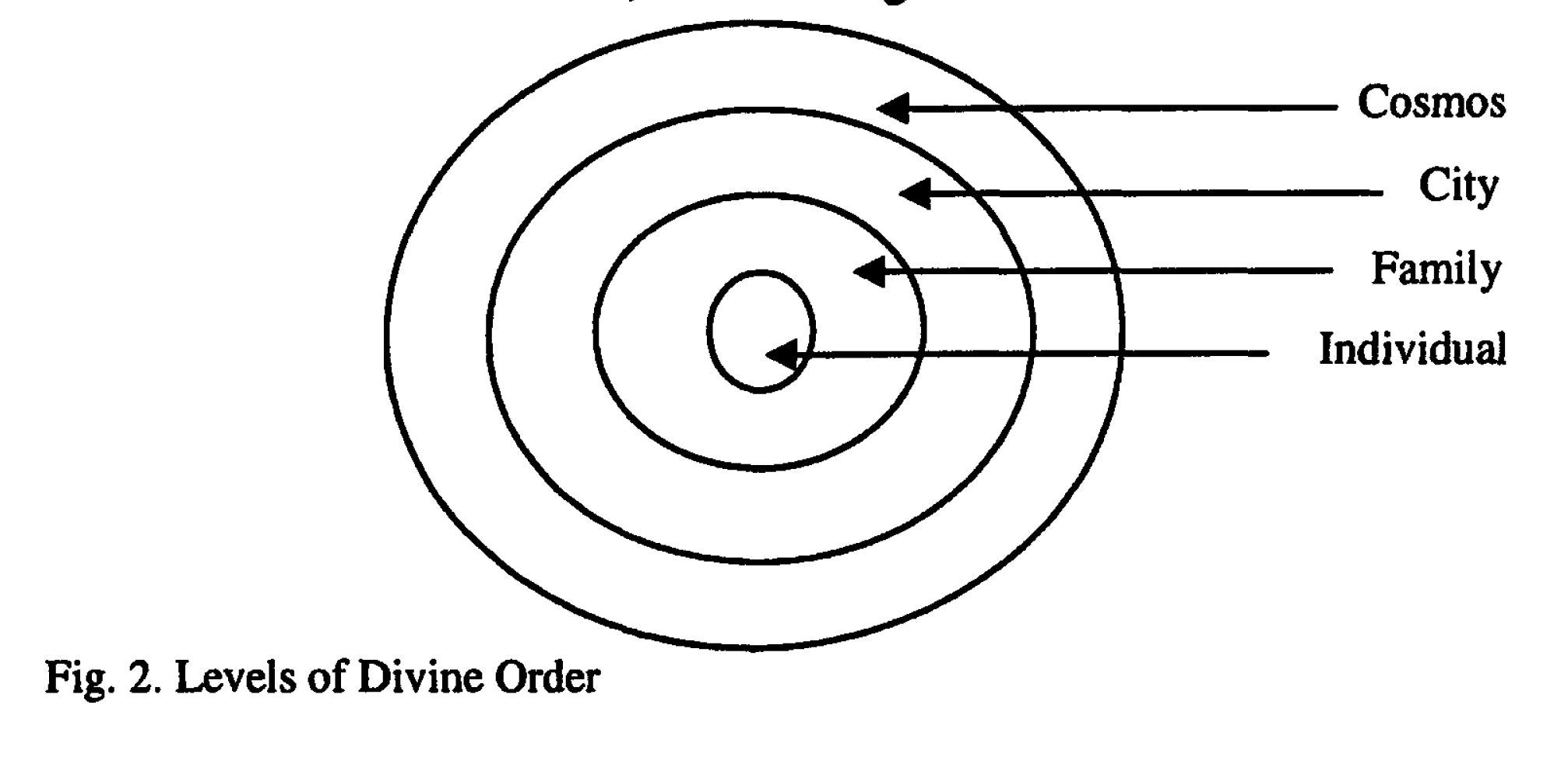





 biblicalfaith.online