Do words matter? Framed in another way, is there a fundamental connection between speaking and God? Again, is there a spiritual component to communication? Consider the following. The Bible asserts that the universe came into existence at the command of God, “God said” (Gen 1:3, 6, 9, 11, 14, 20, 24, 26, 29). The Hebrew writer asserts,
By faith we understand that the worlds have been framed by the word of God, so that what is seen hath not been made out of things which appear.
Hebrews 11:3 (All Scripture references are from the American Standard Version unless otherwise noted)
In fact, both the origin and the dissolution of the universe is subject to the declaration –“word”– of God (2 Pet 3:5-7). Communicating is, then, a core activity of God; in other words, God speaks His Mind.
There are people in this world who seek for a chance to hear God speak to them. God has spoken, in his wisdom, through two monumental venues. The first is creation; the second, are the Scriptures. In Romans 1:20, Paul affirms,
For the invisible things of him since the creation of the world are clearly seen, being perceived through the things that are made, even his everlasting power and divinity; that they may be without excuse.
Romans 1:20
The world essentially speaks of a powerful supernatural eternal being Who is the origin of all that is seen; in a nutshell, the “heavens declare the glory of God; and the firmament showeth his handiwork” (Psa 19:1).
Second, God has spoken his mind and has preserved it in the Scriptures. It is written,
For who among men knoweth the things of a man, save the spirit of the man, which is in him? even so the things of God none knoweth, save the Spirit of God. But we received, not the spirit of the world, but the spirit which is from God; that we might know the things that were freely given to us of God.
1 Corinthians 2:11-12
In fact, the unveiling of God’s mind is the cause which brought about the Scriptures. It is written, “Every scripture inspired of God” (2 Tim 3:16). God has spoken his unique message through his prophets, who have committed those oracles to print (Eph 3:1-6; 2 Pet 1:19). King David once said of himself, “The Spirit of Jehovah spake by me, And his word was upon my tongue” (2 Sam 23:2).
What this discussion points to is a fundamental truth about God. Inasmuch as God is the source of love, it is equally true that God is the source of disclosure. In other words, communicating and disclosing the eternal mind is fundamental to the nature of God. This is important for a proper understanding of human communication because humanity is made in the image of God (Gen 1:26-27). God’s people are expected to reflect their Creator’s nature. In fact, Peter writes,
but like as he who called you is holy, be ye yourselves also holy in all manner of living; because it is written, Ye shall be holy; for I am holy.
1 Peter 1:15-16
Little wonder that Peter would further admonish, “if any man speaketh, speaking as it were oracles of God” (1 Pet 4:11). Every aspect of godly living is to be set apart for God’s purposes (Rom 6:17-18), and this includes how a person speaks.
Speaking is a process which discloses the thoughts and movements within a person’s heart; it reveals what is in the heart (Matt 6:22-23; Mark 7:20-23). All things being equal, regardless of the truths or lies a person speaks, it derives from the inner workings of the heart. Since communication is a spiritual matter and reflects one’s heart, it is not surprising that Jesus would state the following: “And I say unto you, that every idle word that men shall speak, they shall give account thereof in the day of judgment. For by thy words thou shalt be justified, and by thy words thou shalt be condemned” (Matt 12:36-37; cf. Rev 21:8; Rom 14:12, 10-12; 2 Cor 5:10; Eccl 12:14; Acts 17:30-31).
What a person “says” matters because it reflects a spiritual truth about a person’s heart. The heart is the touchstone upon which Jesus makes his case for a higher level of spirituality as addressed in the “Sermon on the Mount” (Matt 5:21-22, 27-28, 33-37, 43-48). When someone tells the truth, or lies, or uses a swear word, there is a corresponding spiritual truth which points to how one reflects the image of God. If one wishes to be a faithful child of God, one must “adorn” God’s teaching on modest speech (Tit 2:10). Our speech must reflect that we are made in the image of God, and it must exemplify the gracious and righteous nature of the gospel message.
Our Speech is to Reflect the Image of God
In writing to the Christians in Colossae, Paul walks through the conversion process (Col 2:10-3.4). They went through “the circumcision of Christ; having been buried with him in baptism” (2:11-12). In this “working of God” they were “raised with him” (2:12), and made “alive together with him” for forgiveness (2:13). To reinforce their commitment, Paul urges them to “put to death” their past vices:
now do ye also put them all away: anger, wrath, malice, railing, shameful speaking out of your mouth: lie not on to another; seeing that ye have put off the old man with his doings and have put on the new man, that is being renewed unto knowledge after the image of him that created him.
Colossians 3:8-10
A child of God should so speak from the heart that it reflects God’s image rebranded upon them. There is a deep truth here to unpack. The Lord Jesus warns and instructs how Christians are to treat others. One should not insult his brother (“Raca” Matt 5:22); instead, Christians are to be “the salt of the earth” and “the light of the world” (Matt 5:13).
Unfortunately, some are so good at the craft of sarcasm and caustic acidity that though they have not transgressed moral boundaries with their vocabulary, they are quite adept at verbally abusing their brethren. Instead, Christians should “receive one another, even as Christ also received you, to the glory of God” (Rom 15:7).
Our Speech is to be Exemplary
In writing to his protégé, Paul extends to Timothy an encouraging word for his ministry in Ephesus. He admonishes, “Let no man despise thy youth; but be thou an ensample to them that believe, in word, in manner of life, in love, in faith, in purity” (1 Tim 4:12). The nature of Timothy’s “youth” (neotatos) is a matter of speculation, but based on inscriptional evidence he may have been in his twenties if not early thirties.
He needed this instruction to dissuade those that would be critical of Timothy’s ministry due to his age; namely, Timothy’s moral and spiritual reputation would be established by the moral pattern of his “word” (i.e. “speech”). Timothy’s speech is to be exemplary, a template. In these words to Timothy, when it comes to their speech Christians are enjoined upon to be a “model citizen.”
Does this mean that one is required to always speak as if they were a graduate from a charm or etiquette school? Hardly, but it does mean that God’s people should be proactive in speaking appropriately. There is room to be culturally flexible provided it is moral. Paul writes,
Let your speech be always with grace, seasoned with salt, that ye may know how ye ought to answer each one.
Colossians 4:6
Ultimately, a Christian’s speech and vocabulary ought to create an attractive environment to their neighbors so that all may feel welcomed in their presence. The obvious illusion is to create an atmosphere where evangelism may occur (1 Thess 2:13; 2 Thess 2:14). Since it is God’s goodness that leads people to repentance (Rom 2:4), then it is also true that a Christian’s goodness can point others to their good God (Matt 5:16).
Concluding Thoughts
The biblical evidence shows that speaking and communicating the thoughts of one’s heart is an important spiritual component to being created in the image of God. Communication comes with a great challenge,
If any stumbleth not in word, the same is a perfect man, able to bridle the whole body also.
James 3:2
The entire course of one’s future can be directed by the outpouring of the thoughts and intentions of the heart when spoken (Jas 3:3-12). The most important aspect of what a person can do is to use one’s words to praise God and his son Jesus the Christ. As it is written,
Wherefore also God highly exalted him, and gave unto him the name which is above every name; that in the name of Jesus every knee should bow, of things in heaven and things on earth, and that every tongue should confess that Jesus Christ is Lord, to the glory of God the Father.
Philippians 2:9-11
This is a slightly reformatted version of the article which originally published in The Glendale Gleaner (Newbern, TN: Glendale church of Christ).
Someone has coined the phrase, “tough times never last, but tough people do.” As the years pass and the hurdles of life with them, this axiom becomes profoundly evident. Life is relentless, however, in its daily dosage of aches and pains – on all fronts.
Sometimes people flail their arms up and give up, feeling helpless. But, for those who are disciples of the Christ, a renewable source of strength and comfort is available: the apostle Peter says that we have been granted “all things that pertain to life and godliness” (2 Pet 1:3). This is the power of incorporating the word of God into a person’s life.
At some time near the end of his life, the apostle Peter dispatched a letter to a church suffering internally because of a number of false teachers were spreading immorality, anti-authoritarianism, and skepticism (2 Pet 2-3). It was, therefore, essential to stay grounded in the true knowledge. These Christians must carry the truth of the gospel in the one hand, and maintain a well rounded Christian lifestyle on the other hand.
In articulating these important instructions, we have been bequeathed a treatise that provides guidelines for developing Christian character during tough times. Tough times manifest themselves politically, socially, familially, spiritually, and emotionally. As in the first century, the contemporary climate of immorality, anti-authoritarianism, and skepticism is prevalent; and likewise, the inspired apostolic instruction is as relevant as when it was first composed nearly two thousand years ago!
To be sure more could be said; however, reflect on these quick notes on a section of Scripture that is often labeled “Christian Graces,” and in so doing perhaps this study will achieve its goal. The goal is to be more mindful of growing as a Christain (2 Pet 1:3-7), and to realize that being active in this process underscores our awareness of the redemption we have received in Christ (2 Pet 1:8-9). May the Lord bless you, as you strive to make your calling and election sure (2 Pet 1:10-11).
Greeting (2 Peter 1:1-2)
Simeon Peter, a servant and apostle of Jesus Christ, To those who have obtained a faith of equal standing with ours by the righteousness of our God and Savior Jesus Christ: May grace and peace be multiplied to you in the knowledge of God and of Jesus our Lord.
Unlike modern letter writing standards, ancient letter writers put the author’s name first, followed by some reference that connects the author and the readers. Peter calls himself a servant and apostle, two terms that are quite descriptive. As a servant (the word used for slave), Peter stresses his submission to God and his disposition regarding his ministry to others. The word apostle stresses his spiritual commission to represent God as His ambassador to the world, delivering His message exactly as God empowered him.
The readers are those who share the same faith as he does, they are on “the same level as the author.”[1] Here we find the principle of equality of a faith to be shared. This faith is personal, as developed with their relationship with God and Jesus. Then consistent with ancient letter writing, Peter sends them a greeting. Grace is usually seen as the Greek salutation while peace is typically considered to be the Hebrew way of saying hello. Consistent with the themes of his letter Peter sends this greeting in the knowledge of God and of Jesus our Lord.
3-4: The Basis for Godly Living
His divine power has granted to us all things that pertain to life and godliness, through the knowledge of him who called us to his own glory and excellence, by which he has granted to us his precious and very great promises, so that through them you may become partakers of the divine nature, having escaped from the corruption that is in the world because of sinful desire.
Peter continues the theme of knowledge and says that it is through Christ’s divine power (God-based ability), that Christians have been given access to all things that pertain to life and godliness. Christians cannot have the latter without the former. In agreement is Frederic Howe, we conclude that Christians must learn that “the ultimate condition, prerequisite, or essential foundation for holiness in the believer’s life is God’s divine power.”[2]
The Christian has this access through knowledge, but this is not simple knowledge, it is the knowledge of him who called us to his own glory and excellence. The reference to his glory and excellence is a “pointer” to which our calling finds completion -to abide with God. Yet this final reality can only be obtained in a life governed by knowledge of the Savior and his teaching.
Knowledge has given us his precious and very great promises, which are the means by which God allows us to become partakers of the divine nature (i.e. to share the holy nature of God). Modern man -even the modern Christian- may feel skeptical about this promise,[3] but it is a promise that in some way those who are faithful will “like him” in the immortal state (1 John 3:2). This holy nature is obtained as one learns how to escape from the corruption that is in the world because of sinful desire. Christians are expected to employ God’s knowledge to do this, holiness will not happen by accident.
5: Faith, Virtue, and knowledge
For this very reason, make every effort to supplement your faith with virtue, and virtue with knowledge,
Naturally, since the Christian aim is to escape the corruption of this world and partake of the divine nature through knowledge, Peter provides a list of “virtues” that must be added to one’s lifestyle in order reach these goals.
The virtues described in the chain in 1:5-7 not only are holy actions, but the very chain indicates the fullness of holiness that they must strive for. Thus those who seek them will be completely holy.[4]
In fact, the word supplement implies that “the believer contributes lavishly to the work of his salvation.”[5] Christians must contribute faith with virtue; moreover, this faith is probably the same referred to earlier -a personally developed reliance upon God- that must be contributed to with virtue (moral excellence).[6]
Furthermore, Christians are to supplement their moral excellence with knowledge, meaning that they are to have knowledge in the “how to’s” of a godly life. Contextually, this knowledge is what allows Christians to become partakers of the divine nature, after escaping the corruption that is in the world because of sinful desire.
6: Self-Control, Steadfastness, and Godliness
and knowledge with self-control, and self-control with steadfastness, and steadfastness with godliness,
In addition to moral excellence and knowledge, to become completely holy and capable of partaking of the divine nature, the Christian is to assume the development of self-control, steadfastness, and godliness. Instead of self-control, some translations have the word temperance (KJV), but this is inaccurate since “temperance” usually implies a self-imposed censorship against alcohol. The Greek word in the text means, “to exercise complete control over one’s desires and actions – ‘to control oneself, to exercise self-control.’”[7] The overarching theme of self-control is one’s ability at self-mastery – i.e. self-government.
Next, is the idea of bearing up courageously under suffering, here translated steadfastness.[8] Perhaps this word provides a better hint of the local situation of Peter’s audience:
The need to persevere is particularly important in the situation Peter addressed, for the opponents were threatening the church, attracting others to follow them (2:2), so that some who began in the way of the gospel had since abandoned it (2:20-22).[9]
And then, disciples of Jesus are to supplement their behavior with godliness. One would think that this exhortation is unnecessary since the whole list of virtues revolves around the idea of devotion towards God in such a way where one “does that which is well-pleasing to Him.”[10] But this list of virtues would be incomplete without such an important inclusion of a vital virtue.
7: Brotherly Affection and Love
and godliness with brotherly affection, and brotherly affection with love.
The last two virtues of Christian godliness are brotherly affection and love, elements which are of special consideration because there is a distinction being made here between the two. Brotherly affection (philadelphia) is mutual love, while purposeful love (agape) is more encompassing because it requires self-generated love directed consistently upon another with their best in view.
Fred Craddock discusses these words in the following way:
Mutual affection is literally ‘love of one’s brothers and sisters’ (philadelphia) and is an essential component of church life. But that is just the point: mutual affection, reciprocal love, pertains to life in the church, to the fellowship. Beyond that, however is love, agape. Love does not require reciprocity; it includes the stranger, and even the enemy. It behaves favorably and helpfully toward the other regardless of who the other is or what the other had done.[11]
Sometimes the differences between these words are overstated, but these words of filial and “purposeful” love simply accentuate important capacities a person must engender in order to be a well-rounded Christian. We must be able to embrace the love (philadelphia) that comes easiest to us (usually familial love), and likewise be able to love on a deeper spiritual level – a beneficent love (agape).[12]
8-9: The Importance of these Characteristics
For if these qualities are yours and are increasing, they keep you from being ineffective or unfruitful in the knowledge of our Lord Jesus Christ. For whoever lacks these qualities is so nearsighted that he is blind, having forgotten that he was cleansed from his former sins.
Peter does not hold back here, where people are prone to; instead, he affirms clearly that these things -qualities- must be in the Christians possessions and in the process of development. In so doing, he affirms, they will keep you from being ineffective or unfruitful in the knowledge of our Lord Jesus Christ. Peter does not let loose of two concepts -godly living and knowledge- for the two are joined at the proverbial “hip.”
This stands more clearly in stark contrast to the false teachers in chapter 2. Rigorous training and development in godly behaviors assure one that they will not become “useless and unproductive” in the joys that exist in the knowledge of our Lord Jesus Christ.
A strong warning is made against those who would lack these qualities, stressing that to lack these qualities are the result of forgetting that a person’s sinfulness was forgiven and that these sins represent one’s imperfection and need to develop morally. Failure to do this will be detrimental to one’s calling and election.
10-11: Making Your Calling and Election Sure
Therefore, brothers, be all the more diligent to make your calling and election sure, for if you practice these qualities you will never fall. For in this way there will be richly provided for you an entrance into the eternal kingdom of our Lord and Savior Jesus Christ.
Because of the dangers that inhere should a Christian not develop these qualities of godly living, Peter warns with a logical conclusion, be all the more diligent to make your calling and election sure.[13] The answer to the question “why?” is provided, for if you practice these qualities you will never fall. It is crystal clear that Peter is demonstrating that one’s salvation can be a fragile thing should one neglect personal development.
Neglect will give way to falling, and contextually, this fall refers to one’s failure to enter into the eternal kingdom of our Lord and Savior Jesus Christ. Peter even affirms, by supplementing one’s life with godly characteristics, one will be richly provided an entrance into this kingdom; however, failure to do this makes this entrance void – it is not just the richness of the heavenly entrance being considered, it’s the entrance into heaven itself.[14] And here we see another major crack in the veneer of the Calvinistic error “Once Saved, Always Saved”.
Conclusion
2 Peter places a high premium on knowledge, especially as it pertains to knowledge and morality, and knowledge and truth. True knowledge appropriately originates from God and of Jesus our Lord and provides the proper framework for the development of godly living. This knowledge is now collected in the 27 documents of the New Testament, as the final revelation of Jesus Christ (John 16:13; Heb 1:1-2).
Guy N. Woods once observed that in this passage a godly character is developed and revealed in the person of deep Christian virtue: (1) those which are necessary to form the Christian character, and (2) those traits which reveal a follower of Christ to be a genuine servant of God.[15]
One of the most striking things about this section of Scripture is the methodical response of the Christians against the false teachers. It was not a brutal attack by physical force – a literal blow by blow as they stand toe to toe. The Christians were to respond with godly character, with love and truth. Viewing this life as concluding with the final judgment, only godly conduct will withstand the type of final exam the Divine Tribunal will release (2 Pet 3:9-13).
Finally, recalling the problem facing the group of Christians of 2 Peter was internal church problems of false teaching manifested in immorality, anti-authoritarianism, and skepticism (2 Pet 2-3). The best way, it seems, to outlast troublesome times, is to endure and become spiritually tough. This is precisely Peter’s point. False teachers with their troubles will come and go, but spiritually tough churches will last and last because they are grounded in godly knowledge and have kept their calling and election sure. And for that matter, so will spiritually tough Christians!
Sources
Pheme Perkins, First and Second Peter, James, and Jude (Louisville, KY: Knox, 1995), 167.
Frederic R. Howe, “The Christian’s Life in Peter’s Theology,” BSac 157 (2000): 307.
Perkins, First and Second Peter, James, and Jude, 169; Guy N. Woods, A Commentary on the New Testament Epistles of Peter, John, and Jude (Nashville, TN: Gospel Advocate, 1991), 149.
Jerome H. Neyrey, 2 Peter, Jude: A New Translation with Introduction and Commentary (New York, NY: Doubleday, 1993), 154. Michael Green’s observation of the use of the Stoic practice of making similar virtue lists, and comments, that the “practice of making lists of virtues was already well established among the Stoics, who called it a prokope, ‘moral advance.'” This is not an attempt to make the church thinking like the world (i.e. the Greek world), but to use a familiar practice and leverage its familiarity to equip these Christians to embody Christian character (The Second Epistle of Peter and the Epistle of Jude [Grand Rapids, MI: Eerdmans, 2002], 75-76).
Simon J. Kistemaker, Exposition of the Epistles of Peter and the Epistle of Jude (Grand Rapids, MI: Baker, 1987), 251.
Barclay M. Newman, Jr., A Concise Greek-English Dictionary of the New Testament (Stuttgart: Deutsche Bibelgesellschaft, 1993), 24.
(L&N) Johannes P. Louw and Eugene A. Nida, Greek-English Lexicon of the New Testament Based on Semantic Domains, 2d ed. (New York, NY: United Bible Societies, 1989), 1:751.
William E. Vine, Merrill F. Unger, and William White, Jr., Vine’s Complete Expository Dictionary of Old and New Testament Words (Nashville, TN: Nelson, 1984), 2:200.
Thomas R. Schreiner, 1, 2 Peter, Jude (Nashville, TN: Broadman & Holman, 2003), 300.
Fred B. Craddock, 1 and 2 Peter and Jude (Louisville, KY: WJK, 1995), 101.
Michael Green has a worthy quote on agape and philadelphia: “This word agape is one which Christians to all intents and purposes coined, to denote the attitude which God has shown himself to have to us, and requires from us towards himself. In friendship (philia) the partners seek mutual solace; in sexual love (eros) mutual satisfaction. In both cases, these feelings are aroused because of what the loved one is. With agape, it is the reverse. God’s agape is evoked not by what we are, but by what he is. It has its origin in the agent, not in the object. It is not that we are lovable, but that he is love. This agape might be defined as a deliberate desire for the highest good of the one loved, which shows itself in sacrificial action for that person’s good” (80).
Perhaps no one word is so misunderstood as the term “called” in the New Testament. Essentially, the church is a group of individuals called out to assemble into a congregation (ek, out of, plus kaleo, to call = ekklesia). A person is called by the Gospel (2 Thess 2:14) and becomes a member of the church (a called out group) through immersion for the forgiveness of sins (Acts 2:38-47; Gal 3:26-29 – notice the transitional tenses – “you are” because “you were”).
Kistemaker, Exposition, 257-58.
Woods, Peter, John, and Jude, 152. Woods hand selects which virtues form character and which other virtues reveal genuine discipleship, and here we must disagree because such a segregation is artificial, and not natural with the flow of the passage. In fact, there is the reason to believe that the list of eight virtues is consistent with a literary form called sarites, “in which we have a step-by-step chain that culminates in a climax” (cf. Schreiner, 1, 2 Peter, Jude, 297). At any rate, we agree with Woods’ observation – albeit modified to be descriptive of all the virtues enlisted by the apostle.
I’ll be honest. I have not always used my tongue in the most positive, and constructive of ways. I could append my guilty plea with the excuse, saying, “it wasn’t me, the devil made me do it,” but such trifle excuses remove personal responsibility from the case. So what am I to do? Repent, seek the counsel of the Scriptures, and then implement that wisdom on a consistent basis.
As in all spiritual quests, the journey is quite personal. Spiritual progress is a tailor-made phenomenon, for no two people are exactly the same and all have individualized challenges. It is the struggle of overcoming, and harnessing the impulses of our body, and conforming them to the teaching of God as revealed in the Bible that unites all men searching for spiritual solutions to their plight with sin.
Perhaps, the most pervasive struggle is the use and misuse of our tongue. This little piece is focused on providing an encouragement and to provide ammunition in the battle over the tongue.
A Warning by James
When the brother of the Lord addressed the church spread across the Roman Empire, James provided one of the most lengthy sections committed to illustrating the danger and misuse of the tongue in the New Testament (3:1-18).
The passage connects two main themes articulated to resolve a number of problems facing the Jewish-Gentile church. On the one hand, a section affirming that faith and action must go hand in hand in order to be genuine faith (2:14-26); and on the other hand, James makes the connection that a wise and understanding person is not only demonstrated by a “good conduct,”[1] but that because of a behavior saturated in heavenly wisdom, such a person can contribute to the diffusion of quarrelings (3:13-4:12).
James argues, therefore, that all members should act in a spirit of humility grounded in the recognition of God (4:4-10; cf. Jas 1:27); otherwise, they will continue to be guilty of sins exasperating the church climate of James’ audience (4:17). So James addresses the use of the tongue and the need to minimize the “heat” amplifying the problems, and to maximize “light” in order to diffuse the internal strife.
James halts the multiplication of teachers by affirming that a teacher should be a mature Christian and that a mature Christian teacher is to be able to control the tongue (3:1-2). The reason? Because, despite its apparent insignificant size, it actually wields a large span of control over a person’s influence and ability (3:3-5a).
Furthermore, its destructive power (unrighteous use) can destroy lives presently and eternally (3:5b-6), but its most consistent problem is found in its duplicity (3:7-12): “with it we bless our Lord and Father, and with it we curse people who are made in the likeness of God.”
Therefore, James warns against “wanna-be teachers” who are too immature to enter the fray of “church problems.” Such matters are to be left to those who have demonstrated a pattern of life guided by wisdom and understanding (3:13). Such individuals will ideally refrain from acting “earthly, unspiritual, [and] demonic,” and instead will act on “the wisdom that comes from above” (3:14-17).
The results?
A harvest of righteousness is sown in peace by those who make peace. (James 3:18 ESV)
Despite the great dangers of the tongue, James says that it can form the foundation needed to resolve conflict – physically, socially, and spiritually. Imagine just how much better people and churches we would be if we constantly sowed the seeds of peace within the congregation and among our congregational neighbors.
In James’ approach to church conflict, he highlights an important trait of the Christian involved: it must be a mature Christian who can win the battle of control over the tongue. It may not always be a perfect use of the tongue, but the tongue will not be allowed to run wild. This is a decision all Christians can make; and so, what we are saying is this: the control of the tongue is an absolutely obtainable spiritual goal.
“Excuses, Excuses”
Usually, we find ourselves under the delusion of our own excuses: “I was raised to cuss like a sailor,” “I was angry and I lost it,” “I need to work on that, but I always forget.” We could plumb the depths of the excuse abyss ad infinitum and find a defense for every one of our misconducts. But we do ourselves a true dis-service by accepting defeat, instead of trusting in Him who raised Jesus from the dead (Rom 6:6-14, 8:32).
The apostle Paul says that we are more than conquerors through God’s power (Rom 8:37), and to raise the white flag is to accept defeat unnecessarily. Such determinism is Calvinistic to the core, and utterly rejects the free-volitional-will that God endowed upon His Imago Dei (Gen 1:26). A person can choose to serve God or not – it is within the hands of the person (Josh 24:15, cf. Eccl 9:10). Furthermore, it dismisses the seriousness of the sins of the mouth, which God has already spoken of as behaviors under His wrath (Prov 6:16-19; Rev 21:8).
Returning to the situation confronting the church James addresses, it is essential to notice that one of his main objectives is to denounce and expose the erroneous excuse that God has placed us in a difficult situation only to fail and that we have no recourse but to sin (cf. Jas 1:12-18). To overthrow this deception, James sets forth the themes of his letter:[2]
Knowing this, my beloved brothers: let every person be quick to hear [1:21-2:26], slow to speak [3:1-18], slow to anger [4:1-5:6]; for the anger of man does not produce the righteousness that God requires. (James 1:19-20)
Such a letter demands personal responsibility in the employment of true religion. Furthermore, true religious expressed through the Christian lifestyle is dependent upon the ability to control the tongue (Jas 1:27-28). This is clearly stated in James 3:2:
For we all stumble in many ways. And if anyone does not stumble in what he says, he is a perfect man, able also to bridle his whole body. (James 3:2)
Chalinagogeo, the word used for “bridle” in James 3:2 is the same word used in James 1.26. It means to literally “lead with a bridle”; and among all the New Testament documents it appears in James alone. Moreover, it carries the metaphorical force of restraint and the ability to keep things in check (cf. NIV).[3]
Amazingly, James reaffirms his statement about the tongue in 1:26-28 , and applies it to the need to control the whole body (i.e. behavior and character) in 3:2. In light of this data, could anything be more clearer than the spiritual need to overcome his or her tongue?
In what way could the excuses above carry weight against the inspired words of James? An uncontrolled use of the tongue can not be explained away with frivolous excuses, nor will they stand when they are brought before the Divine Tribunal in the judgment (Eccl 12:14; Matt 12:36).
With such clear biblical data, excuses must be tossed to the side, responsibility must be taken for the misuse of the tongue, and a course of action must be taken to consistently (daily) manage the tongue knowing full well that it is “a restless evil, full of deadly poison” (Jas 3:8).
Some Suggestions
A study like this would be incomplete without attention being brought to possible strategies to minimize the misuse of the tongue and to maximize the potential of reaching true religion with the proper use of the tongue. Some of the points come from Scripture, and others come from common sense. There is no doubt that these are but a sample of all that could be said.
(1) Check the Heart
Jesus once made the statement that the heart was the source of all of our actions. Notice how Matthew records this affirmation:
[W]hat comes out of the mouth proceeds from the heart, and this defiles a person. For out of the heart come evil thoughts, murder, adultery, sexual immorality, theft, false witness, slander. These are what defile a person. (Matthew 15:18-20; cf. Mark 7:14-23)
Indeed, we see the wisdom of Proverbs 4:23, saying, “Keep your heart with all vigilance, for from it flow the springs of life.” Many feel that the best way to succeed in life is to expose oneself to everything that can be known, and then let the chips fall where they may; thinking that exposure is the same thing as protection. Actually, the opposite is true.
The apostle Paul penned the following inspired words: “I want you to be wise as to what is good and innocent as to what is evil” (Rom 16:19). Two things are said here: we must be thoroughly informed about what is good, and we must be unadulterated with evil.
Layering these passages together, it is clear that the heart must be guarded against evil influences by filling it with “what is good.” This will enable a person to control what proceeds “from the heart.” Certainly, then, with a tongue controlled at its source, the course of our lives will be better.
(2) Upgrade the Filter
Have you ever heard of BTM? BTM stands for “brain to mouth” and is commonly used to describe a popular “syndrome” of sharing whatever comes to mind – i.e., you think it, you say it. Surely this cannot be a prudent method of communication.
It is enlightening to observe some passages from Proverbs and how they describe BTM-ish uses of the mouth. Note a couple of passages:
The heart of the righteous ponders how to answer, but the mouth of the wicked pours out evil things. (15:28)
If one gives an answer before he hears, it is his folly and shame. (18:13)
There is evidence to conclude then that Christians should upgrade their tongue with a filter that makes them ponder of what they are going to say. Moreover, a person can say what is on their heart without forsaking forethought when talking with other people.
Word choice – and it is a choice – is an important part of the communication process. It will enable us to speak morally, honestly, correctly, empathically, and positively. So the next time you are on the verge of a brain-to-mouth moment, pause, “hear” and “ponder” over the matter at hand before you speak. This filtration system just might be the best thing you do to change the direction of your life for the better (Jas 3:2-6)!
(3) Embrace Silence
In chapter 3 of Ecclesiastes, the “Preacher” (Eccl 1:1),[4] presents his famous “there is a time” monologue (3:1-8). In verse 7 of this passage, he pens, that there is “a time to keep silence, and a time to speak.” What was Solomon addressing?
The overruling theme of this section of the book focuses upon two main things: (a) in this transient life humanity has many ways (i.e. the “a time to” statements, 3:2-8) to stay busy (3:1, 10); and (b) despite the ability for the mundanity of life to bring despair (3:9), everything is beautiful “in its time” in light of the eternal consequences of living the life designed by God (3:11-14).[5]
Now that we have established the context, the actual verse needs some clarification. The whole verse reads (3:7):
(A) a time to tear,
and (B) a time to sew;
(A') a time to keep silence,
and (B') a time to speak
As seen above, from the first verse to the eighth each verse is broken down into four parts of what can be best expressed as “opposite extremes.”
For example, in 3:2 birth and death are “opposite extremes” of each other, and then in a similar vein, the vegetative imagery is used of planting a productive plant seed and then plucking the plant to end its productivity. The two lines are very similar in their emphasis, there is a time to begin life and a time that life and all its productivity will come to an end.
Ecclesiastes 3:7 follows a similar pattern, only that here the passage seems to refer to the customs of mourning and grief shown during the event of a death. Customarily, in the cultural milieu of biblical times a garment was “torn” to show grief,[6] but when it was time to overcome grief reconnecting the torn pieces (i.e. “a time to sew”) would symbolize “picking up the pieces” (for lack of a better phrase).
Likewise, carrying this pattern of posing “opposite extremes” against each other, the Preacher says that there are appropriate times that justify silence -like death- and that there are times when we must resume our daily conversations.
Solomon stresses that life often confronts us with these opposite extremities of life. One moment, we are careful without a concern in the world; and then, in the next moment, it would seem as if the whole world were on our shoulders and every detail must be right. However, in the grand scheme of things, knowing that eternity looms in the future, and we have a purpose in the world, we face each challenge with spiritual and moral strategies in place. We fear God and keep his commandments (Eccl 12:13).
Amazingly, one of those spiritual and moral strategies is to be silent or conversant depending upon how the situation demands us to act. Often, spiritually concerned individuals feel that they must consistently insert their lips into every problem or situation, thinking perhaps that it is the conscientious thing to do. Solomon reminds us – there is a time for it, and then there is a time when it is highly inappropriate to speak.
Conclusion
What can we say, our tongue is the battleground. So much depends upon our ability to control this little muscle organ. As we have observed, the use of our tongues stems from our own maturity and spiritual depth. We must be vigilant than to guard our hearts, be more patient and think before we speak; and finally, we must recognize that just because we feel we have something to say, the occasion may not call for it.
May this study be enriching and encouraging to you in your quest to live a life of biblical faith.
Sources
All quotations are taken from the English Standard Version of the Holy Bible unless otherwise noted (Wheaton: Crossway, 2001).
Although many have suggested outlines for the book of James, we agree with John Niemela’s assessment of the organization of the letter based upon the thematic structure of the letter (“Faith Without Works: A Definition,” Chafer Theological Seminary Journal 6.2 (2000): 3-6). In brief: (1) Prologue (1:1-18), (2) Theme (1:19-20), (3) Themes Subdivided (1:21-5:6), (4) Epilogue (5:7-20).
Ralph Earle, Word Meanings in the New Testament (Peabody, MA: Hendrickson, 1998), 434.
The word used for Ecclesiates’ author, the “Preacher,” translates as a difficult word according to R. K. Harrison (Introduction to the Old Testament [1969; repr., Peabody, MA: Hendrickson, 2004], 1072-73). Perhaps a helpful way of thinking about the term itself is in the following way, “Ecclesiastes is a Greek translation of Heb. qohelet ‘one who convenes a congregation,’ presumably to preach to it. ‘Preacher,’ then, is not an inaccurate translation of either Greek or Hebrew. However, Qoheleth (sometimes spelled Koheleth) would hardly parallel the Christian meaning since his texts were taken more from his own observations of life than from the Law or the Prophets” (William S. LaSor, David A. Hubbard, and Frederic W. Bush, Old Testament Survey, 2d ed. [Grand Rapids, MI: Eerdmans, 1996], 497-98). For a brief but good response to the question of Solomon’s authorship in light of linguistic criticisms certain scholars use to reject Solomonic authorship see Gleason L. Archer, Encyclopedia of Bible Difficulties (Grand Rapids:, MI Zondervan, 1982), 255-58.
Derek Kidner, The Wisdom of Proverbs, Job, and Ecclesiastes (Downers Grove, IL: InterVarsity, 1985), 97-99.
Several passages in the Old Testament alone demonstrate this cultural practice: Gen 37:29, 34, 44:13; Num 14:6; Josh 7:6; Judg 11:35; 2 Sam 1:11-12; 2 Sam 13:19, 31; Ezra 9:3; Esth 4:1; Job 1:20, 2:12; Isa 37:1, etc. These is not all the passages that could be listed, but these are sufficient to demonstrate the pattern of behavior.
The book of Joshua finds itself in a unique position in the Holy Writ. Few books express such a pivotal moment in Redemptive History as does the book of Joshua. Within its twenty-four chapters is found how, with Divine oversight, Joshua and the Israelites conquered and settled the land of Canaan. This was not, however, a haphazard situation but rather one of a destiny realized.
The materializing of God’s promise to Abraham was before their very eyes and in their very hands. A brief exploration of this promise and the physical features of the land will aid in understanding and appreciating the historical accounts in Joshua. Likewise, attention will be given the limitation of occupation God incorporated into the “deed” of the Land of Promise.
The Abrahamic Covenant of Faith
A major theme that runs through the book of Genesis is that God has called Abraham to dwell in a land which would eventually be given to him as a possession (i.e., Palestine; Gen 12:1-3, 13:14-15; Acts 7:2-4):[1]
Now the LORD said to Abram, “Go from your country and your kindred and your father’s house to the land that I will show you. And I will make of you a great nation, and I will bless you and make your name great, so that you will be a blessing. I will bless those who bless you, and him who dishonors you I will curse, and in you all the families of the earth shall be blessed.” (Gen 12:1-3)
Furthermore, he would be the father of the Hebrew nation, Israel, through whom the Messiah would come to redeem a fallen humanity (Gen 22:17-18; Gal 3:16). The whole world was offered redemption (John 3:16) so that it would be the beneficiary of this promise – not just the Hebrews (1 John 2:2).
However despite this promise, and despite the panoramic view God gave Abraham (Gen 13:14-18), the great patriarch of the Hebrews never obtained the land as a possession. He had to obtain it through his descendants. The writer of Hebrews recalls the fact Abraham and his offspring did not literally possess the land while they dwelt on its soil.
By faith Abraham obeyed when he was called to go out to a place that he was to receive as an inheritance. And he went out, not knowing where he was going. By faith he went to live in the land of promise, as in a foreign land, living in tents with Isaac and Jacob, heirs with him of the same promise. For he was looking forward to the city that has foundations, whose designer and builder is God. (Heb 11:8-10)
Beginning from chapter 12 of Genesis, the great patriarchs of the Israelites (Abraham, Isaac, and Jacob) dwell in a nomadic sense in the land promised to them by God – though never really possessing it. Possession of the land does not occur until after the period of Egyptian bondage, the wilderness wanderings, and then finally after the conquest of most of the Promised Land under Joshua and Caleb (Josh 11:23, 13:1).
Finally, before moving past this brief introduction to the promises of God to Abraham in Genesis 12, it is highly important to observe Paul’s insight on these passages related to the redemptive role Abraham’s “seed” would play. In Galatians 3, Paul argues how those who have Abrahamic faith will be justified in Jesus Christ.
And the Scripture, foreseeing that God would justify the Gentiles by faith, preached the gospel beforehand to Abraham, saying, “In you shall all the nations be blessed.” So then, those who are of faith are blessed along with Abraham, the man of faith (3:8-9).
Now the promises were made to Abraham and to his offspring. It does not say, “And to offsprings,” referring to many, but referring to one, “And to your offspring,” who is Christ (3:16).
The point Paul makes is that despite Abraham having many descendants, there is one particular offspring in mind that would bless all nations – Jesus the Christ. And it is through a faithful and obedient response to Jesus and his teaching that makes us children of Abraham (Gal 3:24-29). This is a vital aspect of the Abrahamic covenant, for it anticipated the Christian religion in its culminating redemptive work among all nations (Matt 28:19-20, Mark 16:15-16, Luke 24:44-49, John 1:1-14, Acts 1:8, 11:18).
Joshua and the Israelites Divide and Conquer
The book of Joshua is demonstrative proof that God fulfilled his land promise to Abraham. Israel must depend upon the Lord to conquer the land. The conquest is normally described as a three-pronged method of attack.[2] But the text does not describe the unfolding of these events in a strategic way. Initially, it was conceived to be an all-out conquest of the cities in the land much like Jericho and Ai; however, later conquests demonstrate to be more the result of preemptive strikes from other kingdoms upon Israel due to its successful military campaigns in the region.
First, the Israelites penetrated into the center of the Canaanite land (Joshua 6-9). The cities of Jericho (6:1-27) and Ai (7:1-8:29) were the first to experience the Israelite forces, as the Israelites initially took the land. And, the Gibeonite people were subjugated into servants, “cutters of wood and drawers of water for the congregation and for the altar of the Lord” due to their attempt at political deception (9:1-27). They claimed to come from a distant land, though they were an established group of inhabitants in the land with several cities all their own such as Gibeon, Chephirah, Beeroth, and Kiriath-jearim (9:16-17, 22).
Second, the Israelites respond to a strike upon the newly acquired inhabitants (the Gibeonites) by a band of five aggressive Amorite Kings of southern Canaan (Joshua 10). These five kings are listed in 10:5: Adoni-zedek, the king of Jerusalem, Hoham king of Hebron, the king of Jarmuth, the king of Lachish, and the king of Eglon. Since, Gibeon was a renowned city with many valiant warriors, and it had now become a part of the Israelites who conquered Jericho and Ai, these kings embraced the “strike first” strategy. Little did they know that “the Lord fought for Israel” (10:14), and that their fate would end with their cities being conquered (10:16-21, 29-38) and by suffering execution under the hand of Joshua in Makkedah (10:22-28).
The Conquest of Canaan (Laney, Concise Bible Atlas)
At the end of this campaign, the chronicler[3] of these events concludes this aspect of the conquest with following words:
So Joshua struck the whole land, the hill country and the Negeb and the lowland and the slopes, and all their kings. He left none remaining, but devoted to destruction all that breathed, just as the Lord God of Israel commanded. And Joshua struck them from Kadesh-barnea as far as Gaza, and all the country of Goshen, as far as Gibeon. And Joshua captured all these kings and their land at one time, because the Lord God of Israel fought for Israel. Then Joshua returned, and all Israel with him, to the camp at Gilgal. (10:40-43)
It was during this campaign that the famous “sun stood still” miracle occurred (10:12-13). Some dispute that the event was miraculous, but “conservative scholars are in agreement that this circumstance involved a genuine miracle, and that the account is not a mere poetic or mythological description of an ancient victory.”[4]
Finally, Joshua and company have a military victory over a northern Canaanite confederacy (Joshua 11). The land was conquered (Josh 11:16). It must be observed though, that the conquest was aided supernaturally by Divine intervention (Josh 5:13-15). Therefore, “the Lord gave to Israel all the land of which He had sworn to give to their fathers, and they took possession of it and dwelt in it” (Josh 21:43, 44-45 NKJV). After some 500 years after the initial promise, the promise is fulfilled.
The Dimensions of the Land
The land awaiting the Hebrew nation was extremely remarkable. Both Abraham and Moses had been privileged to see its beauty (Gen 13:14-18; Deut 32:49). In his guide book, Guy Duffield writes that from Mt. Nebo “on a clear day, the entire land of Canaan can be seen inasmuch as it is so small – 150 miles from the Jordan River to the Mediterranean.”[5] This is a “parallelogram about 150 miles from north to south and varying in width from 45 to 70 miles”,[6] and was highly diverse botanically, zoologically, meteorologically, and geographically.[7] One writer has said, “Within such small compass the country must have been unequalled for charm and variety.”[8] Even with a brief geographical overview of Palestine a value for the lands diversity can be ascertained.
Beginning from the land east of the Jordan River and venturing across the river into northern and southern extents of Palestine, the children of Israel found themselves in a very geographically dynamic territory. Carl Laney writes that the “land can be divided longitudinally into four distinct geographical regions: the coastal plain, the hill country, the Great Rift Valley, and the Transjordan highlands.”[9] While others have developed the subdivisions of these regions more exhaustively,[10] space here allows for only brief remarks as they relate to the conquest and settlement of Canaan.
The land on either side of the Jordan River is home to the historical narrative of the conquest implemented by the Israelites. The book of Joshua opens with the Israelites on the east side of the Jordan River. In fact, the books of Numbers and Deuteronomy catalog their conquest of this region, known as the Transjordan highlands (Num 31; Deut 2:26-3:11). The land spreads 150 miles from Mt. Hermon in the north to the southern tip of the Dead Sea.[11] The territory was subdivided and given to the tribes of Reuben and Gad, and to half of the tribe of Manasseh (Deut 3:12-22). This high plateau stands nearly at 4,000 feet, which “becomes higher as it extends southward, rising from two to five thousand feet in elevation.”[12] From the western side of this highland, it descends “steeply” down to the Jordan valley.[13] A key monument in the land would be Mt. Nebo, where Moses viewed the Promised Land before his death (Deut 3:23-29).
After crossing the Jordan River, the Israelites transverse a challenging topography throughout their conquests. In it they encountered the deep chasm of the Rift Valley and the mountainous geography of the western Hill Country. As the Israelites crossed the Jordan River, they where trekking through a great “fissure in the earth’s crust.”[14] The Rift Valley is “some 1,700 feet above sea level at the source of the Jordan River (near Caesarea-Philippi) and almost 1,300 feet below sea level at the Dead Sea in the south.”[15] This becomes a major border between the tribes one each side so that the “Rift made it virtually impossible for Transjordan to become integrally united with Samaria and Judah on a permanent basis.”[16]
After walking across the Jordan River, the Israelites encounter the Hill Country. This land is home to a roller coaster of valleys and mountain ranges. This is the backdrop of the central, southern and northern campaigns. This is the home of the rest of the Hebrew nation. North to south, the land consists of:
Upper Galilee, Lower Galilee, the hill country of Samaria and Judea, the “Shefelah” (a natural terrace on the western side of the mountains), and the Negeb (rendered ‘South Country’ in the Scriptures), which extends south of Hebron into the Arabian Desert.[17]
This land division stretches from the Upper Galilean region, where the elevations reach their zenith at nearly 4,000 feet, down through the Samaritan and Judean regions (where lower elevations exist) to the dry Negev plain.[18] One can appreciate then the notion that the Israelites were of a rugged deportment – this is probably accredited to their sojourn in the wilderness.
As the Israelites divided the land, many of their territories would include a portion of the coastal plain (Joshua 14-21). This beach front is “a band of sandy and alluvial soil bordering the Mediterranean Sea.”[19] North to South, it extends some 165 miles from the “Ladder of Tyre (Rosh Ha-Niqra)” to the “Wadi el-‘Arish”, all the while broadening the width of its land from 3 miles in the North to approximately “twenty-five miles” in the south.[20] “The whole coastal region readily lends itself to a threefold division: the Plain of Philistia, the Plain of Sharon, and the Plain of Acre.”[21]
The Divine Transplantation
Jehovah God fulfilled His promise to the Hebrew patriarchs and gave the Israelites the land of promise. The description of the land itself yields a very rugged picture, yet God gave these nomads victory over the established societies encountered therein.
Henry H. Halley captures the magnitude of such a feat. He declares that such a monumental liberation and migration of a nation could not be explained sufficiently with naturalistic conclusions. For Halley, it can be spoken of in no other terms aside from the miraculous:
Aside from various accompanying miracles, the Transplanting of a Whole Great Nation, bodily, from one land to another, meanwhile maintaining it 40 years in a Desert, was in itself one of the most Stupendous Miracles of the ages.[22]
What other explanation would there be for Pharoah to relinquish his profitable workforce – the slave labor of Israel? What other explanation would there be for the survival of millions of Israelites in the desert? Moreover, how can there be a reasonable naturalistic explanation for a nomadic force overtaking fortified cities?
No doubt, the naturalist – or skeptic – can raise criticisms; however, for the theist, the best and simplest explanation is found in Divine intervention. If God created the universe and has provided for every creature, then surely God can lead and provide a nation with liberation from slavery, and then set them on the center stage of the geopolitical tensions of the Mediterranean coastline.
Indeed, the greatest problem for the skeptic and atheist resides in Genesis 1:1 –“In the beginning God.” Such a tremendous experience should have yielded a sense of unwavering dedication to the God of their salvation (Exod 14:28-31), but, unfortunately, Israel’s history retells the cyclical problem of rebellion and idolatry.
It was this problem to which God addressed himself and anticipated in the Law of Moses. The Old Testament is transparent in God’s conditional relationship with Israel.[23] The relationship was dependent upon their faithfulness. Notice a sample of a few verses:
“And if you faithfully obey the voice of the Lord your God, being careful to do all his commandments that I command you today, the Lord your God will set you high above all the nations of the earth” (Deut 28:1).
And the Lord said to Moses, “How long will this people despise me? And how long will they not believe in me, in spite of all the signs that I have done among them? I will strike them with the pestilence and disinherit them, and I will make of you a nation greater and mightier than they” (Num 14:12).
“Be very careful, therefore, to love the Lord your God. For if you turn back and cling to the remnant of these nations remaining among you and make marriages with them, so that you associate with them and they with you, know for certain that the Lord your God will no longer drive out these nations before you, but they shall be a snare and a trap for you, a whip on your sides and thorns in your eyes, until you perish from off this good ground that the Lord your God has given you” (Josh 23:11-13).
“But just as all the good things that the Lord your God promised concerning you have been fulfilled for you, so the Lord will bring upon you all the evil things, until he has destroyed you from off this good land that the Lord your God has given you, if you transgress the covenant of the Lord your God, which he commanded you, and go and serve other gods and bow down to them. Then the anger of the Lord will be kindled against you, and you shall perish quickly from off the good land that he has given to you” (Josh 23:15-16).
The majority of the Hebrew Bible is the retells the story of the consistent Israelite rebellion against their God, God’s warning a recalcitrant nation of wrath, and then the culminating judgment brought upon them. One biblical student summarizes the situation in the following way:
Because of the accelerating rebellion of the nation, consummated by the murder of Jesus Christ, God rejected the Hebrew people. Inexcusably, the Jews rejected their own Messiah; accordingly, Jehovah repudiated that nation and determined to scatter them as dust (Matthew 21:44). Thus, in the providence of God, the Roman armies came against Palestine in A.D. 70, and Judaism was destroyed (cf. Matthew 22:7; 24:1-34); the Jewish “vessel” was smashed, and it cannot be put back together (cf. Jeremiah 19:11). According to Josephus, some 1.1 million Hebrews were slaughtered, and thousands were taken into slavery. All Jewish records were lost in that holocaust. Today, there is not a single Jew who knows his tribal ancestry (McClintock and Strong, 1969, 771). The physical nation of Israel is dead. The “Jews” that make up the State of Israel today (less than twenty-five percent of the world Jewish population) cannot legitimately be called a “nation.”[24]
Conclusion
The biblical record is clear that God had promised to Abraham and his children His covenant to bless them and to give them a land for their descendants (Acts 13:16-25). This land, as demonstrated by ample biblical references was a possession for as long as they remained faithful to God. Sadly, they showed a consistent spirit of rebellion, and as a consequence, a new covenant was to replace the Mosaic Covenant and fulfill the Abrahamic covenant.
Aside from physical blessings, this covenant had spiritual emphases as well – it anticipated the coming offspring that would bless all nations with salvation (Gen 22:17-18; Gal 3:16). Indeed, as the Hebrew writer observes, Joshua may have provided the Jews with a Sabbath rest after the conquest of Palestine, but Jesus provides a rest yet to be experienced – redemption in Heaven (Heb 4:1-10).
Works Cited
Unless otherwise stated, all Scripture quotations are taken from the English Standard Version of the Holy Bible (Wheaton, IL: Crossway, 2001).
Norman L. Geisler, A Popular Survey of the Old Testament (Grand Rapids, MI: Baker, 2000), 97.
I use the name “chronicler” due to the fact that Joshua is, like many Old Testament books, anonymous. Raymond B. Dillard and Tremper Longman, III, stress that ascertaining authorship and date for Joshua’s composition is “bound up with larger historical and theological questions” than mere internal and external argumentation (An Introduction to the Old Testament [Grand Rapids, MI: Zondervan, 1994], 108). David Malick lists a number of features within Joshua (i.e. internal evidence) pointing to various authors; among them, Joshua (“eyewitness quality”) and others who finished the book later – “but not much later” (“An Introduction to the Book of Joshua“). Malick concludes his discussion of authorship by observing that since critical scholarship results rejecting Joshua authorship lacks unanimity, the traditional view that Joshua wrote the majority of the book that bears his name is therefore a good assumption. The book should be viewed as “true to form” written in the days of Joshua and the elders that outlived him (Josh 24:31).
Wayne Jackson, “How Do You Explain Joshua’s Long Day?,” ChristianCourier.com (Accessed: 22 Mar. 2002). This is a brief introduction to the subject, it would be worth consulting.
Guy P. Duffield, Handbook of Bible Lands (Glendale, CA: Regal, 1969), 140.
“Palestine of the Holy Land,” New Standard Reference Bible (Chicago, IL: Hertel, 1955), 756.
Wayne Jackson, Background Bible Study (1986; repr., Stockton, CA: Christian Courier Publications, 2000), 1-18, 67-74.
Alfred Edersheim, Sketches of Jewish Social Life, updated ed. (Peabody, MA: Hendrickson, 1994), 2.
J. Carl Laney, Concise Bible Atlas: A Geographical Survey of Bible History (Peabody, MA: Hendrickson, 1998), 41.
J. McKee Adams, Biblical Backgrounds, revised ed., rev. Joseph A. Callaway (Nashville, TN: Broadman, 1965), 52-85.
Laney, Concise Bible Atlas, 79.
Laney, Concise Bible Atlas, 79.
Laney, Concise Bible Atlas, 42.
Laney, Concise Bible Atlas, 42.
Jackson, Background Bible Study, 3.
Laney, Concise Bible Atlas, 83.
Jackson, Background Bible Study, 3.
Laney, Concise Bible Atlas, 41.
Laney, Concise Bible Atlas, 41.
Laney, Concise Bible Atlas, 131.
Adams, Biblical Backgrounds, 56.
Henry H. Halley, Halley’s Bible Handbook, 24th ed. (Grand Rapids, MI: Zondervan, 1965), 22.
All who strive for a life of faith must recognize a fundamental principle of Divine religion: a life of faith is grounded and developed through the incorporation of the word of God into their lives. It is only until we harmonize our lifestyle with the influence of the inspired word, that we can find ourselves progressing towards spiritual maturity (2 Tim 3:16-17). If we do the former, the latter will follow.
It is the proclamation of the events leading up to the redemptive work of Jesus and the continued ministry of his apostles set forth in the written gospel message of the New Testament that is “bring about the obedience of faith for the sake of his name among all the nations” (Rom 1:5, cf. Rom 16:26). Paul puts the matter into focus in Romans 10:17 when he sets for the principle of faith: “So faith comes from hearing, and hearing through the word of Christ.”
The question considered in this piece is focused on our attitude to Scripture’s application to our lives. We are asking, shall we dictate to Scripture regarding how we ought to live, or will we humbly submit to its teaching?
God and His Word
In Scripture, faithfulness to the instruction of God is paramount from both Divine and human vantage points (Hos 4:6; Psa 119). From the Divine side, God has often warned his people from adding to or removing from what He has entrusted humanity with (Deut 4:2; Rev 22:18-19). Little wonder, then, that Peter once said that if anyone should speak, they should “as one who speaks oracles of God” (1 Pet 4:11).
When Joshua, the son of Nun, succeeded Moses as the prophetic leader over Israel and representation of the Lord’s will, God gave him this encouragement:
Only be strong and very courageous, being careful to do according to all the law that Moses my servant commanded you. Do not turn from it to the right hand or to the left, that you may have good success wherever you go. This Book of the Law shall not depart from your mouth, but you shall meditate on it day and night, so that you may be careful to do according to all that is written in it. For then you will make your way prosperous, and then you will have good success. (Joshua 1:7-8 English Standard Version)[1]
As the representative of the Lord’s leadership among the Israelites, Joshua’s success depended upon his courage to live his life upon the line of faithfulness. Commentary on Joshua’s influence due to his faithfulness is found in the words of Joshua 24:31. This could only be accomplished after extensive meditation and determined application of the Mosaic law.
The opening Psalm of the Psalter echoes these sentiments quite vividly. Psalm 1 is described as “a blessing or beatitude that lays down the two ways of living, exemplified by the character of the just and the wicked.”[2]
Blessed is the man who walks not in the counsel of the wicked, nor stands in the way of sinners, nor sits in the seat of scoffers; but his delight is in the law of the LORD, and on his law he meditates day and night. He is like a tree planted by streams of water that yields its fruit in its season, and its leaf does not wither. In all that he does, he prospers. The wicked are not so, but are like chaff that the wind drives away. (Psalm 1:1-4)
The restatement of “meditation” of the “law” and the subsequent “prosperity” in the life of Joshua 1:8 is not coincidental. It is the foundation of a faithful life of obedience. To “fear God and keep his commandments” is the very fulfillment of the purpose of life (Eccl 12:13).
A millennium later, Jesus speaks to his disciples regarding the importance of abiding in his word. In the Gospel of John, Jesus affirms this principle quite clearly in John 8:31-32, where it is through abiding in his word (“the truth”) that individuals become free from sin. Later, at the close of his earthly ministry, Jesus appeals to the image of a vine and its branches with the emphasis upon the branches abiding in the life-giving vine in order to produce fruit (John 15:1-11).
The illustration stripped away from all metaphor, comes to a focal point in verses 9-11 where Jesus says:
As the Father has loved me, so have I loved you. Abide in my love. If you keep my commandments, you will abide in my love, just as I have kept my Father's commandments and abide in his love. These things I have spoken to you, that my joy may be in you, and that your joy may be full. "This is my commandment, that you love one another as I have loved you." (John 15:9-11)
As Barnabas Lindars summarizes, “the loving relationship of mutual indwelling is pre-eminently a moral union. Hence, love is shown by the voluntary keeping of the Master’s commandments.”[3] We see, then, that love of God is expressed in faithful obedience to the divine commands reflected in a moral and spiritual lifestyle.
God’s Word in Human Hands
From the human vantage point, the application of God’s word derives from “rightly handling the word of truth” (2 Tim 2:15). The significance of the word translated “rightly handling” (Grk. orthotomeo) is expressed by William E. Vine:[4]
The stress is on orthos; the Word of God is to be “handled” strictly along the lines of its teaching. If the metaphor is taken from plowing, cutting a straight furrow, the word would express a careful cultivation, the Word of God viewed as ground designed to give the best results from its ministry and in the life. (Link)
W. E. Vine, M. F. Unger, and W. White, Jr., Vine’s Complete Expository Dictionary of Old and New Testament Words (1984)
In order to properly apply Scripture to life, we must seek the true meaning of the biblical text. This is the human side of living by faith. In essence, God has given his word and expects humans to obey it in love; meanwhile, we must employ our minds to understand and apply his word (cf. 1 Cor 2:11-14; Eph 3:4).
There are several approaches many take to find out the nature of God’s will – that is, His desire or plan for a person’s life. Some randomly open the Bible and apply the first verse under the tip of their finger, and find some mystical application to their situation. Though insight is no doubt obtainable, this is not the most effective approach to incorporating God’s word into everyday life. Scripture was never designed to be approached in this fashion.
Others may have read through the whole Bible several times but still have not figured out what to do with the Bible. The pieces of the biblical puzzle are still scattered throughout their mind because they have never really studied the Bible – they have merely read the Bible as one would read a fictional title. Biblical literature was designed to be meditated upon, memorized, and rigorously studied. It is not literature to enjoy as a pastime or hobby.
We are therefore submitting for consideration the need to study the word of God in such a way that produces spiritual formation; as Paul has said elsewhere, “until Christ is formed in you” (Gal 4:19b). To do this, we must “attempt to hear the Word as the original recipients were to have heard it, to find out what was the original intent of the words of the Bible.”[5] This is the process of exegesis.
The word exegesis is actually derived from two Greek words, ek (“out”) and egeisthas (“to guide or lead”).[6] This is the process of drawing out “the meaning of the biblical text and explaining it.”[7] Biblical faith, and the obedience which is inherent in it, occurs when the meaning of Scripture is drawn out, that meaning is then articulated in meaningful ways, and then applied to contemporary circumstances. This is the noble handling of God’s word.
It is always easier to spout off some superficial interpretation of Scripture that is grounded in inadequate research than it is to produce a well-reasoned, well-understood explanation of a biblical passage or message. Bible study is for all, but it must be candidly acknowledged that there is a difference between the academic exegesis of the Bible and the exegesis usually explored by those untrained in biblical academics. This is an important distinction to address.[8]
Briefly, the non-academic must constantly rely heavily upon the “expert” scholar with the added difficulty of not being able to personally cross-examine “expert” research. However, more resources available today are written at the popular level for the non-expert so that, provided sufficient study, they may become more knowledgeable than ever before (biblical languages, cultural context, tools to study the forms of biblical literature, etc.).[9] This is a matter of mental industry and dedication (Ezra 7:6).
The opposite of exegesis is eisegesis, a word that likewise is derived from two Greek words, eis (“into”) and egeisthas (“to guide or lead”). Eisegesis is “the mistake of reading meaning into a text rather than deriving meaning from it.”[10] It may also be stated as reading into the text “meaning that one wants to get out of it.”[11] The point is: eisegesis is the exact opposite of exegesis. It is a hostile take over of the biblical teaching – intentionally or unintentionally.
In his work, From Scripture to Theology: A Canonical Journey into Hermeneutics, Charles J. Scalise uses the analogy of backpacking and camping to show the need for appropriate hermeneutics. Biblical “campers” must prepare for their trip, employing an important guidance tool for directing their theological travels – a map. The map is the biblical teaching, and it is, therefore, important to stay on the map for the right guidance.
Read carefully the following point Scalise makes contrasting exegesis from eisegesis. It should put the two Bible approaches into perspective:
Instead of Scripture functioning as the rule of doctrine, exaggeration of particular doctrines have sought to become the rule of Scripture. Proponents of a specific view have sought to read their particular opinions into Scripture (eisegesis) rather than letting the Scripture rule their view. Prooftexts have been claimed for an amazing variety of additions to and aberrations of the Christian tradition […] Christians who seek to claim authority for beliefs and actions supported by such scriptural pretexts are making maps where there is no biblical territory.[12]
C. J. Scalise, From Scripture to Theology (1996)
If exegesis is what we do to “stay on the map we are given,” then the opposite is to make, as Scalise observes, a map “where there is no biblical territory.” Shame on us should we fall into this hermeneutical snare. We should always be ready to be taught more accurately and adjust our understandings (our bearings) based upon the Map of Life (Acts 18:24-28).
God’s Word in Human Hearts
After considering the importance God places upon the observance of His word and observing the responsibility laid upon us to properly interpret the Bible, it would be a misfortune not to discuss the need to apply God’s word in the practical everyday life setting. Some seem to simply mentally enjoy the study and proclamation of God’s word, but fail to have the same zeal in the application of its spiritual instruction.
The biblical books were always composed in such a way that they are complete within themselves to teach and to be understood. For example, when Paul composed his letter to the Ephesians regarding “the mystery of Christ” concerning the inclusion of all nations – Jew and Gentile – into the redemption offered by God, he was confident that they would read the letter and perceive its instruction (Eph 3:1-7).
In order to apply God’s teaching to their lives in the most effective way, Christians must be personal students of the Bible. They must be people who hear the word, perceive it, give it space to grow and flourish. Their teacher must be God, and they must never settle for any scholar’s “explanation.” It is Jesus’ words that give life, not the words of the scholar, preacher, or teacher (John 6:68).
As Merrill C. Tenney once said:
[T]here is a danger of substituting the explanation for the text itself. Men read what Dr. X and Professor Y have to say about the text rather than let the text talk to them.[13]
M. C. Tenney, John: The Gospel of Belief (1948)
The Bible is fully capable of inducing belief and providing instruction for faithful living. Knowledge of “the book” prevents destruction, and it is for this reason that Hosea lamented for Israel. They failed to allow Scripture to instruct them and guide them (Hos 4:6).
We must allow Scripture to dictate our behavior in public and in private, at work or at play, “at church” or out “in the world” – wherever we are, we must stay conscious of our responsibilities to “do justice, and to love kindness, and to walk humbly with your God” (Micah 6:8 cf. Rom 12:1). To this point, the Lord spoke very clearly to his auditors (Matt 12:33-37). The genuineness of our faithfulness will become evident to those around us.
Jesus once spoke a parable regarding various souls in a field. It is recorded in three Gospel accounts (Mark 4:1-25; Matt 13:3-23; Luke 8:4-18). It was based on an agricultural backdrop, where a person scatters seeds in a field so that he could grow a crop. In this process the seed is tossed out liberally all around the field: “some here,” “some there,” “some over there,” and “some right here.”
Actually, Jesus set forth four places in the field – the pathway, the rocky soil, the thorny patches, and then the good soil. Each seed produced different results depending upon the soil it was embedded within. The seed that fell on the pathway was quickly devoured by the birds, the rocky soil produced superficial growth of the seed, and the thorn patches choked out the developing seedlings. Finally, the good soil developed seed exponentially, according to the ability of the seed to produce.
But when Jesus spoke this parable, the seed was to represent the word of God, and the different soils represent the different receptive hearts. One group (i.e. pathway) is so dense that the word of God will not penetrate their heart, others (i.e. rocky soil) have no real spiritual depth to them and the spiritual effects of the word only last temporarily, another group (i.e. thorn patches) were so occupied with the cares of life that there was no dedication to the word.
These three groups all have failed relationships with the word. But there are some (i.e. good soil) who have receptive hearts, they are tender and pliable before the God who created them and loved them. These are submissive to the word and develop spiritually, according to the person’s ability to develop spiritual vitality. These individuals allow the word to dictate the terms and conditions of their faith.
Finally, in connection with these thoughts, reflect upon the words of Paul as he speaks of the power of the Word of God:
All Scripture is breathed out by God and profitable for teaching, for reproof, for correction, and for training in righteousness, that the man of God may be competent, equipped for every good work. (2 Timothy 3:16-17)
God’s word should have full reign in molding the human heart. Heaven help those who desire to live in eternity with their God to be so minded.
Conclusion
Returning to the question which led to this study, shall we dictate to Scripture regarding how we ought to live, or will we humbly submit to its teaching? God has clearly shown that we must submit to his word in order to have a lifestyle representative of biblical faith. We must view the Scriptures are authored by God and, therefore, are capable to accomplish the task of spiritual formation.
God has always expected his word to be faithfully kept and never altered. We must exert great care in deriving our understanding from God’s word. And finally, the application is the only way to truly be the people that seek after God. Mere knowledge will lead to destruction, both knowledge and action are the keys to unlocking spiritual vitality in God’s way.
References
Unless otherwise stated all Scripture quotations are taken from the English Standard Version (ESV) of the Holy Bible (Wheaton, IL: Crossway, 2001).
Roland E. Murphy, The Gift of the Psalms (2000; repr., Peabody, MA: Hendrickson, 2003), 18.
Barnabas Lindars, The Gospel of John (1981; repr., Grand Rapids, MI: Eerdmans, 1982), 490.
W. E. Vine, M. F. Unger, and W. White, Jr., Vine’s Complete Expository Dictionary of Old and New Testament Words (1984; repr., Nashville, TN: Nelson, 1996), 2:289.
Gordon D. Fee and Douglas Stuart, How to Read the Bible for All its Worth, 3d ed. (Grand Rapids, MI: Zondervan, 2003), 23 (emphasis original).
Matthew S. DeMoss, Pocket Dictionary for the Study of New Testament Greek (Downer’s Grove, IL: InterVarsity, 2001), 54.
Jack P. Lewis, “The Importance of Biblical Languages,” Man of God: Essays on the Life and Work of the Preacher, ed. Shawn D. Mathis (Nashville, TN: Gospel Advocate, 1996). Lewis specifically addresses the difference in ability between the minister who is a student of the word in its original language, versus the minister who simply preaches and studies from an English text. The former allows ministers to be more certain of their conclusions while the latter finds ministers encumbered with exegetical limitations. Basically, Lewis affirms, “If one is to be an expositor of Scripture, then he matures in that through a life-long study of the languages of Scripture” (162). The difference spoken of here equally resonates with the members of the congregations: it’s a matter of depth of personal certainty upon which a conclusion is drawn. Otherwise, heavy reliance upon “expert” opinion can be and often is costly.
I have seen flaws on both sides of the debate. On the one hand, I have seen students that know more of their English Bible demonstrated in their deep faith and devoted life than some academics caught up in their theoretical debates on hermeneutics. On the other hand, I have seen students make many egregious errors because they press a biblical passage from an English Bible beyond its intended meaning – an error that could have been relieved by appealing to a more in-depth study of the passage.
DeMoss, Pocket Dictionary, 50.
Richard N. Soulen and R. Kendall Soulen, Handbook of Biblical Criticism, 3d ed. (Louisville, KY: WJK, 2001), 52.
Charles J. Scalise, From Scripture to Theology: A Canonical Journey into Hermeneutics (Downers Grove, IL: InterVarsity, 1996), 70 (emphasis added).
Merrill C. Tenney, John: The Gospel of Belief – An Analytical Study of the Text (1948; repr., Grand Rapids, MI: Eerdmans, 1997), 21.
Adultery. Not exactly the warmest of words. For some, it evokes the pain that can only be felt from experiencing a broken home. For others, it is a reminder of what could have been if certain circumstances had presented themselves. There are some who think of this word as an obstacle that was overcome and they are survivors indeed. While yet still, there are others who are ever vigilant of all the steps that lead to this dreaded sin.
And finally, there are some who stand humbled in the rubble around them (a life destroyed), that was brought to fruition through that terrible act of adultery. They enjoyed their brief night in paradise, only to be awoken by the torrents of horror in the morning.
The Word Adultery
It is amazing that some who would set forth the claim that their interests are in teaching the Word of God hold a variety of views as to the nature and meaning of adultery contrary to the biblical data. Without considerable interaction with these distinct points of view, let us press on to consider some of the Old Testament evidence as to the meaning and nature of adultery. How does God represent it in the Hebrew Bible?
But where does the word adultery come from. The actual derivation of the English word for adultery is quite enlightening. It actually derives from combining a number of Latin terms into one:
The word adultery originates not from “adult”, as is commonly thought, but from the Late Latin word for “to alter, corrupt”: adulterare. Adulterarein turn is formed by the combination of ad (“towards”), and alter (“other”), together with the infinitive form are (making it a verb).
So, in English the word adultery has the idea of one person moving towards another person in order to make a new personal arrangement. Moreover, in some cases the Latin term adulterare carried the meaning of “to pollute” – taking something that is pure, and contaminating it.
When we say that someone has committed adultery, we are simply stating that a person has corrupted his or her marriage by introducing a third party. The marriage has been altered, changed, and polluted. The English word is quite graphic, but since the Old Testament was written primarily in Hebrew we would be wise to consult the meaning of this term there.
The Old Testament Term
In the Old Testament, the primary Hebrew word for adultery is nā’ap. As with any word, it is part of a grouping of words with similar meanings. Many of these words emphasize a range of meanings; for example, they can take literal or figurative meanings, and even describe those who are married or betrothed who are unfaithful. However, nā’apis the found the majority of the time to state that a person has – as we say – “cheated” on their spouse.[1]
William Wilson notes that nā’ap “is confined to adultery in the exclusive sense of the term or fornication by a married person.”[2] James Swanson amplifies the meaning, stating that it refers to a person who has “sexual intercourse with [someone] other than a spouse, as a married or betrothed person, generally, a person of low social status.”[3]
One of the earliest appearances of nā’ap in the Old Testament is in the reading of the “10 Commandments” (Exod 20:14). God says transparently, “You shall not commit adultery.” This command is cradled between the “shall not’s” of murder and stealing, which should give us an indication as to the severity of adultery in the eyes of God (Exod 20:13, 15 cf. Lev 20:10).
Clyde Woods makes the observation that in this command, the “sacredness of marriage” is emphasized, and it is this “principle of social purity” that “provides the basis for numerous [other] laws regarding sexual relationships and offenses” (cf. Exod 22:19; Lev 18:1-18; Deut 22:13-30).[4] And in this connection, R. Alan Cole finds in Joseph’s rejection of Potiphar’s wife the fact that:
For a man to have intercourse with another man’s wife was considered as the heinous sin against God as well as man, long before the law, in patriarchal times (Gen 39:9).[5]
R. Alan Cole, Exodus (1979)
The holiness of God demands that the matrimonial bed be undefiled by extra-marital affairs (Heb 13:4). Some people defile their marriage by actually sleeping with someone other than their spouse (John 8:4), others have so saturated their minds with “daydreams” of scenarios to have affairs, that if circumstances presented themselves they would do it (Matt 5:28); and yet still, there are those who have slipped on more rings on their one wedding finger than many super bowl champions have on their whole hand – and with little to no effort (John 4:16-19). From the beginning, however, this was not God’s ideal plan for marriage (Matt 19:9 cf. Gen 2:24).
Literal and Figurative Adultery
Nā’ap may mean literal adultery, but it also carries figurative, or more precisely, a spiritual application as well. Swanson explains: “in some contexts this refers to religious adultery, usually in which Israel is viewed as the unfaithful female spouse to the Lord in a covenantal marriage contract.”[6] Wilhelm Gesenius likewise remarks, “it is applied to the turning aside of Israel from the true God to the worship of idols” (Jer 3:8-9, 5:7, 9:1, 23:14).[7]
Even as Jeremiah writes of the faithless one – the Northern kingdom of Israel:
The Lord said to me in the days of King Josiah: “Have you seen what she did, that faithless one, Israel, how she went up on every high hill and under every green tree, and there played the whore? And I thought, ‘After she has done all this she will return to me,’ but she did not return, and her treacherous sister Judah saw it. She saw that for all the adulteries of that faithless one, Israel, I had sent her away with a decree of divorce. Yet her treacherous sister Judah did not fear, but she too went and played the whore. Because she took her whoredom lightly, she polluted the land, committing adultery with stone and tree. Yet for all this her treacherous sister Judah did not return to me with her whole heart, but in pretense, declares the Lord.” (Jeremiah 3:6-10)
Judah had not learned the lesson of her sister Israel. The Northern kingdom of Israel’s fixation with idolatry is amply substantiated in the Hebrew Bible, and, in fact, was a foundational aspect of its administration and spirituality (cf. 1 Kings 12:25-33). It was this faithless one that committed adultery with stone and tree.
We see then that the literal usages of nā’ap enhance the figurative-spiritual uses. The literal and figurative uses share a reciprocal connection; that is to say, they enhance each other.[8] And, this makes perfect sense, for there are very few – if any – words that do not lend themselves to figurative or metaphorical uses.
Examples of Adultery in the Old Testament
Several times in the book of Ezekiel, the spiritual appraisal of Israel is pictured in terms of adultery. Principally, the first 24 chapters of Ezekiel address themselves to this theme. Chapters 15 through 17 explain the doom of Jerusalem by means of allegories and parables.[9] Within this framework, chapter 16 portrays the spiritual infidelity of the Hebrews in the unmistakably graphic picture of marital sexual infidelity.
Observe some snippets from the chapter that the English Standard Version translators call “The Lord’s Faithless Bride” (Ezek 16:1-58):
“When I passed by you again and saw you, behold, you were at the age for love, and I spread the corner of my garment over you and covered your nakedness; I made my vow to you and entered into a covenant with you, declares the Lord GOD, and you became mine.” (vs. 8)
“But you trusted in your beauty and played the whore [were unfaithful; ESV footnote #2] because of the renown and lavished your whorings on any passerby; your beauty became his.” (vs. 15)
“At the head of every street you built your lofty place and made your beauty an abomination, offering yourself [“Hebrew spreading your legs”; ESV footnote #1; cf. ASV “opened thy feet […]”] to any passerby and multiplying your whoring.” (vs. 25)
“Adulterous [nā’ap] wife, who receives strangers instead of her husband!” (vs. 32)
With great precision, the prophet presents God’s anger and sense of betrayal with the imagery of adultery. As Samuel Schultz and Gary Smith summarize:
[I]n an allegory, Ezekiel compared Judah to a young girl that God cared for and married. But the bride ignored her husband and loved others (foreign customs, idols, her own beauty).[10]
Exploring the Old Testament (2001)
Jeremiah, a contemporary of Ezekiel during the Babylonian captivity, ministered in Jerusalem and abroad. Numerous false prophets declared that this captivity was merely temporary and that God would return them soon. In Jeremiah 29:1-28, the prophet sends a letter from Jerusalem to the captives in Babylon encouraging them in their situation, rebuking those who oppose the truth of God’s punishment upon Judah, and re-enforcing the fact that Judah will remain in Babylon for 70 years. One of the blistering comments rendered to the false prophets is that they were adulterers (Jeremiah 29:20-23).
Jeremiah says that Ahab and Zedekiah, the false prophets, “have done an outrageous thing in Israel, they have committed adultery [nā’ap] with their neighbors’ wives, and they have spoken in my name lying words that I did not command them” (vs. 23). This language is as transparent as Leviticus 20:10 where Moses writes, “if a man commits adultery with the wife of his neighbor, both the adulterer and the adulteress shall surely be put to death.”
Adultery, literal or figurative, describes the most intimate of interactions. Literally, it refers to actual sexual encounters with someone other than their spouse. Spiritually, it expands upon the literal meaning of adultery and give it a figurative flavor stressing the deep treachery felt by God from his people who give their beauty to another.
Conclusion
Literally, then, adultery is sexual activity between a married person and a person who is not their spouse. Spiritually, then, adultery is spiritual and moral activity contrary to God’s teaching. While Old Testament and the New Testament are uniform in their presentation of adultery, space has been given to a brief investigation of the concept in the Old Testament. The Old Testament and New Testament are two testimonies that share the same conception of adultery, a behavior that Russell describes as, a “special and aggravated case of fornication.”[11]
This concept has not been altered or distorted through the passing of time; consequently, we have no right to redefine it in modern times, contemporary times, or in any subsequent generation to come, for God’s truth endures to all generations (Psa 100:5). He means what he says. Heaven help us to keep it secure and unaltered in our minds!
References
James Swanson, “nā’ap,” Dictionary of Biblical Languages with Semantic Domains: Hebrew (Old Testament), 2d ed., electronic ed. (Oak Harbor, WA: Logos Research Systems, 1997).
William Wilson, Wilson’s Old Testament Word Studies (repr., Peabody, MA: Hendrickson, n.d.), 6.
Swanson, Dictionary of Biblical Languages.
Clyde M. Woods, Genesis-Exodus (Henderson, TN: Woods, 1972), 179.
R. Alan Cole, Exodus: An Introduction and Commentary (1973; repr., Downers Grove, IL: InterVarsity, 1979), 160.
Swanson, Dictionary of Biblical Languages.
Wilhelm Gesenius and Samuel Prideaux Tregelles, Gesenius’ Hebrew and Chaldee Lexicon to the Old Testament Scriptures, electronic ed. (Bellingham, WA: Logos Research Systems, 2003), 525.
Emmet Russell observes this exact point when he writes, “the figurative use enhances the literal sense, emphasizing the divine institution and nature of marriage” (Zondervan’s Pictorial Bible Dictionary, ed. Merrill C. Tenney [Grand Rapids, MI: Zondervan, 1967], 17).
By the language of the text, it appears to have been an average day during the Lord’s ministry in Galilee. The multitudes had flocked to the Good Master wishing to hear him speak and to request him to heal their infirmities. In this particular case, the Lord was teaching in a house and a paralyzed man was dropped down through the roof by his inventive and determined friends.
They trusted that Jesus could heal him, but it seems safe to ponder that they did not expect the Lord’s gracious response. Luke chronicles the narrative in the following manner:
And behold, some men were bringing on a bed a man who was paralyzed, and they were seeking to bring him in and lay him before Jesus, but finding no way to bring him in, because of the crowd, they went up on the roof and let him down with his bed through the tiles into the midst before Jesus. And when he saw their faith, he said, "Man, your sins are forgiven you." (Luke 5:18-20 ESV)
The Lord’s first response was to give the paralyzed man a pardon. Jesus canceled the man’s transgressions. He overrode the situation and removed the burden of the man’s sins. What a profound event!
Many today wonder why the Lord forgave the man of his spiritual infirmities first, instead of meeting the principal need for which the man was brought – physical restoration. It could be the case that He had already intended to substantiate his Divine claims to forgive sins by means of a miracle, but we simply do not know why with any degree of absolute certainty.
In some sense, the question is irrelevant because the Lord’s activities are interrupted by the scribes and Pharisees. This gives rise to a unique situation where the Lord boldly argues for and asserts His Divine prerogative to forgive sins.
We continue Luke’s narrative:
And the scribes and the Pharisees began to question, saying, "Who is this who speaks blasphemies? Who can forgive sins but God alone?" When Jesus perceived their thoughts, he answered them, "Why do you question in your hearts? Which is easier, to say, 'Your sins are forgiven you,' or to say, 'Rise and walk'? But that you may know that the Son of Man has authority on earth to forgive sins"—he said to the man who was paralyzed—"I say to you, rise, pick up your bed and go home." (Luke 5:21-24)
The miracle was immediate, the crowd was amazed, and the scribes and the Pharisees received an answer they would never forget – Jesus of Nazareth possess the ability and right to forgive sins!
On the Divinity of Christ
Tremendous amounts of energy and ink have been spent discussing the Divinity of Christ. The canonical documents are quite clear as to the Lord’s divinity. John 1:1-3 describes the existence of the Word, who was the agent to create the universe at the beginning (Gen 1:1; cf. 1 John 1.1). In conjunction with these thoughts are the words of John 1:14 that the Word became flesh and dwelt among us (cf. Phil 2:5-10). The divine Word has made a human and his habitation was among mankind: he was a living and breathing human (in form and substance) capable of dying.
Paul speaks of the supremacy of Christ by saying that in Jesus the universe stands in “perfect equilibrium,” for in him it is “held together” (Col 1:17; Grk. sunistemi). If Jesus pre-existed in eternity, and then became human, and lived a human life in preparation for his divine ministry, it is not surprising, therefore, that Jesus incorporates the miraculous in His ministry. And though we cannot precisely and neatly slice Jesus into his divine and human sides, this is the great mystery of God in the flesh (1 Tim 3.16).
Yet for some who initially beheld his ministry, this was difficult to absorb. The scribes and the Pharisees, the noted Jewish leaders of the day, heard the words of Jesus, “your sins are forgiven you,” and immediately cataloged His action as blasphemous. How did they come to this conclusion? They properly reasoned “Who can forgive sins but God alone?” If Jesus is the son of Joseph and Mary, then it is logical to assume that Jesus is only human.
They were so close! The presupposition of the scribes and Pharisees is correct. Their working knowledge of biblical data and their perception of the situation is, at face value, true. This act of Jesus of Nazareth was therefore viewed as an arrogant hostile takeover of the prerogative of God (Exod 10:17, 32:31-33; Jer 31:34, etc.).[1]
Had Jesus simply been a mere mortal, they would be completely correct; however, they were dealing with a unique situation – Jesus is no mere mortal. He is the “Everlasting Father” (Isa 9:6), a Hebrew idiom meaning that he has an eternal existence (Micah 5:2; John 1:1).[2] Jesus is Immanuel, which means God among us (Matt 1:21-23). The Lord forgave the paralyzed man of his sins because He had the authority to do so. His authority is derived from His Divinity.
Was Jesus a Moralist?
Many have stumbled and erred regarding the nature of Jesus. To some, he is a great teacher, one that should stand at the top of the world’s “Top 10” of most influential religious leaders of human existence. They over-emphasize his humanity and praise his ethical and moral teachings (e.g. the golden rule). However, they cannot view him as a wonderful teacher of ethics and morals and at the same time deny his claims to divinity.
He was not a mere moralist who “inherited” and “perfected” a preexisting moral tradition from the Jews! And those who are so persuaded to think of Jesus in this light, C. S. Lewis stressed the inconsistency of this view:
I am trying here to prevent anyone saying the really foolish thing that people often say about Him: “I’m ready to accept Jesus as a great moral teacher, but I don’t accept His claim to be God.” That is the one thing we must not say. A man who was merely a man and said the sort of things Jesus said [in his teaching and about himself] would not be a great moral teacher. He would either be a lunatic – on a level with the man who says he is a poached egg – or else he would be the Devil of Hell. You must make your choice. Either this man was, and is, the Son of God: or else a madman or something worse. You can shut Him up for a fool, you can spit at Him and kill Him as a demon; or you can fall at His feet and call Him Lord and God. But let us not come with any patronising [sic] nonsense about His being a great human teacher. He has not left that [option] open to us. He did not intend to.[3]
We believe that the Pharisees and Scribes held a similar view that many hold – that Jesus was a just great teacher. They were so close, but still so tragically far away from the real nature of God-Man Jesus.
Are You Close, or Yet so Far?
What will you do with Jesus? How will you view his teaching? His claims to Divinity? His claim to be your Redeemer? You will make a decision either way – actively or inactively – and that decision will ripple its effects in the deepest crevices of your life. Again, we ponder over this decision with the words of Mr. Lewis:
We are faced, then, with a frightening alternative. This man we are talking about either was (and is) just what He said or else a lunatic, or something worse. Now it seems to me obvious that He was neither a lunatic nor a fiend: and consequently, however strange or terrifying or unlikely it may seem, I have to accept the view that He was and is God. God has landed on this enemy-occupied world in human form.[4]
The is a passage in the Gospel accounts that is often nicknamed “the Great Invitation.” It is in Matthew 11.28-30. In it, Jesus invites all who believe in him and his teaching.
Come to me, all who labor and are heavy laden, and I will give you rest. Take my yoke upon you, and learn from me, for I am gentle and lowly in heart, and you will find rest for your souls. For my yoke is easy, and my burden is light.”
He promises that the life that he promises stems from his gentle and lowly heart, and promises rest for your soul. Someone has wonderfully said, that in verse 30 the pressure to successfully live out the teaching of Jesus “fits just right” according to each person’s burdens. We finally ask you: will you come so close to the truth of Jesus and his claims to divinity, or will come so close but yet stand so far off from the good life he promises. The answer is left in your hands. God bless you to do the right thing.
Endnotes
Note: Special thanks to Dr. Earl D. Edwards, Head of the Freed-Hardeman University Graduate School of Bible, for introducing me to this observation in a Bible class. It is not enough to simply observe that the Pharisees and scribes were wrongly charging the Lord with blasphemy, we must also appreciate that they had correctly reasoned that a human did not have this right or power – this was the sole possession of God.
Wayne Jackson, Isaiah: God’s Prophet of Doom and Deliverance (Abilene, TX: Quality Publications, 1991), 25.
C. S. Lewis, Mere Christianity, rev. ed. (New York, NY: HarperSanFrancisco, 2001), 52 (emphasis added).



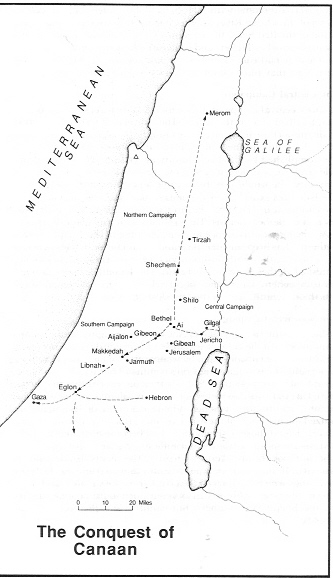


 biblicalfaith.online