Book Review: Emerging Elders

Emerging Elders

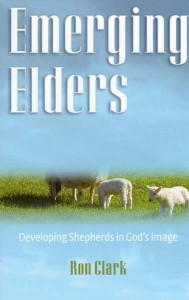
Ron Clark, Emerging Elders: Developing Shepherds in God’s Image (Abilene, TX: Leafwood Publishers, 2008), 203 pages. Paperback.

Ron Clark is the lead church planter with the Agape church of Christ in Portland, Oregon. He holds M.Div. and D.Min. degrees from Harding School of Theology (Memphis, TN) and serves as an adjunct instructor for George Fox Evangelical Seminary. He is also a member of the Oregon Attorney General’s Sexual Assault Task Force.

Clark has contributed to various publications such as New Wineskins, The Christian Chronicle, Stone-Campbell Journal, and Restoration Quarterly; moreover, he has recently published The God of Second Chances (2012) and Setting the Captives Free (2005) along with the current volume which is the subject of this book review.

Emerging Elders: Developing Shepherds in God’s Image provides a theological platform for training current elders and potential elders. Clark explores the text and terminology of the descriptive terms for “pastor” (elder, overseer) and explores such leadership in light of an incarnation model. Clark believes that only when God’s word is actually lived out and exemplified by its the church’s leaders shepherding cannot truly be what God intended it to be.

The Book

Clark has provided the body of Christ a unique text which addresses the needs of the organizational structure of churches of Christ. This is perhaps its greatest overall strength. As Clark observes, “few books are written specifically for ministers about our style of ministry” where the pastor and the preacher are distinct ministries in the body of Christ.[1] Clark observes that most church leadership material is based upon church models which are dissimilar to churches of Christ, or based upon business models which have been given a Christian spin. Consequently, to address the lack of literature on the subject Emerging Elders is an attempt at providing a resource and a solution to the vacuum of pastoral development in light of this distinction.

In Emerging Elders, Clark provides a solid response to this lack of material to address In section one, Clark develops the need for elders who are equipped to lead the body of Christ (chapters 1-2). In section two, Clark provides a dynamic model of God as shepherd and what that means for the leaders of God’s people, he offers a situational and contextual applications of the pastoral qualifications, and then emphasizes that both God’s example and Paul’s instructions are to be applied incarnationally (chapters 3-8).

In section three, Clark provides a series of chapters which specifically address the tensions and problems within church life in particular and churches of Christ in general that emerging elders must address in an incarnational model. “These leaders are appointed to imitate God’s care and concern for people.”[2] The chapters on predators and care of the preacher were particularly exceptional and passionate, and are often not treated in the manner in which Clark has done (chapters 9-15).

Suggestions

What perhaps would have made Emerging Elders more helpful would have been in the area of conflict resolution (chapter 10) and the elder development program (chapter 15). In chapter 10, Clark explores the role elders have in the promotion and maintenance of unity. This lays heavily upon John 17 and Eph 4:1-6, and according to Clark speaks to the needs of the elders to “encourage reconciliation.” To be sure, Clark is complete in his development of the reconciliation process: “Reconciliation requires, conflict resolution, validation, and reinstatement of a relationship.”[3] However, I walked away from that section wishing that Clark had spent more time on developing these ideas, diagrams notwithstanding.

Secondly, I felt that the last chapter (ch. 15) was almost a letdown. With the idea of elder development as the core of the book, I anticipated the last chapter, “Suggested Elder Development Program,” to have more details. Maybe I am being over judgmental. The cycles are a great suggestion and using a quarter year system for elders and potential elders is very helpful. The book reading suggestions are also very appropriate. But what about the first steps it takes, the conversations needful to create the atmosphere to offer and provide these classes? I anticipated more help in creating the development program; however, even in saying this the program offered and the notes to use certain sections of the book along with corresponding cycles is very helpful.

Recommendation: High

In balance, Emerging Elders is a perfect balance of scholarship and the heart of a servant attempting to live incarnationally. Incarnational leadership is at the heart of Emerging Elders and it should be at the heart of how Christian leaders serve, and how Christians serve their church, family, and community. It does not provide easy answers to the flesh and blood problems in the church, nor does it provide answers that are so impossible to achieve. Emerging Elders calls Christians to lead God’s church biblically (incarnationally), and to address the real-life problems the people of God face with the most fundamental gift God has given his people agape love.

Emerging Elders calls every would-be elder to be living examples of faith, integrity, and loving concern for all. I highly recommend Ron Clark’s Emerging Elders to every husband and wife who serve in their church, every preaching couple, every elder and his wife, every deacon, and his wife. They are truly the focus of this book. As Clark observes,

We must help families inside and outside the church heal, but this must come from incarnational leaders who model God’s style of marriage and parenting. God has a pattern; leaders follow and call others to do the same. They follow by modeling his nature through the fruits of the Holy Spirit, becoming a father like God, and being approachable. These individuals reflect God’s character to both the church and the world.[4]

Endnotes

  1. Ron Clark, Emerging Elders: Developing Shepherds in God’s Image (Abilene, TX: Leafwood Publishers, 2008), 9.
  2. Clark, Emerging Elders, 46.
  3. Clark, Emerging Elders, 139.
  4. Clark, Emerging Elders, 101.

Modesty in Speech: Reflecting God’s Image in What We Say

Introduction

Do words matter? Framed in another way, is there a fundamental connection between speaking and God? Again, is there a spiritual component to communication? Consider the following. The Bible asserts that the universe came into existence at the command of God, “God said” (Gen 1:3, 6, 9, 11, 14, 20, 24, 26, 29). The Hebrew writer asserts,

By faith we understand that the worlds have been framed by the word of God, so that what is seen hath not been made out of things which appear.

Hebrews 11:3 (All Scripture references are from the American Standard Version unless otherwise noted)

In fact, both the origin and the dissolution of the universe is subject to the declaration –“word”– of God (2 Pet 3:5-7). Communicating is, then, a core activity of God; in other words, God speaks His Mind.

There are people in this world who seek for a chance to hear God speak to them. God has spoken, in his wisdom, through two monumental venues. The first is creation; the second, are the Scriptures. In Romans 1:20, Paul affirms,

For the invisible things of him since the creation of the world are clearly seen, being perceived through the things that are made, even his everlasting power and divinity; that they may be without excuse.

Romans 1:20

The world essentially speaks of a powerful supernatural eternal being Who is the origin of all that is seen; in a nutshell, the “heavens declare the glory of God; and the firmament showeth his handiwork” (Psa 19:1).

Second, God has spoken his mind and has preserved it in the Scriptures. It is written,

For who among men knoweth the things of a man, save the spirit of the man, which is in him? even so the things of God none knoweth, save the Spirit of God. But we received, not the spirit of the world, but the spirit which is from God; that we might know the things that were freely given to us of God.

1 Corinthians 2:11-12

In fact, the unveiling of God’s mind is the cause which brought about the Scriptures. It is written, “Every scripture inspired of God” (2 Tim 3:16). God has spoken his unique message through his prophets, who have committed those oracles to print (Eph 3:1-6; 2 Pet 1:19). King David once said of himself, “The Spirit of Jehovah spake by me, And his word was upon my tongue” (2 Sam 23:2).

What this discussion points to is a fundamental truth about God. Inasmuch as God is the source of love, it is equally true that God is the source of disclosure. In other words, communicating and disclosing the eternal mind is fundamental to the nature of God. This is important for a proper understanding of human communication because humanity is made in the image of God (Gen 1:26-27). God’s people are expected to reflect their Creator’s nature. In fact, Peter writes,

but like as he who called you is holy, be ye yourselves also holy in all manner of living; because it is written, Ye shall be holy; for I am holy.

1 Peter 1:15-16

Little wonder that Peter would further admonish, “if any man speaketh, speaking as it were oracles of God” (1 Pet 4:11). Every aspect of godly living is to be set apart for God’s purposes (Rom 6:17-18), and this includes how a person speaks.

Speaking is a process which discloses the thoughts and movements within a person’s heart; it reveals what is in the heart (Matt 6:22-23; Mark 7:20-23). All things being equal, regardless of the truths or lies a person speaks, it derives from the inner workings of the heart. Since communication is a spiritual matter and reflects one’s heart, it is not surprising that Jesus would state the following: “And I say unto you, that every idle word that men shall speak, they shall give account thereof in the day of judgment. For by thy words thou shalt be justified, and by thy words thou shalt be condemned” (Matt 12:36-37; cf. Rev 21:8; Rom 14:12, 10-12; 2 Cor 5:10; Eccl 12:14; Acts 17:30-31).

What a person “says” matters because it reflects a spiritual truth about a person’s heart. The heart is the touchstone upon which Jesus makes his case for a higher level of spirituality as addressed in the “Sermon on the Mount” (Matt 5:21-22, 27-28, 33-37, 43-48). When someone tells the truth, or lies, or uses a swear word, there is a corresponding spiritual truth which points to how one reflects the image of God. If one wishes to be a faithful child of God, one must “adorn” God’s teaching on modest speech (Tit 2:10). Our speech must reflect that we are made in the image of God, and it must exemplify the gracious and righteous nature of the gospel message.

Our Speech is to Reflect the Image of God

In writing to the Christians in Colossae, Paul walks through the conversion process (Col 2:10-3.4). They went through “the circumcision of Christ; having been buried with him in baptism” (2:11-12). In this “working of God” they were “raised with him” (2:12), and made “alive together with him” for forgiveness (2:13). To reinforce their commitment, Paul urges them to “put to death” their past vices:

now do ye also put them all away: anger, wrath, malice, railing, shameful speaking out of your mouth: lie not on to another; seeing that ye have put off the old man with his doings and have put on the new man, that is being renewed unto knowledge after the image of him that created him.

Colossians 3:8-10

A child of God should so speak from the heart that it reflects God’s image rebranded upon them. There is a deep truth here to unpack. The Lord Jesus warns and instructs how Christians are to treat others. One should not insult his brother (“Raca” Matt 5:22); instead, Christians are to be “the salt of the earth” and “the light of the world” (Matt 5:13).

Unfortunately, some are so good at the craft of sarcasm and caustic acidity that though they have not transgressed moral boundaries with their vocabulary, they are quite adept at verbally abusing their brethren. Instead, Christians should “receive one another, even as Christ also received you, to the glory of God” (Rom 15:7).

Our Speech is to be Exemplary

In writing to his protégé, Paul extends to Timothy an encouraging word for his ministry in Ephesus. He admonishes, “Let no man despise thy youth; but be thou an ensample to them that believe, in word, in manner of life, in love, in faith, in purity” (1 Tim 4:12). The nature of Timothy’s “youth” (neotatos) is a matter of speculation, but based on inscriptional evidence he may have been in his twenties if not early thirties.

He needed this instruction to dissuade those that would be critical of Timothy’s ministry due to his age; namely, Timothy’s moral and spiritual reputation would be established by the moral pattern of his “word” (i.e. “speech”). Timothy’s speech is to be exemplary, a template. In these words to Timothy, when it comes to their speech Christians are enjoined upon to be a “model citizen.”

Does this mean that one is required to always speak as if they were a graduate from a charm or etiquette school? Hardly, but it does mean that God’s people should be proactive in speaking appropriately. There is room to be culturally flexible provided it is moral. Paul writes,

Let your speech be always with grace, seasoned with salt, that ye may know how ye ought to answer each one.

Colossians 4:6

Ultimately, a Christian’s speech and vocabulary ought to create an attractive environment to their neighbors so that all may feel welcomed in their presence. The obvious illusion is to create an atmosphere where evangelism may occur (1 Thess 2:13; 2 Thess 2:14). Since it is God’s goodness that leads people to repentance (Rom 2:4), then it is also true that a Christian’s goodness can point others to their good God (Matt 5:16).

Concluding Thoughts

The biblical evidence shows that speaking and communicating the thoughts of one’s heart is an important spiritual component to being created in the image of God. Communication comes with a great challenge,

If any stumbleth not in word, the same is a perfect man, able to bridle the whole body also.

James 3:2

The entire course of one’s future can be directed by the outpouring of the thoughts and intentions of the heart when spoken (Jas 3:3-12). The most important aspect of what a person can do is to use one’s words to praise God and his son Jesus the Christ. As it is written,

Wherefore also God highly exalted him, and gave unto him the name which is above every name; that in the name of Jesus every knee should bow, of things in heaven and things on earth, and that every tongue should confess that Jesus Christ is Lord, to the glory of God the Father.

Philippians 2:9-11

This is a slightly reformatted version of the article which originally published in The Glendale Gleaner (Newbern, TN: Glendale church of Christ).


Obtainable Spiritual Goals (2): Study of the Scriptures

There is no debate over the need to be people of the Scriptures. There is ample biblical data to demonstrate this clear teaching. We are providing practical suggestions for the inclusion of devotional time with the Word of God. This is then an attempt at providing some missing links in the chain between fact and practice. Let us incorporate time with Scripture into our daily routine.

The Bible

Centuries ago, a prophet by the name of Hosea[1] lamented over the Hebrew people and their ignorance of God’s word. He said that their calamity was a direct result of their lack of God-revealed-knowledge (Hos 4:1-7:16). To refrain from a study of the Bible is tantamount to a rejection of God, and also may incur rejection of providential protection (cf. Hos. 4:6).

Hosea speaks on behalf of the Creator in the following way:

My people are destroyed for lack of knowledge; because you have rejected knowledge, I reject you from being a priest to me. And since you have forgotten the law of your God, I also will forget your children. (Hos 4:6)

As Jesus would later quote, the Lord desired Israel’s steadfast love, reflected in their possession and application of the knowledge of God (Hos 6:6; cf. Matt 9:13, 12:7). Instead, the Lord received religious deviance (i.e. idolatry, covenantal infractions, etc.) grounded in ignorance and the rejection of God’s word.

As a result, God’s warnings of wrath went unheeded, and the Northern Kingdom (Israel and Ephraim) was conquered in 722 B.C. by Assyria, and the Southern Kingdom (Judah) was overcome and their citizenry harvested three times.[2]

  • 606 B.C.: Nebuchadnezzar conquered Jehoiakim and took the upper class of Judah and the spoils of war (2 Chron 36:6-7).
  • 597 B.C.: Nebuchadnezzar came again and completed the plunder begun a decade prior to this invasion (2 Kings 24:14-16).
  • 586 B.C.: Babylonians burned Jerusalem and leveled the walls, and finalized any deportation desires it had.

Both Israel and Judah suffered at their own hands because they did not commit themselves to the teaching of God. Hosea spoke of this calamity in his prophetic utterances found in Hosea 5:5-7:

The pride of Israel testifies to his face; Israel and Ephraim shall stumble in his guilt; Judah also shall stumble with them. With their flocks and herds they shall go to seek the Lord, but they will not find him; he has withdrawn from them. They have dealt faithlessly with the Lord; for they have borne alien children. Now the new moon shall devour them with their fields.

The lesson here is obvious: there is no substitute for actually opening a biblical book in order to read and to study it, in order to apply the message God embedded within its pages.

Let us, therefore, make time to add Bible reading to our daily schedule. And here are some practical places to introduce Bible reading:

  • Wake up a little earlier (Or, go to bed a little later) to make time for a 5-10 minute reading or study. You would be amazed how much can be accomplished by a consistent dose – however small.
  • If you are a commuter (bus, train, taxi, carpool, etc.) and can read while in motion, try squeezing a paragraph in. Make a photocopy of a page or two out of the Bible, and slip it in your paperwork. Then when you are done reading it, you can give it away or discard it somehow (trash, recycle at office, etc.).
  • Flash cards can be great tools at learning wonderful statements in the Bible. A list could be generated of significant passages, then every night before bed one or two verses can be copied down onto a card or two. The next day, the cards are available to commit to your memory. The book of Proverbs lends itself quite well to this type of learning project.
  • Above all else, make Bible reading time a family project of Divine learning. God required this of physical Israel:

Hear, O Israel: The Lord our God, the Lord is one. You shall love the Lord your God with all your heart and with all your soul and with all your might. And these words that I command you today shall be on your heart. You shall teach them diligently to your children, and shall talk of them when you sit in your house, and when you walk by the way, and when you lie down, and when you rise. You shall bind them as a sign on your hand, and they shall be as frontlets between your eyes. You shall write them on the doorposts of your house and on your gates. (Deut 6:4-9)

To be sure, there are other ways to incorporate Bible reading into a person’s schedule and routine, but these are provided to get your “thinking caps” charged up.

Audio

When the apostle Paul wrote to Timothy regarding this young evangelist’s ministry, Paul was specific that Timothy should do several things. He told Timothy,  “devote yourself to the public reading of Scripture, to exhortation, to teaching […] Keep a close watch on yourself and on the teaching. Persist in this, for by so doing you will save both yourself and your hearers” (1 Tim 4:13, 16).

In as much as we are accustomed to reading the Bible to ourselves, there is much emphasis in Scripture about public settings where the Bible is read aloud. Moses read the Law to all of Israel (Exod 24:3). Ezra read the Law to all of Israel (Neh 8:1-8). Josiah’s reformation was predicated upon the public reading of the Law (2 Kings 22-23). And the Jerusalem church acknowledged that “Moses” (= the Law) was proclaimed since time immemorial (Acts 15:21).

Sometimes a difference is made between “listening” and “hearing,” and one might even suggest that a person can “listen” but never quite listen to the message of a conversation. Likewise, a person can “hear” someone speaking to them and be found in the same predicament – they did not really hear the content of the message.

Jesus faced a similar problem. In the Gospel accounts, Jesus would often say, “He who has ears to hear, let him hear” (Matt 11:14; cf. Mark 4:9 and Luke 8:8, Mark 4:23, Luke 14:35).[3] Such admonitions stem from an old plea from God through the prophet Moses in Deuteronomy 29:4:

And Moses summoned all Israel and said to them: “You have seen all that the LORD did before your eyes in the land of Egypt, to Pharaoh and to all his servants and to all his land, the great trials that your eyes saw, the signs, and those great wonders. But to this day the LORD has not given you a heart to understand or eyes to see or ears to hear. (Deut 29:2-4)

Moses’ words echo throughout the entire biblical tradition, for both testaments embrace the notion of using our ears and eyes to hear and see with spiritual clarity.[4] We must give attention to the “living and abiding voice” of the Scriptures.[5]

How can we incorporate the listening of Scripture into our routine? Fortunately, technology is our ally; really, it is more – it is our servant ready to perform for our Spiritual needs. There are Bibles on tape, cd, mp3, DVD, online, podcasts, and whatever else the future provides as the new “techy” way to provide audio content.

Some audio Bibles are available free online, some are relatively inexpensive to acquire, and others are accentuated with marketing strategies using popular actors, singers, or other types of celebrity voices in dramatized versions of the audio Bible.

There are so many types of Bible in multiple versions that finding the one that we like the most should be our biggest problem, not listening of the Bible. The problem is not access, it is a habit – it is the failure to make it a routine to listen to the Bible.

So here are some practical suggestions.

  • Purchase an audio Bible. That is pretty basic. Go to an online store or a local bookstore – Christian or otherwise – and bring home an audio Bible that you can use in the car, on your iPod or mp3 player, one that you can play on your desktop or laptop. The point is: to take the first step into a larger world.
  • Find a time slot you are going to set aside to listen to the Bible. Select maybe a half an hour every other night dedicated to listening to a book or several books of the Bible (especially those small ones!). We find time to watch our favorite TV show so we can know how the story unfolds (“how will Monk get out of this one?”), we ought to find the same fervor to hear the Bible (“what can we learn from God’s care of Esther and Mordecai?”).
  • The iPod should be God’s pod.[6]Surely, we can make room for God in our iPod or mp3 player – be it an “8 gigger” or “120 gigger.” GB should not only stand for gigabite, but also for God’s bite. It may sound korny, but we know this is an important perspective to embrace. Any portable media player can be a source of spiritual enrichment. For example, at the doctor’s office while you are “waiting for those results”, at the Department of Motor Vehicles when you need the patience of Job, or just when you are experiencing a time of deep emotional turmoil. Why turn to The Killers, or Kanye West, when we can turn to the “I Am”.
  • Make your car an “Ethiopian Eunuch mobile.” In Acts 8:26-40, we find the story of Phillip and the Ethiopian Eunuch. It is a story of providence and salvation, but what appeals to our study from this narrative is that the eunuch was leaving Jerusalem to commute over 1,000 miles to Gaza in his chariot. The text reads that he “was returning, seated in his chariot, and he was reading the prophet Isaiah” (Acts 8:28). We can turn off our typical (habitual?) morning wake-up show for some Scripture time.

Again, these suggestions are just to get your creative juices flowing. Find the time, however brief, to include God and His word in your everyday lifestyle – it will literally change your world.

Sources

  1. Hosea’s ministry is probably fixed between 760-710 B.C., as can be derived from Hosea 1.1 and the list of Hebrew Kings serving as historical benchmarks (Kings of Judah: Uzziah (Azariah), Jotham, Ahaz, and Hezekiah; and Jeroboam II in Israel); Andrew E. Hill, Baker’s Handbook of Bible Lists (Grand Rapids, MI: Baker, 1981), 78-80; Norman L. Geisler, A Popular Survey of the Old Testament (Grand Rapids, MI: Zondervan, 1977), 240.
  2. Henry H. Halley, Halley’s Bible Handbook, 24th ed. (Grand Rapids, MI: Zondervan, 1965), 210.
  3. The last sure place in the New Testament where such an appeal is made to ears that hear is in Romans 11:8 in a quotation of Isaiah 29:10 and coupled with the oldest biblical reference in Deuteronomy 29:4.
  4. It is worth noting that such references are mostly found in the prophetic admonitions where spiritual sensitivity is valued at a high premium; such as Isaiah (30:21), Jeremiah (25:4), Ezekiel (3:10, 12:2, 40:4, 44:5), and Zechariah (7:11).
  5. This reference comes from available fragments of the writings of an early non-inspired Christian named Papias (middle second century AD, cf. Fragments of Papias 3:4; online as ch. 1). He longed to hear from eyewitness auditors of the apostolic circle, those whose memory still rang with apostolic sermons and teaching. He preferred these encounters over the study of books. The longing Papias demonstrates should resonate with our spiritual fervor to hear the Scriptures aloud.
  6. Bible.org offers a free Bible podcast of their New English Translation of the Holy Bible on iTunes. I have enjoyed the translation in hard copy form and am really enjoying it in audio format on iTunes. If possible, download iTunes and check it out (click).