In Jonah 4:2 the prophet appeals to the Hebrew noun חֶסֶד (hesed) as a Divine character trait reflected in relational actions. This term is one of the most profound words in the Hebrew Bible, but this profundity is complicated by the fact no single translation really captures its meaning. For this reason, deClaissé-Walford, Jacobson and Tanner opted to transliterate the term throughout their commentary on the Psalms:
Traditionally, a wide range of English terms have been employed in the attempt to capture the meaning of hesed: “mercy,” “loving-kindness,” “steadfast love,” “faithfulness,” “covenantal love,” “loving faithfulness,” and the like. We find that none of these words or phrases satisfactorily express the range and depth of hesed.[1]
The present word study, then, seeks to provide sufficient contours for the word’s usage in the Hebrew Bible and then suggest Jonah’s usage is not only a matter of subversion but also an acknowledgment that the LORD is a God of “benevolent love” (Exod 34:6–7).
Hesed Throughout the Hebrew Bible
There is no agreement of how many instances of hesed there are in the Hebrew Bible. In ascending order, based on BHS4 Kohlenberger and Swanson index the noun 244 times.[2] Stoebe and Zobel list 245 instances; yet, Gordon counts 246.[3] In their popular grammar, Practico and Van Pelt supply a 249 wordcount; meanwhile, Koehler, Baumgartner, and Stamm, and therefore Holladay, calculate about 250 instances.[4] This apparent statistics fluctuation for the frequency of hesed is probably due, at least, to variants in the critical Hebrew texts upon which their analyses were based.
Hesed is widely distributed across all biblical literary categories of the Hebrew Bible, which is arranged differently than the Christian Bible (see word map below). It is found in the Torah 20 times, in the Prophets (Nevi’im) 53 times, and the Writings (Ketuvim) 172[3] times.[5] The twelve books where hesed does not appear, however, are Leviticus, 2 Kings, Ezekiel, seven of the twelve minor prophets (Amos, Obadiah, Nahum, Habakkuk, Zephaniah, Haggai, and Malachi), Song of Solomon and Ecclesiastes.
Hesed appears in the first book and the last book of the Hebrew Bible; from the rescuing of Lot in Genesis 19:19 to the faithful deeds of Josiah’s reformation in 2 Chronicles 35:26:
you have shown me great kindness [hesed] in saving my life. (NRSV)[6]
the rest of the acts of Josiah and his faithful [hesed] deeds in accordance with what is written in the law of the Lord. (NRSV)
The last reference reflected in the Protestant arrangement of the Bible (see word map below) closes with the prophetic oracle of Zechariah 7:9-10:
Thus says the Lord of hosts: Render true judgments, show kindness [hesed] and mercy to one another; do not oppress the widow, the orphan, the alien, or the poor; and do not devise evil in your hearts against one another. (NRSV)
Word Map: The Hesed (חֶסֶד) word map is based on the English Standard Version generated by Logos Bible software. The pink horizontal lines represent single and double instances.
The books which have ten or more references of hesed are Proverbs (10 times), Genesis (11 times), 1–2 Chronicles (15 times), 1–2 Samuel (16 times), and the Psalms (127[8] times). The majority of these books reflect the relational nature of hesed in the human realm. In Proverbs the end goal of wisdom is to teach practical relational hesed (31:26, 21:21), it is not a false front but the foundation of one’s reputation by its presence in their life (20:6, 28).
In Genesis, “kindness” is requested in prayer to God by Abraham’s servant to find a wife for Isaac (Gen 24:12, 14, 27). Then, Laban and Bethuel act in hesed (“kindness”) by cosigning their approval of Rebekah’s consent to be given as wife to Isaac.
1–2 Chronicles and 1–2 Samuel show that hesed expressed in reciprocal social acts. Saul reciprocates and excuses the Kenites from his assault on the Amalekites because they has shown hesed to Israel in ages past (1 Sam 15:6). Hushai’s “love” (loyalty?) for David is questioned during his infiltration of Absolam’s forces (2 Sam 16:17). The hesed shared between David and Jonathan is a story of deep loyalty and mutual reciprocity (1 Sam 20:8, 14–15). The Divine hesed is evidenced as well (2 Sam 15:20). Nathan enshrined the Davidic lineage and kingdom on behalf of God,
“my love will never be taken away from him” (2 Sam 7:15 NIV; 1 Chr 17:13, 2 Chr 1:8, 6:42; Psa 18:25[26]).
The Psalms contain close to half of all uses of the noun hesed (127[8] times); but it does not appear in 55% (83 psalms) of the 150 psalms. In brief, there are 23 instances in Book I (1-41), 16 instances in Book II (42–72), 14 and 13 times in Book III (73–89) and IV (90–106) respectively. In Book V (107–150), however, the frequency count skyrockets to 60 instances. Psalm 136 alone celebrates the Divine hesed in each of its twenty-six verses. It is in the Psalms that “both God and human worshipers describe God’s hesed as everlasting.”[7] Indeed,
While the term is used of both humans and God, in the Psalter it is above all a theological term that describes God’s essential character as well as God’s characteristic ways of acting—especially God’s characteristic ways of acting in electing, delivering, and sustaining the people of Israel. Hesed is both who the Lord is and what the Lord does. Hesed is an ancient term that defined for Israel who its God is.[8]
The saturation of hesed in the Psalms suggests that God’s people should always be mindful in prayer and worship of its content, its deeds, and the God who so relates to his people (Psa 36:5, 7, 10).
As pertains to the present study, it should be noted that the noun hesed only features twice in Jonah.Jonah is only one of four minor prophets where the term is employed (Hosea, Joel, and Micah). The first instance is in Jonah’s prayer of lament while in the “great fish” wherein he affirms that pagan idolators will miss out on “the grace [hasdam] that could be theirs” (2:8[9] NIV). The other instance is in 4:2 where Jonah laments what he knows about the LORD, who is “abounding in love” (NIV, warabhesed) and willing to change his mind about bringing judgment on the penitent people of Nineveh.
Semantic Range and Related Hebrew Words
As Silzer and Finley remind, “[w]ords normally have more than one meaning. The specific meaning of the word depends on its context.”[9] It is not sufficient, then, to rely on English translations (archaic or contemporary), nor to force lexical glosses to determine the meaning of a word.[10]
Brown, Driver, and Briggs groups hesedwith its verbal (hasad 2 times) and adjectival (hasid 32 times) forms, along with a few proper names, such asBen-Hesed (“son of Hesed” 1 Kgs 4:10) and Hasadiah (“Yah is Hesed” 1 Chr 3:20).[11] Lastly, is the unclean hasidah (6 times) often translated “stork” or “heron.” The root connection is believed to be due to their fond, “kind and affectionate” nature with their young.[12] This is a feature that is never appealed to in the Hebrew Bible.
The semantic range of hesed extends to the secular and the religious. In each, hesed manifests in concrete actions of goodwill, loyalty, and communal love whether in or outside of the covenant.[13] Divergent views emerge here with polarizing understandings over the meaning of hesed. Nelson Glueck saw in hesed a hardline covenantal legal obligation, H. J. Stoebe and others countered that hesedwas a free relational demonstration of loyal love.[14]
In the secular sense hesed speaks to certain “ethical norms of human intercourse” where mutuality exists that focuses on “the closest of human bonds.”[15] For example, Ruth exhibits this sense (1:8, 2:20, 3:10). Naomi blesses her daughters-in-law reciprocally, “May the Lord deal kindly [hesed] with you, as you have dealt with the dead and with me” (NRSV).
Religiously, the Divine demonstration of hesed does not function very differently than from the secular.[16] Exodus 34:1–7 provide a clear liturgical formula which demonstrates that Israel’s God abounds “in steadfast love and faithfulness” (34:6 NRSV; Psa 86:15, 89:14, Num 14:18).
The Lord passed before him, and proclaimed, “The Lord, the Lord, God merciful and gracious, slow to anger, and abounding in steadfast love [hesed] and faithfulness, keeping steadfast love [hesed] for the thousandth generation, forgiving iniquity and transgression and sin, yet by no means clearing the guilty, but visiting the iniquity of the parents upon the children and the children’s children, to the third and the fourth generation.” (Exod 34:6-7 NRSV)
This divine expression stresses the LORD’s multi-generational hesed and faithfulness. Moses now knows (33:13) that the LORD relates to his people through his benevolent and enduring nature. The words are quoted and echoed throughout the Hebrew Bible which suggests that they became formulaic or institutionalized to extoll the attributes of the God of Israel (Num 14:18, Jer 32:18, Joel 2:13, Nah 1:3, Psa 86:15, 103:8, 111:4, 112:4, 116:5, 145:8, Neh 9:17, 31, 2 Chron. 30:9)[17]
There are several words that appear frequently with hesed. They provide some dynamic appreciation for its usage in the Hebrew Bible.[18]Hesed may be done (‘asah) in concrete choices (Ruth 1:8). The LORD God keeps (shamar) and abounds (rab) in hesed (Deut 7:9, Neh 9:17). It is often associated with various nouns of “mercy” as in Psa 103:4 where the psalmist speaks of being crowned by God with hesed and rahamim(mercy). Likewise, hesed appears together with ’emet (faithfulness) probably as a hendiadys such as in Exod 34:6 and Psa 86:15.[19]
Hesed in Jonah 4:2
He prayed to the Lord and said, “O Lord! Is not this what I said while I was still in my own country? That is why I fled to Tarshish at the beginning; for I knew that you are a gracious God and merciful, slow to anger, and abounding in steadfast love [hesed], and ready to relent from punishing. And now, O Lord, please take my life from me, for it is better for me to die than to live.” (Jonah 4:2–3 NRSV)
This survey of hesed in the Hebrew Bible should help to determine the possible range of meaning for how Jonah 4:2 should be understood. Words have meaning only in context. With the above range in mind, the context appears to reflect Jonah’s usage of the formulaic hesedlanguage of Exodus 34:6–7. Instead of celebrating his God with these words, Jonah is subversively using this language to express his frustration with the LORD’s restraint against the city of Nineveh.
Jonah is using God’s own words against him. For this reason, it appears the meaning for Hebrew word hesedfound in Jonah 4:2 should be understood as “benevolent love.” Jonah knows how LORD acts out in concrete acts of hesed, these being grace, mercy, “slow to anger,” and relenting from judgment. Since there is no evidence that the LORD is in covenant with Nineveh, this supports the supposition that divine hesed may be expressed in free relational demonstrations of benevolent love. God relates to repentance with the reciprocal response of grace, mercy, patience/forbearance, relenting from judgment.
Jonah 2:8[9] further supports this view. It reveals that the prophet desires for judgment those who do not enjoy a covenant relationship with the LORD. It appears that for Jonah, idolatry is the “deal-breaker” for having a relationship with the LORD based on hesed. Yet, the irony fails to make any headway with the nationalistic prophet, since he rejected his prophetic call on the basis that he knew what the LORD would do should Nineveh repent. Both he and pagans have rejected God. Jonah is not only selfish with his relationship with his faithful God (“save me from the fish!”) but is resentful that God is “sharing the love” with foreigners (“you saved them from judgment!”).
Jonah wants his curse to come true, that those who “cling to worthless idols forfeit the grace [hesed] that could be theirs” (2:8[9] NIV). It is this forfeiture of Divine hesedwhich Jonah still desires for Nineveh, reflected in his willingness to proclaim that the city “will be overturned” (3:4) and his bitterness that it was not (4:1–11). Jonah knew that God would choose relationship over punishment. The LORD said as much (4:11). Humans, unfortunately, seem to choose punishment over relationship. Jonah shows as much.
This focused study on hesed and Jonah 4:2 brings to mind that the caricature of the bloodthirsty wrathful God of the Old Testament is just that an exaggerated cartoon (cf. Jas 2:13). As Baer and Gordon powerfully remind:
The insight that, while both anger and love are appropriate divine responses, the latter outlasts the former, is an important one for biblical theology. Wrath is a true word, a right word, sometimes an inevitable word, such passages seem to say. But God would not have it be his last word. That honor is reserved for his unfailing love (hesed).[20]
The burden of Jonah was to provide concrete witness to the people of Nineveh that God seeks to extend and establish benevolent love with all nations. As one who has experienced Divine benevolent love, Jonah should have been moved to be a spokesman for Divine benevolent love. In this he struggled and failed; nevertheless, God succeeded even if for a brief time (cf. Nahum 1:1?).
Conclusion
The meaning for Hebrew word hesedfound in Jonah 4:2 should be understood as “benevolent love.” The formulaic language of Exodus 34:6–7 is surely the theological and context for Jonah’s use of hesed. In Exodus as in Jonah 4:11, the LORD shows that he has the concern to establish and maintain a communal relationship with Israel. The benevolent concerns of preserving others and acting on the basis of moral uprightness anchor the LORD’s demands of repentance. Jonah knew if Nineveh took seriously the burden of his message, his God would become their God. They would collectively experience Divine benevolent love.
A final thought should be emphasized. Even though there are many excellent translations in the English language their primary function is simply to provide a reading text. Some significant and complex words, like hesed, merit the focused investigation which a word study provides. As developed above, hesed stresses relationships, community, loyalty and the ethical demands of love, responsibility, care, and obligation words which no single translation can do justice. Word studies reveal facets and these usages are combined into a framework. This framework provides the contours for understanding what a word means within its context, for usage determines meaning.
Endnotes
Rolf A. Jacobson, “Text, Title, and Interpretation,” in The Book of Psalms, NICOT, eds. E. J. Young, R. K. Harrison, and Robert L. Hubbard (Grand Rapids, MI: Eerdmans, 2014), 7–8.
John R. Kohlenberger III. and James A. Swanson, The Hebrew-English Concordance to the Old Testament (Grand Rapids, MI: Zondervan, 1998), v, 559.
H. J. Stoebe, “hesed kindness,” TLOT 2:449; H.-J. Zobel, “hesed,” TDOT 5:45; Robert P. Gordon, “hesed,” NIDOTTE 2:211.
Gray D. Practico and Miles V. Van Pelt, Basics of Biblical Hebrew, 2d ed. (Grand Rapids, MI: Zondervan, 2007), 105; Koehler, Baumgartner, and Stamm, “hesed,” HALOT 1:336; William L. Holladay, A Concise Hebrew and Aramaic Lexicon of the Old Testament (1971; repr., Grand Rapids, MI: Eerdmans, 2000), 111.
The Torah includes Genesis-Deuteronomy; the Nevi’im includes Joshua-2 Kings, Isaiah, Jeremiah and Ezekiel, and the Minor Prophets; and the Ketuvim includes Psalms, Proverbs, Job, Song of Solomon, Ruth, Lamentation, Ecclesiastes, Esther, Daniel, Ezra-Nehemiah, and 1–2 Chronicles.
The two English translations the Holy Bible used in this paper are the New Revised Standard Version (Nashville, TN: Nelson, 1989) and the New International Version (Nashville, TN: HarperCollins, 2011) cited as NRSV and NIV respectively.
David A. Baer and Robert P. Gordon, “hesed,” IDOTTE 2:212–17.
Jacobson, “Text, Title, and Interpretation,” 8.
Peter James Silzer and Thomas John Finley, How Biblical Languages Work: A Student’s Guide to Learning Hebrew and Greek (Grand Rapids, MI: Kregel Publications, 2004), 164.
Douglas Stuart, Old Testament Exegesis: A Handbook for Students and Pastors, 4th ed. (Louisville, KY: Westminster John Knox, 2009), 182–83.
BDB 338–39.
BDB 339; HALOT 1:336; TLOT 2:449.
IDOTTE 2:212–17; HALOT 1:336–37; TDOT 5:46–64.
R. Laird Harris, “hesed,” TWOT 1:305–06.
TDOT 5:47–48.
TDOT 5:54–55.
Nahum M. Sarna, Exodus, JPS Torah Commentary, ed. Nahum M. Sarna (Philadelphia, PA: Jewish Publication Society, 1991), 216.
HALOT 1:337.
TWOT 1:307.
IDOTTE 2:214.
Bibliography
Baer, David A., and Robert P. Gordon. “חסד.” Pages 211–18 in vol. 2 of New International Dictionary of Old Testament Theology and Exegesis. Grand Rapids, MI: Zondervan, 2012.
Brown, Francis, S. R. Driver, and Charles A. Briggs. A Hebrew and English Lexicon of the Old Testament. Oxford: Clarendon Press, 1907.
Ford, David. “Keeping up Biblical Languages while in the Ministry.” Foundations 14 (1985): 41–44.
Gordon, Robert P. “חסד.” Pages 211–18 in vol. 2 of New International Dictionary of Old Testament Theology and Exegesis. Edited by Willem A. VanGemeren. Grand Rapids, MI: Zondervan, 1997.
Harris, R. Laird. “חסד (hsd).” Pages 305–07 in vol. 1 of Theological Wordbook of the Old Testament. Edited by R. Laird Harris, Gleason L. Archer, Jr., and Bruce K. Waltke. Chicago, IL: Moody Press, 1980.
Holladay, William L. A Concise Hebrew and Aramaic Lexicon of the Old Testament. 1971. Repr., Grand Rapids, MI: Eerdmans, 2000.
Jacobson, Rolf A. “Text, Title, and Interpretation.” Pages 2–9 in The Book of Psalms. NICOT. Edited by E. J. Young, R. K. Harrison, and Robert L. Hubbard. Grand Rapids, MI: Eerdmans, 2014.
Koehler, Ludwig, Walter Baumgartner, and Johann J. Stamm. The Hebrew and Aramaic Lexicon of the Old Testament. Translated and edited under the supervision of Mervyn E. J. Richardson. 5 vols. New York: Brill, 1994–1999.
Kohlenberger, John R., III., and James A. Swanson. The Hebrew-English Concordance to the Old Testament. Grand Rapids, MI: Zondervan, 1998.
Practico, Gray D., and Miles V. Van Pelt. Basics of Biblical Hebrew. 2d edition. Grand Rapids, MI: Zondervan, 2007.
Sarna, Nahum M. Exodus. JPS Torah Commentary. Edited by Nahum M. Sarna. Philadelphia, PA: Jewish Publication Society, 1991.
Silzer, Peter James, and Thomas John Finley. How Biblical Languages Work: A Student’s Guide to Learning Hebrew and Greek. Grand Rapids, MI: Kregel Publications, 2004.
Stoebe, H. J. “חֶסֶד, hesed kindness.” Pages 449–64 in vol. 2 of Theological Lexicon of the Old Testament. Edited by Ernst Jenni and Claus Westermann. Translated by Mark E. Biddle. 3 vols. Peabody, MA: Hendrickson, 1997.
Stuart, Douglas. Old Testament Exegesis: A Handbook for Students and Pastors. 4th edition. Louisville, KY: Westminster John Knox, 2009.
Wegner, Paul D. Using Old Testament Hebrew in Preaching: A Guide for Students and Pastors. Grand Rapids, MI: Kregel Publications, 2009.
Zobel, H.-J. “(חֶסֶד, hesed).” Pages 44–64 in vol. 5 of Theological Dictionary of the Old Testament. Edited by G. Johannes Botterweck and Helmer Ringgren. Translated by David E. Green. Grand Rapids, MI: Eerdmans, 1977.
In 2 Timothy, Paul encourages the evangelist Timothy to trust in “[a]ll scripture” as the “useful” source for transformative instruction which empowers God’s people to accomplish “every good work” (3:16–17 NRSV).[1] There is a reason to believe this reference to “scripture” is primarily an allusion to the Hebrew Bible.[2] Study of the Hebrew language, then, would be a necessary acquisition for the minister. The benefits of studying biblical Hebrew are vast and significant, ranging from practical to technical. The insights gained from the study of Hebrew allow the minister to provide biblical clarity for the benefit of their audience.
The Benefits of Studying Biblical Hebrew
There are several benefits of studying Hebrew but only a selected few will be set forward for consideration. The ultimate benefit and goal for any minister of the Hebrew Bible are “to learn to exegete the Hebrew text accurately in order to preach authoritative, relevant sermons.”[3] Studying biblical Hebrew improves the proficiency to preach and teach what amounts to two-thirds of the biblical canon, a literary world that is often a difficult foreign terrain for most people.[4]
Further, a knowledge of biblical Hebrew also liberates ministers from being dependent on commentaries, and other secondary literature, and helps avoid making arguments exclusively from scholarly consensus.[5] Instead, proficient knowledge of Hebrew will allow the minister to provide fresh and original messages that guide the church based on deep personal wrestling with the original languages.[6]
For the minister, there are several benefits from a technical (professional) vantage point. The minister ought to know their subject matter in deeper ways than the average Bible reader.[7] Silzer and Finley point out that much of the exegetical task is to understand how language works to convey meaning, in other words, semantics.[8] A steady daily program of working through biblical Hebrew, along with the right tools (lexicons, grammar, and other aids) will increase exposure and proficiency in how the language functions.[9]
Ideally, such would help mitigate against linguistic fallacies such as root, the figure of speech confusion, and totality transfer which reflect ignorance of how languages work.[10] Furthermore, the exegetical process helps the minister sort through technical questions which have no homiletic value but are required by the exegetical task. “The meaning of a sentence is not always obvious from the meaning of the individual words.”[11] This process to let context determine the meaning of words and phrases whether literal or figurative, ambiguous or clear ought to encourage humility (Jas 4:10), a much-needed “benefit” to the craft of preaching and teaching.[12]
The Task of Ministers to Clarify the Biblical Text
The insights gained from the study of Hebrew allow the minister to be in a better position to clarify the biblical text using languages and images their audience understands. This task emerges from various needs.
First, ministers are often asked to answer questions about translations and teachings.[13] The question “which translation is correct?” may seem a daunting one but it is actually an opportunity to help the person take their first steps into a larger world of Bible study. The minister must help to provide guidance and clarity in this sensitive but crucial area of Bible knowledge that all translations are interpretive aids to understand the original language of the text.[14] Finally, a minister who has adequate proficiency in biblical Hebrew will have the ability to address questions concerning the accuracy of certain proposed teachings or the need to correct inaccurate teachings.
Second, ministers must know when to bring out relevant insights from the text that English translations do not highlight but are quite helpful to see another level of depth to the pericope.[15] Wegner, for example, points to the phrase tōhu wābōhu which appears in the Hebrew Bible twice (Jer 4:23 and Gen 1:2).[16] It seems the prophet Jeremiah is using this unique phrase from Genesis (“a formless void” NRSV) to affirm that due to the sins of Israel, the earth is once again “waste and void” (NRSV). This intertextual insight would most likely have gone unnoticed without work in the Hebrew text.
Finally, and perhaps most significantly is the clarity that comes from a fresh and relevant application of the Hebrew text to the contemporary life of the congregation. Exegesis always has the singular aim “to produce a deeper understanding of biblical truth,”[17] the sermon for the contemporary setting must be shaped by these “freshly pressed” insights.
Conclusion
A knowledge of biblical Hebrew certainly provides practical and technical benefits for the minister who maintains a steady program to improve their proficiency in the language. Likewise, the insights gained from the study of Hebrew allow the minister to provide clarity when preaching and teaching.
This will often include addressing questions regarding translations, and teachings, or providing fresh insight from the Hebrew text hidden by an English text; and finally, by aligning the message to the contours of the exegetical work in the original language.
Endnotes
All Scripture references are taken from the New Revised Standard Version unless otherwise noted.
Paul D. Wegner, Using Old Testament Hebrew in Preaching: A Guide for Students and Pastors (Grand Rapids, MI: Kregel Publications, 2009), 17.
Wegner, Using Old Testament Hebrew, 13.
Wegner, Using Old Testament Hebrew, 13–14; Peter James Silzer and Thomas John Finley, How Biblical Languages Work: A Student’s Guide to Learning Hebrew and Greek (Grand Rapids, MI: Kregel Publications, 2004), 161.
Wegner, Using Old Testament Hebrew, 15–16; David Ford, “Keeping up Biblical Languages while in the Ministry,” Foundations 14 (1985), 42; Douglas Stuart, Old Testament Exegesis: A Handbook for Students and Pastors, 4th ed. (Louisville, KY: Westminster John Knox, 2009), 181.
Ford, “Keeping up Biblical Languages,” 42, 44; Wegner, Using Old Testament Hebrew, 15–17.
Wegner, Using Old Testament Hebrew, 17.
Silzer and Finley, How Biblical Languages Work, 160.
Wegner, Using Old Testament Hebrew, 20–22.
Silzer and Finley, How Biblical Languages Work, 162, 165; Stuart, Old Testament Exegesis, 182–83.
Silzer and Finley, How Biblical Languages Work, 176.
Silzer and Finley, How Biblical Languages Work, 180.
Wegner, Using Old Testament Hebrew, 16.
Wegner, Using Old Testament Hebrew, 15.
Ford, “Keeping up Biblical Languages,” 42.
Wegner, Using Old Testament Hebrew, 15.
Ford, “Keeping up Biblical Languages,” 43.
Bibliography
Ford, David. “Keeping up Biblical Languages while in the Ministry.” Foundations 14 (1985): 41–44.
Silzer, Peter James, and Thomas John Finley. How Biblical Languages Work: A Student’s Guide to Learning Hebrew and Greek. Grand Rapids, Mich: Kregel Publications, 2004.
Stuart, Douglas. Old Testament Exegesis: A Handbook for Students and Pastors. 4th edition. Louisville, Kent: Westminster John Knox, 2009.
Wegner, Paul D. Using Old Testament Hebrew in Preaching: A Guide for Students and Pastors. Grand Rapids, Mich: Kregel Publications, 2009.
Reprinted with permission from the February 2018 issue of Gospel AdvocateMagazine.
Hebrews affirms, “For the word of God is living and active, sharper than any two-edged sword, piercing to the division of soul and of spirit, of joints and of marrow, and discerning the thoughts and intentions of the heart” (4:12 ESV). This is part of a warning in Hebrews, which affirms that Christians who defect from God will fail to meet their rest as their Israelite counterparts did (vv. 1-11). God holds his people —and His creation— accountable by His presence (“sight”) in the word of God (Hebrews 4:13). This is a raw incontrovertible truth.
This passage makes no caveats; it makes no attempt to remedy a distinction between God’s word and God’s presence. They are both manifested at the same time. God is involved with real life (time and space) with Israel and with Christians. God makes promises and keeps his word regarding their “rest,” and God holds His people and creation accountable to His word. God is Lord of heaven and earth and everything in between, and He holds it together by the power residing in Jesus (Hebrews 1:3; Colossians 1:17). The word of God is connected not only to the authority of God but also to His nature and how He reveals Himself to the world.
Let me say the above in a differently. Our God, who is beyond time and space (God’s transcendence), enters our earthly “realm” bound by time and space (God’s immanence) with His divinity and authority (sovereignty) intact; furthermore, God enters into relationship with His creation (Abraham, Israel, Christians) by revealing Himself in creation and in His word. God is active both in creation and in His word. Creation reveals God’s existence and hints at elements of His attributes (natural theology), but it is His word that reveals God and His “will” so that humanity can enter into covenant with God. The word of God was both proclaimed orally through particular spokesmen (patriarchs, prophets, kings, apostles), but the prophetic word was not only through oracles but also in written communiqués embedded with the same divine authority (2 Peter 1:16–21). These writings reveal the mind of God (1 Corinthians 2:11–16), His purposes and mystery (Ephesians 3:1–6), His involvement in human events (Acts 17:26–27), and the righteousness by which He will bring justice to the world (Acts 17:30–31).
To say it bluntly, the Bible is the word of God set in a permanent written form. Paul declared, “all scripture is breathed out by God” (2 Timothy 3:16). The Scripture bears the character of God and is no “dead” codebook, for it transforms every “man of God” into a competent, equipped servant (2 Timothy 3:17). The profitability ofall Scripture is due to its quality as “God’s breath.” There is no pecking order between the spoken or written word of God. The inspired written word is as inerrant as God’s character. There is no source outside of the Holy Spirit-given Scripture that speaks God’s transforming work since it is the depository of the gospel’s message. What the word of God promises, God will do; what God proclaims, God’s holds His creation accountable to (1 Thessalonians 2:13).
The above may seem to belabor the point, but as anticipated by the title of this piece, we will sketch how the word of God is handled among Liberal (Modern) and Neoorthodox influences. It is essential for the church to reflect on these twentieth-century influences because dialogue is healthy, truth has nothing from which to hide, and any redefinition of biblical Christianity must be given due consideration (Galatians 1:6-7).
The following historical sketches will probably not satisfy everyone, but they will be enough to see their direction and how they redefine significant elements of historic Christian beliefs and their tendency to subvert scriptural authority.
Liberalism/Modernism
The word “liberal” is a very loaded word. It is often used with contempt to show disapproval of someone else thought to be progressive (instrumental music, expanded role of women, etc.). But this is not the historic sense of the word. Liberalism emerged in the late nineteenth century through the interplay of many players, thinkers, and philosophical trends. The influence of Liberalism, or Modernism, is seen in three levels: (1) revelation is not the final answer to reality, (2) naturalism is the key to reality and religion, and (3) since the Christian documents are built on ancient myths and superstitions, the historic supernatural claims of Christianity is immaterial. To be a “Christian” is a matter of experience and the “essence” of its teaching.
Liberalism, as an intellectual revolution, is a child of the Age of Reason (the Enlightenment). The “Age” saw the elevation of human reason over the institutional “church,” which wielded divine revelation. It was “the church” that dictated to the people what to believe about reality. Divine revelation was the final answer to determining truth and what really happened in the past. This was displaced with rationalism, scientific history (criticism), and naturalism as final answers to genuine and authentic history and truth. In essence, as Stanley Grenz and Roger Olsen point out, the maxim “I believe in order that I may understand” was turned to “I believe what I can understand.”[1] Faith was overturned by a reason informed by modern findings — thus, this point of view is called “Modernism.”
Everything that was received as genuine knowledge, now, was shaped by the natural world. This was further supported by what is called “the principle of analogy,” popularized by the liberal theologian Ernst Troelsch (1865–1923), which argued that the present is the best way to understand the past. The consequence was detrimental in the extreme on the trustworthiness of Scripture. The supernatural elements interwoven in Scripture are, by definition, myths and superstitions. This meant that there are no miracles, no supernatural interventions by God, and no resurrection of Jesus Christ. Thus, many new schools of “criticism” emerged to study Scripture with mixed results.
This naturally led to an embrace of “the essence of Christianity” so long as reason and experience allowed. “Liberals” are open to the modern findings from the natural world, open to a religious humanism and science —in particularly embracing Darwinian evolution as the process by which God created. If God exists, He could only be revealed through religious “experience.” It was also immaterial if the events of Scripture happened or not because religion is a condition of the heart. Yet, the apostle Paul makes it abundantly clear that if the resurrection event has not occurred, both our preaching and faith are in vain and we are still in our sins (1 Corinthians 15:14, 17).
Another arm of Liberalism is the demythologizing of the New Testament pioneered by the “Form Critic” Rudolf Bultmann (1884–1976). Bultmann argued that historic person of Jesus is built on untrustworthy sources. The New Testament is Christian propaganda shrouded in the imagery of the Greek myths and Roman legends. As such, they are not relevant for faith nor spiritual truth claims. It is the symbolism that matters. Today, one only need to watch the latest “history” programming to find modern theological liberals interviewed. Theological liberalism has significant questions that need to be answered, but it brings Christianity to a logical dead end.
Neoorthodoxy
The Swiss theologian Karl Barth (1886–1968) ignited a movement when he published his commentary on Romans in 1919. It charted a new theological direction away from Liberalism/Modernism. Barth (pronounced “bart”) was not fond of the misnomer “neoorthodoxy,” but his strand of thinking regarding the meaning of “revelation” and “the word of God” would rival the prevailing traditional belief held historically by the church. As a consequence, many regard Barth as one of the great theologians and the father of modern theology.
Orthodoxy affirms the teaching of historic Christian truth based on Scripture. This includes, for example, the following concepts: the inerrant inspiration of scripture, the triune Godhead, the deity and virgin birth of Christ, the historic creation and fall of humanity, the bodily resurrection and ascension of Christ, the return and final judgment. Barth argued, on the other hand, that “revealed truth” was not written, but was the outcome of an encounter (an experience) with God. Thus, instead of scripture as being the objective word of God, Barth argued for a subjective experience with God initiated by reading the Bible.
Barth was offering a completely different course of thought altogether. “Revelation” does not appear in the form of propositional truths. Arguing book, chapter, verse, or appeals to the very words of scripture is insufficient to reveal God. Revelation (the word of God), it is argued, is an “event” in which God acts in history (God’s immanence). Barth even argued that revelation is not found in natural theology (Acts 17; Psalm 19; Romans 1) but, instead, in events like the call of Abraham, the exodus, and the resurrection. Millard Erickson is spot on when he classifies Neoorthodoxy as an illumination theory divorced from an objective standard.[2]
Although Neoorthodoxy is not a unified movement, there are three interconnected witnesses (modes/forms) that shape its view on revelation.[3] First, Jesus is the word of God in the truest sense, for He reveals God in the event of His incarnation, life, ministry, death and resurrection. This is true revelation, the very gospel. Second, Scripture points to Jesus but it is a flawed human (read “errant”) attempt to provide a witness to divine revelation. It is instrumentally God’s word but not properly. Third, the proclamation within the faith community —Barth preferred “community” to church— is likewise instrumentally God’s word. The Bible, then, only becomes God’s word when God uses it to reveal Jesus Christ in the encounter, contrary to 2 Timothy 3:16.
In fact, Neo-orthodoxy is quite a popular approach to handling the Word of God, even among churches of Christ. A popular theological branch of this movement is “Canonical Criticism,” popularized by the late American scholar Brevard Childs (1923–2007). It seeks to broadly bypass much of the liberal destructive criticism of the twentieth century by accepting the texts of Scripture as literary units. Nevertheless, this point of view struggles, as did Barth’s, to embrace the Bible as a very human (errant) book while appealing to its authority for theological thought as if they were inerrant. They seek, in the words of one sympathetic Abilene Christian University professor, to “articulate a doctrine of Scripture that recognizes human flaws in it.”[4] Treating the Bible as an inerrant text is simply a form of bibliolatry.
Keeping the Faith
Today, the phrase “Word of God” means different things to different believers, and that includes preachers. Liberalism ultimately rejects a supernatural Christian faith, and is at home with amputating its historic claims of a resurrected ascended Lord Jesus, in exchange for a subjective diluted Christianity. Neoorthodoxy, on the other hand, embraces a supernatural Christian faith, but it rejects the supernatural origin, inerrancy, and authority of the Scriptures which undergird its claims. The Word of God has always been a manifestation of God’s presence in our lives, in His proclamation, and in His Scripture without pecking order. Let us join Paul who declares, “Let God be true though every one were a liar” (Romans 3:4).
Notes
Stanley J. Grenz and Roger E. Olsen, 20th Century Theology (Downers Grove: InterVarsity, 1992), 17.
Millard J. Erickson, Christian Theology, 3rd ed. (Grand Rapids, Baker Academic, 2013), 220–21.
Karl Barth, Evangelical Theology: An Introduction, trans. G. Foley (New York: Holt, 1963), 26–36.
Who would we be –and where– without those individuals who gave us the guidance and benefits of their wisdom accrued over the years of their experience. The powerful influences of those who have been our benefactors have left an indelible mark upon our lives in more ways than we often can be thankful for.
Of course, not all influences are of the same caliber. The Scriptures remind us of those powerful influences which may tug at our hearts and emotional fixations. Let us look at a few examples of counsel poorly chosen; then reflect upon choosing those wonderful influences which will improve our lives.
Counsel Poorly Chosen
Enabling Wrong-Doing to Satisfy an Obsession
Emotional fixations are very dangerous if left to fester and grow into obsessions. There are some who would do anything to help you gratify your desires.
No one knows this tragic lesson better than Amnon who had an obsession for his beautiful half-sister Tamar (2 Sam 13). Apparently, Amnon’s vexation was so apparent that his cousin Jonadab counsels him to pretend an illness, so that he may request the nursing care of his unsuspecting victim Tamar in his isolated chambers.
The results were a horrific incestuous rape, Amnon’s assassination at the hands of Tamar’s brother Absolam, and in turn an attack upon the throne of David as a further expression of his vengeful defiance. Absalom would lose his life in the insurrection.
Leaning on the Ambitions of the Power Hungry
In the transitional moments following King Solomon’s death and the rise of his successor Rehoboam, the young king had a choice to make: should he be a heavy-handed king like his father, or relieve the people of their plight (1 Kings 12:1-5)?
Rehoboam seeks the counsel of two groups of men, “the old men” (12:6-7) and “the young men” (12:8-11). The “old men” who had seen the oppression of his father were moved with compassion and propose that the new king’s reign should be based upon the welfare of his people, not upon an “iron fist.” [All Scripture references are from the English Standard Version unless otherwise noted.]
Unfortunately, Rehoboam listened to “the young men” with whom he had grown up. They propose an intensified cruel reign (12:9-11). The new king must be vindictive and cruel; his subjects ought to live in fear.
Little wonder that the majority of the Israelite tribes (10 of 12) seceded to follow a new claimant king – Jeroboam. The results were disastrous, for his idolatrous influence plagued the Northern Kingdom of Israel until its demise in 722 BC (2 Kings 17-18). This too was predicated upon Jeroboam’s fear of losing power over his subjects only that instead of listening to the counsel of others “he had devised [this] from his own heart” (1 Kings 12:25-33).
Accepting False Teaching Affects Moral Purity
False teachers are tremendous influences of evil upon our lives. In order to shake up the Corinthian congregation to reject false teaching regarding the resurrection (i.e. that it had already occurred, 1 Cor 15:12-32), Paul quotes the playwright Menander’s comedy Thais (ca.300 BC):
Bad company ruins good morals. (1 Cor 15:33)
By this quote, Paul argues against making associations with false teachers (false mentors); the influence would be, he argues, disastrous upon their morals (v. 34).[1]
Why?
“What could have been” enters the mind when considering the tragedy of Tamar, if only Jonadab had counseled his cousin in another direction.
One ponders, “if only Rehoboam had listened to the wise counsel of the ‘old men’” instead of submitting to the influence of his power grabbing childhood “friends”?
Too, why did Jeroboam reject the religion of the Lord after all that the Lord had promised to make a covenant with him as king (1 Kings 11:29-39)?
When the foundation of the Christian message is founded upon the resurrection from the dead according to the Scriptures (1 Cor 15:1-11), what could be so tempting in the notion that the dead do not rise (15:12)? There is nothing to gain if there is no resurrection. Why move from hope to hopelessness?
Influence and Personal Responsibility
As they say, “hind-sight is 100%.” The Monday morning quarterback is always a pro-bowler, and the “back seat” driver should be authorized to distribute driver licenses. I bring out these clichés because they are pertinent to this discussion.
The matter is not that we are “back seat” drivers telling another how they should have done better. We learn from the mistakes of the past in order to inform our own decisions so that we may not repeat their failures.
This is a matter regarding personal responsibility in light of those moments we allow others into our decision-making process.
Let the wise hear and increase in learning, and the one who understands obtain guidance, to understand a proverb and a saying, the words of the wise and their riddles. (Prov 1:5-6)
God calls us to seek His Word, warning us of the consequences of “ignoring” His counsel and reproof (Prov 1:25).
Like Amnon, Rehoboam and Jeroboam, and the Corinthians there may be temptations which vex us and those enticing us to embrace it by conspiring (via advice or false teaching) a way to experience it; however, like Joseph we need to keep our principles realizing that to satiate a sinful desire betrays God and those who would be destroyed by such an action (Gen 39:6-10).
When we are lost in the possibility that “we could” do something and never stop to think about whether we should,[2] we have left the hallmarks of responsibility behind. Proverbs 7:1-27 reminds of this truth, as Solomon speaks to the dangers of irresponsibility. Seeking counsel does not absolve us from the importance of making the right decision (Prov 11:14), nor from taking responsibility should our “counseled” decisions return to us as a mistake (Matt 5:23-24).
The Scriptures are very clear that we cannot “pass the buck” when it comes to our responsibilities. Every action – public or private – will be evaluated by a Holy God (Eccl 12:14).
The Blame Game
“Passing the buck” is such a common saying that we tend to be ignorant of its origin. President Truman has been associated with this saying, but actually, it is a term from the game of poker as played in the frontier days of the American story.
During these days, a marker or counter was a knife with a buckhorn handle – the “buck.” It “was used to indicate the person whose turn it was to deal”; moreover:
If the player did not wish to deal he could pass the responsibility by passing the ‘buck,’ as the counter came to be called, to the next player.
TrumanLibrary.org
Hence, “pass the buck” means to pass the responsibility on to someone else.
In Truman’s “farewell address” he affirms “the President – whoever he is – has to decide. He can’t pass the buck to anybody. No one else can do the deciding for him. That’s his job” (TrumanLibrary.org).
The saying applies to us all; no one can make our decisions for us. No excuses. This is “ground zero” of personal responsibility.
The First Blame Game
In the early days of the human family, Adam and Eve succumbed to the subtlety of the serpent’s questions regarding the forbidden fruit. When the Lord asked them concerning their actions, Adam and Eve attempt to distance themselves from the responsibility of their actions by placing upon either their spouse or the creature (Gen 3:8-13).
Giving in to Others is Not an Excuse
In early years of the Kingdom of Israel, King Saul was called upon to wage war upon the Amalekites. In fact, Saul was charged specifically to “go and strike Amalek and devote to destruction all that they have” (1 Sam 15:3; Lev 27:28).
Upon return from their victory over Amalek, Saul returns with the choice items of the plunders of war – with which he was not supposed to return. Moreover, he returns with the King (15:9). As a consequence, the prophet Samuel questions the king regarding the bleating of the sheep and lowing of the oxen (15:14).
The king places the burden of the decision to disobey God’s command upon the people, attempting to absolve himself from moral responsibility (15:9, 15, 20-21); yet, the king was completely complicit (15:9). Nevertheless, despite the action of others, the Lord was displeased with Saul and it cost him his throne (15:17-19, 26).
Personal Ownership
Accepting the Burden of our Decisions without Excuses
When David is presented with a parable, he unwittingly condemns himself for the adultery with Bathsheba (2 Sam 11:1-5), a failed cover-up (11:6-13), and the murder of Uriah (11:14-27).
Instead of passing the buck, David accepts accountability and the consequences of his sin. Unlike the many cases of Saul’s incessant impudence, denying his sins – David quickly moves to being convicted of heart. One only needs to read Psalm 51 in order to see his contrition for his sins before God.
Our Future is Based upon Decisions Made Today
When the Kingdom of Judah was exiled into captivity in the 7th–6th century BC, one of the concerns raised is the following: “Our fathers sinned, and are no more; and we bear their iniquities” (Lam 5:7). The exile was a time where the question of sin and responsibility and accountability before the Lord was pondered.
In Ezekiel 14:12-23, the prophet makes it clear that even if many Old Testament faithful were alive during the days of the exile, men like Noah, Daniel and Job would be saved and delivered from the exile because they are righteous. Unlike the rebellious character of the generation of the exile, righteous people could experience deliverance.
This is heavily answered in chapter 18; in particular verses 19–20:
Yet you say, ‘Why should not the son suffer for the iniquity of the father?’ When the son has done what is just and right, and has been careful to observe all my statutes, he shall surely live. (Ezek 18:19)
The son can escape the consequences of his father’s sin by living faithfully to the Lord. We must realize that our futures are partly shaped by our decisions.
One of the most important aspects to receiving the guidance offered by another is taking ownership of the decision to act on it or not.
Some attempt to fabricate a scenario in order to get the advice they desired in the first place but what they wanted was the “green light” from “another” to relieve them of responsibility. Some else made their choice for them.
Others simply run with the first piece of advice thrown at them. In either case, whether it is poor advice or good advice, one cannot escape personal responsibility for the course taken. Here we conclude our discussion.
Good Counsel Taken
Naomi and Ruth
One of the tenderest moments in Old Testament history is the relationship between Naomi and Ruth. After being widowed in the land of Moab, she gave her sons into marriage only to lose them over the course of a decade (Ruth 1:1-5). The only daughter-in-law to remain with Naomi is Ruth, and she joins Naomi on her return to Israelite land (1:6-22).
Being a stranger in another culture is difficult, but thankfully for Ruth she was blessed by a kind man (Boaz) who knew her story. Boaz cautioned her to stay on his land and among his servants and the young women.
When she returns to Naomi’s abode, Naomi reinforces Boaz’s counsel so that she is not assaulted by men in another field (2.22).
Naomi then counsels her to remarry with Boaz – a “redeemer” (2:20; 3:1-17). A redeemer is “one who frees or delivers another from difficulty, danger, or bondage.”[3] And Naomi provides the love, direction, and mentorship to give Ruth a chance at a good life with Boaz after enduring all the hardship of being a widow.
While Boaz works out the details with the extended family of Naomi’s husband, Ruth returns home and explains the situation to her. In a moment of wisdom, Naomi tells Ruth:
Wait, my daughter, until you learn how the matter turns out, for the man will not rest but will settle the matter today. (Ruth 3:18)
The outcome was a marriage that would be central to the lineage of King David (Ruth 4:13-22), and ultimately the ancestral beginnings of Jesus (Matt 1:5-6, 16).
Mordecai and Esther
When Esther replaces Vashti as queen of Persia, in the days of King Ahasuerus her relationship with her cousin Mordecai results in the protection of the Jewish population in exile.
A plot had emerged to genocide the Jewish population of the Persian Empire orchestrated by Haman. When Mordecai becomes aware of the plot, he impresses upon Esther with counsel to go to the king to stop it:
And who knows whether you have not come to the kingdom for such a time as this? (Esth 4:14b)
The results where an intercession so dramatic that Haman’s plot is foiled, he is punished by death, the Jews are delivered, and the Feast of Purim is inaugurated to honor this great event (Esth 5:1-9:32).
Samuel and Eli
In those transitional years when Israel settled into the land of Canaan, the Lord raised “judges” to deliver the people from oppression and led them to faithfulness. The last of the judges is the prophet Samuel. His beginnings are miraculous (1 Sam 1-2).
When he was a very young boy, Samuel’s mother Hannah lends him over to the Lord’s service for the entirety of his life (2:21-28). Samuel is placed into the care of the high priest Eli.
When Samuel grows to be “young man” he is found serving under Eli. On one occasion, when Samuel was sleeping “the Lord called Samuel” (3:4); it was during a unique time when “the word of the Lord was rare” and there “was no frequent vision” (3:1b). Consequently, Samuel – and Eli – did not understand what was happening when the Lord began to call Samuel for service.
Samuel initially arose from bed and presented himself before Eli, “Here I am”. Three times it occurred, twice Eli responded, “I did not call; lie down” (3:4-7). On the third time, Eli “perceived” that Samuel was being called by the Lord (3:8).
Eli counsels Samuel on how to respond to the Lord’s call (3:9): “Speak, Lord, for your servant hears.” That one moment of guidance set the groundwork for one of the greatest prophets of biblical history. Samuel led Israel faithfully, he set up kings (Saul and David) and deposed another (Saul).
Concluding Thoughts
Where would we be without mothers who guided our futures by their powerful faith? How would we make those important life-changing decisions without the passionate pleas from our friends? Or, how would we see the Lord calling us to do great things for Him if not by trusting in the wisdom of a good friend?
“No man is an island”; neither are our decisions. “What would ‘_’ have done” has helped us on many occasions. Let us apply wisdom prayerfully, knowing that in the end, the responsibility of our actions is all on us. Let there be mercy.
Endnotes
Marion L. Soards, 1 Corinthians (Peabody, MA: Hendrickson, 1999), 339.
This is a play on a scene from the sci-fi film Jurassic Park (Universal, 1993) where Dr. Ian Malcolm reacts to the reckless behavior of geneticists in the film who were cloning dinosaurs for an amusement park. Here is the dialogue courtesy of IMDB.com: Dr. Ian Malcom: If I may… Um, I’ll tell you the problem with the scientific power that you’re using here, it didn’t require any discipline to attain it. You read what others had done and you took the next step. You didn’t earn the knowledge for yourselves, so you don’t take any responsibility for it. You stood on the shoulders of geniuses to accomplish something as fast as you could, and before you even knew what you had, you patented it, and packaged it, and slapped it on a plastic lunchbox, and now [bangs on the table] Dr. Ian Malcolm: you’re selling it, you wanna sell it. Well… John Hammond: I don’t think you’re giving us our due credit. Our scientists have done things which nobody’s ever done before… Dr. Ian Malcolm: Yeah, yeah, but your scientists were so preoccupied with whether or not they could that they didn’t stop to think if they should.
“Redeemer,” Nelson’s New Illustrated Bible Dictionary, ed. Ronald F. Youngblood (Nashville, TN: Nelson, 1995), 1073.
The book of Proverbs was the first book of the Bible that I read as a new Christian in 1996. It called my attention and spoke to me with wisdom that I did not have. It literally saved my life. I come from a street gang background, and after leaving it behind for Christ I would receive invitations and phone calls to “go out” with friends still living the life I had abandoned. The hard part was that I cared for my friends but I knew that the life they were living was dangerous. On one occasion, after reading Proverbs, I denied an invitation to go out. My friend asked, “Why?” I said, “Let me read you something.” I read to him Proverbs 1:1-33verbatim from the American Standard Version.[1] He did not like what he heard, but he understood. It would almost be a decade later when I would have a safe outing with my old friends. In that moment, though, Proverbs spoke for me with the wisdom I did not have at the time, the words of wisdom which promise life when followed, and warnings of calamity when not.
On face value, Proverbs promises to all those who would read and apply its words of protection from calamity. The first verses invite people to learn wisdom. It calls out with the words, “To know wisdom… to discern the words… to receive instruction… to give prudence… knowledge and discretion” (1:2-4 ASV). These synonymously paralleled ideas highlight the strength, beauty, and power of this book. I am indebted to Proverbs for giving me the words and a plan of action for speaking to my friend when I was very tempted to say yes and go out with him and others. It cannot be overstated that this paper on Proverbs is not a mere academic exercise in biblical hermeneutics and interpretive methods, and their bearing on Hebrew Poetry and Wisdom Literature. I do not believe that an academic judicious study of the Scriptures must ignore or be disinterested in practical engagement of the same. The wisdom psalm says our “delight” must be “in the law of the Lord” wherein we should meditate upon it “day and night” and, as a consequence, our actions bear its fruit (Psa 1:2-3 ESV).[2]
The present paper focuses, though, upon the contents of Proverbs 1-9 and the methodology within this section to teach wisdom. The impetus for this paper is the intriguing use of two women (Lady Wisdom, Dame/Madam Folly) dueling for the attention of a “lover/spouse” (the reader), the use of a father-figure addressing his son as to the importance of selecting a companion from one of these women, and how this motif and strategy is used to teach wisdom —presumably from God. This paper will contextualize Proverbs 1-9 in order to properly understand its literary features (genre), structure (the instruction speeches), and strategies (how it teaches wisdom); so that, trajectories may be suggested for personal spiritual growth in wisdom. The home and the church needs more wise people active in this world.
Consider first the cautionary words of Old Testament scholar, Tremper Longman, III:
We will surely distort God’s message to us if we read the Old Testament as if it had been written yesterday. We will surely misapply it to our lives and the communities in which we live if we don’t take into account the discontinuity between the Israelites… and us Christians living at the beginning of the third millennium.[3]
In an attempt to reduce these potential gaps, this paper will have two movements. First, Proverbs will be considered as a work of Hebrew Poetry set within the international context of Wisdom Literature. Second, the strength of interpreting Proverbs 1-9 as a significant collection within the anthology of the whole book will be examined. Finally, some conclusions will be drawn.
1. Contextualizing the Genre of Proverbs
Proverbs is a work of Hebrew Poetry set within an ancient international context of Wisdom Literature. Proverbs must be read in light of the stylistic poetic methods of the ancient Hebrews rather than in the light of modern literary expectations. Karen Jobes reminds that the “unfamiliarity of ancient literary genres found in the Bible is undoubtedly a stumbling block to interpretation — and has been throughout the history of the church.”[4] Due to the antiquity and foreignness of the Hebrew Bible, it is important to bridge this interpretive gap by understanding the form through which God communicates His Word. To even begin to understand Hebrew poetry the Bible student must enter into “the image world of the poet” derived from “the ancient biblical culture” which is most likely quite different from the present modern (or post-modern) era today.[5] To lament with Samuel Sandmel, outside of allusions to David, Solomon, “certain ‘guilds,’” and the mentions of Asaph and the sons of Korah in the superscriptions of the Psalms, “Scripture tells us virtually nothing about the poets.”[6] Nevertheless, the legacy of their poetry suggests that they were wordsmiths and craftsmen[7] leveraged by the Spirit of God to communicate His Word in poetic form.
Poetry Appreciation
Poetry —ancient Near Eastern (ANE) or modern— is quite a different literary creature than narratives and civic codifications. To appreciate poetry and non-prosaic literature, it must be approached “with our imaginations sharpened, our rhythmic senses ready to carry us along the swells and recesses.” In others words, a poetic frame of mind must be at the ready if there will be any enjoyment or profit when reading poetic sections and books of the Bible.[8] Why? Because poetry is crafted to convey truth by means of emotion and imagery; the imagery is not to be pressed for its literalness. This is critical because the Hebrew Bible particularly is comprised of many books and sections which are framed in poetry (verse or proverb). This is a core hermeneutical skill needed to interpret and understand a large section of the Hebrew Bible, of which only Leviticus, Ruth, Ezra-Esther, Haggai and Malachi have no poetic sections.[9] Ultimately, poetry is regarded as the second most prevalent form of literature in either testament.[10]
Proverbs must be set within the international context of Wisdom Literature for this is the background of its poetic forms. This is not comfortable for some Bible students; however, when the biblical writings are set within their historical context, it becomes observable that biblical writers use the literary genres and conventions of their day and international heritage.[11] This is true as for the Hebrew Bible as well as the New Testament. For example, the Greco-Roman world was a letter writing community and its capacity to send information through a letter as a surrogate for a personal visit was powerfully used by the apostles and Christian prophets.[12] This utilitarian means led to the dominance of the epistolary genre of the New Testament. Likewise, it is clear that the form and function of Proverbs that its poetic nature is tied to an internationally known literary genre which centers upon teaching wisdom. It is not the form that makes them unique, it is the revelation they bear from God which set Israel’s Wisdom Literature apart from its international counterparts (2 Tim 3:16).
Consequently, while the context of God’s relationship with Israel may satisfy many interpreters of Proverbs for understanding the formation of the wisdom genre, it is probably better to understand Israel’s Wisdom Literature within the “contemporary” international context of the ANE. Merrill F. Unger offers, however, a valuable caution. Unger stresses a value for the contributions of scholarship from a variety of disciplines external to the text of Scripture (archaeology, ethnology, history, etc.), provided such disciplines are “purged of the leaven of unbelief and the unhappy results of a professed scientific but invalid method of approach that reposes [i.e., sets, lies] authority in unaided human reason.”[13] The concern is a valid one, but this conviction must not breed a fear which hinders properly contextualizing the Old Testament (cf. Longman).
International Wisdom Literature
With this said, Kenton L. Sparks, John H. Walton, and William W. Hallo have cataloged a vast array of documents and texts which make it clear that “wisdom was an international rather than strictly Israelite/Jewish phenomenon.”[14] These wisdom texts are spread across three broad ancient international regions and “states”: Mesopotamia, Egypt, and the West Semitic and Hittite. The existence of Wisdom Literature external to biblical sources goes back to the third millennium BC. In Mesopotamia, wisdom is identified in such texts as the Sumerian Proverbs, the Instruction of Shuruppak, the Instruction of Urninurta, the Counsels of Wisdom, and the Advice to a Prince.[15] In Egypt, “Instruction” texts such as the following share a striking literary correspondence with Proverbs: Instruction of Ptahhotep, Instruction of Merikare, and Instruction of Any and Instruction of Amenemope.[16] In the third group, the Aramaic Proverbs of Ahiqar bears similarities with the numerical sayings of Proverbs (6:16-19).[17]
Consider a few conclusion drawn by Old Testament scholars regarding these extra-biblical international sources of Wisdom Literature. First, Walton demonstrates (following Kitchen)[18] that “a great deal of formal similarity exists between the Instruction of the ancient Near East and the book of Proverbs.”[19] Thus, one cannot ignore this similarity. Second, Israel’s wisdom genre is a late-comer, however, when compared to the international community. Nevertheless, despite the existence of international Wisdom Literature which predates Israel’s, one should not confuse pre-existing genre and form as a subversive challenge to divine revelation. Third, many of these texts are generally framed between a father and a son, provide advice and counsel, and employ riddles and figurative language.
In the Akkadian Counsels of Wisdom (lines 81-84)[20] a father speaks to his son:
My son, if it be the wish of a ruler that you belong to him, //If you are entrusted with his closely guarded seal, //Open his treasure (and) enter it, //For no one but you may do it.
In the Instruction of Shuruppak (lines 31-34)[21] there are sections reminiscent of the concern about proper conduct especially around a married woman (Prov 2:16-22, 5:1-23, 6:20-35, 7:1-27):
My son, do not commit robbery, do not cut yourself with an axe. //Do not act as the bridegroom’s friend in a wedding, do not … yourself. //Do not laugh with a girl who is married; the slander is strong. //My son, do not sit (alone) in a chamber with a woman who is married.
Fourth, the wisdom “Instructional sayings” texts emphasizing the passing on of instruction by imperatival phrases (“listen, my son”) find strong intertextual similarities with Proverbs 1-9, 22-24, and 30-31.[22] For example, the Egyptian Instruction of Amenemopet shares common literary features with the prologue of Proverbs 1 and 22:17-24:22.[23]
Solomon’s Placement
These findings stand in agreement with the biblical narrative which frames the international influence and fame of King Solomon’s wisdom (1 King 4:29-34). Solomon’s kingdom (ca. 960-922 BCE) is connected to the international community of the world. There are five elements to this passage which underscore the international stature of wisdom in Israel due to Solomon.[24]
First, as a result of Solomon seeking wisdom and “an understanding mind to govern” Israel (1 King 3:9), God grants him “wisdom [hakmah] and understanding [tebuna] beyond measure” (4:29).[25]
Second, the richness of his wisdom is as the “breadth of mind like the sand on the seashore” (4:29).
Third, Solomon’s hakmah is intentionally stated to have surpassed the pre-existing wisdom tradition of the east (Mesopotamia?) and Egypt (4:30).[26]
Fourth, Solomon’s wisdom was regarded as exceptional at home among the men of Israel (4:31).[27]
Fifth, Solomon’s wisdom had achieved international acclaim (4:31-43). Perhaps, the catalogue of Solomon’s 3,000 proverbial sayings and his 1,005 songs (masal) were appealing for their artistry and craftsmanship: “And people of all nations came to hear the wisdom of Solomon, and from all the kings of the earth, who had heard of his wisdom” (4:43).[28]
Furthermore, the mention of the Ezion-geber seaport and capable seamen in 1 Kings 9:26-28 and 2 Chronicles 8:17-18 provides insight into the international trade and military capacity of Israel during the reign of Solomon. The capacity to use the sea would extend Israel’s connection to other nations and implicitly suggests that here was to some degree the transference of cultural and religious ideas. The point is, Israel was connected.[29]
Exploring the Purpose of Proverbs 1-9: Order and the Fear the Lord
What is the purpose the Wisdom Literature as revealed in Proverbs 1-9? A survey of scholarly sources can easily demonstrate the difficulty inherent in defining biblical wisdom. Some define wisdom, and ultimately the purpose of Wisdom Literature, from the point of view of a chase to obtain wisdom or to become wise. Dave Bland asserts that Wisdom Literature concerns itself with “how one gains wisdom” so that one may have ability and expertise to negotiate the difficulties of life (2:1-5).[30] James G. Williams, describes wisdom as the ability to voice and apply perspective, “wisdom is dedicated to articulating a sense of order.”[31] Williams goes on to define that “sense of order” through the lens of positive and negative retributive justice; which is it say, if you do x, then y follows — whether to reward you or to punish you. Furthermore, and what is inviting to Williams’ treatment of wisdom codified in proverbial sayings, is that the power of wisdom resides in its capacity to instill discipline and self-control (musar 1:1-7).[32]
Indeed, Kevin J. Youngblood[33] sustains and extends this thesis by arguing that “discipline” functions in four relational levels, all of which maintain the “cosmic boundaries” which protect wisdom’s order. They move from the proper order that should exist in the comprehensive first level of the cosmos as God orders it, the second level of the city with its cultural and political order, the third level being the family and household order, and finally the fourth level where self-discipline reflects the “individual expression” of the cosmic order.[34] The foundation to this order of wisdom is spelled out in the prologue of Proverbs (see Youngblood’s figure below).
Figure from Youngblood, “Cosmic Boundaries,” ResQ 51 (2009): 147.
The language of wisdom from Proverbs 1:2-6 is distinctively summed up[35] by the synonymously parallel concept of “the fear of the Lord is the beginning of knowledge” (1:7a). Bruce Waltke calls this verse the essential “spiritual grammar for understanding” Proverbs and in effect wisdom.[36] In agreement, if Bland and Williams may be synthesized, the pursuit to gain wisdom is to articulate and practice the treasury of human knowledge which provides the understanding and guideposts to live within the proper divinely sanctioned order of existence. In light of Proverbs 1:7a, then, the emerging wise person must begin with the primary source of earthly order, namely — the Lord. Roland Murphy believes this phrase enunciated the motto of the sages. It takes little to explain how this function of “fear” in the God of Israel is the only thing which aligns the emerging person with a right relationship with their surroundings.[37]
In addition, when seeking a broader perspective on the notion of fearing the Lord, Kenneth T. Aitken calls attention to two elements of “the fear of the Lord” illustrated in the Hebrew Bible. First, there is “deep-seated reverence and awe,” and second, there is the commitment of the emerging wise person to be loyal and obedient to the Lord’s law.[38] It was Moses who was afraid to look at God when He manifested at the burning bush (Exod 3:6), and it was Isaiah who spoke of regarding “the Lord of Hosts” as holy, your “fear” and “dread” (Isa 8:13). However, Proverbs use of “the fear of the Lord” is quite clear. The phrase is used in Proverbs 1:7 and 9:10. In the conclusion to the preamble of Proverbs (1:7), the emphasis is laid upon a promotion to begin practicing the essence of wisdom; later, Proverbs 9:10 functions as a warning to those who would be seduced by the way of folly, or as Whybray calls her Lady Stupidity.[39] “Fear of the Lord” or “fear the Lord” is used as a shorthand (Waltke’s “spiritual grammar”) for the wisdom of obedience to God’s order (Prov 3:7; 14:2; 24:21; 28:14; 31:30). In these references for “fear the Lord,” one can observe in the juxtaposed tension found in the antithetic binary line the contours of what wisdom-obedience is and is not.
We may then conclude that “fear of the Lord” or “fear the Lord” is used as a shorthand (Waltke’s “spiritual grammar”) for obedience to God’s order as it connects down the one’s personal relationships (Prov 3:7; 14:2; 24:21; 28:14; 31:30). In these references for “fear the Lord,” one can observe how the contours of what “wisdom-obedience” is and is not by the tension created in the antithetic binary line.
2. Understanding the Structure of Proverbs 1-9
The strength of interpreting Proverbs 1-9 as a significant collection within the anthology of the whole book will be examined. The book of Proverbs may be outlined in three movements: (1) the preamble (1:1-7), (2) the Instructional Sayings (1:18-9:18), and (3) the Proverbial Sayings (10:1-31:31). An outline like this demonstrates the broad outlook of the book which is framed as a father encouraging his son to follow after wisdom.[40] However, it is very clear from the headings staggered throughout Proverbs (1:1, 10:1, 22:17, 25:1, 30:1, 31:1), that the canonical form of this inspired book is the result of a purposeful editorial hand(s) marked by these collections. This anthological insight provides guideposts for knowing how to read the different parts of Proverbs.[41] It is precisely due to this diversity of literary forms in Proverbs that forces Whybray to say, “there is little gained from attempting to read the book straight through without a break.”[42] In the case of the two Solomonic headings (1:1, 10:1), it may be to acknowledge the change in literary form from Instructional discourse to two-line proverbs.[43] These headings provide internal seams to distinguish between literary collections.
Unfortunately, the academic community is divided over the exact structure of Proverbs 1:8-9:18.[44] Merrill F. Unger offers a common three-point outline: (1) the call of wisdom (1:1-33), (2) the rewards of wisdom (2:1-7:27), and (3) praise of divine wisdom (8:1-9:18).[45] Yet, the outline is simplistic and does not take into account the prologue (1:1-7), nor the various individualized thematic Instructions given on the wayward woman throughout chapters 2-7. To be fair, Unger is providing an introductory outline, and yet his outline represents the problem of oversimplification.
Outlining the Structure of Proverbs 1-9
So while there is wide agreement that Proverbs 1-9 is framed in a series of lectures or Instructions, this is where the agreement ends. Some scholars organize Proverbs 1-9 along self-proclaimed traditional lines of fifteen discourses (Bullock, Archer). Meanwhile, other scholars carve out 10 instructional speeches with a varied number of interludes (Whybray, Bland, Crenshaw). However, Patrick W. Skehan[46] takes his cue from Proverbs 9:1 advancing a seven speech (Instruction) model:
“Wisdom has built her house; she has hewn her seven pillars.”
For Skehan this is the best interpretive place to start, as the seven pillars of Wisdom personified are best explained in literary terms (a “literary edifice”). Chapters 1 and 8-9 function, according to Skehan, as the framework for the seven speeches of roughly 22 lines each within chapters 2-7. Despite some promising observations, Skehan’s forces every speech into this paradigm which runs him into trouble with Proverbs 6:1-19. His solution is to cut it out of his structure, labeling it as “intrusive.”
What is clear is that there is an intentionality in how Proverbs 1-9 was organized, but at this point, there is not total agreement among biblical scholars, who have similar and overlapping outlines. Furthermore, these smaller sections within chapters 1-9 do work together and provide the “hermeneutical guide to the interpretation of the rest of the book” (10:1-31:31).[47] It is not held here that the value of the structure of chapters 1-9 falls because of the difficulty of outlining it; instead, the value of the structure is upheld if it accomplishes its intended goal: to instruct the simple to find wisdom through the fear of the Lord. The overlapping ideas and grammatical nuances which create structural tensions may, in fact, be another measure to provoke the interconnected nature of these Instructions.
The Personification of Wisdom and Folly
The theological contribution of chapters of the Instruction sayings 1-9 is found particularly in its personification of wisdom and folly. There is the pursuit of the proper order of things (Lady Wisdom) and the disruption of the proper order of things (Dame Folly, the Adulteress, etc.). Wisdom and Folly are personified throughout Proverbs 1-9: Folly (1:10-19, 4:14-17, 5:1, 7:1, 9:13-18) and Wisdom (1:20-33, 8:1-21, 9:1-6). The personification of wisdom and folly is particularly developed in Proverbs8:1-9:18, when the emerging wise person is called upon to make the final decision. The pageantry is over. Unlike Adam who woke up “clean slate” to Eve in the Garden, the emerging wise son must choose between two beauties. Will he choose Lady Wisdom or Dame Folly?
Bringing a mind ready for the imagery of poetry, recognizing this personification is critically important. Personification may be understood as when “an inanimate object or entity or an animal (or a god, or God) is spoken of as though it or he were a human person with human characteristics.”[48] The power in such figures of speech, over against the clarity of literal speech, relies on its power to communicate with “richness, depth, and emotional impact.”[49] Although it can be argued that such women may and do exist in real life,[50] it can not be ignored that throughout the context of chapters 1-9 they function as figurative expressions to illustrate the object lesson of both wisdom and folly.
Personification plays another important role besides providing imagery. It is clear that even “the way” which an emerging wise person will go is personified by the home of either Wisdom or Folly. These all reflect one choice to follow God or to reject His counsel. In chapters 8-9, Wisdom’s origin is above the city, “the highest places in the town” (9:3); likewise, so is Folly situated in a seat “on the highest places of the town” (9:14). It is believed by some that this is a direct allusion to the ANE idea that only the god of that city would dwell in the highest locales.[51] Derek Kidner illustrates from Canaanite practice the precedent to personify a deity from the pantheon with the principle which best represented their god or an attribute of their god (anger, war, love, etc.). Personifying God’s wisdom by a faithful honorable woman was then in keeping with literary strategy; likewise, personifying the opposition to God’s wisdom (idolatry? paganism?) by a distrusted dishonorable covenant breaking woman also fits.[52] Thus, personification is more than mere imagery. It serves as a literary feature —a tool— procured by Israel from the international religious community, and incorporated it into their own wisdom speeches to epitomize God and the deceitful “competition.”[53]
The Strategy’s Terminus
The first nine chapters of Proverbs creates a framework for understanding that seeking wisdom, and upholding how things ought to be, demonstrates the “fear of the Lord.” This “discipline” and “self-control” to choose wisdom functions then in relational ways. What the speeches in Proverbs 1-9 address is that our choices affect the order of things around us. In the four concentrated sections dealing with the adulteress or strange woman and the unfaithful wife(2:16-22; 5:1-23; 6:20-35; 7:1-27), wisdom is explained in terms of marital faithfulness, foolishness is explained in terms of the pitfalls of misplaced sexuality.
Again, Youngblood is correct when he observes that wisdom (for Youngblood “self-control”) “is a matter of submitting oneself to Yahweh’s governance as does all creation.”[54] It begins with the self, then in the home, then the civic interactions, and then before God himself (see figure above).[55] This transition is borne out by comparing Proverbs 3:19-20 and 24:3-4. The same wisdom that founded creation also builds our households; the same understanding by which the heavens are established also establishes our own home and life; by means of his knowledge creation functions, so to our family.[56] The choice of the which woman to dine with and to be with, is a demonstration —a graduation of sorts— for the emerging wise person, for in that choice they have shown fear and discipline (or, vice and disorder), and are living in the order that ought to be (or, how it ought not to be).
Two outcomes result at this point. In the first place, the emerging wise person has chosen the direction of their life, which according to Proverbs 1-9 ought to be wisdom and fear of the Lord. In the second, this perspective will give the reader the proper guidance for understanding judiciously and applying the binary proverbs in the later collections of Proverbs. Proverbs 1-9, then, provides the context to understand the rest of the book.
3. Models for Teaching Wisdom
Let us consider some thoughts on how to articulate a model for teaching wisdom within the home and the church.
Wisdom-Training Must Begin in the Home
The motif of a father (and mother) speaking to their son is a significant reminder of the importance Scripture places on the home as the primary location for spiritual formation. The shema passage of Deuteronomy 6:4-9 is not only the Law but also provides and demands parents and guardians to find appropriate ways to make faith the “air that the family breathes.”
Every parent should be willing to recognize the obvious truth that with the raising and caring for children comes a learning curve — a learning curve that seems to never straighten. Nevertheless, the task in the home is to connect the children to the divine order of wisdom which speaks to their behavior. In Malachi the prophet condemned Judah for their lack of faithfulness. And in this condemnation, the Lord clearly addresses His desire for “godly offspring” (Mal 2:15).
What is at stake is establishing early the human boundaries created by God for self-control and responsible involvement to be the creative force that establishes God’s order in the world.[57] Furthermore, as Sandmel acknowledges,
a person can be trained in wisdom and, if by chance he does not himself become personally wise, he can at least absorb the wisdom in the book well enough to live prudently… to live without unnecessary risk.[58]
Proverbs is useful for developing the emerging wise person because its counsel is “safe and reliable” and fosters the virtues of “thrift, hard work, foresight, and piety.”[59]
It was through a home education in God’s sacred writings which provided the wisdom for Timothy to obtain the salvation which is in Christ (2 Tim 3:14-15). Fathers and mothers are called upon to raise up children (1 Tim 3:4, 5:14; Tit 2:4) and train them in the “nurture and admonition of the Lord” (Eph 6:1-4).
Everyday Choices are Spiritual Choices
In the use of personification in Proverbs 1-9, the spiritualization of everyday things can assist dramatically in demonstrating the consequences of wisdom and folly.
Wisdom, then, is different from learning, for an unschooled person may posses it, out of rich experience. On the other hand, there are people with rich experience to whom we would not attribute wisdom, for even that experience does not necessarily lead them to it.[60]
What are the gods of this age? How might one describe drug addiction or sexual pornographic addictions, or greedy consumerism? It comes down to choices. If we could reframe our spiritual focus down to the kitchen table choices, the check book choices, the wandering feet choices, etc., then it is possible to illustrate with clarity the heart of the problem and not the symptom.
It is the rejection of a loving obedience to God’s order which enables a lack of self-control. If you lack self-control, then you may eventually be controlled by a vice you never learned to say no to. The wisdom of Proverbs 1-9 highlights the creative ways we may seek to instill wisdom one choice at a time. Too many times, we believe simply by knowing or quoting the Scripture it will be sufficient. This is unsatisfactory.
In the temptation of Jesus, his identity as the Christ was under attack (Matt 4:1-11). It was not simply that he was hungry, or a test of God, or a test of ruling the kingdoms of men that was at the heart of the temptation. Jesus’ identity was under attack. In each response, Jesus quotes Scripture, but it was his choice to abide by the wisdom of those passages that led his victory over Satan. There was an order that he respected, thus, as the practice of fasting often typified Jesus showed himself disciplined to the leading of God.
There is a great social need for discipline and the wisdom that provides the contours of discipline. Some seek to develop spiritual discipline in recovery programs, particularly those built upon the sermon on the mount. For all the stigma such recovery programs receive, they at least are addressing the matter of discipline head-on and are not ignoring or whitewashing the issue.
For those who face their hurts, hang-ups, and habits, everyday choices are spiritual choices of restructuring their world order based upon the “fear of the Lord.” We need to champion their cause rather than subvert them, or stigmatizing them. They know who has the antidote for their weaknesses. The real question is, “do we?”
The Church Needs Wise People
Third, James A. Sanders speaks to the need for the church to develop and “produce more ‘wisemen’ and fewer ‘prophets’ for the responsible guidance of the people of God.”[61] For Sanders this would include the concern for the survival of God’s people. Wise people, as conceived in terms of Proverbs 1-9, scrutinize the power structure of any given situation, or the problem, and then work them out in realistic ways which honor their relationship with God.[62] James 1:19-20 reads,
“Know this, my beloved brothers: let every person be quick to hear, slow to speak, slow to anger; for the anger of man does not produce the righteousness of God.”
Developing men and women to think in terms of the fear of the Lord, to choose faithful means to serve God, is what will reinforce the ideal Divine order. Paul clearly connects the church’s identity to the outflow of God’s wisdom and the order which it creates:
In him we have redemption through his blood, the forgiveness of our trespasses, according to the riches of his grace, which he lavished upon us, in all wisdom and insight making known to us the mystery of his will, according to his purpose, which he set forth in Christ as a plan for the fullness of time, to unite all things in him, things in heaven and things on earth. (Eph 1:7-10)
Thus, it will take a variety of means to develop members of the body of Christ. This must be primarily accomplished at the level of the local congregation. This will require developing mentoring relationships within the body of Christ. One has wisely said, “Academic training is not the only kind of training we should utilize, however. A young person can benefit from working with someone older, wiser, more experienced.”[63] I fully concur. We must cultivate wisdom-seeking from within the church, this will aid us to be receptive to God’s lead (Eph 3:10-11; Luke 7:31-35).
Conclusion
Proverbs 1-9 stands as a powerful section of Wisdom Literature. It shows that God’s people can learn from others how to teach wisdom. It also reveals that wisdom is more than knowing what to do, but also doing so because of a godly “fear of the Lord.” God’s people can and must use all expedient methods to teach wisdom. As an inspired anthology, Proverbs 1-9 demonstrates a measure of creativity for teaching wisdom in the home, in the community, and in the church. Proverbs 1-9 provides guideposts for teaching wisdom and discipline in the home and the church, for living by the fear of the Lord creates God’s order.
Endnotes
American Standard Version of The Holy Bible (1885, 1901; repr., Fort Worth, TX: Star Bible, 1992).
Unless otherwise stated all Scripture quotations are taken from the English Standard Version of The Holy Bible (Wheaton, IL: Crossway, 2001).
Tremper Longman, III, Making Sense of the Old Testament: Three Crucial Questions (1998; repr., Grand Rapids, MI: Baker Books, 2005), 22-23. Longman argues that there are four major causes for this interpretive distance, two of which are the antiquity (“vast space of time”) and foreignness (culture, civilization, images, and literary genres and forms) of the Hebrew Bible (19-22).
Karen Jobes, “Stumbling Block #1: Literary Genre: Missing Clues in the Text,” Bible Study Magazine 9.1 (Nov.-Dec. 2016), 25.
Jack P. Lewis, “The Nature of Hebrew Poetry,” in When We Hurt: Tragedy and Triumph in Job, ed. David L. Lipe (Henderson, TN: Freed-Hardemen University, 2003), 187.
Samuel Sandmel, The Enjoyment of Scripture: The Law, the Prophets, and the Writings (1972; repr., London: Oxford University Press, 1981), 195.
Sandmel, Enjoyment of Scripture, 196.
A. Berkeley Mickelsen and Alvera M. Mickelsen, Understanding Scripture: How to Read and Study the Bible, rev. ed. (Peabody, MA: Hendrickson, 1992), 115.
Lewis, “Hebrew Poetry,” 185. This means that thirty-two books of the Hebrew Bible are composed either completely or in part (sections) as poetic literature (82%).
Leland Ryken, How to Read the Bible as Literature (Grand Rapids, MI: Academie Books, 1984), 87.
Leland Ryken, “Bible as Literature,” in Foundations for Biblical Interpretation, eds. David S. Dockery, et al. (Nashville, TN: B&H, 1994), 56.
Harry Y. Gamble, The New Testament Canon: Its Making and Meaning (Philadelphia, PA: Fortress, 1985), 13. “Examined within the full context of early Christian literature, the documents which came to constitute the NT canon are not, as a group, recognizably unique.” Cf., W. Hersey Davis, Greek Papyri of the First Century (New York, NY: Harper & Brothers, 1933; repr., Chicago, IL: Ares, n.d.).
Merrill F. Unger, “Scientific Biblical Criticism and Exegesis,” Bsac 121 (1964): 64.
Kenton L. Sparks, Ancient Texts for the Study of the Hebrew Bible: A Guide to the Background Literature (Peabody, MA: Hendrickson, 2005), 56. John H. Walton, Ancient Israelite Literature in its Cultural Context (1989; repr., Grand Rapids, MI: Zondervan, 1990), 169-97; William W. Hallo and K. Lawson Younger, eds., The Context of Scripture (New York: Brill, 1997); James L. Crenshaw, Old Testament Wisdom: An Introduction, rev. ed. (Louisville, KY: Westminster John Knox, 1998), 205-26.
Robert D. Biggs, trans., “Counsels of Wisdom,” in The Ancient Near East, ed. James B. Pritchard (London: Princeton University, 1975), 2:147.
Bendt Alster, “Shuruppak,” COS 1.176.
Dave Bland, Proverbs, Ecclesiastes & Song of Songs (Joplin, MO: College Press, 2002), 17.
Crenshaw, Old Testament Wisdom, 210-13.
Walton, Ancient Israelite Literature, 177; James E. Smith, The Wisdom Literature and Psalms (Joplin, MO: College Press, 1997), 20-21.
Louis Goldberg, “hakmah,” TWOT 647a; Louis Goldberg, “tebuna,” TWOT 239b.
Harvey E. Finley, “The Book of Kings,” in Beacon Bible Commentary, ed. A. F. Harper, et al. (Kansas City, MO: Beacon Hill Press of Kansas City, 1965), 2:362. “The ancient Near East could claim a considerable deposit of wisdom (hokma) before Solomon’s time. This the Historian recognized.”
Are Ethan and Heman mentioned here the Ezrahites cited in the subtitles of Psalm 88 and 89?
Sandmel, Enjoyment of Scripture, 196. “Meter and parallelism suggest that these poets were craftsmen. One would need to conclude, too, that the people were receptive to the poems; some high status of the poet is certainly to be inferred from the epithet applied to David, that he was Israel’s sweet singer.”
The visit by the Queen of Sheba by camel and the seaport mentioned lend strongly in favor of a Solomonic kingdom that was an international player. Furthermore, add the centralized placement of Israel between Egypt in the southwest and Mesopotamia in the northeast. See Samuel J. Schultz, The Old Testament Speaks, 5th ed. (San Francisco, CA: HarperSanFrancisco, 2000), 141-53.
Bland, Proverbs, 12.
James G. Williams, “Proverbs and Ecclesiastes,” in The Literary Guide to the Bible, Robert Alter and Frank Kermode (1987; repr., Cambridge, MA: Belknap Press of Harvard University,1999), 263.
Williams, “Proverbs and Ecclesiastes,” 264-65. “Everything in traditional Wisdom, from its basic ideas to its literary forms, affirms order. What this means when the principle of retribution, the necessity of wise utterance, and the authority of the fathers are brought to bear on the individual is the imperative of discipline and self-control” (246).
Bruce K. Waltke, The Book of Proverbs: Chapters 1-15 (Grand Rapids, MI: Eerdmans, 2004), 180-81.
Waltke, Proverbs, 180-81.
Roland Murphy, Proverbs (Nashville, TN: Nelson, 1998), 5. Robert Alter marks this as a distinctive emphasis by Israel which is “not evident in analogous Wisdom texts in Egypt and Mesopotamia” (The Wisdom Books: Job, Proverbs, and Ecclesiastes [New York, NY: Norton & Co., 2010], 194).
Kenneth T. Aitken, Proverbs (Louisville, KY: Westminster John Knox, 1986), 14-15.
R. N. Whybray, The Book of Proverbs (London: Cambridge at the University Press, 1972), 55.
Tremper Longman, III, “Poetic Books,” in The IVP Introduction to the Bible, ed. Philip S. Johnston (Downers Grove, IL: InterVarsity, 2006), 104.
Thomas H. Olbricht, “The Making of Old Testament Books,” in The World and Literature of the Old Testament, ed. John T. Willis (1979; repr., Abilene, TX: Abilene Christian University, 1984), 234.
Whybray, Proverbs, 12.
Olbricht, “Making of OT Books,” 233. Waltke labels 10:1a as a Janus verse linking the 1:1-9:18 collection and the 10:1b-22:16 collection (Proverbs, 447; cf. Murphy, Proverbs, 64).
Raymond Dillard and Tremper Longman, III, An Introduction to the Old Testament (Grand Rapids, MI: Zondervan, 1994), 238.
Merrill F. Unger, Introductory Guide to the Old Testament (1951; repr., Grand Rapids, MI: Zondervan, 1979), 372.
Patrick William Skehan, “The Seven Columns of Wisdom’s House in Proverbs 1-9,” Catholic Biblical Quarterly 9.2 (April 1947): 190-98.
Dillard and Longman, Introduction to the OT, 239.
John C. L. Gibson, Language and Imagery in the Old Testament (Peabody, MA: Hendrickson, 1998), 16-18.
Craig C. Broyles, “Interpreting the Old Testament,” in Interpreting the Old Testament: A Guide for Exegesis, ed. Craig C. Broyles (Grand Rapids, MI: Baker Academic, 2001), 37.
Dave Bland, Proverbs, 81.
Dillard and Longman, Introduction to the OT, 243.
Derek Kidner, An Introduction to Wisdom Literature: The Wisdom of Proverbs, Job, and Ecclesiastes (Downers Grove, IL: InterVarsity, 1985), 38-43.
Lawrence Boadt, Reading the Old Testament: An Introduction (New York, NY: Paulist, 1984), 480.
Youngblood, “Cosmic Boundaries,” 140.
Youngblood, “Cosmic Boundaries,” 147.
Youngblood, “Cosmic Boundaries,” 141.
Youngblood, “Cosmic Boundaries,” 149.
Sandmel, Enjoyment of Scripture, 210.
Sandmel, Enjoyment of Scripture, 210.
Sandmel, Enjoyment of Scripture, 208.
James A. Sanders, Torah and Canon (1972; repr., Philadelphia, PA: Fortress Press, 1976), 100.
Sanders, Torah and Canon, 101.
Stan Mitchell, Will Our Faith Have Children? Developing Leadership in the Church for the Next Generation (Henderson, TN: Hester, 2016), 10.
Bibliography
Aitken, Kenneth T. Proverbs. Daily Study Bible Series. Old Testament. Edited by John C. L. Gibson. Louisville, KY: Westminster John Knox, 1986.
Alter, Robert. The Wisdom Books: Job, Proverbs, and Ecclesiastes: A Translation with Commentary. New York, NY: Norton & Co., 2010.
Archer, Gleason L. A Survey of Old Testament Introduction. Revised and expanded edition. Chicago, IL: Moody, 1994.
Bland, Dave. Proverbs, Ecclesiastes & Song of Songs. College Press NIV Commentary. Edited by Terry Briley and Paul Kissling. Joplin, MO: College Press, 2002.
Boadt, Lawrence. Reading the Old Testament: An Introduction. New York, NY: Paulist, 1984.
Broyles, Craig C. “Interpreting the Old Testament: Principles and Steps.” Pages 13-62 in Interpreting the Old Testament: A Guide for Exegesis. Edited by Craig C. Broyles. Grand Rapids, MI: Baker Academic, 2001.
Brueggemann, Walter. An Introduction to the Old Testament: The Canon and Christian Imagination. Louisville, KY: Westminster John Knox, 2003.
Bullock C. Hassell. An Introduction to the Old Testament Poetic Books. Revised and Expanded. Chicago, IL: Moody, 1988.
Crenshaw, James L. Old Testament Wisdom: An Introduction. Revised and Enlarged. Louisville, KY: Westminster John Knox, 1998.
Dillard, Raymond B., and Tremper Longman, III. An Introduction to the Old Testament. Grand Rapids, MI: Zondervan, 1994.
Fee, Gordon D., and Douglas Stuart. How to Read the Bible for All its Worth. 3rd edition. Grand Rapids, MI: Zondervan, 2003.
Finley, Harvey E. “The Book of Kings.” Pages 337-507 in vol. 2 of the Beacon Bible Commentary. Edited by A. F. Harper, et al. Kansas City, MO: Beacon Hill Press of Kansas City, 1965.
Gibson, John C. L. Language and Imagery in the Old Testament. Peabody, MA: Hendrickson, 1998.
Guthrie, George H., and David Howard. “Reading Psalms and Proverbs.” Pages 111-30 in Read the Bible for Life: Your Guide to Understanding and Living God’s Word. Nashville, TN: B&H, 2011.
Hallo, William W., and K. Lawson Younger. Editors. The Context of Scripture. 3 vol. New York: Brill, 1997.
Harris, R. Laird, Gleason L. Archer Jr., and Bruce K. Waltke, eds. Theological Wordbook of the Old Testament. Chicago: Moody Press, 1999.
Jobes, Karen. “Stumbling Block #1: Literary Genre: Missing Clues in the Text.” Bible Study Magazine 9.1 (Nov.-Dec. 2016): 24-25.
Lewis, Jack P. “The Nature of Hebrew Poetry.” Pages 185-93 in When We Hurt: Tragedy and Triumph in Job. Edited by David L. Lipe. Henderson, TN: Freed-Hardeman University, 2003.
Longman, Tremper, III. Making Sense of the Old Testament: Three Crucial Questions. 3 Crucial Questions Series. Edited by Grant R. Osborne and Richard J. Jones, Jr. 1998. Repr., Grand Rapids, MI: Baker Books, 2005.
Longman, Tremper, III. “Poetic Books.” Pages 95-113 in The IVP Introduction to the Bible. Edited by Philip S. Johnston. Downers Grove, IL: InterVarsity Press, 2006.
Mickelsen, A. Berkeley, and Alvera M. Mickelsen. Understanding Scripture: How to Read and Study the Bible. Revised edition. Peabody, MA: Hendrickson, 1992.
Miller, Clyde M. “Interpreting Poetic Literature in the Bible.” Pages 158-67 in Biblical Interpretation: Principles and Practice: Studies in Honor of Jack Pearl Lewis. Edited by F. Furman Kearley, Edward P. Myers, and Timothy D. Hadley. Grand Rapids, MI: Baker Book House, 1986.
Murphy, Roland E. Proverbs. Word Biblical Commentary 22. Edited by Bruce M. Metzger, David A. Hubbard, and Glenn W. Barker. Nashville, TN: Nelson, 1998.
Paterson, John. The Book that is Alive: Studies in Old Testament Life and Thought as set Forth by the Hebrew Sages. New York, NY: Scribner’s Sons, 1954.
Pritchard, James B. Editor. The Ancient Near East. Vol. 2. London: Princeton University, 1975.
Ryken, Leland. “Bible as Literature.” Pages 55-72 in Foundations for Biblical Interpretation: A Complete Library of Tools and Resources. Edited by David S. Dockery, Kenneth A. Mathews, and Robert B. Sloan. Nashville, TN: B&H, 1994.
Ryken, Leland. How to Read the Bible as Literature. Grand Rapids, MI: Zondervan, 1984.
Sanders, James A. Torah and Canon. 1972. Repr., Philadelphia, PA: Fortress, 1976.
Sandmel, Samuel. The Enjoyment of Scripture: The Law, the Prophets, and the Writings. 1972. Repr., London: Oxford University Press, 1981.
Schultz, Samuel J. The Old Testament Speaks: A Complete Survey of Old Testament History and Literature. 5th edition. San Francisco, CA: HarperSanFrancisco, 2000.
Skehan, Patrick William. “The Seven Columns of Wisdom’s House in Proverbs 1-9.” CBQ 9.2 (April 1947): 190-98.
Smith, James E. The Wisdom Literature and Psalms. Joplin, MO: College Press, 1997.
Sparks, Kenton L. Ancient Texts for the Study of the Hebrew Bible: A Guide to the Background Literature. Peabody, MA: Hendrickson, 2005.
Unger, Merrill F. Introductory Guide to the Old Testament. 1951. Repr., Grand Rapids, MI: Zondervan, 1979.
Unger, Merrill F. “Scientific Biblical Criticism and Exegesis.” Bsac 121.481 (Jan.-March 1964): 58-65.
Waltke, Bruce K. The Book of Proverbs: Chapters 1-15. New International Commentary on the Old Testament. Edited by Robert L. Hubbard. Grand Rapids, MI: Eerdmans, 2004.
Walton, John H. Ancient Israelite Literature in its Cultural Context: A Survey of Parallels Between Biblical and Ancient Near Eastern Texts. Library of Biblical Interpretation. 1989. Repr., Grand Rapids, MI: Zondervan, 1990.
Whybray, R. N. The Book of Proverbs. Cambridge Bible Commentary on the New English Bible. Edited by Peter A. Ackroyd, A. R. C. Leaney, and J. W. Packer. New York, NY: Cambridge at the University Press, 1972.
Williams, James G. “Proverbs and Ecclesiastes.” Pages 263-82 in The Literary Guide to the Bible. Edited by Robert Alter and Frank Kermode. 1987. Repr., Cambridge, MA: Belknap Press of Harvard University, 1999.
The prose section of the book of Job receives a variety of approaches, but the most consistent approach is to treat it as a separate folk-tale which existed independently than the present canonical form. This “campfire” tale, or this moral free legend, had grown sufficient credibility to take on a permanent form within a community. Then an unknown poet emerges who takes the folk-tale[1] and formalizes it with a series of poetic discourses and creates an extended edition, the present form of the book of Job. As such, questions emerge as to the continuity between the prose sections (1:1-2:13; 42:7-17) and the poetic sections (3:1-42:6). This source critical approach makes an assumption that the book of Job is the result of significant editorial activity, suggesting that the book has undergone considerable layering and updating. Robert Fyall argues that such a possibility does not “in itself” deny divine inspiration but it only makes poor sense in Job’s connection to the biblical canon.[2] As such, “the question of the relationship of the prologue (chs. 1-2) and the epilogue (42:10-17) to the poetic dialogue must be explored.”[3]
Nevertheless, despite the reticence among some scholars to see a significant degree of continuity vital to understanding the tensions, themes, and argument of the present form of the book of Job, it is argued here that a proper understanding of Job does not rely upon the theoretical pre-canonical form of the two independent traditions.[4] Instead, there is a “logical coherence” between the prologue, the poetic discourses, and the epilogue.[5] It is argued here that the prose sections play an integral part to understanding the canonical form of the book of Job. The style and vocabulary purposely represents an ANE setting apart of Israelite religion in the tradition of the dramatic epic, and sets the wisdom and theodicy debate in a historical context like that of the Hebrew patriarchs (Abraham, Moses). The prose sections place a large emphasis upon the heavenly court which anchors the theology and drama of the poetic discourses.
The Integral Nature of the Prose Sections
First, the prose sections play an integral part to understanding the canonical form of the book of Job. In proportion to the bulk of the book this may seem to overstate the weight of the prose sections in Job. As Bernhard Anderson argues, “if we are to understand the viewpoint of the author of Job we must rely primarily on the poems rather than on the prologue and epilogue.”[6] Nevertheless, Anderson concedes that the poems are only effective because they are “framed within the context of the folk story.”[7] The book of Job is framed by “the life-situation that occasions the poetic meditations.”[8] In general, the framework of narrative transitions are, as Robert Alter observes, an act of conscious narration “in order to reveal the imperative truth of God’s works in history.”[9] The function of the prologue and the epilogue, then, is to bracket in the core discussion of Job and this is accomplished by setting the plot, the tensions, and the characters which will enter the fray of the poetic discourses in Job 3:1-42:6.
The limits of the prose sections of Job are substantially agreed upon.[10] The usual limits of the prologue of Job are from 1:1-2:13. First, the prologue has natural and literary limits. A reading of the first chapters of Job lends its to a natural outline of a narrative that transitions to a series of discourses, but as James Patrick observes there are a series of “speech ascriptions” which provides a literary limit to the prologue in particular and the speech cycles in general (“Job opened his mouth… Job said”[11]).[12] This marks the closing limit of the prologue, which as “the frame-story of Job”[13] will find its themes continued in the poetic body of the Jobine discourses (3:3-42:6).[14]Second, the prologue, then, introduces the tension of the worthiness of God to be served, the sincerity of Job’s faith, the heavenly court and the “wager” (so Anderson), the earthly trials and suffering of a pious and prosperous patriarch, and the interaction among the heavenly realms (Yahweh, The Satan, Heavenly Court) and the earthly realm (skeptic wife, the three friends, Job the hurting) where the narrative will transition to the core discussions of the book.
The epilogue, on the other hand, is generally considered to begin in Job 42:7 and ends in 42:17.[15] First, reading the closing chapters of Job, the transition from discourse (“I despise myself, and repent in dust and ashes”) to the actions agrees with the usual outline of Job. There are however literary markers to distinguish between 42:6 and 7. John Hartley’s observation gives a semantic starting point to the epilogue with words from the Lord in favor of Job reminiscent of 1:7, and concludes in verse 42:17.[16] Although 42:7 may be viewed as a potential ascription by the narrator before a statement, it lacks the same verb phrase (וַיַּ֖עַן) used to introduce the Lord’s speeches (38:1, 40:1) and Job’s response (42:1). Second, the epilogue, then transitions from the repentance of Job and the demonstration of the wisdom of God and serves as a narrative of resolution. The epilogue the humility and restoration of Job, the tensions removed, and Yahweh honoring Job and dishonoring the three friends who “have not spoken of me what is right, as my servant Job has” (Job 42:7).
Robert H. Pfeiffer, however, nuances the prose sections (“prose folk tale”) by trimming the traditional prologue to 1:1-2:10 and the epilogue as 42:10b-17. Pfeiffer takes 2:11-13 as the introduction to the entire dialogue exchange; meanwhile, 42:7-10a as a part of the dialogue structure of Job.[17] That there is an obvious shift between 2:10 to 2:11 and 42:10a to 42:10b in content is readily conceded. Pfeiffer’s discussion of the structure of Job demonstrates the quality of his imagination to reconstruct the literary development of the book, but it fails to appreciate these verses in the prose sections as transitions within the same narrative event respectively. It is here that a significant warning finds validity: “Dissecting the book of Job into its component parts actually may diminish one’s understanding of its message.”[18] Instead, it is best to appreciate the “harmony and dissonance” between the prose and poetic discourses which force a critical rereading of the themes presented in Job.[19] The prose sections then are a vital part for understanding Job.
The Genre and Hebrew of the Book of Job
Second, the genre and vocabulary of Job represents an Ancient Near Eastern (ANE) setting apart of Israelite religion, set forth in the tradition of the dramatic epic, and sets then the discourses on the wisdom and theodicy in a historical context like that of the Hebrew patriarchs (Abraham, Moses). Epic literature centers upon episodes in the life of a known figure from history, conveying “didactic instruction concerning the gods and their relations with humanity.”[20] This area of study which has some implications for the dating and setting of Job, an area which has as many dates as interpreters. Dates range from late pre-exilic, a period between Jeremiah and Isaiah, or anywhere from the eighth century to the fourth-century B.C.E.[21] Nevertheless, another warning is called to the student of Job: “it is a mistake to infer the age of the writer from the circumstances of the hero of the book.”[22]
The Genre. Craig Broyles reminds that “the Bible must be read literarily before it can be read literally. If we think of Scripture as light (cf. Psa 119:5), exegesis acts like a prism revealing its colors.”[23] The style of the prologue and epilogue show marks of the dramatic narrative genre of the epic placed in the historical setting of reminiscent of the biblical patriarchs. Many scholars concede the point that Job defies specific genre classification (sui generis “self genre”), but on a macro-level it falls generally into the wisdom literature genre which has parallels in Babylon and Egypt.[24] The prose sections, however, seem to have points of contact with the epic elements of Genesis and Ugaritic literature suggesting that the author was either influenced by preexistence literary genre of the epic, or by specific examples.[25] In keeping with epic narratives in Genesis, Job is painted as a patriarch. His wealth is measured by his cattle and servants (1:3; 42:12), he is the head of his family in both paternal and religious aspects (1:5), and his life-span is comparable to known biblical patriarchs (42:16). Also, the Sabeans and the Chaldeans are in the land of Uz (1:15, 17). In general, then, the internal evidence portrays Job “as a Bedouin sheikh, living in the land of Uz, in northwest Arabia.”[26] It is not clear that Job is directly connected to Hebrew family; aside his connection to Uz, which may imply he is an Edomite, not much can be said of his ethnicity.[27] Most likely, Job is not an Israelite and probably predates the Abrahamic covenant.[28]
The epic genre[29] is further seen in the literary structure of the prose sections fit the literary type of epic, which are directed to an “audience” rather than “reading” public. Elements such as repetition and reiteration are symmetrically constructed throughout these sections following the “epic archetype.” These elements are seen in the celestial council (1:6-12, 2:1-7), in detailing the character of Job (1:1, 8, 22, 2:3, 10), and the three successive blows with “formulaic introduction” and “concluding refrain.” Also, the significant use of numbers within the prose sections (1:2, 42:13) is a Near Eastern literary feature, supported externally in Ugaritic epics. Furthermore, the mythology represented by the celestial beings in 1:6 and 1:21 also is a feature of epic drama. Such a concept of an assembly of celestial beings (“the assembly of the gods”) “are well attested,” according to Sarna, “in the Northwest Semitic literary sphere.” There is also the “prominence of women in epic literature” as seen in the daughters of Job. The naming of the daughters in contrast to the sons is inexplicable aside from its parallel use with Baal’s daughters over his seven named sons and other Ugaritic parallels. Moreover, in Mosaic law daughters receive an inheritance in the absence of sons (Num 27:8), Job’s daughters, however, receive theirs along with their brothers (42:15). This particular point details “quite a different social milieu” like that of Ugaritic epics. Internally, Job is placed in an ancient setting which may reflect the truth about his antiquity but may not have sufficient weight in its determining date.
The Vocabulary and Hebrew. Also, the vocabulary and type of Hebrew employed in the prose covers a significant amount of syntactical and semantic ground in the philological history of the Hebrew language and its connection to the Hebrew canon. Avi Hurvitz, however, disputes this assertion. In fact, he developed criteria to inform the Old Testament exegete whether the Hebrew volume under consideration is composed in Late Biblical Hebrew (LBH), as opposed to Early Biblical Hebrew (EBH). After Hurvitz evaluates seven terms and phrases he concludes are LBH in the prologue and epilogue, argues that “in spite of his efforts to write pure classical Hebrew and to mark his story with ‘Patriarchal colouring’, [sic] the author of the Prose Tale could not avoid certain phrases which are unmistakably characteristic of post-exilic Hebrew, thus betraying his actual late date.”[30]
Ian Young reassesses[31] this study by the criterion Hurvitz developed. In order for there to be identifiable LBH the terms must meet the following: linguistic distribution, linguistic contrast, extra-biblical attestations, and accumulation of the evidence.[32] Young’s own assessment of Hurvitz’s work was both negative and reaffirming. Young dismisses three of Hurvitz’s submissions and supplements three additional phrases as LBH. The total numbered tallied by Young is seven between these two scholars. Young questions whether or not this is sufficient accumulation to establish a LBH imprint on the prose sections of Job to warrant a late date for them and for the book as a whole.[33] To put the matter into perspective, Young places literature known for its LBH with a 500 word sample in a comparative chart to find the astonishing finding that does not line up with post-exilic LBH core books; instead, it is situated low and close to Genesis. Young then concludes, “according to Hurvitz’s own criterion of accumulation, the Prose Tale of Job is not in LBH.”[34]
This is not to say that this is evidence for an early date of the prose sections of Job. Instead, Young argues that LBH and EBH are overlapping styles of Hebrew, rather than EBH being a chronological precursor to LBH. “EBH and LBH would thus turn out to be two styles of post-exilic Hebrew.”[35] Whether Young is correct regarding overlapping styles of Hebrew, it has not been established. It would not seem outside the realm of possibility; yet, in terms of a written language a developmental Hebrew from earlier to later seems legitimate along with the fact that oral developments tend to have their history, nuances, and trajectories.[36] At this point, though Young’s suggestion is inviting, it may be best to accept that EBH and LBH are post-exilic writings styles as tentative until more information arises. As Derek Kidner observes in the face of the “inconclusiveness” of the linguistic evidence, “Happily, this open question is academic, in every sense of the word. This book is no prisoner of time.”[37]
Little Did They Know: Elements of the Prologue and Epilogue
The prose sections place a large emphasis upon the heavenly court which anchors the theology and drama of the poetic discourses.[38] This emphasis is seen in several aspects which arch over the thematic issues addressed in the poetic discourses of Job. This emphasis is more pertinent to the reader than it is to hero Job.
First, there is the setting of the heavenly court (1:6; 2:1). The heavenly court introduced in the prologue recalls to the reader that “there are powers in the universe other than God and that they exercise great influence on the course of events.”[39] The heavenly court motif in Job echoes Canaanite mythology of a council of the gods,[40] or, as Alter describes it, a “celestrial entourage” as in Psa 82:1 (1b “in the midst of the gods he holds judgment”). In the prologue, the heavenly court scene appears twice where a defense of Job’s honest fidelity to God is made to rebut “the Adversary” (“the Satan”); however, in the epilogue, it is the Lord who descends upon the early court apart from the entourage and heavenly Adversary and restore’s Job’s faith and standing.
Second, this leads to a discussion of the main characters of the prose sections which are uniquely bound to each other in Job; namely, the Lord (יְהוָ֑ה), Job, and the Satan (הַשָּׂטָ֖ן). The interaction between God and the Satan place a wager upon Job’s life that he is fully unaware of; in fact, Job is never told in epilogue. The heavenly court is the stage where the celestial adversary emerges, “the Satan” (1:6-9, 12; 2:1-4, 6-7). While it is thought by some that the articular “Satan” suggests a proper name,[41] Alter argues that the use of the definite article (הַשָּׂטָ֖ן) “indicates a function, not a proper name.”[42] Hartley also agrees, this use “functions as a title rather than as a personal name.”[43] This adversary (“the Satan”), then, functions as a celestial prosecutor against Job in response to the Lord (יהוה) proposal that Job is a unique human specimen of spiritual fidelity. This brings two particular elements into play which arch over the discourse cycles.
The drama is set, on the one hand, when Job becomes the subject of a “wager” that has his genuine devotion to the Lord questioned.[44] On the other hand, in the face of Job’s ignorance of the impending hard knocks which will challenge his faith, the Lord’s “justice is on the line and everything depends on the final verdict. God must act to vindicate not only Job but himself.”[45] This places the burden of the outcome upon God rather than Job. The Satan accuses, in essence, that positive rewards yield religious/pious service; hence, is not the person of God but instead a combination of divine bribery and human egocentric desire for these rewards which had motivated Job’s fidelity. It appears that the ideology of retribution builds upon these metrics.
In the epilogue, this theme is returned to after the series of discourses and a showing of Job’s penitence but the adversary is nowhere to be seen; instead, the Lord reinforces the righteousness and faithfulness of Job. It is the friends who have been arguing for the form of retribution the Satan argues for in the prologue, and now that they have been approaching it from the opposite angle. Job is indeed suffering. So, is Job suffering for no reason? The friends argue it is a response (Job 3:23) to Job’s hidden wickedness, so in order to return the hedge of rewards the patriarch must repent (5:17-27). But appeasing God in a religious transaction (repentance, sacrifice, etc.), or by piety, is not a foolproof plan to escape the hardships of life. Job, then, is not convicted to repent but holds to his integrity (Job 27:4-6). In the epilogue, though Job is not truly the victor of the debates, the friends have not changed their words and maintain Satan’s argument. Hence, in the friends the Satan’s accusation is proven inadequate and a great offense to the relationship God actually maintains with humanity.
Third, there is a level of “dramatic irony” which is shaped in the prologue and hangs through the discourses and ultimately returns in the epilogue. One the one hand, Job is completely unaware of what is about to happen to him; whereas the reader is fully knowledgeable of the perils which have been agreed to which are now coming upon Job. Yet, despite this lack of information, Job senses that there is a divine court to plead his case when his faith comes under scrutiny and serious questions about God and justice. This, however, is his longing and a position he is ultimately led to since the court of his contemporaries is already quite hostile and prejudicial towards him due to their conventional wisdom based upon their retributive theology.
On the other hand, the narrator establishes the irony of the story and its theological questions by granting permission to the intended audience of Job.[46] Job and the reader have completely different motivations as the discourses develop. Job’s questions emerge as seeking a better answer to his questions. The reader knows these are the wrong questions. For Job, the man, it is God who has hand picked Job (though this is true) to tear him down (this is not true). In fact, it is the Satan who has touched Job (though by God’s permission), to prove that humanity symbolized in Job will reject God faced with this unjust treatment (which Job refuses to do because of his own sense of integrity). It is Job who finds and exposes the inconsistencies of the conventional wisdom of retribution. In the midst of Job’s sense of indignity for his suffering as a senseless act of God, the reader knows the conversation is all wrong because God champions for Job.Job’s ignorance is the reader’s understanding of reality are carried from the prologue, hang during the poetic discussions, and returns in the epilogue.
It is Job’s ignorance which informs the reader’s understanding of reality. The world is not a tidy place, the good sometimes suffer despite being good, and the bad sometimes enjoy more good they do not “deserve.” The reader is carried along with this tension in mind from the prologue, as it hangs during the poetic discourse cycles, and returns in the epilogue only to be met with the knowledge that humanity does not have the depth of wisdom, the power of control, nor the skill to balance the wild and domesticated world. The epilogue benefits from Job’s confessions of his “smallness” in comparison to what he was critiquing (40:3-5) and that he spoke out of considerable ignorance (42:1-6). This is staggering since the reader supposes that in order to resolve the tension of the book, God would explain to Job why he is suffering. But that is not how the book ends. The resolution is found in the fact that instead of judgment upon Job and his friends for what they “deserve,” God forgives them all. This shows that God relates to humanity in terms of grace, but grace in a real world with hardships that are not always connected to, nor demonstrative of, their relationship with God.
Fourth, there is some foreshadowing in the prologue of the final verdict for Job reflected in the epilogue.[47] In Job 1:22 and 2:10 the narrator demonstrates the fortitude of Job’s faithfulness to God in the face of tragedy. After the first challenge to Job’s genuine devotion to God, the narrator observes, “In all this Job did not sin or charge God with wrong” (1:22); furthermore, after the second challenge, the narrator writes again, “In all this Job did not sin with his lips” (2:10). These foreshadows are realized when the Lord himself validates Job’s words, “or you have not spoken of me what is right, as my servant Job has” (42:7). It is not that Job is sinless, but that Job committed —albeit off and on — that God was not mechanical in his wrath as his friends had been arguing in their dialogues. This is the underlying argument of the three friends, asserting an unbalanced doctrine of retribution, a “doctrine of rewards and punishments that was widespread in the wisdom literature of antiquity.”[48] In the shorthand, their view amounted to two principles: virtue is rewarded and sin is punished. The prologue reveals heaven’s sabotage of this doctrine with, as Clines observes, “a most shocking infringement.”[49]
The poetic discourses did not center on the premise that “If you sin, then you will suffer,” instead the three friends “reversed the cause and effect to reach the belief that: If you suffer, then you have sinned.”[50] This theological failure on the part of the three friends demonstrates that although they claimed to “understand the meaning of life in terms of this doctrine of retribution,”[51] they lacked wisdom. In fact, they share the same problem as Job in that they are woefully ignorant of reality and are attempting to explain it with impoverished wisdom. This speaks to why Job laments his friends, “miserable comforters are you all” (Job 16:2), and why, in the epilogue, the Lord rebukes them and asks Job to intercede on their behalf (Job 42:8-9).Although the doctrine of retribution does not feature in the prose section, nor are there the explicit answer to why humans suffer, the events in the prologue create a series of events which allow the book to “disabuse one common belief, the so-called doctrine of retribution.”[52] In the end, the verdict on Job’s disparaged piety is seen in his response to the Lord in 42:5-6, “I had heard of you by the hearing of the ear, but now my eye sees you; therefore I despise myself and repent in dust and ashes.” Job’s piety is maintained and his wisdom is asserted for now he sees the Lord who provides at the cosmic level down to the human earthly level and acknowledges his relationship is based upon the charitable and gracious hand of God.
Concluding Thoughts
It has been said that Job is “the greatest monument of wisdom literature in the Old Testament.”[53] Yet, for such an epithet Job requires a demanding reservoir of critical skills to grapple with its structured tensions. The prose sections of Job require tremendous skill and patience to evaluate their contribution. There is a “logical coherence” between the prologue, the poetic discourses, and the epilogue. The prose sections play an integral part in understanding the canonical form of the book of Job. The epic genre and vocabulary places the wisdom and theodicy debate in a historical context like that of the Hebrew patriarchs. Finally, they place a large emphasis upon the heavenly court which anchors the theology and drama of the poetic discourses.
Endnotes
The prologue is often considered the “oldest” element of Job, originally existing as a “simple folk tale” then forming the basis of the current story. See Raymond B. Dillard and Tremper Longman, III, An Introduction to the Old Testament (Grand Rapids, MI: Zondervan, 1994), 202.
Robert S. Fyall, Now My Eyes Have Seen You: Images of Creation and Evil in the Book of Job, (Downers Grove, IL: InterVarsity Press, 2002), 19.
Fyall, Now My Eyes Have Seen You, 19.
This does not disregard the fact that there are a variety of serious critical questions which must be considered; however, since even the consensus view as to the pre-literary origin of the prose-discourse-prose format of Job is theoretical and limited, it seems best to treat Job in its canonical form.
Dillard and Longman, An Introduction to the Old Testament, 202.
Bernhard W. Anderson, Understanding the Old Testament, 4th ed. (Englewood Cliffs, N.J.: Prentice-Hall, 1986), 590.
Anderson, Understanding the Old Testament, 590. Irving F. Wood disagrees. Arguing from a source-critical point of view, the poetic discourses “displace the heart of the story” of Job found in the prologue and the epilogue. See his “Folk-Tales in Old Testament Narrative,” JBL 28.1 (1909): 39-40.
Anderson, Understanding the Old Testament, 590.
Robert Alter, The Art of Biblical Narrative (New York, NY: Basic Books, 1981), 46.
Due to space and the complexity of the issues, the prose elements which attend to the introduction of Elihu (Job 32:1-5) and his discourses will not be discussed in this essay. Milo L. Chapman, “Job,” in vol. 3 of Beacon Bible Commentary (Kansas City, MO: Beacon Hill Press of Kansas City, 1967), 101. Chapman sees this section as “part of the prose introduction of Elihu’s speeches.” See also, Pfeiffer, Introduction to the Old Testament, 665, and John E. Hartley, The Book of Job (Grand Rapids, MI: Eerdmans, 1988), 429.
Unless otherwise stated all Scripture citations are from the English Standard Version of The Holy Bible (Wheaton, IL: Crossway, 2001).
James E. Patrick, “The Fourfold Structure of Job: Variations on a Theme,” VT 55.2 (2005): 186. Patrick demonstrates the use of “regular speech ascriptions” throughout Job (4:1, 6:1, 8:1, 9:1, 11:1, 12:1, 15:1, 16:1, 18:1, 19:1, 20:1, 21:1, 22:1, 23:1, 25:1, etc).
Alter, The Art of Biblical Narrative, 74.
These themes are principally found in the lengthy arguments made by The Satan against Job (1:9-11, 2:4-5).
There are some variations on the epilogue but in general this is how many outline the epilogue.
Hartley, The Book of Job, 539. “Whereas Yahweh has accused Job of darkening knowledge (38:2), his charge against the friends is much stronger. Job has been genuinely groping for the truth, but the friends have spoken falsely in their attempt to defend God.”
Robert H. Pfeiffer, Introduction to the Old Testament (New York, NY: Harper & Brothers, 1941; repr., New York, NY: Harper & Brothers, 1948), 660.
William S. LaSor, David A. Hubbard, and Frederic W. Bush, Old Testament Survey: The Message, Form, and Background of the Old Testament, 2d ed. (Grand Rapids, MI: Eerdmans, 1996), 474.
Anderson, Understanding the Old Testament, 590-91.
John H. Walton, Ancient Israelite Literature in its Cultural Context: A Survey of Parallels Between Biblical and Ancient Near Eastern Texts (Grand Rapids, MI: Zondervan, 1989), 46.
Anderson, Understanding the Old Testament, 593; Dillard and Longman, An Introduction to the Old Testament, 200.
Craig C. Broyles, “Interpreting the Old Testament,” in Interpreting the Old Testament: A Guide for Exegesis, ed. Craig C. Broyles (Grand Rapids, MI: Baker Academic, 2001), 28.
Fyall argues that “we cannot force the book into a straightjacket. The nature of the book is such that into one form can cover the variety of situations, emotions, questions, protests and characters that it introduces” (Now My Eyes Have Seen You, 23). Anderson, Understanding the Old Testament, 573; Walton places Job along side many ANE parallel wisdom texts in Ancient Israelite Literature in its Cultural Context, 169-87.
See LaSor, Hubbard, and Bush, Old Testament Survey, 472. “Our prologue and epilogue contain a considerable amount of epic substratum and that our prose version would seem to be directly derived from an ancient epic of Job.” See Nahum M. Sarna, “Epic Substratum in the Prose of Job,” JBL 76.1 (March 1957): 15. Leland Ryken, however, does not list these prologues as examples of the epic in How to Read the Bible as Literature (Grand Rapids, MI: Academic Books, 1984), 78-81.
Tremper and Longman, An Introduction to the Old Testament, 200-01. Still, Job as a historical figure is known to Ezekiel and his reputation is comparable to that of Daniel (Ezek 14:14, 20).
Sarna, “Epic Substratum in the Prose of Job,” 15-24. Many other features and parallels of epic literature are discussed in Walton, Ancient Israelite Literature in its Cultural Context, 58-63.
Hurvitz, “Date of the Prose-Tale of Job Linguistically Reconsidered,” 18.
Young, “Is the Prose Tale of Job in Late Biblical Hebrew,” 608.
Young, “Is the Prose Tale of Job in Late Biblical Hebrew,” 621-26.
Young, “Is the Prose Tale of Job in Late Biblical Hebrew,” 626.
Young, “Is the Prose Tale of Job in Late Biblical Hebrew,” 626.
A. Jeffery, “Hebrew Language,” IBD 2:555-56.
Derek Kidner, The Wisdom of Proverbs, Job and Ecclesiastes: An Introduction to Wisdom Literature (Downers Grove, IL: InterVarsity Press, 1985), 76. Indeed, Tremper Longman, III, argues that it best to remain “agnostic about the date of composition” because “fortunately the answer to this question does not bear on its interpretation,” “Poetic Books,” in The IVP Introduction to the Bible, ed. Philip S. Johnston (Downers Grove, IL: InterVarsity Press, 2006), 98.
The following discussion follows the lead of Fyall, Now My Eyes Have Seen You, 34-38.
Fyall, Now My Eyes Have Seen You, 34.
Fyall, Now My Eyes Have Seen You, 34.
Wayne Jackson, The Book of Job: Analyzed and Applied (Abilene, TX: Quality Publications, 1983), 20. He connects the goings of “the Satan” with 1 Pet 5:8 and argues for the Devil; in fact, Jackson opposes the view taken here that “the Satan” is a celestial member of the heavenly court describing it as “baseless.” Fyall likewise takes “the Satan” as the personal Devil (Now My Eyes Have Seen You, 36). Outside of Job, but within the Hebrew canon, the articular “the Satan” only appears in Zechariah (3:1-2). Both contexts are legal in setting which gives weight for a legal/courtroom Adversary – the prosecutor.
Robert Alter, The Wisdom Books: Job, Proverbs, and Ecclesiastes — A Translation with Commentary (New York, NY: Norton & Co., 2010), 12.
Hartley, The Book of Job, 71.
Fyall, Now My Eyes Have Seen You, 35.
Fyall, Now My Eyes Have Seen You, 35.
Fyall, Now My Eyes Have Seen You, 37-38.
Fyall, Now My Eyes Have Seen You, 38.
Anderson, Understanding the Old Testament, 595.
David J. A. Clines, “A Brief Explanation of Job 1-3,” in Sitting with Job: Selected Studies on the Book of Job, ed. Roy B. Zuck (Eugene, OR: Wipf and Stock, 1992), 250.
Dillard and Longman, An Introduction to the Old Testament, 209.
Anderson, Understanding the Old Testament, 595.
Dillard and Longman, An Introduction to the Old Testament, 209.
Discussion concerning the date for the composition of Daniel is controversial. The traditional view is that it is of 6th century B.C. origin, while the critical view argues for a late 2nd century B.C. time frame of completion. On the surface, it seems that critical scholars have removed any thought of retaining a traditional view of the composition of the book of Daniel. Supporters of the traditional view, however, have responded in numerous scholarly ways.
Yet, it appears to be the case that the majority of biblical scholars, i.e. the critics, agree that the traditional view is saturated with egregious errors (interpretive and historical) and consequently is not a feasible alternative. Traditionalists have combated further by exploiting the weaknesses of critical approaches to date the composition of Daniel. The controversy, though, still wages and the effects of the implications of each model are felt in biblical academia.
Two Basic Approaches
The roots of each model run deep into certain presuppositions relative to supernaturalism. While each view will be given consideration below, here it seems necessary to make mention of this because it plays such a vital role in evaluating the available evidence. Generally speaking, the critical approach brings to the evaluation of the evidence of the supposition that the production of Biblical books is solely the product of human enterprise to the exclusion of Divine guidance and revelatory intervention. This view is in practical terms, deistic. Meanwhile, traditionalists usually believe that Divine guidance and revelatory intervention coupled with the utility of man are possible and the means by which God makes his will known to humanity.
Issues such as predictive prophecy and inspiration are therefore readily accepted by traditionalists, but this is denied by the critics, for they take a naturalistic (or rationalistic) approach because they view supernatural intervention as incapable of occurring. The two approaches are diametrically opposed. Ultimately, one is false and the other is the correct approach. The proposition under discussion here is that although the critical position of a late Maccabean period for the date of composition of the book of Daniel is predominately accepted by biblical scholars, the traditional position that the book of Daniel is of an early 6th century B.C. composition is adequately supported by the linguistic and historical evidence.
The approaches for dating the composition of the book of Daniel are composed of numerous methods of argumentation, with varying degrees of complexity. In general, though, the two basic approaches can be condensed with some generalizations.
The Traditional Approach
The traditional approach for ascertaining the date of composition for the book of Daniel argues that the book is a literary product of the 6th century B.C., composed by Daniel (the book’s hero) by the inspiration and guidance of the God of Israel. According to this approach, the story is both a historical and a prophetic document; consequently, it is not a mythological book of imagery. The historical setting of the book and its composition, then, is in Babylonian captivity and subsequently into the early years of Medo-Persian imperial rule (c. 603-536 BC).[1]
This view is the earliest extant view held between Hebrew and Christian writings to date. Harold Ginsberg, who is in favor of the critical approach, concedes in the Encyclopaedia Judaica that the traditional view is the earliest position concerning the date of composition for Daniel. He writes:
Both the rabbis of the Talmudic Age and the Christian Church Fathers accepted the book’s own statements that the four apocalypses of Daniel B [chapters 7-12] were written by a man named Daniel in the last years of the Babylonian Age and in the first ones of the Persian Age, […] and they did not question the historicity of any part of Daniel A [chapters 1-6].[2]
Harold Louis Ginsberg, “Daniel, Book of,” in Encyclopaedia Judaica
Even though no other position is known earlier than the Hebrew tradition, it has not remained unchallenged by critical scholars. Raymond Dillard and Tremper Longman, however, observe that it was not until the 1900s that things changed because up until the 20th century the book of Daniel was viewed as being composed by the historical Daniel (statesman and prophet of God) who ministered prominently in the 500s B.C. and who revealed the future political progression of four kingdoms and the implementation of God’s kingdom.[3]
The Critical Approach
In contradistinction to the traditional approach stands the critical approach for ascertaining the date for the composition of Daniel. As the antagonist to the traditional view, the critical position affirms that the book of Daniel is a rather late production by some unknown author or editor of the 2nd century B.C. Critical scholars view the book of Daniel as a pseudepigraph (“false” writing)[4] and consequently cannot have been written by Daniel nor capable to predict the future, because the critical approach does not believe that predictive prophecy can occur.
Instead of relating past and future events, Daniel was written to inflame the patriotic muscles of the Israelites in order to confront Antiochus IV Epiphanes (a Seleucid) and his people from Syria for Antiochus’ desecration of the temple in Jerusalem. The prophecies are said to be written: “after the event” (vaticinium ex eventu).
The earliest denial of the traditional view is found in the writings of a Neoplatonic philosopher named Porphyry. About 2 centuries after Jesus Christ had described Daniel as “the prophet” (Matt 23:15), Porphyry put his stylus to the maximum level of labor and produced a 15-volume work entitled, Against the Christians.[5] According to Jerome’s commentary on Daniel, which is the only source that reproduces Porphyry’s arguments, in his 12th volume Porphyry attacks “the prophecy of Daniel” and affirms that there are characteristics of the book which betray a late 2nd century B.C. period for composition.[6]
Prominent critical scholar J.J. Collins observes that while Porphyry’s argument was resisted for about a millennium, modern critics from the 18th century to today acknowledge their “validity” and his “insight.”[7] Yet those who still resist Porphyry’s work do so principally on the grounds that his reasoning is based upon the a priori supposition that predictive prophecy is impossible.[8]
The Present Approach
With these two approaches considered, a working knowledge of both the approach to the book and the evaluation of evidence is acquired. The burden to provide adequate evidence to substantiate the claims made above falls upon the shoulders of each approach. Majority consensus is not to be confused with absolute certainty, and the term “conservative approach” need not blind one’s eye to discernment in the evaluation of the data. The case must stand based on the evidence available and proper critique of what it means and substantiates. This shall presently be done.
There are numerous avenues of approaches to dating the materials in the book of Daniel. For example, the earliest extant tradition of the date of composition can greatly aid in approaching the problem, however, there are more issues to deal with than just tradition. As is typical with the critical approach, various issues are raised dealing with the history of both the text and its composition, linguistic analysis, theological development, and any possible discrepant exegetical material. Edwin Yamauchi has discussed some of these issues in 1980.[9] The scope of this discussion is large, so attention will be given to the issues relative to linguistics and history.
Linguistic Concerns
Linguistic analysis is a broad field of analysis that looks at the languages employed, the grammar used, and the literary genre implemented to carry out the production of the document. As in practically every book placed under the scalpel of criticism one of the areas of discussion and controversy is the literary characteristics of the given book. Daniel is no exception.
Hebrew, Aramaic, and Loan Words
Critics argue that the language and stylistic materials in Daniel betray a late date. In staunch disagreement stand scholars taking the traditional approach, asserting that the literary content of Daniel is best explained by an early date. The last century and a half (roughly) reflect this debate. It seems evident, however, that the growing data relative to the literary content of Daniel weighs in strongly for an early date. In 1976, Bruce K. Waltke observed:
From [S.R.] Driver’s classic statement of the linguistic evidence in 1897 to the commentary by [Norman W.] Porteous in 1965, there has been no reappraisal of the evidence by the literary critics of Daniel in spite of the increasing mass of evidence that the language of Daniel can no longer be regarded as belonging to the second century B.C.[10]
Waltke, “The Date of the Book of Daniel” BSac 133 (1976)
It is, therefore, important to analyze this line of reasoning to observe the nature of the evidence and make a conclusion as to what the details suggest in order to make an educated assertion. Two major areas of contention are the mixture of Hebrew (Dan 1:1-2:4a; 8:1-12) and Aramaic (2:4b-7:28) languages in the book of Daniel and the loan words from the Persian and Greek languages.
Hebrew and Aramaic Composition
The book of Daniel is the product of two languages; Hebrew and Aramaic. This book does not stand alone in having this admixture of languages, however, the book of Ezra is of similar composition (Aramaic sections Ezra 4:8-6:18; 7:12-26).[11]
Critical scholars allege that the book was originally composed in Aramaic and later thepresent transitions (1:1-2:4a and 8:1-12) were translated into Hebrew.[12] Neil R. Lightfoot remarks that the Hebrew to Aramaic and Aramaic to Hebrew sections in Daniel has been confirmed by the Dead Sea Scrolls (DSS).[13] While Lightfoot does not identify the specific fragments, Gerhard Hasel identifies them in his work as 1QDana (Dan 2:2-6), 4QDana (7:25-8:5), 4QDanb (Dan 7:26-8:1-8).[14] Overall, “we have at our disposal from the Dead Sea scrolls parts of all chapters, except Daniel 9 and 12.”[15] This is striking information because when the scrolls were discovered one of the main questions was concerning what precise sections were preserved.
Moreover, the earliest extant text before the DSS was the Masoretic Text (MT c. A.D. 980), the accuracy of which was seriously challenged by critical scholars because of the great gapbetween the MT and the autographs. The transitions in Daniel received equal criticism; however, there is no reason to argue against them, except if one is biased toward the critical view, that the Hebrew and Aramaic sections are authentic. The authenticity of the composition of Daniel argues strongly that the book is one whole unit.[16]
Critics typically argue that Daniel is the result of a long process of composition. They argue that Daniel A, that is Daniel 1-6, is the first and oldest unit of the book, and Daniel B, that is Daniel 7-12, is principally of late authorship or redaction.[17] The critical scholar John G. Gammie has argued that there have been three stages in the growth of the book.[18] Hasel observes that the oldest scroll published before 1992 is 4QDanc dating to the late 2nd century B.C. The manuscript evidence for Daniel is 50 years closer to the supposed Maccabean date of composition than anything extant.[19] Moreover, “there is great harmony between the MT and the Cave 4 finds of the book of Daniel” and Hasel notes 4 powerful lines of supporting material.[20] The unity and early date for the DSS is far more problematic to the critic than the traditionalist because:
Is there enough time for the supposed tradition-historical and redaction-critical developments [as mentioned above] allegedly needed for the growth of the book? […] The verdict seems negative, and an earlier date for Daniel than the second century is unavoidable.[21]
The rather simple observation is that the language transitions are original and a mark of an authentic composition, and consequently of an earlier date than is supposed by critics. Yet the critic is not content with this conception; instead, it appears that the critic must contrive another hypothesis.
Loanwords: Persian, Greek, and Egyptian
The book of Daniel has Persian and Greek loanwords along with one Egyptian loanword. This has served as a source of contention between both approaches. The only agreement as of yet is that they exist; the evidence that they provide is interpreted distinctively. Critics argue that these words reflect a late period. In fact, it has been argued that their placement in Daniel is the result of a deliberate desire to give the impression of being really from the 6th century B.C. but not done consistently.[22]
According to Driver’s classical arguments, critics argue that Greek loanwords objectively support the case; moreover, as Peter W. Coxon argues, it is the “strongest evidence in favor of the second century B.C.” position.[23] Traditional scholars are not impressed with such assertions on the grounds that there is no need to limit the utility of each respective language to the 2nd century B.C.; therefore, the argument (based upon a precise but faulty linguistic chronology) falls by the wayside as compelling “proof.”
The Egyptian loanword hartummin (Dan 2:10, 27; 4:4), another formation is rab hartummayya (Dan 4:6, 5:11), is the Egyptian word for “magician.”[24] L. F. Hartman, in “The Great Tree and Nobuchodonosor’s Madness,” argues that this loanword should “strictly” only apply to “Egyptian magicians” who would are not to be found in the Babylonian court of Nebuchadnezzar.[25] In response, Yamauchi suggests two lines of evidence to demonstrate how frail the argument is. First, the Jehoiachin ration tablets illuminate the setting by noting that among other nations “Egyptians were given provision by the royal court.” Second, I. Eph’al demonstrates that there were Mesopotamian Egyptians professionally serving as lubare (“diviners”) and luhartibi (“dream interpreters”) in the 5th and 6th centuries B.C. Luhartibi is a cognate of the word in question. While Yamauchi argues that the word does not necessarily have to be a reference to Egyptian nationals, “the idea that there were Egyptian magicians and soothsayers in Mesopotamia is not so far fetched as Harman believes.”[26]
The Persian and Greek loanwords are said, respectively, to “presuppose a period after the Persian empire had been well established” and “demand […] a date after the conquest of Palestine by Alexander the Great (B.C. 332).”[27] Yet, Montgomery is said to point out that allowance must be made for the influence of cultures to be more widespread than earlier presumed.[28] In other words, the classical linguistic argument is not as strong as it used to be. In fact, Driver’s famous linguistic conclusion abbreviated above included Aramaic which is now known to be difficult to distinguish between early and late periods.[29]
Nevertheless, some would still use this argument in support of a late date, but to this, there is an answer. Yamauchi has completely crippled this notion by chronicling the channels of transmissions (i.e. musical notation, merchant exchange, and that of foreign captives).[30] Moreover, he has demonstrably chronicled there has been Grecian contact with Mesopotamia from even before 1000 B.C. to at least the 400s B.C.,[31] and any appearance of these Greek words “is not proof of Hellenistic date, in view of the abundant opportunities for contact between the Aegean and the Near East.”[32]
The Persians loanwords fare no better as evidence of a late date. Waltke gleans three observations from Kenneth Kitchen’s 1965 work “The Aramaic of Daniel” published in Notes on Some Problems in the Book of Daniel.[33] First, by way of objectivity, it must be noted that the Persian words are “old Persian words” which typically are found in the 300s B.C. Second, it is egregious to assume that it would take an absorbent amount of time for Persian words to be borrowed into Aramaic, because if Daniel did exist he would have become acclimated to the Persian vocabulary sooner rather than later.
Third, four of nineteen Persian words the old Greek translations are mere guesswork which bears this implication: “if Daniel were wholly a product of 165 B.C., then just a century or so in a continuous tradition is surely embarrassingly inadequate as a sufficient interval for that loss (or change) of meaning to occur by Near Eastern standards.”[34] In 1976, Millard, citing this work, notes that these loanwords are “quite at home in a sixth century context” and that Kitchen’s observations “have been accepted by leading linguists.”[35]
Canonical Placement
Wisdom or Prophetic Literature?
Based upon the placement of Daniel among the Ketubim (Writings) of the Hebrew Bible and not among the Nevi’im (Prophets), critics dismiss Daniel because it is mere wisdom literature with no true prophetic import instead it is a pseudepigraphic work utilizing vaticinium ex eventu prophecy (i.e. utterances appearing prophetic but were composed post-event).Klaus Koch notes that by “presupposing” an early date for the completion of the canon around c.200 A.D., “scholars made the incorporation of Daniel among the writings a cornerstone of the so-called Maccabean Theory.”[36]
First, the placement of the book does not illegitimate it from being both wisdom and prophetic. David Malick argues that Daniel is historical literature along the lines of Ezra (an accepted book by the critics) and therefore “applies because the prophetic visions are also a record (in advance) of the sovereign work of God in history.”[37]
Second, after evaluating the positive and negative evidence of the placement of Daniel, Kloch argues that there is the negative evidence is inconclusive,[38] while the positive evidence suggests an earlier “Jewish diaspora canon”[39] and “at some point the rabbis transferred the book from the prophetic corpus to the last third of their collection of Holy Scripture. That probably happened long before the fifth century” A.D.[40]
In other words, there appears to be a strong case that Daniel was initially in the Nebhim and was later transferred to the Ketubim, which is in total disagreement with the critical attack.
Historical Concerns
The Archaeological Record is Incomplete but Reliable
Since the historical issues are directly related to the issue of the date of composition, it is important to evaluate the faulty view that archaeology has revealed everything relative to historical studies of biblical narratives. It must be understood that not all of the desired archaeological data is available to the Bible student. However, what is available impressively agrees with the biblical narrative.
In discussing the fragmentary nature of the archaeological evidence, Yamauchi briefly and candidly lays out the situation. In summary, he lists 4 factors.[41]
First, artifact remains (written or manufactured) are minute. Second, a small fraction of the possible sites were surveyed or excavated. Third, generally speaking, only a small fraction of these sites are even excavated. Fourth, a small percentage of what has been found has been written upon, and even when they are there is typically a great delay of time between excavation and publication. This is important to recognize because it is typically the case that the critics argue that “since we do not have certain corroborative evidence for something mentioned in the textual tradition, the reference must be anachronistic.”[42]
For example, Daniel 5:30 mentions Belshazzar, a person who for years was a personage relegated to myth by critics, therefore being a serious divergence in the biblical account from historical veracity. However, as Gonzalo Baez-Carmargo writes “the problem continued until new archaeological evidence showed that the two reports [from history and the Bible] could be reconciled.”[43]
It is not foolish to suggest, therefore (when there is a lack of evidence on a given point of contention) that one must wait for new evidence to arrive. Sadly, that is not what typically occurs, and instead, as H. C. Leupold observes, whenever the Bible is the sole source for reporting history, the “prevailing tendency is to discredit the biblical statement” never mind that in other situations single statements from other sources are received without much alarm.[44]
Daniel 1:1 and Jeremiah 25:1
Robert A. Anderson, taking the critical approach, comments upon Daniel 1:1 and writes that “reference is often made to a historical inaccuracy within these opening verses.”[45] Anderson refers to the alleged contradiction between Daniel 1:1 and Jeremiah 25:1. Anderson also represents the naturalistic critical mindset when he writes that “historical inexactitudes are not infrequent in” Daniel.
First among the supposed historical blunders to be considered is the invasion into Judah by Nebuchadnezzar. Bruce K. Waltke asks the following question:
How can one square the statement in Daniel 1:1 that Nebuchadnezzar in his first year as king besieged Jerusalem in the thirdyear of Jehoiakim with the statement in Jeremiah 25:1, 9; 46:1[-2] that Nebuchadnezzar defeated Pharaoh Necho in the fourthyear of Jehoiakim?[46]
Waltke, “The Date of the Book of Daniel,” BSac 133 (1976)
After all, if they cannot be harmonized then this is an occasion of a “historical inexactitude” which would underscore a purely human enterprise in the composition of either Daniel or Jeremiah which implicitly affirms that there was no supernatural guidance in their production as the dogma of inspiration necessitates.
Waltke suggests that the superficial discrepancy between Daniel and Jeremiah is the result of comparing the use of two distinct systems of dating, citing Edwin Thiele’s work The Mysterious Numbers of the Hebrew Kings. Waltke further writes:
In Babylonia the year in which the king ascended the throne was designated specifically as “the year of accession to the kingdom,” and this was followed by the first, second, and subsequent years of rule. In Palestine, on the other hand, there was no accession year as such, so that the length of rule was computed differently, with the year of accession being regarded as the first year of the king’s reign.[47]
Waltke, “The Date of the Book of Daniel,” BSac 133 (1976)
Likewise, based upon R. K Harrison’s 1973 work on Jeremiah and Lamentations (Tyndale Old Testament commentary) Wayne Jackson notes that critics “once alleged that this passage was in conflict with Daniel 1:1, but archaeological discoveries have demonstrated that Jeremiah used the Jewish method of computing reigns, while Daniel employed the Babylonian system.”[48]
If this harmonization is correct then it becomes a line of argumentation for the early 6th century B.C. date of composition because the dating is not in conflict.[49]
Darius the Mede
The next issue under consideration encircles the identity of the illusive personage of Darius the Mede. Critics basically assert that “no such figure as Darius the Mede is known to history,”[50] or as Frost words it, Darius the Mede “never existed.”[51] Collins argues that it is the confusion by the Maccabean author for Darius I of Persia (522-486 B.C.).[52] Frost notes two options that are: this illusive one does not exist or he “is known to history by some other name.”[53] Frost lucidly summarizes Rowley’s work on ascertaining the Mede’s identity and notes that it could not be Astyages (too early), Cambyses (not a Mede), Gobryas (either Babylonian or Persian), nor Cyaxares (a fictional person).[54]
Since no one fits that description, coupled with the discovery of two dated overlapping Babylonian tablets by two months depicting that after Nabonidus reigned, succeeded only by Belshazzar, Cyrus ruled; consequently, Frost’s either-or scenario seems to imply that the illusive Mede is fictitious.
However, Dillard and Longman present the work of Shea conducted from 1971-1982 which affirms that there was a unique situation in the 1st year of the reign of Cyrus noting that he did not take on the title “king of Babylon” only until as late as the end of his 1st year. This has led Shea to conclude that there is space to put in a possible vassal, biblically identified as Darius the Mede.[55] Moreover, there is room for debate, however, Shea’s second option is that consistent with the Babylonian dating system, the Cambyses-Cyrus co-regency is “dated to the latter’s second year,” which is consistent with “Cambyses’ participation in the Babylonian New Year’s festival” placed at the beginning of Cyrus’ second year of reign.
This is, as Shea writes, “tantamount to designating him as king.”[56] The point is, the issue can be given a soluble response enmeshed in historical facts. This answers Frost’s either-or position leaving another possible persona Rowley perhaps had not considered.
Jesus and Daniel the Prophet
The last historical evidence is the testimony of Jesus, the founder of the Christian religion. Jesus regards exilic Daniel as a prophet (Matt 24:15), and many have seized upon this as proof that Daniel is prophetic, thereby arguing for a sixth-century B.C. date of composition. Samuel A. Cartledge, observing this, affirms that this is not definite proof that Daniel is the author of the book which bears his name. “Jesus may have known that the book was written by someone else and still have spoken of it in a popular way.”[57] For Cartledge, it may conceivably be this or another occasion where the Lord has limited his knowledge as in the case of the time of his return.[58]
However, the grammar of the passage is rather vivid. It is observed that dia with the genitive (as is the case in verse 15) “is common for the intermediate agent in contrast with” hupowith the genitive (“the immediate agent”) as in hupo kurioo dia too profetoo “by the Lord through the prophet.”[59] This intermediate agencyof Daniel in the predicting of the “abomination of desolation” (Dan 9:27; 11:31; 12:11) has made Gleason Archer observe the following:
Christ was not simply referring to some book in the Old Testament named “Daniel” but rather to the agency of Daniel personally, since diawith the genitive always implies personal human agency[emphasis added]. If these words of Christ are reliably reported […] we can only conclude that Christ personally believed that the historic personage Daniel was the author of the book that contained this eschatological phrase.[60]
Archer, New International Encyclopedia of Bible Difficulties (1982)
It must be conceded that the context must determine that human participation is in view; however, if Archer’s argument is sound in general (and it appears that it is) then this is a strong case for Daniel to be regarded as a prophet. Also, it underscores what the Apostle Matthew and the church under his leadership believed concerning Daniel’s prophetic office.
Daniel would consequently satisfy the prophetic criteria of Deuteronomy 18:22. It seems appropriate to suggest that Cartledge assumes far too much when he provides his fanciful options. He also explains away what would be obvious to the first-century reader of the Greek text.
Final Observations
In brief, the major linguistic issues are not demonstrably in favor of the late 2nd century B.C. view. The evaluation of such data is not easy and is meticulous; however, the linguistic transitions from Hebrew to Aramaic and Aramaic to Hebrew are only separated (if taking the critical approach) from the autographs by 50 years; thus, the earliest extant testimony to their authenticity and the early unity of Daniel. The Egyptian, Persian, and Greek loanwords do not demonstrably prove that the composition is of a late date. Instead, there are vast amounts of opportunities for these terms to be used throughout the captivity, exploding the small window of opportunity for usage provided by the critical position.
The evidence does not prove or substantially support the critical approach, meanwhile, the traditional view in light of the data from the foregoing research does, however, stand in a stronger position.
Likewise, the controverted historical data, while at times difficult to sort through, can be harmonized to the point that it does not contradict history. It must be recognized that everything available from archaeology is not uncovered and that even that which is recovered is a small fraction of a bygone world. Consequently, patience and watchfulness must be given in affirming a conclusion based on that evidence. Be that as it may, the historical data relative to Daniel better supports the traditional literal approach to Daniel.
The relegation of Daniel to mere wisdom literature with no true prophetic import is fallacious at best and a biased interpretation at worst. Attacks upon the biblical account of the invasion of Jerusalem can be harmonized satisfactorily. The great difficulty of identifying Darius the Mede is not insoluble, but critical scholars have no demonstrable right to affirm that this character must be relegated to mythology as a historical confusion. Finally, the testimony of Jesus affirms that Daniel is considered a prophet by the first-century Jews which, at least for the Lord, had an unfinished prophecy to be fulfilled.
At worst this is the testimony of a Rabbi living earlier than the Christian antagonist Porphyry and a little under two millennia earlier than the modern critics, and at best the testimony of the God in the flesh.
One might conclude with the “Danielic” words “MENE, MENE, TEKEL” (Dan 5:25), but instead, consider some observations by Robert D. Wilson and Harry Rimmer. Rimmer writes that a scientific approach to the Bible inquiry is to adopt a hypothesis and then test it and see if there are supportive data that establishes it. Rimmer writes:
If the hypothesis cannot be established and if the facts will not fit in with its framework, we reject that hypothesis and proceed along the line of another theory. If facts sustain the hypothesis, it then ceases to be theory and becomes an established truth.[61]
Harry Rimmer, Internal Evidence of Inspiration (1946)
Wilson makes a similar argument and ties an ethical demand to it. After ably refuting a critical argument against Daniel, Wilson remarks that when prominent critical scholars make egregious affirmations adequately shown to be so, “what dependence will you place on him when he steps beyond the bounds of knowledge into the dim regions of conjecture and fancy?”[62]
This is important to consider when the Bible is supported by abundant evidence of its authenticity (as is the case for Daniel), for “upon what ground of common sense or law of evidence are we to be induced to believe that these documents are false or forged when charges absolutely unsupported by evidence are made against them?”[63] There is no reason to. Yet many will be subdued by critical scholarship spouting that it holds the majority view of the date of composition. For those who look at the evidence, there really is no cause to accept the critical view of a late date of Daniel.
Works Cited
J. Carl Laney, Concise Bible Atlas: a Geographical Survey of Bible History (Peabody: Hendrickson, 1998), 153.
Harold Louis Ginsberg, “Daniel, Book of,” in Encyclopaedia Judaica (Jerusalem: Judaica, 1973), 5:1281.
Raymond B. Dillard and Tremper Longman, III, An Introduction to the Old Testament(Grand Rapids, MI: Zondervan, 1994), 330.
For a strong critique see Gleason L. Archer, “The Aramaic of the ‘Genesis Apocryphon’ Compared with the Aramaic of Daniel,” in New Perspectives on the Old Testament., ed. J. Barton Payne (Waco, TX: Word, 1970), 160-69.
Bruce K. Waltke, “The Date of the Book of Daniel” BSac 133 (1976): 319.
J. J. Collins, “Daniel, Book of,” Anchor Bible Dictionary, ed. David Noel Freedman (New York, NY: Doubleday, 1992. 29-37), 2:30.
Gammie, “The Classification, Stages of Growth, and Changing Intentions in the Book of Daniel,” 199.
Yamauchi, “The Archaeological Background of Daniel,” 10.
Yamauchi, “The Archaeological Background of Daniel,” 10.
Stanley B. Frost, “Daniel,” Interpreter’s Dictionary of the Bible, ed. George Arthur Buttrick (New York, NY: Abingdon, 1962), 1:768.
Frost, “Daniel,” IDB 1:763.
Frost, “Daniel,” IDB 1:763.
Edwin M. Yamauchi, “The Greek Words in Daniel in the Light of Greek Influence in the Near East,” in New Perspectives on the Old Testament, ed. J. Barton Payne (Waco, TX: Word, 1970), 176.
Yamauchi, “The Greek Words in Daniel in the Light of Greek Influence in the Near East,” 177-92.
Yamauchi, “The Greek Words in Daniel in the Light of Greek Influence in the Near East,” 192.
Waltke, “The Date of the Book of Daniel,” 323-24.
Waltke, “The Date of the Book of Daniel,” 234.
Allan R. Millard, “Daniel” in The International Bible Commentary, rev. ed., ed. Frederick F. Bruce (Grand Rapids: Zondervan, 1986), 848.
Klaus Kloch, “Is Daniel also Among the Prophets?” Int 39 (1985): 118.
Kloch, “Is Daniel also Among the Prophets?,” 119-20.
Kloch, “Is Daniel also Among the Prophets?,” 121.
Kloch, “Is Daniel also Among the Prophets?,” 122.
Yamauchi, “The Greek Words in Daniel in the Light of Greek Influence in the Near East,” 171-74.
Yamauchi, “The Greek Words in Daniel in the Light of Greek Influence in the Near East,” 170.
Gonzalo Baez-Carmargo, Archaeological Commentary on the Bible, trans. American Bible Society (Garden City, NY: Doubleday, 1984), 180.
H. C. Leupold, Exposition of Genesis: 1-19 (repr. Grand Rapids: Baker, 1975), 365-66.
Anderson,Daniel, 1.
Waltke, “The Date of the Book of Daniel,” 325-26.
Waltke, “The Date of the Book of Daniel,” 326.
Wayne Jackson, Jeremiah and Lamentations (Stockton, CA: Courier, 1997), 61.
Waltke, “The Date of the Book of Daniel,” 326.
Collins, “Daniel, Book of,” ABD 2:30.
Frost, “Daniel,” IDB 1:765.
Collins, “Daniel, Book of,” ABD 2:30.
Frost, “Daniel,” IDB 1:765.
Frost, “Daniel,” IDB 1:765.
Dillard and Longman, An Introduction to the Old Testament, 336.
Dillard and Longman, An Introduction to the Old Testament, 337.
Samuel A. Cartledge, A Conservative Introduction to the Old Testament (Athens, GA: University of Georgia Press, 1944), 221.
Cartledge, A Conservative Introduction to the Old Testament,221.
Archibald T. Robertson and W. Hersey Davis, A New Short Grammar of the Greek Testament, 10th ed. (repr. Grand Rapids: Baker, 1979), 254.
Gleason L. Archer, New International Encyclopedia of Bible Difficulties (Grand Rapids, MI: Zondervan, 1982), 284.
Harry Rimmer, Internal Evidence of Inspiration, 7th ed. (Grand Rapids: Eerdmans, 1946), 36.
Robert D. Wilson, A Scientific Investigation of the Old Testament, rev. ed., ed. Edward J. Young (Chicago, IL: Moody, 1967), 98.
Wilson, A Scientific Investigation of the Old Testament, 99.
Bibliography
Alexander, David, and Pat Alexander. Eds. Eerdmans’ Handbook to the Bible. Grand Rapids: Eerdmans, 1973.
Anderson, Robert A. Daniel: Signs and Wonders. Gen. eds. George A.F. Knight and Fredrick Carlson Holmgren. Grand Rapids: Eerdmans, 1984.
Archer, Gleason. L. “The Aramaic of the ‘Genesis Apocryphon’ Compared with the Aramaic of Daniel.” New Perspectives on the Old Testament. Ed. J. Barton Payne. Waco, TX: Word, 1970. 160–69.
_____.“Modern Rationalism and the Book of Daniel.” Bibliotheca Sacra 136.542 (1979): 129–47.
_____. New International Encyclopedia of Bible Difficulties. Grand Rapids: Zondervan, 1982.
Baez-Carmargo, Gonzalo. Archaeological Commentary on the Bible. Trans. American Bible Society. Garden City, NY: Doubleday, 1984.
Cartledge, Samuel A. A Conservative Introduction to the Old Testament. Athens, GA: U Georgia P, 1944.
Collins, J.J. “Daniel, Book of.” Anchor Bible Dictionary. vol. 2. Gen. ed. David Noel Freedman. New York: Doubleday, 1992. 29–37.
Dillard, Raymond B., and Tremper Longman III. An Introduction to the Old Testament. Grand Rapids: Zondervan, 1994.
Frost, Stanley B. “Daniel.” The Interpreter’s Dictionary of the Bible. vol. 1. Ed. George Arthur Buttrick. New York: Abingdon, 1962. 768.
Gammie, John G. “The Classification, Stages of Growth, and Changing Intentions in the Book of Daniel.” Journal of Biblical Literature 95.2 (1976): 191–204.
Geisler, Norman L. A Popular Survey of the Old Testament. Grand Rapids: Zondervan, 2000.
Ginsberg, Harold Louis. “Daniel, Book of.” Encyclopaedia Judaica. vol. 5. Jerusalem: Judaica, 1973.1277–89.
Harrison, R.K. “Daniel, Book of.” International Standard Bible Encyclopedia. Rev. ed. vol. 1. Gen. ed. Geoffrey W. Bromiley. Grand Rapids: Eerdmans, 1979. 859–66.
_____. “The Greek Words in Daniel in the Light of Greek Influence in the Near East.” New Perspectives on the Old Testament. Ed. J. Barton Payne. Waco, TX: Word, 1970.


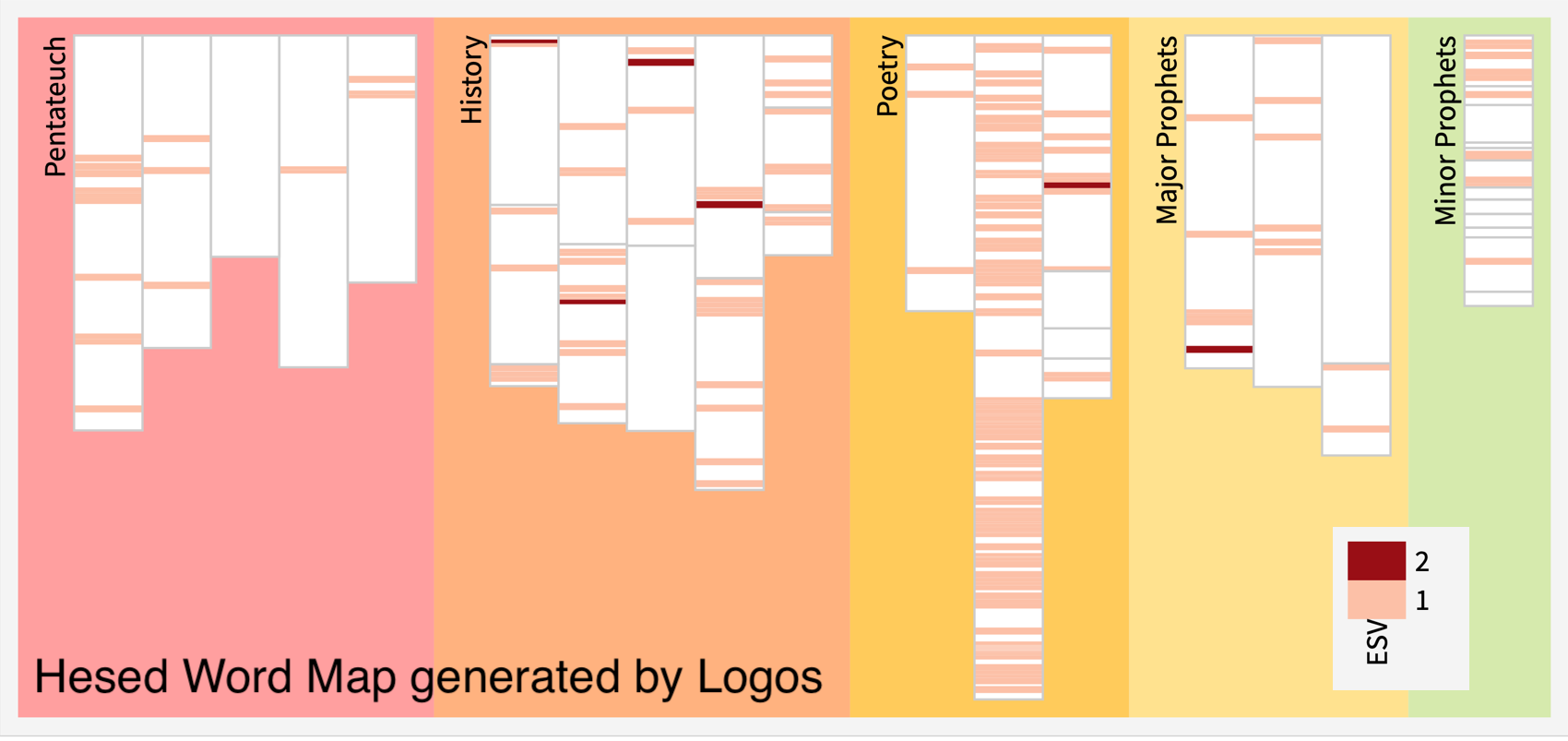


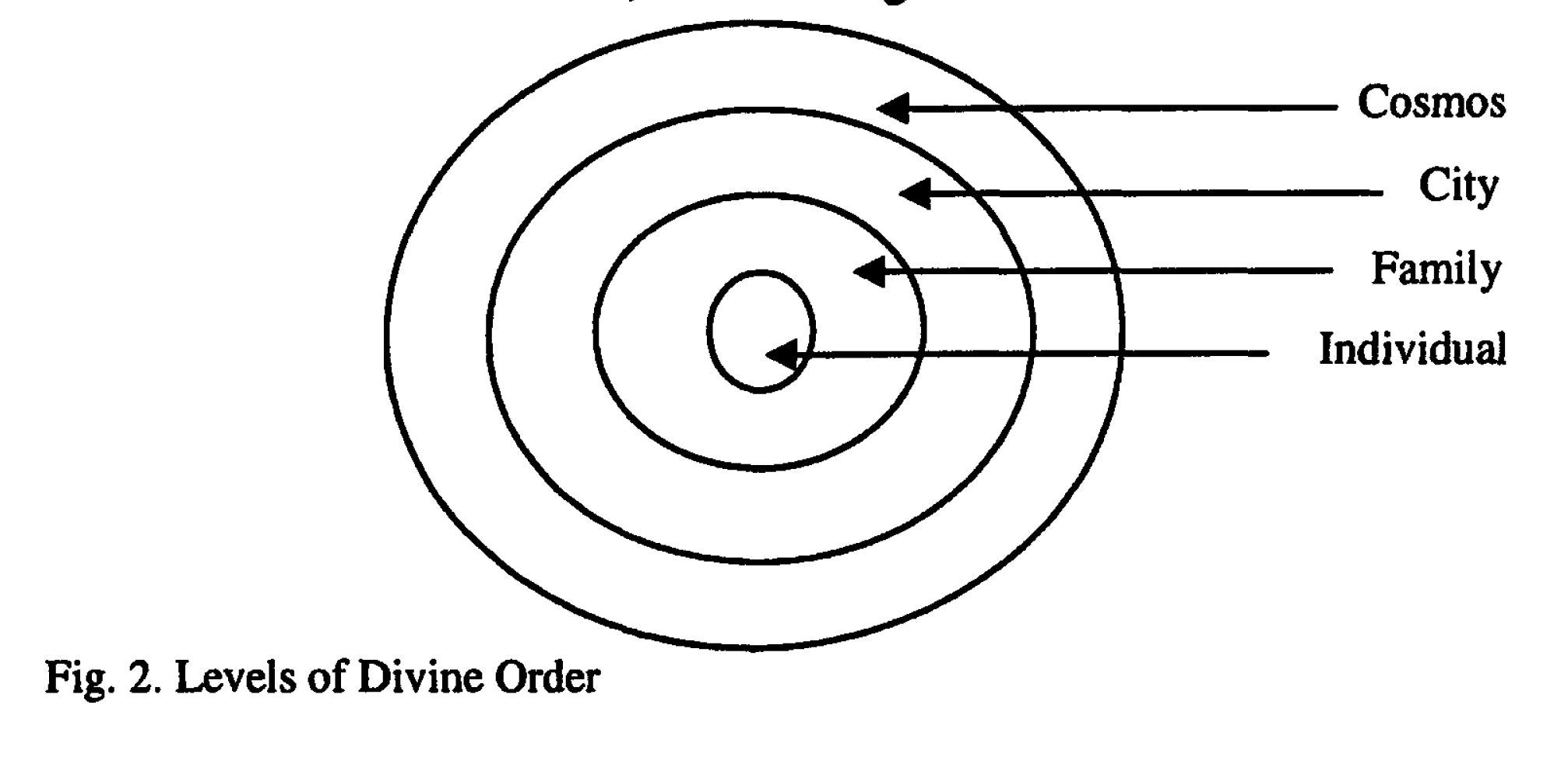


 biblicalfaith.online