The Flock of God that is Among You (1 Pet 5:1-5)

John W. McGarvey (1829-1911) is a well-known gospel preacher of the American attempt to restore the practice of New Testament Christianity, free from the embellishments and teachings of men.

McGarvey was a tremendous scholar of the apostolic word; his talents were consumed with the teaching and defense of the ancient faith. He was, for example, a deliberate and strong advocate for the New Testament teaching of worship free of any musical instrument (a cappella singing).

His strong conviction on this matter played into his decision to leave the Broadway church in Lexington (his “home” congregation) where he had served both as a preacher for many years, and an elder for thirty-two years.

Brandon Renfroe recounts this decision.[1] In September of 1902, McGarvey resigned from his service as an elder “citing his increasing deafness.” On November 2, the remaining elders announced that they would “put the use of the instrument to a vote” a week later.

In reaction to this vote to include the instruments of music in worship, McGarvey submitted a “letter of withdrawal from the Broadway Church” dated “the very day the elders decided to put the unscriptural practice to a ‘vote.’” He subsequently placed his membership with the Chestnut Street congregation and remained with them until his death.

Why does McGarvey’s withdrawal from one congregation and placement within another matter? At minimum, the decision reflects his desire to be affiliated with a faithful congregation. Church membership, however, is much more.

Is Church Membership Biblical?

This is the first question that needs to be answered: “is church membership biblical?” The practice of “placing membership” is often regarded as a “good tradition” but not a biblical responsibility for every Christian.

Apologist Paul Little is known for saying, “Believing something doesn’t make it true; refusing to believe it doesn’t make it false.”[2] I believe this is a fitting point to ponder here. Let us consider this important question: Is “church membership” biblical, or is it merely a “good tradition”? What does the evidence affirm?

A passage to consider in answering this question is 1 Peter 5.1-5:

So I exhort the elders among you, as a fellow elder and a witness of the sufferings of Christ, as well as a partaker in the glory that is going to be revealed: shepherd the flock of God that is among you, exercising oversight, not under compulsion, but willingly, as God would have you; not for shameful gain, but eagerly not domineering over those in your charge, but being examples to the flock. And when the chief Shepherd appears, you will receive the unfading crown of glory. Likewise, you who are younger be subject to the elders. Clothe yourselves, all of you, with humility toward one another, for God opposes the proud but gives grace to the humble. (ESV)

In this passage the apostle Peter teaches, on the one hand, that elders are required to “shepherd to the flock of God that is among you” (1 Pet 5:2).

On the other hand, the apostle instructs that the flock likewise has a responsibility to be submissive to their shepherds (1 Pet 5:5). These responsibilities are both dependent upon a mutual submission to God.

Let us briefly consider these three aspects as we answer this question.

The Responsibility of the Elders

The Apostle Peter exhorts the “elders” with the imagery of shepherd and sheep: “tend to the flock that is among you like a shepherd” (5:2). The exhortation has teeth, for it is in the mood of a command (aorist imperative).

Peter makes “a direct demand upon the will” of these godly elders.[3] He summarizes their standing responsibility to the congregation as shepherds and overseers.[4]

Moreover, their leadership will be seen by their godly example, not through ungodly behavior (5:3). They too must be submissive to their Chief Shepherd (i.e. Jesus/God cf. Psa 23), that they may be blessed (5:4).

The Responsibility of Christians

Peter quickly turns around and reminds the “younger” (i.e. the body of Christ in general) to be submissive to their congregational leadership (“the elders”).

Peter addresses the “younger” with the command as well to accept their standing responsibility of submission and humility toward their congregational leadership (aorist imperative). This is an obligation with a spiritual blessing – God gives “grace to the humble” 5:5).

Membership among Local Churches

The passage demonstrates that congregations are forged on the basis of a submission to God. The elders are responsible for its flock, and the flock is responsible to its leadership. There is another factor to consider.

Peter uses the phrase: “the flock of God among you” or “the flock of God that is in your charge” (RSV). Congregational elders have their own sheep to pasture and do not pasture the sheep from another fold. They do not work with sheep that are not among them; those sheep belong to other shepherds.

The members of congregation A, are not members of congregation B, C, or D. Biblically speaking, there is no such thing as the “roving Christian”, wandering from congregation to congregation. The permanent visitor is equally unscriptural. They must be members in one congregation at a time.

In “church” terms, then, there is such a thing as church membership. Christians are responsible to place themselves under the leadership  of their congregation (ideally the elders, cf. Phil. 1.1-2). “Placing membership” is biblical and required to maintain the imagery; but more importantly, to show submission to God’s plan for our lives.

Concluding Thoughts

So many times Christians trivialize church membership. They hop from congregation to congregation, never submitting themselves to the Lord’s plan. Sometimes it is out of ignorance that they violate God’s plan; other times, it is a willful act of defiance.Sometimes even traveling preachers fall prey to this problem as they rarely plant roots in the life of their congregation. Those who believe a Christian may wander about are simply wrong. The remedy is simple however: repent and submit to the Chief Shepherd by submitting your membership to a faithful congregation and its leadership.

Sources

  1. Brandon Renfroe, “J.W. McGarvey and the Instrument,” Christian Courier 41.11 (March 2006): 43.
  2. Marie Little, “Introduction” in Paul Little, Know Why You Believe, 3rd ed. (Downers Grove, IL: InterVarsity, 1988), 10.
  3. David A. Black, Learn to Read New Testament Greek, Expand. ed (Nashville, TN: B&H, 1994), 171.
  4. J. Gresham Machen, New Testament Greek for Beginners (New York, NY: Macmillan, 1923), 180; Stanley E. Porter, Idioms of the Greek New Testament, 2d ed. (London: Sheffield Academic, 1994), 52-54.

An Elder’s Character: A Matter of Public Record (1 Tim 3:7)

Moreover, he [the guardian/overseer (3:1)] must be well thought of by outsiders, so that he may not fall into disgrace, into a snare of the devil. (1 Timothy 3:7 ESV)

One of the qualifications for the “guardians” (overseers) in Ephesus listed above concerns the Christian man’s reputation among non-Christians. In 1 Tim 3:7, the church is called to evaluate this testimony as a preventive measure in the selection process of a “guardian.”

It has been asked, “what will happen to a leader who is not so regarded by those outside the church”?[1] The answer is clear: it becomes a trap set by the Devil to bring about disgrace in the church. The man’s public record must weigh in as to whether or not he should have the responsibility of a guardian. Let us explore this verse in some greater detail by looking at three aspects of the text.

(1) A Final Necessity

After exploring thirteen qualifications designed to add details to the broad concept of being “above reproach” (1 Tim 3:2), the final detail is the measure of his character as reflected by “outsiders.”

The nature of his public record must be “morally excellent.” The ESV has “well thought of,” but the text literally reads, “have a good testimony.” It covers the positive moral ideas of good, noble, and praiseworthy, a quality that is “favorably valued.”[2] His character and standing in the community (3:7) must be equal to the “good work” as a guardian (3:2).

The “source” of information which is supposed to help the church examine a “guardian’s” candidacy comes from non-Christians (literally, “from those on the outside”). At first glance, this may appear to be strange. Why would public opinion matter when addressing the leadership role of a church “guardian”? The short answer is his public reputation either brings glory to God or disgrace to His Kingdom. This qualification of the quality of an overseer’s reputation must not be ignored.

(2) The Reason for the Requirement

The middle of the verse reads, “so that he may not fall into disgrace, into a snare of the devil.” The emphasis is placed upon protecting the church from those who have a bad reputation in the community; such a scenario would play “into the devil’s trap.”

Are there any longstanding frictions with the community which not only are detrimental to the guardian’s service but also to the mission of the church? Is he “known” for having improper relationships, or do rumors circulate about him which would be reproachable to him?

These questions must be asked and answered. However, despite the importance of public record, the community is not the final say. It is an important part of the appraisal process designed to prevent disgraceful men from entering the eldership. It is much easier to get a man in than it is to remove an unqualified elder.

(3) The Ever-Present Danger of the Devil

There are no sinless guardians; however, pretense and hypocrisy are subject to slander and accusations. Such is the main objectives of “the Slanderer” (i.e., the Devil). The man’s public record should not be a prized trophy captured by the Devil (i.e., the implied hunter’s snare). Consequently, “Christian men who bring widespread scandal upon the church of God have a heavy burden to bear.”[3]

If one’s character is something that has been built brick by brick, then so is one’s reputation. Good character does not have to be perfect, but according to this verse, one’s reputation does need to be well thought of. This, then, is not a role where one develops a good reputation; quite to the contrary, the role is for the person who already possesses an excellent reputation. Contextually, further, they must already possess such a reputation from the community.

A Final Word

One’s public record is a general guide to anticipating the trajectory of a person’s character: where does it point? We must allow for imperfect people to have imperfect records; furthermore, not all concerns are of the same weight and worth. Nevertheless, if there is no longstanding trajectory towards godliness in non-Christian circles then it is adequately apparent such a prospect cannot serve in such an iconic and spiritual role as shepherd, elder, and overseer in the church of God, which is God’s house (1 Tim 3:15).

I was recently told of a congregation that was in the process of selecting new elders. In keeping with the tenor of this character requirement, the congregation placed a notice in a local newspaper seeking public input as to the character and public record of the proposed elders. I am unaware of the outcome, but their action is powerful as it upholds the importance placed upon an elder’s public record.

Endnotes

  1. George W. Knight, III, The Pastoral Epistles (1992; repr., Grand Rapids, MI: Eerdmans, 2013), 165.
  2. Bauer, Walter, Frederick W. Danker, W. F. Arndt, and F. W. Gingrich, eds. A Greek-English Lexicon of the New Testament and Other Early Christian Literature, 3rd ed. (Chicago, IL: University of Chicago Press, 2000), BDAG 504; Johannes P. Louw and Eugene A. Nida, Greek-English Lexicon of the New Testament Based on Semantic Domains, 2d ed. (New York, NY: United Bible Society, 1989), L&N 88.4.
  3. Wayne Jackson, Before I Die: Paul’s Letters to Timothy and Titus (Stockton, CA: Christian Courier Publications, 2007), 94.

Book Review: Emerging Elders

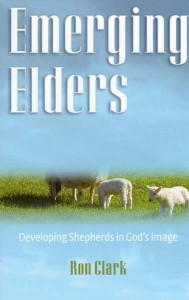
Emerging Elders

Ron Clark, Emerging Elders: Developing Shepherds in God’s Image (Abilene, TX: Leafwood Publishers, 2008), 203 pages. Paperback.

Ron Clark is the lead church planter with the Agape church of Christ in Portland, Oregon. He holds M.Div. and D.Min. degrees from Harding School of Theology (Memphis, TN) and serves as an adjunct instructor for George Fox Evangelical Seminary. He is also a member of the Oregon Attorney General’s Sexual Assault Task Force.

Clark has contributed to various publications such as New Wineskins, The Christian Chronicle, Stone-Campbell Journal, and Restoration Quarterly; moreover, he has recently published The God of Second Chances (2012) and Setting the Captives Free (2005) along with the current volume which is the subject of this book review.

Emerging Elders: Developing Shepherds in God’s Image provides a theological platform for training current elders and potential elders. Clark explores the text and terminology of the descriptive terms for “pastor” (elder, overseer) and explores such leadership in light of an incarnation model. Clark believes that only when God’s word is actually lived out and exemplified by its the church’s leaders shepherding cannot truly be what God intended it to be.

The Book

Clark has provided the body of Christ a unique text which addresses the needs of the organizational structure of churches of Christ. This is perhaps its greatest overall strength. As Clark observes, “few books are written specifically for ministers about our style of ministry” where the pastor and the preacher are distinct ministries in the body of Christ.[1] Clark observes that most church leadership material is based upon church models which are dissimilar to churches of Christ, or based upon business models which have been given a Christian spin. Consequently, to address the lack of literature on the subject Emerging Elders is an attempt at providing a resource and a solution to the vacuum of pastoral development in light of this distinction.

In Emerging Elders, Clark provides a solid response to this lack of material to address In section one, Clark develops the need for elders who are equipped to lead the body of Christ (chapters 1-2). In section two, Clark provides a dynamic model of God as shepherd and what that means for the leaders of God’s people, he offers a situational and contextual applications of the pastoral qualifications, and then emphasizes that both God’s example and Paul’s instructions are to be applied incarnationally (chapters 3-8).

In section three, Clark provides a series of chapters which specifically address the tensions and problems within church life in particular and churches of Christ in general that emerging elders must address in an incarnational model. “These leaders are appointed to imitate God’s care and concern for people.”[2] The chapters on predators and care of the preacher were particularly exceptional and passionate, and are often not treated in the manner in which Clark has done (chapters 9-15).

Suggestions

What perhaps would have made Emerging Elders more helpful would have been in the area of conflict resolution (chapter 10) and the elder development program (chapter 15). In chapter 10, Clark explores the role elders have in the promotion and maintenance of unity. This lays heavily upon John 17 and Eph 4:1-6, and according to Clark speaks to the needs of the elders to “encourage reconciliation.” To be sure, Clark is complete in his development of the reconciliation process: “Reconciliation requires, conflict resolution, validation, and reinstatement of a relationship.”[3] However, I walked away from that section wishing that Clark had spent more time on developing these ideas, diagrams notwithstanding.

Secondly, I felt that the last chapter (ch. 15) was almost a letdown. With the idea of elder development as the core of the book, I anticipated the last chapter, “Suggested Elder Development Program,” to have more details. Maybe I am being over judgmental. The cycles are a great suggestion and using a quarter year system for elders and potential elders is very helpful. The book reading suggestions are also very appropriate. But what about the first steps it takes, the conversations needful to create the atmosphere to offer and provide these classes? I anticipated more help in creating the development program; however, even in saying this the program offered and the notes to use certain sections of the book along with corresponding cycles is very helpful.

Recommendation: High

In balance, Emerging Elders is a perfect balance of scholarship and the heart of a servant attempting to live incarnationally. Incarnational leadership is at the heart of Emerging Elders and it should be at the heart of how Christian leaders serve, and how Christians serve their church, family, and community. It does not provide easy answers to the flesh and blood problems in the church, nor does it provide answers that are so impossible to achieve. Emerging Elders calls Christians to lead God’s church biblically (incarnationally), and to address the real-life problems the people of God face with the most fundamental gift God has given his people agape love.

Emerging Elders calls every would-be elder to be living examples of faith, integrity, and loving concern for all. I highly recommend Ron Clark’s Emerging Elders to every husband and wife who serve in their church, every preaching couple, every elder and his wife, every deacon, and his wife. They are truly the focus of this book. As Clark observes,

We must help families inside and outside the church heal, but this must come from incarnational leaders who model God’s style of marriage and parenting. God has a pattern; leaders follow and call others to do the same. They follow by modeling his nature through the fruits of the Holy Spirit, becoming a father like God, and being approachable. These individuals reflect God’s character to both the church and the world.[4]

Endnotes

  1. Ron Clark, Emerging Elders: Developing Shepherds in God’s Image (Abilene, TX: Leafwood Publishers, 2008), 9.
  2. Clark, Emerging Elders, 46.
  3. Clark, Emerging Elders, 139.
  4. Clark, Emerging Elders, 101.