Larry Crabb, The Safest Place on Earth: Where People Connect and Are Forever Changed (Nashville, TN: W Publishing, 1999), Hardback, 240 pages.
Dr. Larry Crabb is an established licensed psychologist, a well-known Christian author on marriage and biblical counseling topics, and current Distinguished Scholar in Residence at the Colorado Christian University (Morrison, CO).[1]
Dr. Crabb earned his Ph.D in Clinical Psychology from the University of Illinois, and has been a professor of psychology since 1970. Dr. Crabb also provides workshops and weekend seminars across the United States as part of his non-profit New Way Ministries and its web presence which features interviews, video lectures, and other multimedia outlets to share resources from his School of Spiritual Direction.
Dr. Crabb has been involved in counseling and marriage, in self-help ministry, and in developing a context of “spiritual community” for over 40 years, and so has earned a place among the various “Christian voices” seeking to make the church a better place.
In 1999, Dr. Crabb released a significant but brief volume on the church as a safe spiritual community. The volume is entitled, The Safest Place on Earth: Where People Connect and Are Forever Changed (238 pages).[2]Dr. Crabb has registered his own frustration with two elements which bear upon the community of the church and its spiritual health, which he further addresses in Real Church: Does it Exist? Can I Find It? (Nashville, TN: Nelson, 2009).
In The Safest Place on Earth, however, Dr. Crabb establishes a vision for the church as a group of believers on a journey towards God, and it is within the journey that spiritual community must begin and end for spiritual healing and direction. Despite Dr. Crabb’s own training in psychology, he believes when it comes to the soul care that ought to go on within the church, such assistance must yield “to special revelation and biblically dependent thinking.”[3]Dr. Crabb is adamant,
We don’t need more churches, as we usually define the word. We need more spiritual communities where good friends and wise people turn their chairs toward each other and talk well.[4]
Structurally, The Safest Place on Earth is organized in seventeen chapters, divided into three parts, and finishes with a section of questions for each chapter. The layout follows a very clear program of development, and the content is written in a popular style. Dr. Crabb is able to articulate and shape a conceptual paradigm of what is a spiritual community and what is not a spiritual community without complex vocabulary. His illustrations, personal anecdotes, and insights from personal interactions are delivered to support his vision for a spiritual community is very clear and helpful ways.
Dr. Crabb also interacts with and depends upon the works of Dutch Catholic priest Henri Nouwen[5](1932-1996), who focused on spiritual solitude, spiritual community, and spiritual compassion, along with Swiss Catholic philosopher Jean Vanier (b. 1928) and his work connected to L’Arche communities which have overlapping concerns.[6]
A Book Summary
In part one, Dr. Crabb develops and sharpens the idea of spiritual community and how the church needs to develop sensitivity to being the spiritual community it was intended to be. Spiritual community is, according to Crabb, at the core of what the church is.
It is people facing each other in intimate, honest, and safe ways as they journey together on their way to God. Spiritual community, however, will not occur if there is no opportunity for vulnerability and a full sense of validation from these that witness the vulnerable parts of who we are.
One of the difficulties in church community life is to wrestle with the crux,
if they knew who I really was, the church would probably not like me.
To be a spiritual community, then, we must be able to love free from ego and embrace those so broken by those things which burden our souls and even cripple us.
The health metric of a spiritual community is its ability to love the unlovable, the broken, those that can only let you love them in their brokenness.
In part two, Dr. Crabb reframes the New Testament discussion of flesh and spirit elements of our soul in terms of the analogies of the Lower Room (carnal/wretchedness) and the Upper Room (spiritual/greatness).
It is in this phase of the book that Dr. Crabb focuses on the part of the church community that needs to be addressed first — our internal struggles to be spiritual. Enter Dr. Crabb’s “two rooms” analogy which he builds from the words of Jesus:
If anyone loves me, he will keep my word, and my Father will love him, and we will come to him and make our home with him. (John 14:23)
And he amplifies these words with Paul’s regarding “Christ in you” (Colossians 1:27).[7]
In essence, the two rooms represent fully furnished environments that exist within us.
Now there are two rooms inside us, the one we built where our natural self thrives, and the one the Spirit built where our natural self suffocates and our new self flourishes.[8]
Dr. Crabb does not explicitly use all the terms, but these “rooms” parallel the Freudian id, ego, and superego dynamics, the difference being they are spiritualized.[9]The lower room is self-furnished by our wretchedness and “dark forces” with its corruption and stench (id). The upper room is furnished by the Spirit of God only enjoyed once we open the doors of the lower room, acknowledge its stench, and celebrate the confidence to be a new us (an obedient us) empowered by God’s grace and teaching (superego?).
Finally, we consciously (ego?) take these “two rooms” within us and the internal struggles that go with them —because we prefer to be in the lower room— to receive outside help from “another room” which is the spiritual community, the church. This room is furnished by the Spirit with safety, vision, wisdom, and power.
In part three, Dr. Crabb continues his visioning for spiritual community with another analogy of “turning our chairs toward each other” but now by “turning our souls toward each other.”
In this process, the members of the church community must practice three needed things. First, spiritual community can only be done by the Holy Spirit. Second, personal holiness grounded in the Spirit influences the pursuit of personal holiness of others. Third, there must then be a safe place to “own and trace our desires to their source.”[10]
Spiritual community, however, will only occur when spiritual passions are “supernaturally” aroused when we are together in spiritual community experiencing acceptance, mutual faith in God’s presence in our lives, affirm the “upper room” elements in our lives, and allow God to change us without applying human pressures of forced change.
It is certainly a place of risk, but risk will always be a factor when embracing the need for vulnerability. Therefore, the real question is: will we, the church, be the safe place for those being vulnerable?
Response and Review
I chose this book principally because of the title. In fact, I had seen this title on the cover of the September/October 2001 New Wineskin magazine as part of the issue theme of “Authentic Christian Community.”[11]The concept peaked my interest because I do feel the church has not been the safest place on Earth in managing people’s sin. One example will suffice. I once heard a preacher react to the exposed sins of others with the derogatory question, “where are the normal people?” That’s not a safe place for healing. Nor is the following response to a fellow congregant’s addiction any safer, “there’s a word they need to learn – repent.”
Rebuking sin is the easy work of preaching, but creating a compassionate environment to help brothers and sisters work through repentance is the harder – and in my judgment – more fruitful work of ministry.
Crabb’s book further calls the church to be the community through which Christians experience spiritual healing for spiritual problems often mistreated —according to Dr. Crabb—as psychological disorders or problems. The gospel and the New Testament teaching that the church is the dwelling place of God, and Christians are the temple of the Holy Spirit, seem to support the overall agenda that the culture of the local congregation should be more attuned to openly working through sin, temptations, and openly celebrating grace, and spiritual empowerment by God. Even Paul declares that the church is being recreated (2 Corinthians 5:17) and repurposed for ministry (Ephesians 2:10).
Dr. Crabb’s book both intrigued me and made me uncomfortable in that he elevates the spiritual components of the church where the Holy Spirit dwells. Again, it is not that I’m troubled by the Holy Spirit, it is that in many pockets of the Churches of Christ the Holy Spirit and the use of “community” have been so tinged with so-called “liberal agendas” in the latter, and doctrinal controversial hotbeds regarding the former. His emphasis that the church is specifically designed to be a spiritual community and therefore it must be that spiritual community on a journey to God is what stands out the most to me. If we are not a spiritual community, then there will not be the Spirit.
I do not agree with all of his points on the “wretchedness” of man, but Dr. Crabb has challenged me to speak more about the Spirit and the church as the community in which God does His best work to heal us from the effects of sin.
Concluding Thoughts
What I liked overall about the book is the Dr. Crabb’s challenging call to the church to be a safe place for the sort of healing love that needs to exists between God’s people, so that the Spirit of God may work through the church to heal its members as they bear each other’s burdens with the gifts of the Spirit (Galatians 5:22-26). The church must be so, because, as Dr. Crabb reminds us, we are traveling together on a journey to God.
I recommend the challenge of this book to every Christian and church leader. The reminder that Scripture centers the body of Christ as the place where the Spirit dwells, and therefore must be the safe place where the members of the body can serve each other empowered by the same Spirit. To overcome sin, the church must be, and in some cases become, the place where no one struggles with sin void of love, compassion, support, and patience as we journey to God breaking free from the bondage of sin.
If you were to take a sheet of paper and list what you believe are the top ten qualities of a strong family, what would you put down? And, from among these ten qualities, which would be among the top six?
The February 2002 issue of NebFact a resource bulletin of The University of Nebraska’s Institute of Agriculture and Natural Resources in Lincoln, Nebraska, provided just this kind of information.[1] It focused on the issue of family life relationships. It summarized the research work of the Nebraska professor, Dr. John DeFrain, on “American Family Strengths.”
Built on extensive research, covering a span of 25 years, DeFrain concludes that while what constitutes a strong family varies from culture to culture, and society to society, they have one thing in common: they have “qualities that contribute to the family members’ sense of personal worth and feelings of satisfaction in their relationships with each other.”
Psalm 133 and Family Strength
It should be the goal of every family that each member can say two things: (1) “I matter to them” and (2) “I love being with my family.” When both of these statements are realized, then the practical foundations for a strong family are in place.
The 133rd Psalm suggests as much:
Behold, how good and pleasant it is when brothers dwell in unity!
It is like the precious oil on the head, running down on the beard, on the beard of Aaron, running down on the collar of his robes!
It is like the dew of Hermon, which falls on the mountains of Zion! For there the Lord has commanded the blessing, life forevermore. (Psalm 133:1–3 ESV)[2]
This psalm of David (per the superscription) centers on family, a family that is united in their bond and in the Lord.
The psalm is certainly an echo of the Genesis account and the first family. The Lord assesses the Creation as “good” (tob) when God gave the light (1:4), gave the earth and the waters (1:10), gave the plants and the trees (1:12), gave the moon and the sun (1:18), and gave the animals of the sea and air (1:21). Yet, it was decidedly “not good” for Adam to be alone (2:18). It was only until humanity became a family unit (“one”) that things are described to be “very good” (2:18–25; cf. 1:31). The use of “good,” then, in this psalm is a reminder or a call to embrace the goodness and the pleasantness of family together as God intended.
The portrayal of this unity is found along two images: the pouring of oil and the dew of the mountain. As a member of the family, one should feel as integrated to each member of the family like oil that pours upon the head, down to the beard, and on throughout the garments (v. 2). The pouring of oil to soothe or to consecrate did not isolate head, or beard, or garment — it applied wholly to the person and garments. As was the dew that descended on Mt. Hermon and extended to the mountains of Zion, the dew on the land united the land. Zion may be where God descends and where Israel ascended, but the dew united them (v. 3).
We should not walk away from the truth that family has been forged by God, and receives a blessing when it submits to His provisions (Deuteronomy 6:4–9). Nancy deClaissé-Walford reminds us:
the words of the whole psalm reminded the people that their family relationship was established not by blood, but by their mutual share in the community of God, a community that received blessing [sic] from its God.[3]
As sure as the family is to be a blessing to its own members, the family is how God planned to bring about the gospel blessing through Abraham (Genesis 12:3): “in you all the families of the earth shall be blessed.”
What Makes a Family Strong?
John DeFrain and his colleague David H. Olson point to six general overlapping qualities which have a proven record to make families strong. Olson and DeFrain call these qualities, “The Family Strengths Framework,” and they are (1) commitment, (2) positive communication, (3) spiritual well-being, (4) appreciation and affection, (5) enjoyable time together, and (6) the ability to cope with stress and crisis.[4] The following is a summary of these qualities of strong families (according to Olson and DeFrain) along with some supplemental perspectives I have picked up along the way.
Members of strong families demonstrate a commitment to one another with an investment of time and energy toward them, marking the family as their highest priority. This is not a controlling commitment but one that empowers, encourages, and trusts, especially with regards to marital sexual fidelity.
Ed Wheat and Gloria Okes Perkins’ emphasize from the Greek word storge the importance of creating the atmosphere of “belonging” with “natural affection” (Romans 12:10).[5] This fits well with the trusting and honest environment which comprises a family strength. Wheat and Perkins go on to paint a picture of welcomeness. It is not a “spectacular” and swooping love that builds strong marriages. Instead, it is a “comfort love,” necessary and nourishing, taken for granted and unexciting.
The family culture it creates needs to allow for members of the family to trust they can be comfortable in “their own skin” and safely accepted by their family when the outside world rejects them.
Second, Positive Communication. Key Qualities: sharing feelings, giving compliments, avoiding blame, being able to compromise, agreeing to disagree.
Members of strong families spend time “talking with and listening to one another” in meaningful ways (sharing feelings). They will not always agree with each other but will have the coping skills to disagree, agree to disagree, and compromise without blaming each other. Humor is also a significant unifying feature, a stress reducer, and a way to bring levity to struggles of daily life.
Gary Smalley’s “Five Levels of Intimacy” model fits well here (cf. Making Love Last Forever): (Level 1) having shallow (think clichés) discussions (“good morning,” etc.), (Level 2) sharing basic facts about life or self (“it was hot,” etc), (Level 3) sharing opinions, concerns, or expectations (may risk an argument), (Level 4) honest sharing of one’s deepest feelings with an honorable safe listening environment (“Let me see if I understand what you’re feeling…”), and (Level 5) honest sharing of one’s deepest needs with an honorable safe listening environment (“Let me see if I understand what you need…”).[6]
Communication is the glue that keeps the whole family together. We would do well to enjoy each other’s company through positive communication.
Members of strong families believe that faith, hope, or optimism about life are important to a healthy connection to the world. There is a sense in which transcendence of the “every day” to the sacred is embraced, shared, and desired. Their ethics and values emerge from their spiritual orientation. The sense of belonging to a caring and supportive community is important to connect the family to the world. This is considered to be “the most controversial finding of the family strengths” research.
According to F. M. Bernt, research shows that culturally, there has been a move away from a culturally shared value toward a personal/subjective sense of what is important.[7] In other words, people used to have a stronger sense of a shared morality and priority, but that frame of reference has eroded. Today, people are more likely to lean on their own priorities – moral and spiritual. Case in point, research shows that a “strong marriage/family” will seek a strong spiritual well-being. However, when polled to list the top five traits parents wish to pass on to their children “loyalty to church” is never included. Instead, the top five traits listed are: “willingness to work hard,” “frankness/honest,” “independence,” and a three-way tie between “social mindedness,” “economy in money matters,” and “good manners.”
This fits well with George Barna’s research, Growing True Disciples.[8] The Barna Group, a church statistics ministry, shows that many believers say faith matters, but few, in fact, admit to investing the kind of energy to pursue actual spiritual growth. This may point to a partial answer to a very complex question: “why are our young people leaving the church after they leave their ‘church going’ families?” It seems that discipleship is not a real practical priority. “Dragging” children to church is one thing, training them to become disciples of Jesus is quite another thing. If adult members of the family do not embrace discipleship, it will be very hard to expect the children to embrace such.
The church cannot be expected to raise people’s children, but we need to create an environment for all members to develop as disciples of Christ (1 Timothy 2:1–2).
Fourth, Appreciation and Affection. Key Qualities: caring for each other, friendship, respect for individuality, playfulness.
Members of strong families regularly show their deep feelings for one another through care, friendship, respect, and even playfulness. This does not mean the family is free of tension. Strong families do not ignore negativity. Yet, sharing criticism is outweighed by a genuine concern to show respect. Marital sexual intimacy in strong marriages is likewise built on this positive interplay of friendship and respect.
Gary Chapman’s model of The 5 Love Languages[9] provides very practical ways to demonstrate appreciation and affection; namely: words of affirmation, quality time, receiving gifts, acts of service, and physical touch. This is not only for marital intimacy but also works in broad ways for all family members, acknowledging that some people react better to certain expressions of love.
The key is to remember that healthier families are nurturing with care, affection, friendship, togetherness, and the joy of each other’s company. This takes effort and a commitment to creating a home culture where the language of family interaction is endearing.
Fifth, Enjoyable Time Together. Key Qualities: quality time in great quantity, good things take time, enjoying each other’s company, simple good times, sharing fun times.
Members of strong families create happy memories by spending considerable quality time together. Despite the tension of “much” time versus “quality” time, the focus of strong families are to make every moment together memorable, grounded in simple good times, where the “shared times” (picnics, fishing, meals, trips, etc.) leave indelible marks of joy on each member of the family.
In keeping with the above, Paul Faulkner discusses, in What Every Family Needs with Carl Breechen,[10] the importance of “spending quality time.” Faulkner asserts that there are four hindrances to spending quality time together. These “big fours” are built into American’s aggressive consumer and materialistic culture ([1] money, [2] beauty/sex, [3] intelligence, and [4] athletic ability). These make it hard for families to spend time together.
The scriptures show that money is not evil, but it is the “love of money” that leads to every kind of evil (1 Timothy 5:10). Beauty and sex-appeal is only as enduring as the godly fearfulness and prudence beneath the skin (Proverbs 11:22; 31:30). The vaunted praise of the naturalistic mindset of our society is limited by its detrimental lack to include God in it (Romans 1:19–20). And finally, the obsession with athletes and their skills to the point they displace God as the focus of our hearts is truly the stuff of idolatry (Acts 8:9–11).
It is, therefore, important to be proactive, not passive, in making time —as a priority— for family members in order to overcome the persuasive time killers. Husband and wives need to work together by changing work schedules, reducing professional involvements, and even giving spouses “veto powers” over these matters.
Sixth, Ability to Cope with Stress and Crisis. Key Qualities: adaptability, seeing crises as challenges and opportunities, growing through crises together, openness to change, resilience.
Members of strong families will develop the skill to effectively cope with the unavoidable troubles, stresses, and crises of life. Strong families are less crisis-prone than dysfunctional families because they often prevent the sort of troubles that their counterparts do not. The four main troubles strong families face are —in statistical order— illness and surgery, death, marital problems, and the problems of their children. Strong families adapt to these, and other troubles, through a series of strategies that help family members pull together. The resilience to admit the need for help is listed here in statistical order: every member has a part to play to ease the burden, help is sought to solve problems that the family cannot, counseling is sought to learn better-coping methods.
Parents and guardians of children would be wise to have a preexisting list of recommended Christian counselors, psychologists, or psychiatrists of all ages available to assist their families to cope with stress and crises. Aside from other services, the American Association of Christian Counselors website may be a good place to start to find helpful Christian counseling resources. Counselors are available to help assess our stability and situation: mental, spiritual, or emotional.
Nevertheless, we should always remember that God is the only true help for the ill that no pill can cure (Psalm 121:1).
Concluding Thoughts
There are no perfect families, and this includes the “strong families.” The conclusions by Olson and DeFrain, and others, simply illustrate the sorts of behaviors that have shown to yield a healthy family atmosphere. You might even consider this simply a survey of “best practices” among families that have healthier relationships than others. They do not, however, promise to create perfect families.
In the end, all families -including Christians ones- can gain a great deal when these Family Strength qualities are pursued and practiced. Christian families are no less prone to dysfunction as non-Christian families are, and vice-versa. Families essentially boil down to relationships, and the value felt and satisfaction experienced from being together. We return to the two overarching signs of a healthy family: (1) “I matter to them” and (2) “I love being with my family.”
For the child of God, we seek another dynamic to be at play in the success or strength of the family, and that is God and his Word, and our story together revealed in Scripture to be at the core of what we do as a family. Moses’ call to Israel is for all of God’s people and ought to be “heard” today:
Hear, O Israel: The Lord our God, the Lord is one. You shall love the Lord your God with all your heart and with all your soul and with all your might. And these words that I command you today shall be on your heart. You shall teach them diligently to your children, and shall talk of them when you sit in your house, and when you walk by the way, and when you lie down, and when you rise. You shall bind them as a sign on your hand, and they shall be as frontlets between your eyes. You shall write them on the doorposts of your house and on your gates. (Deuteronomy 6:4–9)
Unless otherwise stated all quotations are taken from the English Standard Version of The Holy Bible (Wheaton, IL: Crossway, 2016)
Nancy deClaissé-Walford, Rolf A. Jacobson, and Beth Laneel Tanner, The Book of the Psalms, NICOT, ed. E. J. Young, et al. (Grand Rapids, MI: Eerdmans, 2014), 939.
See, “The Family Strengths Framework” in David H. Olson and John DeFrain, Marriages and Families: Intimacy, Diversity, and Strengths, 4th ed. (Boston, MA: McGraw-Hill, 2003), 75–80.
Ed Wheat and Gloria Okes Perkins, Love Life for Every Married Couple (New York: Inspirational Press, 1980), 80.
Gary Smalley, Making Love Last Forever (Dallas, TX: Word Publishing, 1996), 142–44.
F. M. Bernt, “The Ends and Means of Raising Children: A Parent Interview Activity,” Activities Handbook for the Teaching of Psychology, vol. 4, eds. L. T. Benjamin, et al. (Washington, DC: American Psychological Association, 1999), table 55-2.
(Colorado Springs: Water Brook, 2001).
(Grand Rapids: Zondervan, 1992).
Carl Brecheen and Paul Faulkner, What Every Family Needs: Whatever Happened to Mom, Dad, and the Kids? (Nashville, TN: Gospel Advocate, 1994), 177–79.
Who would we be –and where– without those individuals who gave us the guidance and benefits of their wisdom accrued over the years of their experience. The powerful influences of those who have been our benefactors have left an indelible mark upon our lives in more ways than we often can be thankful for.
Of course, not all influences are of the same caliber. The Scriptures remind us of those powerful influences which may tug at our hearts and emotional fixations. Let us look at a few examples of counsel poorly chosen; then reflect upon choosing those wonderful influences which will improve our lives.
Counsel Poorly Chosen
Enabling Wrong-Doing to Satisfy an Obsession
Emotional fixations are very dangerous if left to fester and grow into obsessions. There are some who would do anything to help you gratify your desires.
No one knows this tragic lesson better than Amnon who had an obsession for his beautiful half-sister Tamar (2 Sam 13). Apparently, Amnon’s vexation was so apparent that his cousin Jonadab counsels him to pretend an illness, so that he may request the nursing care of his unsuspecting victim Tamar in his isolated chambers.
The results were a horrific incestuous rape, Amnon’s assassination at the hands of Tamar’s brother Absolam, and in turn an attack upon the throne of David as a further expression of his vengeful defiance. Absalom would lose his life in the insurrection.
Leaning on the Ambitions of the Power Hungry
In the transitional moments following King Solomon’s death and the rise of his successor Rehoboam, the young king had a choice to make: should he be a heavy-handed king like his father, or relieve the people of their plight (1 Kings 12:1-5)?
Rehoboam seeks the counsel of two groups of men, “the old men” (12:6-7) and “the young men” (12:8-11). The “old men” who had seen the oppression of his father were moved with compassion and propose that the new king’s reign should be based upon the welfare of his people, not upon an “iron fist.” [All Scripture references are from the English Standard Version unless otherwise noted.]
Unfortunately, Rehoboam listened to “the young men” with whom he had grown up. They propose an intensified cruel reign (12:9-11). The new king must be vindictive and cruel; his subjects ought to live in fear.
Little wonder that the majority of the Israelite tribes (10 of 12) seceded to follow a new claimant king – Jeroboam. The results were disastrous, for his idolatrous influence plagued the Northern Kingdom of Israel until its demise in 722 BC (2 Kings 17-18). This too was predicated upon Jeroboam’s fear of losing power over his subjects only that instead of listening to the counsel of others “he had devised [this] from his own heart” (1 Kings 12:25-33).
Accepting False Teaching Affects Moral Purity
False teachers are tremendous influences of evil upon our lives. In order to shake up the Corinthian congregation to reject false teaching regarding the resurrection (i.e. that it had already occurred, 1 Cor 15:12-32), Paul quotes the playwright Menander’s comedy Thais (ca.300 BC):
Bad company ruins good morals. (1 Cor 15:33)
By this quote, Paul argues against making associations with false teachers (false mentors); the influence would be, he argues, disastrous upon their morals (v. 34).[1]
Why?
“What could have been” enters the mind when considering the tragedy of Tamar, if only Jonadab had counseled his cousin in another direction.
One ponders, “if only Rehoboam had listened to the wise counsel of the ‘old men’” instead of submitting to the influence of his power grabbing childhood “friends”?
Too, why did Jeroboam reject the religion of the Lord after all that the Lord had promised to make a covenant with him as king (1 Kings 11:29-39)?
When the foundation of the Christian message is founded upon the resurrection from the dead according to the Scriptures (1 Cor 15:1-11), what could be so tempting in the notion that the dead do not rise (15:12)? There is nothing to gain if there is no resurrection. Why move from hope to hopelessness?
Influence and Personal Responsibility
As they say, “hind-sight is 100%.” The Monday morning quarterback is always a pro-bowler, and the “back seat” driver should be authorized to distribute driver licenses. I bring out these clichés because they are pertinent to this discussion.
The matter is not that we are “back seat” drivers telling another how they should have done better. We learn from the mistakes of the past in order to inform our own decisions so that we may not repeat their failures.
This is a matter regarding personal responsibility in light of those moments we allow others into our decision-making process.
Let the wise hear and increase in learning, and the one who understands obtain guidance, to understand a proverb and a saying, the words of the wise and their riddles. (Prov 1:5-6)
God calls us to seek His Word, warning us of the consequences of “ignoring” His counsel and reproof (Prov 1:25).
Like Amnon, Rehoboam and Jeroboam, and the Corinthians there may be temptations which vex us and those enticing us to embrace it by conspiring (via advice or false teaching) a way to experience it; however, like Joseph we need to keep our principles realizing that to satiate a sinful desire betrays God and those who would be destroyed by such an action (Gen 39:6-10).
When we are lost in the possibility that “we could” do something and never stop to think about whether we should,[2] we have left the hallmarks of responsibility behind. Proverbs 7:1-27 reminds of this truth, as Solomon speaks to the dangers of irresponsibility. Seeking counsel does not absolve us from the importance of making the right decision (Prov 11:14), nor from taking responsibility should our “counseled” decisions return to us as a mistake (Matt 5:23-24).
The Scriptures are very clear that we cannot “pass the buck” when it comes to our responsibilities. Every action – public or private – will be evaluated by a Holy God (Eccl 12:14).
The Blame Game
“Passing the buck” is such a common saying that we tend to be ignorant of its origin. President Truman has been associated with this saying, but actually, it is a term from the game of poker as played in the frontier days of the American story.
During these days, a marker or counter was a knife with a buckhorn handle – the “buck.” It “was used to indicate the person whose turn it was to deal”; moreover:
If the player did not wish to deal he could pass the responsibility by passing the ‘buck,’ as the counter came to be called, to the next player.
TrumanLibrary.org
Hence, “pass the buck” means to pass the responsibility on to someone else.
In Truman’s “farewell address” he affirms “the President – whoever he is – has to decide. He can’t pass the buck to anybody. No one else can do the deciding for him. That’s his job” (TrumanLibrary.org).
The saying applies to us all; no one can make our decisions for us. No excuses. This is “ground zero” of personal responsibility.
The First Blame Game
In the early days of the human family, Adam and Eve succumbed to the subtlety of the serpent’s questions regarding the forbidden fruit. When the Lord asked them concerning their actions, Adam and Eve attempt to distance themselves from the responsibility of their actions by placing upon either their spouse or the creature (Gen 3:8-13).
Giving in to Others is Not an Excuse
In early years of the Kingdom of Israel, King Saul was called upon to wage war upon the Amalekites. In fact, Saul was charged specifically to “go and strike Amalek and devote to destruction all that they have” (1 Sam 15:3; Lev 27:28).
Upon return from their victory over Amalek, Saul returns with the choice items of the plunders of war – with which he was not supposed to return. Moreover, he returns with the King (15:9). As a consequence, the prophet Samuel questions the king regarding the bleating of the sheep and lowing of the oxen (15:14).
The king places the burden of the decision to disobey God’s command upon the people, attempting to absolve himself from moral responsibility (15:9, 15, 20-21); yet, the king was completely complicit (15:9). Nevertheless, despite the action of others, the Lord was displeased with Saul and it cost him his throne (15:17-19, 26).
Personal Ownership
Accepting the Burden of our Decisions without Excuses
When David is presented with a parable, he unwittingly condemns himself for the adultery with Bathsheba (2 Sam 11:1-5), a failed cover-up (11:6-13), and the murder of Uriah (11:14-27).
Instead of passing the buck, David accepts accountability and the consequences of his sin. Unlike the many cases of Saul’s incessant impudence, denying his sins – David quickly moves to being convicted of heart. One only needs to read Psalm 51 in order to see his contrition for his sins before God.
Our Future is Based upon Decisions Made Today
When the Kingdom of Judah was exiled into captivity in the 7th–6th century BC, one of the concerns raised is the following: “Our fathers sinned, and are no more; and we bear their iniquities” (Lam 5:7). The exile was a time where the question of sin and responsibility and accountability before the Lord was pondered.
In Ezekiel 14:12-23, the prophet makes it clear that even if many Old Testament faithful were alive during the days of the exile, men like Noah, Daniel and Job would be saved and delivered from the exile because they are righteous. Unlike the rebellious character of the generation of the exile, righteous people could experience deliverance.
This is heavily answered in chapter 18; in particular verses 19–20:
Yet you say, ‘Why should not the son suffer for the iniquity of the father?’ When the son has done what is just and right, and has been careful to observe all my statutes, he shall surely live. (Ezek 18:19)
The son can escape the consequences of his father’s sin by living faithfully to the Lord. We must realize that our futures are partly shaped by our decisions.
One of the most important aspects to receiving the guidance offered by another is taking ownership of the decision to act on it or not.
Some attempt to fabricate a scenario in order to get the advice they desired in the first place but what they wanted was the “green light” from “another” to relieve them of responsibility. Some else made their choice for them.
Others simply run with the first piece of advice thrown at them. In either case, whether it is poor advice or good advice, one cannot escape personal responsibility for the course taken. Here we conclude our discussion.
Good Counsel Taken
Naomi and Ruth
One of the tenderest moments in Old Testament history is the relationship between Naomi and Ruth. After being widowed in the land of Moab, she gave her sons into marriage only to lose them over the course of a decade (Ruth 1:1-5). The only daughter-in-law to remain with Naomi is Ruth, and she joins Naomi on her return to Israelite land (1:6-22).
Being a stranger in another culture is difficult, but thankfully for Ruth she was blessed by a kind man (Boaz) who knew her story. Boaz cautioned her to stay on his land and among his servants and the young women.
When she returns to Naomi’s abode, Naomi reinforces Boaz’s counsel so that she is not assaulted by men in another field (2.22).
Naomi then counsels her to remarry with Boaz – a “redeemer” (2:20; 3:1-17). A redeemer is “one who frees or delivers another from difficulty, danger, or bondage.”[3] And Naomi provides the love, direction, and mentorship to give Ruth a chance at a good life with Boaz after enduring all the hardship of being a widow.
While Boaz works out the details with the extended family of Naomi’s husband, Ruth returns home and explains the situation to her. In a moment of wisdom, Naomi tells Ruth:
Wait, my daughter, until you learn how the matter turns out, for the man will not rest but will settle the matter today. (Ruth 3:18)
The outcome was a marriage that would be central to the lineage of King David (Ruth 4:13-22), and ultimately the ancestral beginnings of Jesus (Matt 1:5-6, 16).
Mordecai and Esther
When Esther replaces Vashti as queen of Persia, in the days of King Ahasuerus her relationship with her cousin Mordecai results in the protection of the Jewish population in exile.
A plot had emerged to genocide the Jewish population of the Persian Empire orchestrated by Haman. When Mordecai becomes aware of the plot, he impresses upon Esther with counsel to go to the king to stop it:
And who knows whether you have not come to the kingdom for such a time as this? (Esth 4:14b)
The results where an intercession so dramatic that Haman’s plot is foiled, he is punished by death, the Jews are delivered, and the Feast of Purim is inaugurated to honor this great event (Esth 5:1-9:32).
Samuel and Eli
In those transitional years when Israel settled into the land of Canaan, the Lord raised “judges” to deliver the people from oppression and led them to faithfulness. The last of the judges is the prophet Samuel. His beginnings are miraculous (1 Sam 1-2).
When he was a very young boy, Samuel’s mother Hannah lends him over to the Lord’s service for the entirety of his life (2:21-28). Samuel is placed into the care of the high priest Eli.
When Samuel grows to be “young man” he is found serving under Eli. On one occasion, when Samuel was sleeping “the Lord called Samuel” (3:4); it was during a unique time when “the word of the Lord was rare” and there “was no frequent vision” (3:1b). Consequently, Samuel – and Eli – did not understand what was happening when the Lord began to call Samuel for service.
Samuel initially arose from bed and presented himself before Eli, “Here I am”. Three times it occurred, twice Eli responded, “I did not call; lie down” (3:4-7). On the third time, Eli “perceived” that Samuel was being called by the Lord (3:8).
Eli counsels Samuel on how to respond to the Lord’s call (3:9): “Speak, Lord, for your servant hears.” That one moment of guidance set the groundwork for one of the greatest prophets of biblical history. Samuel led Israel faithfully, he set up kings (Saul and David) and deposed another (Saul).
Concluding Thoughts
Where would we be without mothers who guided our futures by their powerful faith? How would we make those important life-changing decisions without the passionate pleas from our friends? Or, how would we see the Lord calling us to do great things for Him if not by trusting in the wisdom of a good friend?
“No man is an island”; neither are our decisions. “What would ‘_’ have done” has helped us on many occasions. Let us apply wisdom prayerfully, knowing that in the end, the responsibility of our actions is all on us. Let there be mercy.
Endnotes
Marion L. Soards, 1 Corinthians (Peabody, MA: Hendrickson, 1999), 339.
This is a play on a scene from the sci-fi film Jurassic Park (Universal, 1993) where Dr. Ian Malcolm reacts to the reckless behavior of geneticists in the film who were cloning dinosaurs for an amusement park. Here is the dialogue courtesy of IMDB.com: Dr. Ian Malcom: If I may… Um, I’ll tell you the problem with the scientific power that you’re using here, it didn’t require any discipline to attain it. You read what others had done and you took the next step. You didn’t earn the knowledge for yourselves, so you don’t take any responsibility for it. You stood on the shoulders of geniuses to accomplish something as fast as you could, and before you even knew what you had, you patented it, and packaged it, and slapped it on a plastic lunchbox, and now [bangs on the table] Dr. Ian Malcolm: you’re selling it, you wanna sell it. Well… John Hammond: I don’t think you’re giving us our due credit. Our scientists have done things which nobody’s ever done before… Dr. Ian Malcolm: Yeah, yeah, but your scientists were so preoccupied with whether or not they could that they didn’t stop to think if they should.
“Redeemer,” Nelson’s New Illustrated Bible Dictionary, ed. Ronald F. Youngblood (Nashville, TN: Nelson, 1995), 1073.
Aristocratic Romans began education early in their children with the use of private tutors.[1] Historian Robert Wilken goes on to explain that even a certain “style of speech” was essential to embrace early on so that there was no “style” to unlearned later in life.
To give a sense of the aristocratic educational processes of the mid-first century AD, Wilken writes:
Roman education consisted chiefly of the study of rhetoric, the skill an enterprising young man would need most for a life in the law courts or a position in the civil bureaucracy. Grammar, recitation, analysis of classical literary texts, imitation of the great styles.[2]
Robert Wilken, The Christians as the Romans Saw Them (1984)
Such learning would include tremendous repetition.
That is probably why the Latins are attributed with the old saying: Repetitio mater studiorum est. Translation: “Repetition is the mother of all learning.”[3] After enough repetition, imitation is bound to appear – intended or otherwise.
It would stand to reason that at some point imitation must give rise to personal stylistic variations and the development of a unique voice. Still, one might hear the echo of a common saying: “Imitation is the sincerest [form] of flattery” (QuotationsPage.com).
Nevertheless, not all imitation is flattery is it? Especially the kind of imitation which goes by the name of plagiarism. Dictionary.com denotes the term as:
[A]n act or instance of using or closely imitating the language and thoughts of another author without authorization and the representation of that author’s work as one’s own, as by not crediting the original author.
Dictionary.com
Unfortunately, despite the constant emphasis on academic responsibility, plagiarism appears in our educational institutions and academic organizations.
With the time of the year upon us where educational pursuits are reinvigorated by the rush of “back to school,” we thought it timely to address an issue which affects the school house as well as the church house.
The Issue of Plagiarism
If a dictionary definition does not bring home the problem of plagiarism, perhaps synonyms will provide some focus and sharpness to our understanding. Phrases such as “piracy,” counterfeiting,” and “passing off” (Dictionary.com) should be pointed enough to stress that this act is “literary theft” (Thesaurus.com).
A few years ago, ABC Primetime’s Charles Gibson spoke to many college students regarding cheating and plagiarism. One student interviewed said, “The real world is terrible […] People will take other people’s materials and pass it on as theirs. I’m numb to it already, I’ll cheat to get by.”[4]
It is unfortunate when Christians use equally transparently flawed reasons for intellectual dishonesty. The Christian ought to have an aversion to plagiarism out of sheer principle that we ought not to be thieves or robbers (Exod 20:15; 1 Pet 4:15).
This ethic would extend beyond physical property to include intellectual property as well. “Sticky fingers” is not supposed to be a part of the “worthy” calling of God (Col 1:10; Eph 4:1). And yet, it is no longer a shock to this author when it occurs “even in religious circles.”[5]
It is an amazing thing that some operate under the impression that they can provide a sort of “wave-of-the-hand” acknowledgment to another’s work, while copying line-after-line of material, without the common use of appropriate grammatical devices which indicate the identity of the real author.[6]
The goal to expand the knowledge of humanity is never deterred by documenting the sources used and borrowed – “whether facts, opinions, or quotations.”[7]
While doing research on dinosaurs, I stumbled upon a so-called hi-profile preacher and publisher who blatantly took the words of their collaborators only to claim those “words” to be the mutual property of their ministry. Meanwhile, they fail to forget that they did not do the heavy lifting of the research nor organize of the wording of the material. Further, they seem to disregard the fact that most publications are archived so that it becomes clear whose words were penned first.
There are, however, times when it may seem impossible to attribute individual concepts one has come to believe or understand due to considerable collaboration with others. We ought to acknowledge the fluid elements of learning and idea shaping. I always appreciate the “Acknowledgements” page at the beginning of the book where the author intends to show an indebtedness to their colleagues and friends for the stimulation and fertile ground where many of the ideas they have written about were seeded and planted.
So Why Plagiarize?
I suppose there are many reasons for the seductive temptation to take the words of another to employ them as though they are yours: need, laziness, lack of creativity, tight schedules, arrogance, etc. “Convenience, quick turn around and other elements are also factors,” says Jonathan Bailey, a victim of plagiarism.[8]
The action is, however, thuggish. It has been observed that “plagiarists chose their victims in much the same way and they often do so with much less skill than the common mugger chooses theirs.”[9] Would anyone, including a child of God, want to be considered a “mugger”?
There are two New Testament terms of significance here.[10] (a) Thieves (kleptes) operate by means of “fraud and in secret”; likewise, (b) robbers (lestes) obtain what is not theirs “by violence and openly.” The plagiarist resembles both of these terms.[11]
Joseph Gibaldi, in the MLA Handbook for Writers of Research Papers, observes:
Using another person’s ideas, information, or expressions without acknowledging that person’s work constitutes intellectual theft. Passing off another person’s ideas, information, or expressions as your own to get a better grade or gain some other advantage constitutes fraud.[12]
Joseph Gilbaldi, MLA Handbook for Writers of Research Papers, 6th ed. (2003)
It has been a painful thing to read the work of fellow classmates, and the work of others, only to discover that the words and research they employ are not their own – but that of others.
Not only has “intellectual theft” and “fraud” occurred, but blatant deception as well. Since liars, the greedy, and thieves will not be welcomed in that eternal abode (1 Cor 6:10, Rev 21:8), why plagiarize? There is no spiritual advantage. Frankly, there is no advantage at all.
What about the Sermon?
I was in the assembly of a congregation when a young preacher was “working” through his lesson. Then, the wording began to sound very familiar. I immediately looked for a pen and something to write on and jotted down what I suspected was his next few points. Sure enough, I had read this sermon before and apparently so had this young preacher. Was he plagiarizing? If I’m going to be a “stickler” about it, then yes.
However, there seems to be a sort of allowance among the preaching community for sharing and using the outlines and even content of another preacher. Yet, we must be careful. Gary Holloway shares a few anecdotal examples of “stolen sermons.” He introduces his segment of the practice among southern preachers with the following words:
Sermons, like most speeches, are not often copyrighted. Preachers felt no moral compunction in “borrowing” sermon ideas, outlines, and sometimes entire sermons verbatim from other preachers.[13]
Gary Holloway, Saints, Demons; and Asses: Southern Preacher Anecdotes (1989)
Holloway recounts two stories of famous Restoration Movement preachers of the early 20th century (H. Leo Boles and N. B. Hardeman) who happened to be visiting a congregation when their sermons were being presented verbatim by the local preacher.
Despite the cordial responses and humorous reactions by the original speakers,[14] Holloway footnotes these anecdotal stories with a concern. A concern which I share:
[T]heir humor is based on a serious issue. Although stealing sermons was a common and accepted practice, there is an underlying sense of the unethical nature of the practice that provides the humor in this situation. These young men got caught doing what most preachers did surreptitiously [i.e., covertly, secretly].[15]
Holloway, Saints, Demons; and Asses
For preachers and evangelists, then, plagiarism can present itself to be a true danger. I sympathize. If I only consider the math of my own preaching ministry, then at the minimum I speak about 52 weeks a year – that’s every week.
I speak, at the minimum, three times a week before an assembly 52 weeks a year. That means I present spiritual content designed to stimulate, provide a reason for meditation, and to ignite action approximately 156 times a year, 13 times a month, 3 times a week.
Most church goers do not realize the work that goes into just one of these messages. They can demand the energies of a small college term paper. Then multiply this three times a week, 13 times a month, 156 times a year. That’s is a lot of temptation to short-cut the content and plagiarize and ignore a moderate level of attribution for words or phrases which may be vital to the delivery of a sermon or message.
Here are a few guidelines that I follow and I share them here as benchmarks of genuine attribution in a field which it can be very hard to cite the source. These are in no order of importance, and they are benchmarks that I have put together over time.
Remember that there is no copyright on truth. There is copyright protection for the presentation of that truth, but not on truth itself. Every preacher is influenced by the thoughts and studies of another. If you quote an author verbatim and at length introduce your quote with an attribution.
When you make a linguistic argument, there is no need to cite every source which was consulted (nor the whole debate). Nor, should one make lexical lists of definitions for matters which are insignificant (I have heard one preacher spend over 10 minutes quoting lexicons over the definition of the word “cup”). If it is significant to the point of the lesson, refer by name the language tool being used and give the audience a sense of why that is important.
When you follow a book, article, or commentary’s flow of thought then at the beginning of the message an acknowledgment to the author would be ideal. However, it would be best if the preacher worked through the text on their own and found their own sense of the flow of thought of the passage before they ever consulted other authors.
Keep track of your research and sources of information by footnoting or parenthetical references in an outline or manuscript of the sermon. Sometimes I share outlines with the assembly so they can follow along or so they can study the passage again later. I’ve been asked, “why do you have all the footnotes in your outlines?” My answer, “so the brethren will know I have thought through my message.”
No doubt some will disagree with some of my suggestions. I’m sure some will say that I have missed a few more benchmarks. Yet, the above will go a long way to preventing plagiarism in the pulpit. We already have the greatest message in the world, there is no need to hide how we frame our thoughts.
Concluding Thoughts
It may be argued that plagiarism is not the worst thing “out there.” One might be tempted to agree, but the practice of hijacking the words of another robs one of learning and personal development. More importantly, it reflects a sinful disposition which must be rejected.
The truth of the matter is that it is an ethically deficient habit which not only hurts others but also ruins the trustworthiness of intellectual thief. It is a tragedy that some either do not know the courtesy of citing where they learned their information, are shallow or too lazy to follow through with it. We strongly encourage our writing brethren and friends to refrain from literary theft.
For our friends who are in the spotlight we submit this brief warning from Wayne Jackson:
Every writer should remember this. Once he has compromised his status as a serious student and a researcher of integrity, he will forever be suspect. Whose material are we reading—his or someone else’s? It behooves the Christian to be honorable in all things.[16]
Joseph Gilbaldi, MLA Handbook for Writers of Research Papers, 6th ed. (N.Y.: Modern Language Association of America, 2003), 142. Cf. Wayne Jackson, 1997-2012, “Advice to Aspiring Writers,” ChristianCourier.com. Jackson writes, “I have observed some writers quote line after line—even consecutive paragraphs—from other authors with no credit given whatever. Or, sometimes significant portions of a writer’s material will be “borrowed”—word-for-word with no quotation marks—but with some sort of generic acknowledgment added at the end. Literary “plastic surgery” is unethical. One never detracts from his own scholarship by giving proper acknowledgment to those from whom he has learned.”
Richard C. Trench, Synonyms of the New Testament, 12th ed. (London: Trubner, 1894), 157.
Gilbaldi, MLA Handbook, 66 (emphasis added).
Gary Holloway, Saints, Demons; and Asses: Southern Preacher Anecdotes (Bloomington, IN: Indiana University Press, 1989), 25.
When a preacher saw H. Leo Boles in the assembly, he apologized from the pulpit. Boles responded, “That’s all right; the fellow I got it from said you can preach it too” (Holloway, Saints, Demons; and Asses, 26).
But if we confess our sins, he is faithful and righteous, forgiving us our sins and cleansing us from all unrighteousness. (New English Translation)[1]
“I never get it right.” “I feel like such a failure.” Ever say this to yourself with respect to your Christian relationship with God? You are not alone; in fact, you are not alone in more ways than this sense of moral and spiritual frustration. But, I’m jumping the gun a little; so read on.
The apostle John writes these words to a group of Christians that are actually having the opposite problem. As hard as it may be to believe, this letter was written to remind Christians that admission of spiritual and moral failures (sin) is actually a mark of faithfulness. Some had become so misguided to believe that how a person lives does not affect their relationship with God.
But the apostle of love reminds them that living in denial is actually lying (1:6), self-deception (1:8), and an outright attack upon God’s integrity (1:10). All this is a reflection of human arrogance, and as such reflects a life lived in darkness (1:6). It appears, then, that when we try to cover up our moral and spiritual failures, weaknesses, and limitations, we are in fact covering up our dependence upon a faithful and just God.
Growing up in San Francisco, I would often look out into the bay and see sailboats. Sometimes, if close to the breakers I can even see windsurfers speeding along. A sailboat depends upon the wind in its sail to propel it upon its nautical journey. Would it not be the most ridiculous thing for the captain of the vessel to say, “I do not need the wind!” Stuck in the bay would be his lot. For that matter, ask a windsurfer how important wind is to her endeavors. The matter is equally obvious.
The Christians who first read these words were struggling with a teaching that encouraged a sense of arrogance about their lifestyle, that they were not accountable for their decisions; however, today, many Christians are afflicted with an unbalanced sense of guilt for their past sins, and for those more current, to the point where they judge themselves beyond the borders of God’s continued forgiveness.
In putting these early Christians in their place, John gives all Christians in every generation the truth that consoles the self-afflicted: God is faithful – despite our sins – and He will not abandon His children should they approach Him confessing sin, seeking forgiveness. Forgiveness is a privilege of “sonship”; and as such restores us in conscience and service by the cleansing power of God as he imparts to us the righteousness that is not our own (Phil 3:9).
Knowing this, let us remember our shortcomings are a reminder that we are not always faithful and just – but God is. It is the faithfulness of God that should give us confidence and joy in the face of our spiritual struggles. If he prepared to forgive us initially through Christ, shall he not also keep us in spite of our sins through Him as well? The answer is obvious.
There is no debate over the need to be people of the Scriptures. There is ample biblical data to demonstrate this clear teaching. We are providing practical suggestions for the inclusion of devotional time with the Word of God. This is then an attempt at providing some missing links in the chain between fact and practice. Let us incorporate time with Scripture into our daily routine.
The Bible
Centuries ago, a prophet by the name of Hosea[1] lamented over the Hebrew people and their ignorance of God’s word. He said that their calamity was a direct result of their lack of God-revealed-knowledge (Hos 4:1-7:16). To refrain from a study of the Bible is tantamount to a rejection of God, and also may incur rejection of providential protection (cf. Hos. 4:6).
Hosea speaks on behalf of the Creator in the following way:
My people are destroyed for lack of knowledge; because you have rejected knowledge, I reject you from being a priest to me. And since you have forgotten the law of your God, I also will forget your children. (Hos 4:6)
As Jesus would later quote, the Lord desired Israel’s steadfast love, reflected in their possession and application of the knowledge of God (Hos 6:6; cf. Matt 9:13, 12:7). Instead, the Lord received religious deviance (i.e. idolatry, covenantal infractions, etc.) grounded in ignorance and the rejection of God’s word.
As a result, God’s warnings of wrath went unheeded, and the Northern Kingdom (Israel and Ephraim) was conquered in 722 B.C. by Assyria, and the Southern Kingdom (Judah) was overcome and their citizenry harvested three times.[2]
606 B.C.: Nebuchadnezzar conquered Jehoiakim and took the upper class of Judah and the spoils of war (2 Chron 36:6-7).
597 B.C.: Nebuchadnezzar came again and completed the plunder begun a decade prior to this invasion (2 Kings 24:14-16).
586 B.C.: Babylonians burned Jerusalem and leveled the walls, and finalized any deportation desires it had.
Both Israel and Judah suffered at their own hands because they did not commit themselves to the teaching of God. Hosea spoke of this calamity in his prophetic utterances found in Hosea 5:5-7:
The pride of Israel testifies to his face; Israel and Ephraim shall stumble in his guilt; Judah also shall stumble with them. With their flocks and herds they shall go to seek the Lord, but they will not find him; he has withdrawn from them. They have dealt faithlessly with the Lord; for they have borne alien children. Now the new moon shall devour them with their fields.
The lesson here is obvious: there is no substitute for actually opening a biblical book in order to read and to study it, in order to apply the message God embedded within its pages.
Let us, therefore, make time to add Bible reading to our daily schedule. And here are some practical places to introduce Bible reading:
Wake up a little earlier (Or, go to bed a little later) to make time for a 5-10 minute reading or study. You would be amazed how much can be accomplished by a consistent dose – however small.
If you are a commuter (bus, train, taxi, carpool, etc.) and can read while in motion, try squeezing a paragraph in. Make a photocopy of a page or two out of the Bible, and slip it in your paperwork. Then when you are done reading it, you can give it away or discard it somehow (trash, recycle at office, etc.).
Flash cards can be great tools at learning wonderful statements in the Bible. A list could be generated of significant passages, then every night before bed one or two verses can be copied down onto a card or two. The next day, the cards are available to commit to your memory. The book of Proverbs lends itself quite well to this type of learning project.
Above all else, make Bible reading time a family project of Divine learning. God required this of physical Israel:
Hear, O Israel: The Lord our God, the Lord is one. You shall love the Lord your God with all your heart and with all your soul and with all your might. And these words that I command you today shall be on your heart. You shall teach them diligently to your children, and shall talk of them when you sit in your house, and when you walk by the way, and when you lie down, and when you rise. You shall bind them as a sign on your hand, and they shall be as frontlets between your eyes. You shall write them on the doorposts of your house and on your gates. (Deut 6:4-9)
To be sure, there are other ways to incorporate Bible reading into a person’s schedule and routine, but these are provided to get your “thinking caps” charged up.
Audio
When the apostle Paul wrote to Timothy regarding this young evangelist’s ministry, Paul was specific that Timothy should do several things. He told Timothy, “devote yourself to the public reading of Scripture, to exhortation, to teaching […] Keep a close watch on yourself and on the teaching. Persist in this, for by so doing you will save both yourself and your hearers” (1 Tim 4:13, 16).
In as much as we are accustomed to reading the Bible to ourselves, there is much emphasis in Scripture about public settings where the Bible is read aloud. Moses read the Law to all of Israel (Exod 24:3). Ezra read the Law to all of Israel (Neh 8:1-8). Josiah’s reformation was predicated upon the public reading of the Law (2 Kings 22-23). And the Jerusalem church acknowledged that “Moses” (= the Law) was proclaimed since time immemorial (Acts 15:21).
Sometimes a difference is made between “listening” and “hearing,” and one might even suggest that a person can “listen” but never quite listen to the message of a conversation. Likewise, a person can “hear” someone speaking to them and be found in the same predicament – they did not really hear the content of the message.
Jesus faced a similar problem. In the Gospel accounts, Jesus would often say, “He who has ears to hear, let him hear” (Matt 11:14; cf. Mark 4:9 and Luke 8:8, Mark 4:23, Luke 14:35).[3] Such admonitions stem from an old plea from God through the prophet Moses in Deuteronomy 29:4:
And Moses summoned all Israel and said to them: “You have seen all that the LORD did before your eyes in the land of Egypt, to Pharaoh and to all his servants and to all his land, the great trials that your eyes saw, the signs, and those great wonders. But to this day the LORD has not given you a heart to understand or eyes to see or ears to hear. (Deut 29:2-4)
Moses’ words echo throughout the entire biblical tradition, for both testaments embrace the notion of using our ears and eyes to hear and see with spiritual clarity.[4] We must give attention to the “living and abiding voice” of the Scriptures.[5]
How can we incorporate the listening of Scripture into our routine? Fortunately, technology is our ally; really, it is more – it is our servant ready to perform for our Spiritual needs. There are Bibles on tape, cd, mp3, DVD, online, podcasts, and whatever else the future provides as the new “techy” way to provide audio content.
Some audio Bibles are available free online, some are relatively inexpensive to acquire, and others are accentuated with marketing strategies using popular actors, singers, or other types of celebrity voices in dramatized versions of the audio Bible.
There are so many types of Bible in multiple versions that finding the one that we like the most should be our biggest problem, not listening of the Bible. The problem is not access, it is a habit – it is the failure to make it a routine to listen to the Bible.
So here are some practical suggestions.
Purchase an audio Bible. That is pretty basic. Go to an online store or a local bookstore – Christian or otherwise – and bring home an audio Bible that you can use in the car, on your iPod or mp3 player, one that you can play on your desktop or laptop. The point is: to take the first step into a larger world.
Find a time slot you are going to set aside to listen to the Bible. Select maybe a half an hour every other night dedicated to listening to a book or several books of the Bible (especially those small ones!). We find time to watch our favorite TV show so we can know how the story unfolds (“how will Monk get out of this one?”), we ought to find the same fervor to hear the Bible (“what can we learn from God’s care of Esther and Mordecai?”).
The iPod should be God’s pod.[6]Surely, we can make room for God in our iPod or mp3 player – be it an “8 gigger” or “120 gigger.” GB should not only stand for gigabite, but also for God’s bite. It may sound korny, but we know this is an important perspective to embrace. Any portable media player can be a source of spiritual enrichment. For example, at the doctor’s office while you are “waiting for those results”, at the Department of Motor Vehicles when you need the patience of Job, or just when you are experiencing a time of deep emotional turmoil. Why turn to The Killers, or Kanye West, when we can turn to the “I Am”.
Make your car an “Ethiopian Eunuch mobile.” In Acts 8:26-40, we find the story of Phillip and the Ethiopian Eunuch. It is a story of providence and salvation, but what appeals to our study from this narrative is that the eunuch was leaving Jerusalem to commute over 1,000 miles to Gaza in his chariot. The text reads that he “was returning, seated in his chariot, and he was reading the prophet Isaiah” (Acts 8:28). We can turn off our typical (habitual?) morning wake-up show for some Scripture time.
Again, these suggestions are just to get your creative juices flowing. Find the time, however brief, to include God and His word in your everyday lifestyle – it will literally change your world.
Sources
Hosea’s ministry is probably fixed between 760-710 B.C., as can be derived from Hosea 1.1 and the list of Hebrew Kings serving as historical benchmarks (Kings of Judah: Uzziah (Azariah), Jotham, Ahaz, and Hezekiah; and Jeroboam II in Israel); Andrew E. Hill, Baker’s Handbook of Bible Lists (Grand Rapids, MI: Baker, 1981), 78-80; Norman L. Geisler, A Popular Survey of the Old Testament (Grand Rapids, MI: Zondervan, 1977), 240.
Henry H. Halley, Halley’s Bible Handbook, 24th ed. (Grand Rapids, MI: Zondervan, 1965), 210.
The last sure place in the New Testament where such an appeal is made to ears that hear is in Romans 11:8 in a quotation of Isaiah 29:10 and coupled with the oldest biblical reference in Deuteronomy 29:4.
It is worth noting that such references are mostly found in the prophetic admonitions where spiritual sensitivity is valued at a high premium; such as Isaiah (30:21), Jeremiah (25:4), Ezekiel (3:10, 12:2, 40:4, 44:5), and Zechariah (7:11).
This reference comes from available fragments of the writings of an early non-inspired Christian named Papias (middle second century AD, cf. Fragments of Papias3:4; online as ch. 1). He longed to hear from eyewitness auditors of the apostolic circle, those whose memory still rang with apostolic sermons and teaching. He preferred these encounters over the study of books. The longing Papias demonstrates should resonate with our spiritual fervor to hear the Scriptures aloud.
Bible.orgoffers a free Bible podcast of their New English Translation of the Holy Bible on iTunes. I have enjoyed the translation in hard copy form and am really enjoying it in audio format on iTunes. If possible, download iTunes and check it out (click).
The modern Bible student must come to grips with the proliferation of Bible translations. Proliferation is a strong word. It suggests the idea that something is numerically multiplying (i.e. spreading) at a rapid rate. The 20th Century bore witness to the birth of several hundred translations of the Bible, dispersed throughout several languages and dialects.
For example, in 1965 John Reumann stated that the Bible had been translated into 1,215 languages and dialects in various testament formats (i.e. complete Bible, NT only, etc.). He goes on to describe the Bible as the most frequently translated book in the world.[1] Later in 1971, during the International Biblical-Pastoral Seminar at Rocca di Papa, Eugene A. Nida announced that 97 percent of the world’s languages had “some portion” of translated biblical text published, with ongoing translation endeavors occurring among 80 percent of the world’s languages.[2]
More recently, in 2001, Bruce M. Metzger observed that the American Bible Society’s registration for 2000 recorded that the new millennium opened with about 1,018 more translations in various formats and languages and dialects than in 1965.[3] Moving from these raw facts, it is obvious that there is abundant availability of some and even most of the entire Bible for every major language in the world.
Even within the English-speaking world, there is a large selection of Bible translations to choose from. The modern English reading Bible student must evaluate several factors when selecting a Bible translation; in other words, as Jack P. Lewis observes, a person must become aware of the issues involved and determine “what set of problems one prefers to live with.”[4]
I find Lewis’ observation to be one of the most important decisions a person can make in choosing which translation a person will use or not use. For no translation is perfect, and it would be foolhardy to press for a perfect translation. Because of this imperfection, one must consequently acknowledge the benefits and deficiencies in the translation of their choice, and learn to account for them in their studies.
The following piece is a consideration of a few problems or issues a person should at least be aware of when choosing or using a Bible translation. The treatment is brief, but we pray it to be helpful.
What is a Translation?
We embark upon this study with the following question, “what is a translation?” The verbal form “translate” comes from the Latin term translatus, it being the past participle of transferre, meaning, “to transfer.”[5] When speaking of literature, a translation is the result of scholarly work to transfer word thoughts from one language to another. It answers the question, “How would we say that in our language and culture?”
The work to be translated is called the source language, and the language the translation is being brought into is regarded as the receptor language. Essentially, a translation provides access to inaccessible documents – due to a language barrier (source) – by communicating them in the language and dialect of its new reader (receptor). This is the basic idea of a translation.
This would lead us then to consider what a translation is not. A translation is not an absolute and perfect reproduction of the original document; instead, there are certain limitations that preclude this from being completely possible. D. A. Carson makes this exact point in the following quotation:
Anyone who knows two or more modern languages well recognizes how difficult it is to translate material from one to the other in such a way that the material sounds as natural in the receptor language as it does in the donor language, and with the meaning and nuances preserved intact.[6]
To translate may be a difficult task, but the goal of every translator is to “retain as far as possible the characteristic qualities of the ancient writer […] or the best part of him will be lost to the English reader,” affirms Dr. Benjamin Jowett, translator of the Dialogues of Plato.[7]
It is this fundamental limitation to express everything in its plenitude that makes the endeavor to translate anything particularly frustrating. Despite the great labor and scholarly attention given to the task of translating, we still remain with a secondary source that reflects the essential drift of the original source.
The translation of the Bible should never be confused as the original Bible itself. Although a translation provides access to a foreign work by making it understandable, it is always subject to improvement due to limitations on transferring one language into another.[8]
Traduttore Traditore – “Translator, Traitor”
John H. P. Reumann explains in his work, The Romance of Bible Scripts and Scholars, the precarious position the translator is in by use of an Italian proverb, traduttore traditore – “translator, traitor.” Meaning, “the translator seldom brings across the sense fully and precisely and thus betrays his author.”[9] In other words, there will always be a certain level of depth that the original author’s work retains as its own possession, that the translation does not.
The translator is under the tremendous burden to present an intelligible translation that is accurate, understandable, and with the needed readability for its intended new audience. This tension has been long recognized; in fact, an ancient rabbi once said, “He lies who renders a verse as it reads with literalness, he blasphemes who makes additions.”[10] May we call this “The Strait of the Translator”?
Yet, while we have only considered the “genuine” betrayal by the translator above, there are times when dishonest betrayal is the result of theological, philosophical, and other external forces at work in the translator’s life. For example, in the various English New Testaments, the Greek term baptizo is frequently mistranslated – for which there is no excuse. In fact, it is not translated, for in most cases it is transliterated instead of being translated.
Here a differentiation must be made between transliteration and translation. A translation grants access to a linguistically foreign work by rendering it into the new audience’s language and dialect. Instead of rendering a foreign word with a word that more or less corresponds to it in the new language, a transliteration composes a word by finding corresponding letters that sound the same. Hence, a new word is often created in the new language and translation has not occurred – misleading or confusing the new audience.
Case in point, as soon as we introduced the term baptizo it is highly likely that the term baptism came to mind – based upon sheer phonetical resemblance (i.e. they sound the same). This is the goal of transliteration, to create this resemblance. However, the English word baptism is a rather generic term for an initiation ceremony for entrance into the Christian religion “marked by the symbolic use of water.”[11]The world of Christendom offered three forms – modes – of baptism: sprinkling, pouring, or dipping. This is hardly what the term baptizo meant when inspired authors employed this term.
Without providing an exhaustive analysis of this Greek term, we submit a few lines of thought. First, baptizo is part of a group of New Testament terms that share a common root (baptid-) – hence they share some similarities in meaning. Second, quite literally the term meant submerging, washing, dipping, and cleaning with water, and could also be used metaphorically for an overwhelming experience.[12]
Third, baptizo “was not nearly so technical as the transliteration suggests”[13]; hence, baptism creates an artificially technical meaning that is not exclusively there in baptizo. Finally, when employed in connection with salvation, baptizo has a singularapplication – immersion. In 1896, Joseph Thayer explained that in the New Testament baptizo is used particularly for “the rite of sacred ablution”; in other words, “an immersion in water” for the forgiveness of sin (cf. Acts 2:38).[14] The Christian community would do well to affirm the singular biblical model of Christian “baptism” as revealed in the New Testament – immersion in water.
As a side note, we would like to point out that transliteration is not to be viewed suspiciously, for it is a common feature in translations done for names, places, and certain situations of direct address. For example, in the New Testament, the apostle Paul is a transliterated phrase for apostolos Paulos (Gal 1:1). Likewise, in Luke 2:4, Joseph travels from Nazareth, Galilee, to Bethlehem, Judea. All of these names are transliterations from Greek expressions.
An interesting situation occurs in Matthew 27:46 at the cross, where Jesus shouts loudly, “Eli, Eli, lema, sabakthani?” Jesus spoke in Aramaic, but Luke wrote in Greek. Luke transliterates Aramaic into Greek for his readers (and then translates its meaning). Humorously, English translators must then transliterate Luke’s Greek transliteration into English, and then translate Luke’s translation into English as well. These examples are set forth to show the genuine need to transliterate phrases or words – it is all part of the process.
The Need for Bible Translation
The Bible did not drop out of heaven in its present prepackaged format. Quite to the contrary, it is an anthology (i.e. collection of writings) produced over a span of some 1500 years by authors from various socio-economic backgrounds and linguistic heritages.
The overwhelming majority of the Old Testament was written in Hebrew (i.e. Classical Hebrew), though various portions are found composed in Aramaic (Dan 2:4b–7:28; Ezra 4:8–6:18, 7:12–26). Both languages are regarded as Northwestern Semitic languages along the Mediterranean Sea.[15] The documents of the New Testament are composed in Koine Greek, the third stage of the evolution of the Greek language “born out of the conquests of Alexander the Great.”[16]
Internal biblical evidence demonstrates that even the Israelites had a need for translation. In Nehemiah 8:1-8 it chronicles that at the reading of the Law, during post-exilic times, there were some people “who could understand what they heard” (8:2-3), while there were others who needed assistance to understand the reading by selected individuals ready to give the “sense” of the Law (8:7-8). At some point during exile in Babylon, the Israelites became more comfortable with Aramaic than Hebrew, becoming heavily reliant upon Aramaic interpretations (Targums) – oral and written.[17]
According to The Letter of Aristeas, a Greek translation of the Pentateuch was commissioned by Egyptian royal decree for housing in the famed library in Alexandria, Egypt, for academic purposes. The events detailed are to have taken place somewhere between 278 and 270 B.C. of Ptolemy Philadelphus’ reign as king of Egypt. Though scholarship is divided over the authenticity of the letter in its exact chronology of the origin of the LXX, an Alexandrian origin story is most likely.[18] It is clear that the Greek Old Testament was a much-needed resource for Hellenistic Jews scattered throughout the Mediterranean world.
The early church translated the various portions of the New Testament books, if not all, into various ancient languages in order to pass on the message of the gospel to the entire world. Without recounting all of these ancient translations, it is sufficient to say that they represent a wide geographic dispersion throughout the Roman Empire at the earliest of times in the movement.[19] The missionary imperative set forth by Jesus in Matthew 28.19–20 implies the reason why we translate the Bible – God’s revelation to humankind; consequently, it makes perfect sense why there are ancient translations intended chiefly for Christian use.
The Value of a Fresh Translation
Where the previous section addresses the basic need for a translation of the Bible to exist, this next line of reasoning focuses on the need of producing new translations. In the history of Bible translations in English alone, books are profusely available. We only submit a view of thoughts to help the curious reader make some sense of the situation the student of the English Bible faces today.
In the late 1500s AD, the English-speaking people had access to what we call the Geneva Bible. It was considered by many to be the most accurate translation of its time, and yet today one could scarcely find a copy of it in church pews. Why? In short, the arrival of the King James Bible displaced it, but it was largely a revision of the English Bibles of its time.
In the late 1800’s AD, the English Revised Version appeared (ERV), along with its American counterpart – American Standard Version (ASV). The ASV was thought to be vastly superior to anything then available because its textual basis for translations was so strong, but it failed to successfully replace the King James Version as the popular version of the Bible. Why?
We would run the risk of oversimplification if we did not admit at the beginning, that the popularity of translation used is the result of a confluence of several factors. But the main factor, it seems, in the popularity of any translation is that it speaks clearly and essentially to the people that will pour hours of attention to its pages (its contemporary readership). Two traits are essential then: it must be easy to read, and easy to be understood.
For these principles to be met in a Bible translation, a fresh translation based on the original languages must appear from time to time. Bible translations are therefore temporary things – and should there be doubt, the reader is encouraged to study the history of the Bible in the English language.
Biblical scholar and translator, Fredrick C. Grant, made this exact point:
If a translation is to be any good, it must be addressed to the times in which it is written. One reason why the Revised Version of 1881-85 failed and along with it the American Standard Edition of the Revised Version of 1901, was that it did not address the world in which men lived.[20]
They retained archaic expressions that by reason of language evolution had either gained new meaning(s) or had been abandoned by the contemporary vernacular. For example, notice the case of 1 Corinthians 16:13:
Watch ye, stand fast in the faith, quit you like men, be strong. (King James Version 1611)

Watch ye, stand fast in the faith, quit you like men, be strong. (American Standard Version 1901)
What is the possible meaning of the phrase “quit you like men”? The phrase comes from one Greek expression: andrizesthe, from andrizo. Appearing only once in the New Testament, it means “to play the man” (link). According to the papyri, instances of this term stress the firmness and courageous strengths inhering in masculinity which faces the world with forces that must be overcome.[21]
When compared with a translation produced one century later, the need for improvements over the ASV (1901) and its predecessors is clearly seen and required. The English Standard translation of the Holy Bible (ESV) renders andrizo, as follows:
"Be watchful, stand firm in the faith, act like men [andrizesthe], be strong." (English Standard Version, 2001)
The meaning of this passage is, therefore, obvious after careful analysis of the Greek expression. In balance with some of the leadership problems in Corinth, it appears to be a closing general exhortation (so the force of the imperative suggests) whereby Paul challenges “the men to assume their God-given responsibilities and to assume the leadership in the church and in their homes.”[22]
To be sure, this is just one case out of many which could be easily demonstrated as test cases for the need of new translations.
Translation Philosophy Employed
In speaking about a philosophy of Bible translation, I think there is much to commend what Eugene Nida[23] wrote regarding translating the New Testament:
People have finally recognized that the professor and the gardener can communicate one with the other through the so-called “overlap” language which may be equally understandable and acceptable to both the learned and those with limited education. Producing translations in such a common form of speech is completely in the tradition of the New Testament, which was written in Koine Greek.[24]
Nida’s main point is to communicate a biblical translation in a vernacular that is accessible to all walks of life. Little wonder what the Bible says about Jesus and his teaching, “the masses heard him gladly” (Mark 12:37). One of the great strengths of Martin Luther’s work in the Reformation was to produce a translation of the Bible in the language of the German people. They had been forbidden access to the Bible in their own language, so access to the Bible and Luther’s plea for a return to the Bible was readily received.
More critically, there are two main philosophies in Bible translation.[25] When selecting a translation most conservative Bible students are concerned with a “word-for-word” translation. By use of this expression, the philosophy of formal equivalence is made reference. At the other side of the translation pool, is what may be called a “phrase by phrase” translation, formally called dynamic equivalence.[26]
What separates these two translation methods is how they achieve their goal: “how does one best communicate the text in translation?” Robert Martin contrasts formal equivalence and dynamic equivalence in the following way:
[F]ormal equivalence translators answer that the content of the original is best communicated when the translator consistently tries to parallel closely the linguistic form (i.e. structure, grammar, and exact wording) of the original. Dynamic equivalence translators, on the other hand, answer that the best way is to use the most natural form of the language of the reader (i.e., giving priority to the structure, grammar, and idiomatic expressions of contemporary English), whether or not this closely parallels the linguistic form of the original text.[27]
From a student’s perspective, a formal equivalent translation may be a bit harder to read, but it allows the reader to approach an essentially unbiased text to read and study the Scripture for themselves. Meanwhile, a dynamic equivalent translation will usually have a text that is a lot easier and clearer to read and study, but the reader is provided with a text that is highly interpretive.[28]
To be clear, each philosophy has its limitations, and cannot solve by themselves every translation hurdle a translator comes across. It must be understood, as Martin points out, that “every translation of the Bible is a mixture of formal and dynamic elements.”[29] Formal equivalent translations make exceptions to incorporate dynamic elements out of the necessity to render difficult passages; whereas, dynamic equivalent translations must have a formal relationship to the original text, otherwise it would not qualify as a translation.[30]
We believe that a balanced translation philosophy is that a translation needs to be as literal as possible, but free when necessary.[31] We conclude this section with the following words:
The translator must strive, therefore, to stay as close to the original as he can, so as not to lose those subtle messages reflected in tense, voice, mood, etc. This is certainly the ideal, where no clarity of message is sacrificed.[32]
Conclusion
We are not attempting to plead on behalf of one translation over another. No version has cornered the market, because sooner or later, the translation will be replaced by a more modern one that speaks in the language of its contemporaries.
No doubt some might find this study incomplete, and yes to some extent it is. However, the main goal here is to emphasize the need to be aware of some of the common issues one must be aware of.
Criticisms against this translation or that translation in order to elevate a pet Bible version have no place in the question of choosing a version. In all cases, we must decide what issues we are willing to live with when we select a translation, for none are perfect – no not one.[33]
Let us, therefore, find a translation that fits our particular study patterns and that compels us to focus on the Scriptures daily (Acts 17:8). For it is through study, learning, and obedience that we gain access to the Father (John 6:44–45).
Endnotes
John H. P. Reumann, The Romance of Bible Scripts and Scholars: Chapters in the History of Bible Transmission and Translation (Englewood Cliffs, NJ: Prentice-Hall, 1965), 1.
Eugene A. Nida, “Bible Translating in Today’s World,” The Bible is For All, ed. Joseph Rhymer (London: Collins, 1973), 55.
Bruce M. Metzger, The Bible in Translation: Ancient and English Versions (Grand Rapids, MI: Baker, 2001), 9-10.
Jack P. Lewis, Questions You’ve Asked About Bible Translations (Searcy, AR: Resource Publications, 1991), 55. Lewis essentially argues that since there is no perfect translation and when a person settles upon using a certain translation they are, therefore, accepting to interact with the decisions the translation committee made in transferring the ancient and biblical languages into a modern rendition in the language of the reader.
American Heritage College Dictionary, 3rd edition.
Donald A. Carson, The King James Version Debate: A Plea for Realism (Grand Rapids, MI: Baker, 2002), 85.
Frederick C. Grant, Translating the Bible (Greenwich, CT: Seabury Press, 1961), 136ff.
Reumann, Romance of Bible Scripts and Scholars, 7.
Reumann, Romance of Bible Scripts and Scholars, 6.
Lewis, Questions You’ve Asked, 8.
American Heritage College Dictionary, 3rd edition.
William E. Vine, et al., Vine’s Complete Expository Dictionary of Old and New Testament Words (Nashville, TN: Nelson, 1986), 2:50.
Walter Bauer, et al., A Greek-English Lexicon of the New Testament and Other Christian Literature, 3rd ed. (Chicago, IL: University of Chicago Press, 2001), 164. Now referenced as BDAG.
Allen P. Ross, Introducing Biblical Hebrew (Grand Rapids, MI: Baker, 2001), 13-15.
Daniel B. Wallace, Greek Grammar Beyond the Basics: An Exegetical Syntax of the New Testament (Grand Rapids, MI: Zondervan, 1996), 15.
Metzger, Bible in Translation, 20-24.
Reumann, Romance of Bible Scripts and Scholars, 8; Everett F. Harrison summarizes the issue as follows: “Though the Letter of Aristeas ascribes the translation of the Law to the royal interest in literature, it is clear from the Letter itself, […] that the real inspiration for the version sprang from the need of the Jews in Alexandria for the Scriptures in their adopted language” (“The Importance of the Septuagint for Biblical Studies — Part I,” BSac 112 [1955], 345). Likewise, Charles K. Barrett writes in his, The New Testament Background: Selected Documents (New York, NY: Harper, 1961), that the Aristeas tradition is “almost certainly false, although here and there it shows glimpses of what appears to be the truth” (208).
This is not a wholesale endorsement of “all things” Nida, but the ideal translation Nida speaks of is quite desirous.
Nida, “Bible Translating in Today’s World,” 58.
To be sure, there are other assumptions or philosophies that filter into the two main translation models practiced among translators (feminist, gender-neutral, ethno-centric, etc), but formal and dynamic translation are the two most basic issues.
Daniel B. Wallace, “Why So Many Versions?,” Bible.org , pars. 30-39. Wallace discusses the objectives of each philosophy and flavors his discussion of them with a critique of the “positives” and “negatives” of each translation methodology.
Robert P. Martin, Accuracy of Translation (1989; repr., Carlisle, PA: Banner of Truth Trust, 2000), 7; emphasis added.
Wallace writes, “A formal equivalence translation lets the reader interpret for himself. But too often, the average reader doesn’t have the background or the tools to interpret accurately. The net result is that he often badly misunderstands the text. On the other hand, a dynamic equivalence translation is usually clear and quite understandable. But if the translators missed the point of the original–either intentionally or unintentionally–they will be communicating an idea foreign to the biblical text” (“Why So Many Versions?,” pars. 37-38 – emphasis added).
Martin, Accuracy of Translation, 9.
Martin, Accuracy of Translation, 9-10.
My Greek professor, Dr. Clyde M. Woods used to state to us this principle, that a translation should always be as literal as possible, but free when necessary – i.e. when the translation is so awkward that a literal rendering would be unclear or misleading a reasonable non-literal rendering must be provided.
Wayne Jackson, The Bible Translation Controversy, 2d ed. (Stockton, CA: Christian Courier Publications, 2002), 10. I highly recommend this little book. It is “ounce for ounce” the most succinct and balanced presentation I have found.
“No version has appeared (old or new) which is above someone’s objecting to some of its renderings, it is quite conceivable that one might say, ‘I choose the reliability of a certain version.’ Even if out of all the passages in the book someone can come up with a few places where the version does not pass his shibboleth, it does not disqualify the whole. One need not deny that the problem exists. In fact, there is no excuse for anyone’s covering over any mistranslation that exists in any version” (Lewis, Questions You’ve Asked, 58).


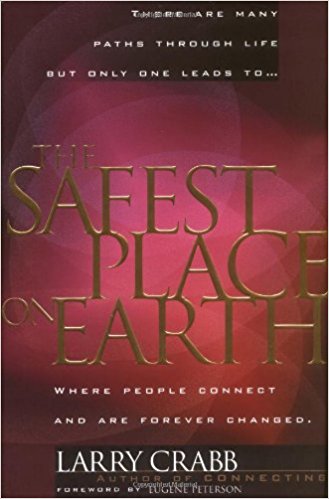


 biblicalfaith.online